Hey everyone, if you are wanting more pretty pictures and clever commentary about the trip, you should probably skip this one and wait until the day 5 entry. For those of you who have been faithfully following along, you won’t be surprised that I was feeling especially contemplative at this point. Fair warning, there is also some repetition of incidents, especially from day 4.
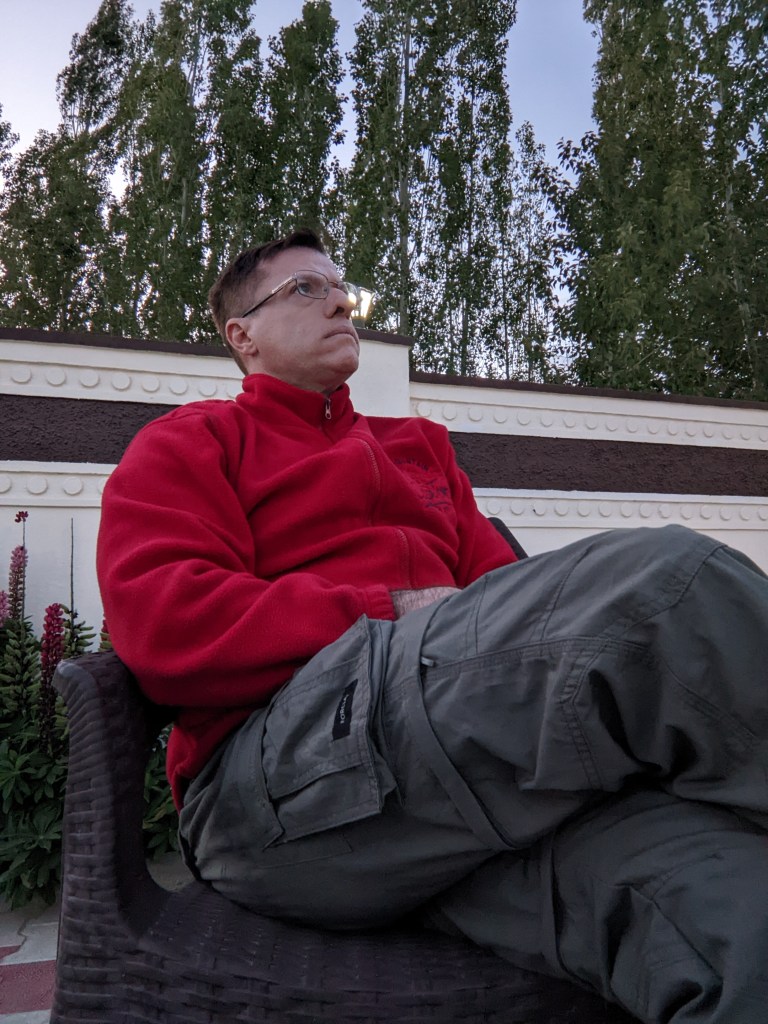
Lessons learnt so far . . .
A lot of these overlap, and some also only apply to me. Furthermore, I already sort of knew some of these things, but this experience has made them more clear.
1) Being strong/athletic as it relates to specific activities, or even being an overall athlete, does not mean you will be able to handle all “sporting/athletic” activities. Or at any rate, you might need some preparation before doing so.
2) Overland (relatively flat, even through “rough terrain”) trekking is not the same as mountainous trekking.
3) Start small and then work your way up. I think I would have been fine with a three day “trek” of 3-4 hour mountain treks. However, knowing that the plan was to end up with a couple days of 10-13 hours of trekking, this was just too much for me. I even think I would have been fine with seven days of 3-4 hour mountainous terrain “treks”, but again, not this.
4) Slippery terrain is scary, especially when the fall is potentially far down with plenty of jagged rocks along the way. Yeah, this one isn’t a big revelation, but it’s definitely a truth. Betsy gave me a tip that made it easier, especially when going down, but it’s still scary. I suppose it’s easy enough to also turn this one into a metaphor; we all have our own slippery terrains, and many times we have a very legitimate reason for being afraid.
5) Recognise your limits and don’t be afraid to communicate them. I did feel bad about deciding to stop with “the trek” after only one of seven days, but I also had to make a mature decision to not “ruin” the experience for everyone else. Furthermore, I didn’t want to needlessly put myself in harm’s way. My breathing was fine, carrying the backpack was fine (if not super enjoyable), and my leg strength seemed to be holding out. Furthermore, my feet actually felt great, and still do (This is only remarkable because, this is evidently the biggest initial concern for most hikers/trekkers. Additionally, my shoes were strictly speaking not ideal trekking shoes, but they didn’t seem to be a problem for me.
However, and those who know me well will not be surprised, the muscle cramps were not fine. Yes, I was cautious and didn’t let any of them grow into full fledged cramps. I’ve had plenty of raging muscle cramps and definitely didn’t want to deal with that while being in a mountainous desert, further than two kilometres away from a road. It started with intermittent cramping in my right quadricep, then a bit later I started to have twinges in my left mid back. One of those actually became a proper cramp, but not a rager. Connected to the same, many thanks to Betsy for staying back with me while that was happening, neither being overly solicitous nor disinterested, basically just keeping me company. After that calmed down and I continued at my slow, cautious pace, I started to feel mini cramps in my left hamstring. While this last one did not actually start until we reached the homestay, my forearms (which I had not used in any meaningful fashion during the day) also started to have mini cramps. In summary, the writing was on the wall.
As we started to reach a road again, I told Thinlas I was sorry, but I really didn’t think I could go down and up again. Her solution, which worked fine, was for her and I to stay on the road for the last kilometer or two; whereas, the others were on the road for awhile but then headed back down into the natural terrain. However, I realised that I simply couldn’t continue on. Maybe if it were just Thinlas and I, going there pace I could handle, it would work, but I didn’t want to drag everyone else down with me.
6) Having some disposable income is nice. Most people reading this blog fall into that category whether or not you realise it, and it might be worthwhile to contemplate on the same. Having a bit of disposable income means that we get to have more choices and that we are less vulnerable to adversity. I’m definitely not “wealthy” although I suppose by global averages I’m certainly “doing well”. Some of that is the result of life decisions I’ve made, but most of it is undoubtedly the result of underserved opportunities and support I’ve been given by virtue of birth . . . In summary, privilege. Deciding to “lose” what I had paid for the trekking part of this trip wasn’t really a big deal for me. Even realising that it might mean spending another 2-4 hundred dollars to occupy myself otherwise didn’t really matter. What mattered was getting out of what for me, had become a bad situation.
7) Maybe trekking isn’t for me. Now for those of you who love trekking, or even specifically mountain trekking, please don’t pile on with the hate. This is a possible personal truth, not something which applies to anyone else. Putting aside the muscle cramps, which clearly are some sort of a medical issue which I will once again try to address upon returning home, I didn’t really see the point of what we were doing. Yes, I appreciated the amazing natural beauty, but for the most part, I could see that just fine from the road. Also, once I’d gone down one peak and up another a couple of times, I felt like it all looked pretty much the same. Pretty, yes, something I wanted to do all day long, not really. I’m sure there are many places that can only be seen and experienced through trekking, so I will reserve my judgement about those particular locales.
Furthermore, assuming that I did take on trekking as a personal goal, doing a whole carefully planned training regime, gradually working up to longer treks over more difficult terrain, is that something I really want? Yes, I do think I could do that, and that I could be successful, but why?
What ifs?
(1) I don’t know if it really would have made a difference, but I’ve been wondering if maybe I should have had a porter. Dorothée decided to do that sort of at the last moment before we departed, and at least for day 1 of the actual trek, it seemed to be working well for her. I however considered it and for myself, decided that if I couldn’t do it on my own, I would just bow out gracefully along the way. I felt like if I couldn’t do it carrying my own things, then I shouldn’t be doing it. Note, this only applies to ME and is not meant to be a judgement nor advice for anyone else. Even though I didn’t really feel that the pack weight was that much, would not having to carry it have meant that I would both have enjoyed more the trek and also have been able to complete the whole seven days? Connected to the same, should I have checked with Thinlas about the possibility of doing a rest day, and then continuing, but with the added assistance of a personal porter? Would I have then had a nice time the rest of the planned seven days? I just don’t know.
(2) Should I have just tried to push through? Maybe the cramps would have resolved on their own once my body stopped thinking it was in crisis. Hell, maybe I was self sabotaging as I remembered other times I had been in crisis due to out of control muscle cramps. Maybe I would have had a positive life changing experience on day 6. Or more likely, and I really believe this is more likely, would I first have really annoyed everyone as they tried to accommodate me and then caused a crisis by becoming truly incapacitated by muscle cramps or some other unforeseen issue at some point, forcing Thinlas to get a rescue team to remove me to safety and putting a pall on everyone else’s trip for the remaining time? While I will admit to having some doubts in the back of my head, overwhelmingly, at least today, I firmly stand by my decision. But no, at the end of the day, I don’t know what the alternative outcome would have been.
(3) Since I had known about the trip with a couple of months of advance notice, should I have scrapped my current gym routine and instead done something which would have better prepared me for the physical demands of mountainous trekking? Would it have made a difference, and if so, how much of a difference? Again, I just don’t know.
A suggestion for homestay and tourism operators
(1) Asian toilets, are certainly legitimate waste disposal systems. Although perhaps not practical for widespread use in modern cities (I’m not really sure about this one), the uncomplicated composting toilets in Ladakh seem like a great idea; certainly they are less wasteful (no pun intended) and much more sustainable than the water flush systems which are the norm in most “modern cities” worldwide. Unfortunately, many (maybe most?) Visitors who did not grow up where these are common, will not reasonably be able to simply squat over an open hole to defecate. I get wanting to provide an authentic experience, but consider having a simple raised toilet seat available for outside visitors. It doesn’t have to be complicated, and could easily be made of locally available wood and would last a lifetime. It also would not at all detract from the outstanding composting system. When outside visitors arrive, I suggest first showing them the unaltered local option, but then showing them where they can get the raised seat if needed. Heck, although I’m not sure how this would work, you could even show visitors how to use the toilet without the seat addition. No doubt many would feel capable of handling the unaltered system, but many would appreciate the rescue option of the raised seat. I MAY be wrong about this, but I suspect a raised seat option might even be appreciated by some very infirm locals; maybe they already do this for sick/weak locals, but I don’t know about it. Again, I’m not in any way suggesting that people should change their own tried and true local systems, but if you want to accommodate outsiders of all types, this is something that would be so easy to do and yet would make so many people so very grateful.
Okay, it’s time to go back to sleep now. I will get this posted once I’m back to a place with internet. Again, I’m sorry if you found this interlude to be too introspective, but you were warned. Anyways, I promise that day 5 will get all of us back on track. See you there!

 Travels with Jay