I got up happily at 5:30 AM to quickly repack, decide what to take, what to leave behind, and ended up with only my small blue daypack for this three day trip. The plan was to leave at 8:00 AM.
While showering, I received several text alerts but assumed they were just messages from friends. I got out quickly, slathered on the moisturizer (without which my face and hands flake and crack in this cool dry desert clime) and discovered that the alternative route which we had planned on taking had now also been temporarily blocked due to some rain and snow on the mountain pass. Our preferred route had already been blocked by a big rock slide two days ago. As I left the room to head to the eating area, the shock of cold air and wet table and tiles confirmed the change in weather to which I had already been alerted.
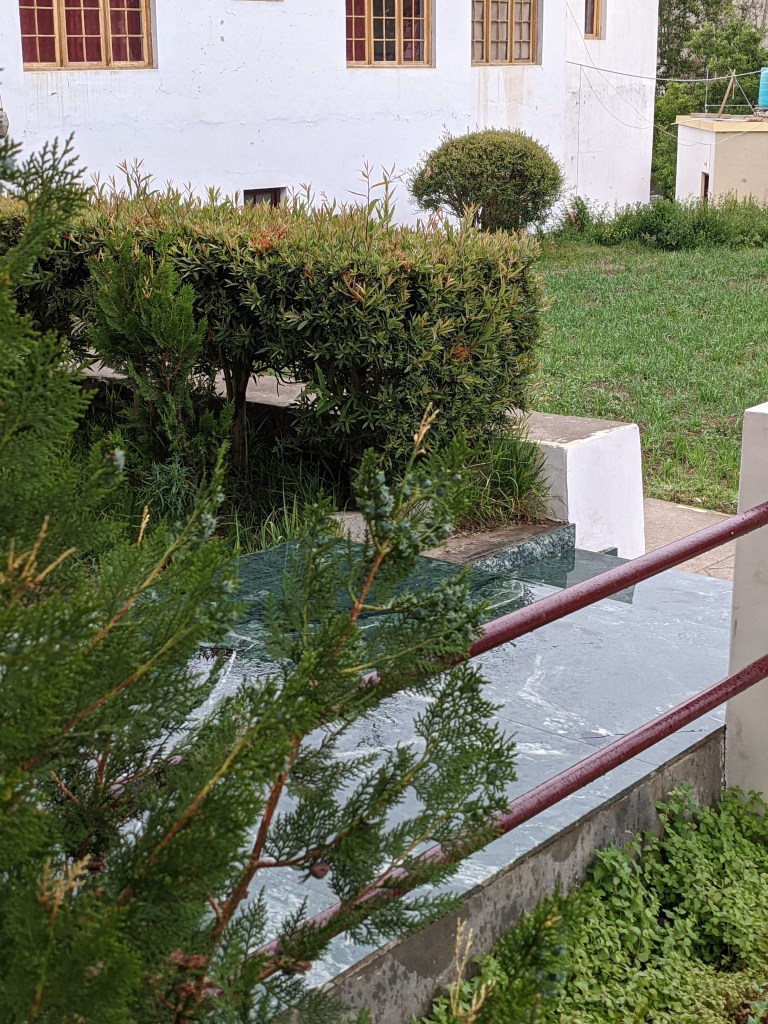
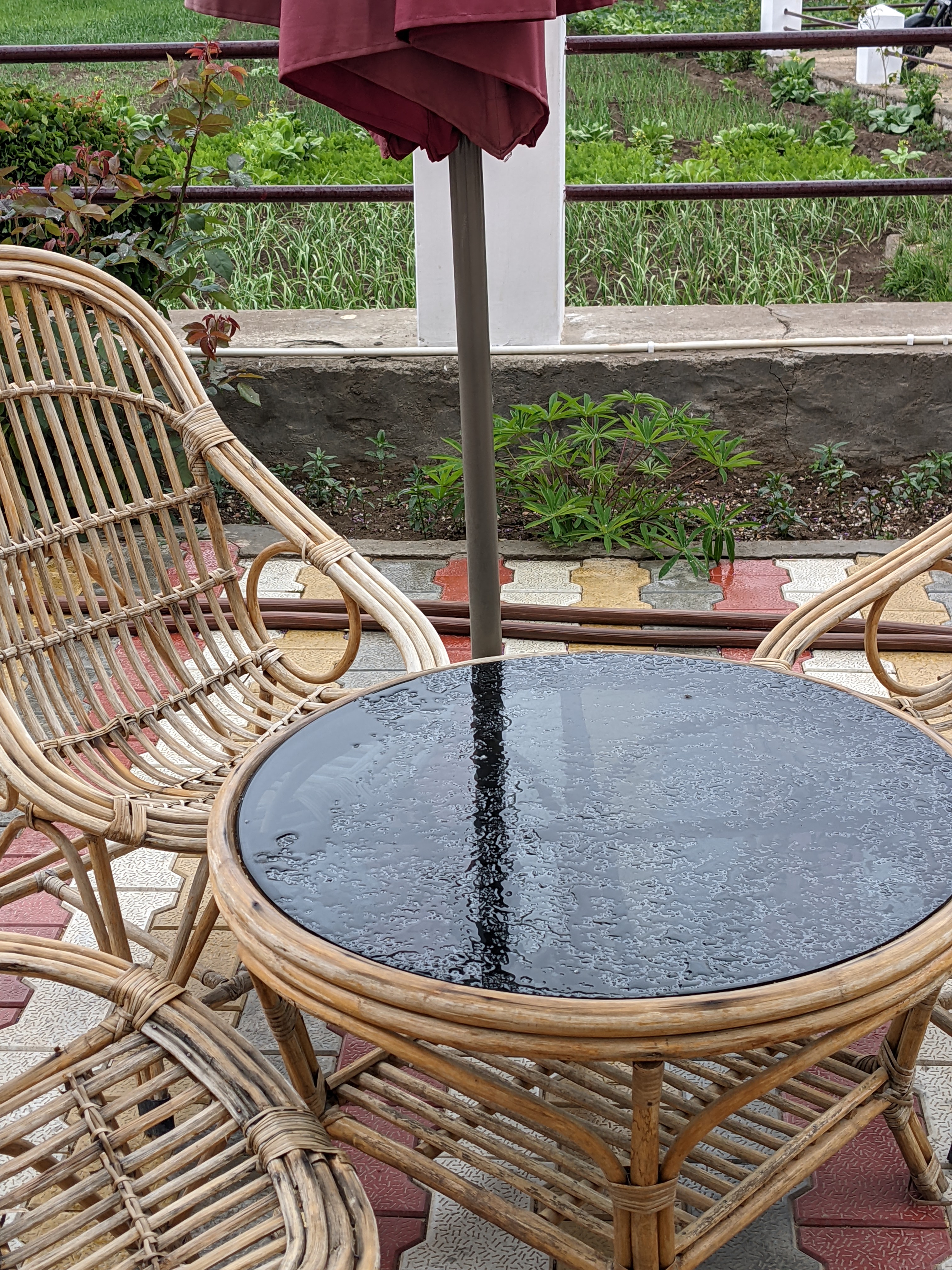
According to Dawa (my driver and guide), the alternative mountain pass crossing should still be safe, but now our departure would be either 9:30 or 10:00 AM. I still wanted to do this three day trip, but I made clear to him that safety was first, both his and mine. Then stepping outside, I was hit with a shock of cold air, the sight of wet tile and stray raindrops. Assuming the weather is similar where Dorothée and Betsy are now located, I certainly hope they are okay. Even with my light gloves and fancy new rain poncho, I definitely wouldn’t want to be out on the mountain passes in this weather. Still, I trust Thinlas will keep them safe, but I can’t help remembering how slippery some of the paths were, even with ideal weather . . .
At about 10:30 AM, Dawa arrived and we headed off on the second highest motorable road in the world, Khardong mountain pass. Starting out, things seemed to be going well, with the first military checkpoint at 11:50 AM (have to make sure I’m not a terrorist). The travel was quite smooth as we headed further up the pass. Before that, traffic so backed up that we were frequently just parked. The road had two lanes and seemed in very good condition.


Then around 12:15 for some reason we were stuck again in a stalled line of cars. I guess it had to do with managing the mountain pass, perhaps only allowing a few cars at a time, probably only one direction at a time? Still, I suppose it was a good opportunity for some photos. At 1:43 PM, still mostly not moving, I asked Dawa what was the problem, and he said it was because mainland Indians (meaning those not from either the far north or northeast) all want to stop and take pictures at the highest point of the pass, especially when there is snow like now.

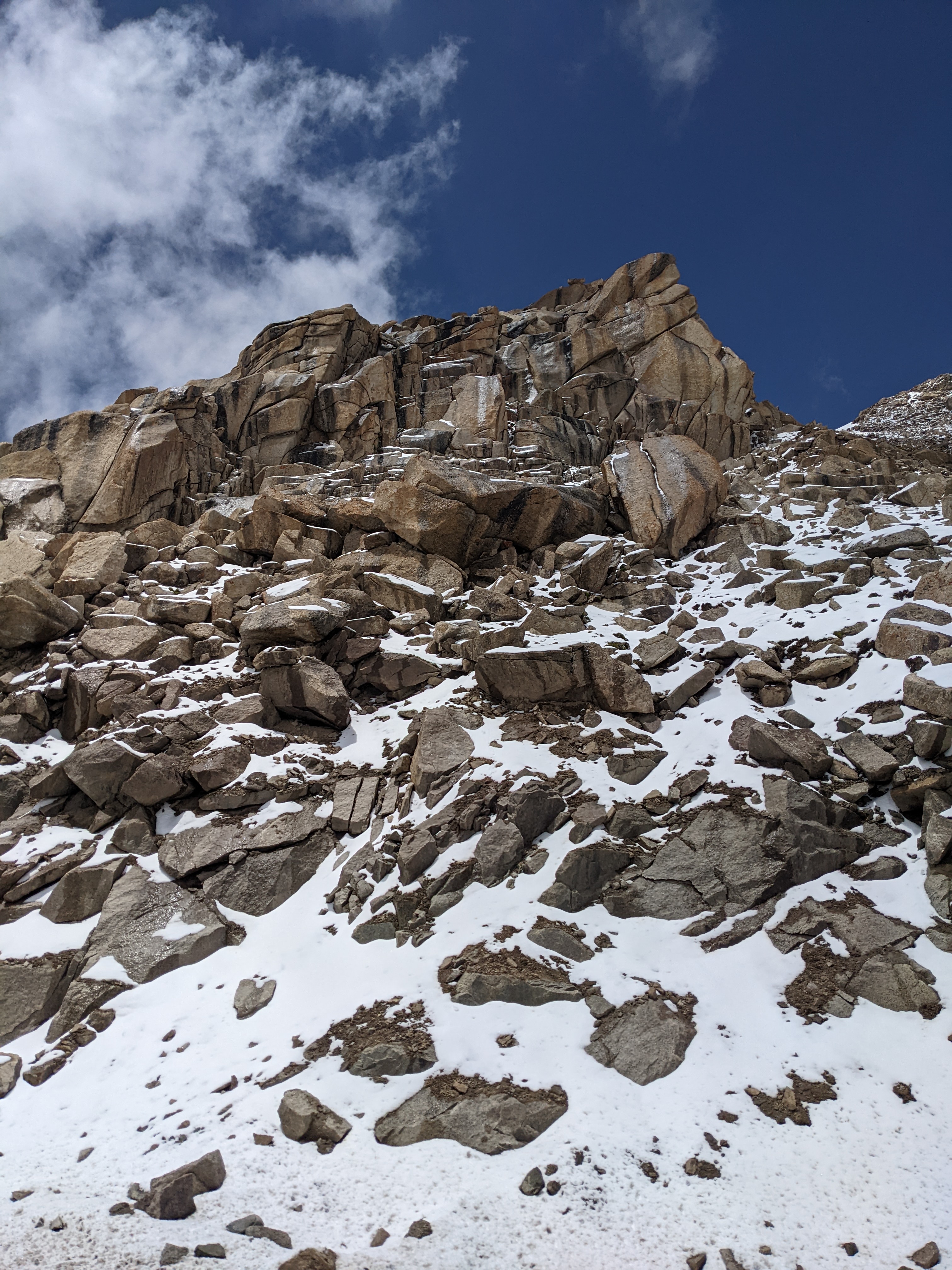
If that was really the case, then I don’t mind saying it was absolutely absurd. I am always very conscious that I’m a guest when visiting a country, but this sort of activity should be prohibited and if needed, there should be law enforcement officials stationed to make sure it doesn’t happen. This makes a massive problem for everyone and it’s also potentially a safety issue on a road such as this. But anyways, I certainly can’t change it;
Sure enough, it appeared that he was correct. As soon as we passed the top of the pass at 2:00 PM, cars were parked all over the place with people posing for their Instagram pics in the snow. After that, the road was wide open. Seriously, I know that for them it was important, but so many crazy people taking pictures and blocking the road at the top? There was noticeable but not heavy snow as we took the descending road. Happily, the road was clear and cars were now moving quickly.
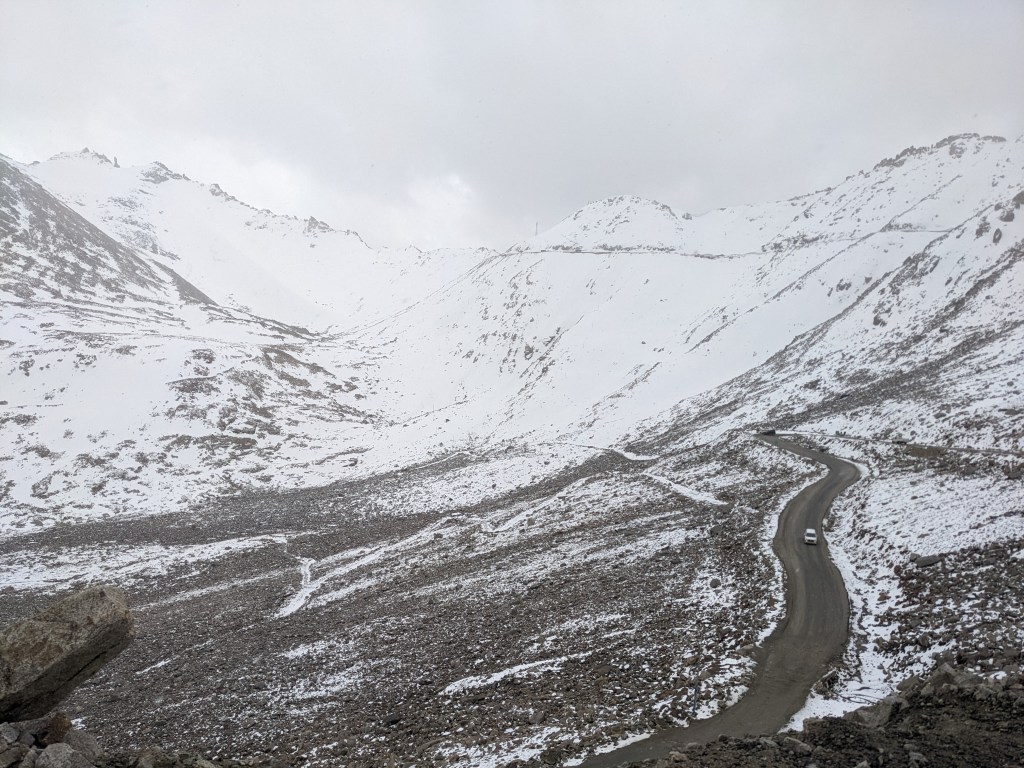
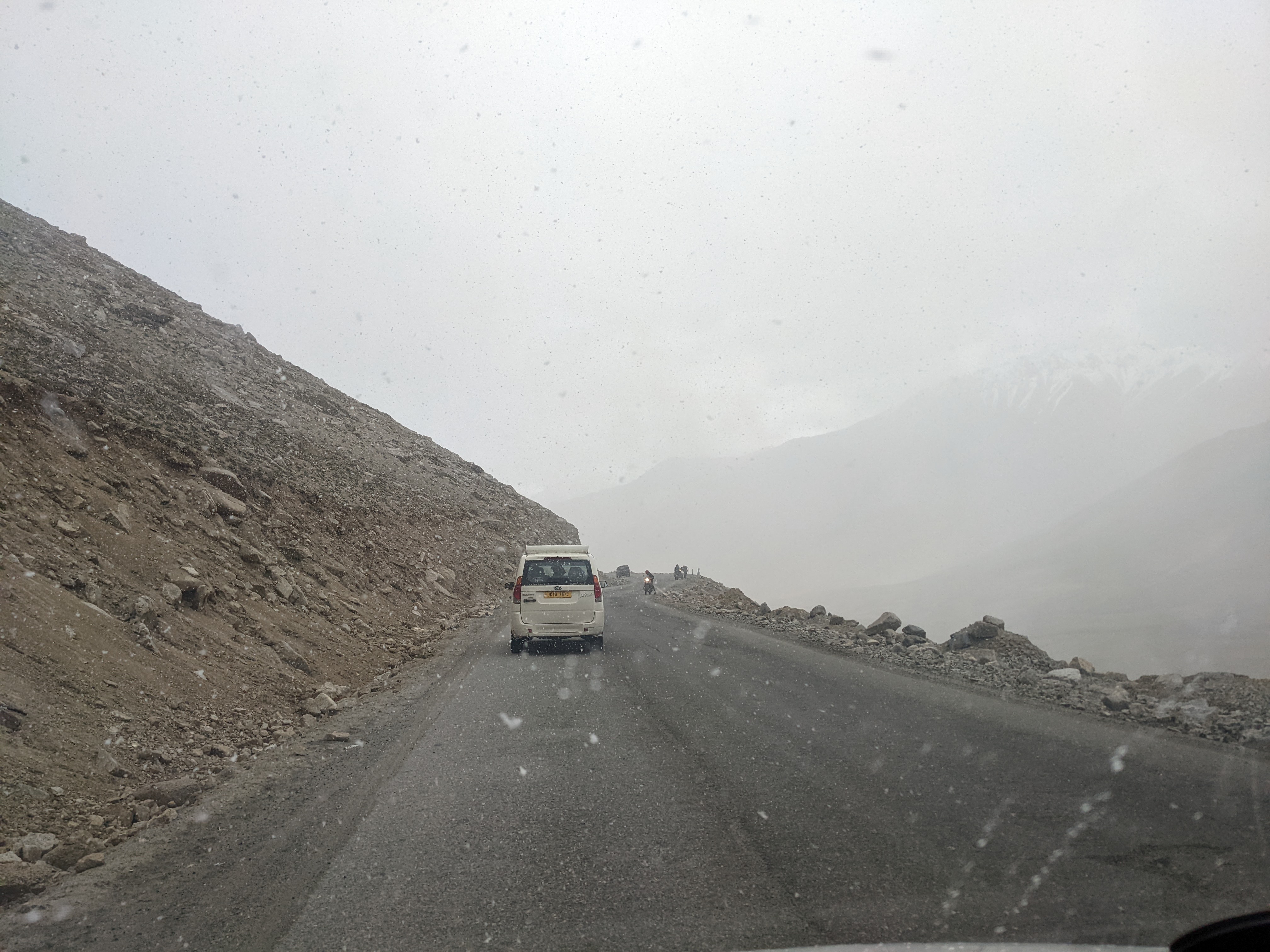
At 2:33 PM we stopped because there was once again some sort of a checkpoint. How many of these are really needed on a mountain road with no other access points? Do they think someone is going to parachute in and then casually take the road? Enough complaining though. We were quickly on our way again and by 2:40 PM we had driven out of the snow, arriving to Khardung village a little after 3:00 PM.
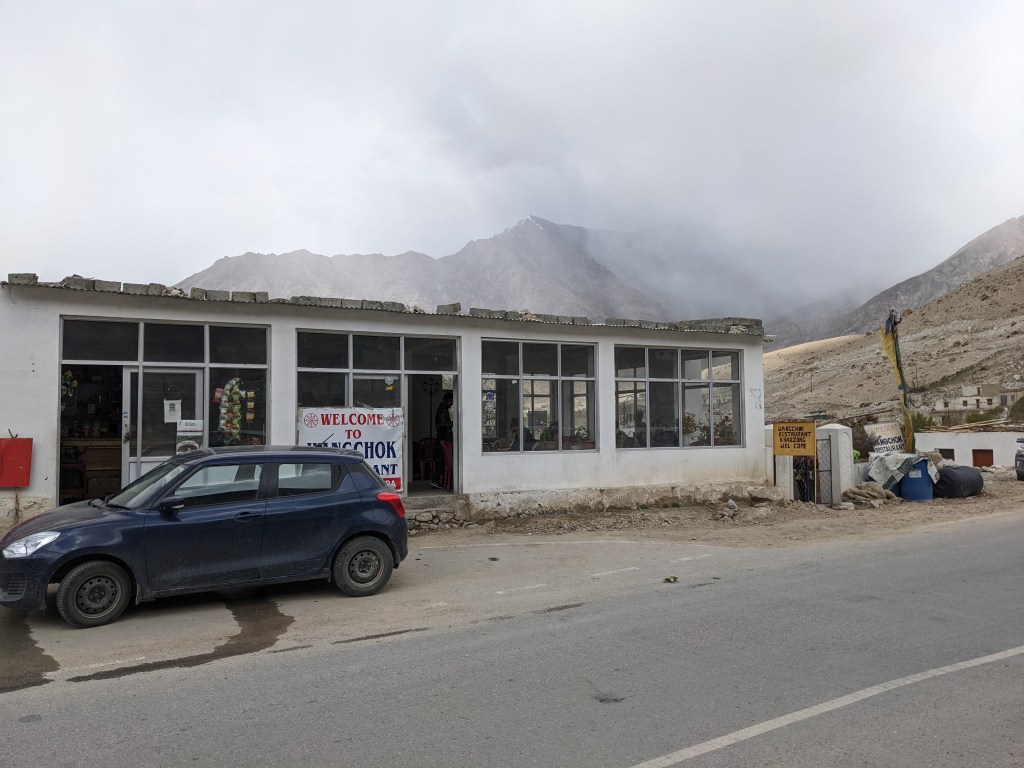
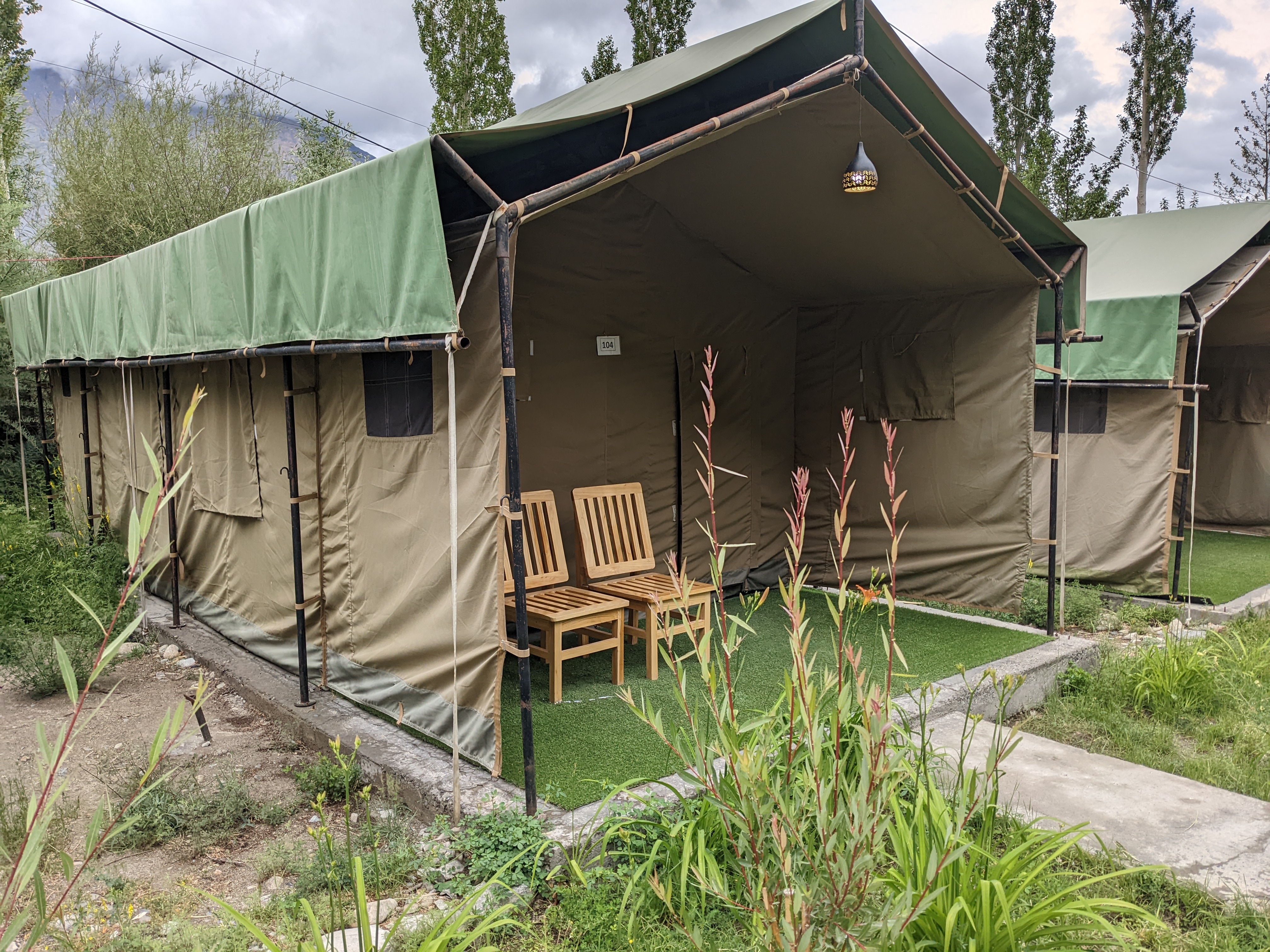
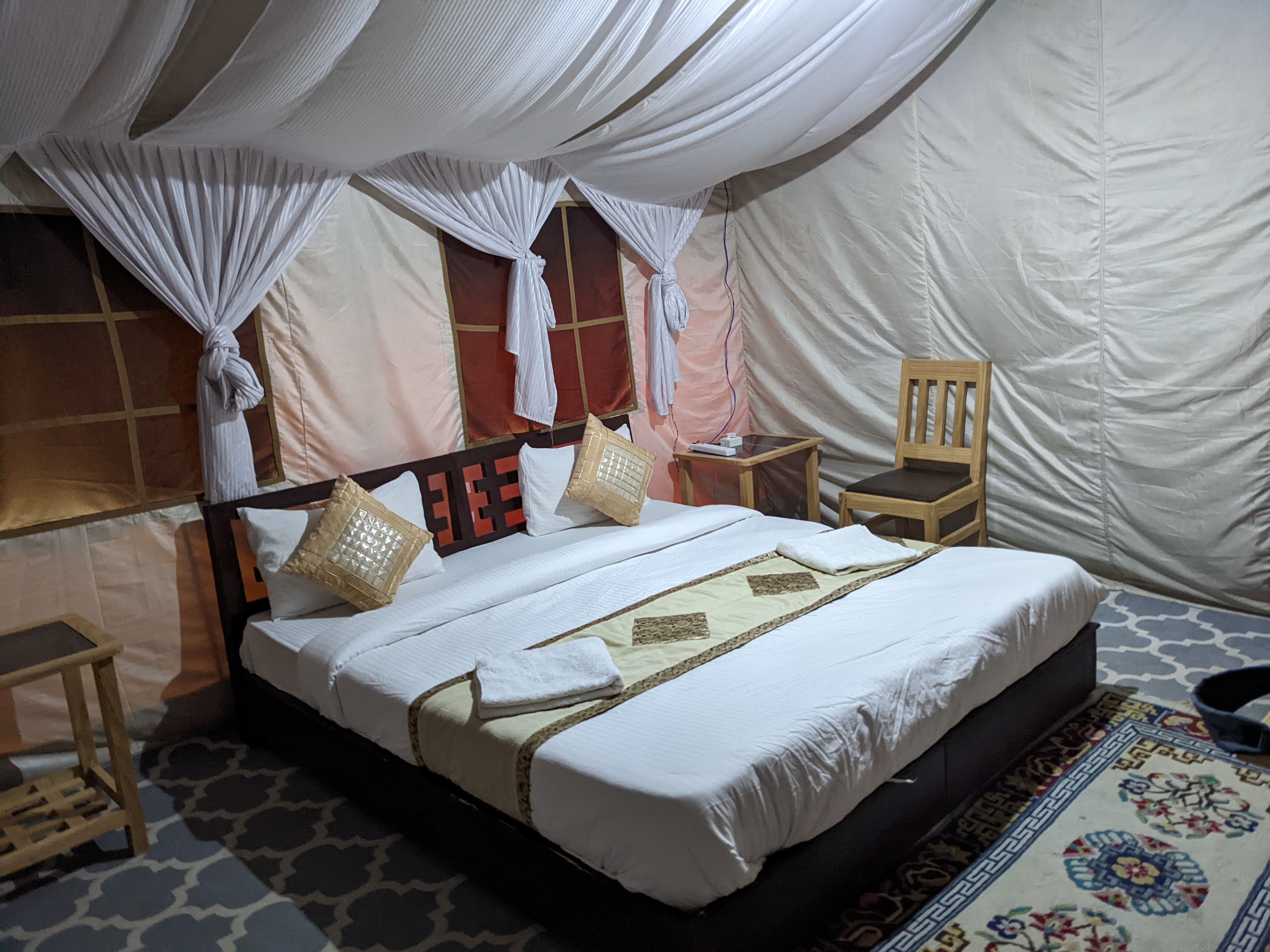
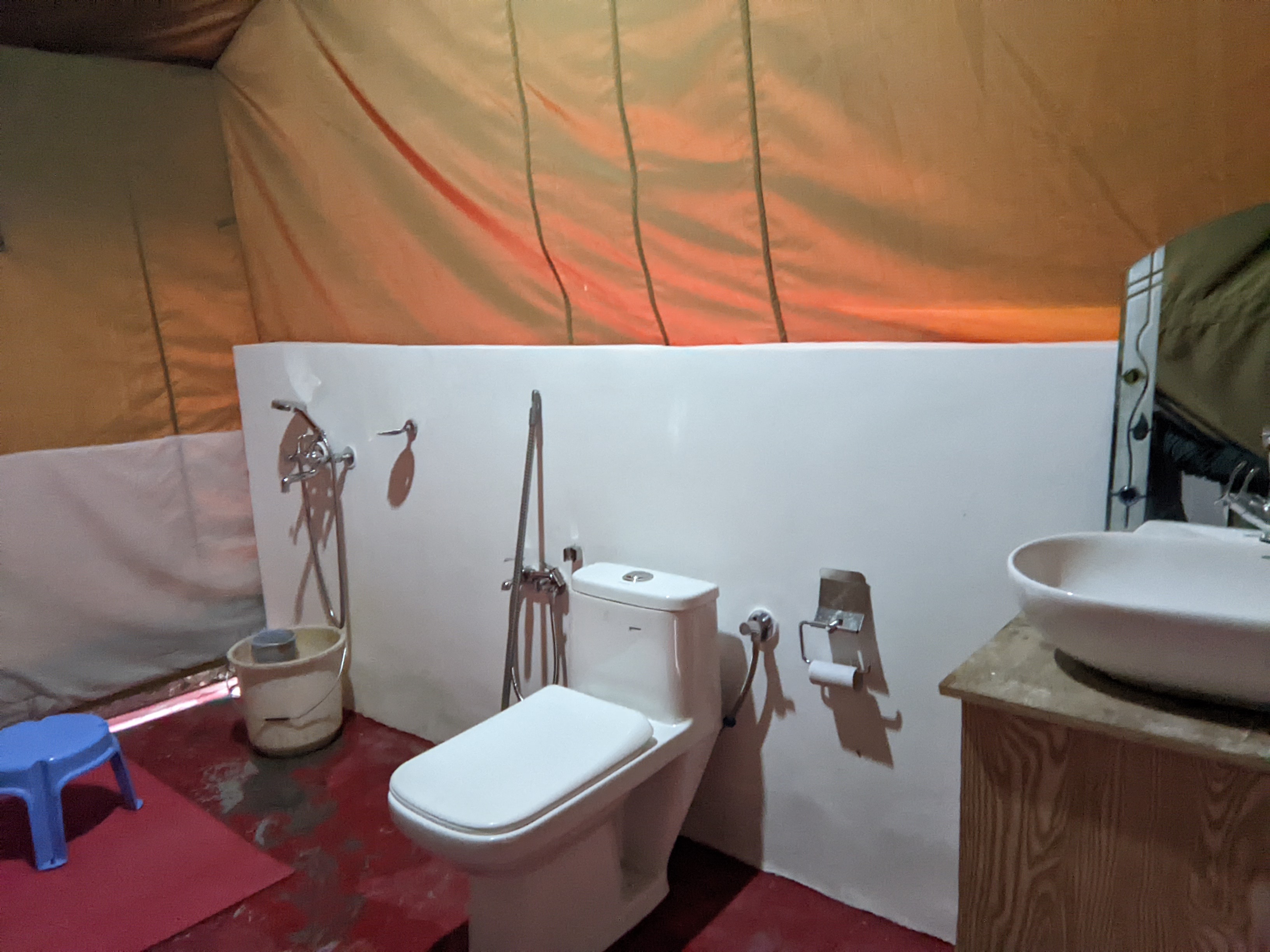
There we stopped for a very simple lunch and then continued on, arriving to Diskit village in the Nubra Valley at 5:00 PM. Diskit is relatively large, so probably should be called a town. Around this area there are many “tent camps” and it was too one of these that we went to quickly leave bags etc… before continuing on the trip.


As you can see, a tent camp here is not what most people would be expecting. While the idea is initially novel, I figured that it would probably make more sense to build more permanent structures, and in the mid term might even make more financial sense . Regardless, that seems to be the thing here.

After having the obligatory cup of tea, I went into full on tourist mode. At the nearby sand dunes with the charming Mochu stream, there were quite a few people doing archery with rubber tips, ATV rides in a separate area which was far enough away to not be at all disturbing, a dress up station to wear traditional Ladakhi clothes and Bactrian (two humped) camels!


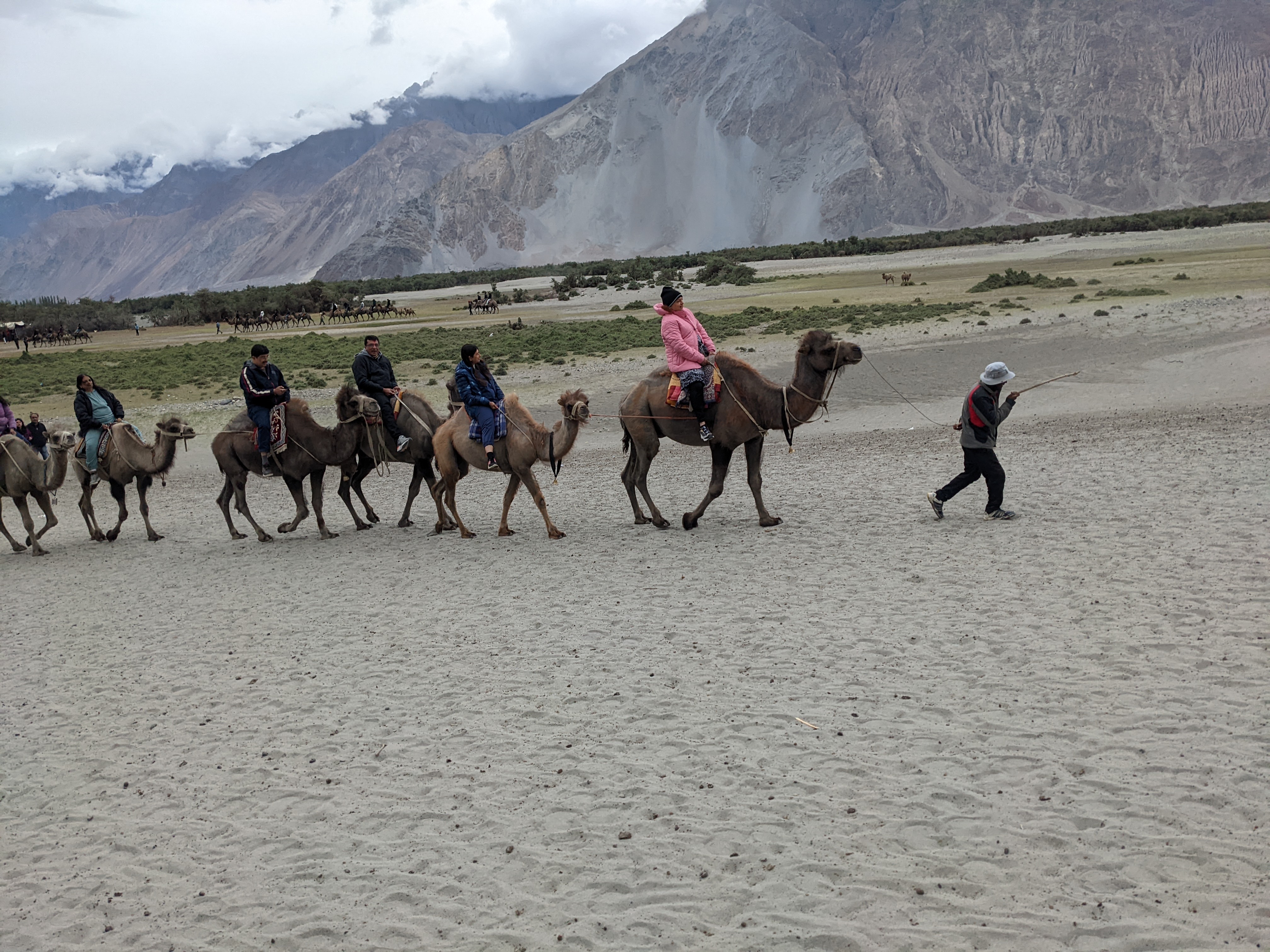
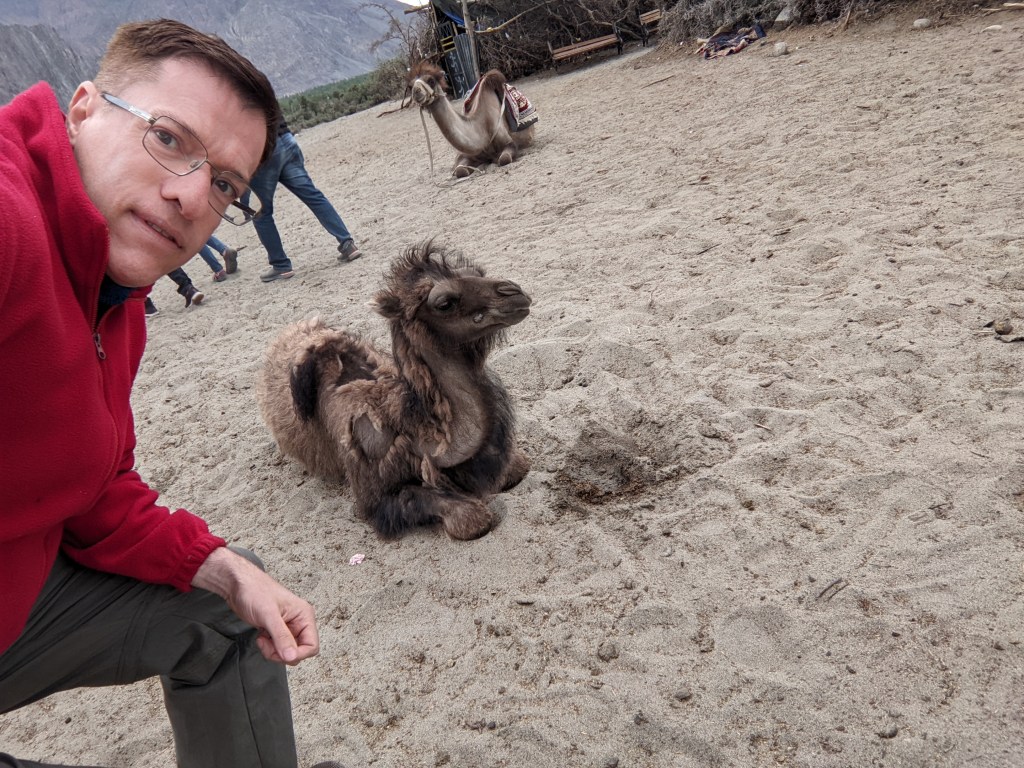
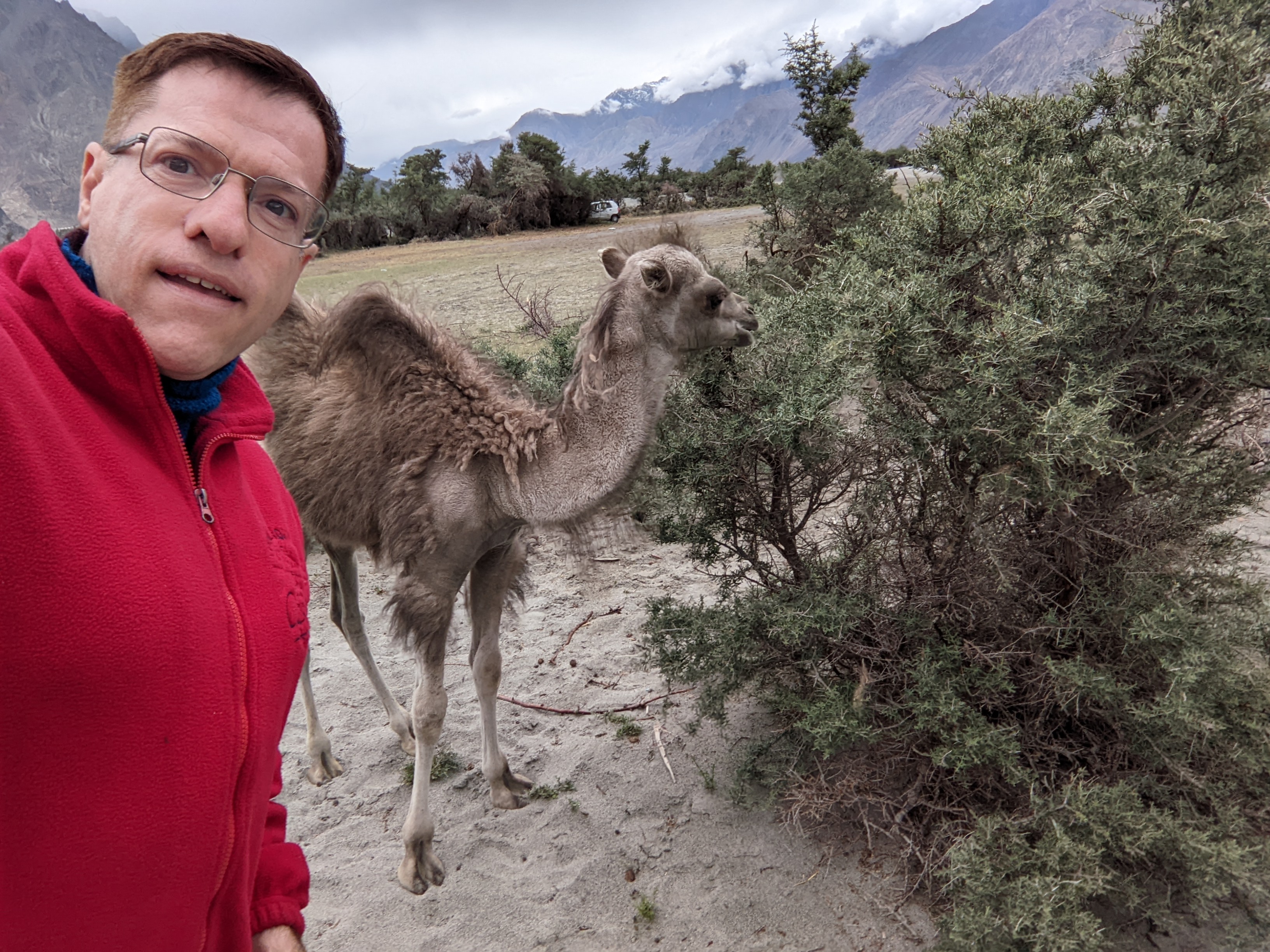
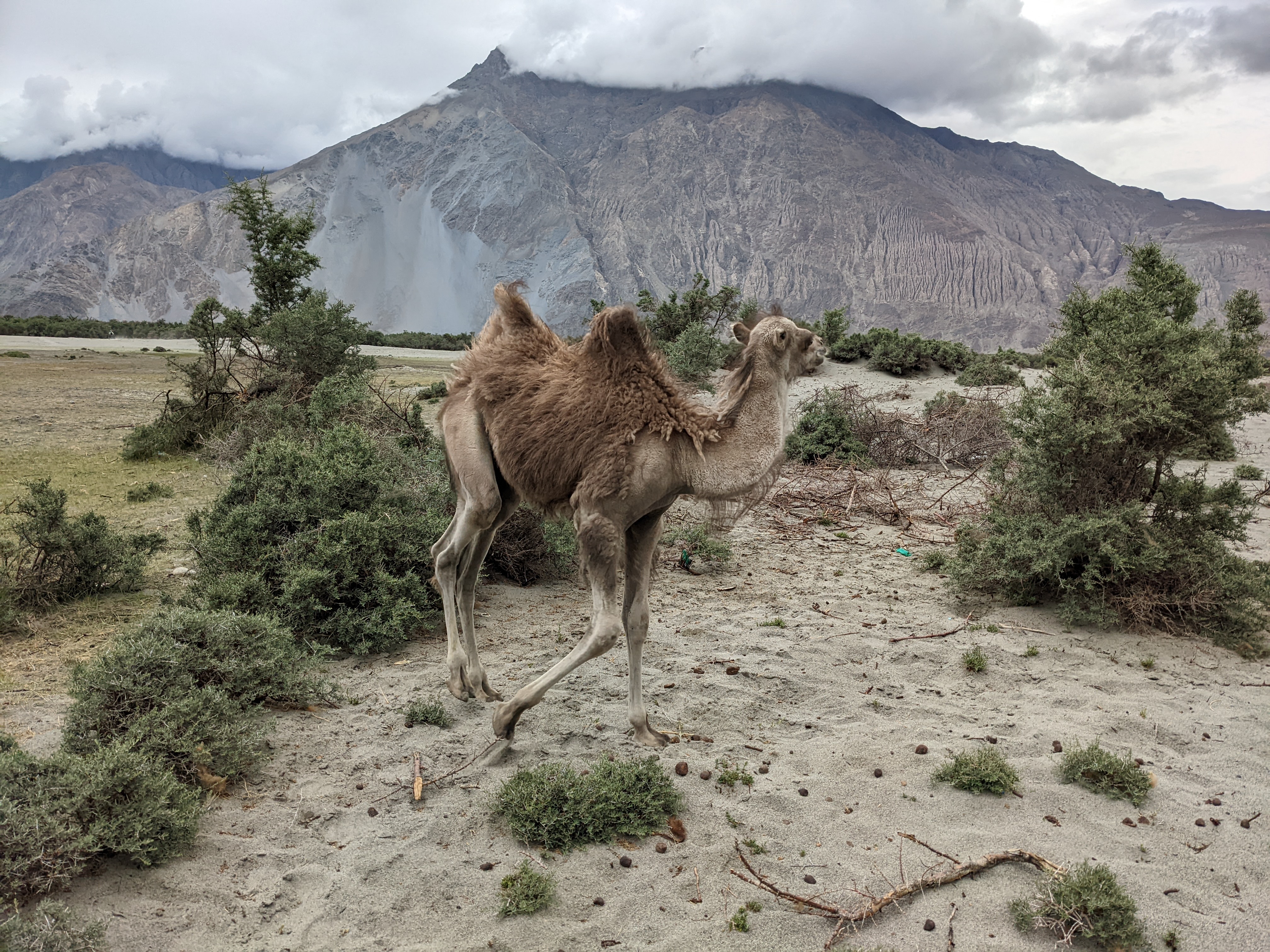
Like everywhere I’ve seen in Ladakh, the views themselves were simply beautiful (despite the throngs of people). I was also very happy to see that the young camels too small and untrained to be ridden were left to play as they pleased, sometimes just trailing along with their mothers. Dawa urged me to do a camel ride, and while I secretly felt I should be disdainful of the notion, I quickly relented and got in line to buy my 350 INR (4.50 USD) ticket for a roughly five minute camel ride through the heavy sand.
As is the norm in most of India, several people tried to push their way in front of us in the line. Whereas I generally patiently endure what I see as inconsiderate rudeness, Dawas was having none of it and politely but firmly instructed each interloper to head to the back of the line. The whole waiting process was only a few minutes (maybe 5?) And then I was greeting camels and getting on the back of one.

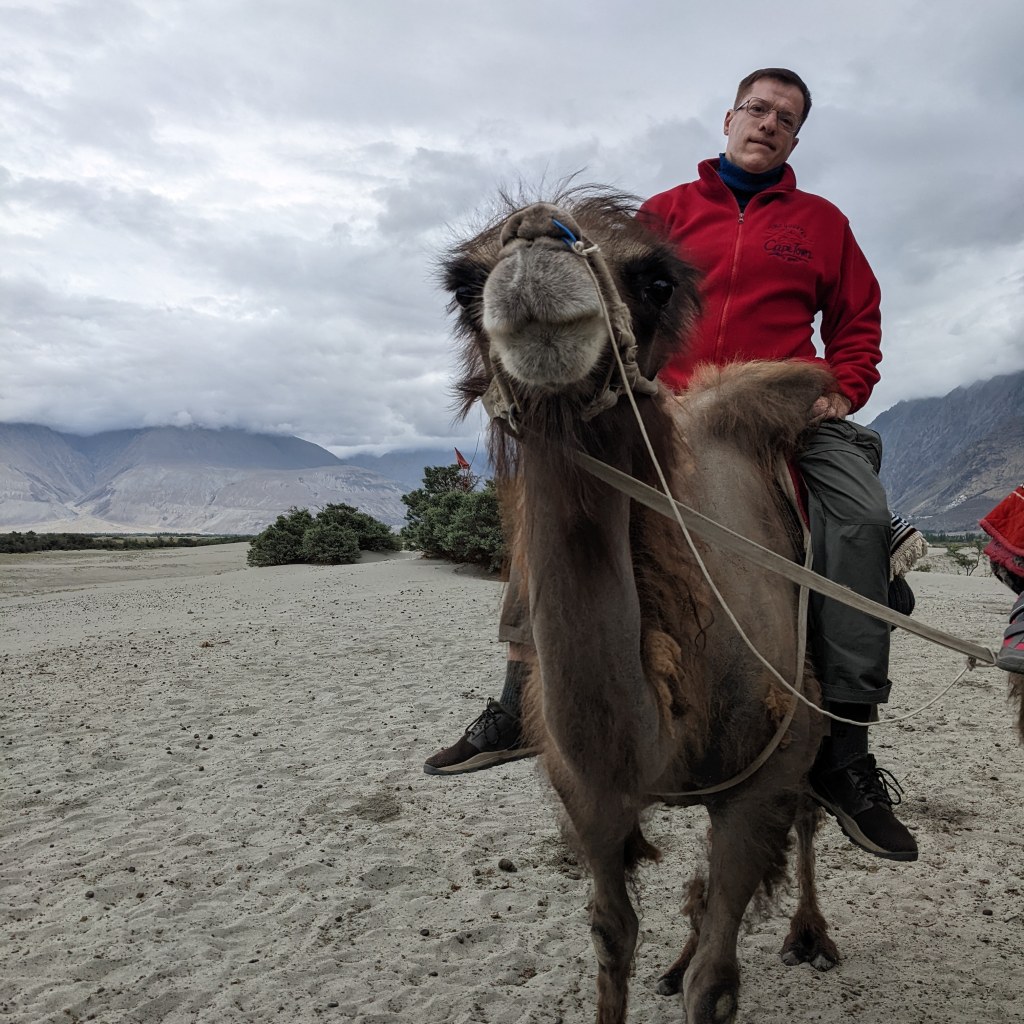

As far as I could tell, the camels were well cared for (no I’m not any sort of an expert) and were extremely docile, even allowing little kids to pet their faces. I’m not sure what I was expecting of an up close camel experience, but this exceeded expectations.
During this time of year, they are shedding, but their skin is thick and pleasant to the touch. Their fur was a bit rough, but also pleasant. Perhaps because of the cool temperature, there was no noticable odor. I’m glad Dawa talked me into the ride, since it’s unlikely I will ever again be this close to a camel (domesticated or otherwise) and I will certainly never have a practical justifiable reason to ride one.
After the ride, I spent a few minutes visiting with some of the calves.

If a friend had been along to tease me into it, I’m sure I would have played dress up. However, as it was just Dawa, my fake superiority won out and I walked by the “Be a Ladakhi ” stand with swift steps and my head high in the air.
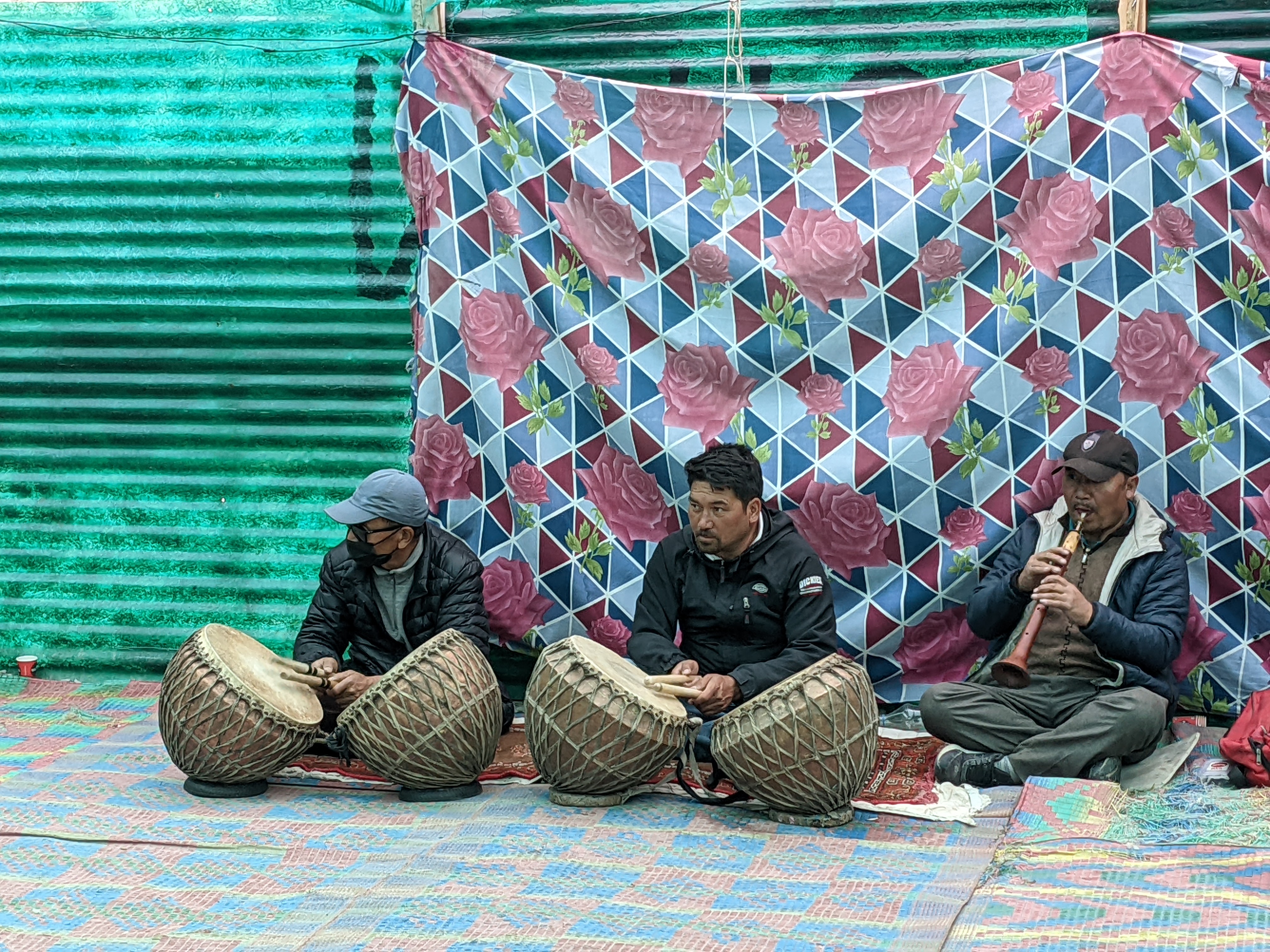
Dawa thought I wouldn’t really be interested in the traditional dance exhibition tent, cost of 100 INR (1.25 USD), but I begged to differ and I’m happy to report I was correct. I was a bit disappointed that there were only women dancing, but Dawa explained that most Ladakhi men, while knowing how to do traditional dances, don’t usually participate in these sorts of events because there are few of them, and they are off doing better renumerated jobs.

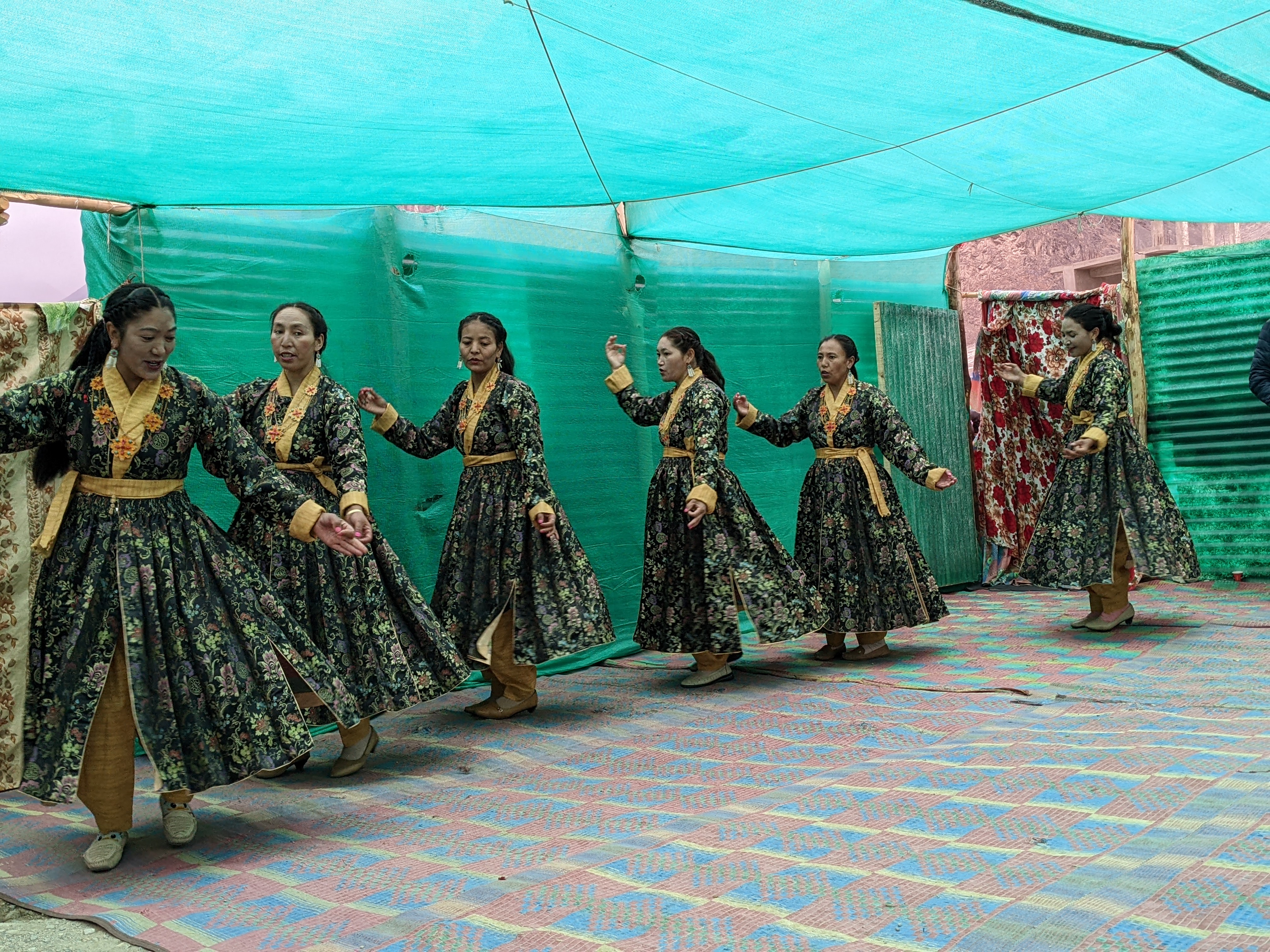

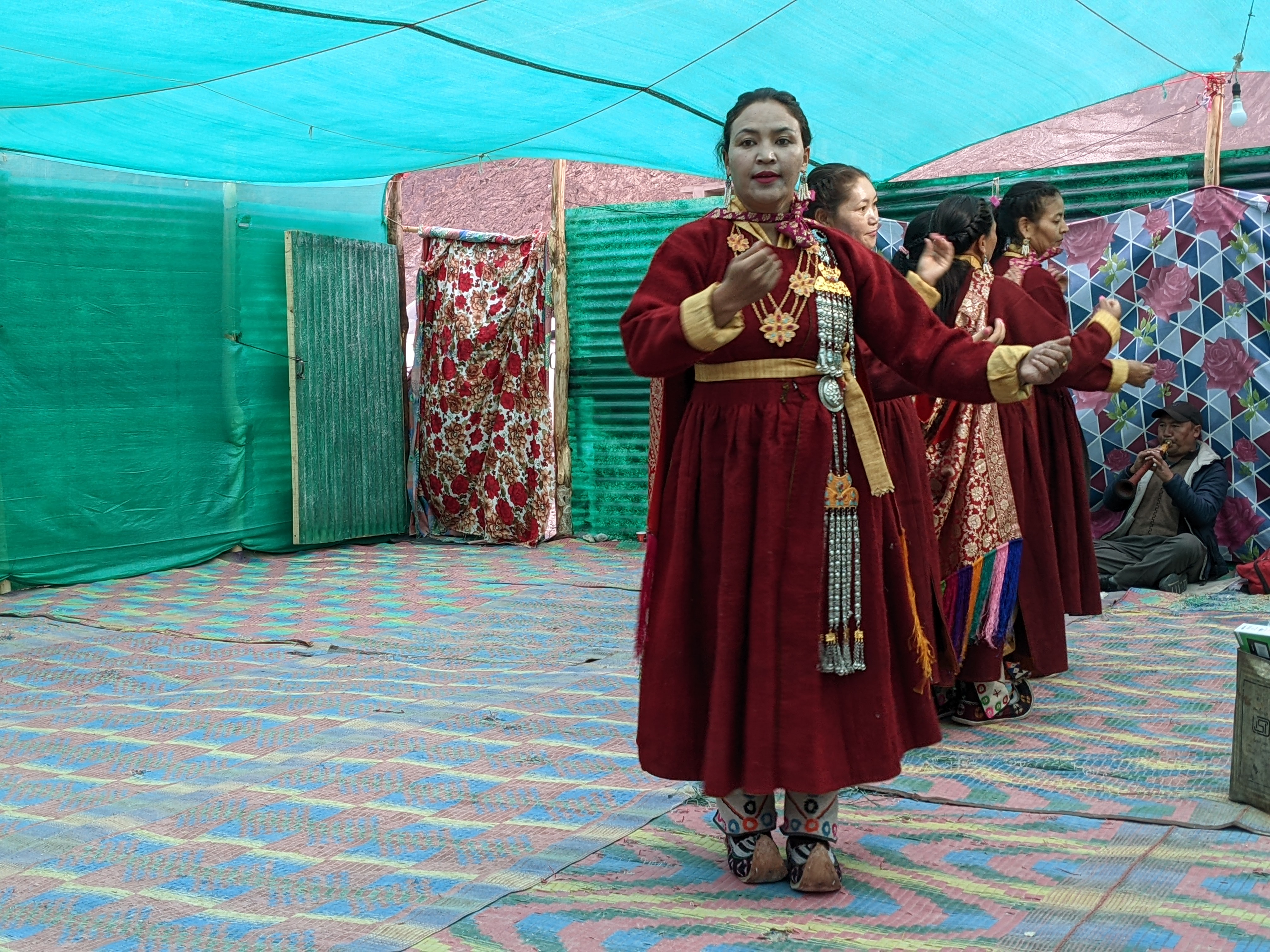
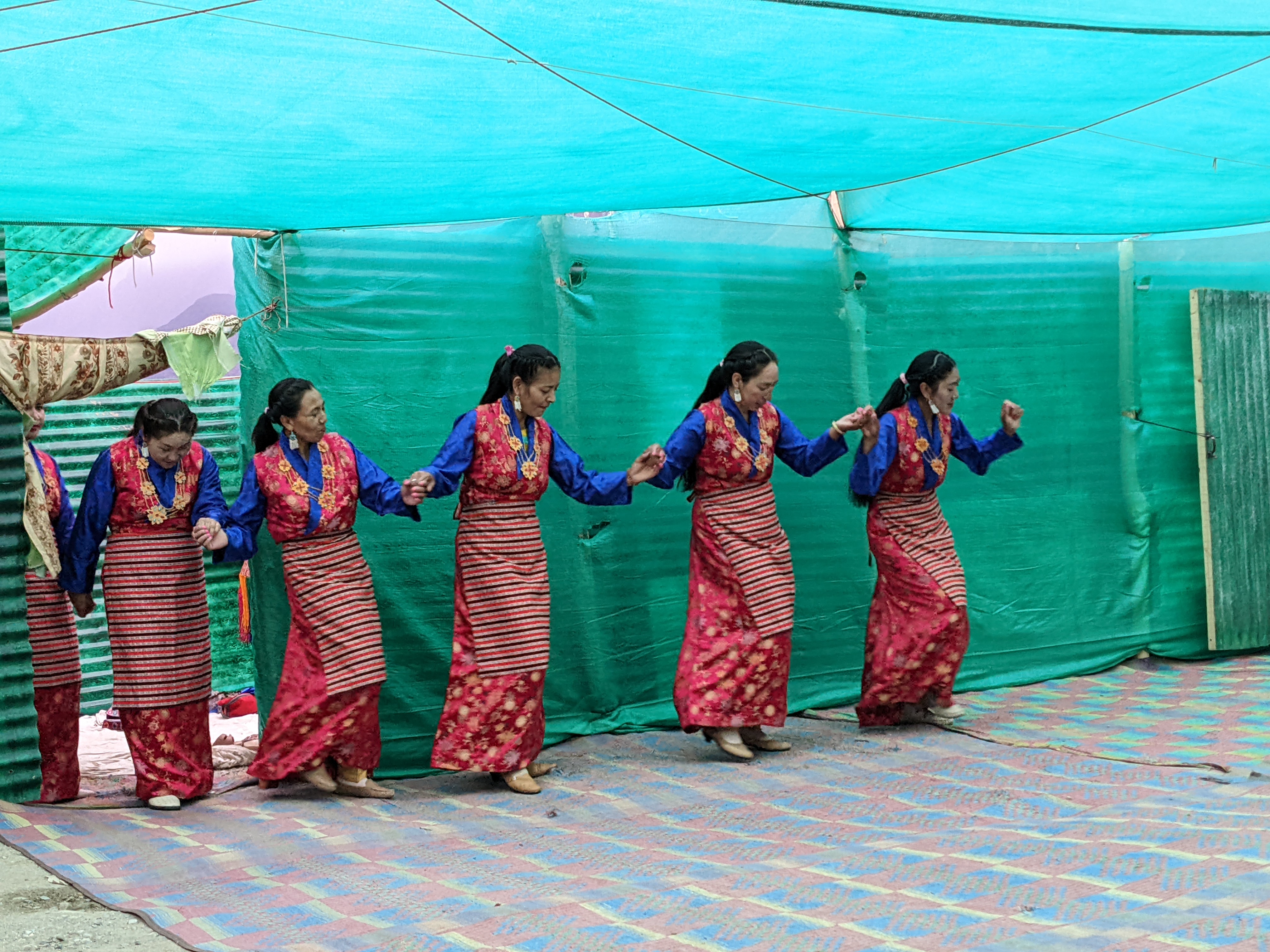
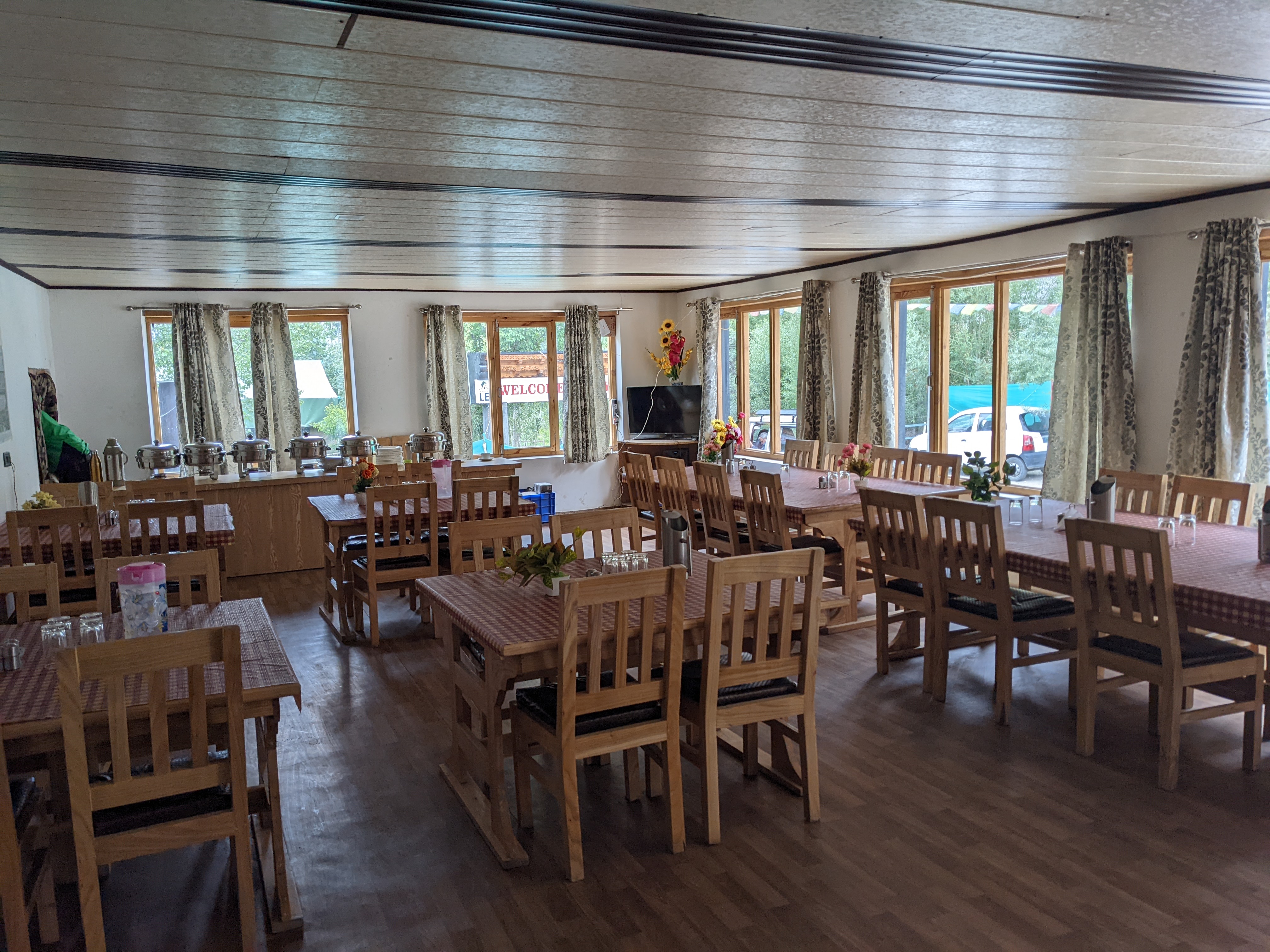
By then it was already 7:30 PM so we headed back to the camp. Dinner started quite late, so we spent about 90 minutes with Dawa telling me his ideas about Buddhism and also the economic outlook of the region. The former was quite positive with the latter seeming rather bleak. Still, unlike many/most men from Ladakh, he expressed a strong interest in sticking it out, trying to be successful in the land of his ancestors. I wish him the best, but with tourism which is really only feasible 3-4 months out of the year being the primary private sector endeavor, the prospects don’t seem great. Of course there are multiple ways to define success and certainly numerous roads to happiness.
Dinner itself was unremarkable, and then at 10:00 PM. I headed to my tent. Without going into great detail, this was the first night I was genuinely COLD. I used all three blankets and was also thankful to Thinlas who had earlier explained to me how most Ladakhi people will position the covers for maximum warmth; I finally got a chance to apply that lesson.
Anyways, let’s see what tomorrow will bring. For now, bye everyone.


 Travels with Jay