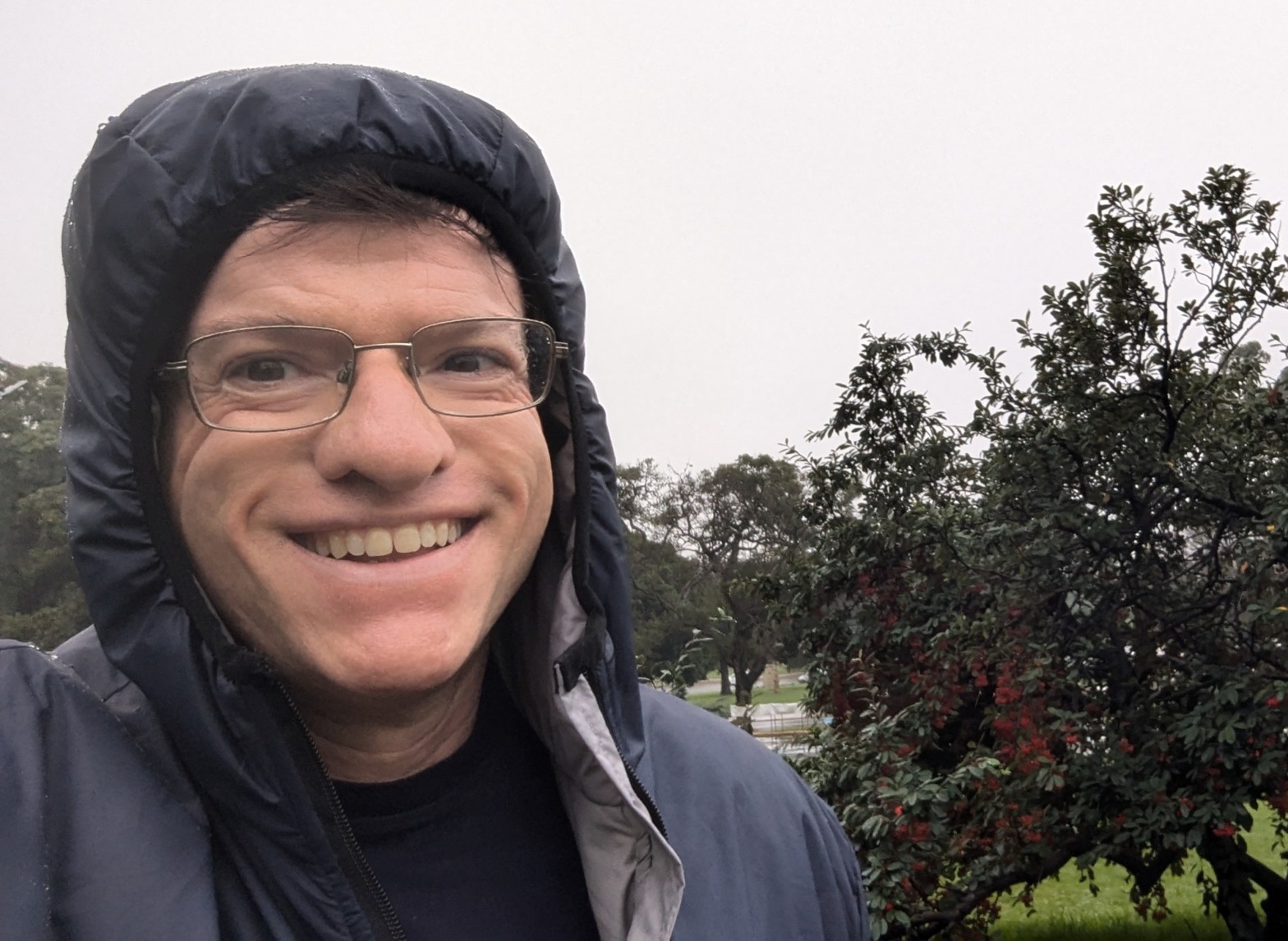
Hey there everyone, it’s hard to believe, but I’m already on my seventh day in Argentina, or more specifically, my seventh day in Buenos Aires. For those of you who have been reading along, you know that things have been going pretty well so far, and that yesterday in particular was a completely unexpected treat. For today, as I have not yet visited any, I decided to make this a museum day.

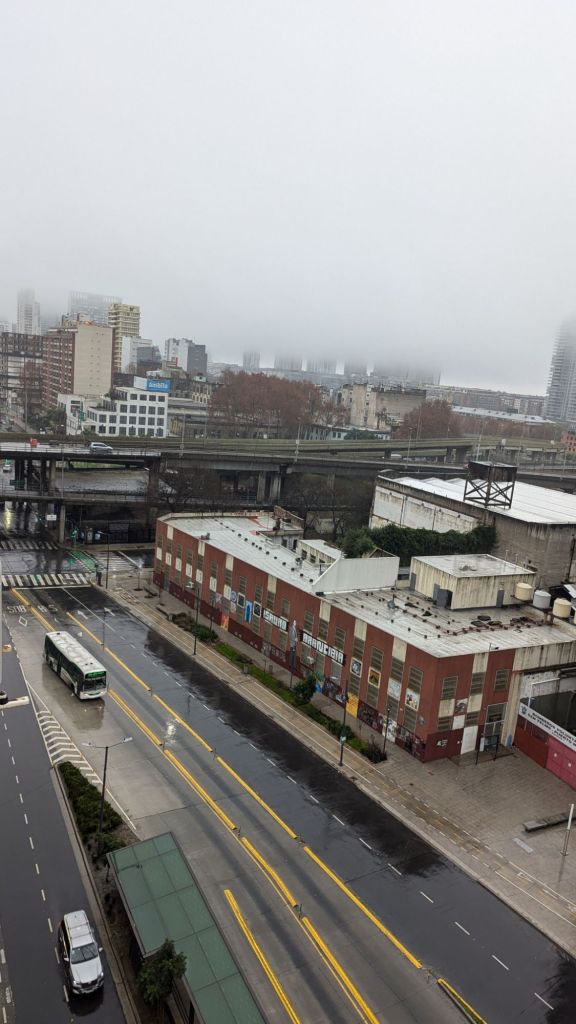
So at 9:45 AM I was looking out the window before heading to the Museo Nacional de Bellas Artes. It had been my plan to walk there, arriving just before they opened at 11. However, it was drizzling, almost to the point of full on rain, so I figured I would wait a bit. Normally I wouldn’t mind, but with the cooler temperature (14 C – 57 F). At 10:26 AM it was still clearly drizzling, but I decided to go out anyway, but with the plan of taking the bus rather than walking .
So, at 10:45 I was waiting for the 62A bus near the entrance to my lodging. Initially I had tried for the 130, but I missed it. Then at 10:53 I moved back to the 130 as I had already seen 3 of the 130 buses go, but no 62A. Finally at 10:55 AM I was on the relatively empty bus.
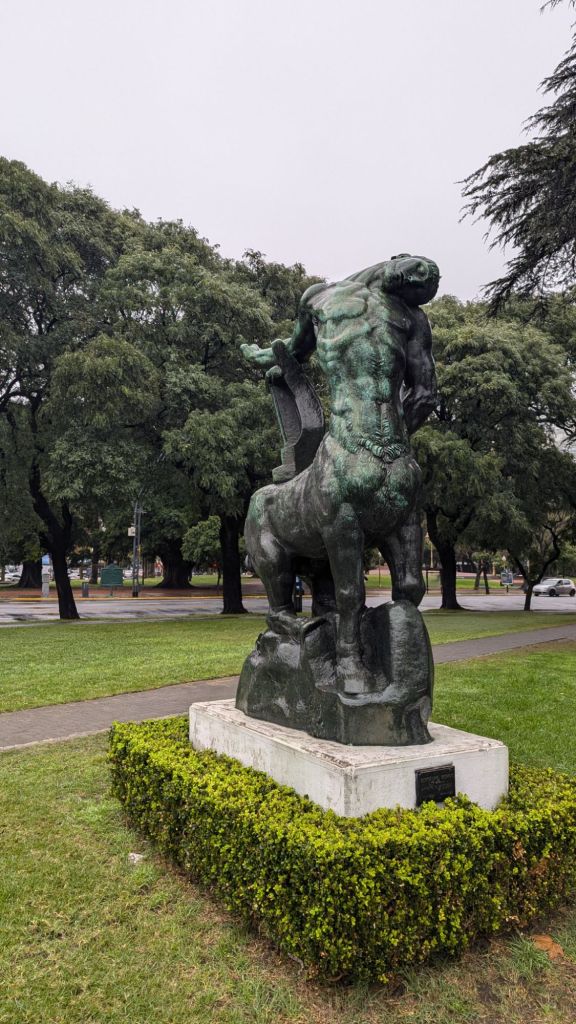
Traffic went smoothly, as it has normally appeared to do in this area of Buenos Aires since I arrived, and at 11:11 I got off the bus. Right off I noticed a rather impressive utilitarian looking building, but there was no obvious sign and it appeared to be closed. Nearby there was also a nice sort of green space, not exactly a park, right next to where the museum is located. It had a couple of interesting sculptures. I took a picture of “The wounded centaur”. For obvious reasons, I was then separately reminded of one nice thing I’ve noticed here in Buenos Aires. If someone barely accidentally bumps into you, they immediately excuse themselves . . . nothing like San José, Costa Rica in that regard.
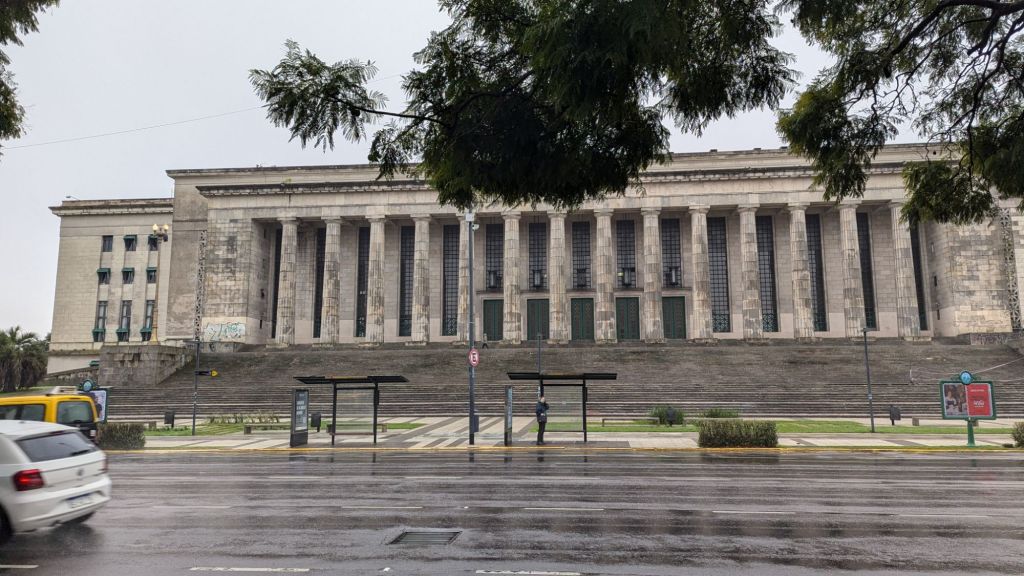
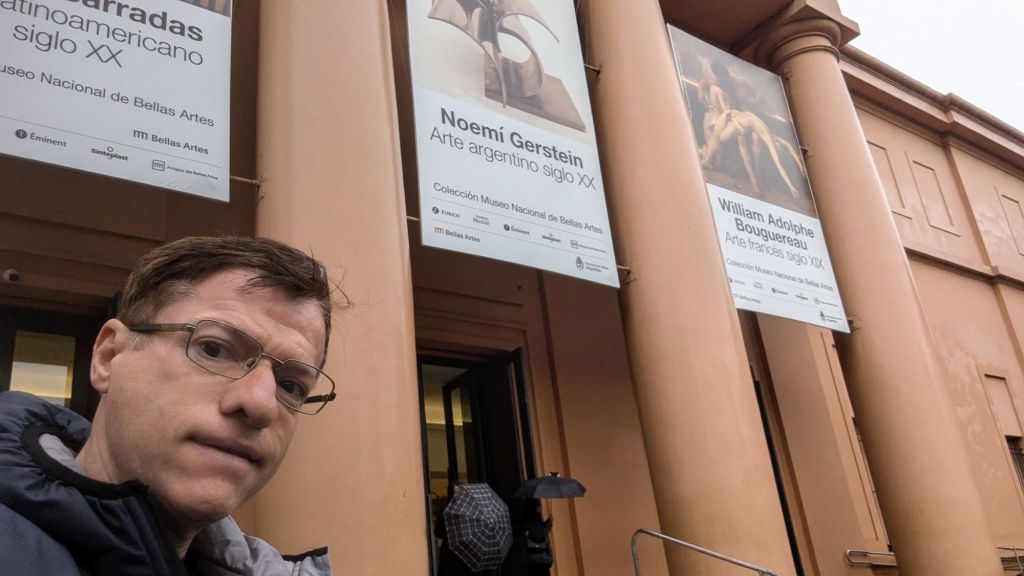
But getting back on track, at 11:21 I entered the museum and was pleasantly surprised to see there was no entry fee. I decided to start at the top and work my way down. Right off I noticed that throughout the museum, many of the pieces have QR codes which can be scanned to get rather complete additional information. It’s all in Spanish, but one could of course easily use automatic translation.
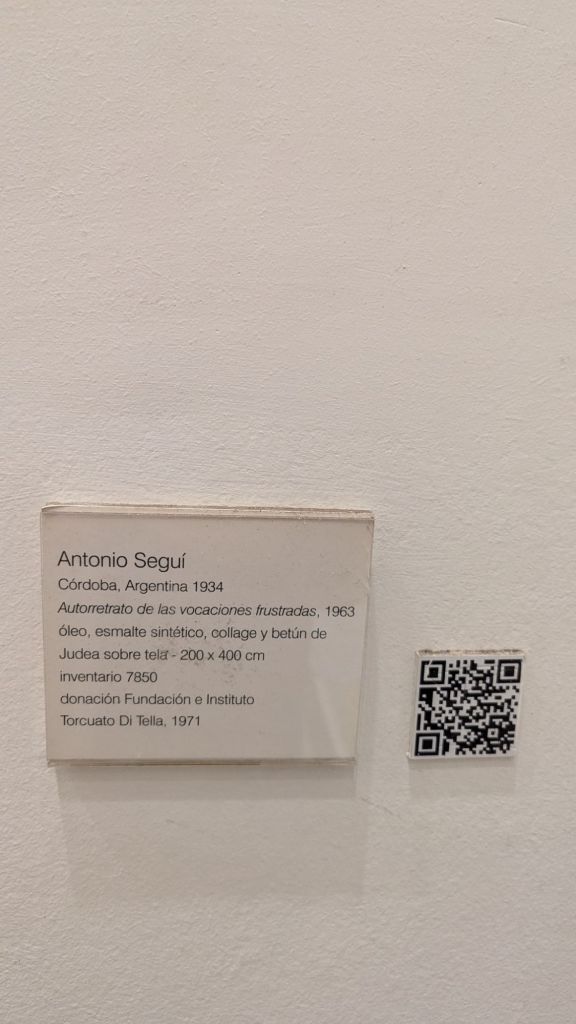
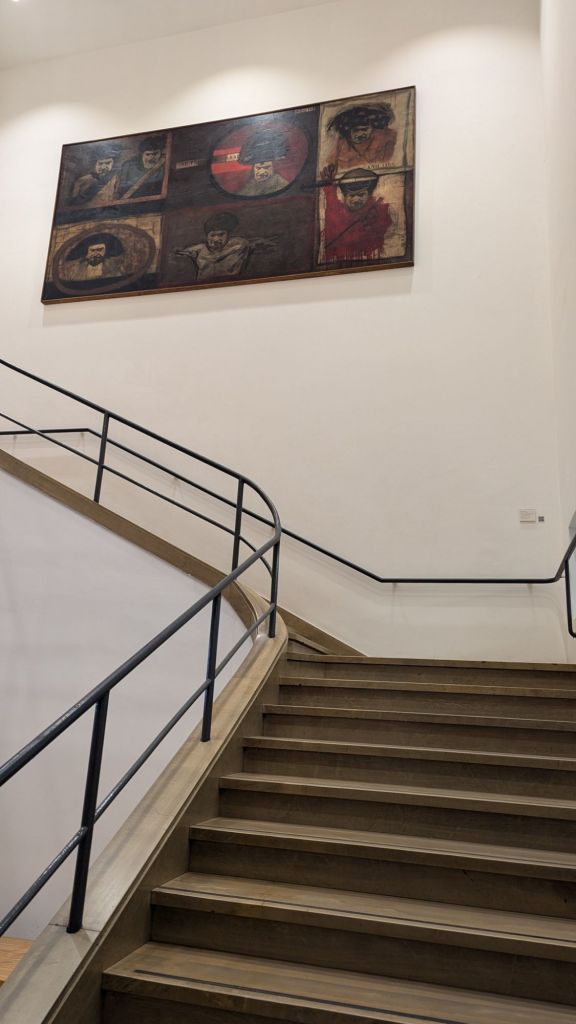
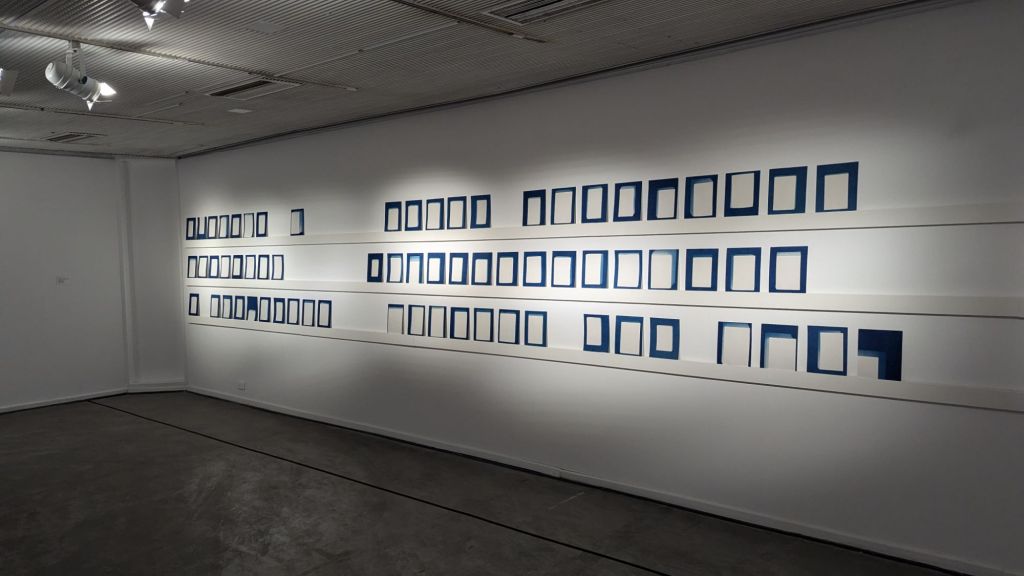
Walking up the stairs, at 11:29 AM I started on the top floor of three. Here I found a photography exhibition made of commentaries about books written by Facundo de Zuviría in the initial days of the COVID-19 pandemic lockdown. I was a bit impressed by how much he was able to read (or remember about having previously read) during that time. It made me think of my own COVID time in India, which went much longer (like many countries in Asia) then here. As I had been working full time online at that time, I guess I didn’t experience the sort of loneliness, fear and frustration which others did. I was so incredibly busy preparing and then doing online lessons, that I really didn’t have time to feel deep thoughts.


Of course, I did do a lot of walking with my dog Hannah at the time, 3-4 hours a day, since in India, walking a dog was one of the only ways you were allowed to be outside. Fortunately I also was living on the outskirts of the city, so there were plenty of wide, green spaces where we could go. Was it really only in 2020 that all of that began? It seems so far ago now, despite how long things were dragged out in India. . . It was an unusual time, and in many ways tough, but my comparative wealth in India and a full time job that needed to be done sheltered me from much of it. Still, I remember that was also when I did a lot of online training and also when I really started earnestly learning Hindi. I know that for the more vulnerable people in society, it was a truly horrible time.
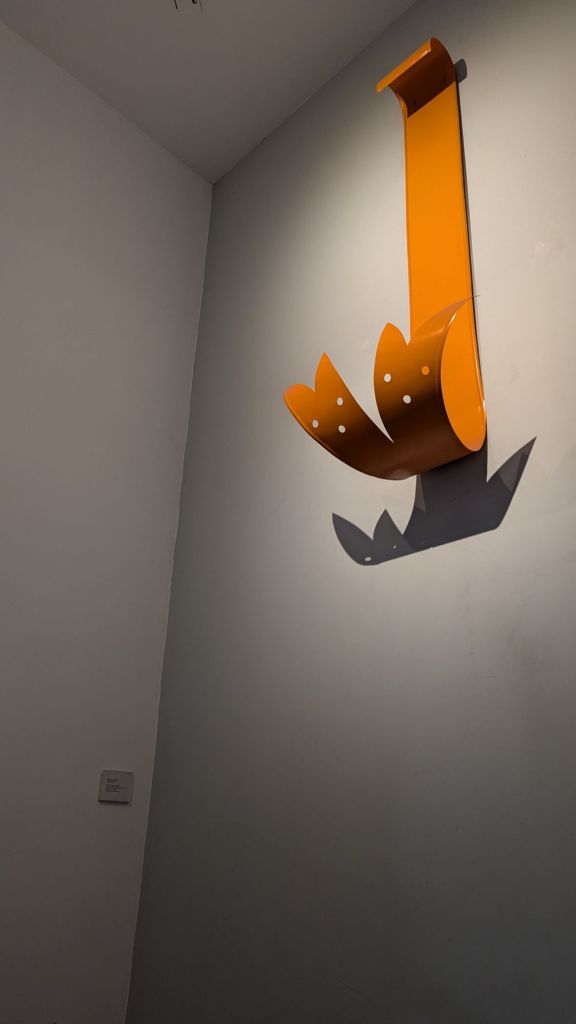
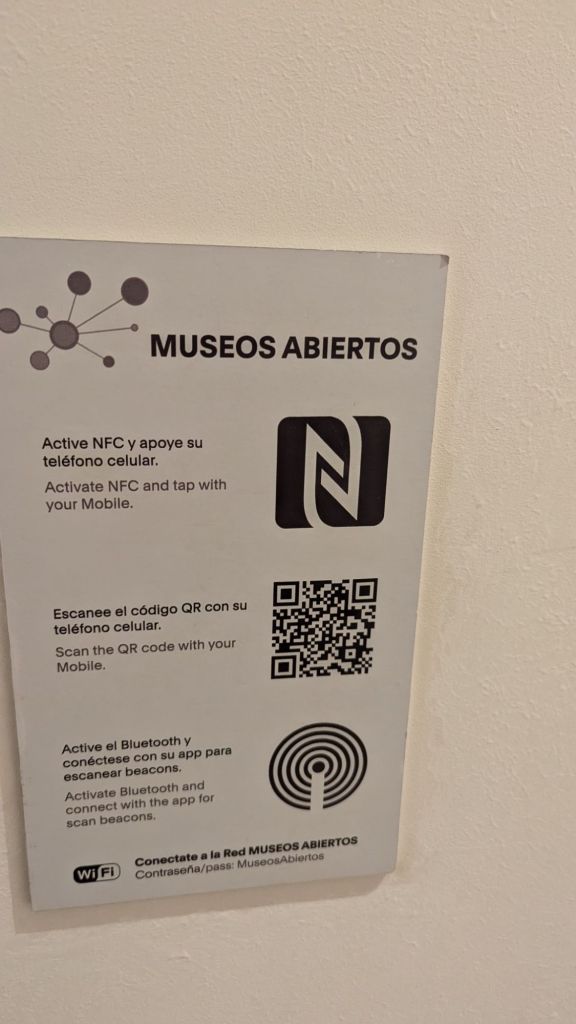
At 11:47 AM I walked down to the middle floor (Piso 1) and at 11:51 into room 25 “Argentina and the rest of the world 1900-1820”. Shortly thereafter at 11:55 then into room 26 “Latin American art 1910-1945”, in addition to the set itself, I saw that they actually have many ways that people can connect and get more information, not just QR codes: QR codes, NFC and Bluetooth beacons. Again, most of the information is in Spanish. However, this extra information was not available for all pieces. Still, there was way more than any single person would want.
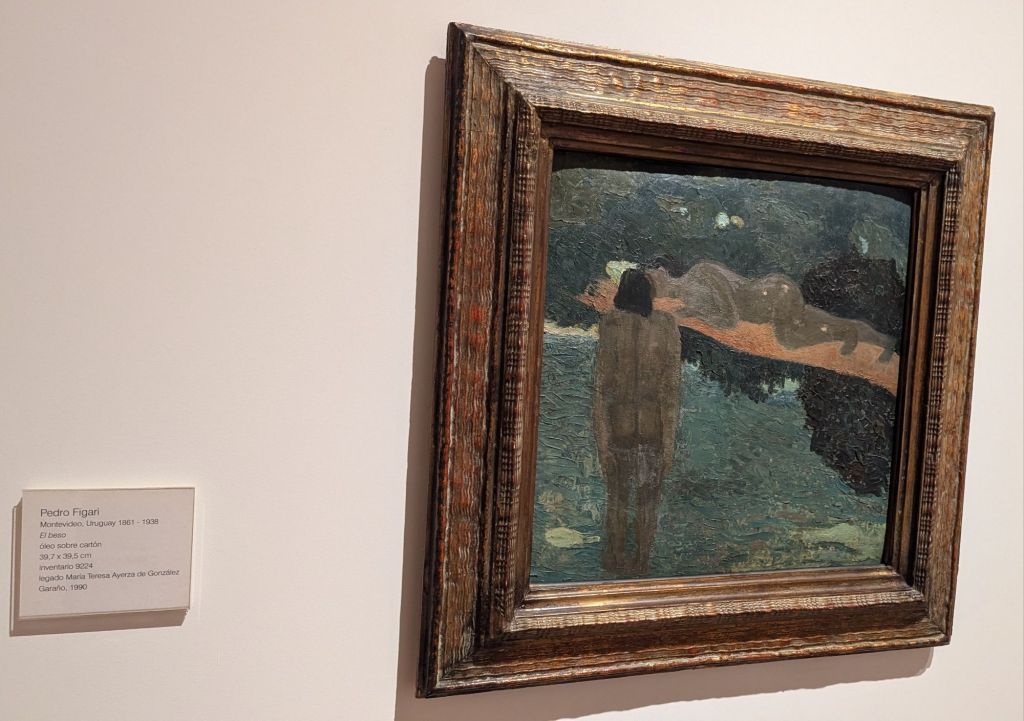

Continuing on at 12:04 PM I wondered if much of this “new art” might have simply been a backlash against photography? What was the point of realist painting if photography was increasingly so common? Then at 12:07 PM I entered the Maria Luisa Bamberg collection. She wasn’t the painter herself, but rather an art collector. She had been a film director and script writer. Later on I realized that this theme of previously private collections which were then made public through a donation (frequently) or purchase, was quite common here.
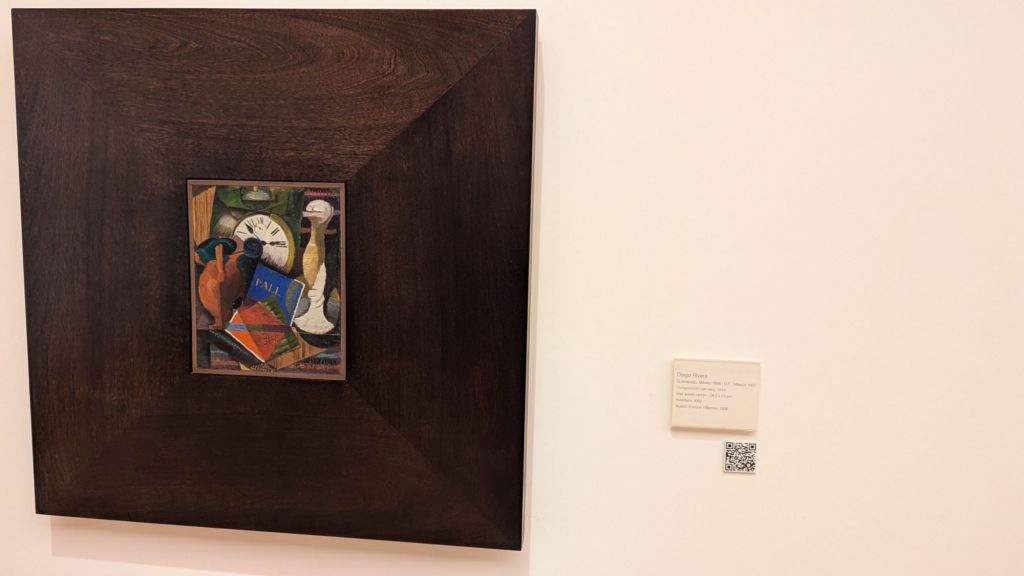
It was at 12:19 PM when not being particularly cultured myself, I had one of those classic, delightful art gallery moments when I suddenly see a painting or sculpture by an artist I actually know, such as the Composición con Reloj painting by Diego Rivera and Mujer recostada by Pablo Picasso which I saw in Sala 28. As noted earlier, it seems that many if not most of these art pieces had been donated from private collections.

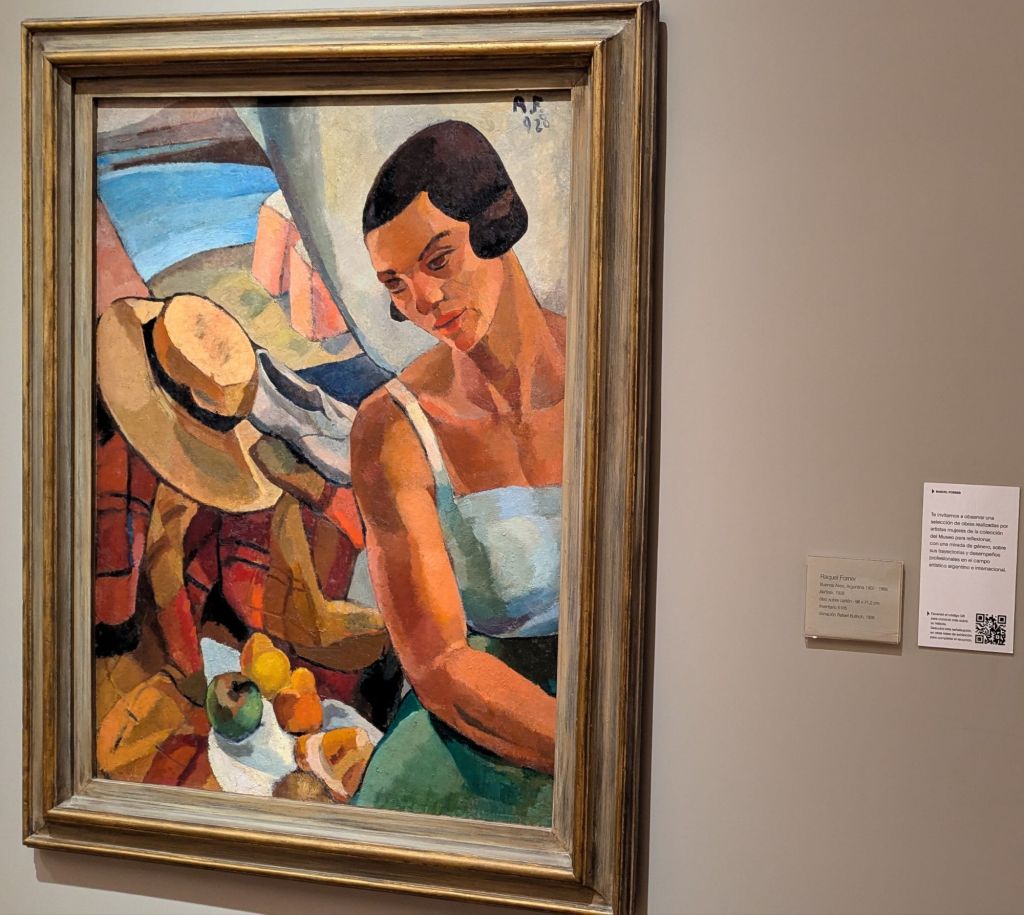
If earlier had been a delight, at 12:23 PM my thoughts were a bit different. Many times when I see paintings I think, “Why would anyone pay for them, or at any rate, why would anyone pay so much?” But every once in a while there is a painting that for some reason will resonate with me, even though I suspect that it does nothing for others. That was the case with Barista by Raquel Forner.
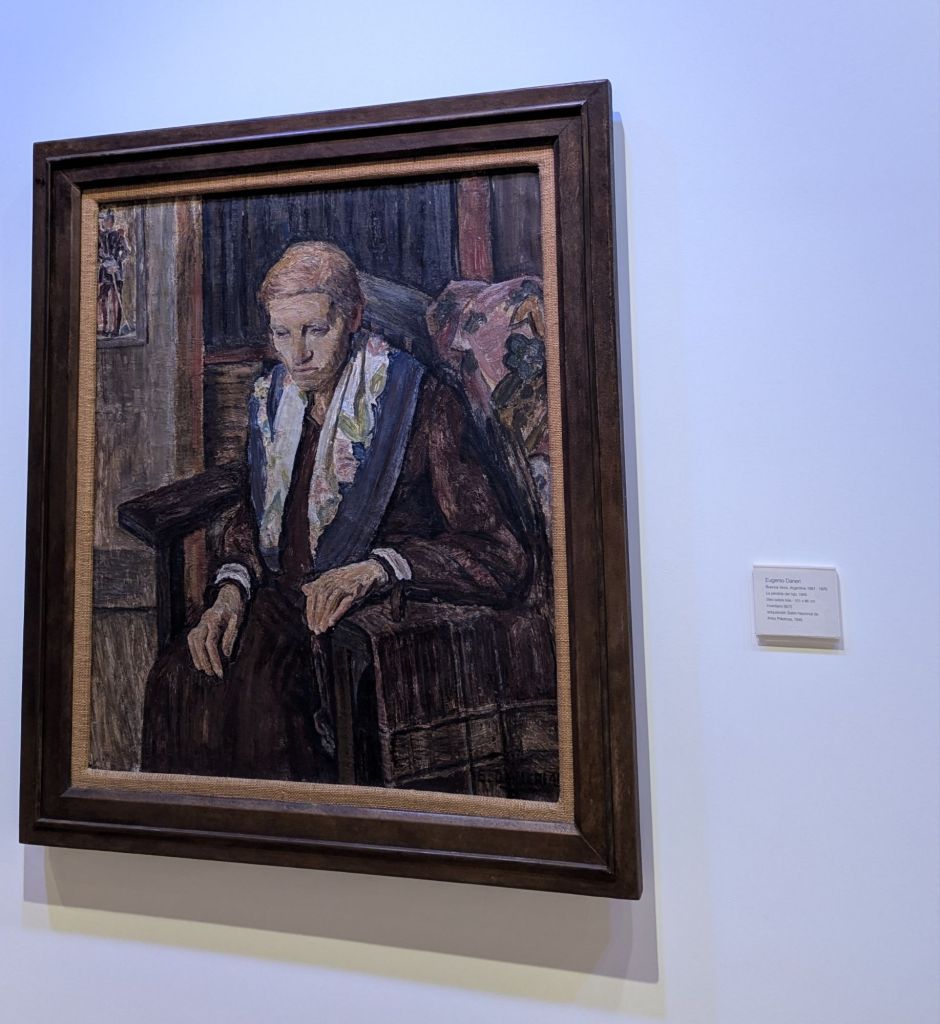
At 12:29 PM in room 30 I was impressed by Eugenio Daneri’s “La perdida del hijo” (The loss of a child) 1945. The stoic resignation in the woman’s face was powerful.
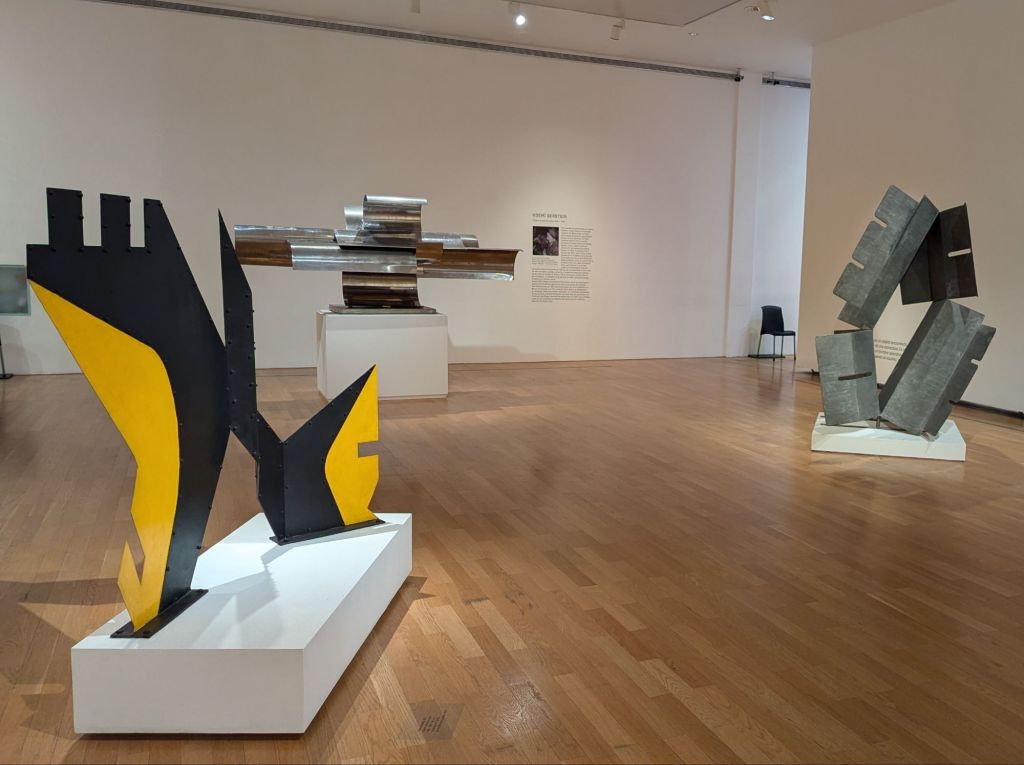
Then at 12:39 PM in sala (room) 33, there were several sculptures by Maria Juana Heras Velasco, Noemí Gerstein and Maria Simón.. These were good examples of “art” where I simply asked myself “why”? I mean as an example of “personal expression”, do what you want. But who really WANTS to see these?
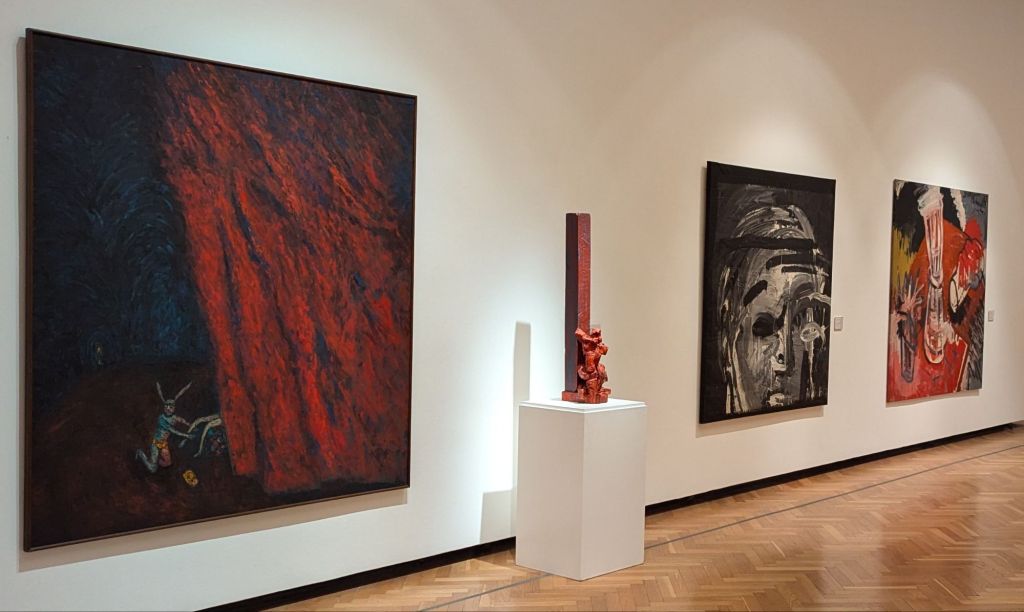
Again, at 12:51 PM in Sala 35 “Argentinian art 1945-1970” this whole room was like, really? Did these artists honestly believe what they were doing or were they just taking everyone for a ride? I could see how it might be considered “decorative” but is it “art”? For goodness” sake, one of the “pieces” was just a ripped piece of cloth!


Anyways, at 1:07 PM it was time to head down to the ground floor. This floor seemed to be more about classic or traditional art, without as much explanation as upstairs . . . Perhaps there wasn’t so much explanation because it was simply easier to understand.
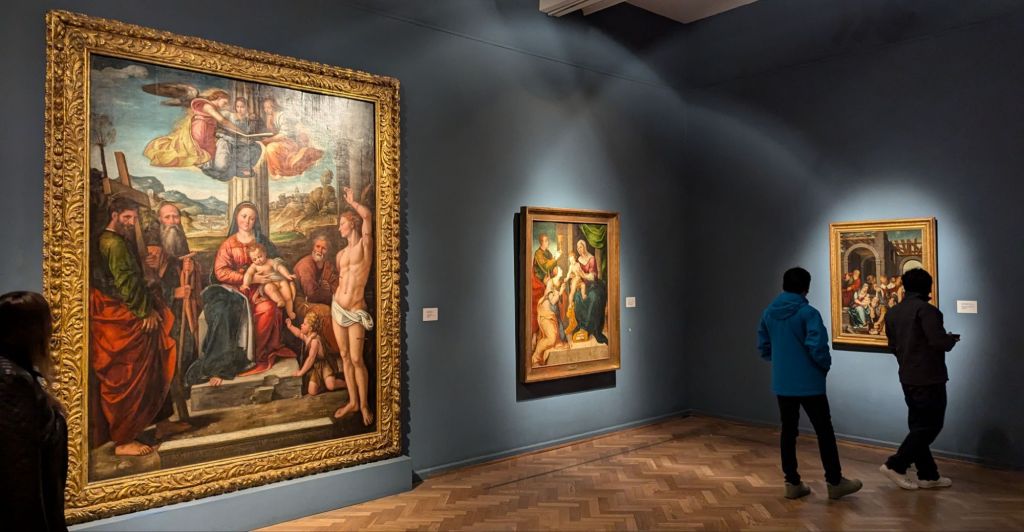
Right off at 1:13 PM there was this brilliant painting by Giovanni Da Milano from between 1345 and 1370. . . It was amazing to see how vibrant it still looked after at least 650 years.
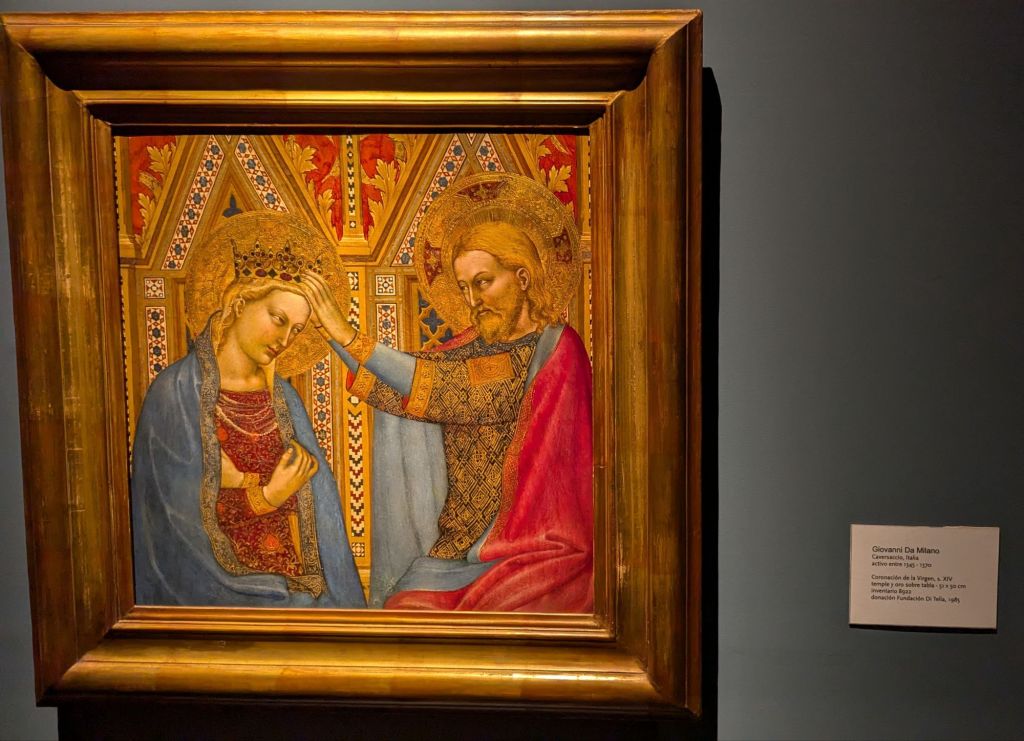
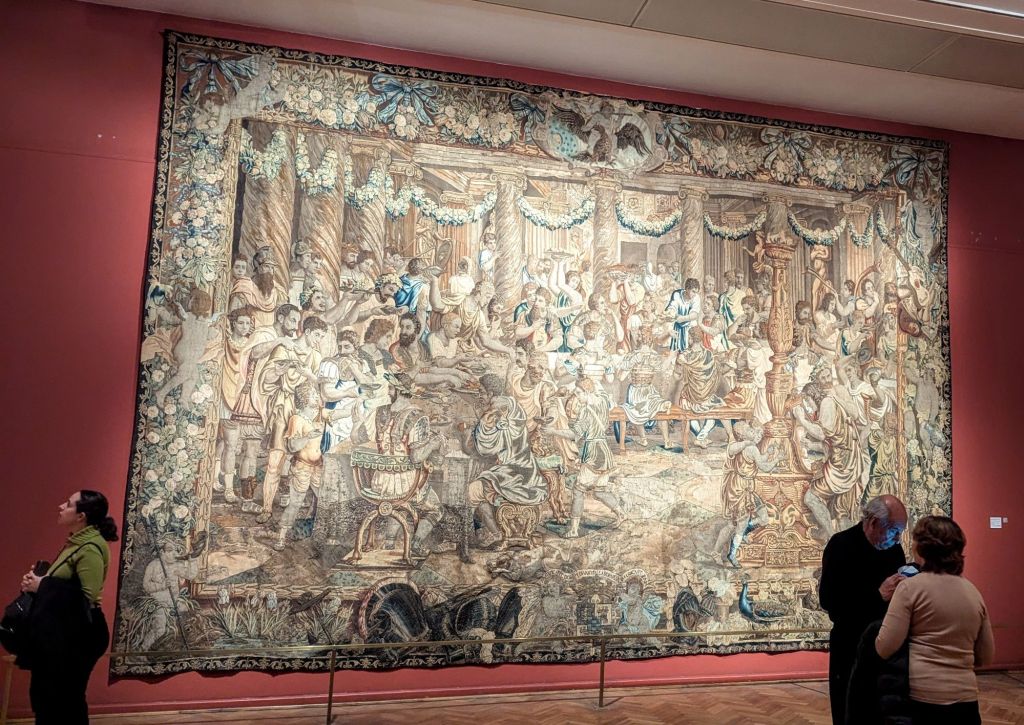
Then at 1:19 PM I saw a stunning, huge tapestry by Everaert Leyniers III from 1660 “Banquete de Escipión después del triunfo”. It’s size alone, and how much detail was done just through weaving and needlework. . . wow!
I observed at 1:26 PM that this ground floor area in general seemed far more popular than the upstairs areas. With many of these older paintings, it is striking how a single, seemingly unimportant element of a huge painting will really stand out, such as the dog’s collar in “Master Cathcat and dog” by Henry Raeburn 1756-1823.

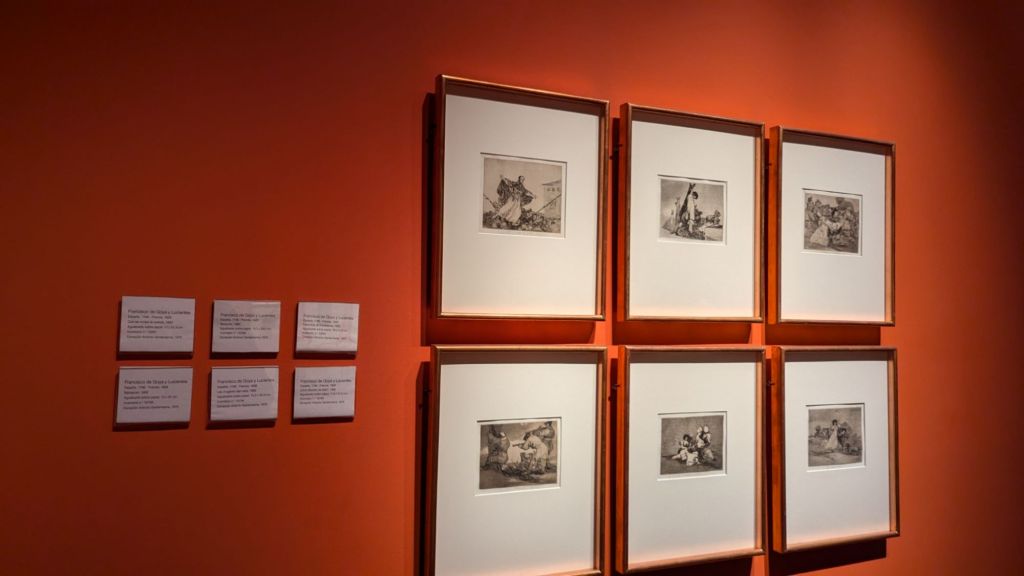
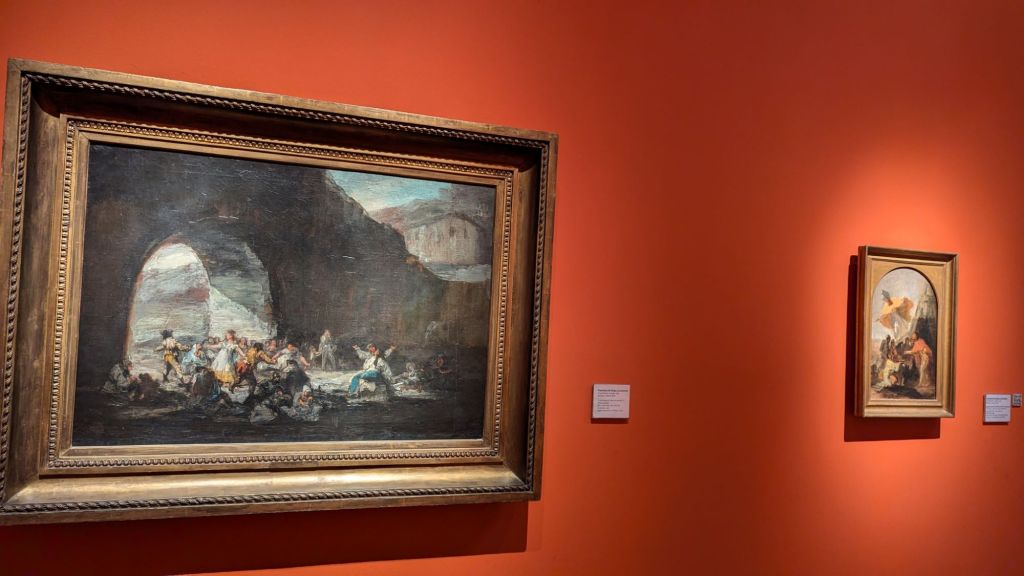
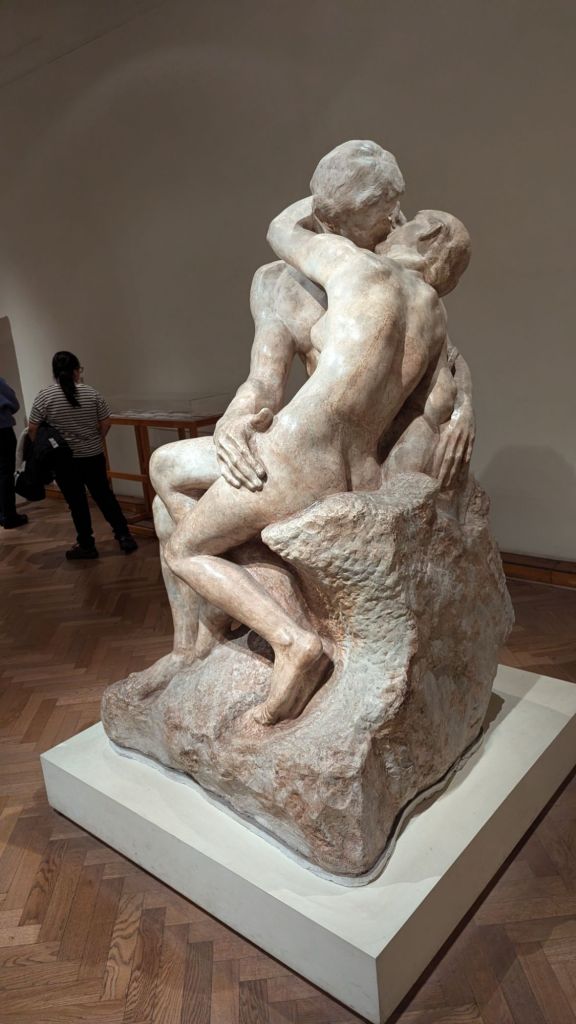
Then at 1:31 PM, playing to my joy at seeing original works by known artists, it was a treat to see several works by Francisco de Goya y Lucientes. Then at 1:34 PM there was a very big collection of works by Rodin. I hadn’t even known that he had lived and worked many years in Argentina. I was also impressed to read the details about many of his creations, in particular learning that much of his work was the result of a massive failed undertaking in France that was never completed. As a result, he had then repurposed and altered a lot of pieces.

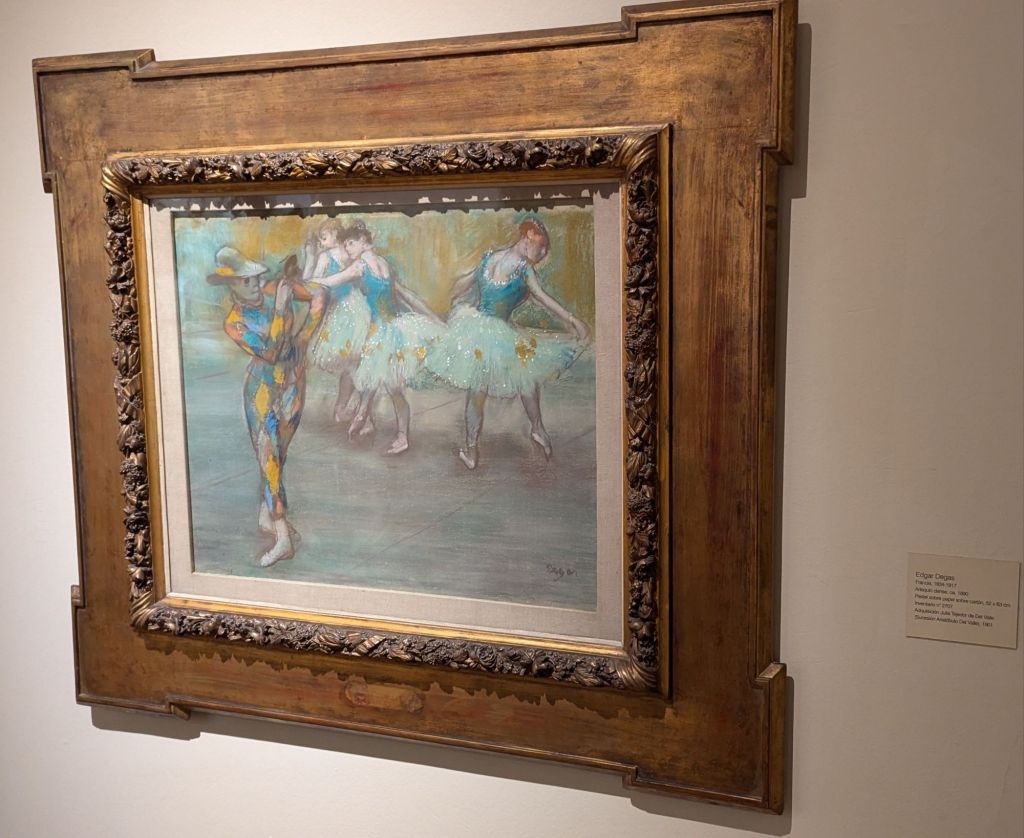
Then at 1:43 PM I was once more surprised to find a painting I had seen reproduced in several books and prints, “Arlequin Danse” 1890 by Edgar Degas.
Next at 1:47 PM there was a painting by Claude Monet, which I critically had to admit was not really better than many of the questionable works upstairs.
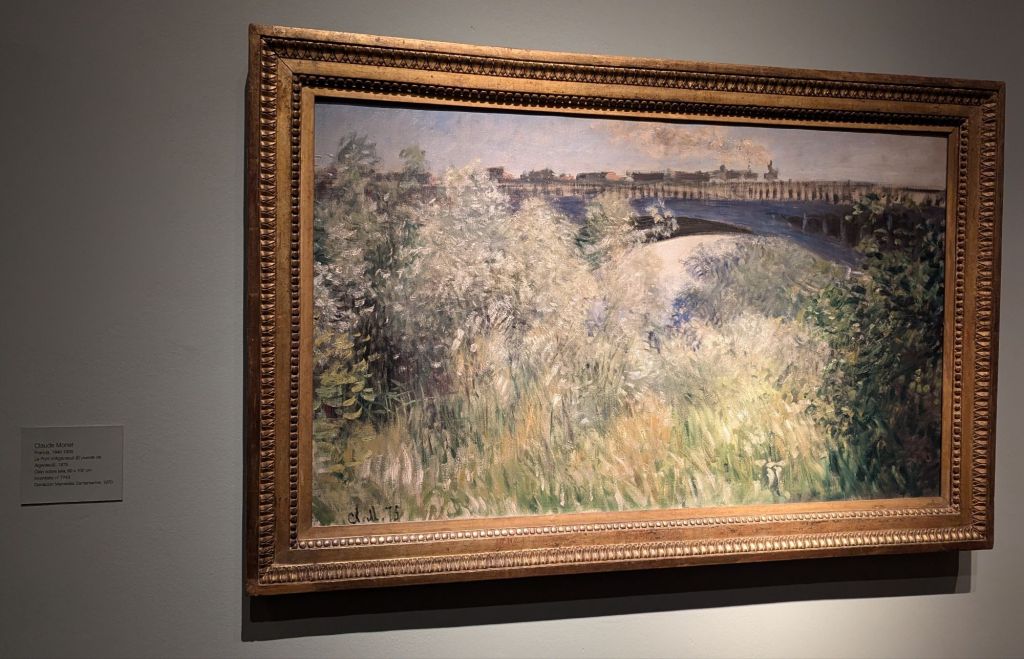
Many of these paintings had been donated by Mercedes Santamarina. While I appreciate that in her later years she donated the work to the public museum, as with other wealthy patrons who collect art and then donate some or even all of it, I found myself thinking that “yes, the donation is appreciated, but one can’t help but wonder at the absurd inequality of wealth, usually coming by way of inheritance.” She had also donated some paintings by Cézanne and Renoir. Again I thought, “The art is beautiful, but with so much suffering in the world, was this the best way to use her money, even if later on she donated the work to the public?” Maybe I should keep these thoughts in check; I suspect that this is the way revolutions get started.
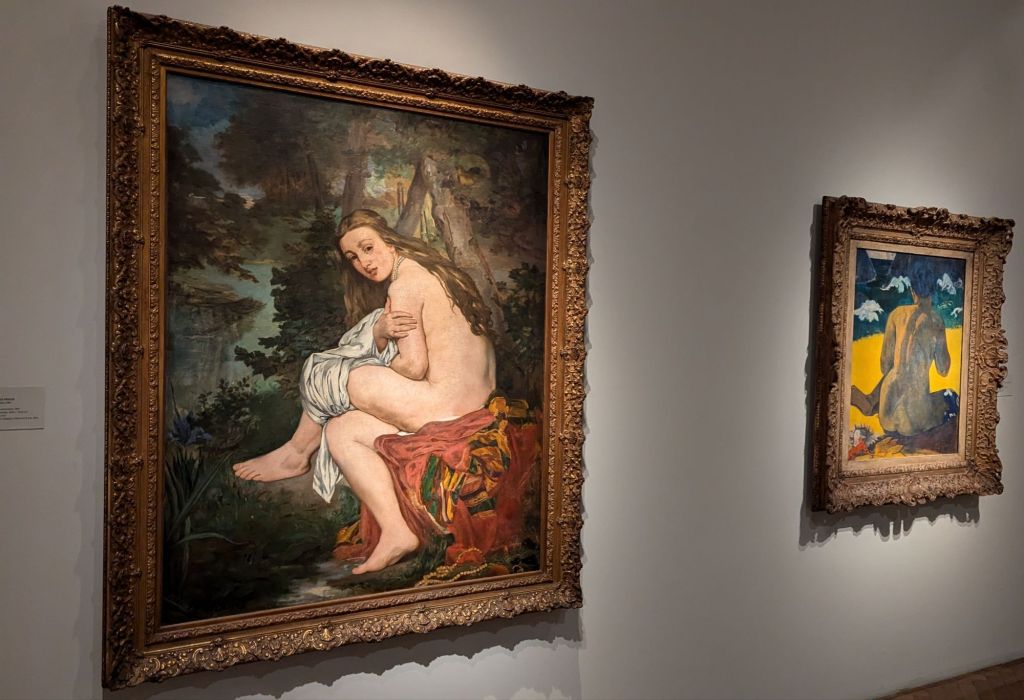
At 1:57 PM there were also several works by Edouard Manet.
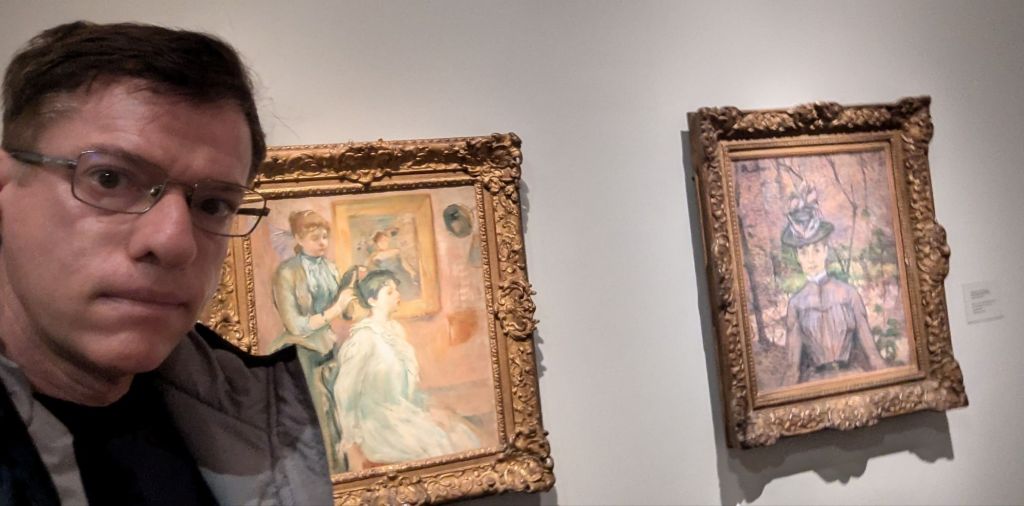
Introspection seemed to be my personal theme of the day, and at 2:00 PM I was thinking about how I almost hadn’t visited this museum, since I reasoned that as entry was free, it wouldn’t be that impressive, but clearly I had been very wrong. Especially for art lovers, this is an amazing place to visit. I had no idea I would find something like this in Buenos Aires. Continuing with another recurring theme of the day, there was a huge selection which had been collected by Jose de Guerrico and his son José Prudencio and then donated in 1938.
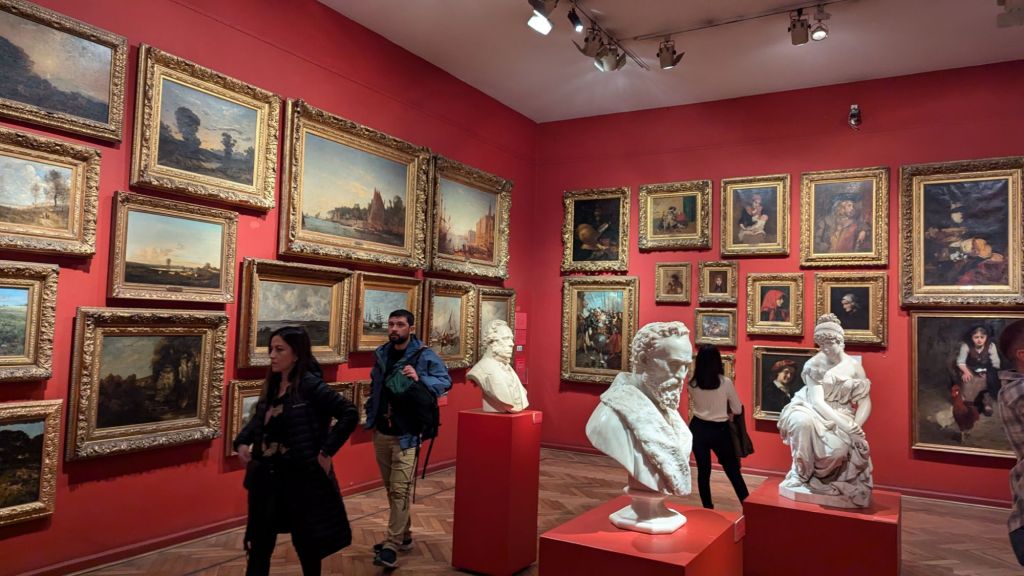
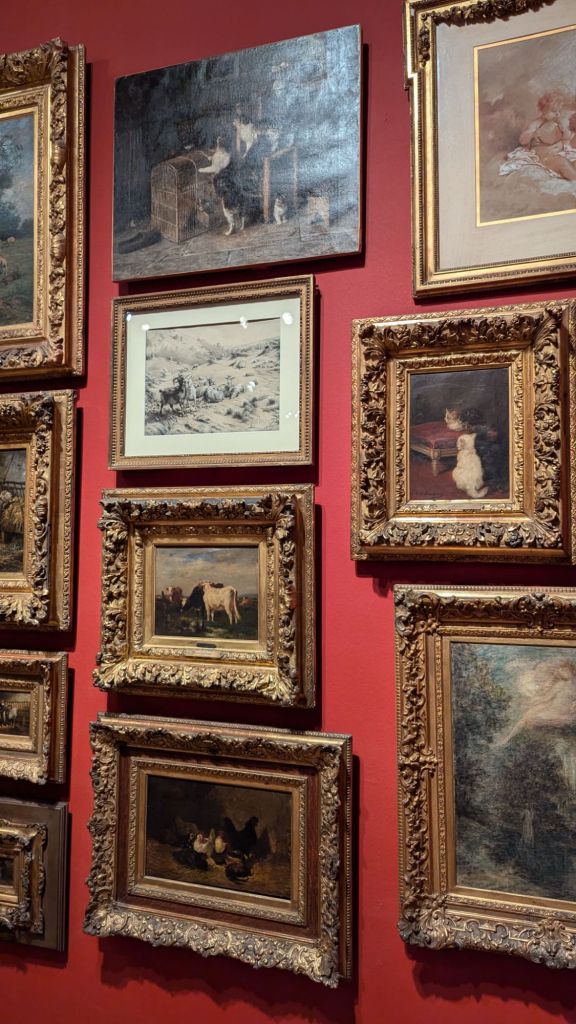
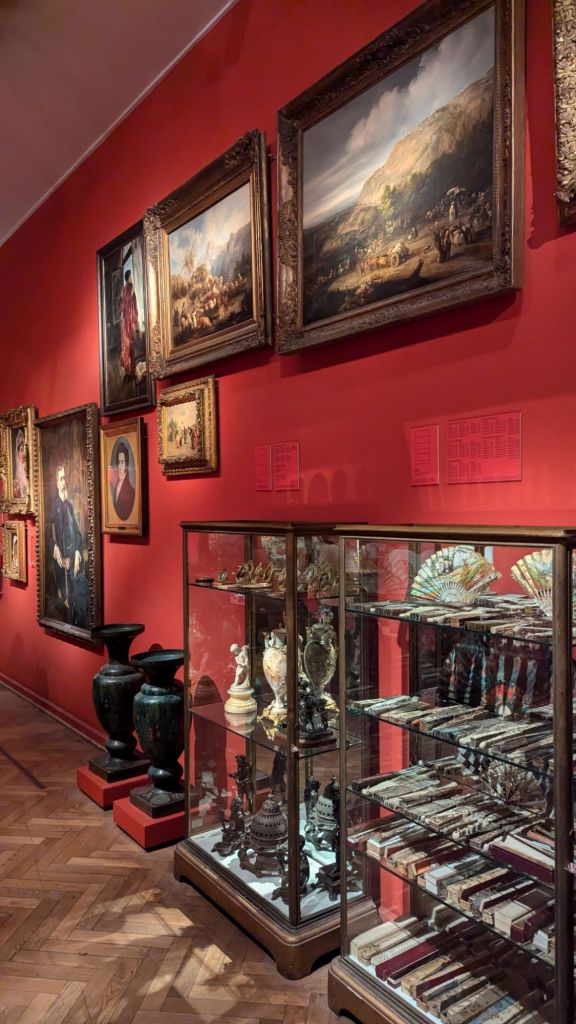
One thing that really impresses me about this museum is how the pieces are so accessible to the public. Yes, there are guards, but entry is free, and the visitors are allowed to get extremely close to the artwork.
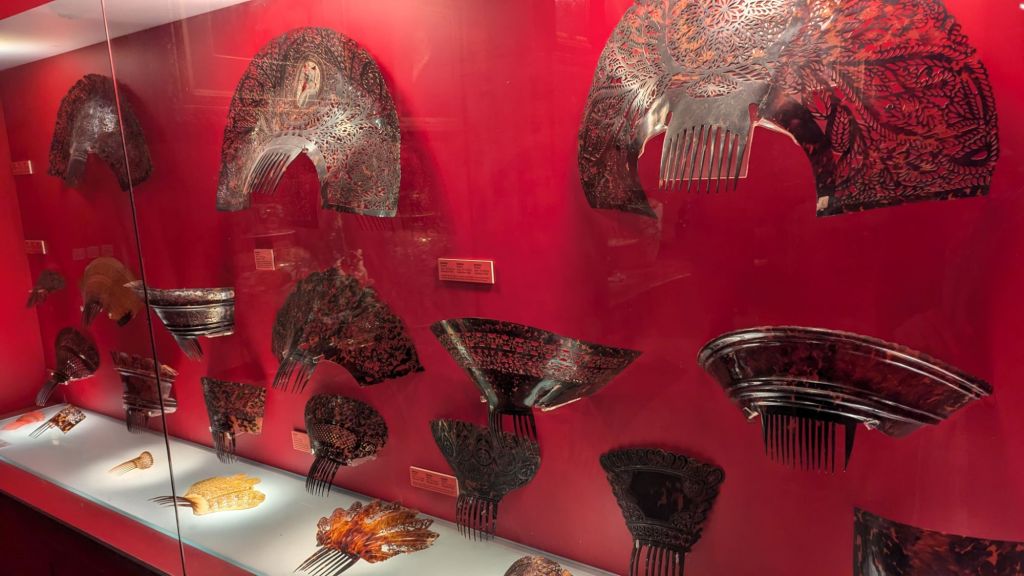
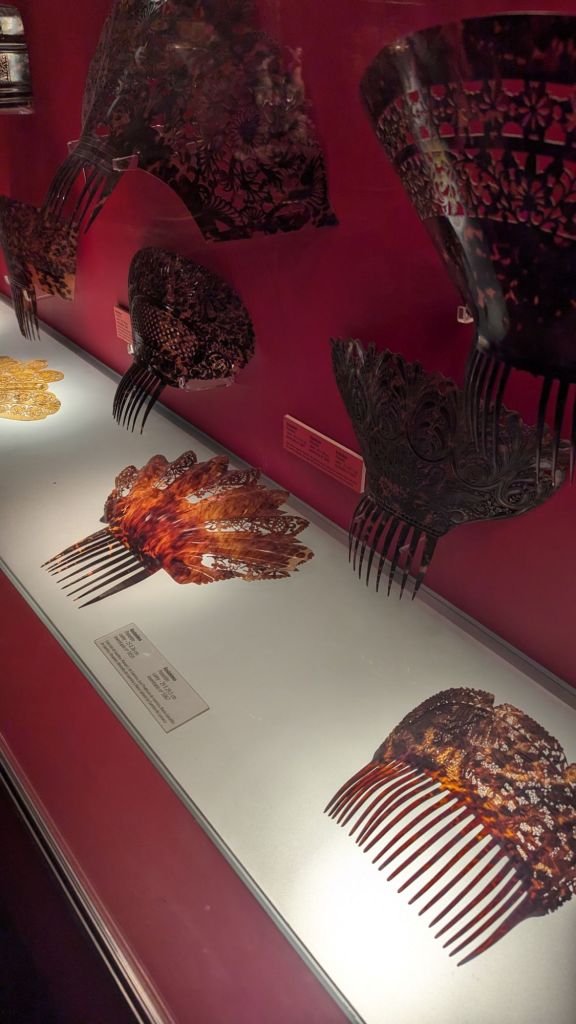
At 2:10 pm I noticed a big collection of beautiful hair combs, all of them being of anonymous origin, but no less beautiful. I wondered at the work that went into creating them, but the author did not sign them anywhere. . .I guess since they were just considered fancy hair pieces, not meant to be appreciated/remembered on their own. Why were these anonymous, but paint splatters upstairs were proudly titled, dated and signed?
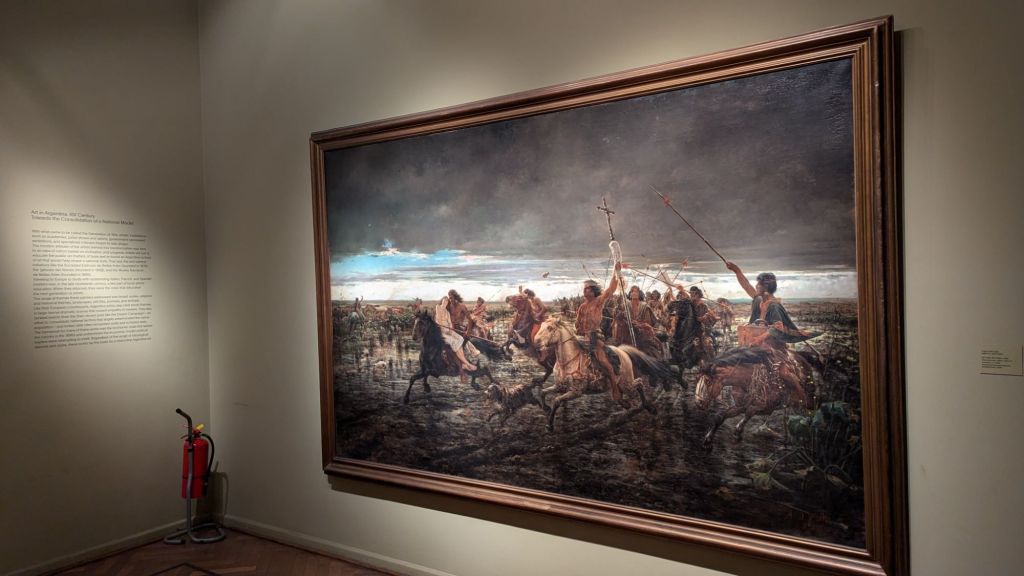
At 2:23 PM I looked at some of the native art and pieces commemorating the Spanish conquest. It was quite uncomfortable to learn that as late as the 1870s and 1880s there was the period of the campaña del desierto which had resulted in the extinction of most of the first peoples native to Patagonia. I learned that something similar was happening in Chile at the same time. This was of course in no way exclusive to southern South America, but that doesn’t make it any less uncomfortable nor less tragic.

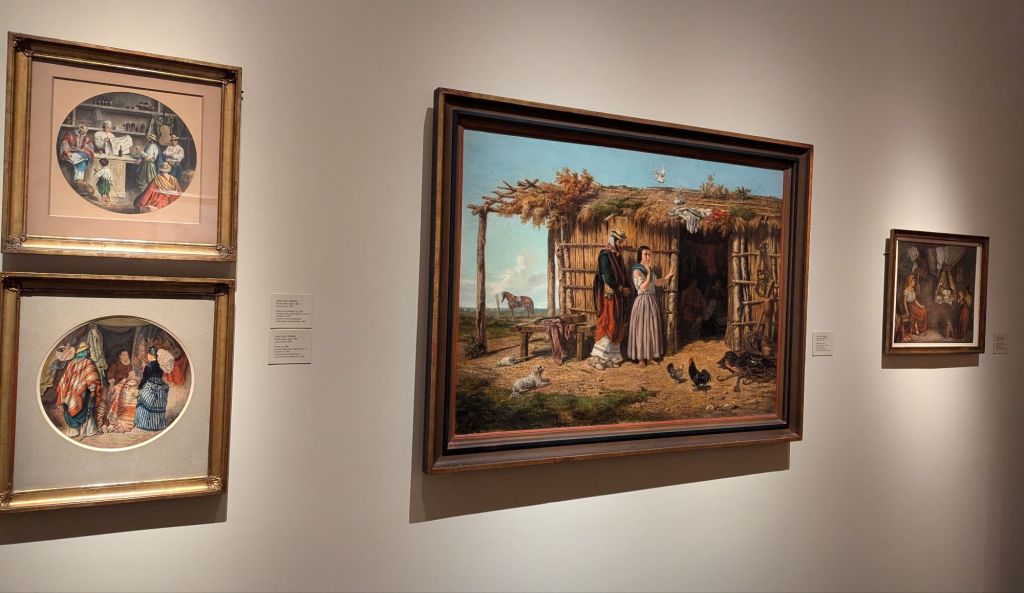
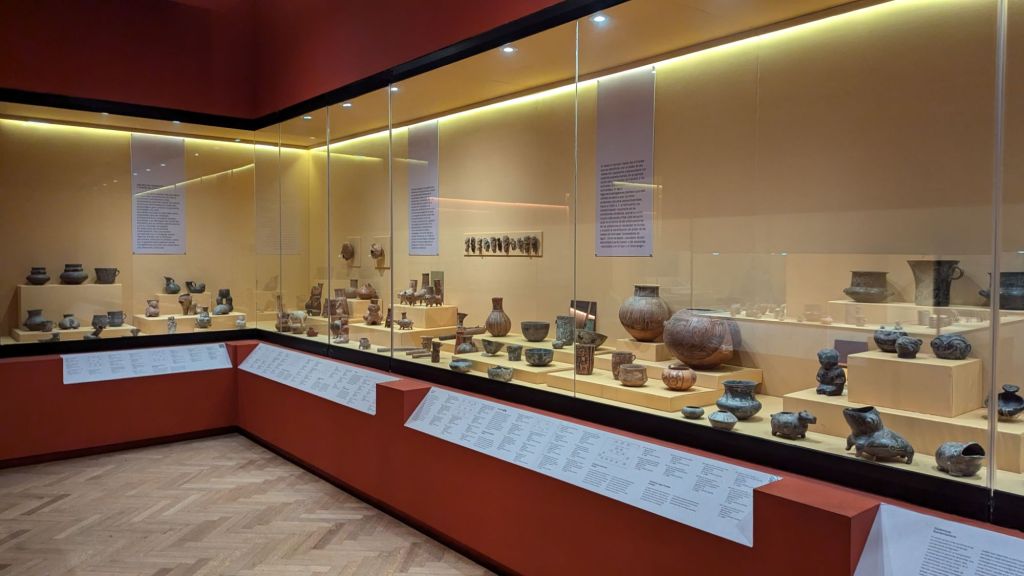
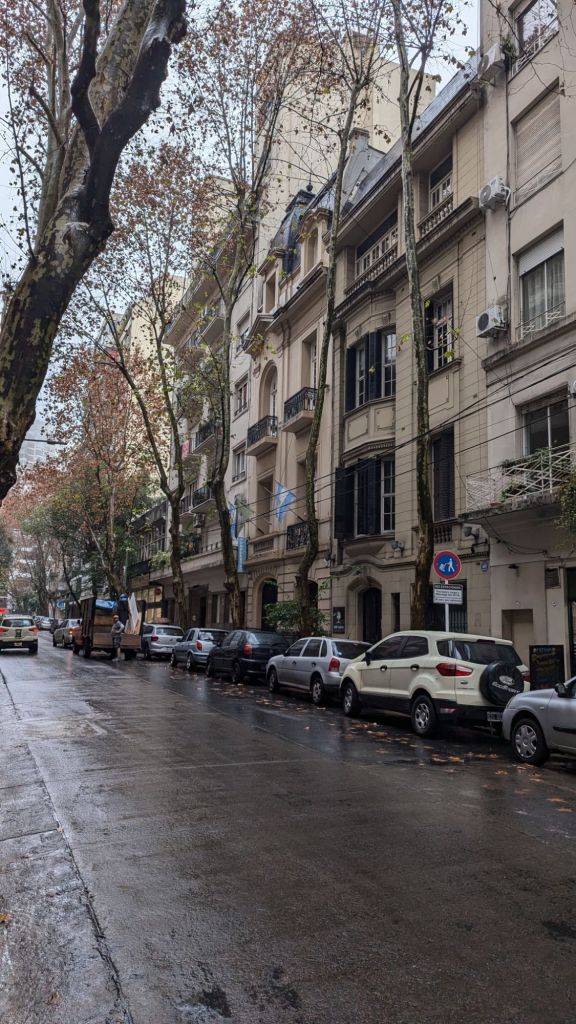
So, as is usually the case with art museums, I obviously could have spent much more time here, but at 2:30 PM I was ready to leave. My original plan for the day had been to also visit the Museum of Latin American art, but now I was thinking that might be a bit much. I had already been three hours in a museum today, and while it had mostly been amazing, the mind can only attempt to absorb so much before being overloaded. While at 2:35 PM I saw that it was still drizzling, I decided to go out walking anyway.
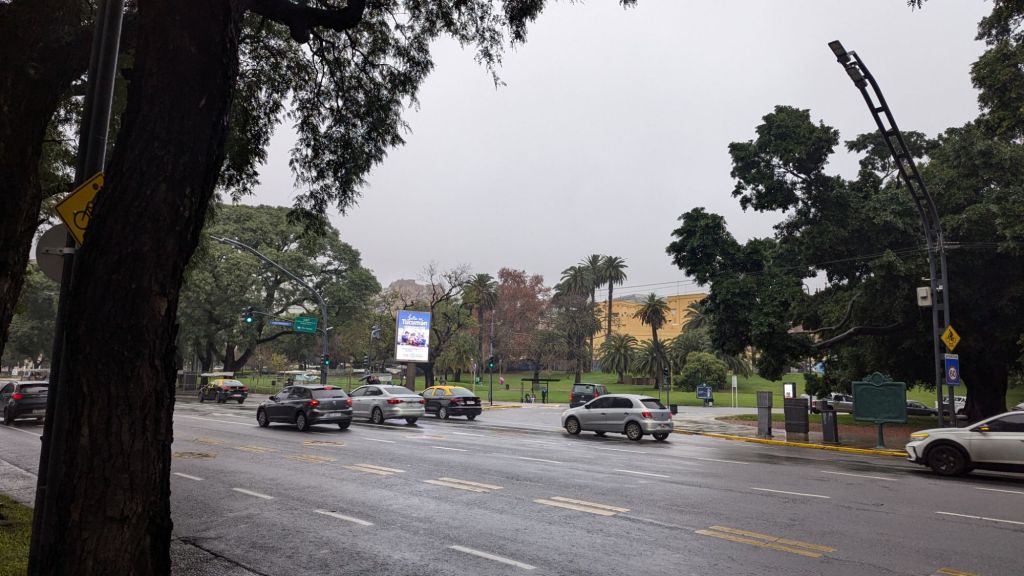
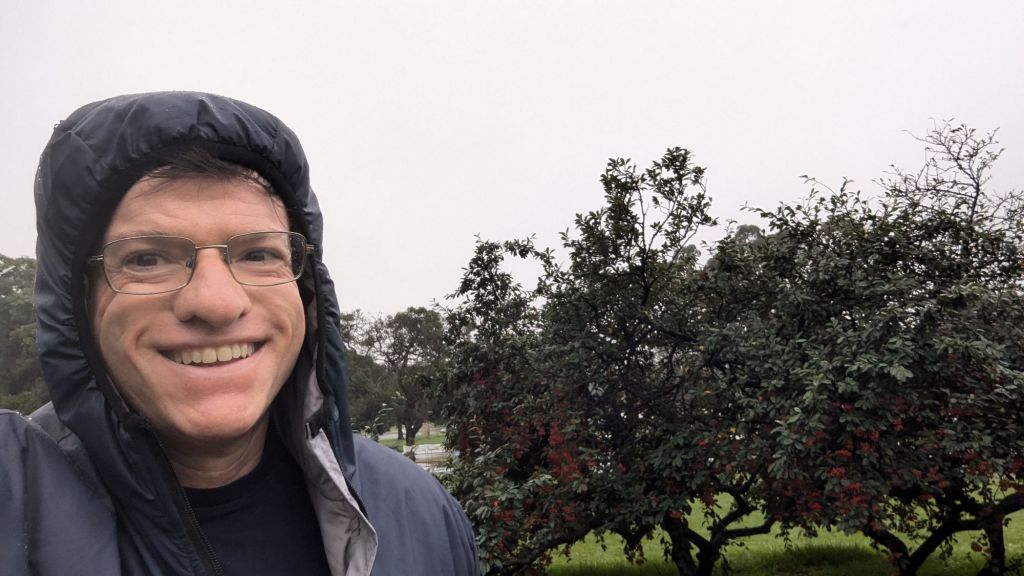


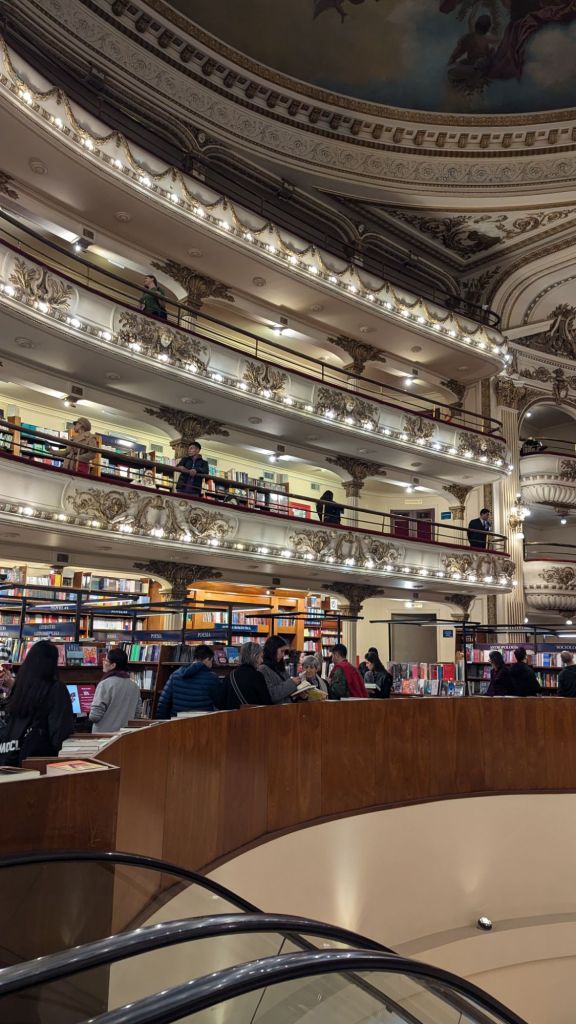
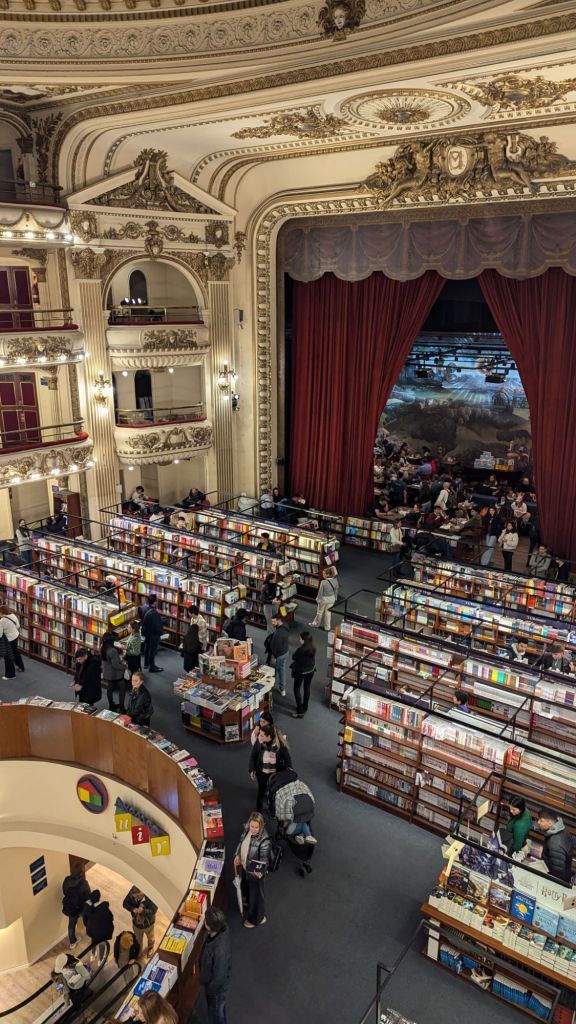
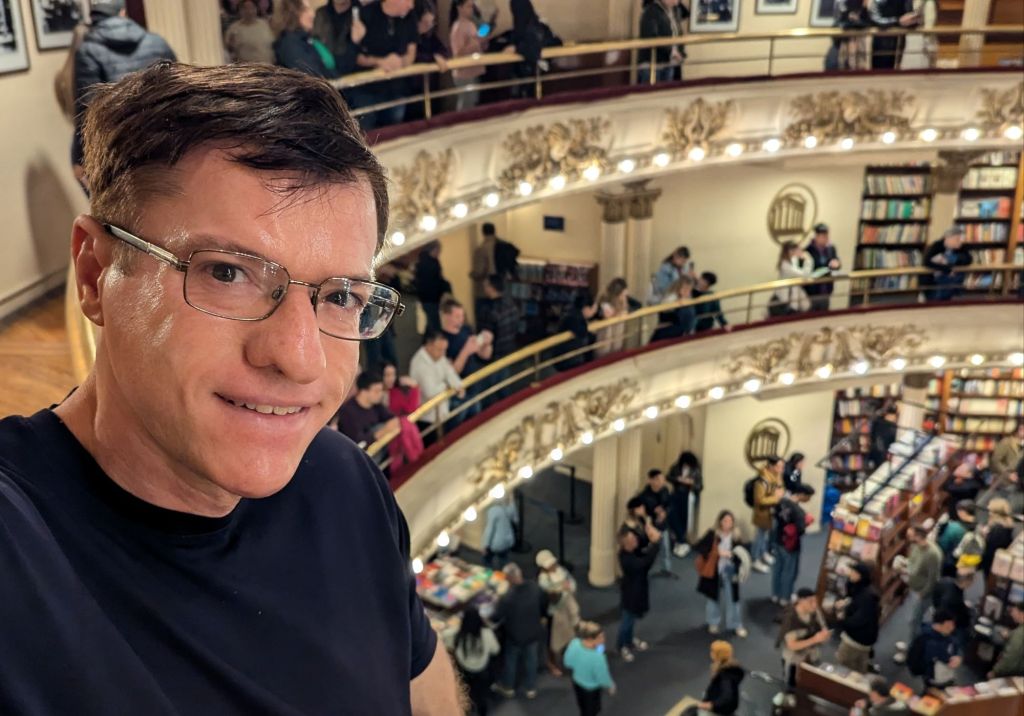
At 3:20 PM I suddenly realized I was in front of the famous Ateneo book store. While it’s certainly impressive, this is definitely not a “discount bookstore”. A lot of people, like myself, clearly only come in to take pictures. Perhaps if I lived here or had I not become accustomed to reading on a device I would have taken a picture, but at 3:42 PM I was out walking again.
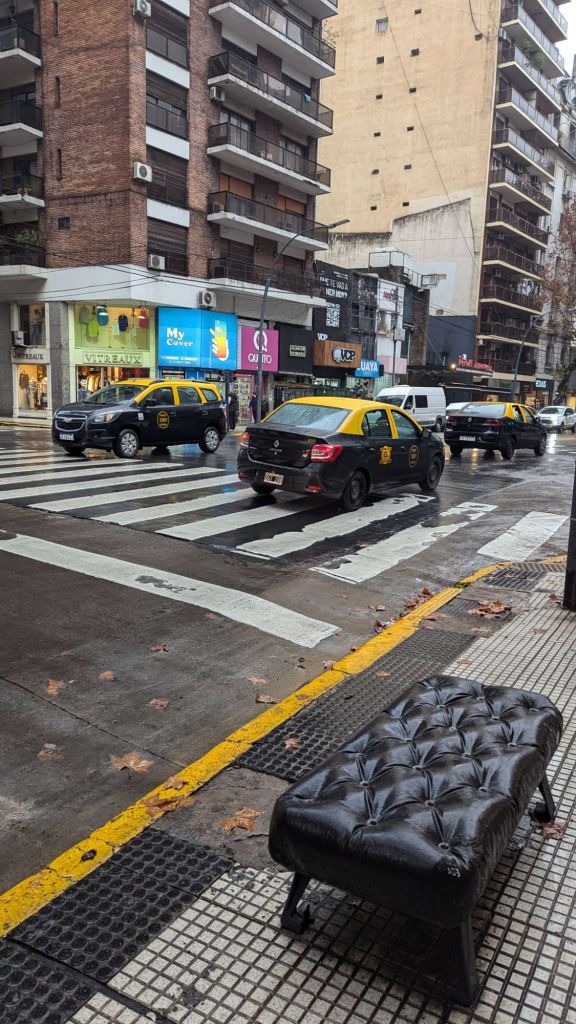
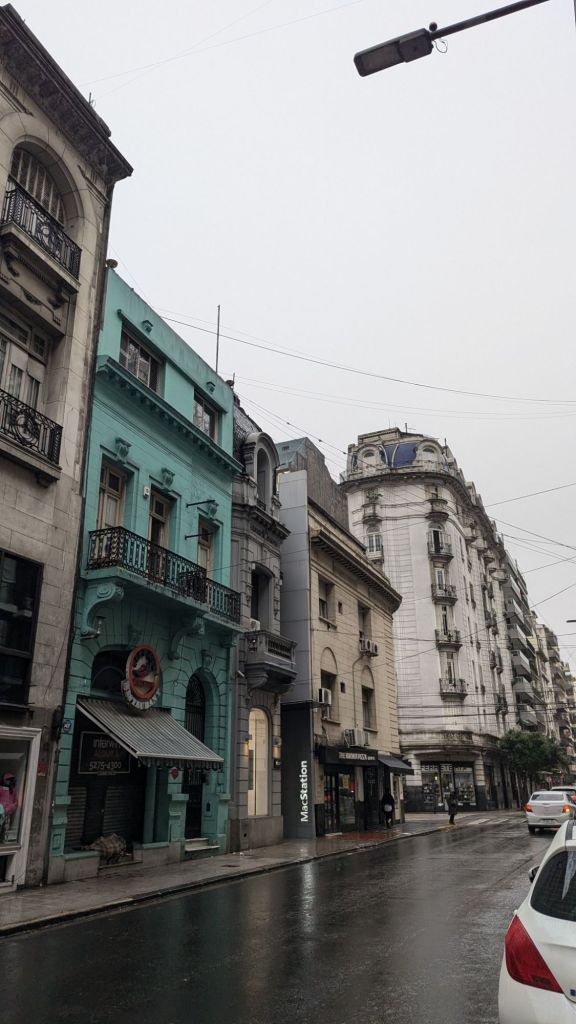
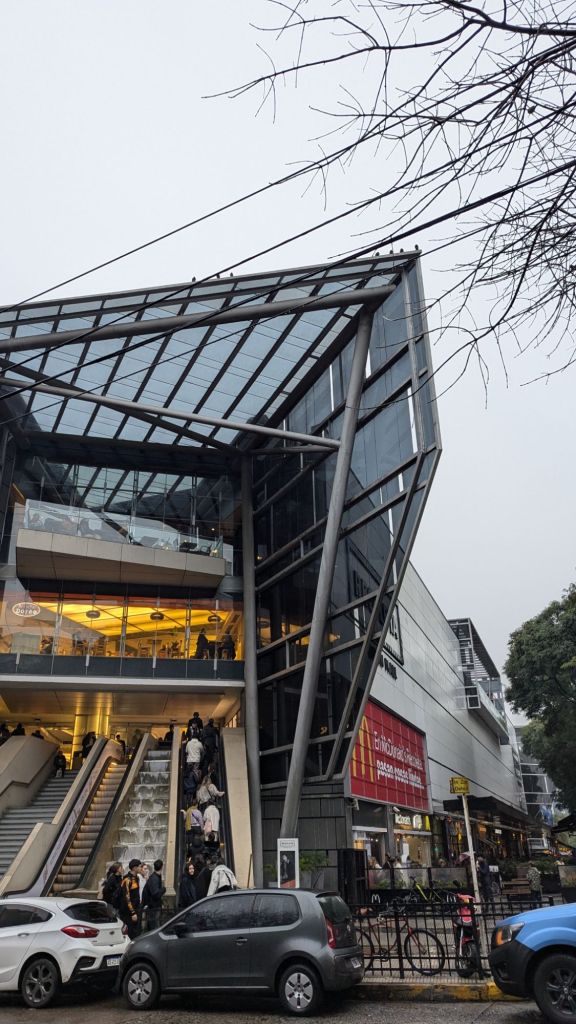
At 3:44 PM I saw another of these concrete benches throughout the city that look like they are cushioned. It’s a clever idea, and the “button holes” allow water to drain out easily. Continuing my walk, at 4:00 PM I walked into the Recolecta Urban Mall, which I had previously seen from the outside when visiting Recolecta cemetery. However, there wasn’t really much of interest inside, even though I walked through the whole thing, and by 4:26 PM I was once again out in the street walking.
Finally at 4:50 PM I stopped in at Bonafide – Las Heras to have a coffee and a dessert. The cake and coffee was just beautiful looking, and the cake, despite it’s appearance, was not overly sweet. I paid 9500 ARS (667 INR with my Indian credit card).
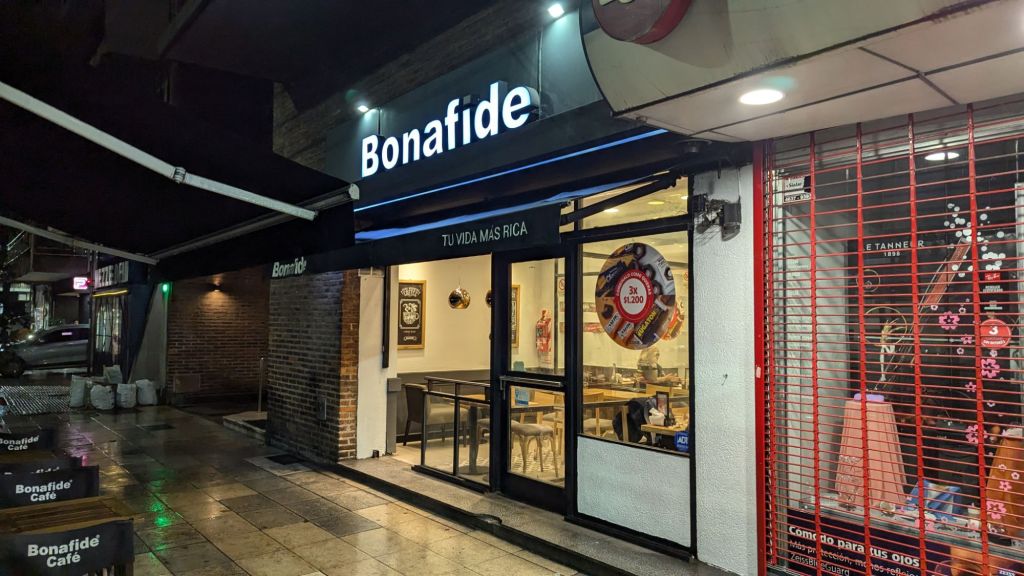

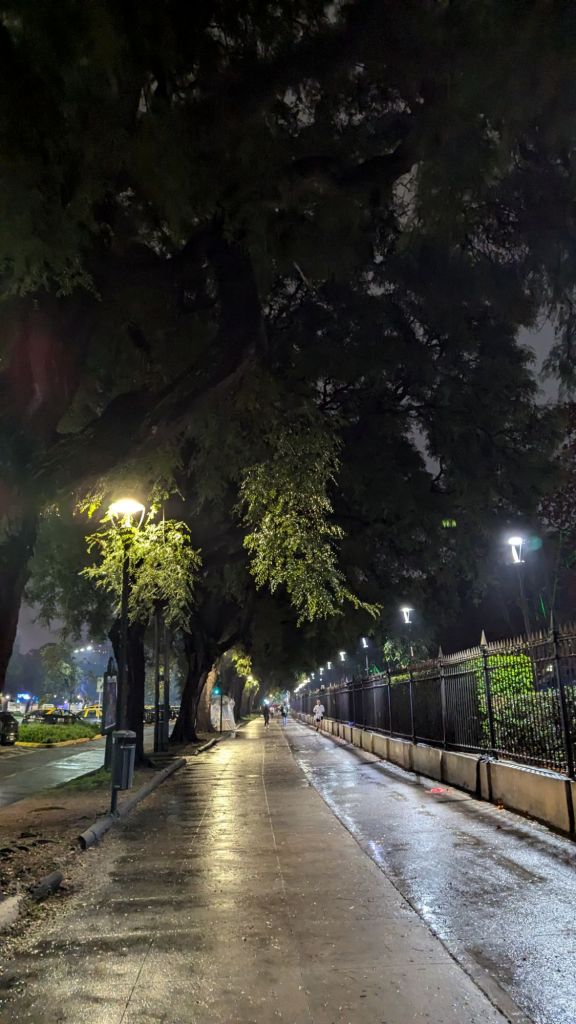
I was there relaxing until 6:10 PM, and then once again left on foot, headed towards Beatriz’s place in Belgrano. Despite the kind of rainy weather, I had found it to be nice weather for walking as long as it wasn’t actively drizzling. Besides, Buenos Aires is beautiful at night, just like during the day.
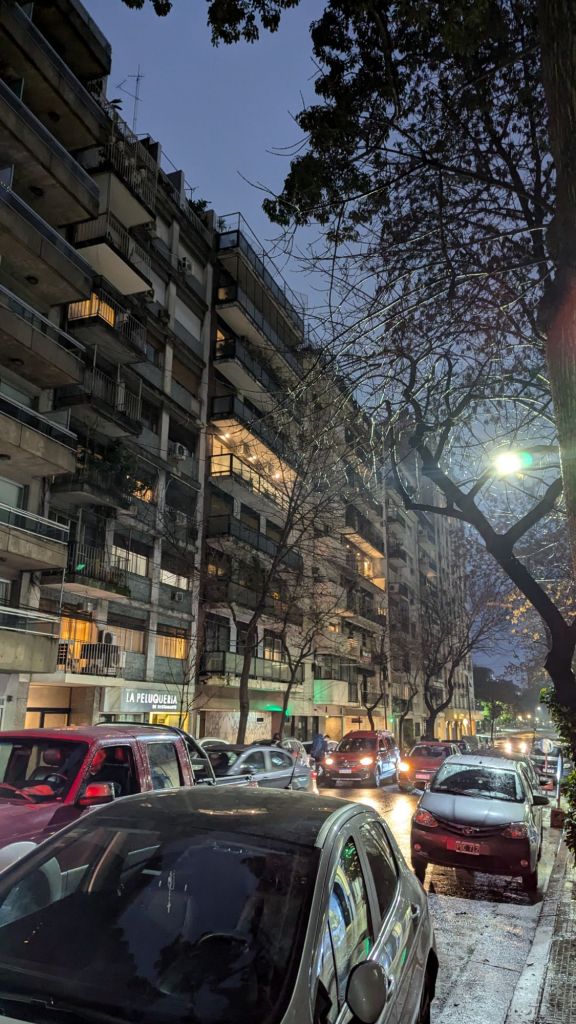

At 6:34 PM I walked past plaza Italia.
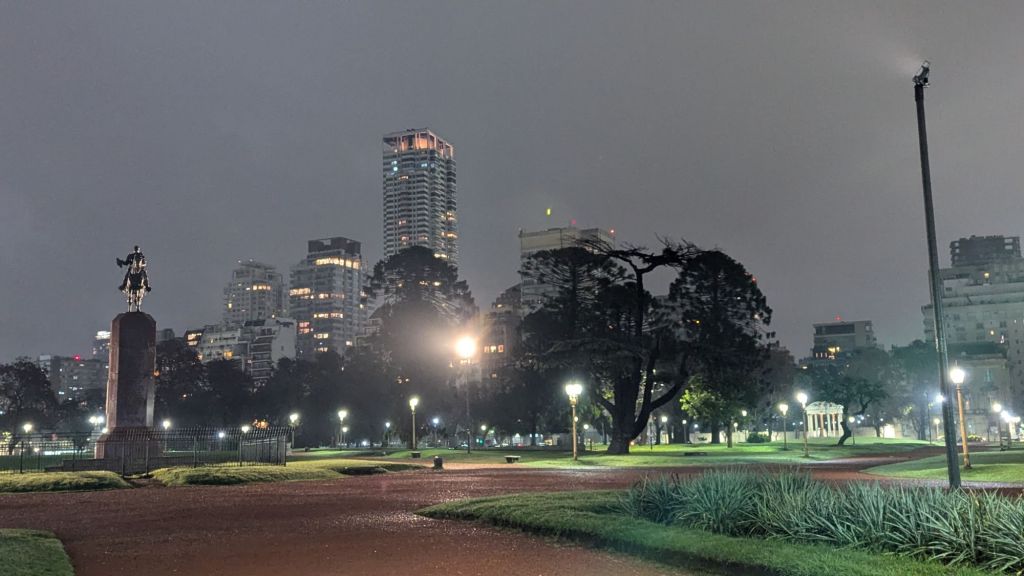
There was then a beautiful, tall sculpture at the roundabout.
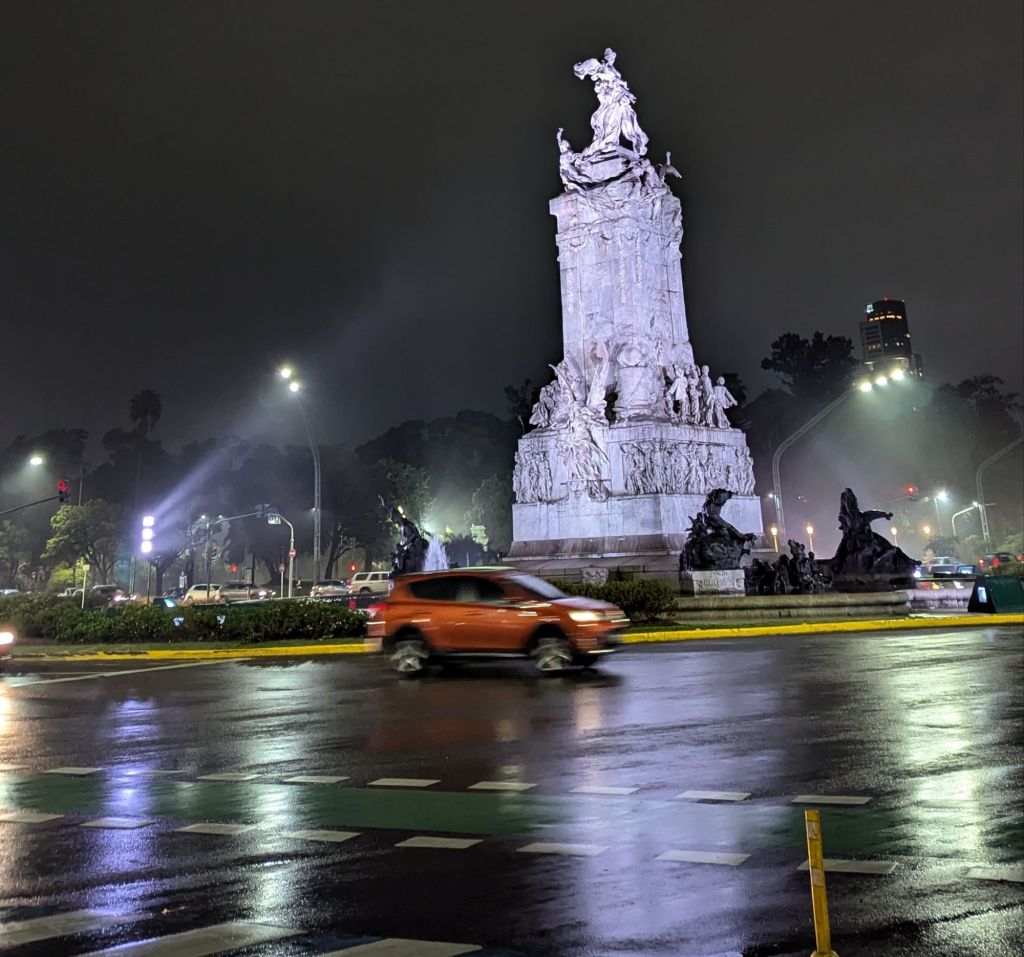
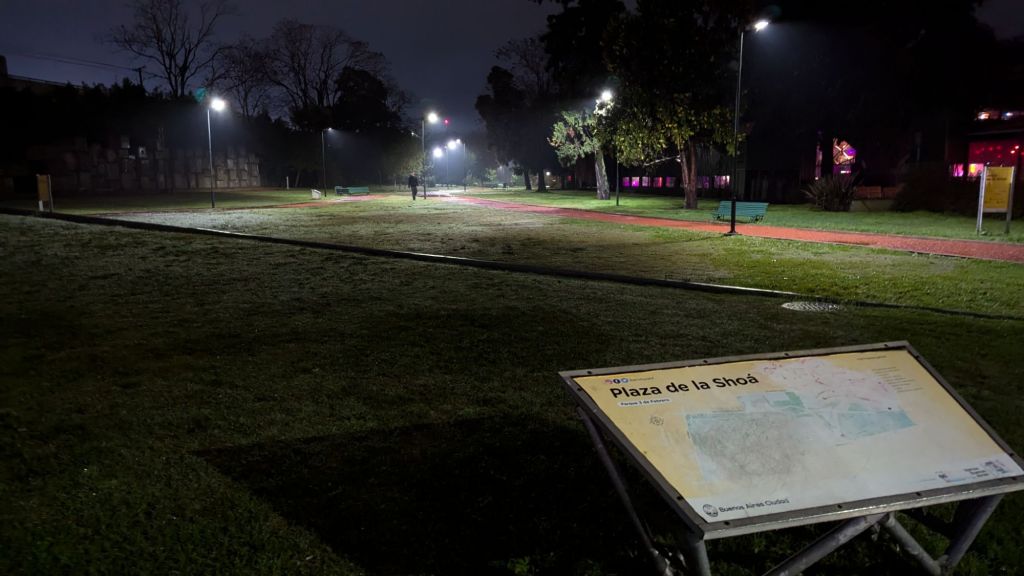
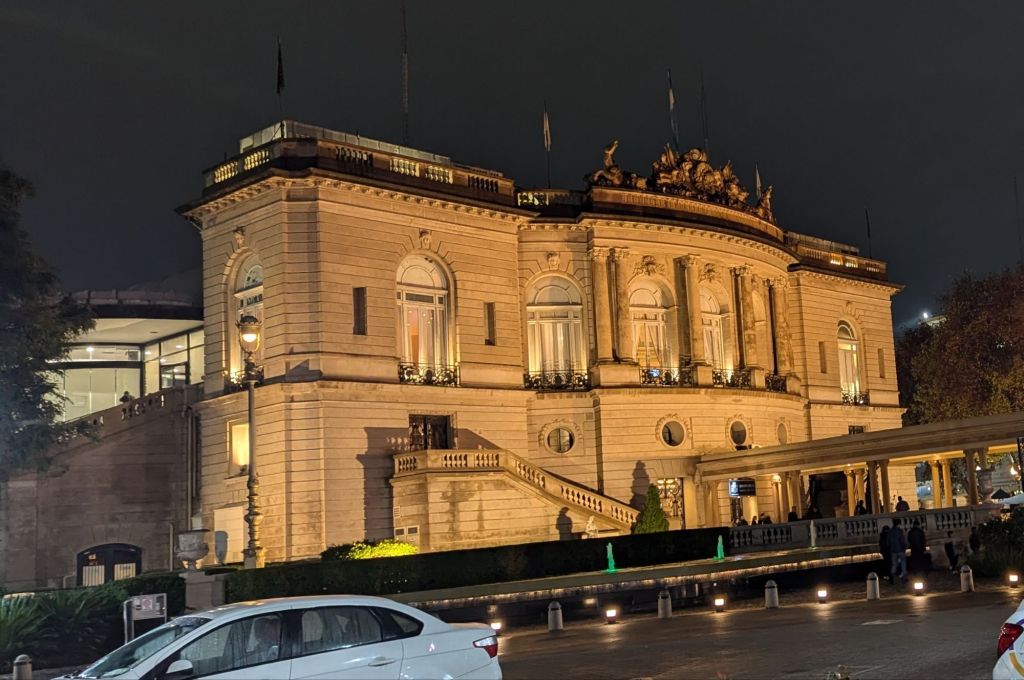
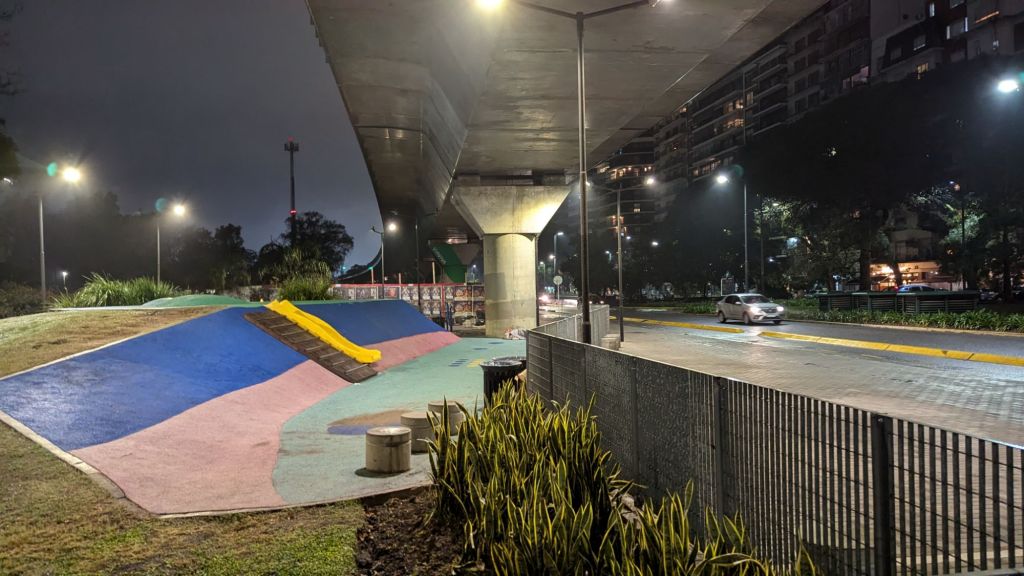
Continuing my walk, at 6:40 PM I passed by parque Rosedal and Plaza Holanda, followed shortly thereafter at 6:46 PM by Plaza de la Shoá. Then at 6:52 PM there was the Hipódromo Argentino. You see so many more neat things when you go walking!

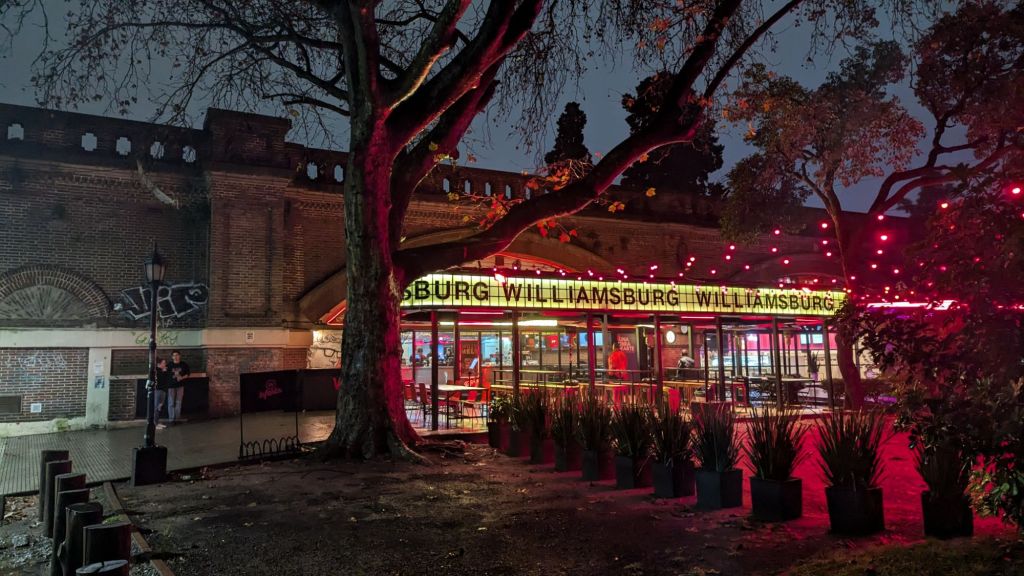

Finally at 7:15 PM I arrived to Beatriz’s in Barranca de Belgrano, having just enough time to pick up a bottle of Trapiche Malbec (my favourite Argentinian wine) so I wouldn’t show up empty handed. The card reader wouldn’t work for my card, so that’s a reminder to always have some cash along just in case, which I did, so there was no problem. Then at 7:30 PM sharp I was back at Beatriz’s door

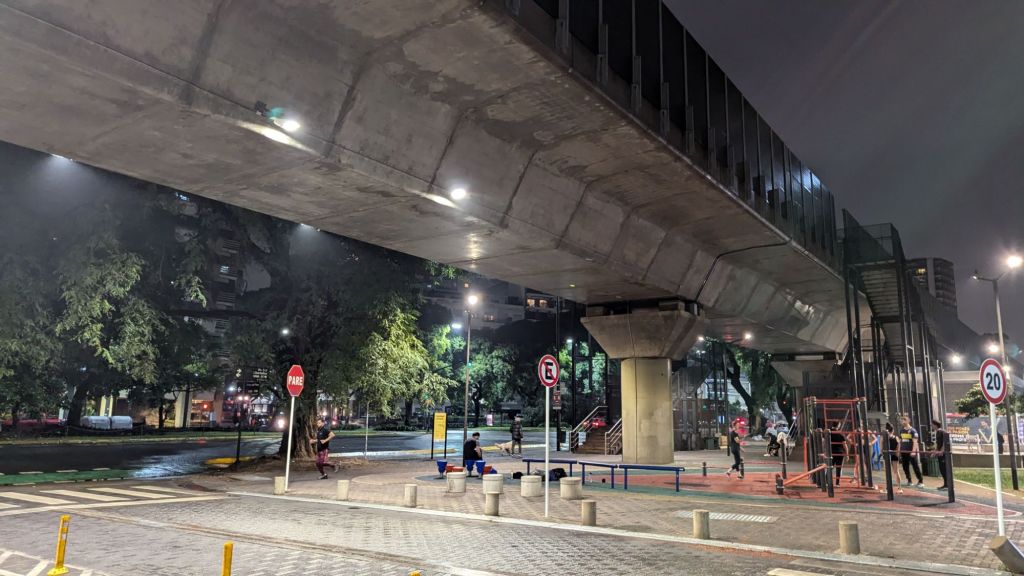

We had a wonderful visit: myself, Beatriz, her daughter Paula, and her son-in-law Roberto. The conversation was great, as was the choripan, empanadas and brownies.

As Paula had to get to work early the next day and I also had a ways to travel to get back to San Telmo, we wrapped up at 11:05 PM and by 11:35 I was waiting for bus 130, which finally arrived at 11:40. The bus was mostly empty at this hour and with no significant traffic, I was getting off the bus near my apartment at 12:18 AM.
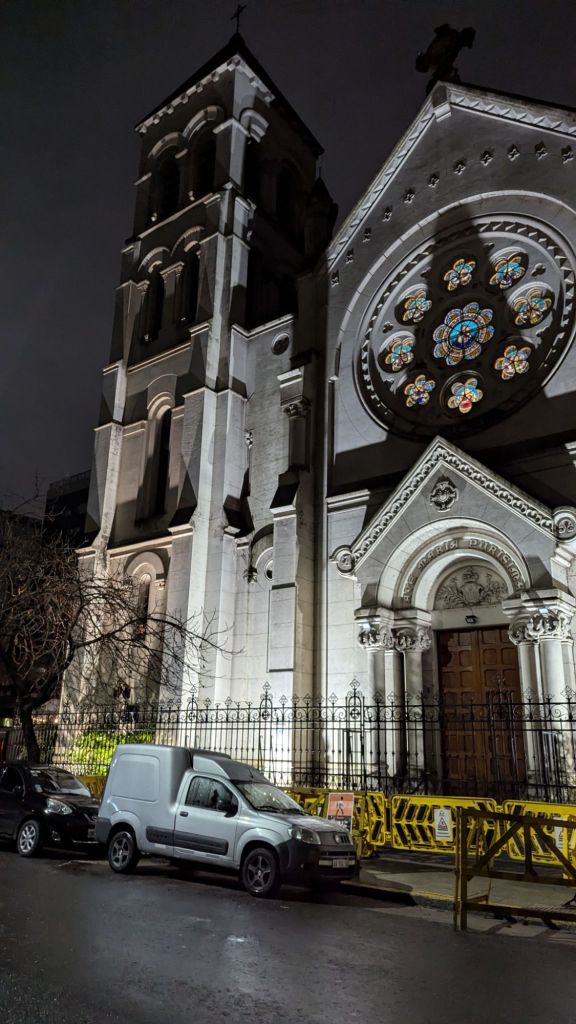
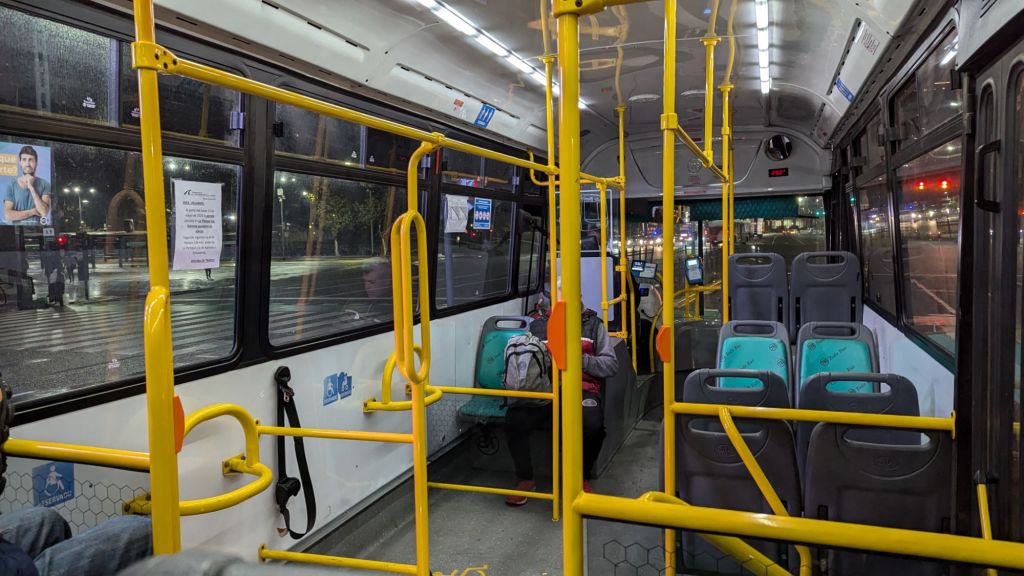
Given my early mentioned issue with judging bus stops, I had again got off the bus a couple stops too early, but also as mentioned in earlier blog entries, that doesn’t really bother me, so it was all good. Finally, at 12:30 AM I was in the apartment, and thus
So folks, that was my last full day in Buenos Aires. My fight tomorrow isn’t until late afternoon, but as of now I don’t have any concrete plans. However, I still have several more days coming up in Argentina, so I invite you to keep reading to see how things go. As always, thanks for reading along, and feel free to leave your comments and questions in the area indicated below.

 Travels with Jay