
Hey there followers, this has been one of my longer trips, so I congratulate you if you are one of those who have kept reading since day 1. If you came in late and would like to catch up, you can just go to Travels with Jay, and scroll backwards. At some point I may do a redesign of the site to make it easier to navigate to past trips, but for now it serves its purpose.
So today I was again up at 6:00 AM and got ready for the day. At 6:50 AM I was feeling a bit insecure because the previous days of programmed excursions, by this time I had already received two confirmation messages, but today I hadn’t received anything even though I had already sent messages to all the contact numbers I had. There was no reason for me to need the confirmations, but this shows the danger of changing routine. They had previously been very proactive about letting me know that everything was going well for the upcoming day, and now that I didn’t have it, I was worried.

Breaking the suspense, at 7:00 AM I finally received a message saying everything was in order for today. Although, I didn’t actually know where I would be going 🤣. Shortly thereafter, at 7:26 AM I was picked up and off we went towards Cafayate. This was again a slightly different type of minibus from the previous two days, but it was still a similar design.
Today, Juan was the driver and Jazmin the guide. Today’s bus was a bit more comfortable than yesterday
Unlike the other days, today at 7:57 AM they collected all of our documents to make a list. They also advised us that it was likely the police would be making stops and asking questions. I think this was related to the current national obsession with the case of the missing boy Loan. Regarding that, from what I can tell, it’s playing out in a similar way to the John Bennett Ramsey case in the USA many years ago. It’s curious how so many children go missing (usually with a family member) but you never hear about it, but then there are these huge cases which capture everyone’s imagination.
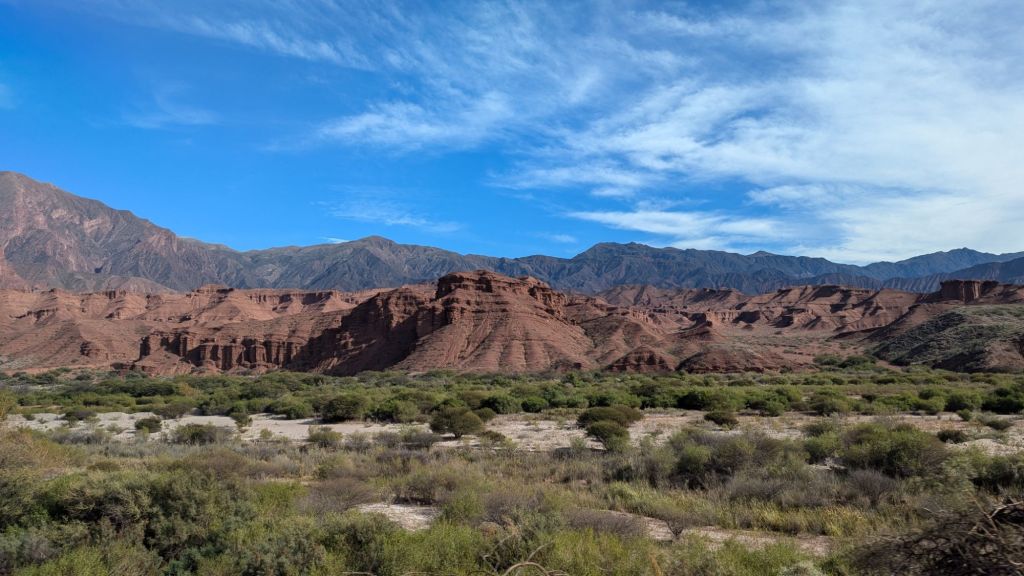
At 8:34 AM I noted the pleasant, mostly flat (unlike previous days) scenery, with mountains in the distant background. Then around 8:37 AM we started to see vineyards, but as it was “the winter” the vines were bare.
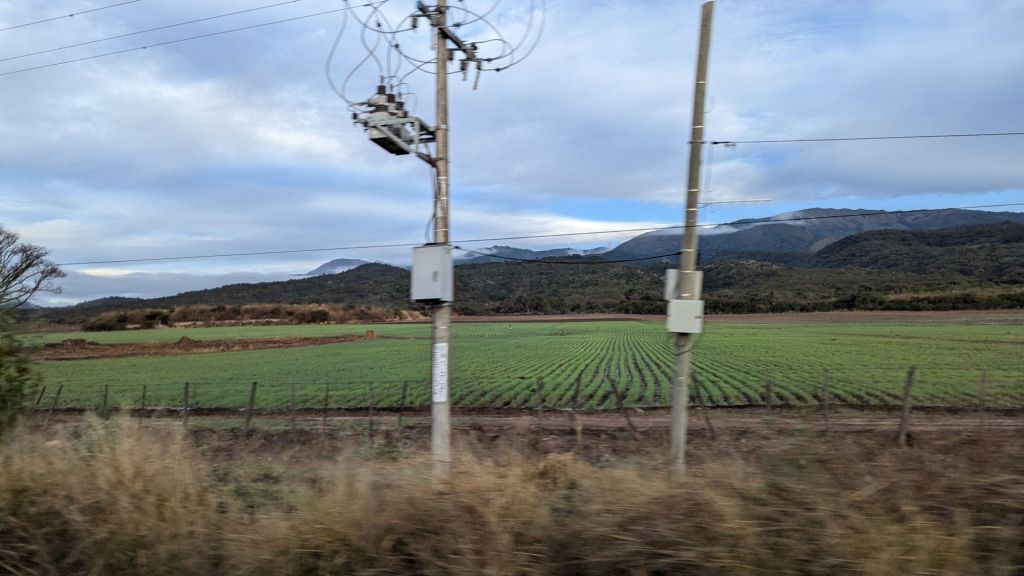
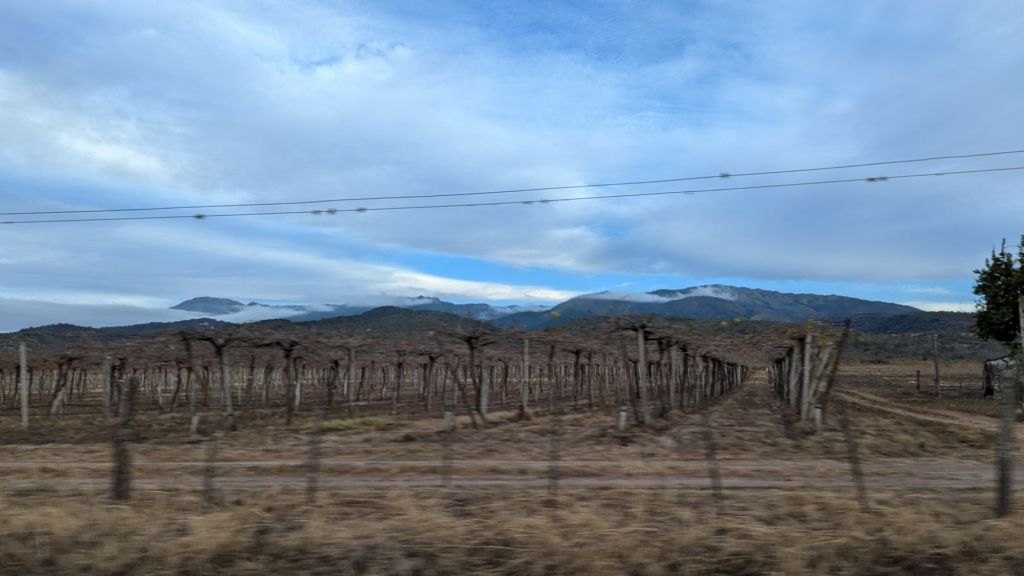
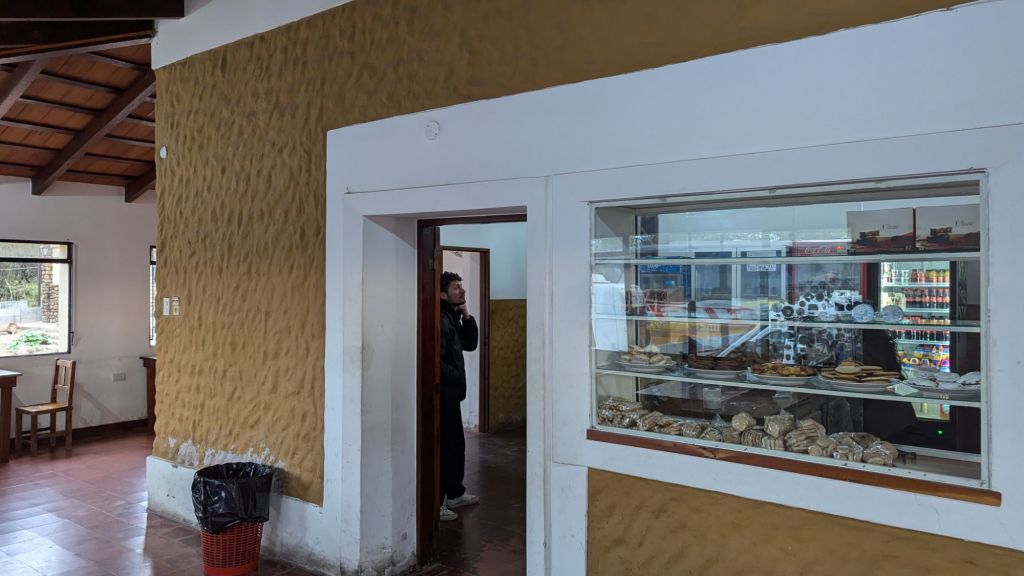
At 9:13 AM we stopped in the town of Talapampa. From here on there was no stopping point where we could use the bathroom, etc . . . Until arriving at the winery. The bathroom was clean, but the whole place was much more rustic than places from previous days. Note, there was no toilet paper nor bidet facility, and I had been told that is fairly normal in Argentina, so be prepared. Most of the others were getting something quick to eat, but I had made sure to have my delicious apple pastries in the morning.


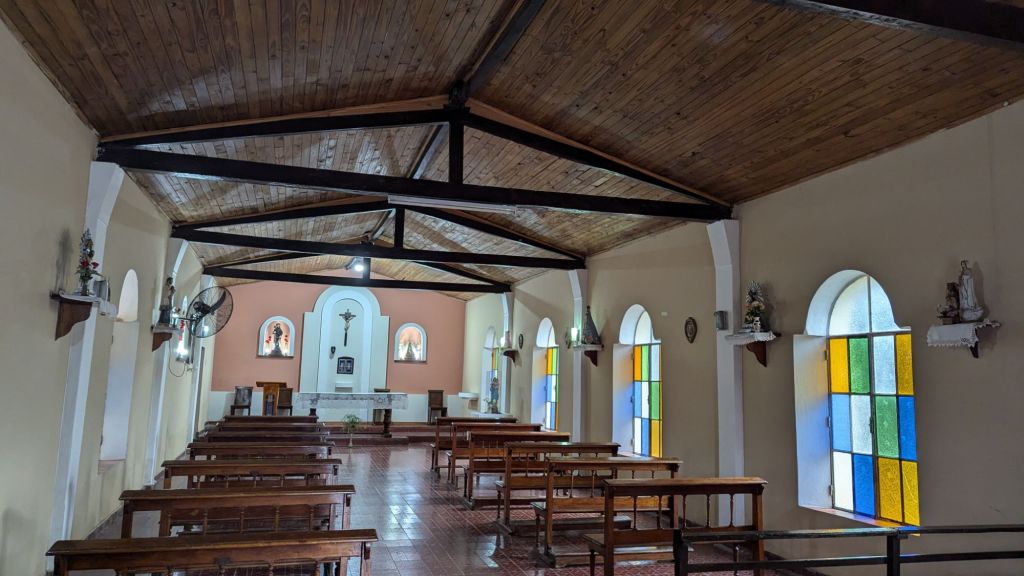
Having a couple minutes to spare, at 9:25 AM I peeked into the chapel next to where we had stopped, Capilla San Roque. The temperature outside was 5 C.


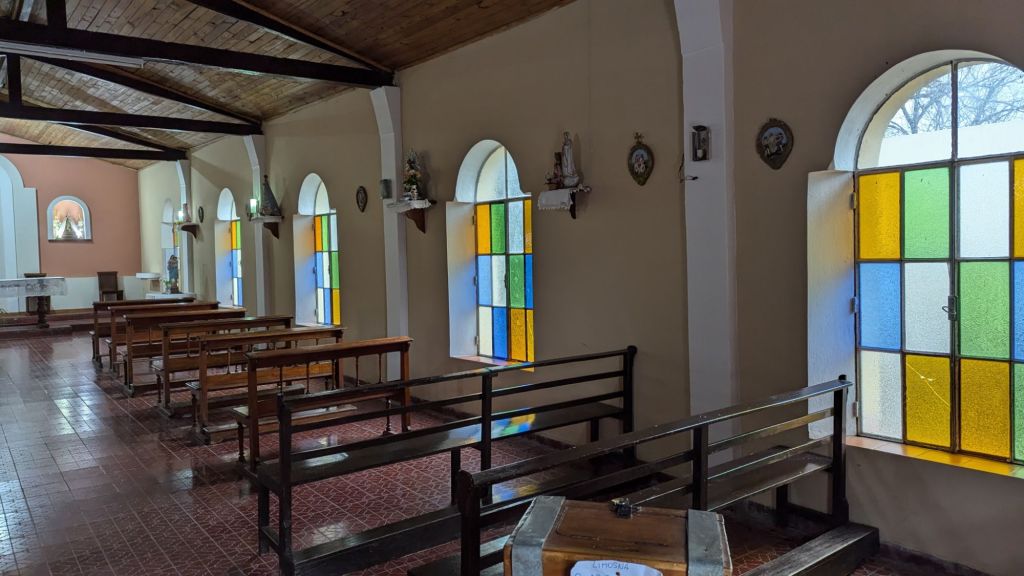
With several other small tourist buses stopping here, it was clear that this was the stopping point for all companies. I suspect that if I had shopped around in Salta I could have found a slightly cheaper package for the four days I had bought, but Get Your Guide generally does a good job of vetting its tour operators, and I also didn’t even really know everything I wanted to do. So far I had been happy with the Tiamar operated trips, with the only hiccup being not having an advance confirmation for today’s trip. Again though, if you are really bargain shopping and have the time, it’s probably better to shop around a bit and also even contact operators directly once you arrive in Salta.

At 9:39 AM we got back in the van and went on our way. Today’s group had around 14 people, but the van definitely had a couple spots open. The microphone which was used the first day would sort of cut out, but the sound system the last two days had been much better. Jazmin continued giving us the general chat, telling us that we were going to go through la Quebrada de las conchas. She shared quite a few interesting tidbits.
Salta is a province with more rain, even in the dry season, than most of the country. That’s why things have mostly looked green, even though we are in winter. Note, much of the time of my first two days of tours was actually in Jujuy, not Salta, so it was frequently not as green.

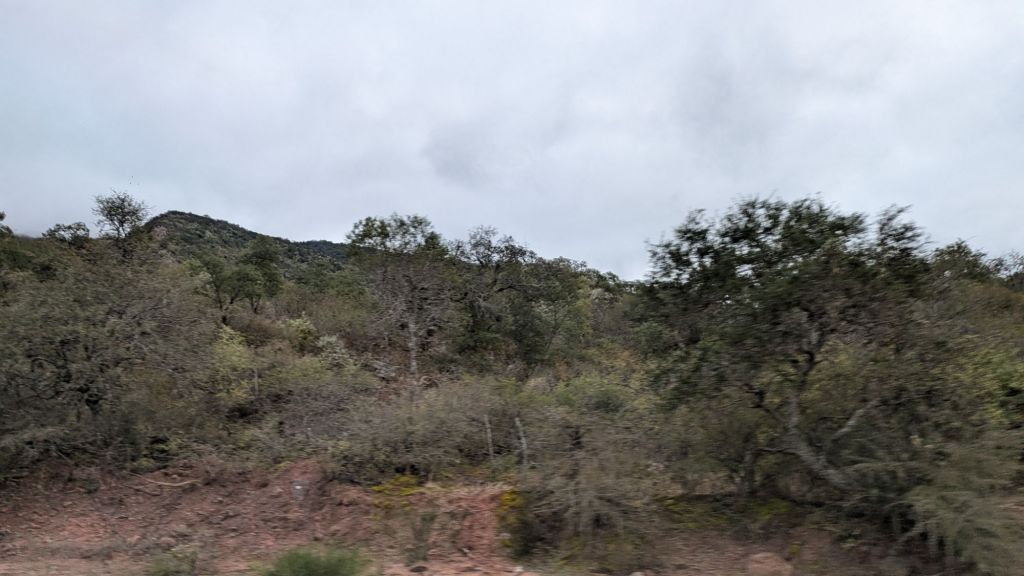
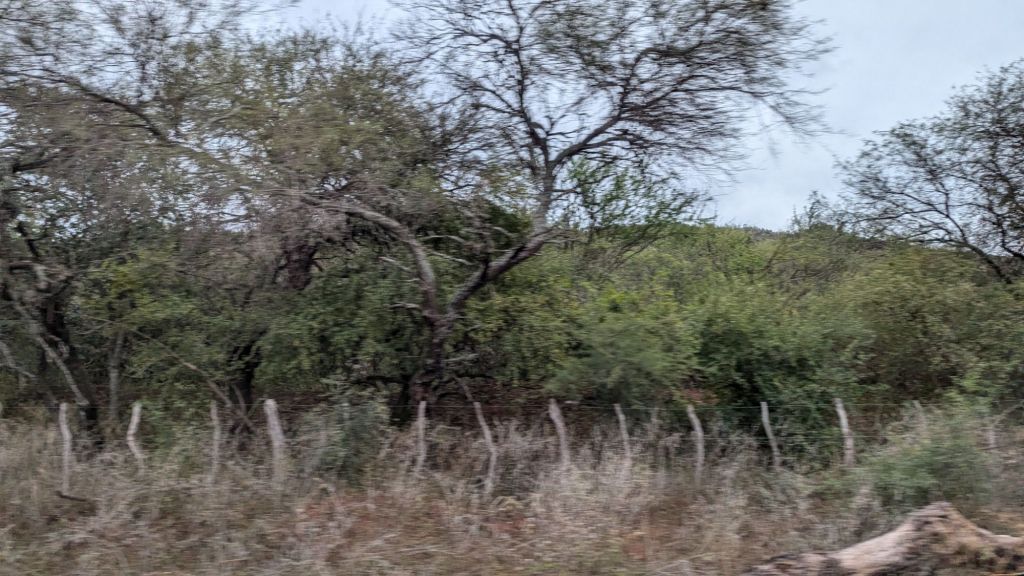
At 9:49 AM we passed the ghost town of Alemanía which is now only inhabited by three families. It was the other side of the bus and I could not take a picture. It became a ghost town, because the train stopped operating going through here around 1970. Unsurprisingly, Alemanía was founded by German immigrants.
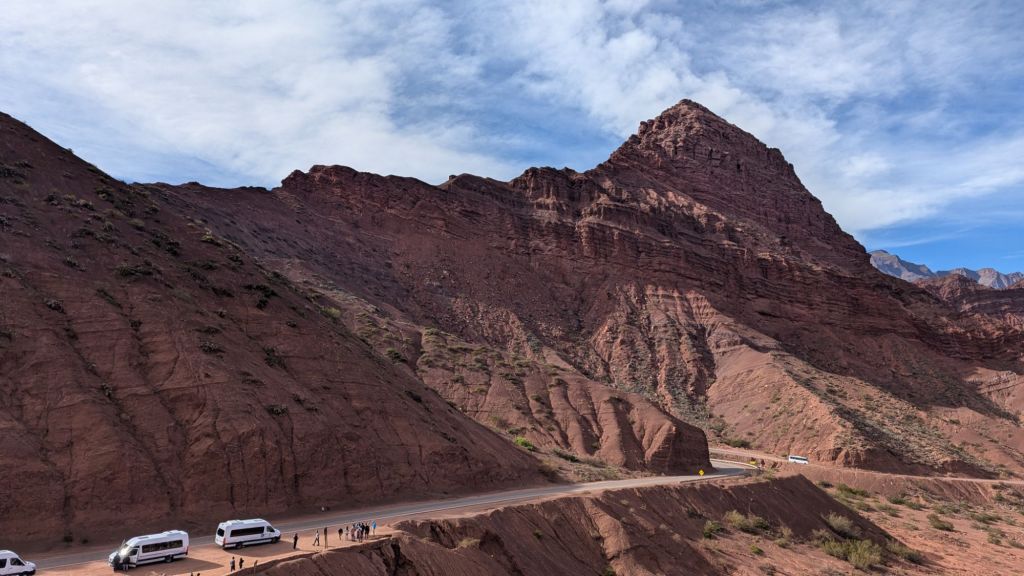
This area was at some point under the ocean, and there are many obvious fossils and remnants in this area. That’s why it’s called “Shell” valley (Quebrada de las conchas).
At 10:05 AM Jazmin mentioned that the first/native peoples in Salta and Jujuy held back the Spanish invaders for 100 years as the indigenous communities here were very organized and war like; however, they eventually fell. I couldn’t tell exactly how, but wine and the Catholic church were important in this. Today, Salta is the most religious/Catholic province in Argentina.
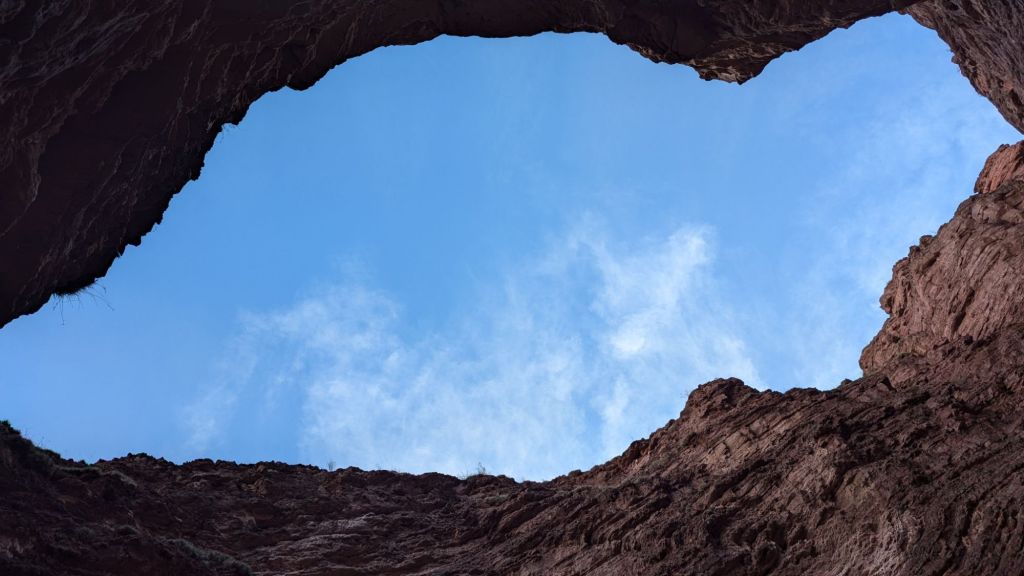
An unexpected surprise at 10:21 AM was when we stopped at La garganta del diablo (Devil’s throat). Sadly, this beautiful rock formation used to be used as a threat by the Spanish, directed at the first peoples. I’m not really sure how that worked, since it seemed that having been here first, they would have known better. However, they used to threaten the local people saying that if they didn’t pay tribute, the devil would come get them, with this rock formation being a type of portal to hell. Honestly, I found that hard to believe, but maybe they were tribes which had been moved here from somewhere else? Incidentally, until only very shortly the arrival of the Spanish, the tribes here were not part of the Incan empire, but they had active trade with them.
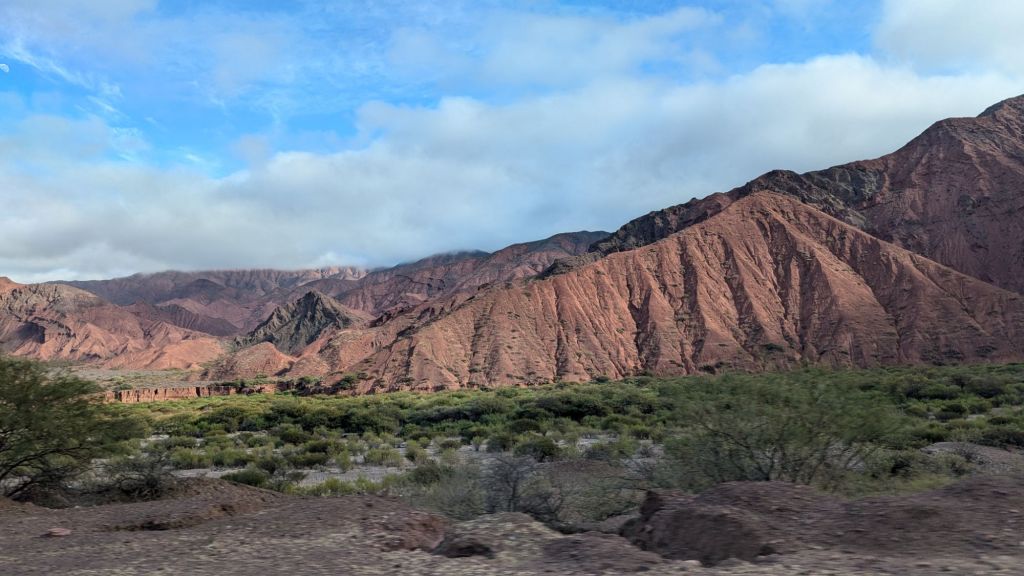
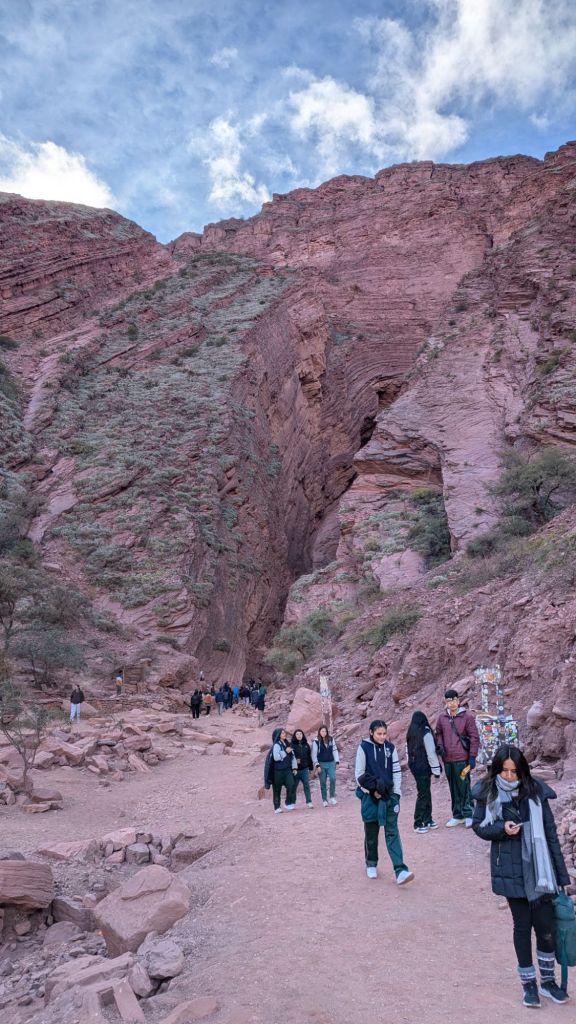


Evidently It wasn’t until 2007 that they started developing tourism here. Jazmin said that other companies irresponsibly allow the tourists to go up on the rocks, but she begged us to not do the same as we could either get hurt or unintentionally damage some of the natural landscape.
At 10:36 AM I noticed that various sellers had wares there on a cloth, but they respected the main space so that it would look uncluttered.
By 10:46 AM we were back in the van. It had been a nice little stop. As is frequently the case, I don’t think the photos will really show it’s beauty, but still you will get an idea.
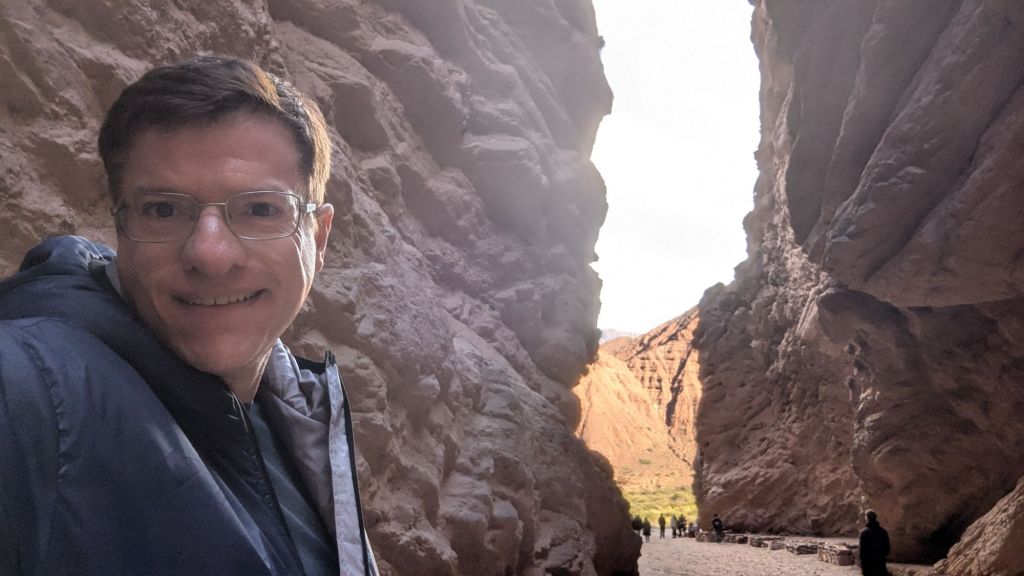
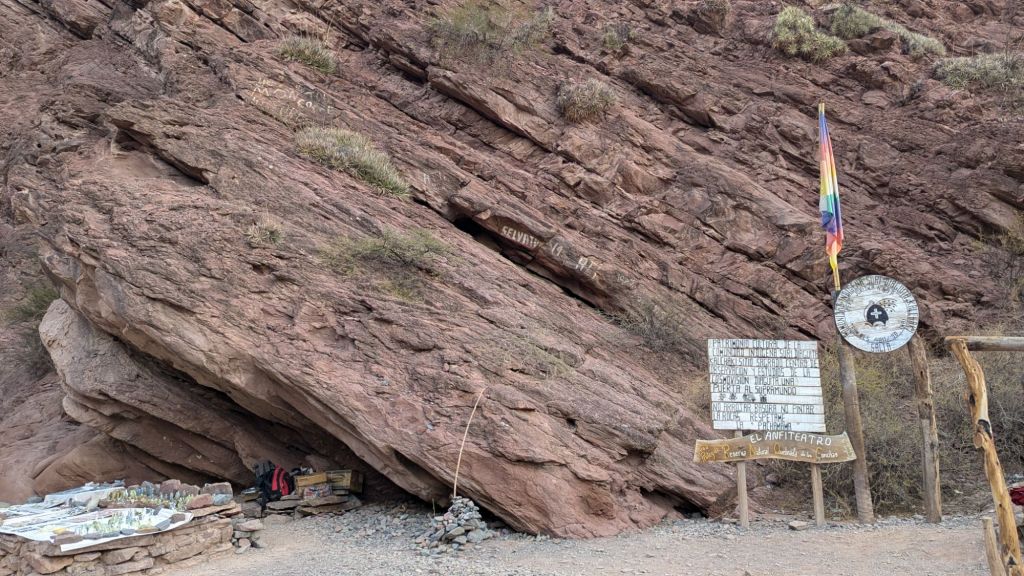
From here we were going to a place they call anfiteatro (amphitheatre) which is well known for its natural acoustics. We actually arrived there very quickly, at 10:49 and were out again. The local people used this site as an astronomical observatory. I could see how this would have been good as an observatory, since it’s structure would keep the view to a limited section of the sky which would change over time. There was a guy singing as well, and yes, the acoustics were impressive. Jazmin said that they do local concerts here in July which go on for several hours, but no sound systems nor amplification equipment are used.
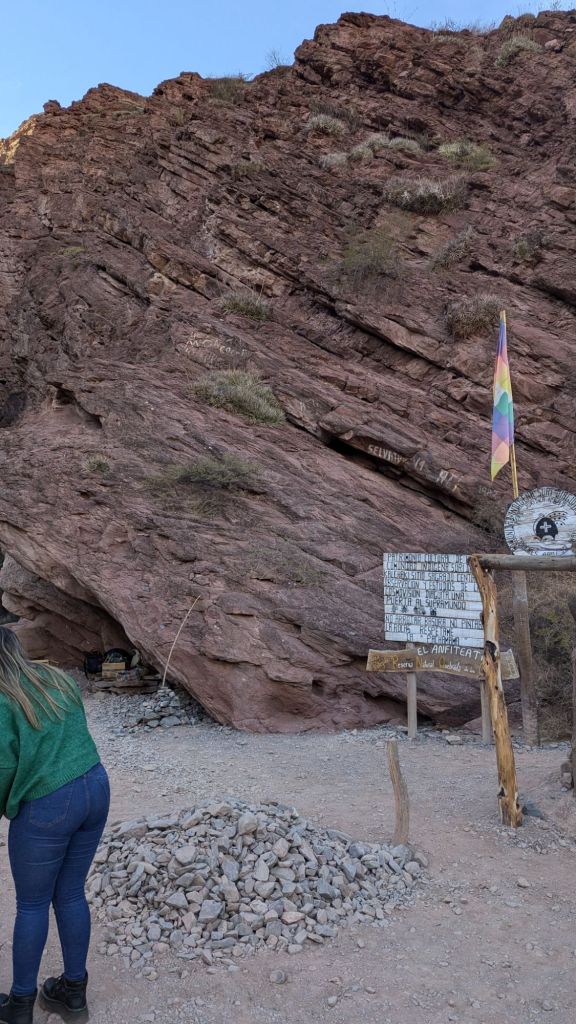
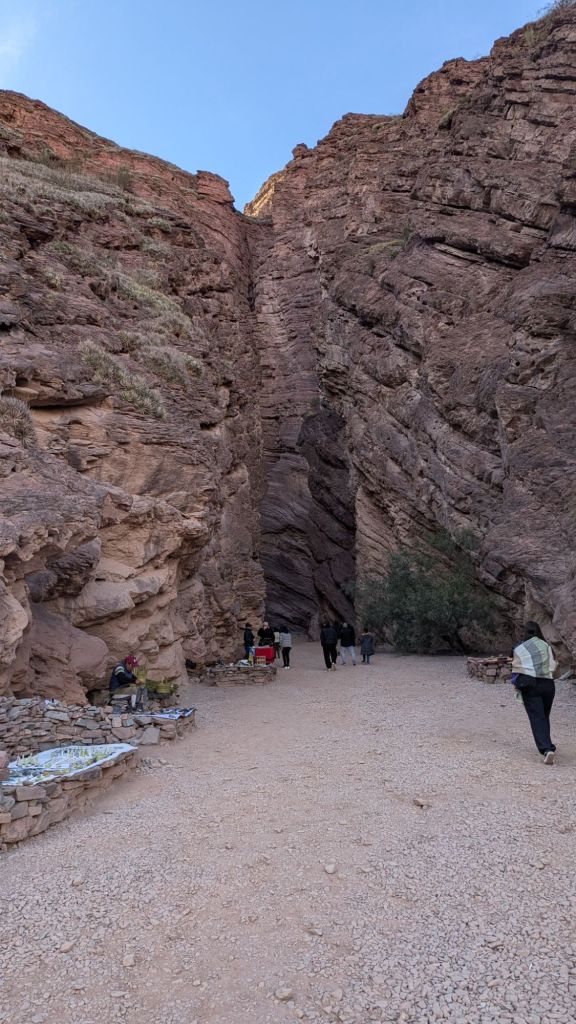
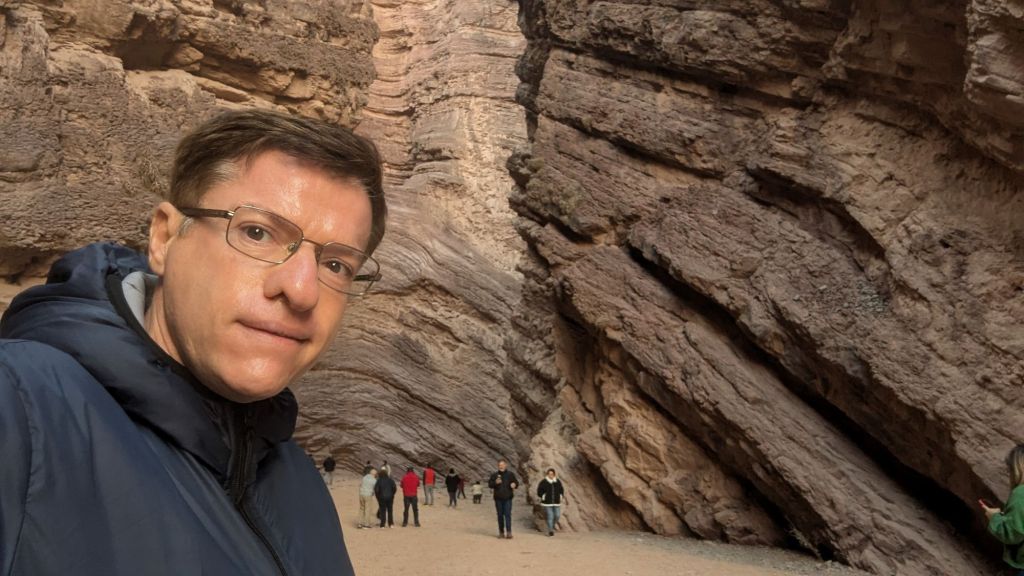

One more we were in the vehicle at 11:07 AM, arriving at “Three crosses viewpoint at 11:13 AM. The legend is that three thieves killed each other here, after they had stolen gold from the revolutionary army. Given the circumstances, I didn’t really see why they would be honored with crosses, but it makes for a good story.
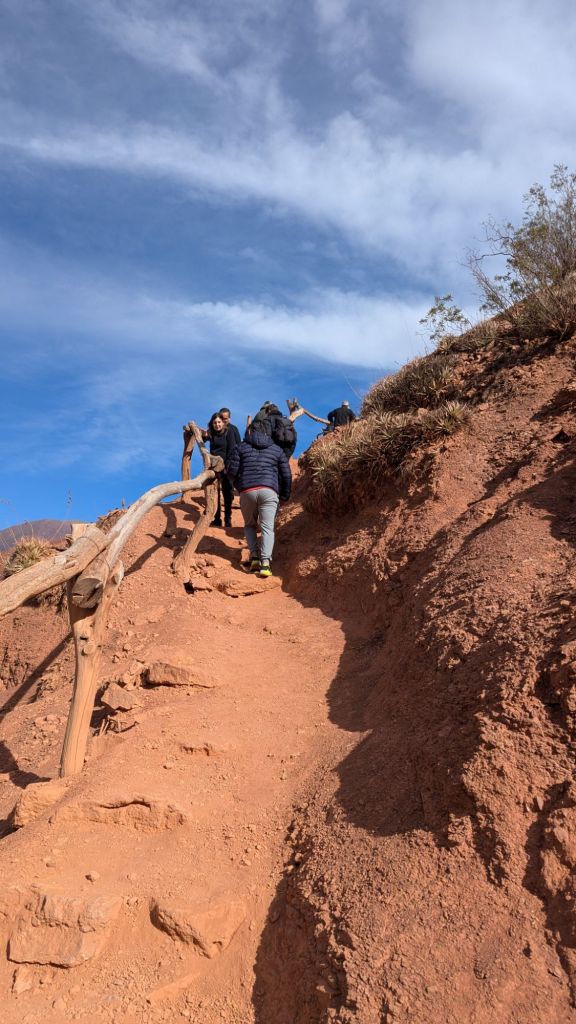
While I wouldn’t say that this is a “dangerous” viewpoint, at 11:20 AM I could see that it was definitely slippery for a lot of people with a couple of women in front of me even falling down. There was also no sort of railing at the top, and a fall from there certainly could have caused greater injury. I may have separately commented on this, but throughout my time in Salta, I noticed that almost all the tourism was local. However, I was told that in the south of the country it was primarily international tourists. For my money, the international visitors are missing out by not coming to Salta and Jujuy, but not having visited the South due to time constraints, I had no point of comparison.
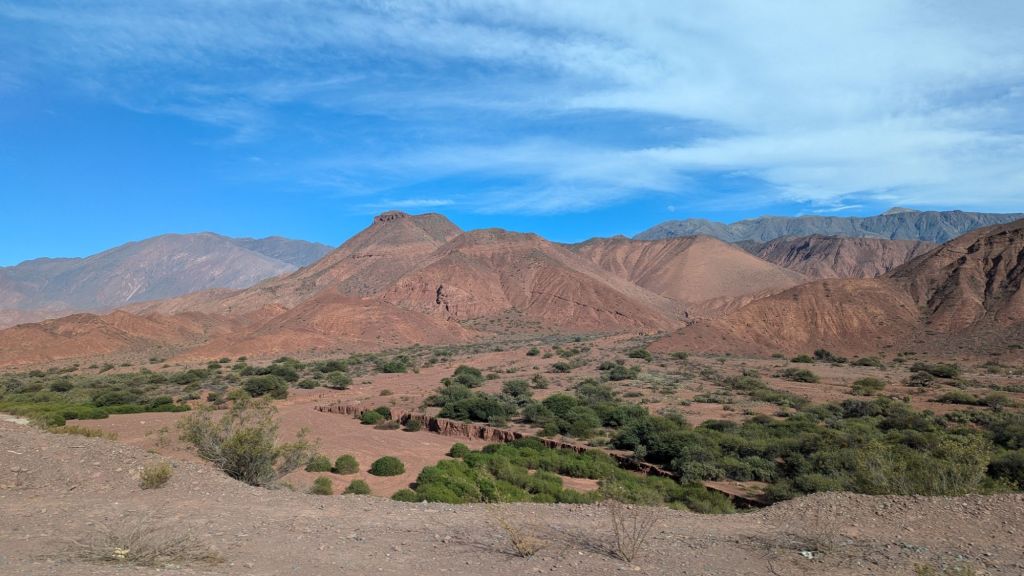


At 11:25 AM I got back in the vehicle, soon after passing the “El sapo” rock formation, which amazingly really did look very much like a frog, but we didn’t stop, and I couldn’t get a good picture.
Whether or not this is true, I don’t know, but at 11:34 AM Jazmin said that the Franciscans were different from other Catholic religious groups that came, because they supported the local population more and also pushed for a greater recognition of the rights of the native peoples. The Jesuits had also tried, but they were expelled by the Spanish crown, and most of their monuments and churches were destroyed. To honor their contribution, they had named a sort of “Friar shaped” natural rock formation “The Franciscan” and we passed this at 11:36 AM.
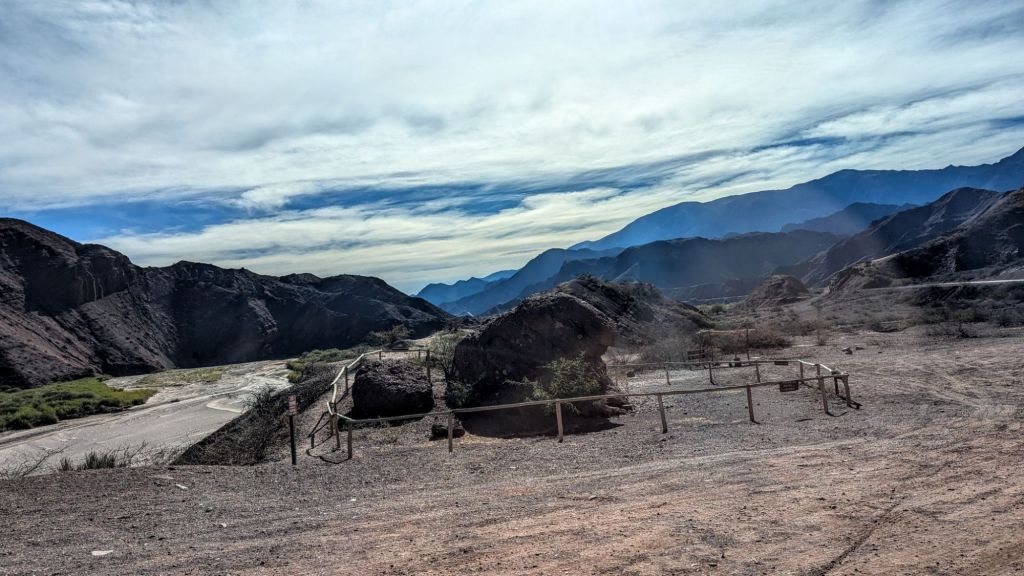

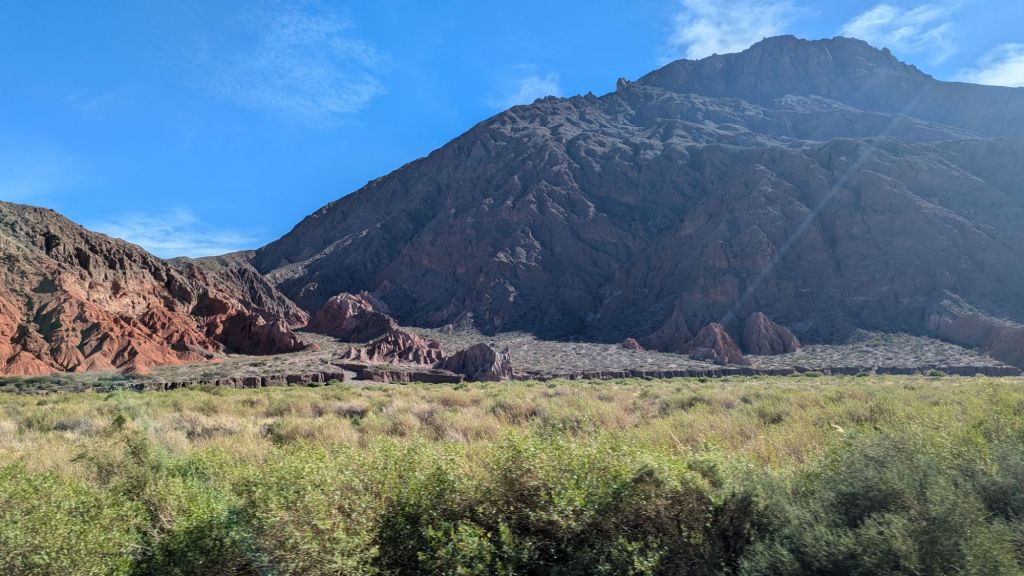
At 11:42 AM the Quebrada was coming to an end. I half slept for a few minutes, when at 11:55 AM I noticed that we were entering Cafayete, which is known probably for its white wine, but there was some red. I think I understood that most of the wine from this region was consumed by the domestic market.
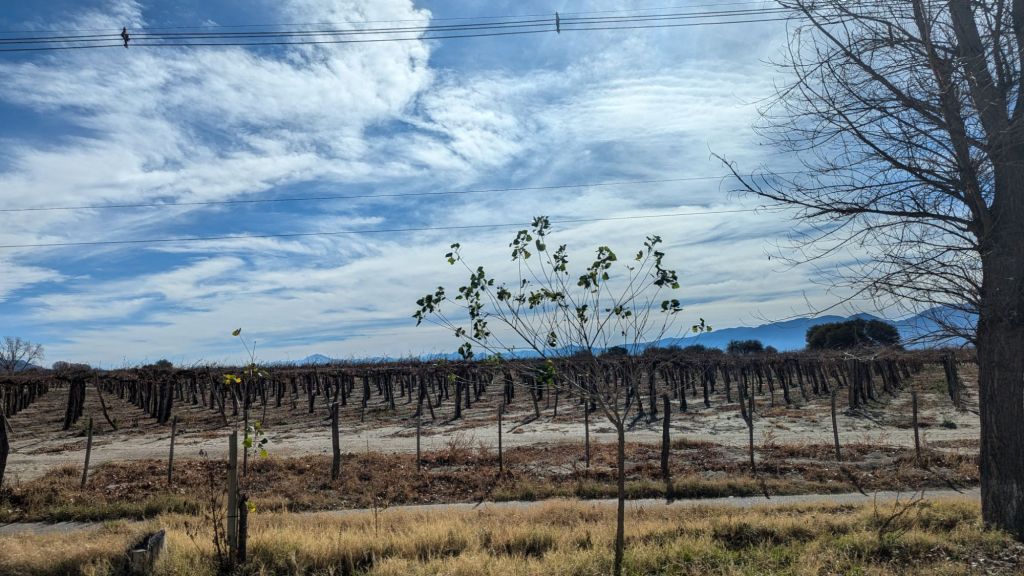
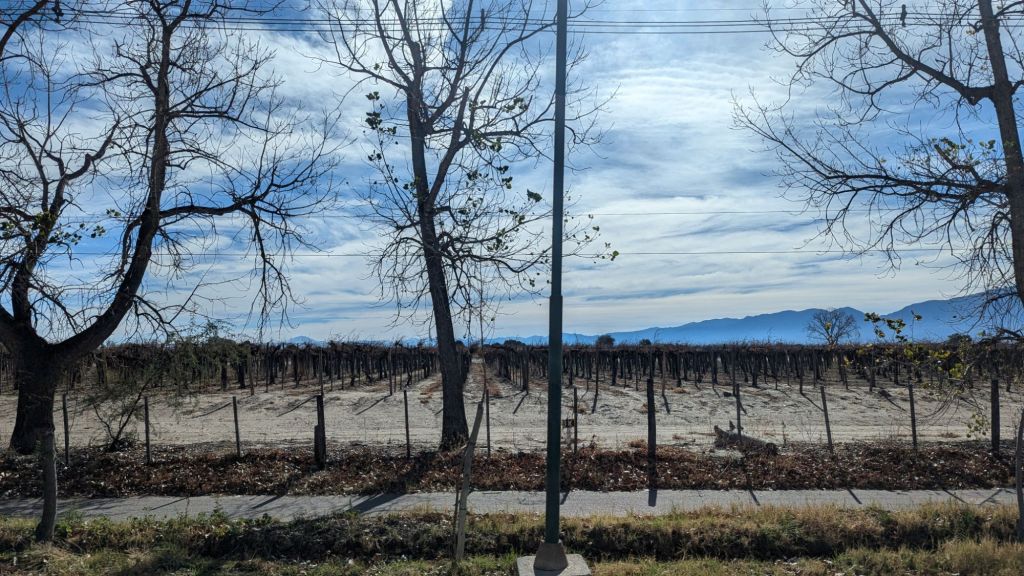
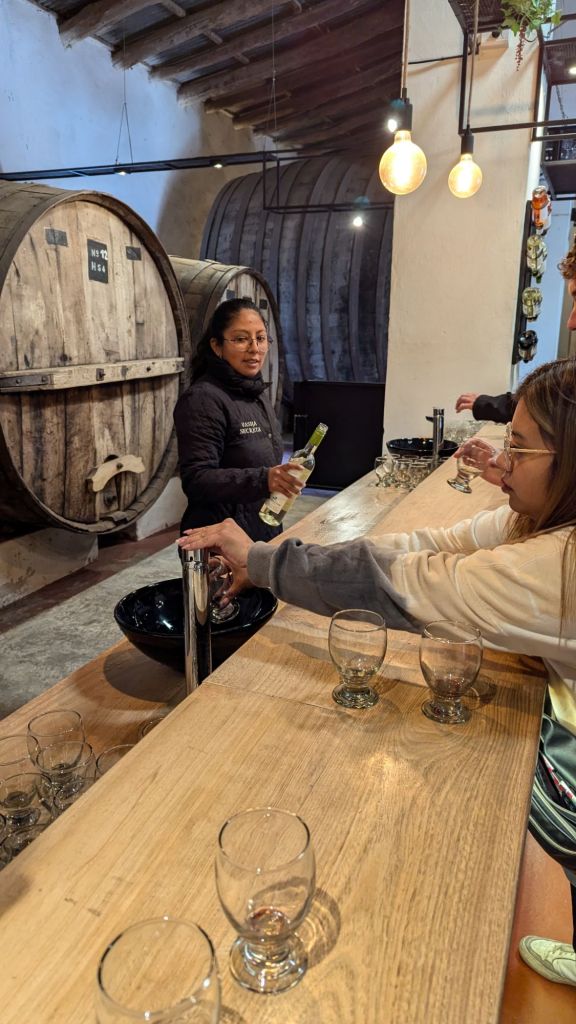
We pulled into Vasija Secreta winery at 12:05 PM. Despite being at a lower altitude, it was fortunately not overcast today. This place must be quite popular, as they do mini tours and wine tasting starting every ten minutes. My group’s tour began at 12:17 PM.
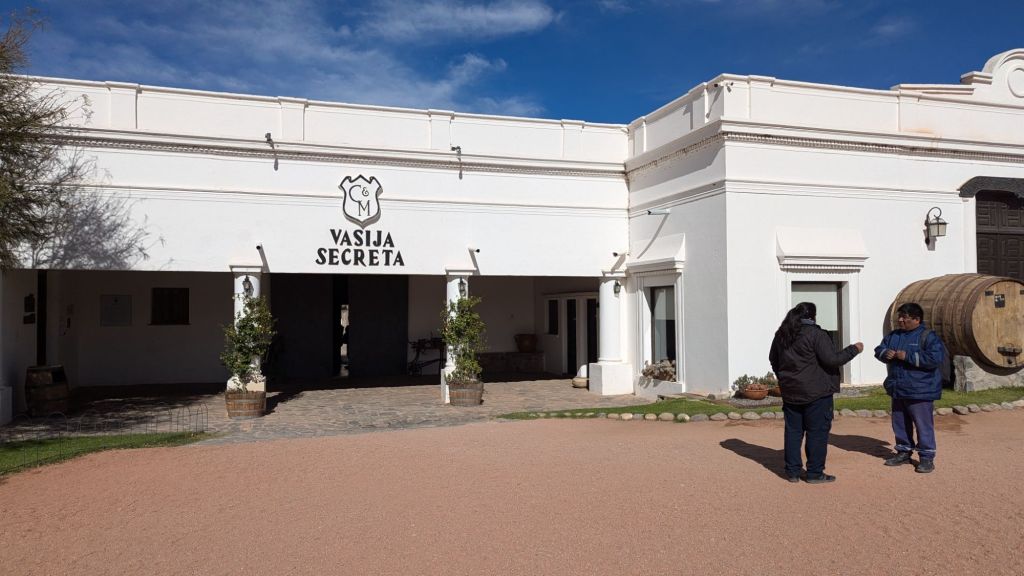

This winery was founded in 1857. There is a type of wine they make which is very limited which only comes from vines which are at least 90 years old. She explained tons of other things, but it was really too much for me to mark down. Also, much of it was particular information for people who know more about wines, and that’s not me.
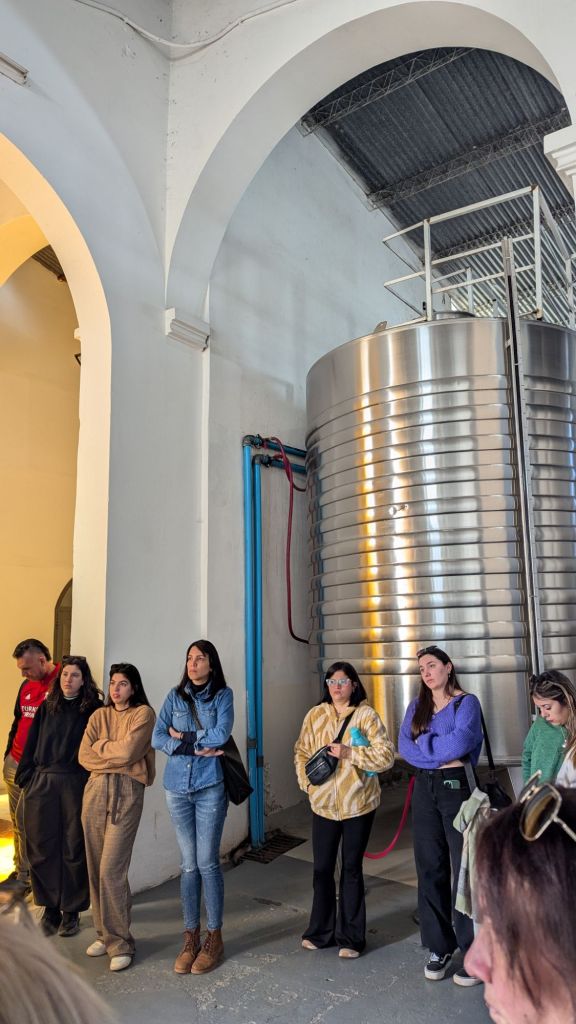
At 12:30 PM the vineyard guide said that the metal tanks of the white wine were designed like this in order to maintain a cooler temperature, without using electricity. She explained about how different rooms have different characteristics because they need different climactic conditions to make different wines. This is of course more important for a traditional winery like this one.

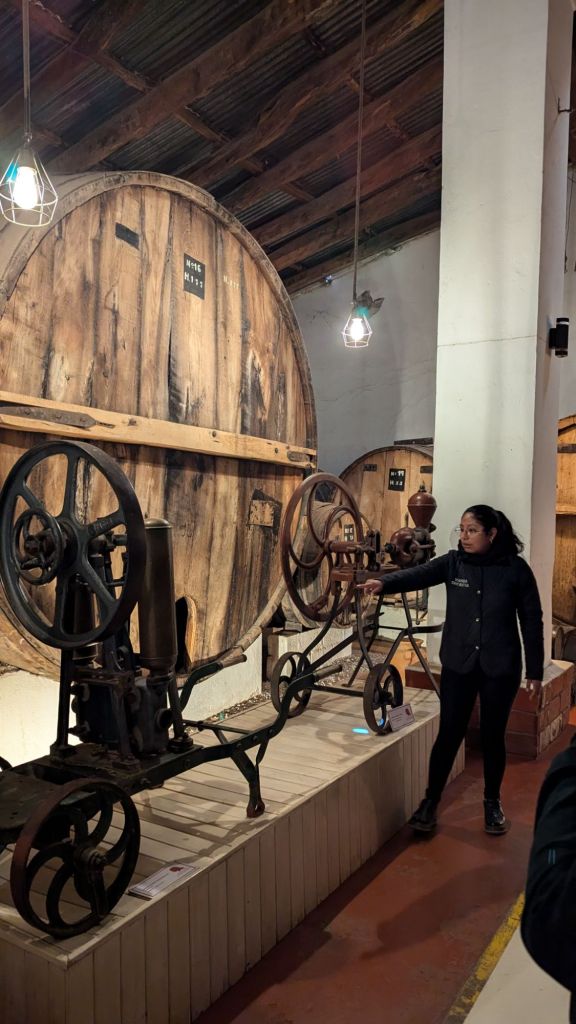
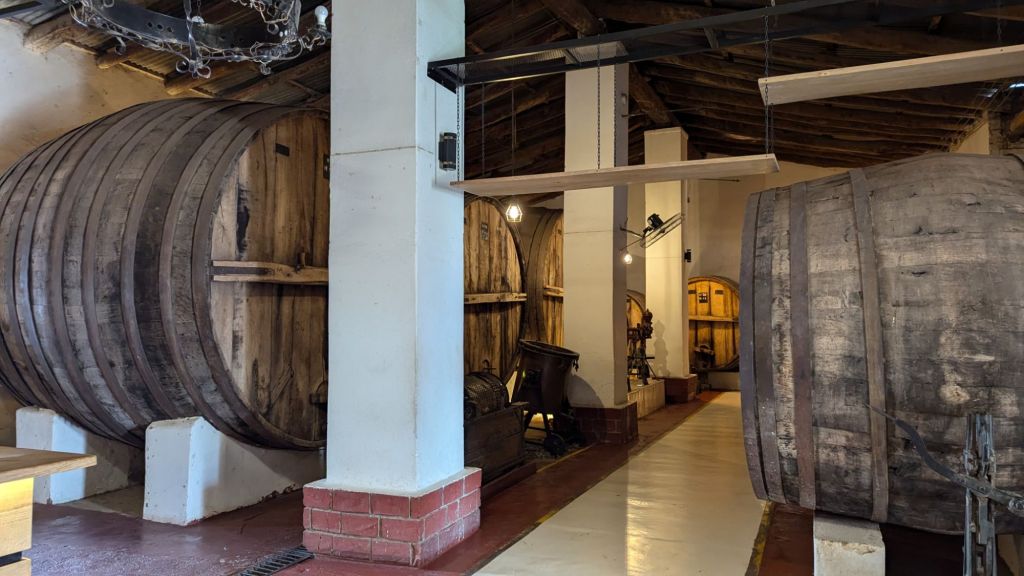
At 12:37 PM the big room with huge wooden casks was actually a museum. While their wine is still considered artisanal, they have included a lot of aspects from the industrial revolution. For instance, they don’t stomp the grapes here. A machine does that. The skins used to be fed to animals, but now that mostly goes to cosmetic use, but some is used to make Grappa.
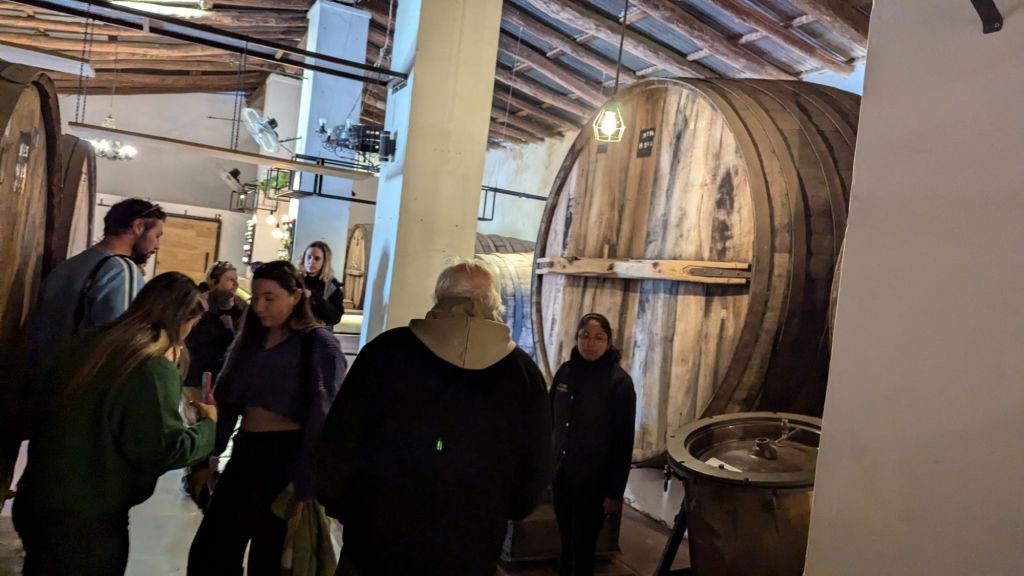
At 12:43 PM she explained that generally speaking, Argentinean wines are considered a bit sweeter than others. After trying the Malbec Cafayete, we rinsed our cups before trying the next one. This was a Torrontés Cafayete and yes, it was quite sweet but pleasant. According to her it’s semi sweet, but I think many from outside Argentina would find it fully sweet. I did like it, but I suspect it isn’t sold much outside Argentina. I thought of my friend Dorothée and was sure that she would not have liked it, but she would appreciate learning about a different type of wines.

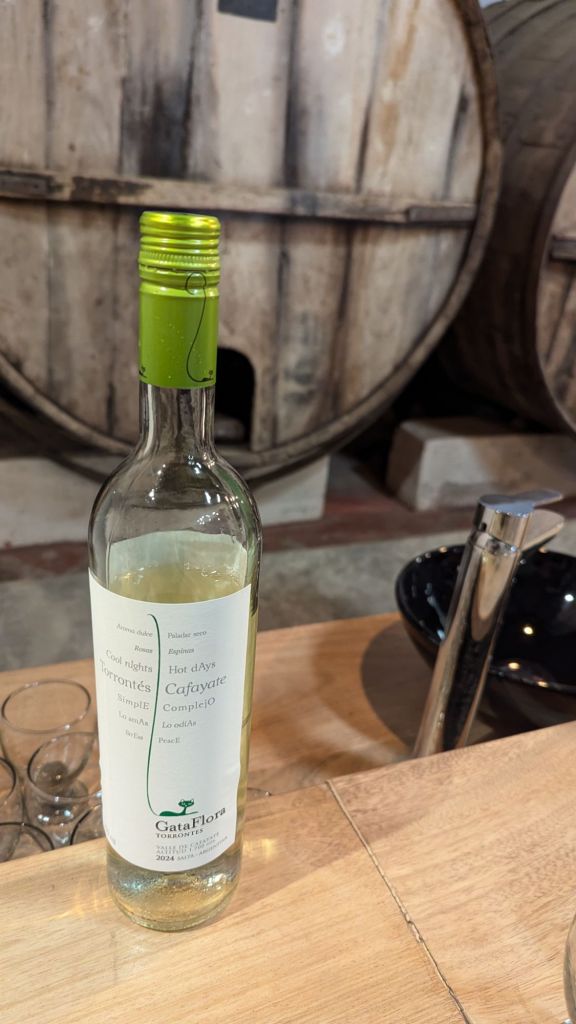
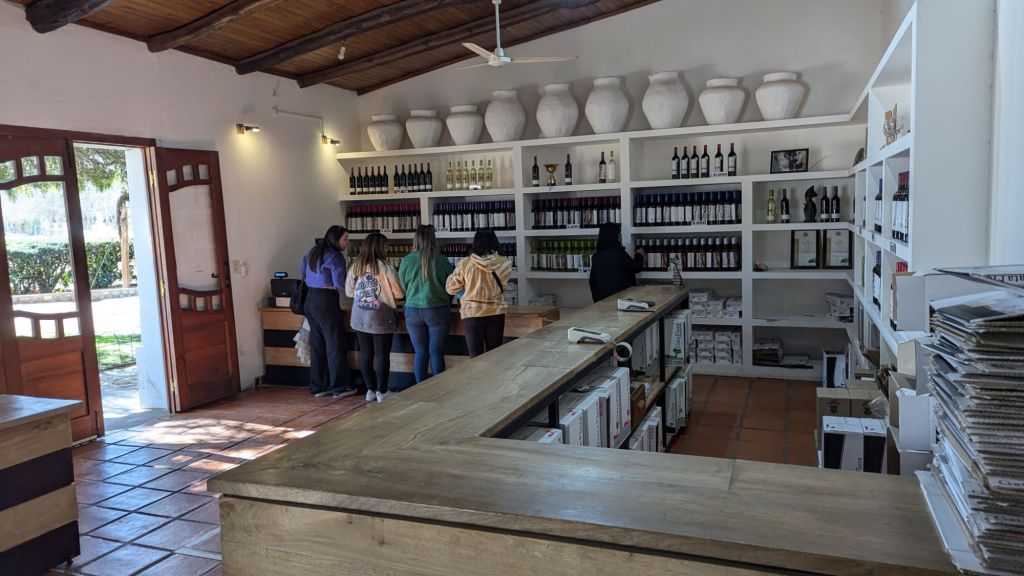
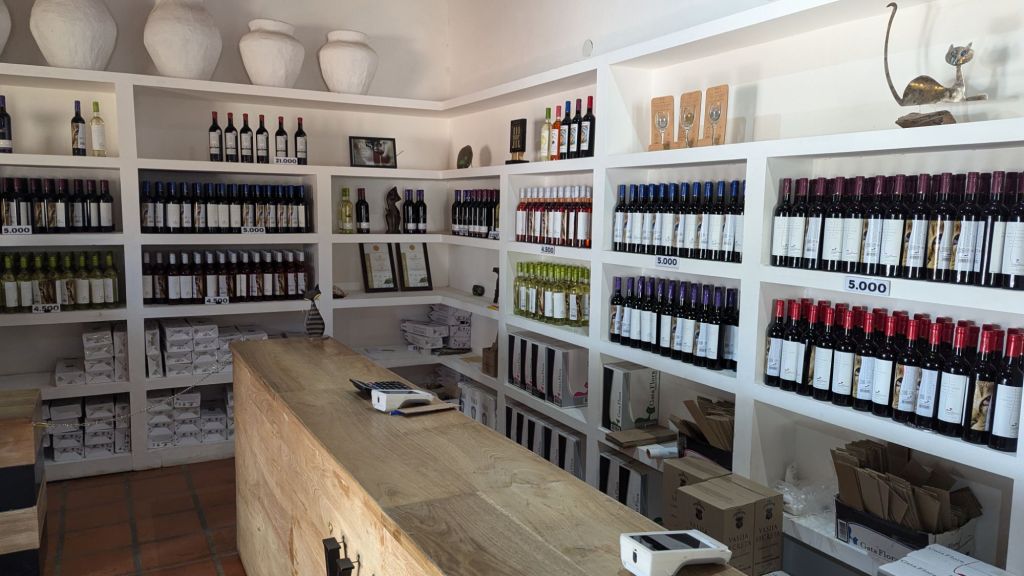
At 12:51 PM there was a store where one could buy, by my standards, quite cheap bottles of wine, costing between 4500 ARS and 16000 ARS a bottle. The locals confirmed that buying right here was a bit cheaper than buying from a store; this of course made sense, since they make the wine right here. I would have liked to buy some to take home, but in my case, due to continued travel and still having planned to visit a couple more countries on this trip, that didn’t make sense.
At 12:59 PM we were back in the van, making a quick stop at Feria Artesanal Cafayete where they offered us vino mistela, which was way too sweet, and some local raisins. The prices of the food items were good, and it would have been nice to take some, but all but impossible to reasonably transport the way I travel. The costs of the other souvenirs were also reasonable. I would in particular have liked to take escabeche de llama and ciervo with me, but I’m pretty sure you are only supposed to eat very small amounts at a time and I definitely didn’t want to juggle glass bottles in my luggage.
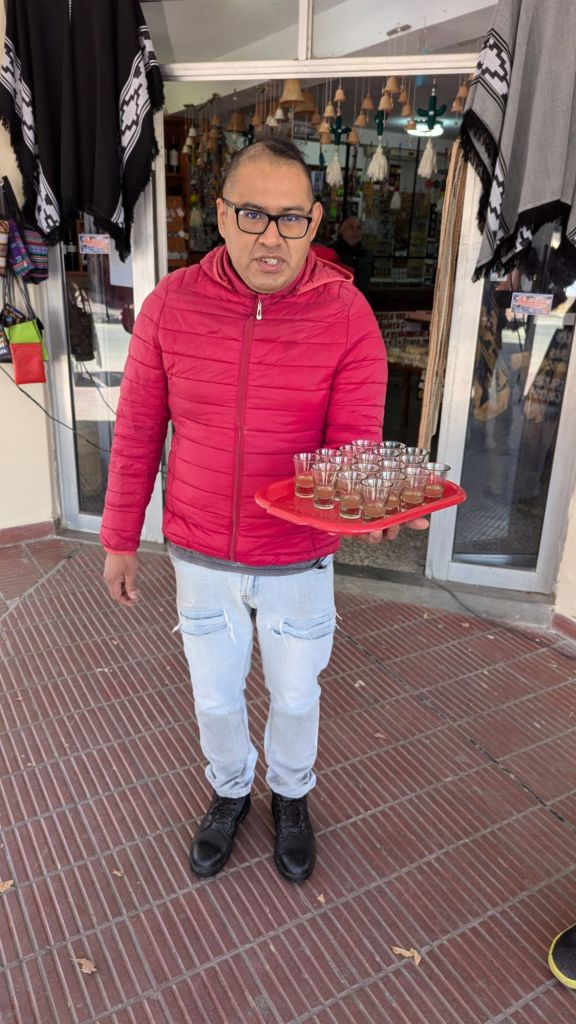


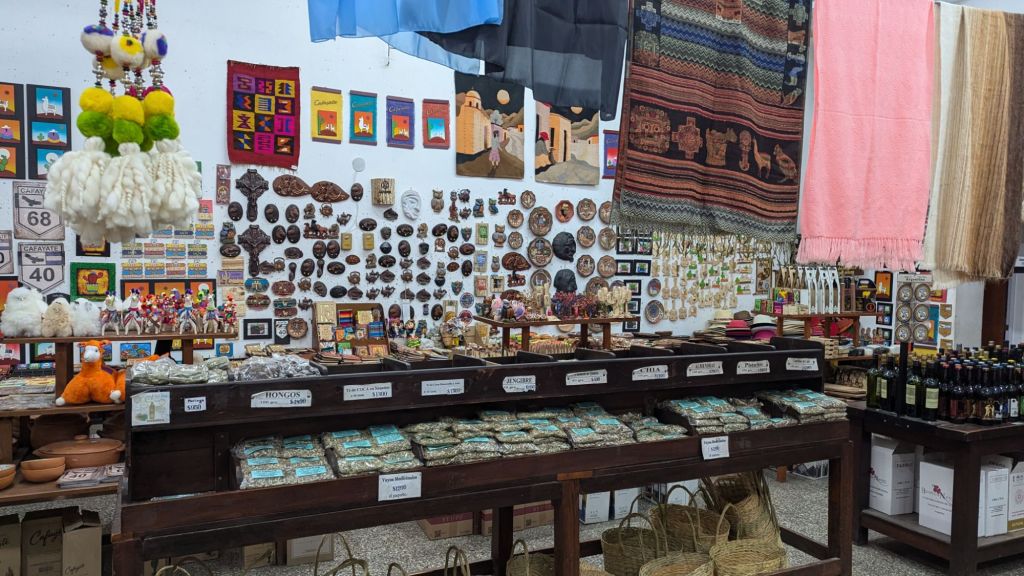
When I got back in the transpory at 1:16 PM, I asked the other passengers, and they told me that the meat escabeche is eaten with bread.
Shortly thereafter at 1:21 PM we stopped at the recommended restaurant, El criollo. I didn’t want to wander around before choosing where to eat. I ordered the plate of the day which included Jamón cocido, locro. It was cool inside but not cold, so I put on my long sleeve shirt over my other shirt but kept the coat off. I had done the same thing yesterday. The Jamón cocido appears to just be pork ham, basically lunch meat. The tiny piece of cheese was nice. It was basically a “new cheese” similar to queso Turrialba in Costa Rica.
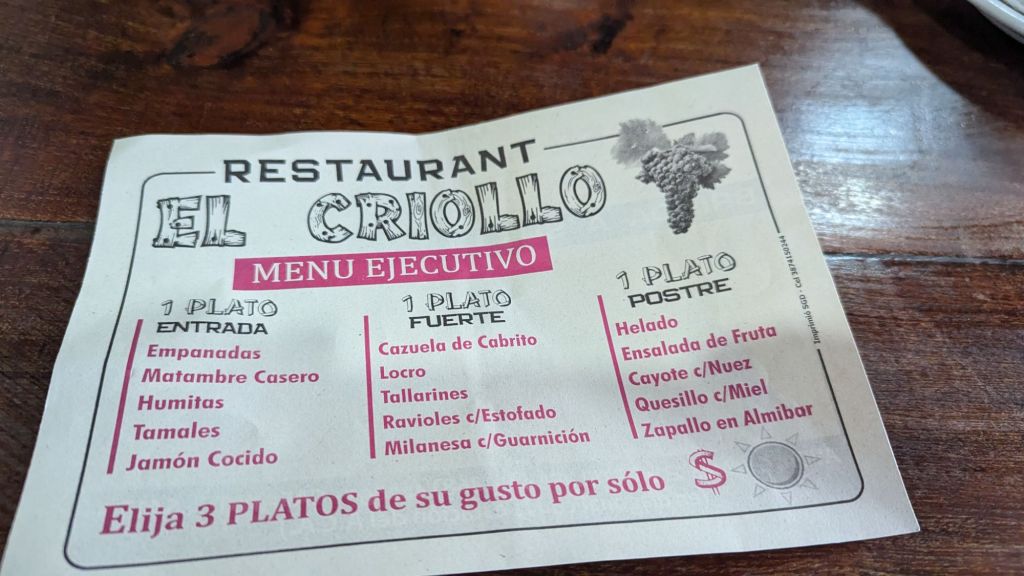

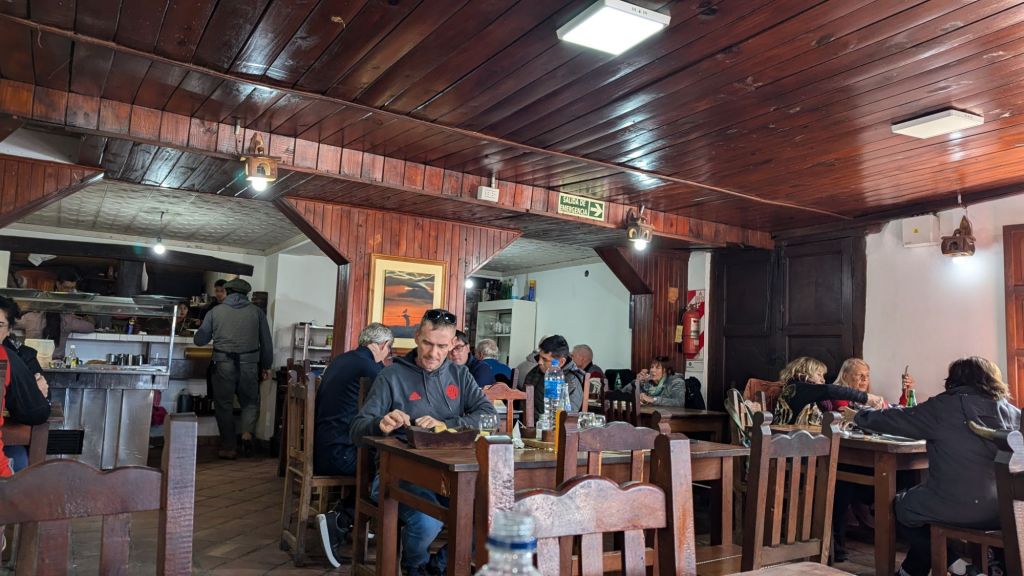
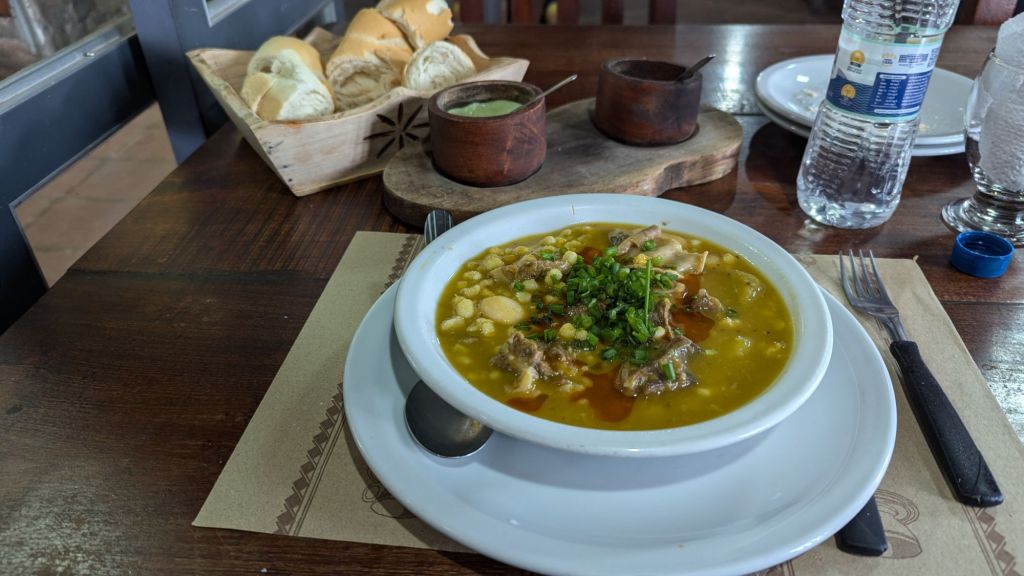
At 1:36 PM my locro arrived. This was my first locro in Argentina. It’s basically a hominy (the main ingredient) and butter bean stew with rather chewy beef. It was alright, and good for the cold weather, but I thought it would have been better with a bit of chili or at least some black pepper. I’ve noticed that in Argentina people will add salt to their food, but I haven’t seen pepper or chili on a table. I don’t think Indians would like this food at all. . . I could see myself making something like this stew, but I would add a splash of vinegar.
Around this time I was also thinking that for dinner I would try to see if that empanada place near my apartment was open when we got back, and I would also get a couple for tomorrow morning. Separately, I think I would like to TRY mate, but I definitely don’t want to buy a big thing of it. I strongly suspect that I won’t be all that impressed, that it is an acquired taste.
At 2:02 PM I opted for Cayote con Nuez for my dessert. It’s basically sweetened squash with walnut. It was a tiny bit too sweet for my taste, but that’s also the way it’s usually made in Costa Rica. At 2:16 PM I left 1050 ARS tip on the table and then paid 11500 ARS cash ($9.27 USD) for the meal and drink. I had thought about paying with a card, but there was a 10% surcharge, and I seemed to have enough cash with me.
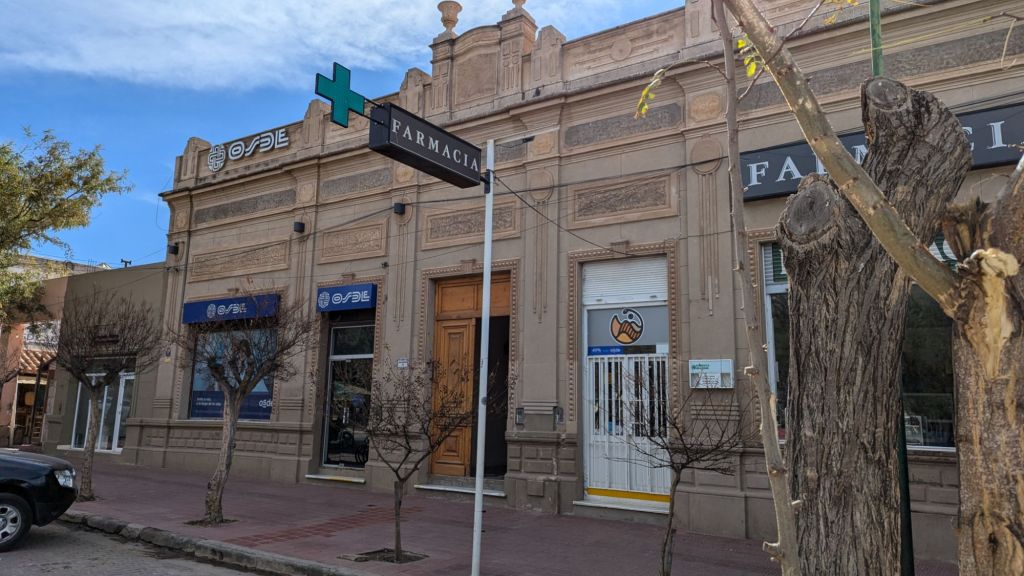
I departed at 2:19 PM and decided to try to check out the plaza which was near there. Upon arriving at 2:29 PM I understood why they had prohibited the tourist vans and vendors around the square. It was much nicer without them, and there were plenty of other places to buy crafts without it being there.


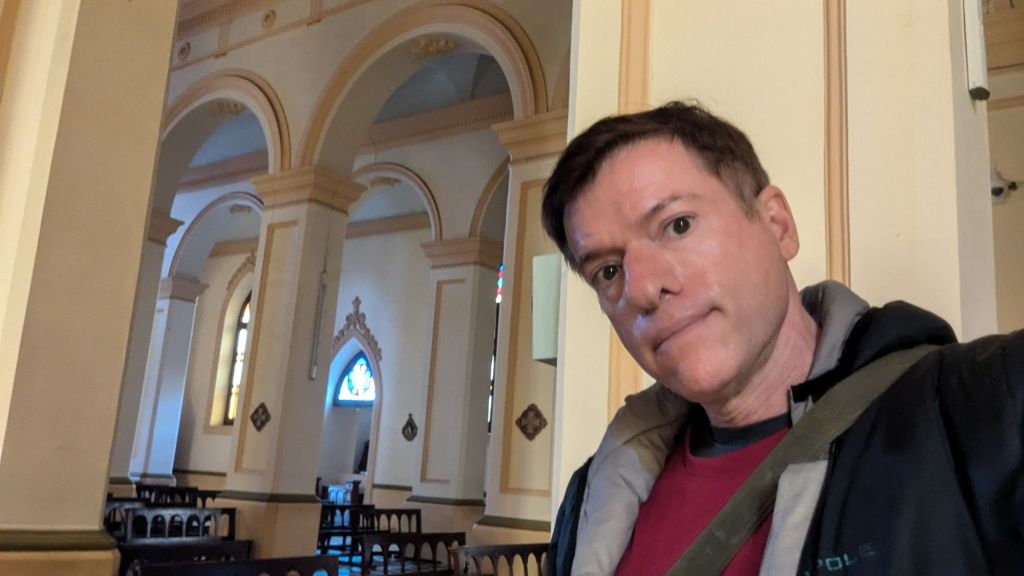
At 2:33 PM I entered the Catholic church. It had a simple but elegant design. I found the flooring to be of particular note, as I didn’t think I’d seen that before in a church.
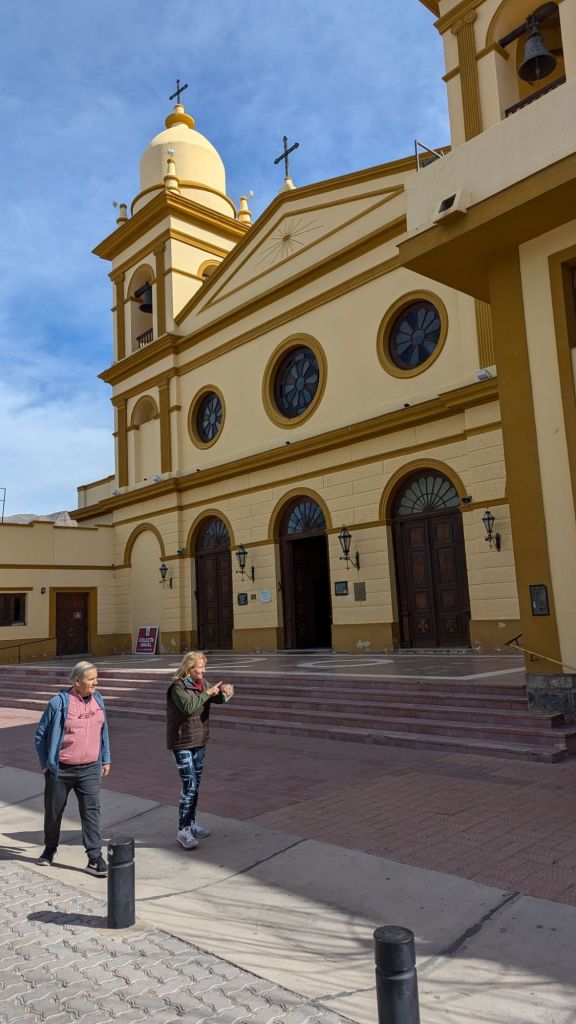


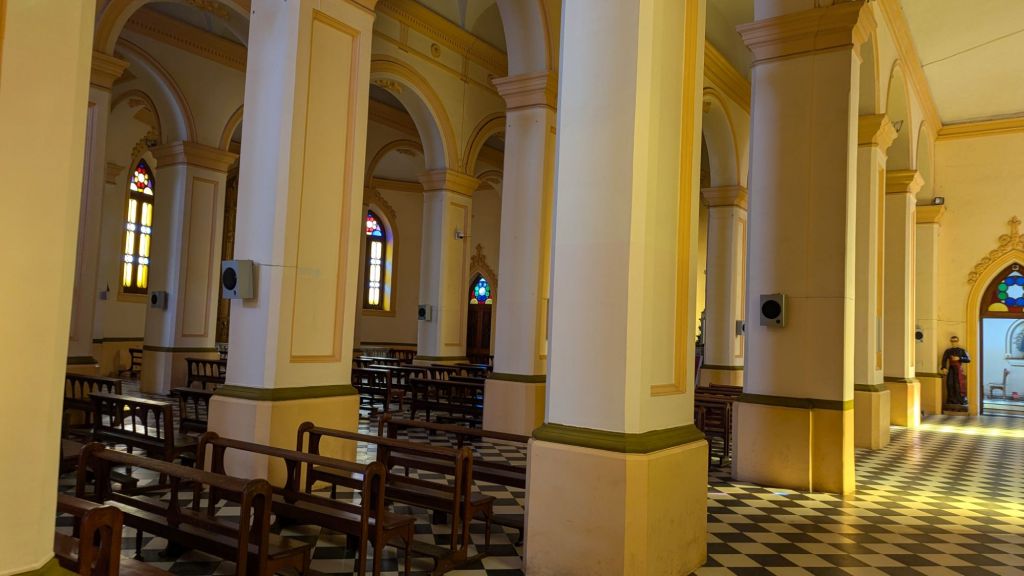
I departed at 2:40 PM walking back to our transport. The plaza was very peaceful. The theme of the city/town of Cafayete seemed to be “simple elegance”. It was not overly adorned in any way, but things seemed to be cleanly organized and in an attractive fashion.

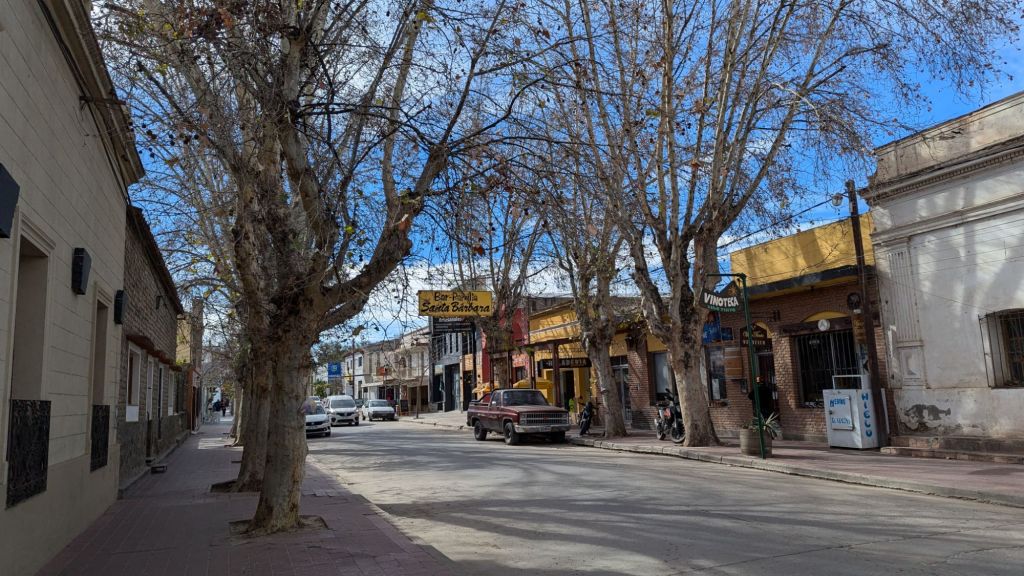
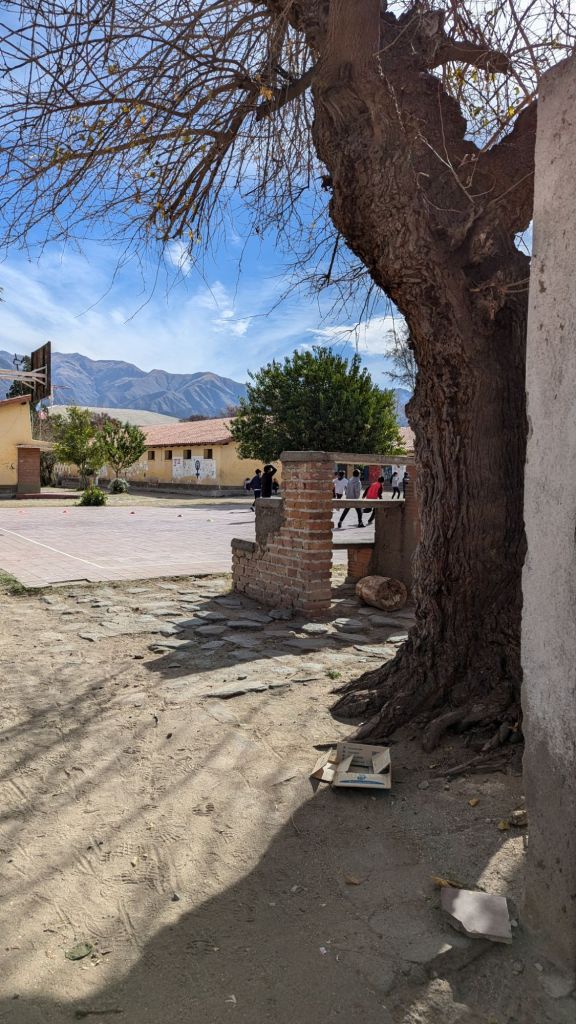
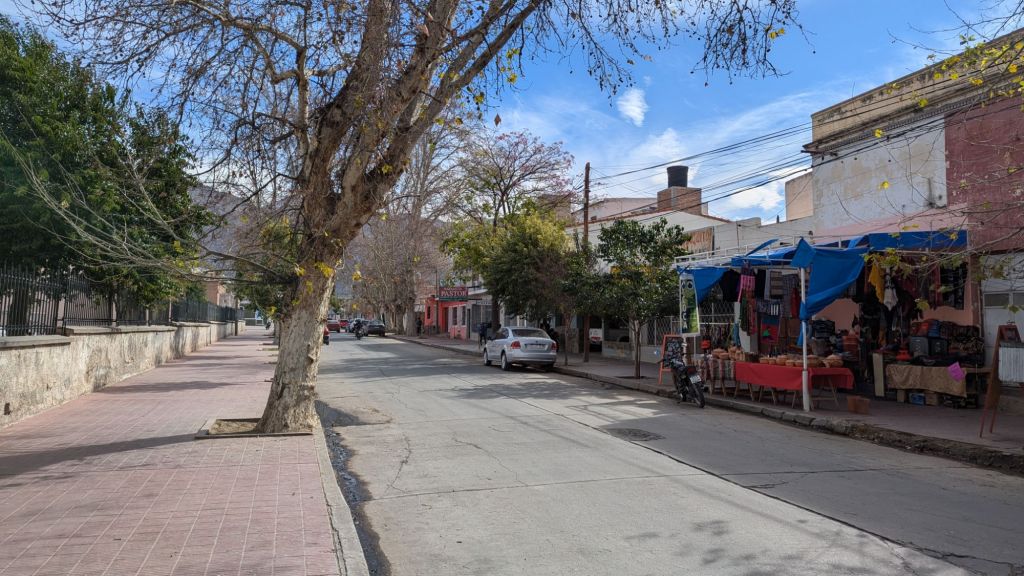
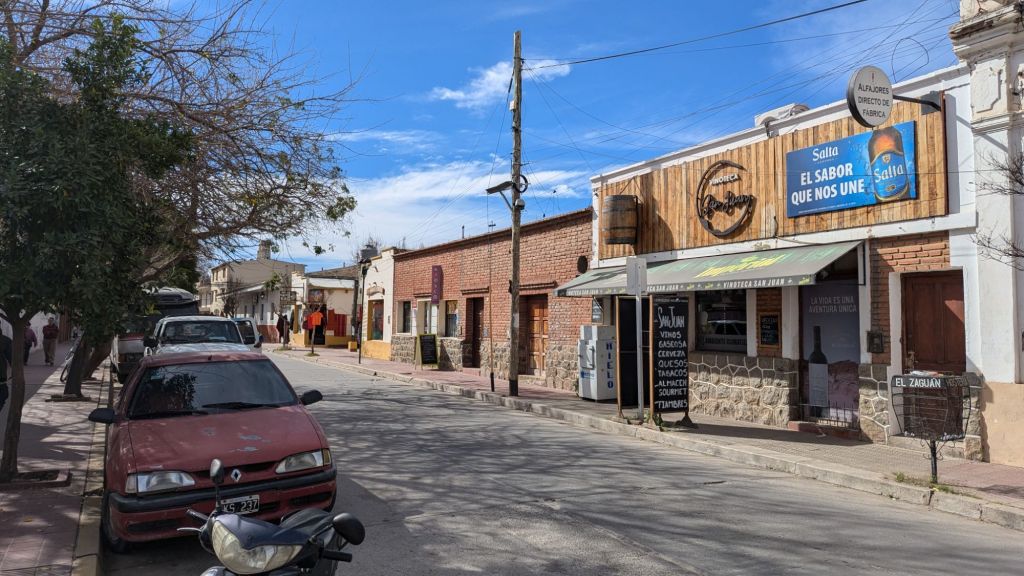
I was back in the van at 2:52 PM waiting for stragglers. Today had definitely not been a walking day. I will probably try to do more walking when we get back, even though I had sort of thought of keeping it a simple evening near the apartment. I was feeling a bit bloated from too much food.
The vehicle departed at 2:56 PM. The guide mentioned that here in February there is a huge folklore festival, and it’s always closed by several hours of el Chaqueño Palavecino (a very popular local assist) singing.
At 3:15 we had a photo stop to take pictures of what they call “Los castillos” (the castles). It was fine, but I thought the earlier things we had seen were more noteworthy. Then at 3:25 PM we were on our way once more. That was the last “tourist stop” of the trip.
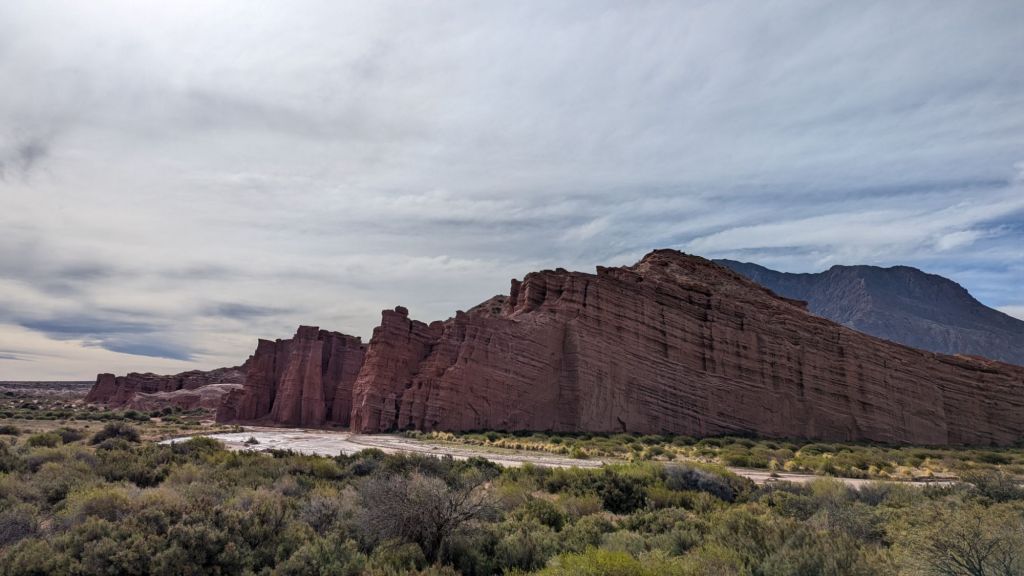
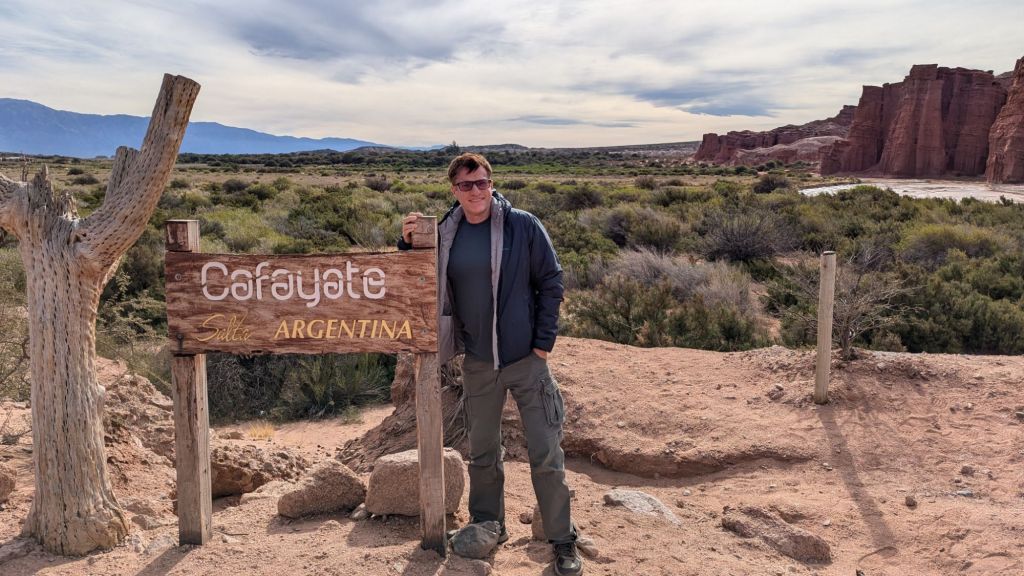
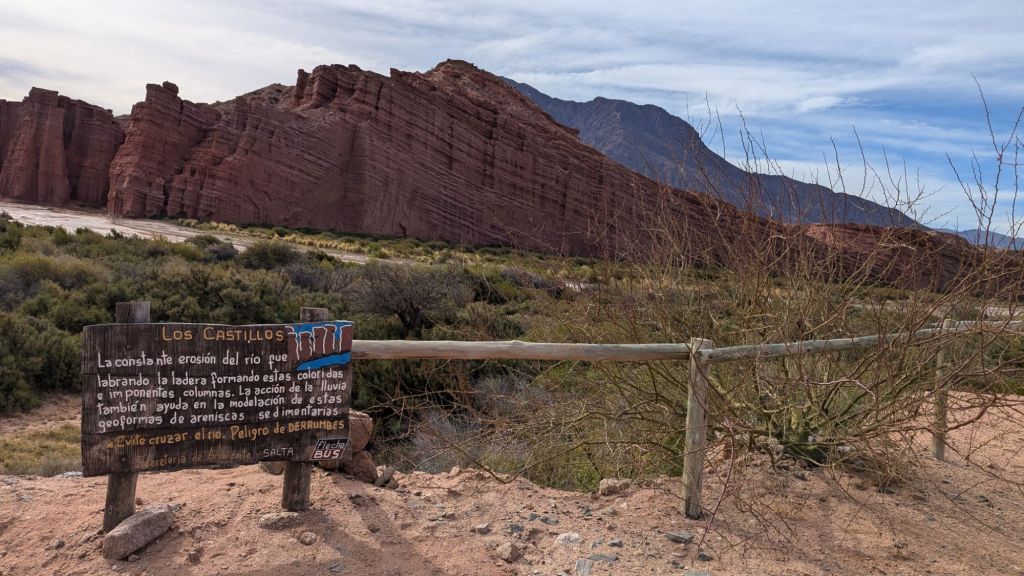
However we did make a quick rest stop at 4:29 PM at the same place as before, being back on the road by 4:45 PM.
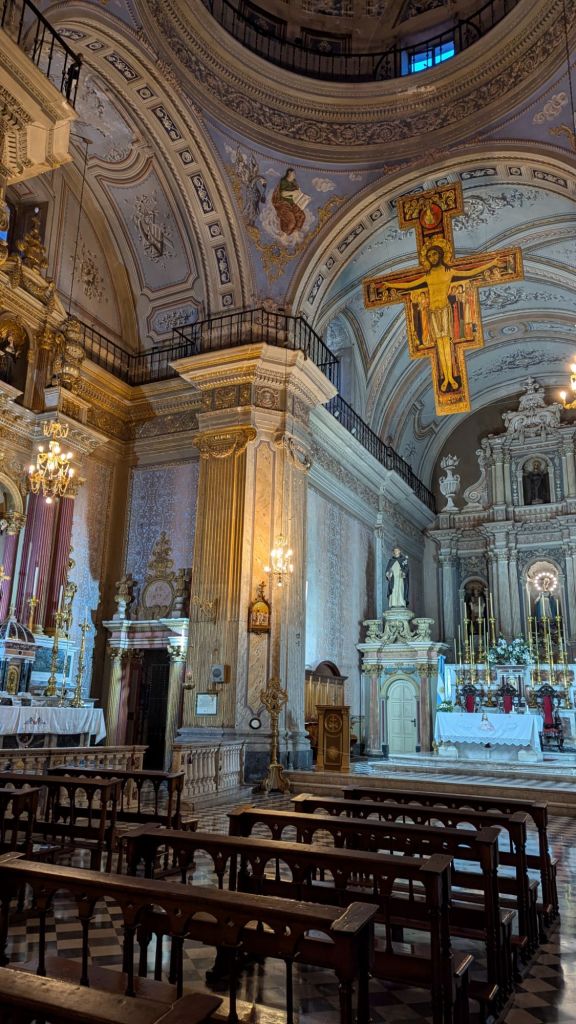
I was pleased to get off the minibus at 6:24 PM, right in front of Basilica Menor y Convento San Francisco in Salta. I decided to go into the main hall where I saw that this Catholic church was more like the ones I’m accustomed to visiting as a tourist in Latin America. Adding to the solemnity, they had beautiful religious music playing at a reduced volume.
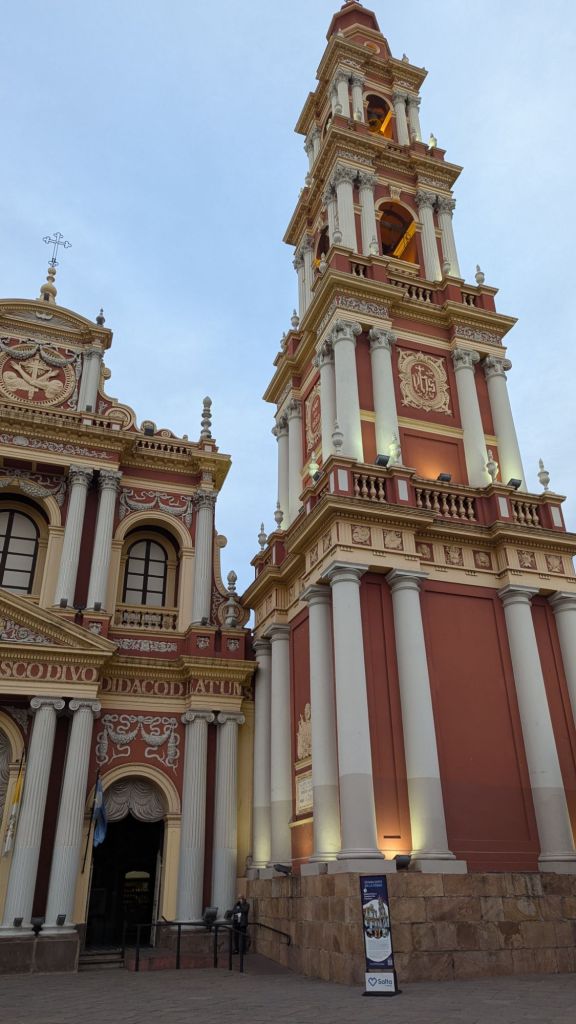


At 6:45 PM I had to admit that even though I had only been there for a few minutes, this church left me with a feeling of peace. I’m very happy that they dropped us off here, as otherwise I probably wouldn’t have wandered inside. I left at 6:50 PM with no particular destination in mind, just wanting to see more.

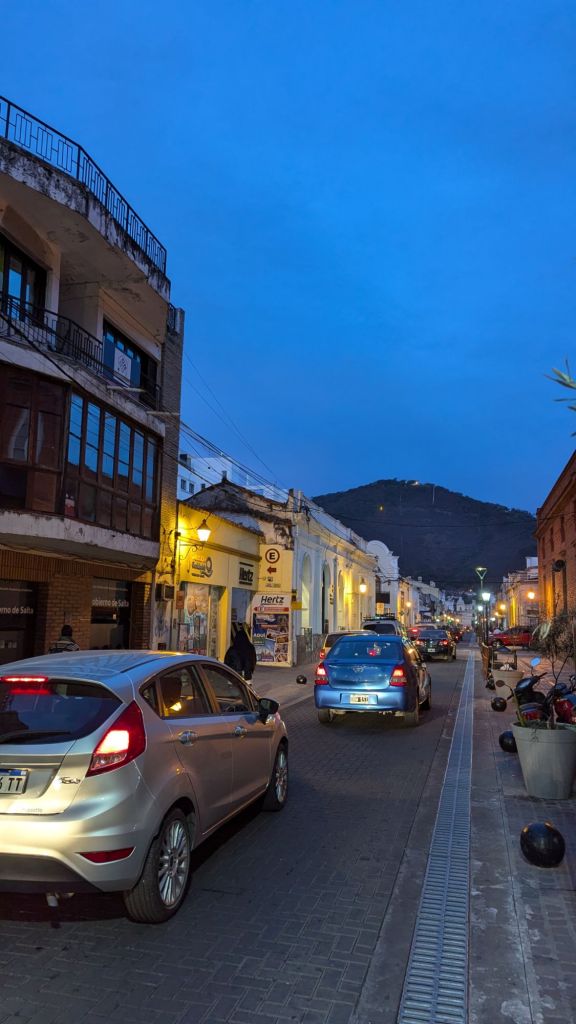
At 7:07 PM I found myself back at Plaza 9 de Julio. Then at 7:22 PM there was some sort of a peaceful street protest related to education. It was very orderly. While hanging out I bought some pastries from a street vendor for 1500 ARS.


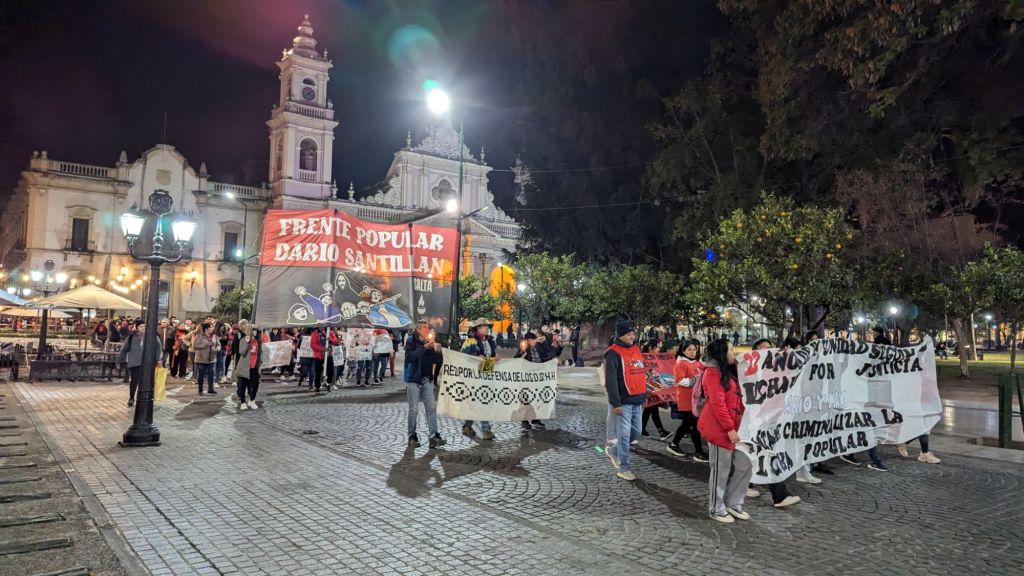
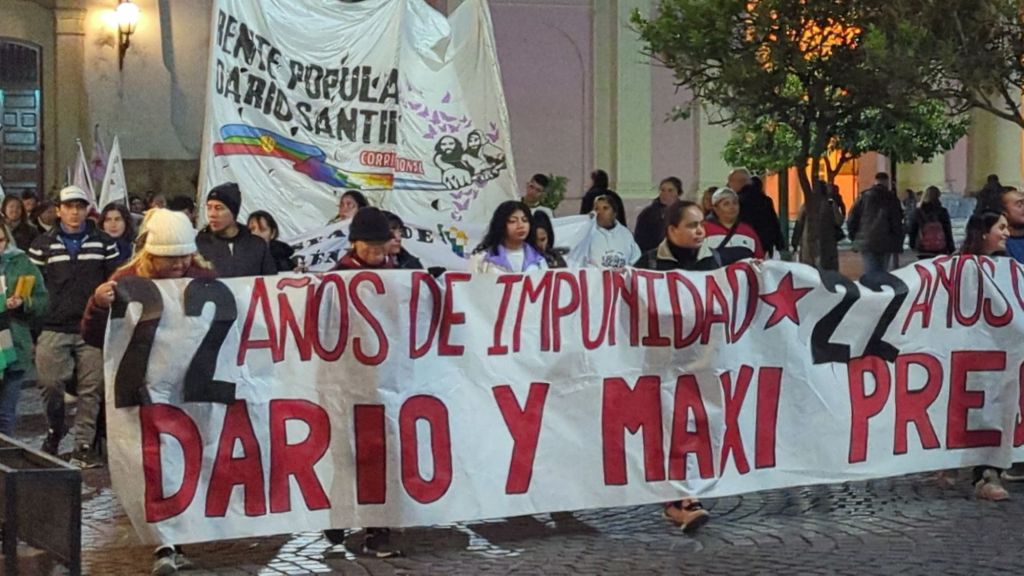


My general impression at 7:34 PM was that everything was very beautiful and there was a lot of action around the plaza. It was nice, but I decided to walk back to where I had eaten on Sunday. I had liked it before, and wanted to patronize them again.
When I arrived at 8:17 PM the gate was locked, but I knocked and they were happy to let me in where I ordered 2 of each of the types of empanada she had (6 total). I sat while she baked them.


At 8:39 the six empanadas were turned over to me for only 3000 ARS cash and I headed to the house, where I arrived at 8:45.
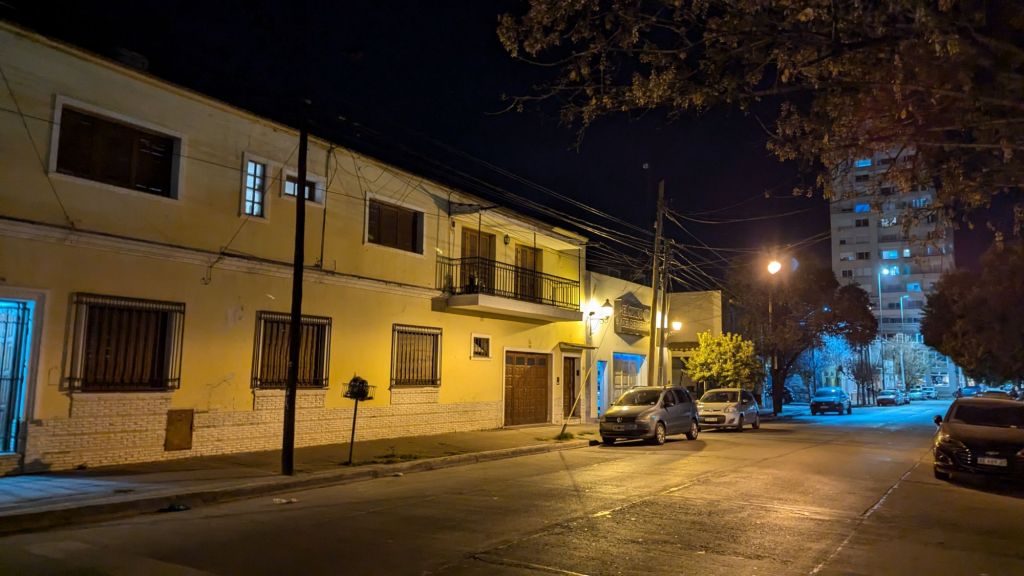
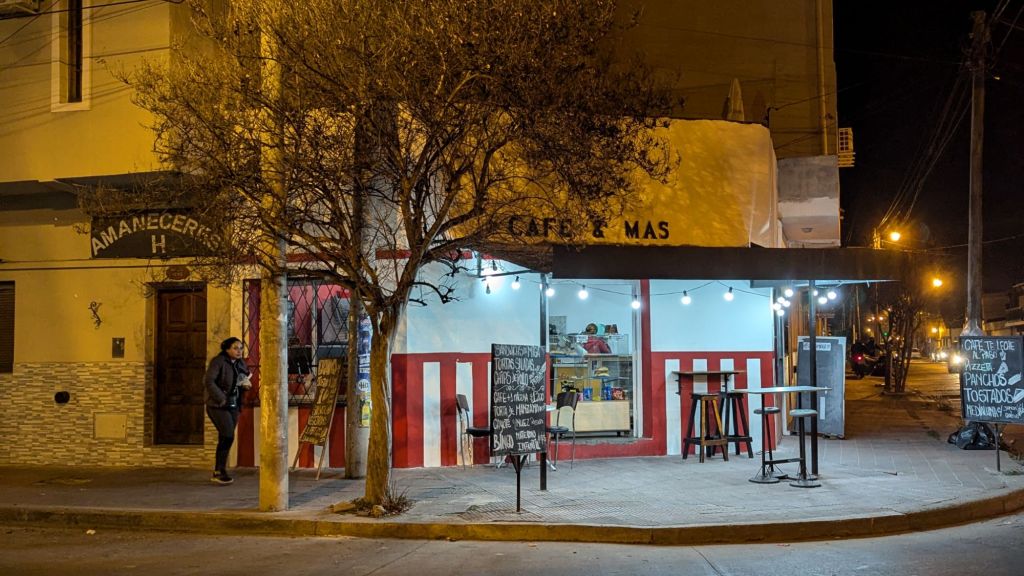
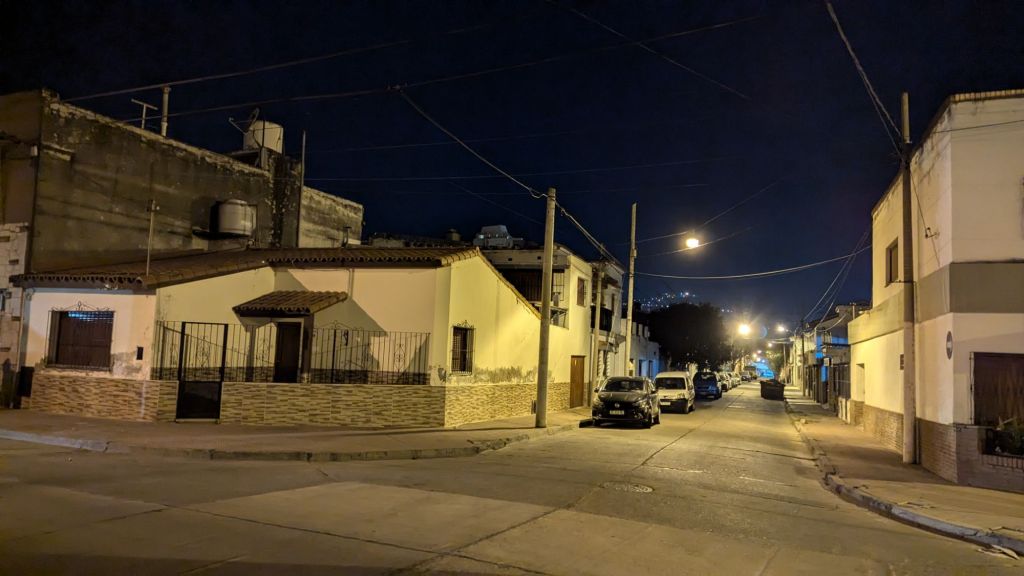

I washed clothes, ate, and read in bed until 10:30 PM
Today’s excursion had definitely been more low key than the previous two days, but it had been good to have a bit more relaxation. What did you think? Did you prefer today or one of the other days of excursions? Let me know in the comment section below.

 Travels with Jay