
Hey there readers. I really hope things are going well for you. Today, as with the previous several days, I got up at 6:00 AM and for breakfast at 6:30 AM heated up some of the empanadas and the simple pastries I had bought from the street vendor.

It wasn’t until 7:54 AM that the minibus picked me pick up. It looked like this would be the biggest group so far. There were 14 passengers with me, and 2 more entered at 7:54 AM. Today I scored the coveted single front seat, so I will have a good view of both the front and the side (get ready for lots of windshield pictures). The driver/guide’s name was Marcelo.
Around 7:58 AM Marcelo started with his running explanation, all in Spanish. That was fine with me. The sky was clear, and at 8:04 AM it was already fairly light out. Interestingly, while there are various spices and other agricultural products here, the paprika from this area is considered one of the two best varieties of paprika in the world. Among the other major products of the region are sugar cane, biodiesel, and tobacco.
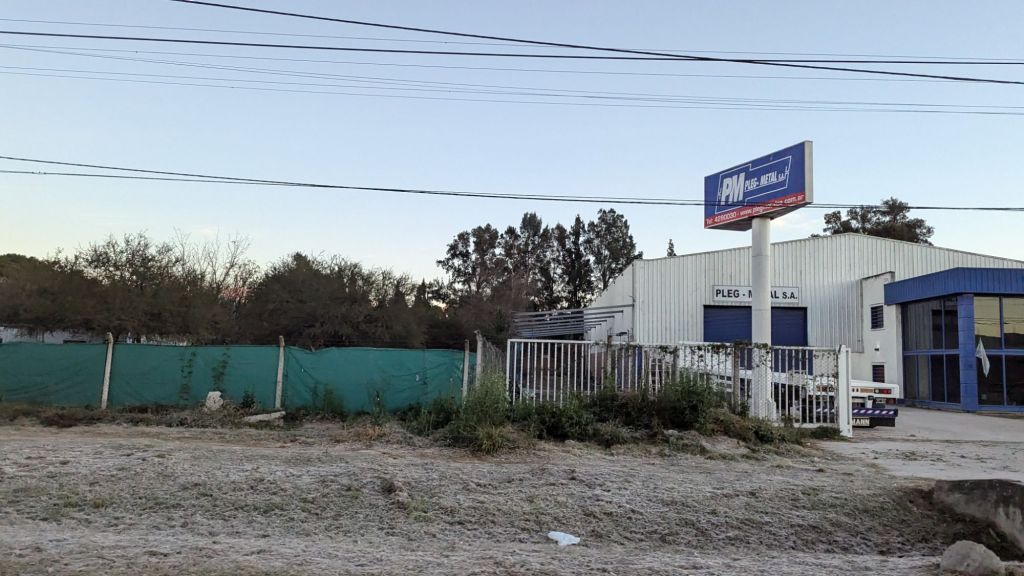
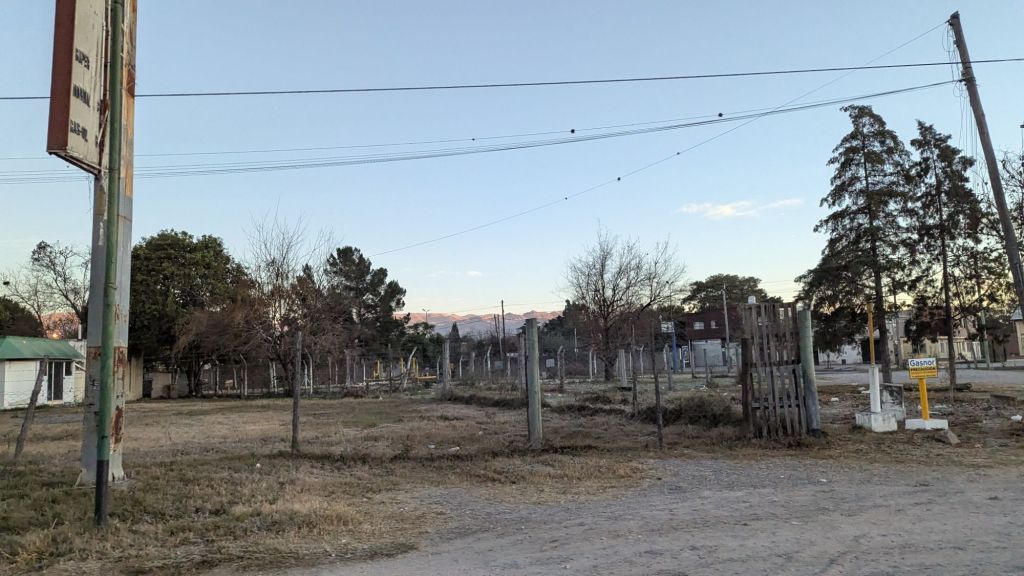
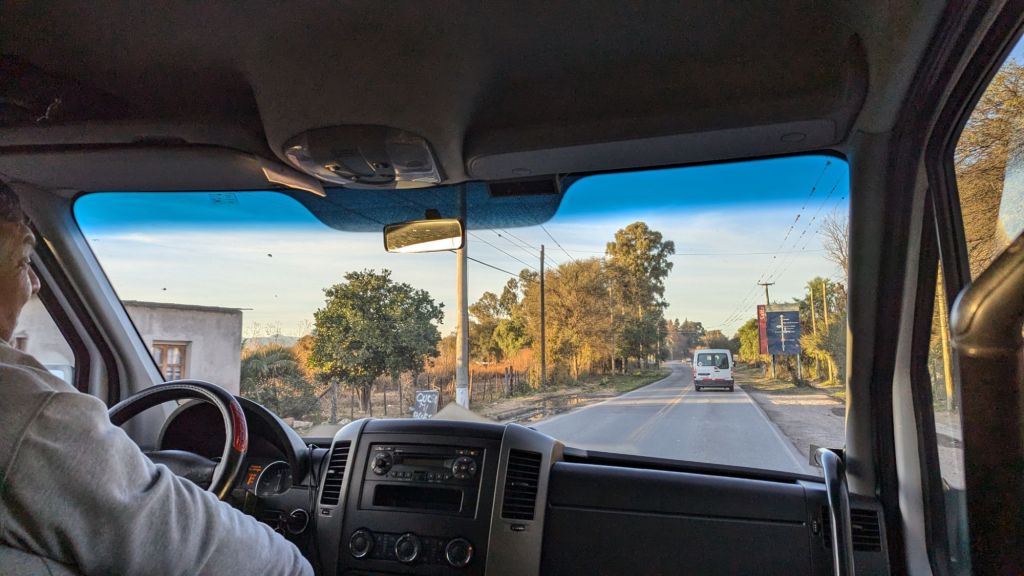
At 8:14 AM the driver stopped speaking and we were given time to rest and just enjoy the scenery.
At 8:17 AM we passed Cerrillos, and then at 8:32 AM through Mercedes.
By 8:41 AM since I think everyone else on the excursion today was Argentinian or a local resident, the ever present mate thermoses and “bombas” were out in force. Before coming here I had thought it was just a custom to constantly drink this herbal infusion, but I have since learned that while there is clearly a strong cultural element, it is partially also an addiction, since mate contains various degrees of caffeine. However, similar to green tea, without the caffeine jitters at times associated with coffee. Regardless, as an outsider, it’s certainly odd to see the way they lug those Mate kits everywhere. I guess it’s no stranger than in some countries, people carry water bottles everywhere. The only difference is how the Mate is drunk out of an open cup.


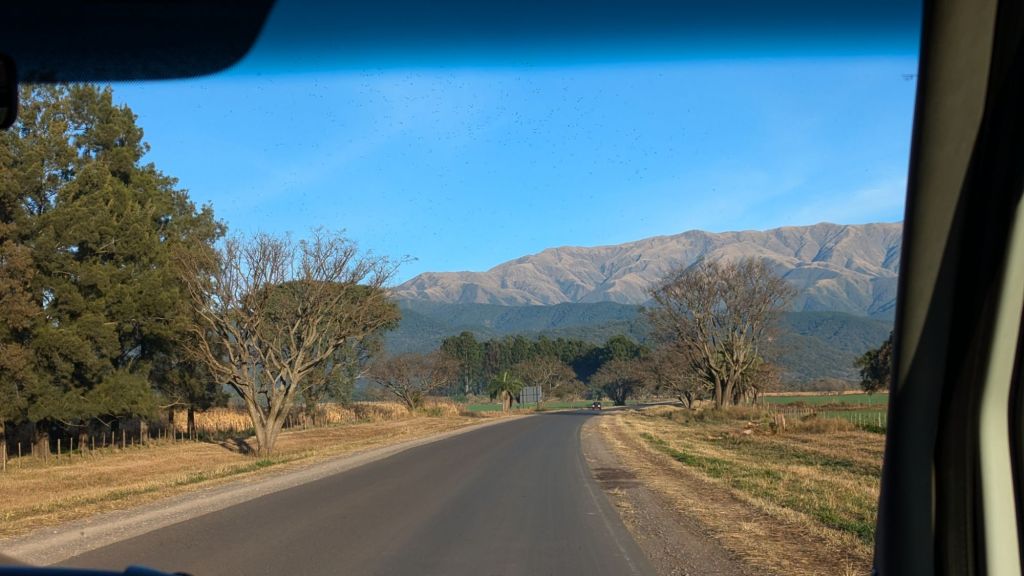
At 8:51 we were in a transitory jungle/forest (selva de transición).
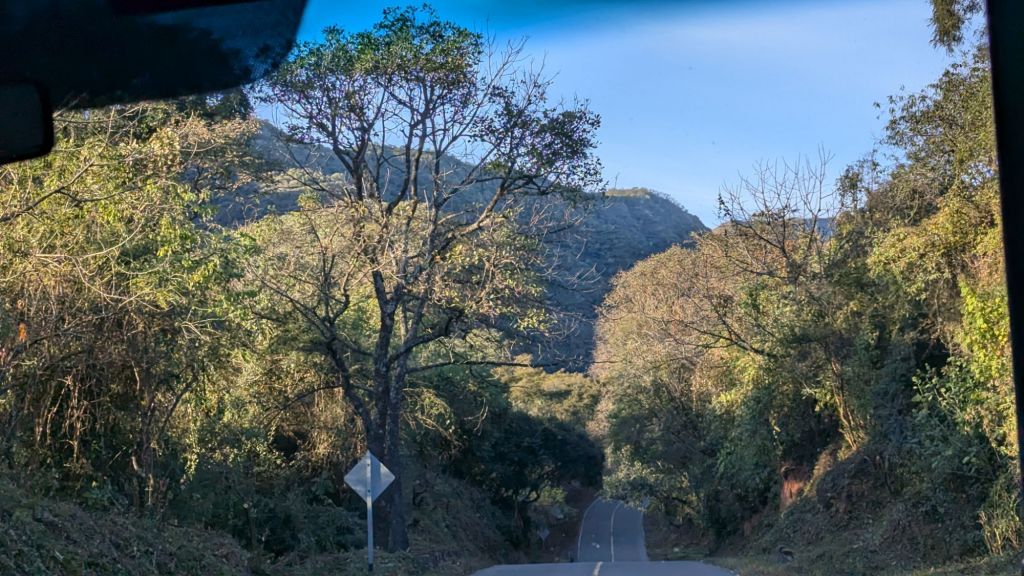
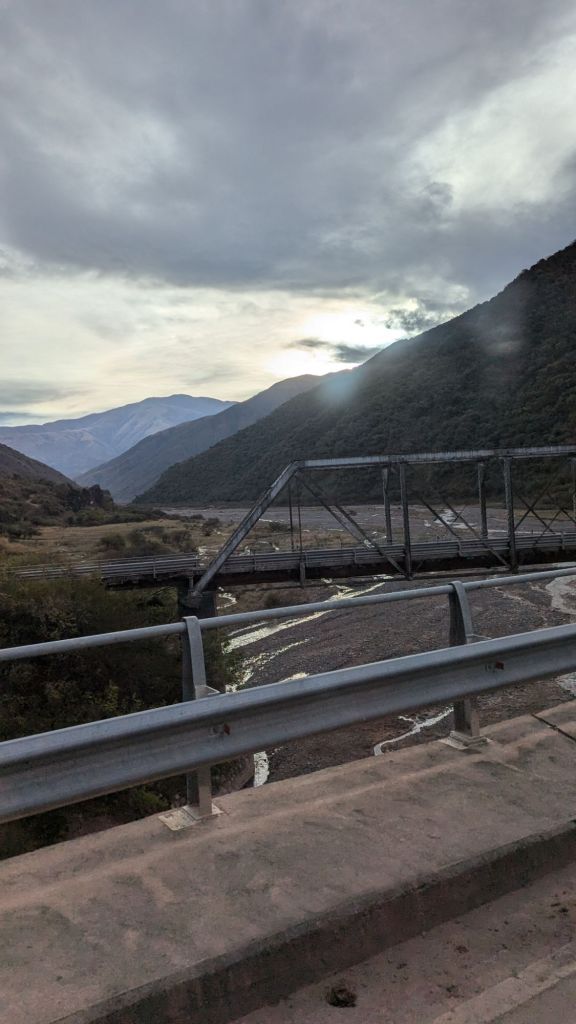
Then at 9:05 AM we stopped at a bridge (Cuesta del Obispo – Bishop’s Hill) to take pictures. The bridge we walked across is still good for pedestrians but no longer for vehicles.


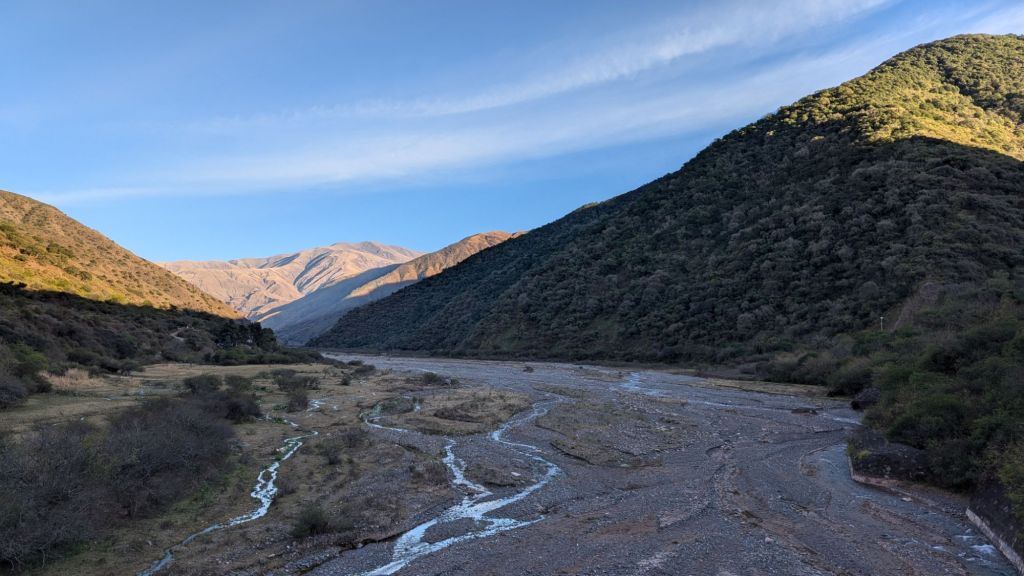
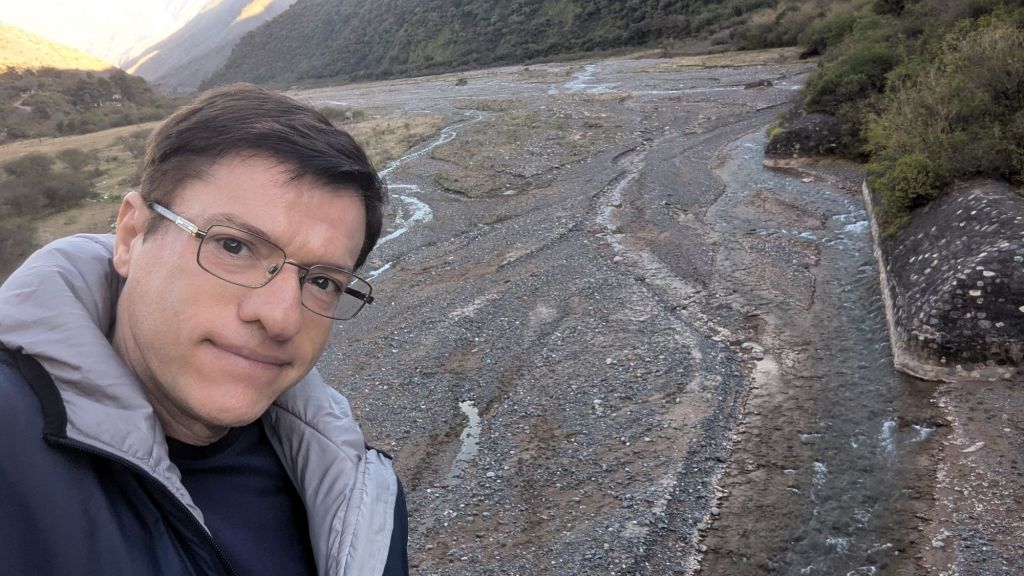

At 9:14 AM we got back on the bus. Marcelo pointed out that the vegetation on the right is much more exuberant than the left because of the direction of the winds. He was also full of other tidbits like how in the late 1970’s domestic tourism and then international tourism in this area started to develop because of the influence of Sol Jet, which was a subsidiary of Aerolíneas Argentinas.
At 9:32 he was still talking, and I certainly found much of it to be interesting, it was too much to write it all down. Again though, here is some that he shared. He told all the rocks in the area and why there are differences and what each type means. He also mixed it in with many stories and legends, kind of like a grandpa. At 9:40 one of the stories, who knows if it was true, was that during carnaval people could do a trial marriage for one year, but they were only allowed two attempts. If the second one didn’t work, you were allowed to separate, but had to remain single.
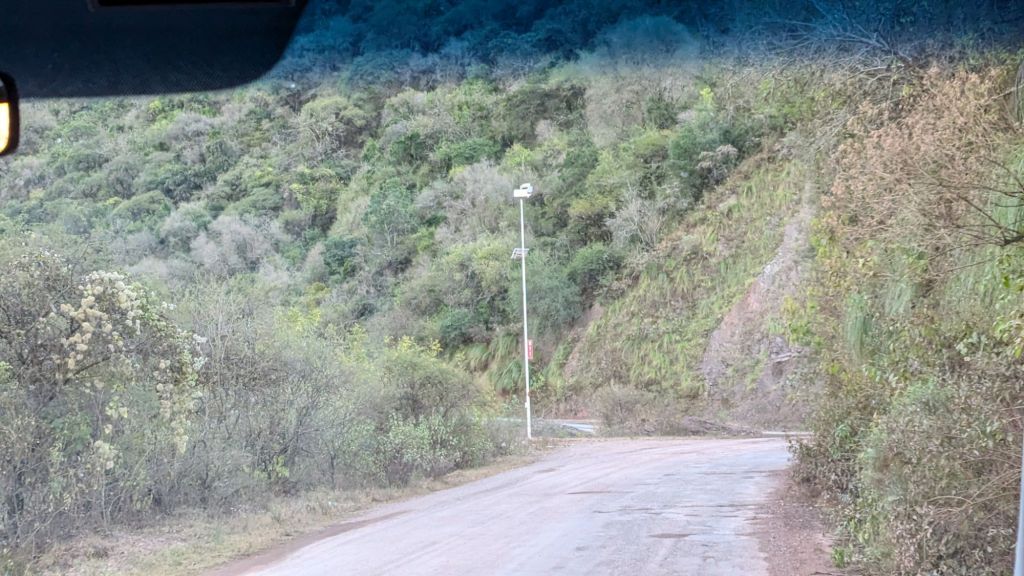
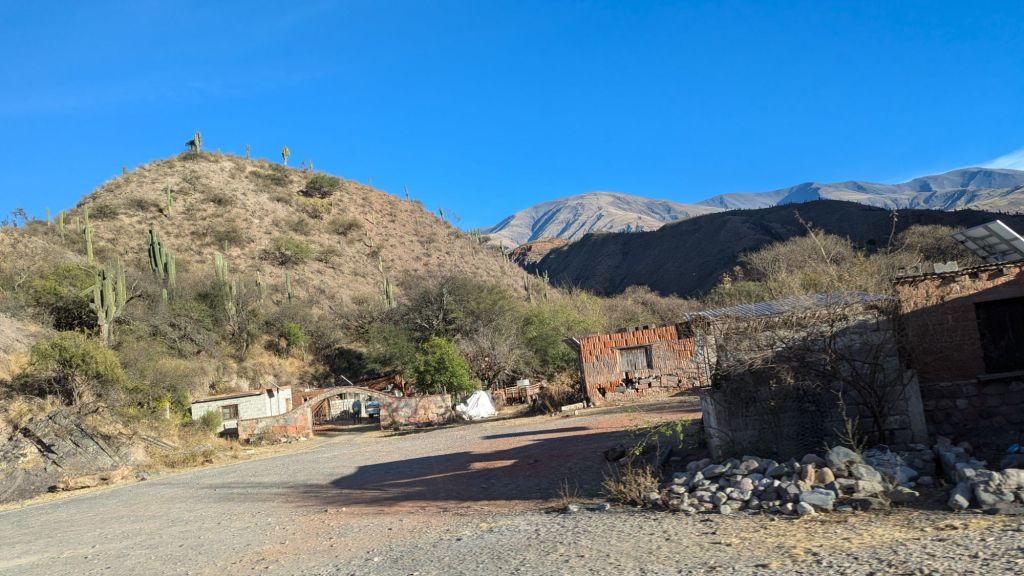
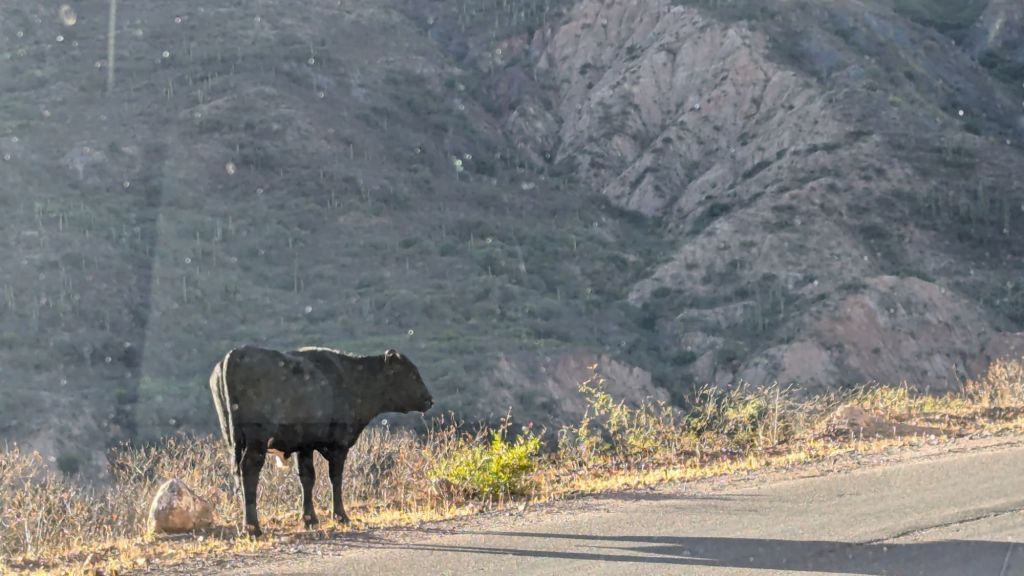
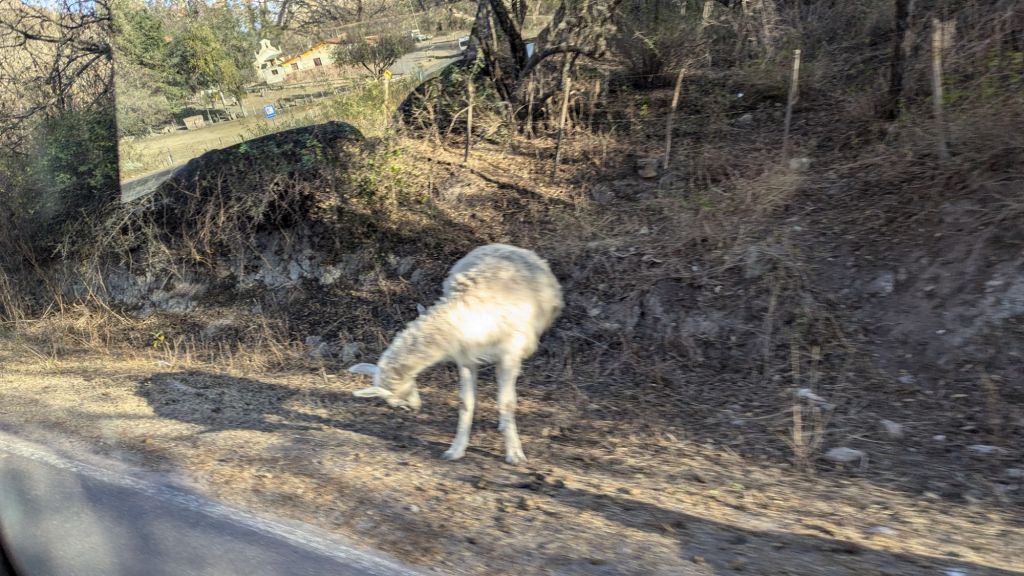
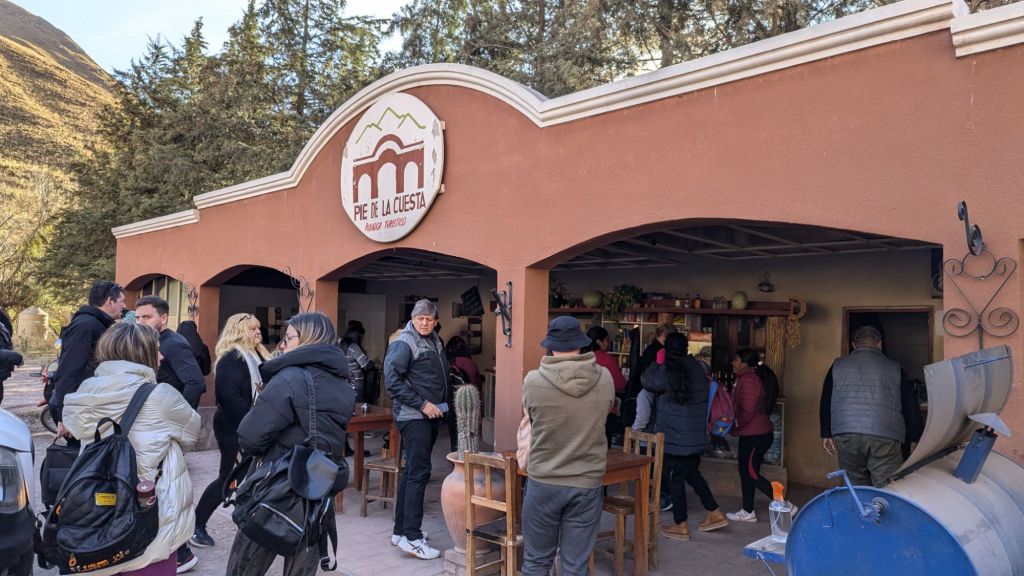
At 9:42 AM we had a rest stop. I paid 2800 ARS ($2.26 USD) for my coffee with milk, Alfajor and a bottle of water. It drew my attention that the cup was styrofoam and the spoon was disposable plastic. The woman who was selling was running all over the place. I had decided to buy another bottle of water since I noticed that I had already drunk half of the one I had filled in the apartment, and I decided to not risk filling it here, even though the tap water was probably perfectly good.

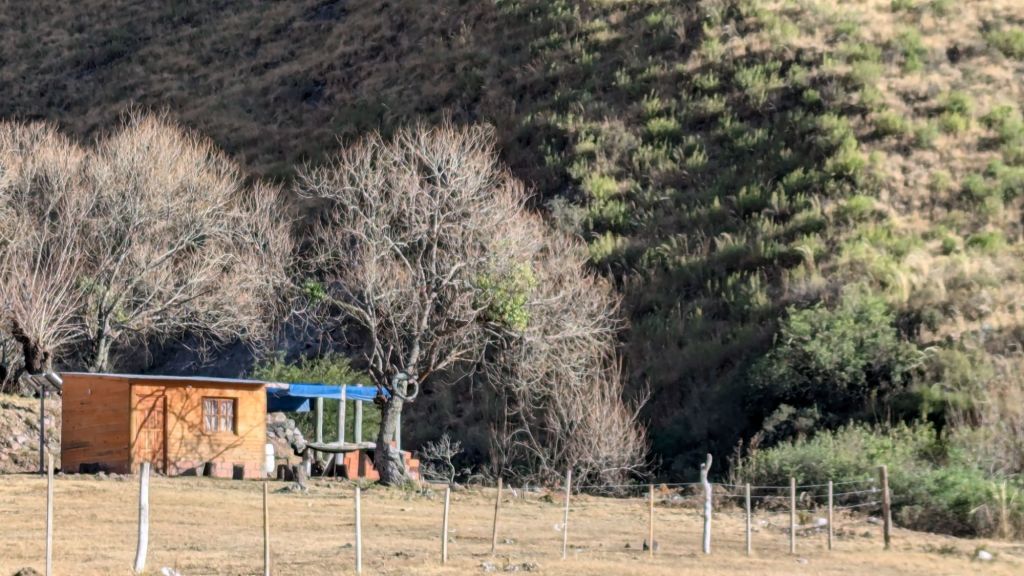
At 10:04 AM we were promptly back in the van and moving. Again, Marcelo was commenting the entire time. We moved onto an unpaved road, which was not permitted to be paved as a preservation effort since much of this route was a historic Incan road. While I agree with the theoretical desire to preserve, I don’t really see how this is a preservation effort when it is still constantly used by cars and vans, even with pressed down gravel; regardless, I’m not a conservationist, so who knows. Interestingly, only 20 km is unpaved because when the road moves into the national park, the national government does not recognize the preservation of the road which was declared by the provincial authorities.

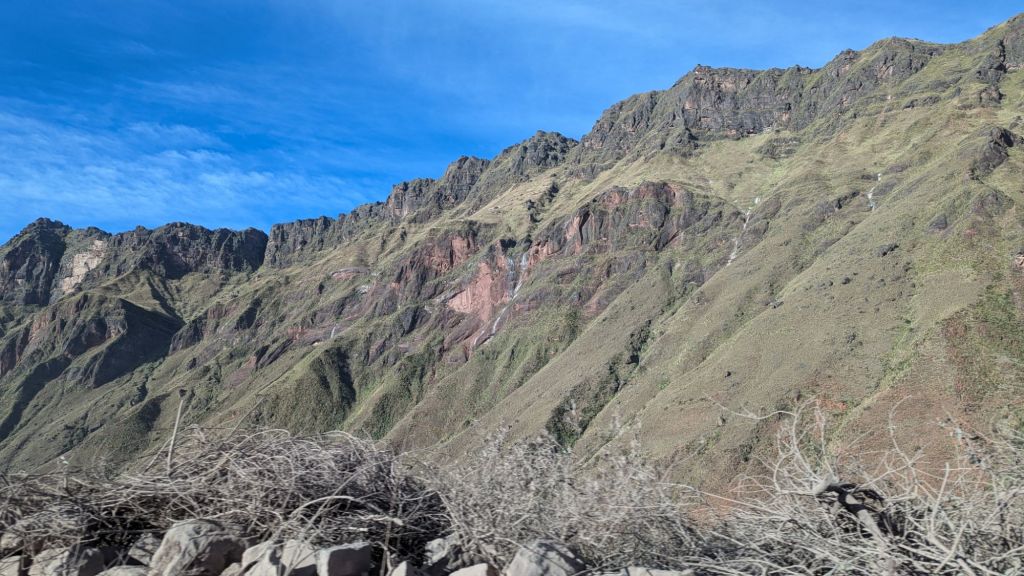
At 10:12 AM we were heading up in a steady fashion.

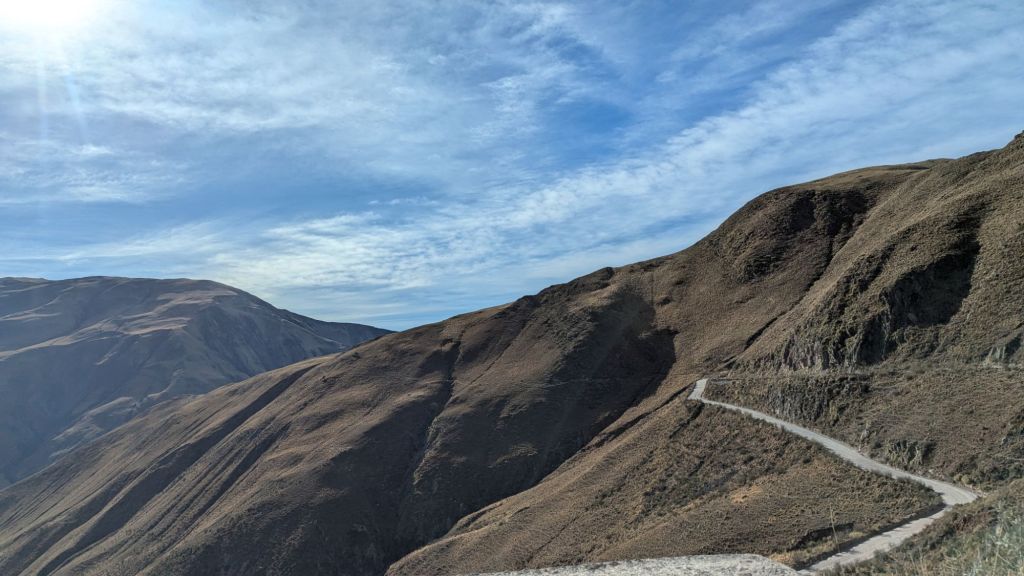
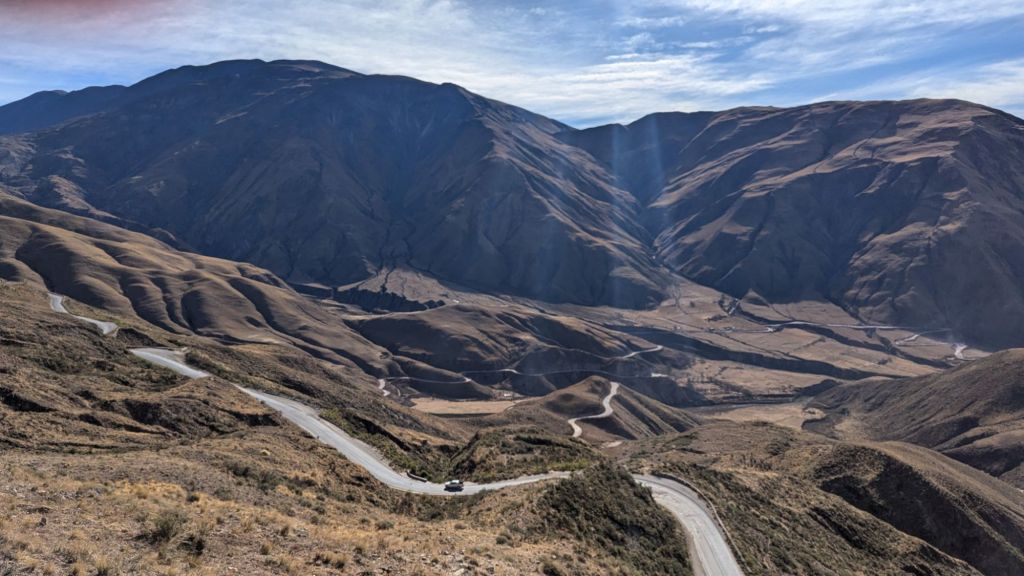
At 10:20 AM Marcelo, who is clearly an apologist for the Spanish invasion and colonization, started making the argument that the Spanish left the Americas better than they had found it. Of course, that assumes that everyone judges better/worse using the same criteria. However, he recognized the many benefits also brought by the Incas (who were also invaders to this area), many of which still remain, both physical and cultural/practical. No doubt the first peoples of the area might have a different interpretation, especially when considering the abuse/enslavement/even genocide which took place of many tribes, but none of them were in the tour group. At 10:27 AM I acknowledged to myself that certainly his discourse in favor of the advantages of the fusion of cultures which took place in the Americas is practical for attempting to maintain peace and cohabitation of cultures today. Around about this same time, he pointed out that there are no longer trees here due to the altitude, but there was still plenty of short vegetation.
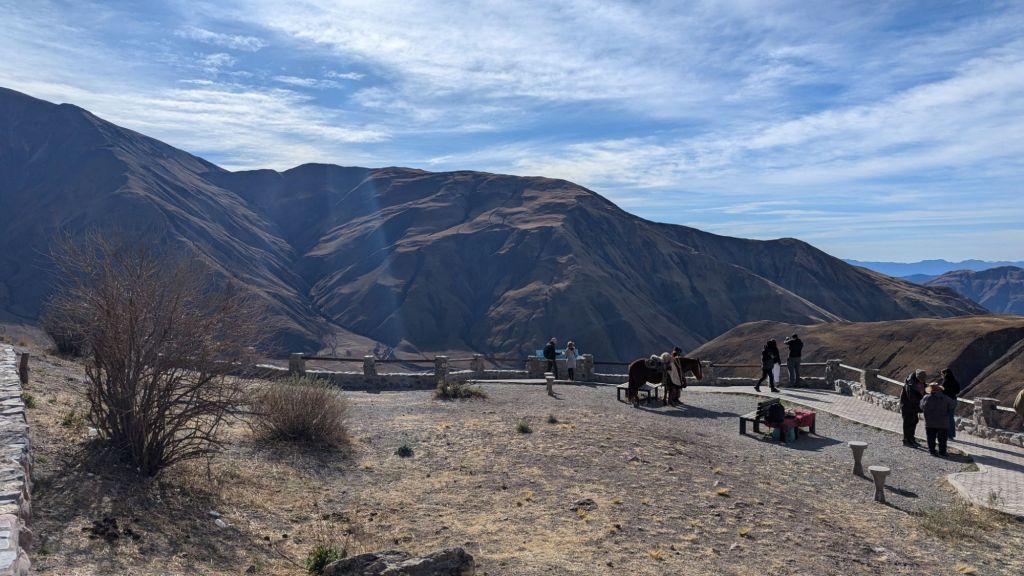
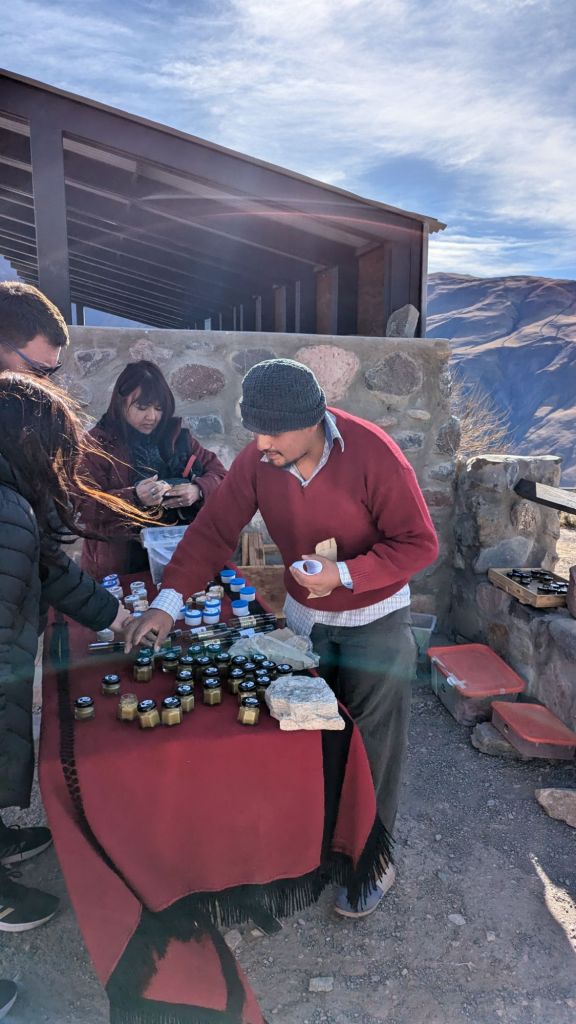
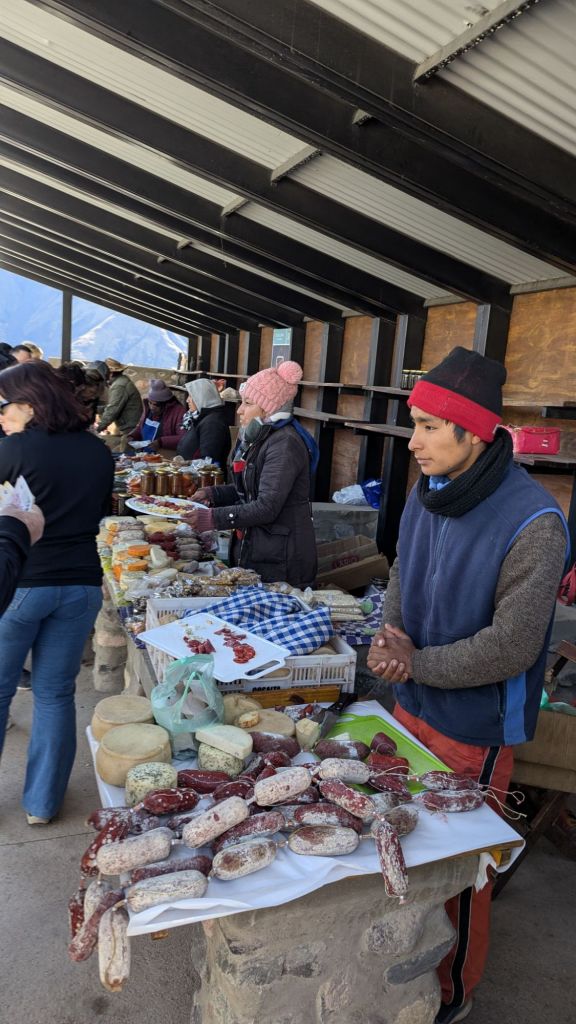
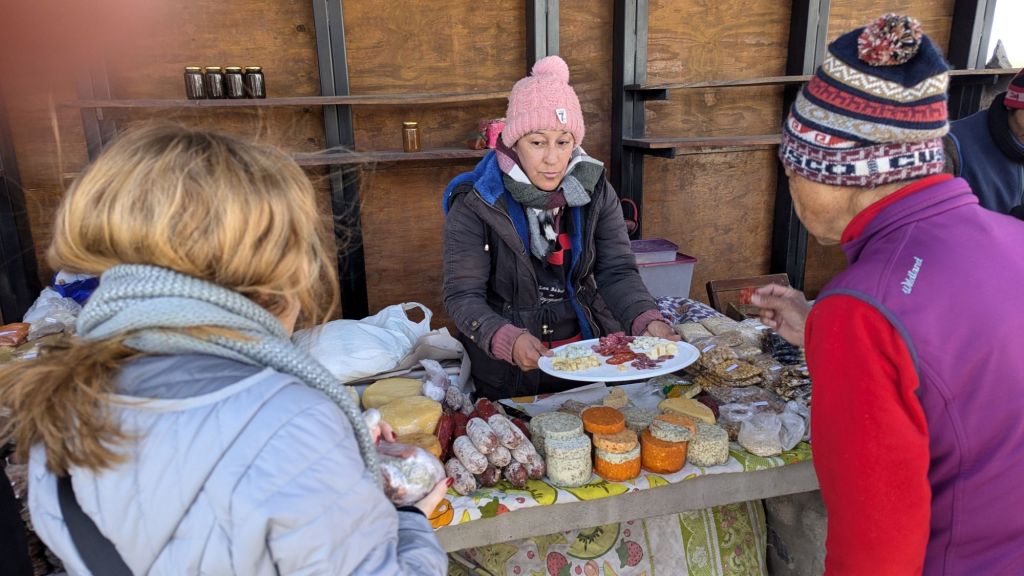
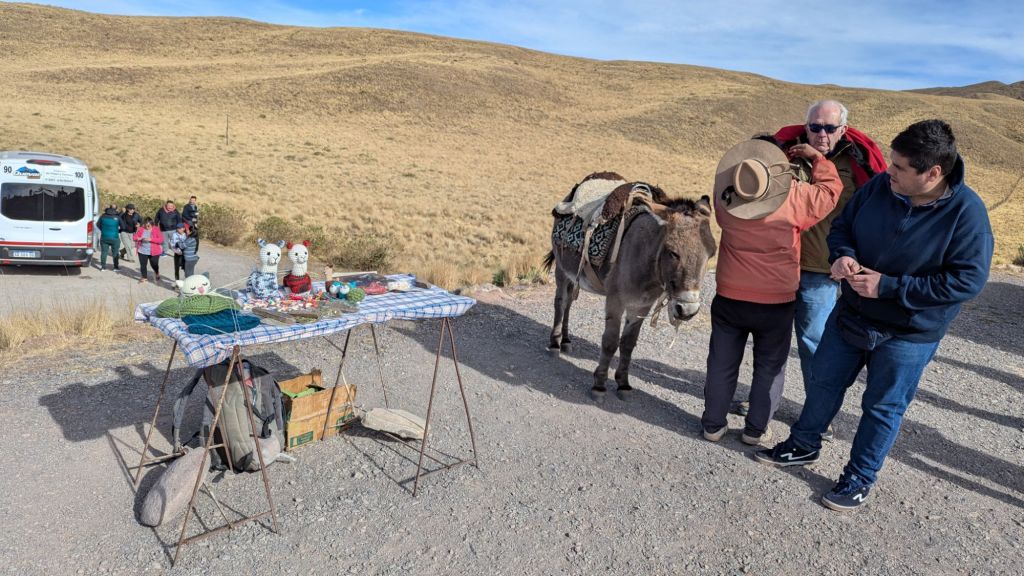
At 10:42 AM we stopped for the viewpoint and to try salami and queso made by local producers. While there were several tourists here, it definitely wasn’t crowded. There were also some local sellers of handicrafts, but they weren’t intrusive or annoying.
I noticed at 10:55 AM that they were selling llama salami and goat cheese. It wasn’t expensive at all. However, I didn’t see how I could take it back to India with me to Costa Rica or the USA. One of the people I was talking to told me that there was mostly domestic tourism in the north, partially because it’s cheaper, but it’s also considered heritage tourism. In contrast, the far south is more expensive, mostly pure nature tourism, and more where there is international tourism. In general I found it to be a good stop, but was also ready to get back in the vehicle at 11:06 AM.
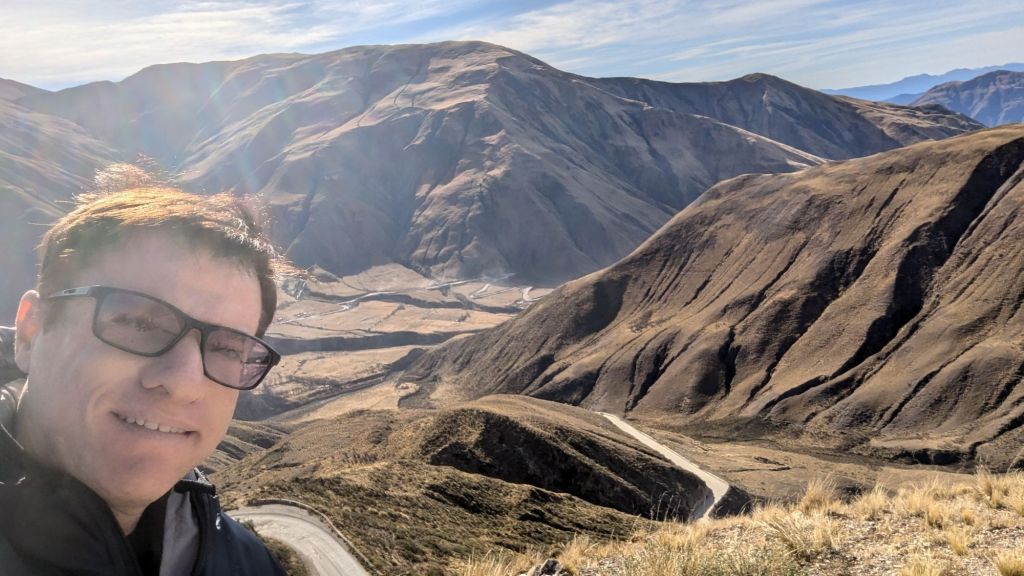
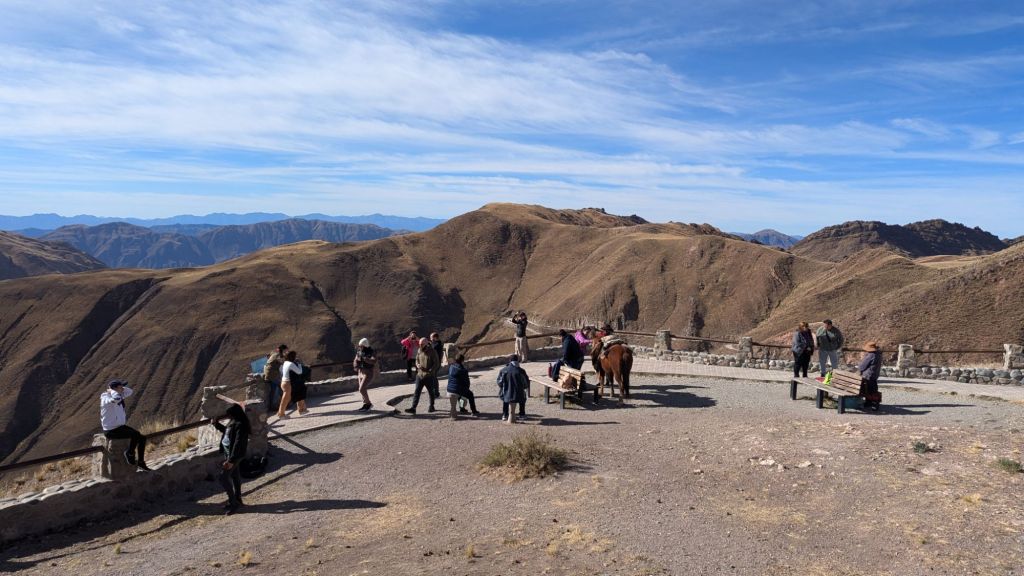
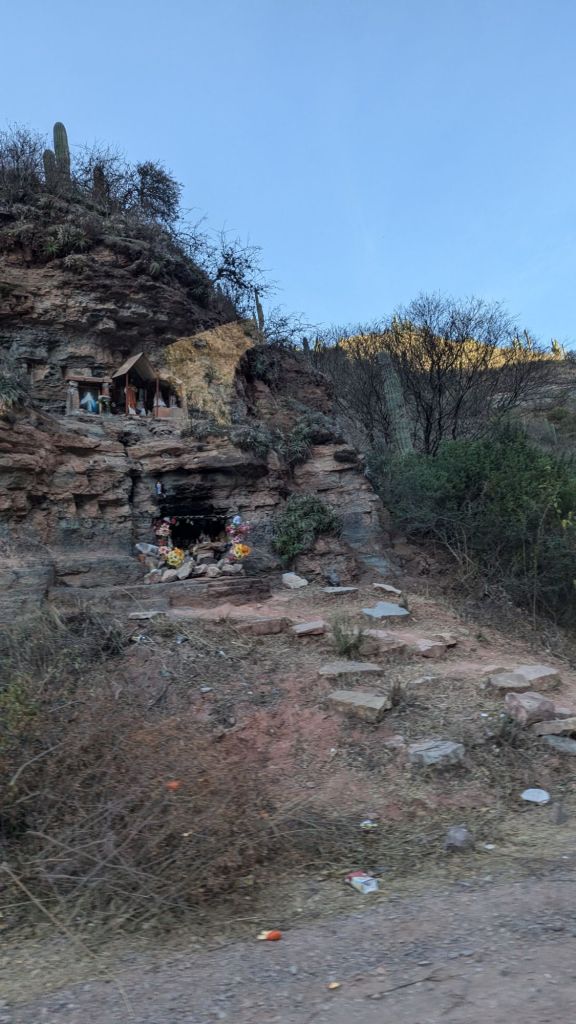
Shortly thereafter at 11:12 AM we stopped at another viewpoint which is known for being where a large millstone was left abandoned when a cart broke. There was more to the story, but he was talking so much that at some points I just didn’t really pay a lot of attention, even though he was mostly entertaining and at times extremely informative. There was also a small chapel here, which I think had something to do with the whole millstone story. If you come here later on, you can ask for the additional details. Alternatively, with these modern days it’s probably also all available somewhere on the internet without too much research required.


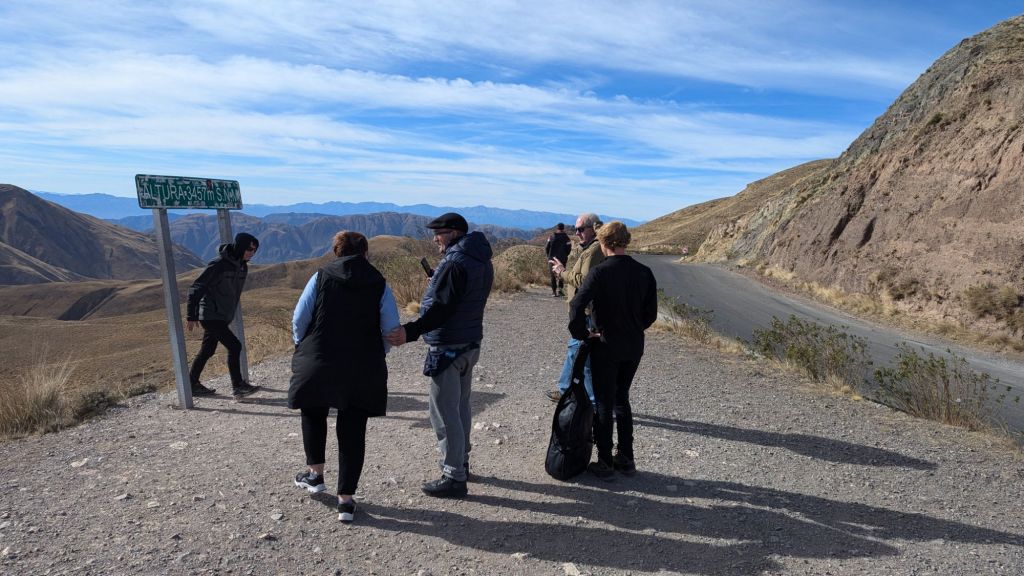

At 11:22 AM we got back in the van. Marcelo commented that the highland valleys have a different name: “Puna” which distinguishes them from lowland valleys, simply called “vales”. In the distance we saw some guanacos which are protected in this national park. They have black faces, which distinguish them from vicuñas. Here the vicuñas and guanacos are protected animals, unlike llamas, because these first two are not easily domesticated.
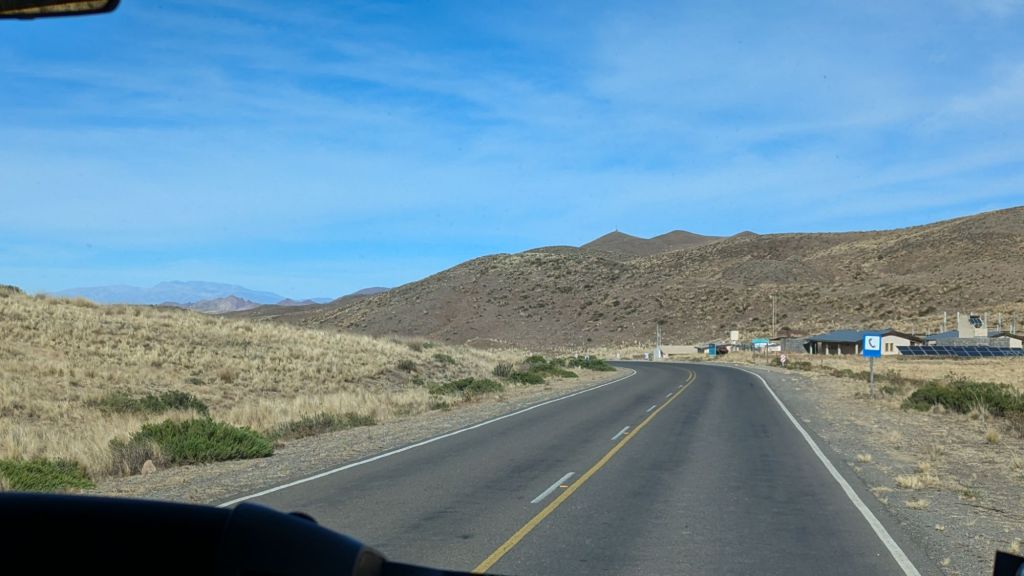
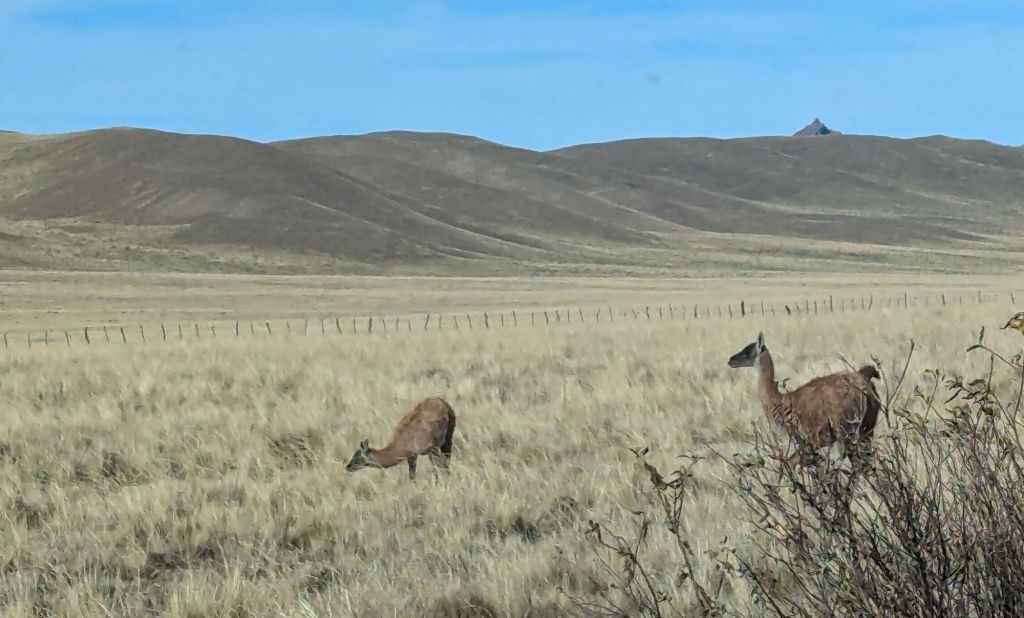

Furthermore, guanacos have only one calf a year, and the vicuñas which live even higher up have only one calf every two years. In contrast, the llama is not protected, because it is easily domesticated, lives at a much lower altitude, and has two calves a year.
Vicuña wool is evidently incredibly expensive. Even in vicuñas ranches, where they have semi-domesticated animals, they are only permitted to take 200 grams of wool a year from the male vicuñas. They are not permitted to take any from the females, since it’s too cold and taking part of their wool could result in the death of the gestating calf and even the mother. As I said, assuming it was true, much of Marcelo’s information seemed useful and interesting, whereas other things were just him talking. Nevertheless, almost everyone seemed to find him to be very enjoyable.
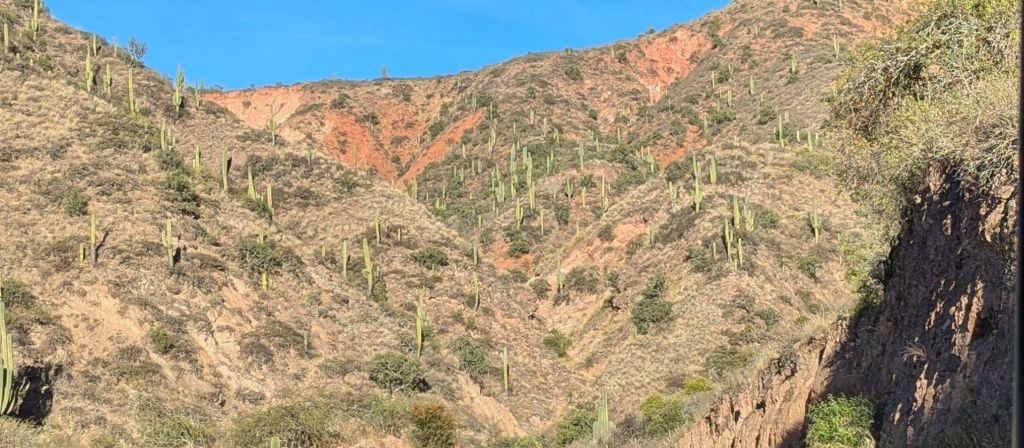
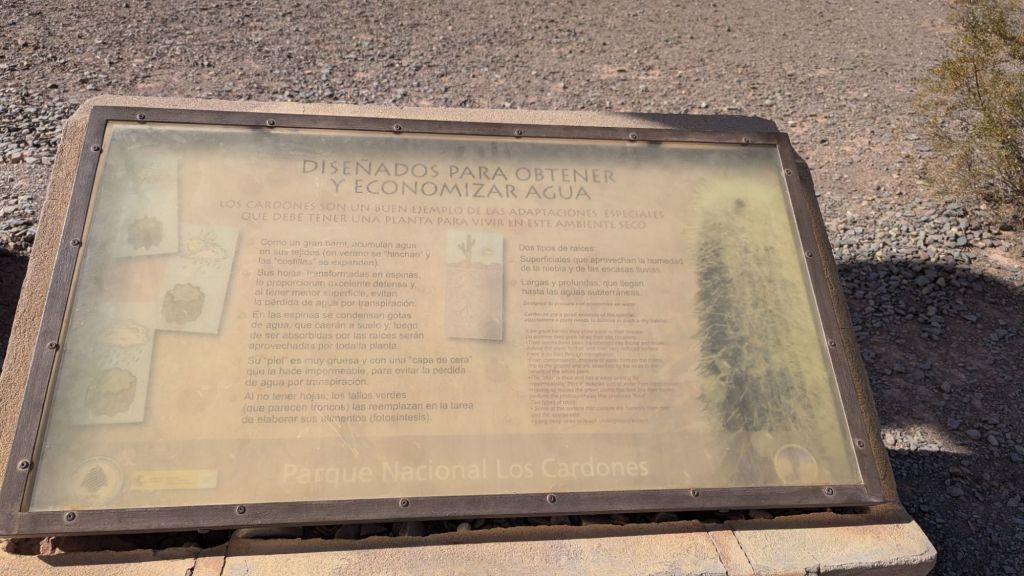
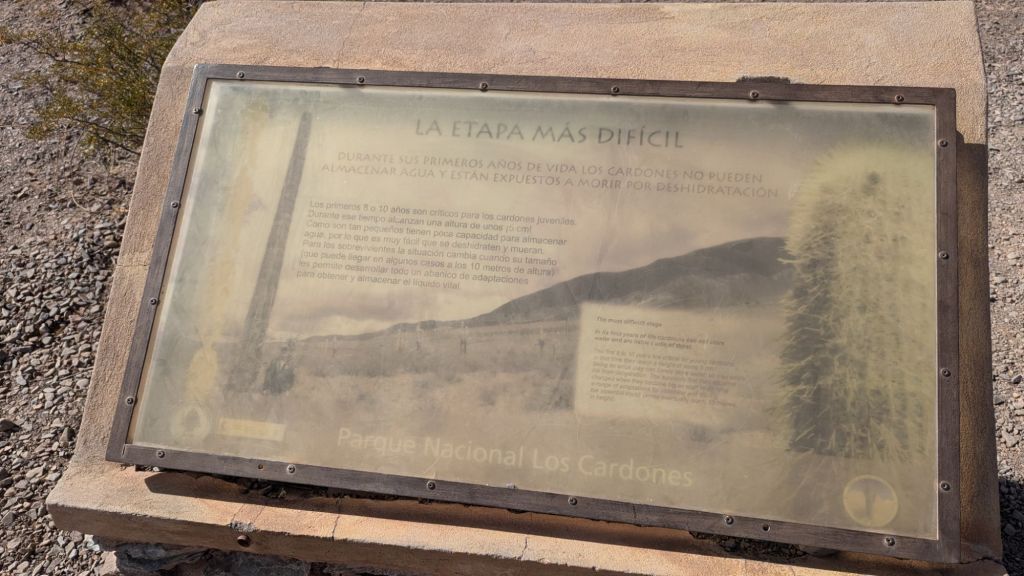
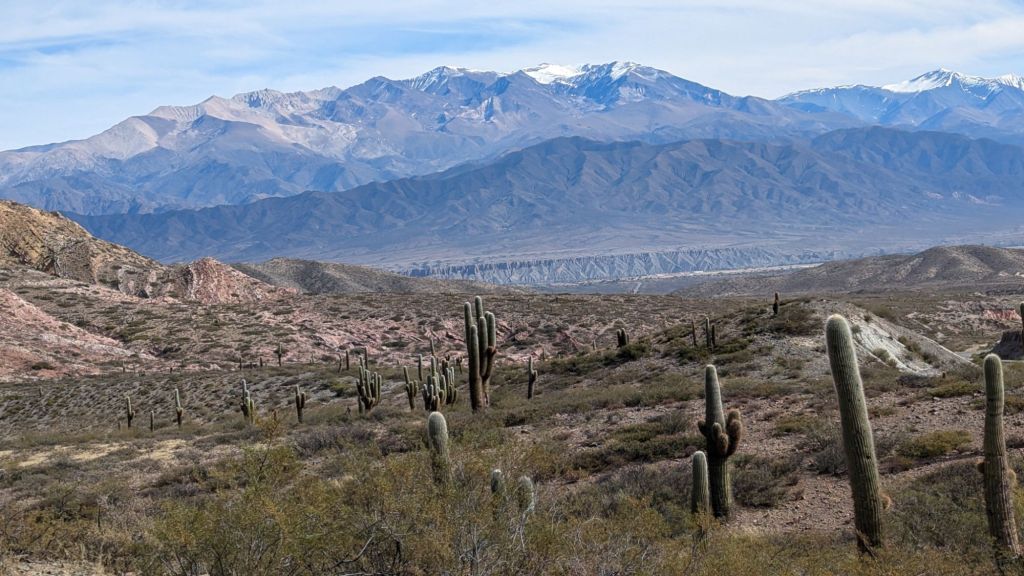
At 11:39 AM we are on a rather large plain. Where I could increasingly see more and more of these larger cacti. Happily, at 11:42 AM, we stopped to learn about this tall cactus which is called a Cardón. He was another time when Marcelo appeared to be both very knowledgeable, and passionate about conservation. These large plants are technically considered to be trees, because inside their thick protective covering, the adult ones have wood. Due to excessive clearing of the land, and their slow growth, these must be protected from further deforestation. The Cardones, which are hermaphrodites, only grow 1 cm a year. During the first ten years of life, they depend almost entirely on the symbiotic relationship they have with the low bushes to get their water. Then they develop their interior pulp. The woodpecker takes water from them, but the cactus heals itself within a few days afterwards.
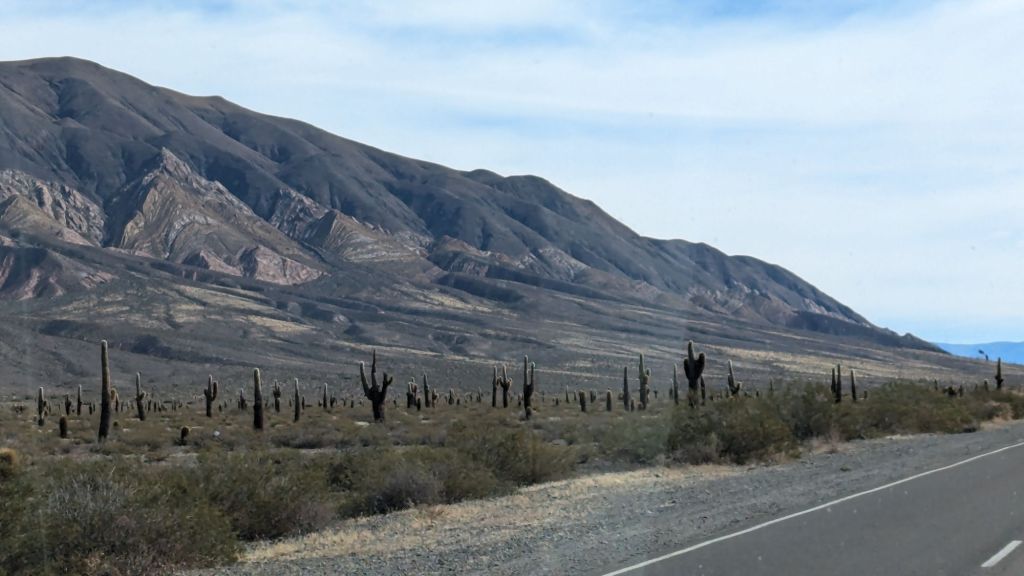
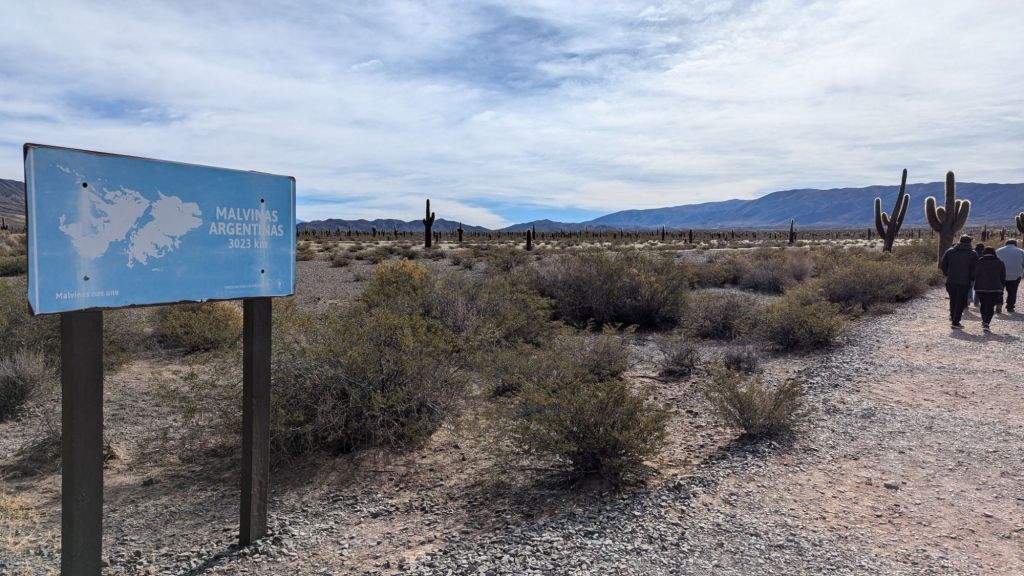
They reproduce when an arm falls off, and then rolls, until stopped by the symbiotic bush which they need for water. Initially they remain lying on their side until they finally are able to develop roots and then stand up. Really, it was all very fascinating and I was especially awed to see how many of them in this area were several hundred years old . . . If I understand correctly, the oldest of them can be around a thousand years old, but there were many here that were at least 500. I really do hope that they stick to their conservation efforts as it would be incredibly sad to lose this desert “forest”.
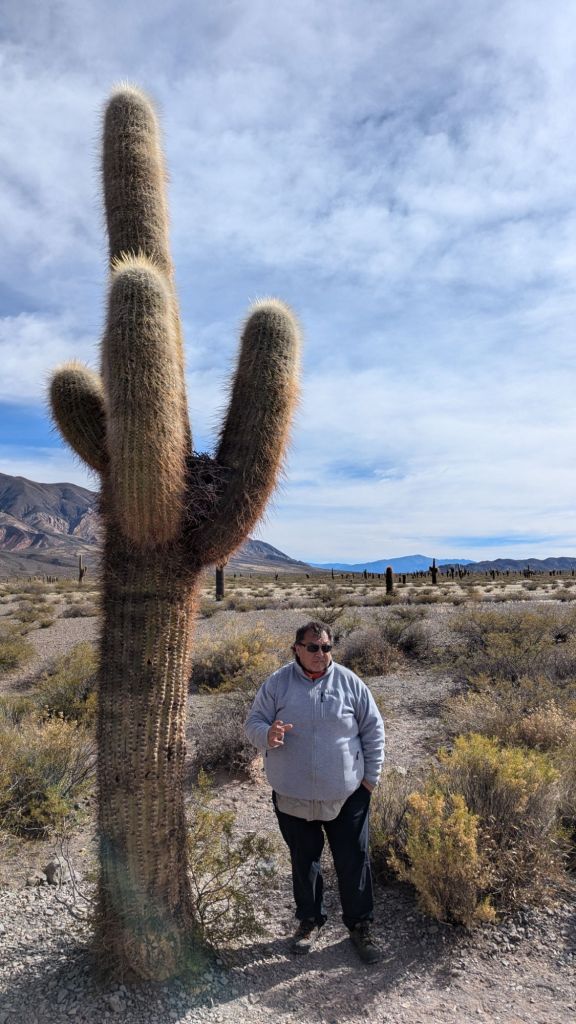


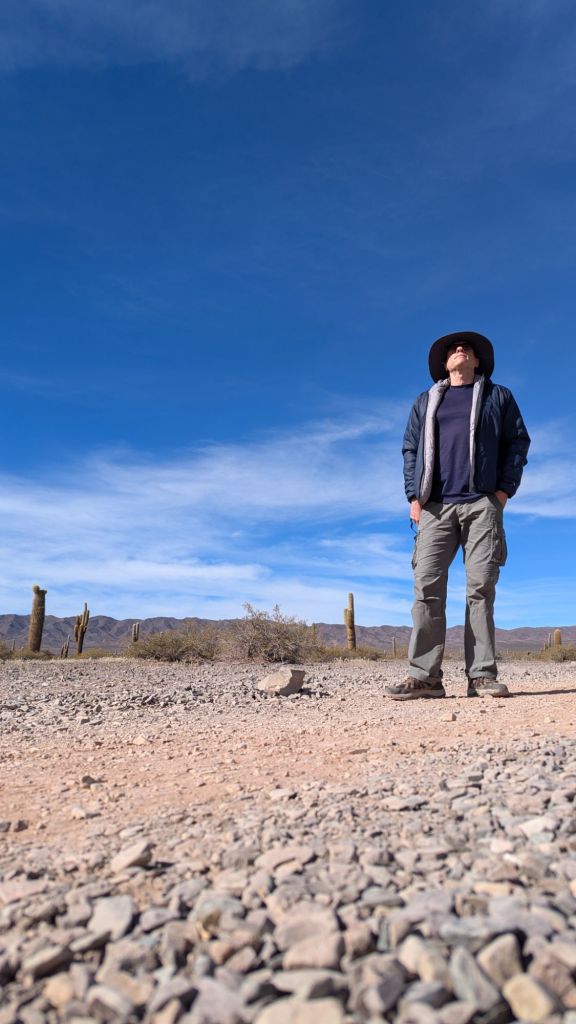
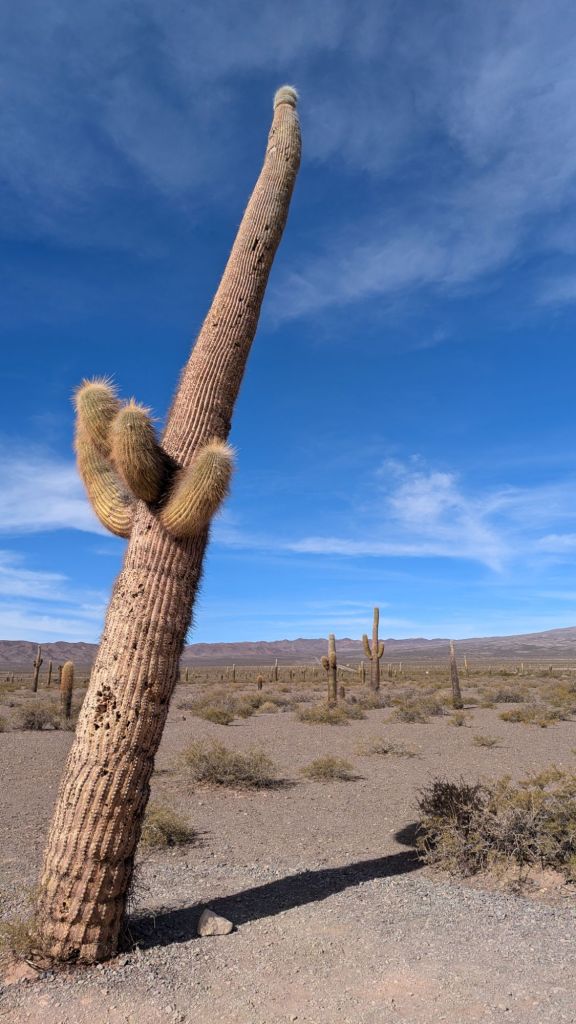

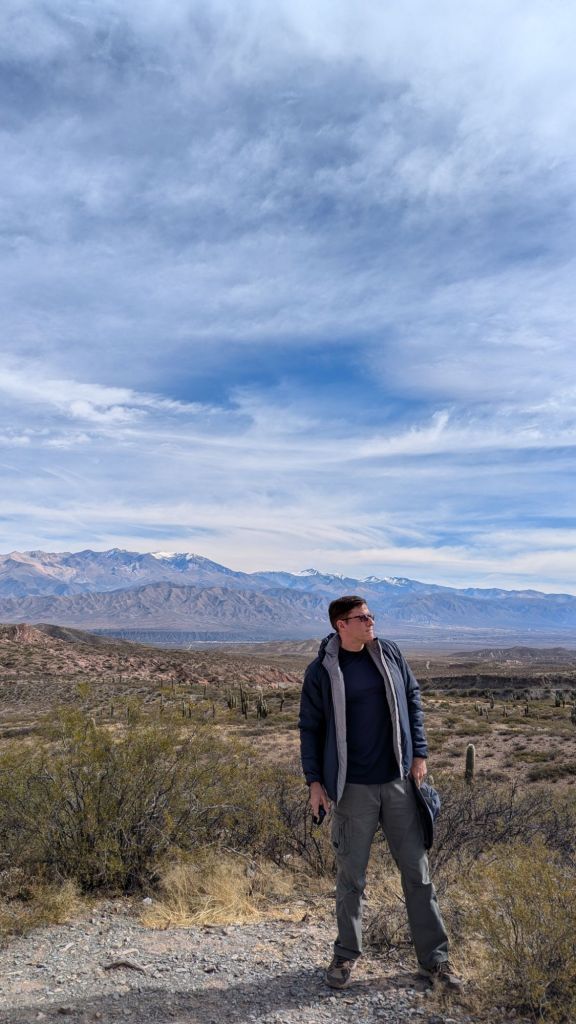
At 12:15 PM we got back in the van, then having another mini stop at 12:26 PM to take pictures of the snow capped Andes in the far distance, which are something to see with the Cardones trees in the foreground.
Coming in from India, at 12:37 PM it was interesting for me to see them selling local spices and talking about the advantages of those which are of course quite common in India and I think most of them originally come from India. However, in this area the mostly native/first/indigenous peoples have developed their own local spice agriculture, which they really value. They especially talked about the advantages of turmeric. I thought that all of my friends and coworkers back in India would be delighted by this.

At 12:42 we got in the van again, passing through Payogaso at 12:55 PM . Here they are extremely well known for paprika. It was interesting to hear Marcelo talk about the internal conflict of nationalized vs provincial commodities. For instance he was saying that in the north they don’t want the salt flats nationalized so that the lithium dollars will stay within the province rather than being redistributed throughout the country.
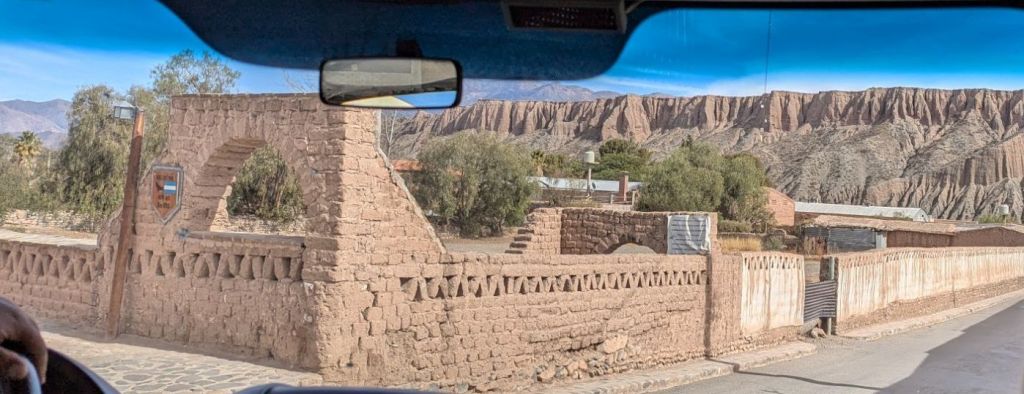


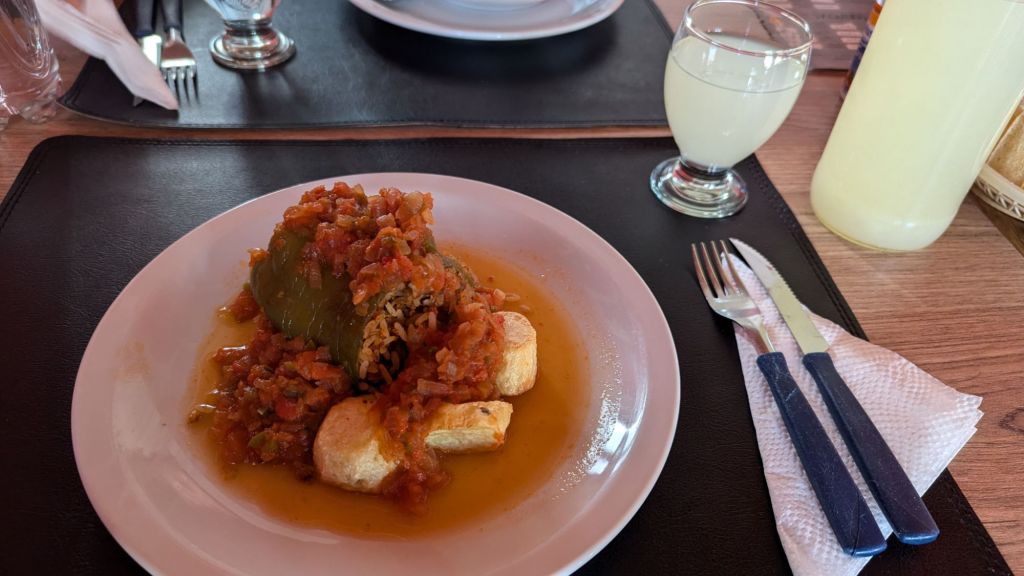
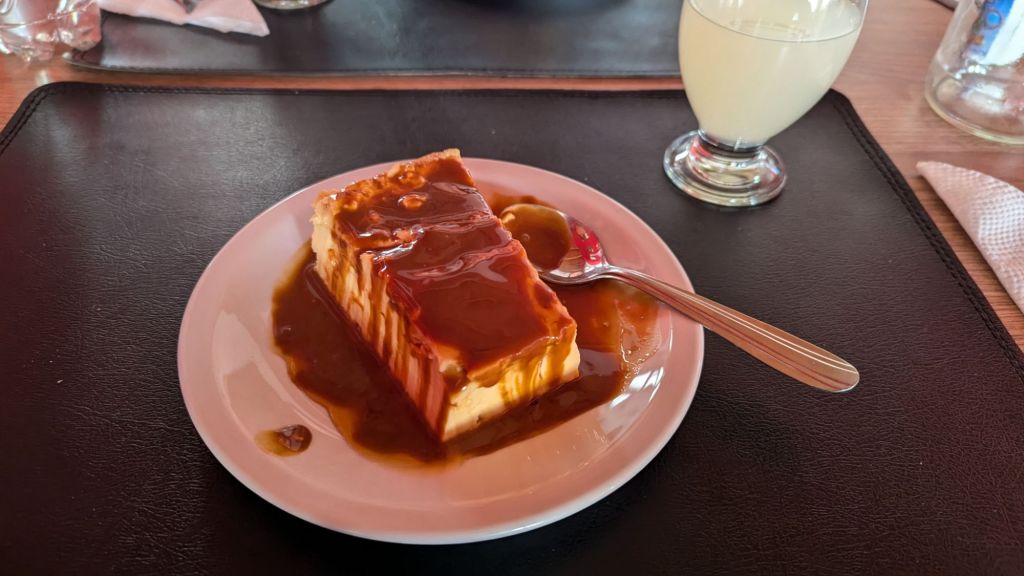
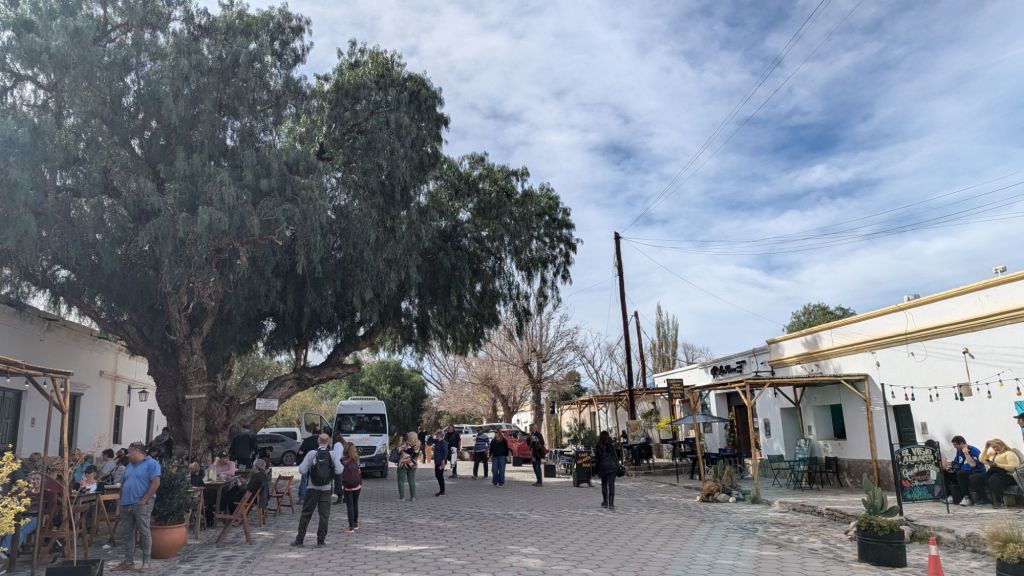
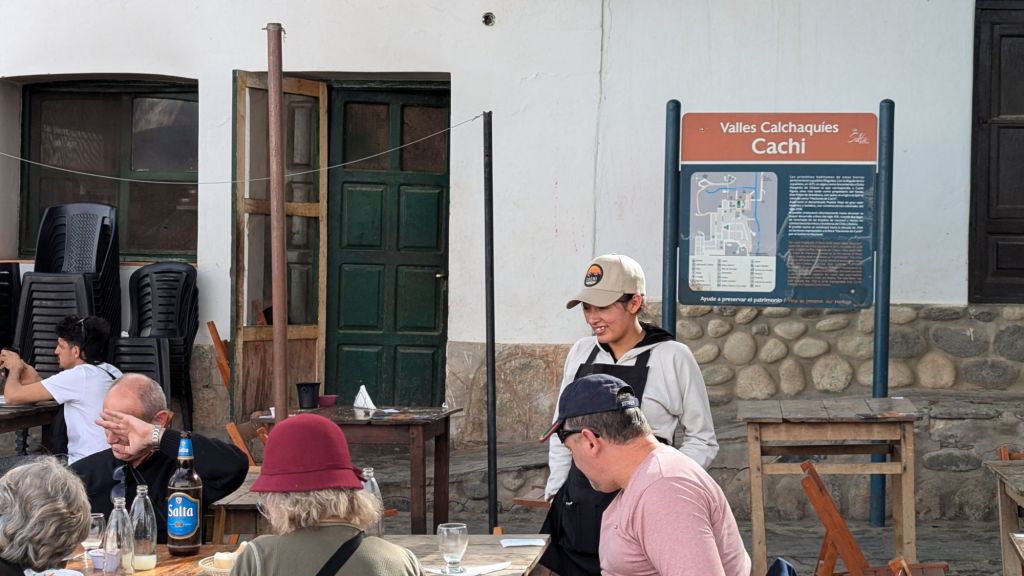
At 1:15 PM we arrived at Cachi, it’s kind of like Antigua Guatemala. Everything seems frozen in time. At the recommended restaurant, I had stuffed bell pepper, custard and lemonade. I stayed longer than I would have otherwise since I was having a nice conversation with another trip participant, a Venezuelan engineer who has been a resident of Argentina for seven years. At 2:40 PM I paid 12700 ARS cash + 1000 tip ($11.95 USD total) for my meal.
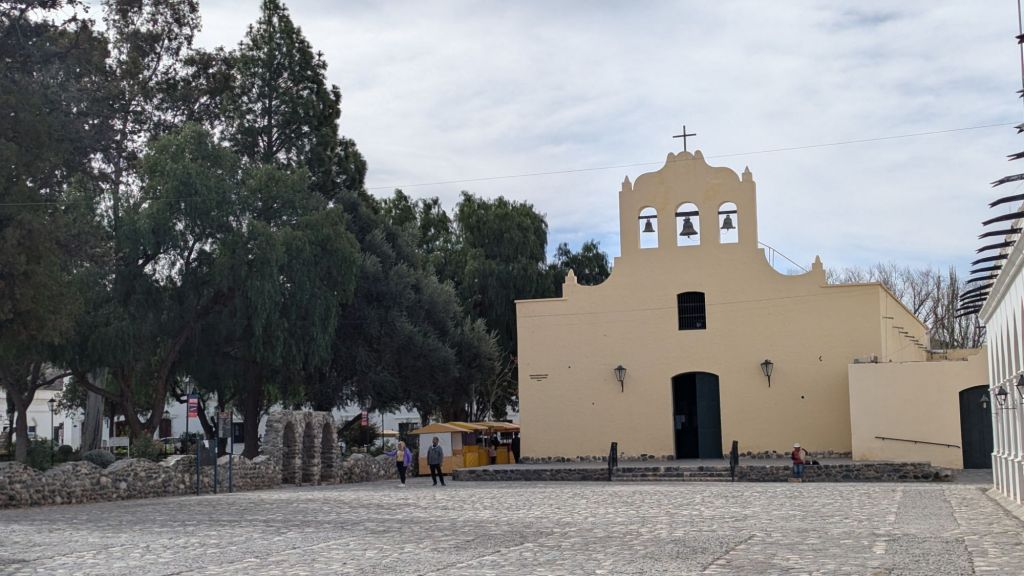
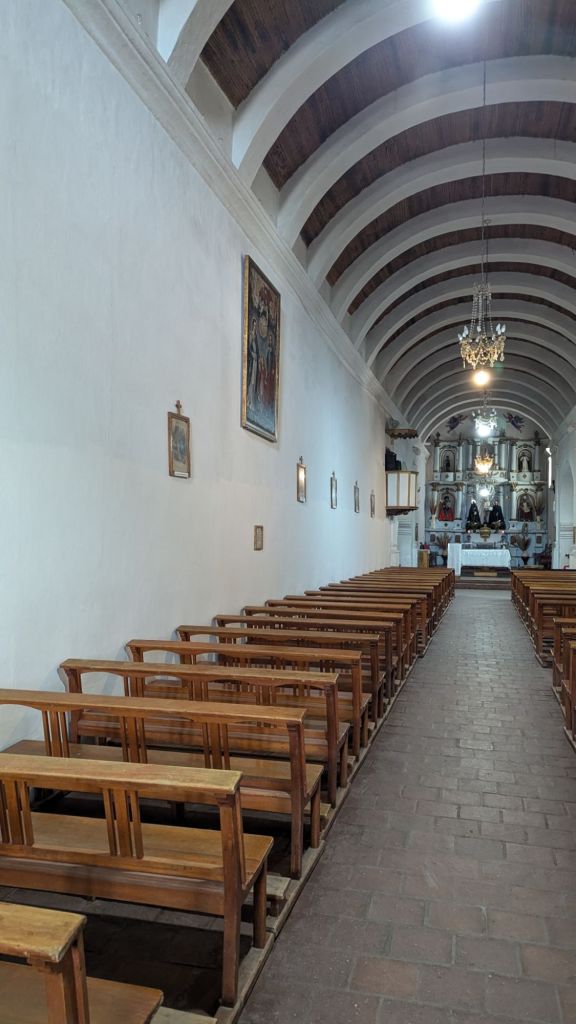
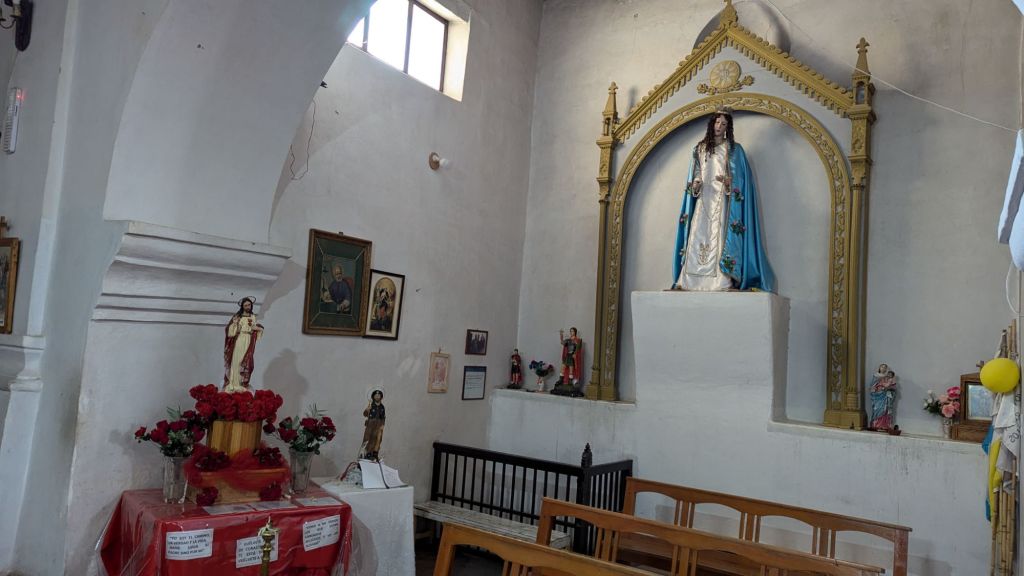
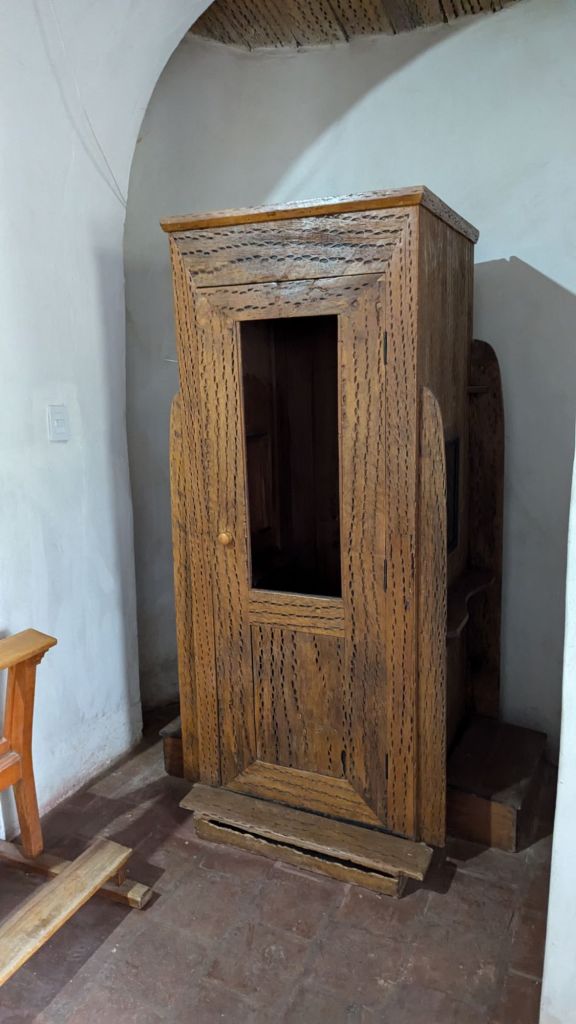
We left the restaurant at 2:56 PM and walked around. I checked out the local church and saw they had used the Cardón wood for the roof, the pulpit and a confessional. The floor was stone.

Note, at some time while we were eating, electricity went out in the town, and as a consequence, there also was no running water. They all seemed to take this in stride, so it must be common. I understood the general problem, but thought it odd that they did not invest in water tanks to guard against this inconvenience. In other towns in the area, I had seen the large tanks which are there precisely for this purpose, also being quite common in many other parts of Latin America.
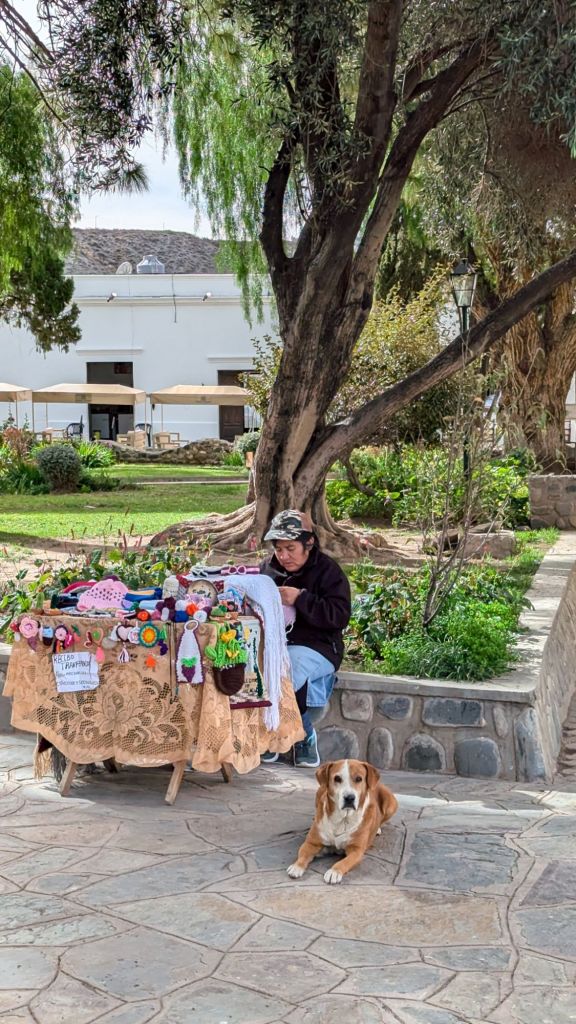


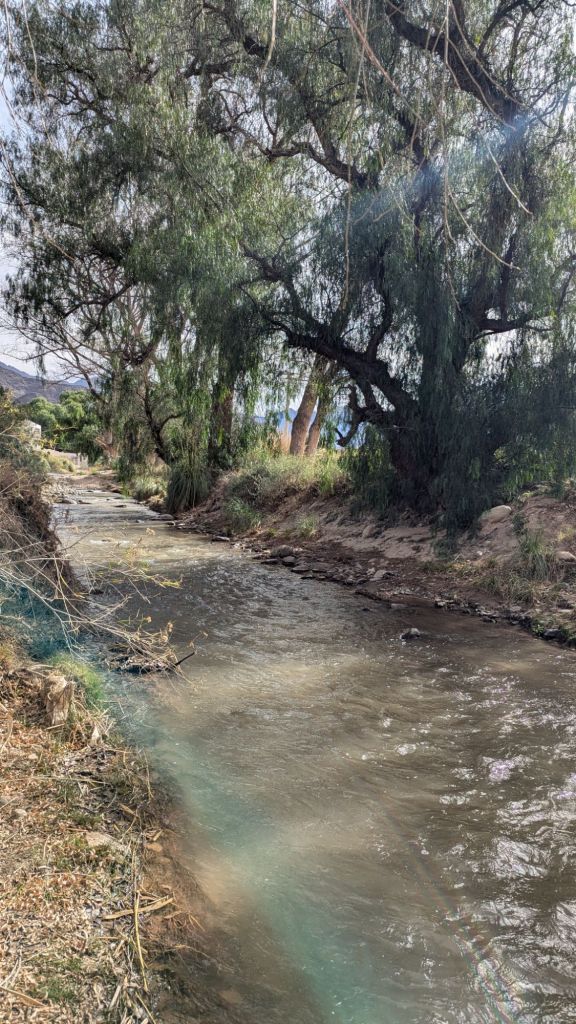
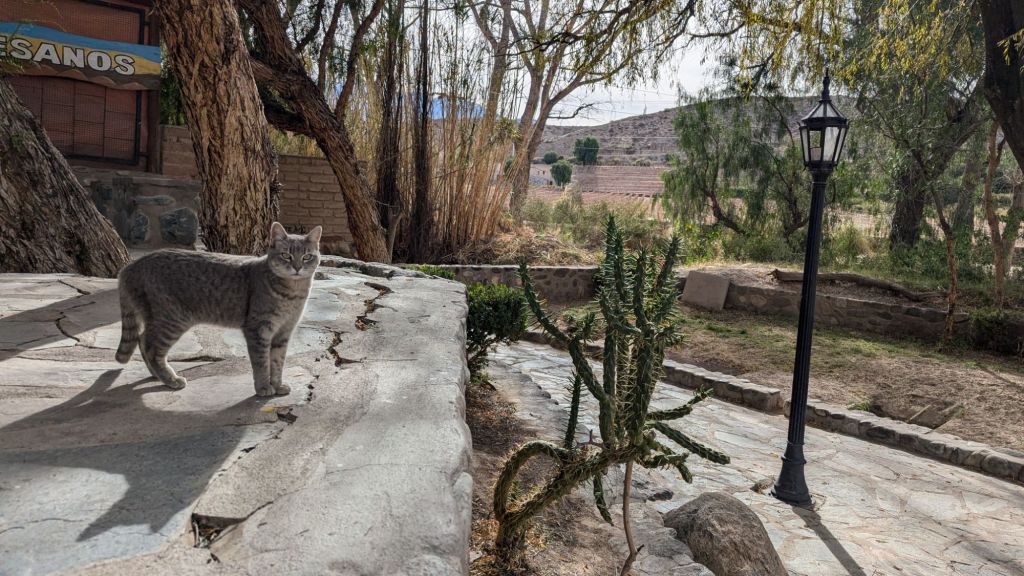
At 3:30 PM we departed from the town of Cachi. Believe it or not, he now turned on the air conditioner! Yes, there is a lot of variability in the temperature in a day, but I think people are also sometimes just too delicate. The road near Cachí was paved, but not as good as in other areas I’ve seen so far in this region.

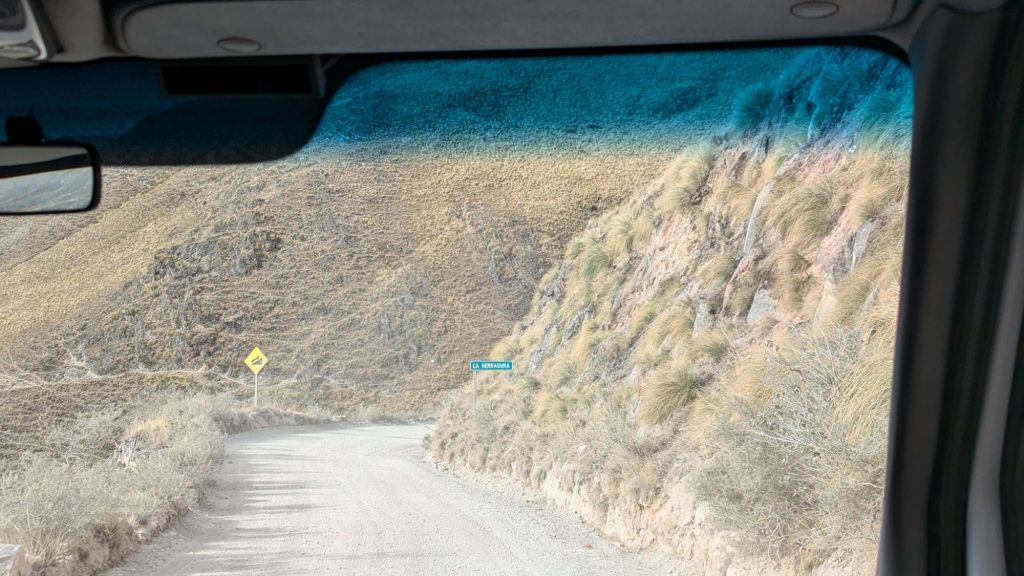
At 3:50 PM I noticed that now the road quality was again much better.


At 4:24 PM I saw that we were clearly headed downhill again, and at 4:28 PM we were back on the winding, unpaved roads. Despite them being unpaved, they seemed perfectly safe mountain roads, nothing like when I went to Sikkim a couple of years ago.


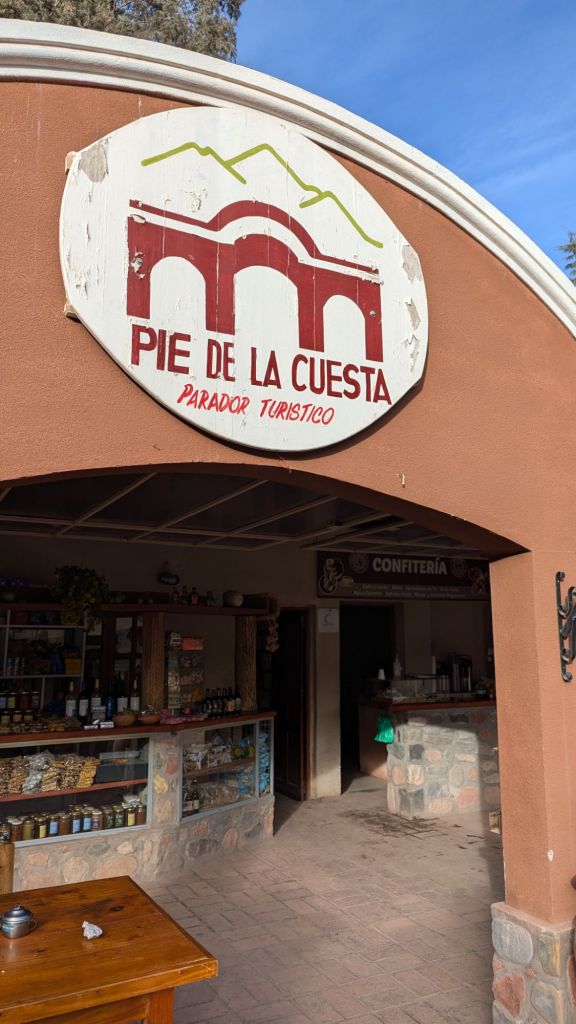
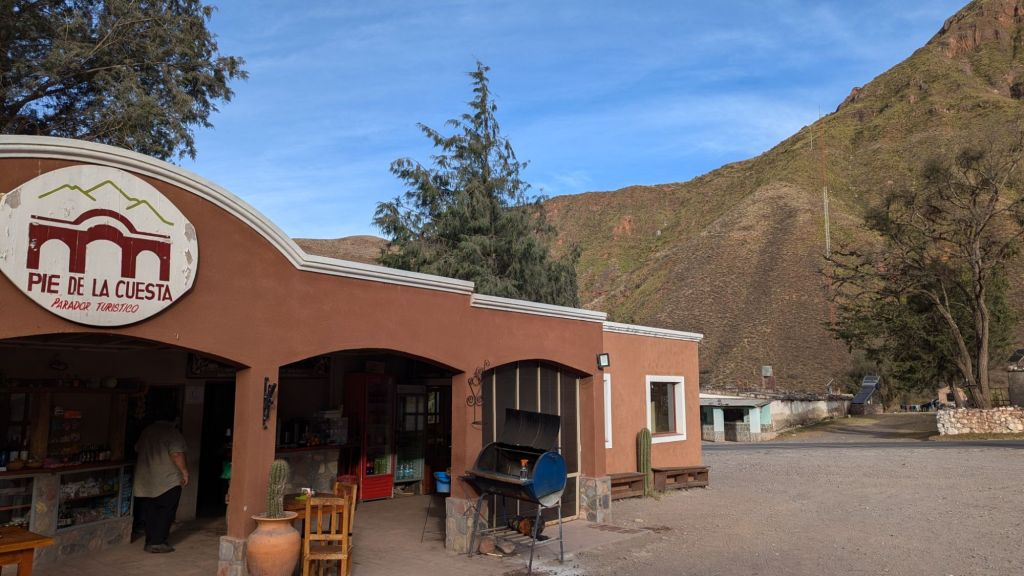
At 4:59 PM we had another rest stop at the same place as before when we were going up: Pie de la Cuesta. This time, as I didn’t buy anything, I paid 200 ARS to use the bathroom.

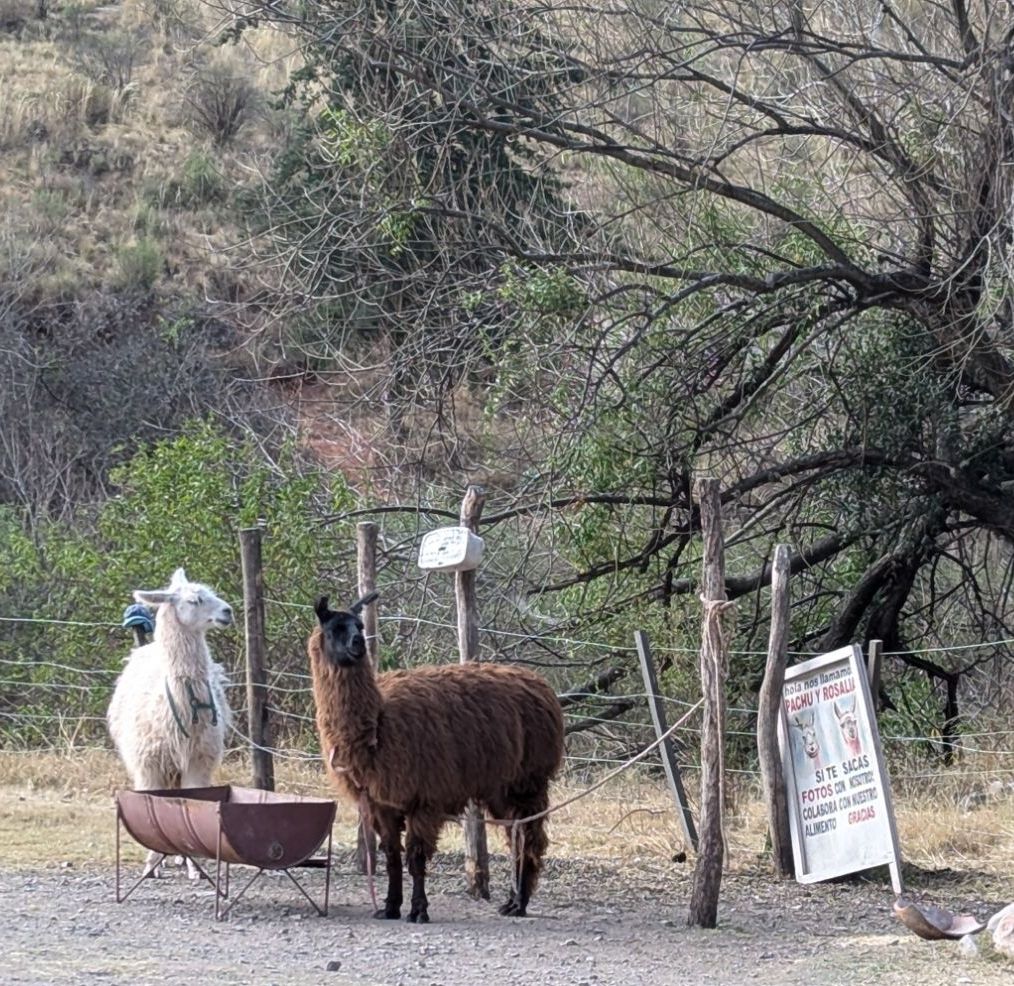

At 5:15 PM we were on our way again, with traditional music playing most of this time. At 5:51 PM Marcelo said that local people here frequently mix the local wines with other things like Fanta (a type of flavored soda) or juice. I suppose that’s unsurprising, since the wine is ubiquitous and many times has a similar cost as that of a flavored soda.
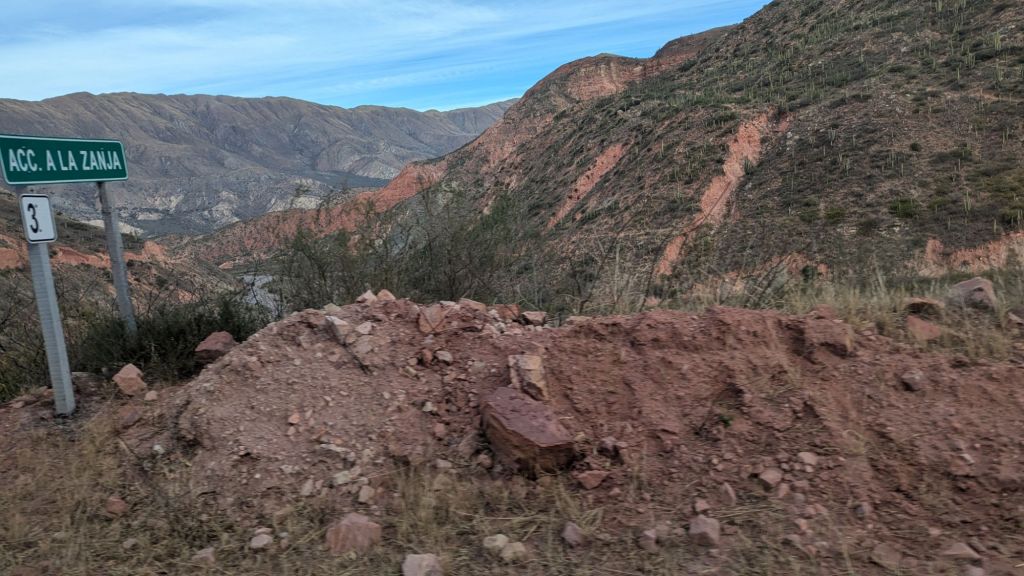
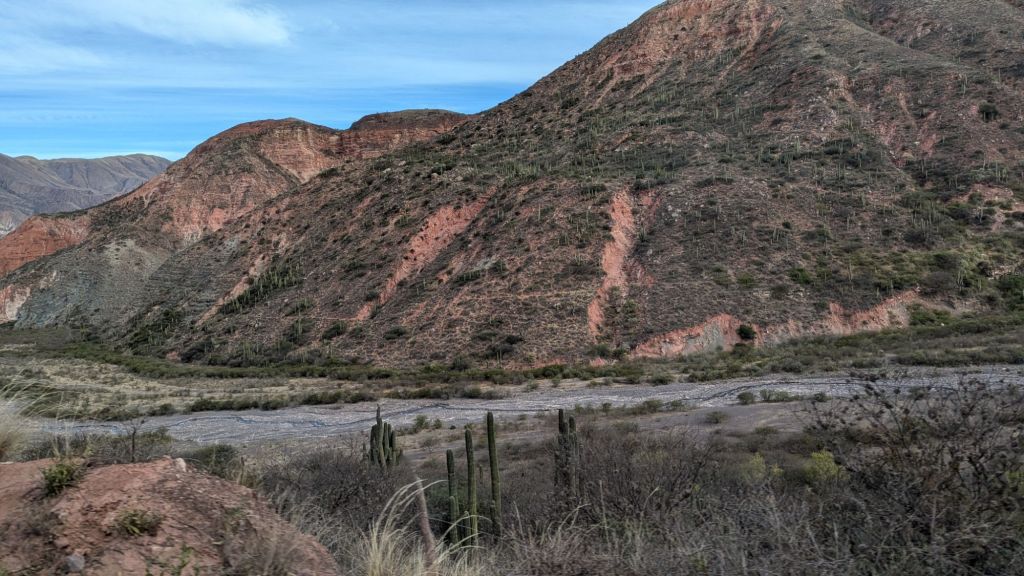


By 5:58 PM we were all the way down the hill/mountain and on our way again on flat road.
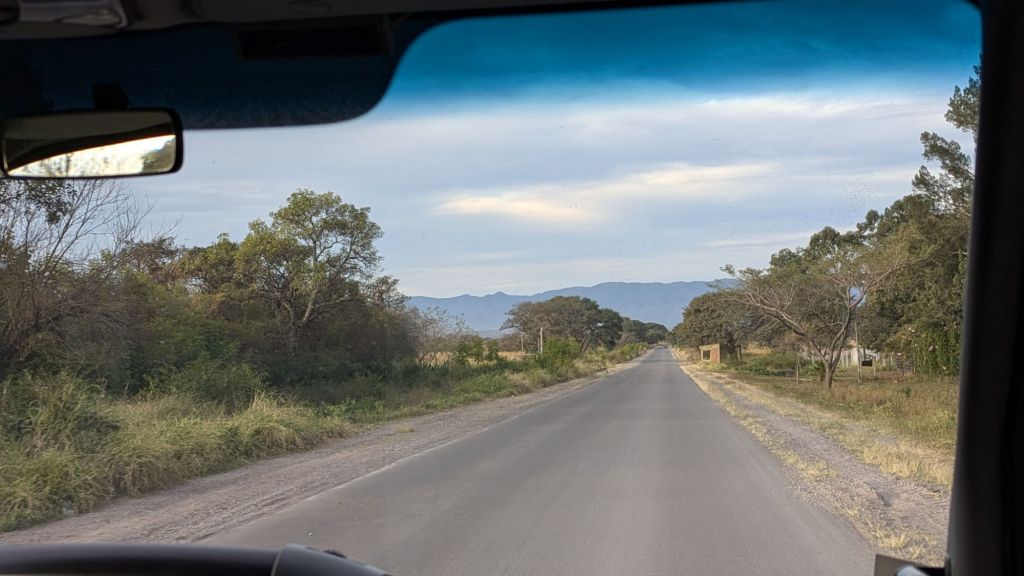
At 6:35 PM I saw volunteer firefighters collecting funds in the town of Cerrillos. It was still completely clear outside, and I hoped it would be that way for tomorrow as well.
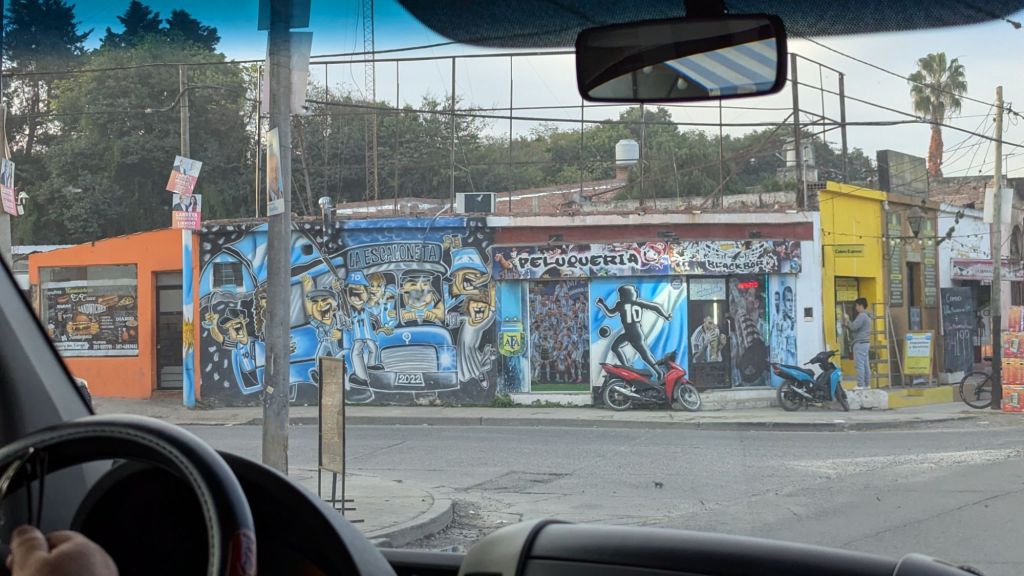


The rest of the drive was scenic and relaxing.


When we arrived at 7:10 PM It had originally been my plan to perhaps try to go to a peña (folklore and live music place) tonight by myself, but shortly before we arrived at Salta, Natalia, the engineer with whom I’d had lunch asked if I would like to walk around the center a bit. She seemed like a very nice person, and I thought it would be nice to chat with someone rather than always being alone. I said yes, and we stayed in that area, then also deciding to have a light dinner together. My food was 17400 ARS, paid by card (1170 INR – $14 USD).
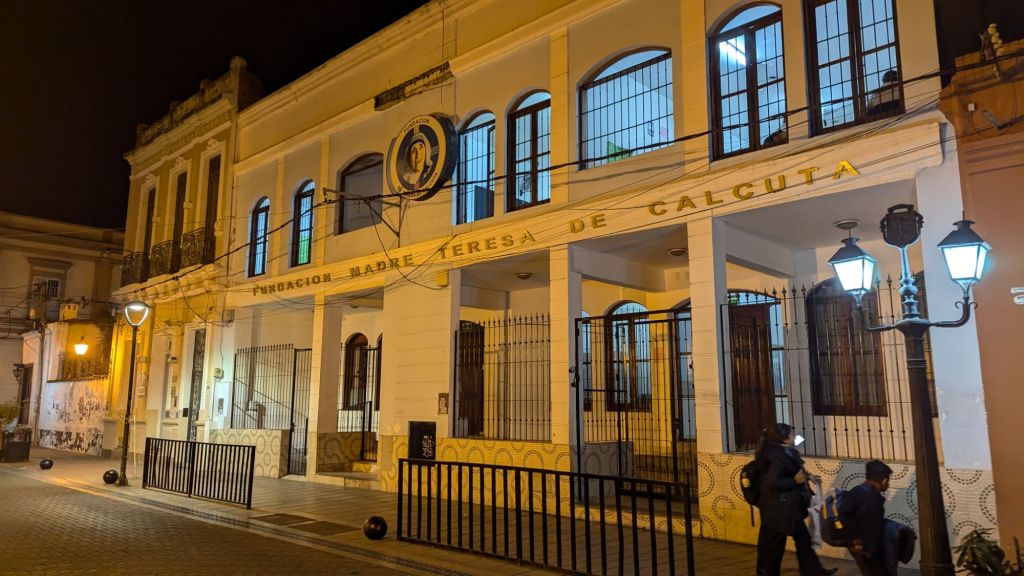
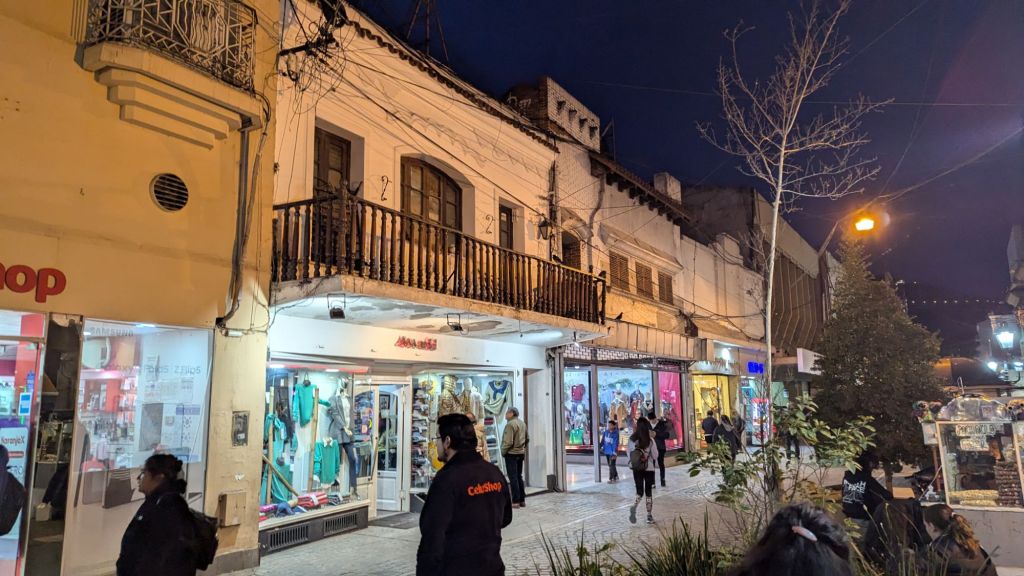

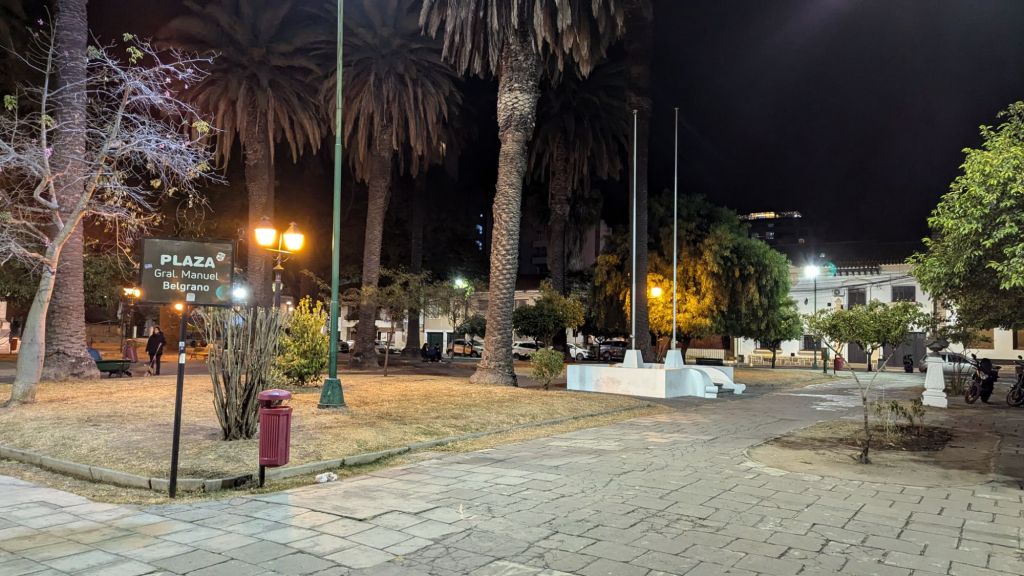
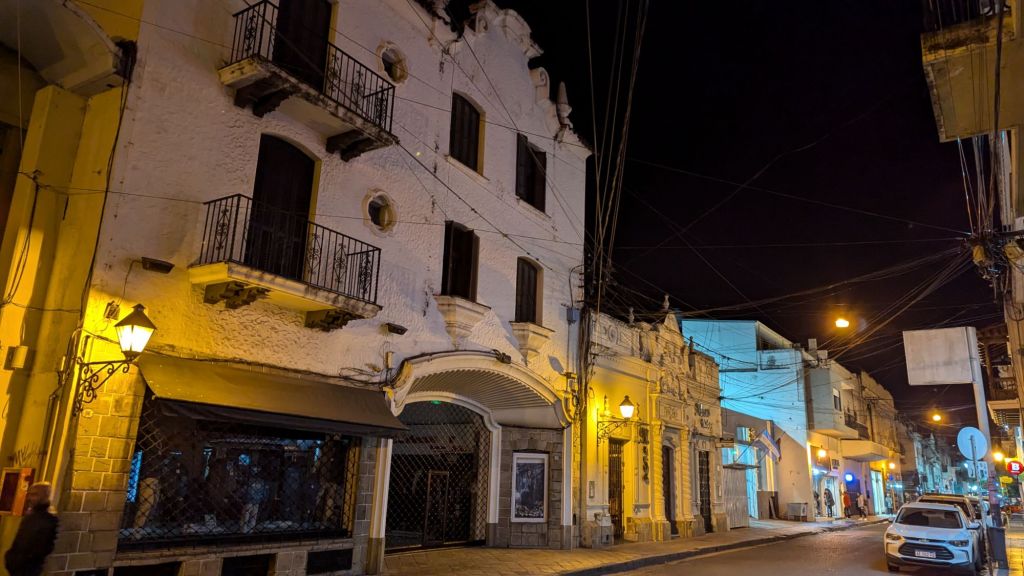
At 9:48 PM we parted ways and I departed from near the 9 de Julio plaza and headed back to Donna Alba serviced apartments, where I was staying. I walked by Plaza Belgrano at 10:09 PM and then was in the apartment at 10:25 PM.

Once more, I had a wonderful day. For sure, Marcelo was certainly a character. I especially enjoyed the Cardones “forest” but the town of Cachi was also quite nice. Finally, it was an unexpected surprise to have had Natalia as a conversation partner.
I think it’s quite common to make random friends while traveling when one is younger, but at least as I myself get older, it is less so. Part of this is because of how younger people tend to stay in hostels etc, but part of it is also because I think we just become a bit more particular as we get older. Anyways, I feel like I’m rambling at this point, so I will go ahead and bring today’s entry to a close. I look forward to sharing more with you tomorrow!

 Travels with Jay