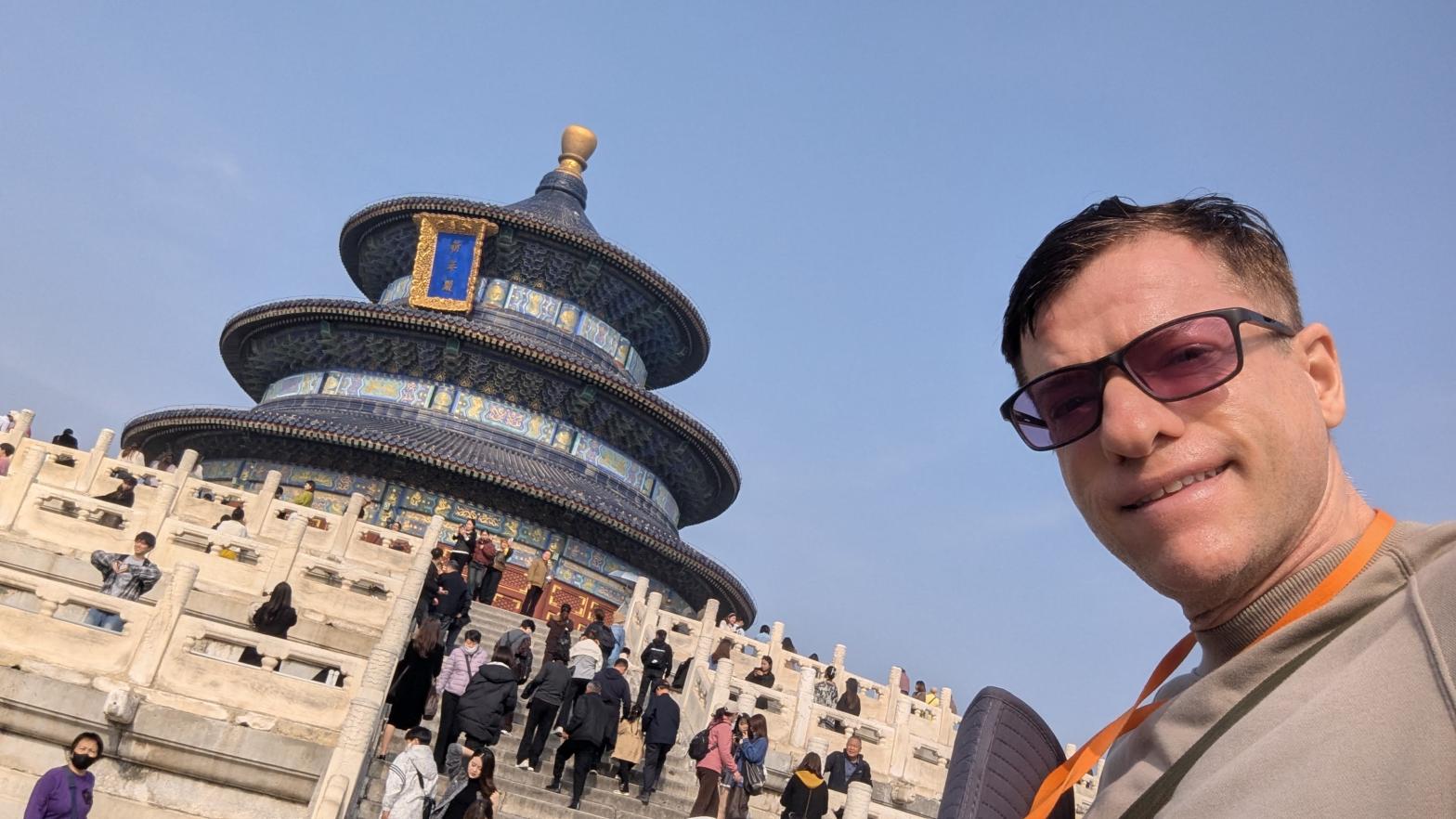
Hi again everyone. I hope things are going as well for you as they are for me. If not, take my advice, wait another day and reevaluate. There’s a good chance that you will feel better in the morning. If not, then repeat until things are going well.
Anyway, Day 6 in Beijing was for the most part once more courtesy of GetYourGuide; as much as I recommend them, I feel like I should be getting some sort of sponsorship! Today’s plan was Summer Palace and Temple of Heaven, and I had paid $51.50 USD.
As there was nothing new about how I got to the starting point of today’s formal activities, I will skip past all of that and start at 9:06 AM when our Guide Andy showed up just outside Tiantandongmen station, passed out the Bluetooth earpieces, and then we started off towards the Summer Palace. Evidently, those 60 and over can enter for free, so I was suspecting that it would be a bit more crowded inside as we entered at 9:09 AM.
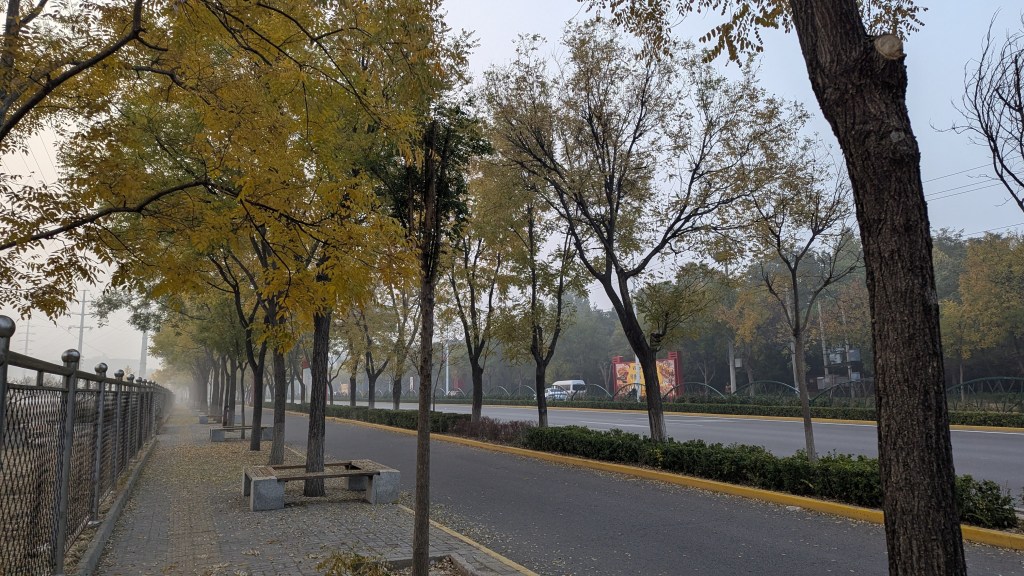

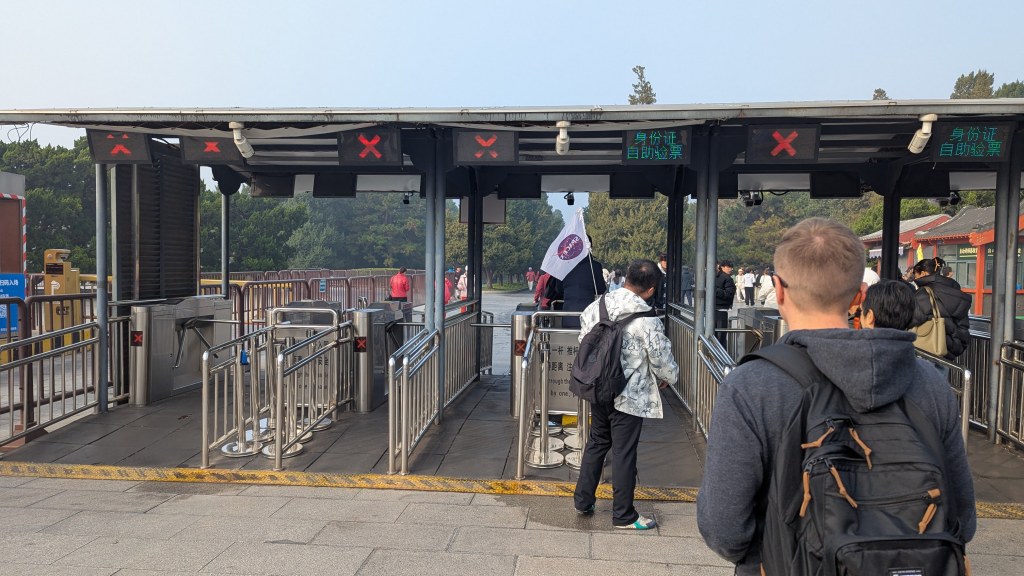
Similar to my guided tour from a couple of days ago, there was a LOT of very interesting information, but I will only share those details which stood out for me, even if the details seem incoherent and of no interest to anyone else🤔. According to Andy, this whole Temple of Heaven area was built in 1420 and is actually 3 times bigger than the Forbidden City, which is also simply known as “The Palace Museum”, where I had visited yesterday. Amongst the other various fun facts shared were that ancient Chinese (like most other groups of people) believed that the Earth was the center of the universe, and like a lot of previous civilizations with monarchs, the emperor was believed to be the son of God. As with earlier visits to historic sites in China, the number 9 came up a lot, but here they also seemed keen on the numbers 8 and 5. The most significant combination was 9 x 5. Even today in China, according to Andy, numbers are a big deal. Odd numbers are used to represent men and even numbers are used to represent women.

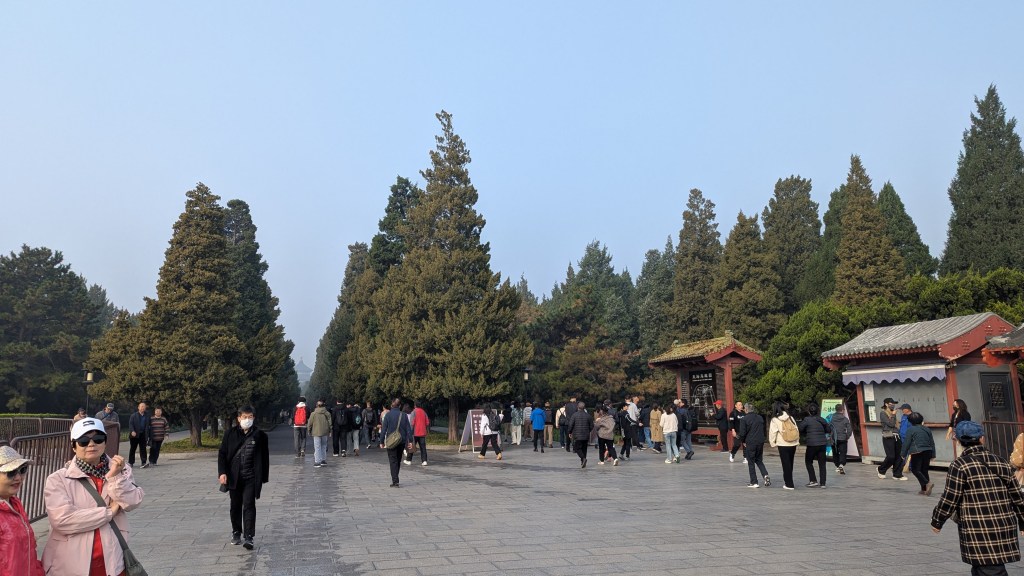
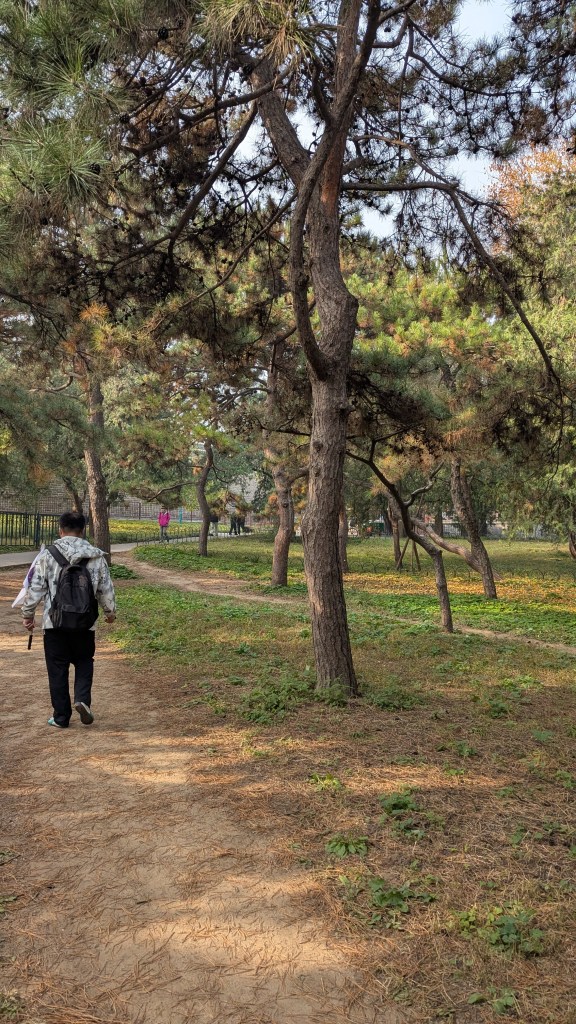
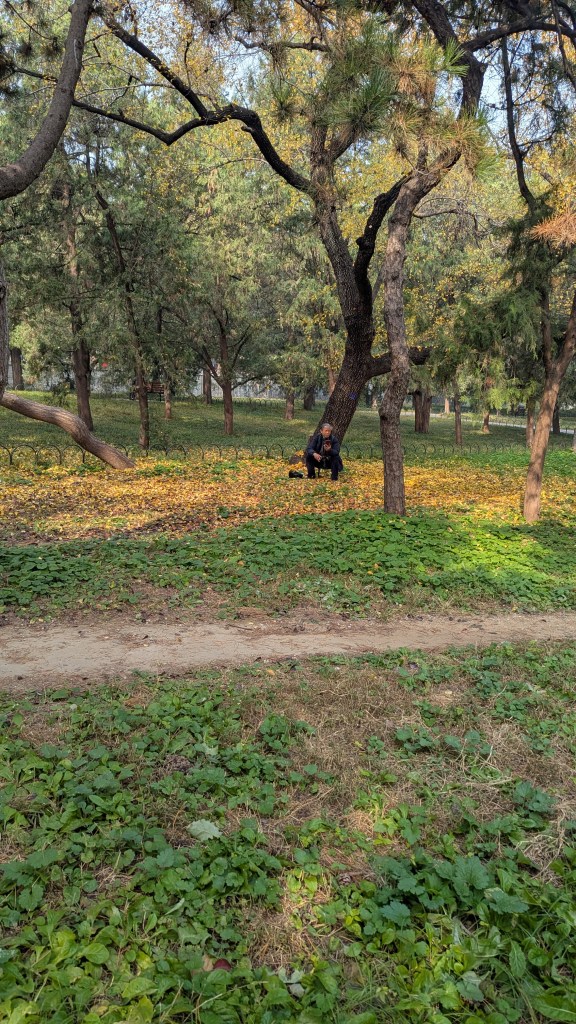
So far, this place seemed to just be a really big park. Connected to the same, I found out that the green plaques on certain trees mean they are between 100 and 300 years old, whereas the red plaques mean the tree is at least 300 years old. They figure this out based on the diameter of the different types of trees, so it is only a rough estimate. A bit of further investigation revealed then that the reason some trees have steel barriers around them, is that they are in the red-plaque category. It was right at 9:39 AM that we came upon the seven starstones. I am not sure why they are called stars, but they represent the seven most important provinces from that time. Ironically, there are actually eight stones, but the eighth one is much smaller.


At 9:48 AM as we continued along, I am not sure this is true since the people there did not seem particularly happy, we walked through an area which Andy claimed was a blind date market. If this was true, I assume it was older relatives looking for arranged marriages for their children and grandchildren. As is more commonly seen in Chinese parks, we also came across different groups of retired people doing Tai Chi and similar activities. I’ve got to say, if you have a bit of money in the bank, eastern China seems to be a good place to be a retired person, but then I guess that is probably true for older people with a bit more money everywhere.


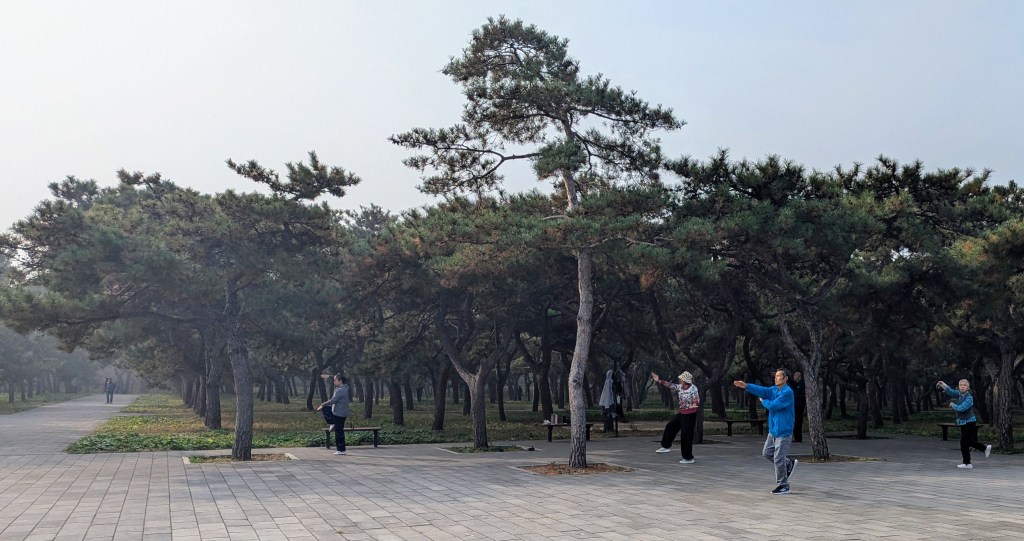
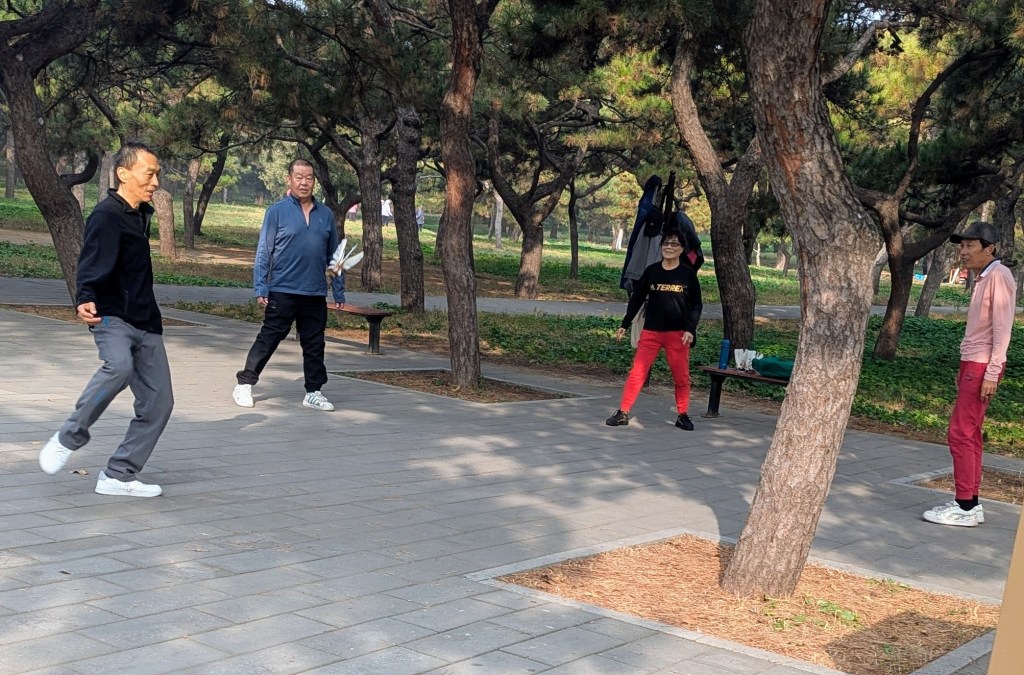
At about 9:54 AM as we neared the actual temple, Andy told us that the round wall represents the shape of heaven. It was also about this time that I noticed that Andy seemed a bit frazzled or just upset. He had spoken on his phone a couple of times and also seemed to have a bit of a shouting match with some other random man in the park. To be fair, foreigners frequently think Chinese speaking to one another sounds like shouting, so maybe they had just been talking about the weather.

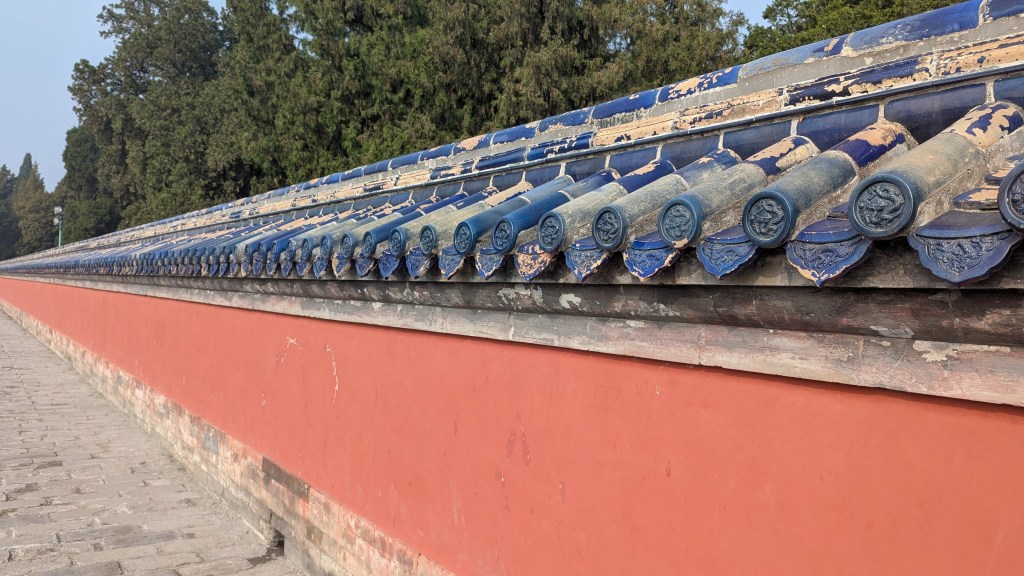
Then at 10:02 AM we headed into the actual temple area, and I was glad that we were able to enter very quickly and with no hassle. According to Andy, the outer middle gate, which was closed, is only for God, so I can’t imagine it get’s used that often. One of the other gates was only for the emperor, but I don’t remember which one. The blue tiles we saw were supposedly original, and about 600 years old. Pretty much everything here has symbolic meeting and is tied to a system of numerology which they were using at the time; it was unclear to me if that was different from the system of numerology which is still frequently used today.



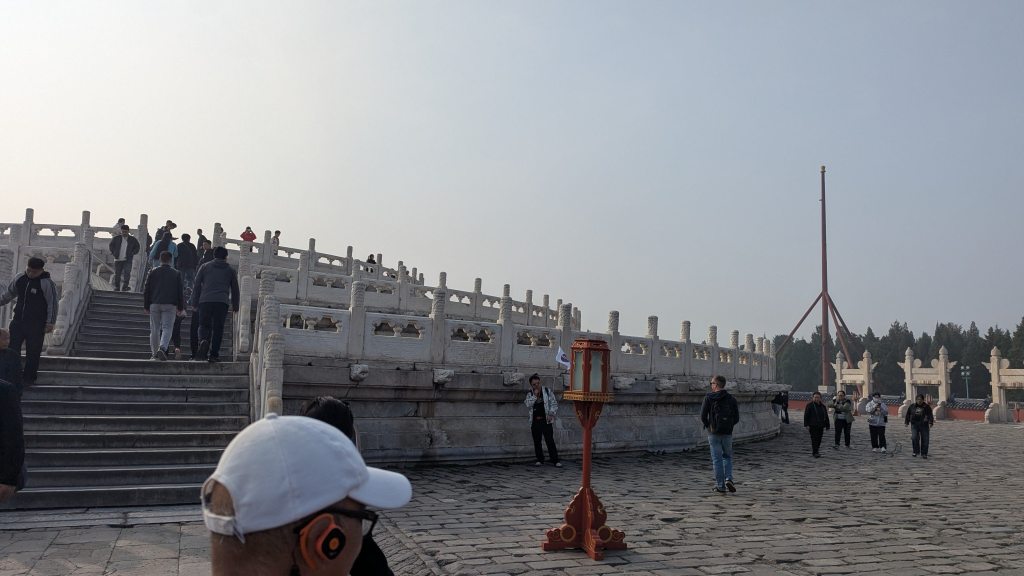


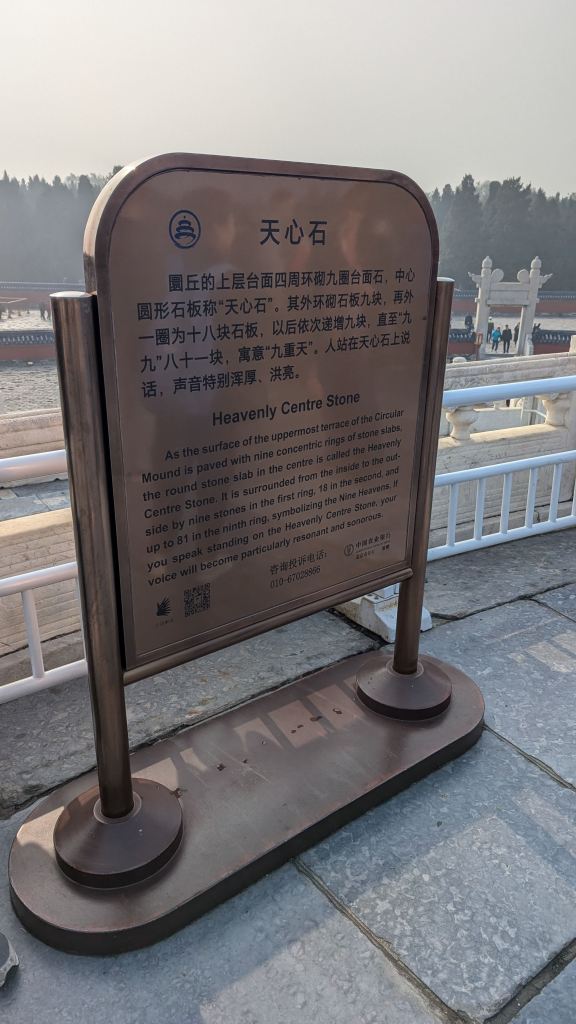
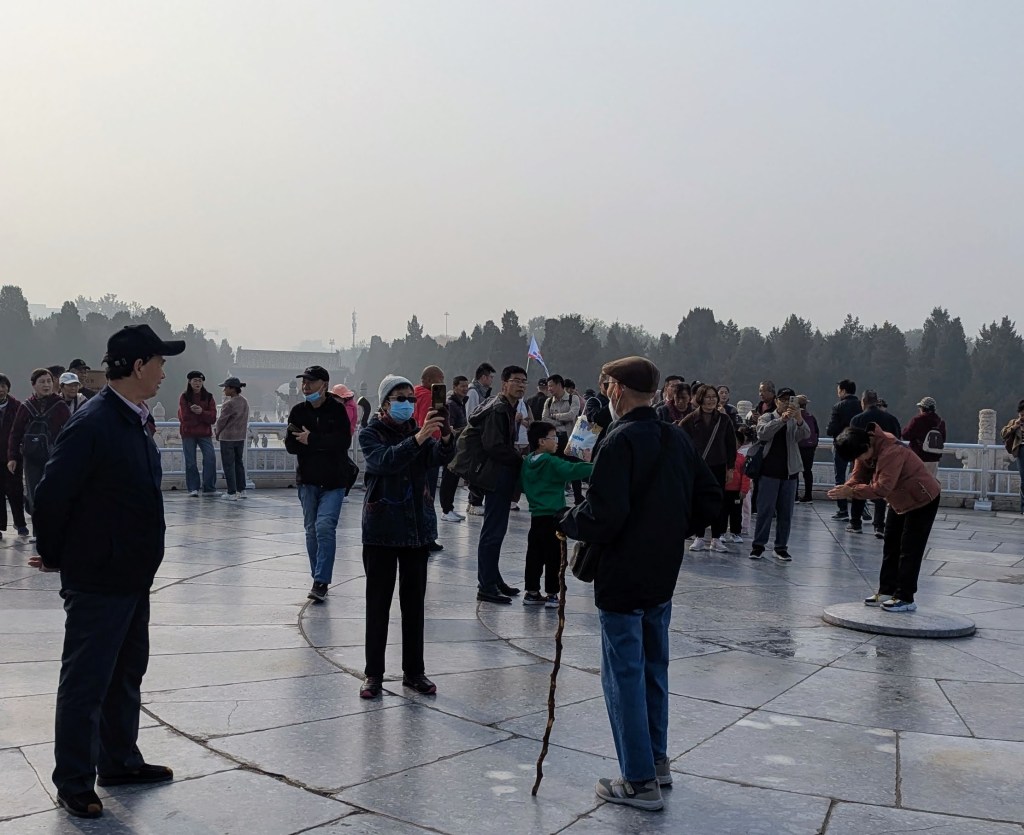
Inside, the inner circle, there was a big group of people lining up to stand on the round mound which I think Andy said represented the Tridentine heaven (I guess they also had a sort of trinity?). He was quite annoyed about the people who were standing on the round mound in the middle and bowing/praying. He said they did not actually know what they were doing, since the CCP discourages real religious learning and belief. However, I thought to myself, they might not be doing it “the correct way,” but at least SOME of them must have been doing it out of genuine belief. So, if we remove the ones who were just doing it for the WeChat/Little Red Book picture, who were undoubtedly the majority from what I could see, then what was wrong with the ones who were doing it out of genuine belief? Regardless, Andy seemed rather annoyed/exasperated/disgusted with them; so, our group got the message, and nobody got in the line!
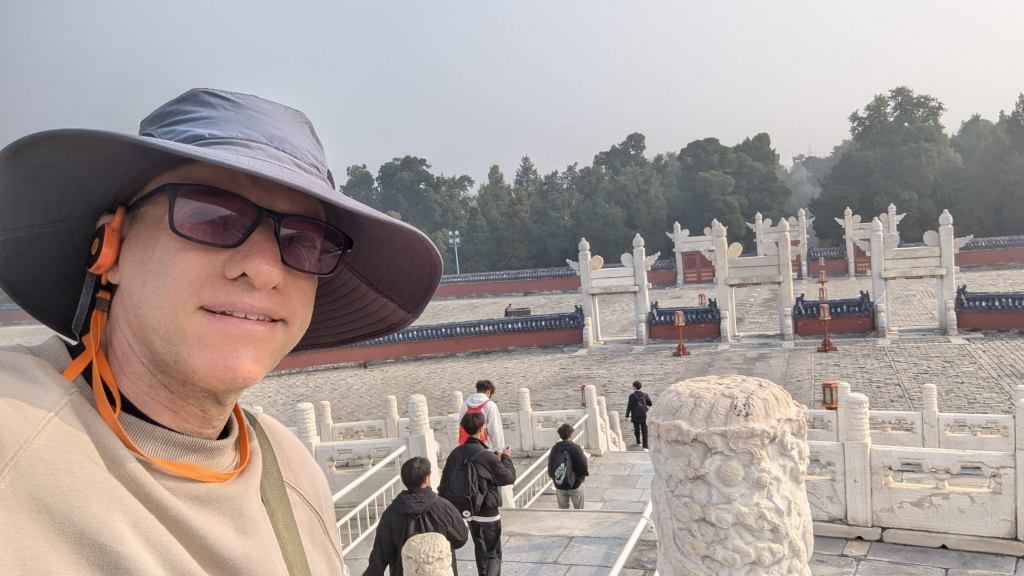
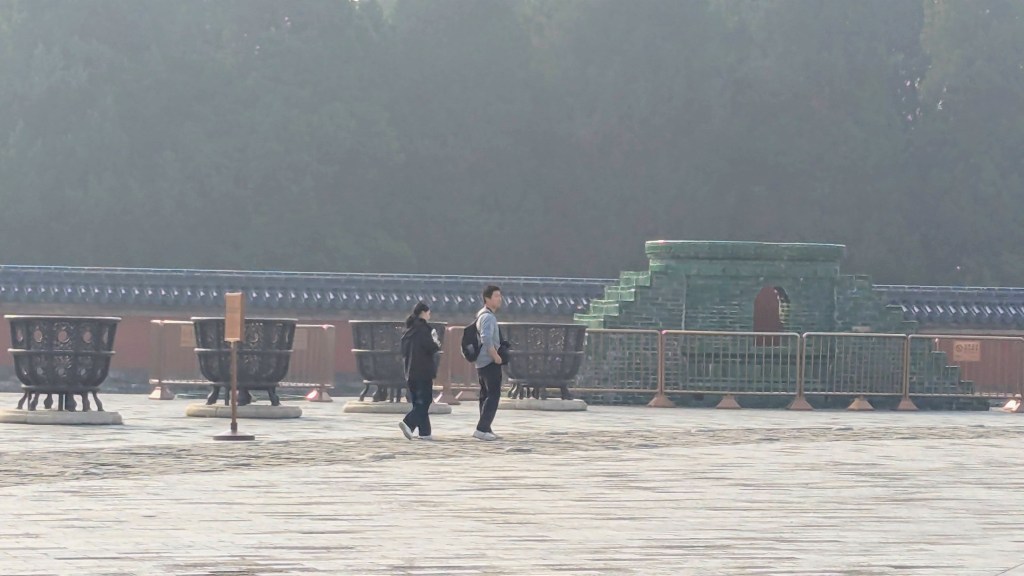
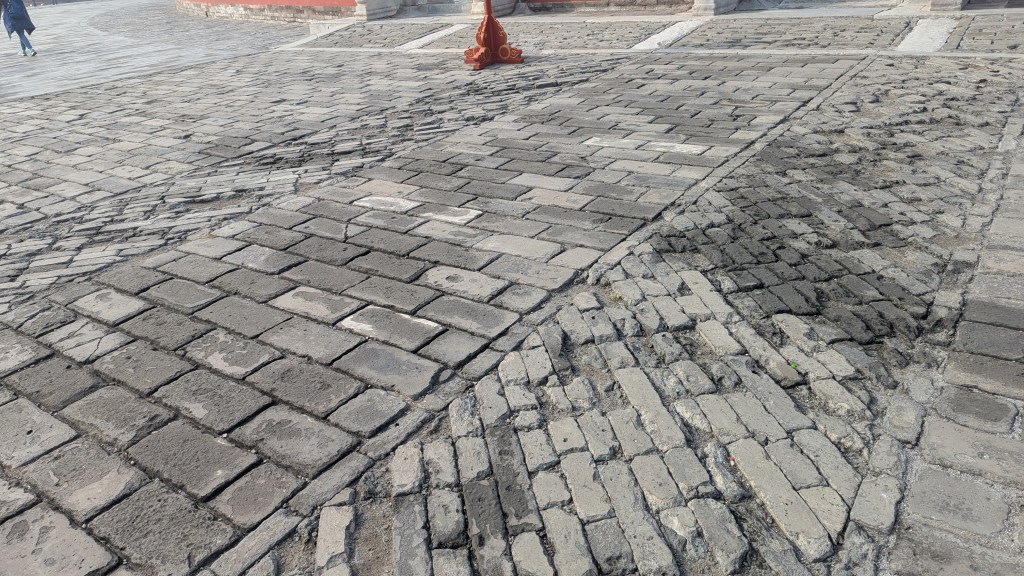
At 10:17 AM we then exited the central mound area and looked around a bit. The uneven paving stones are original, but the ones which look nicer were recently placed by the government. There in the distance, we could see a green structure, which was where the sacrificial offerings used to be cooked.
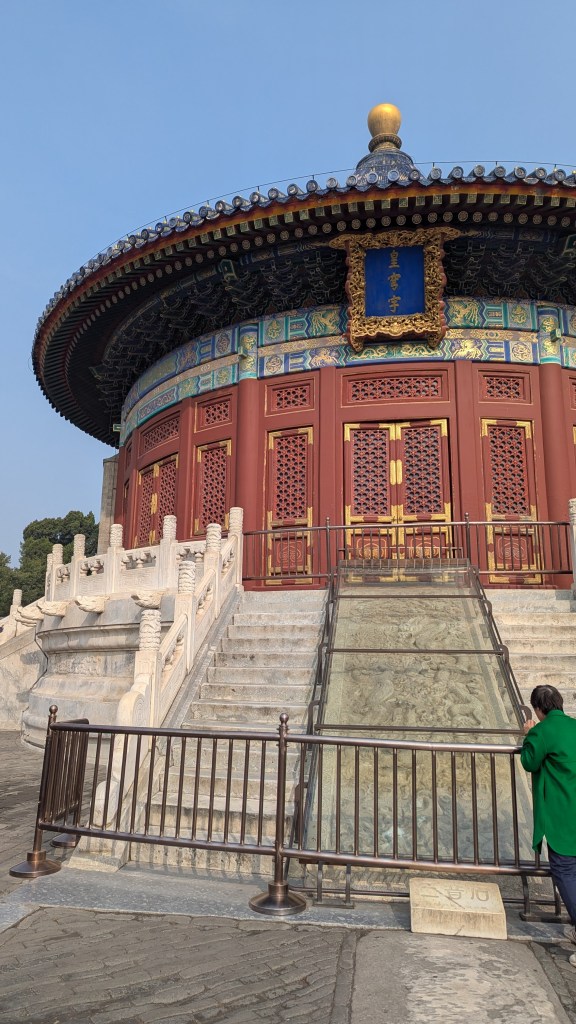
At 10:26 AM we saw the imperial vault of heaven “round temple” which used to be open for people to see inside, but that is no longer the case. The gold metal piece on the top evidently also functions as a sort of lightning rod. Then at 10:37 AM we came across the Nine Dragon Cypress, which many consider to be the holiest tree in Beijing; evidently a lot of people seem to use it as a sort of “wishing tree”.


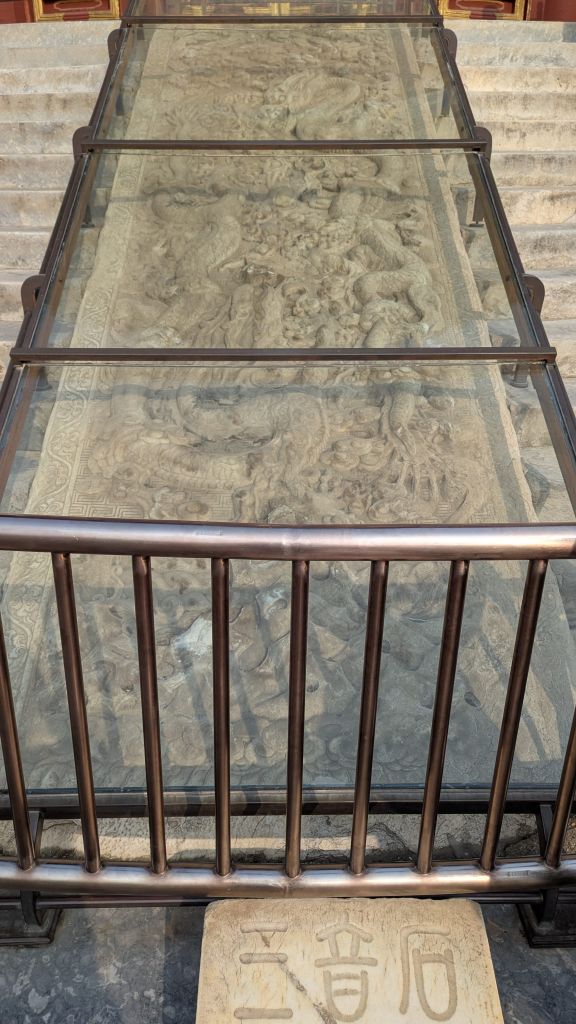
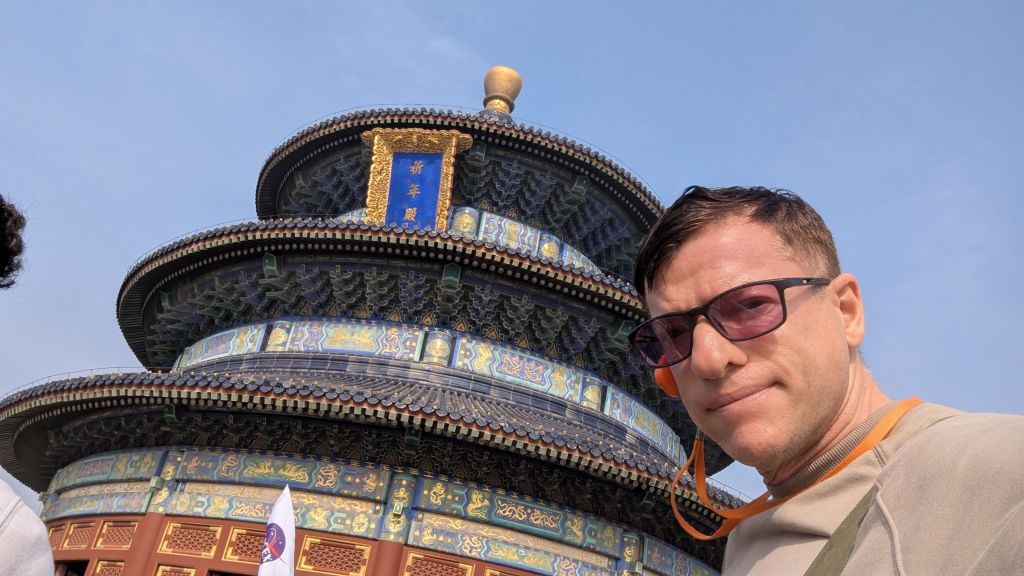
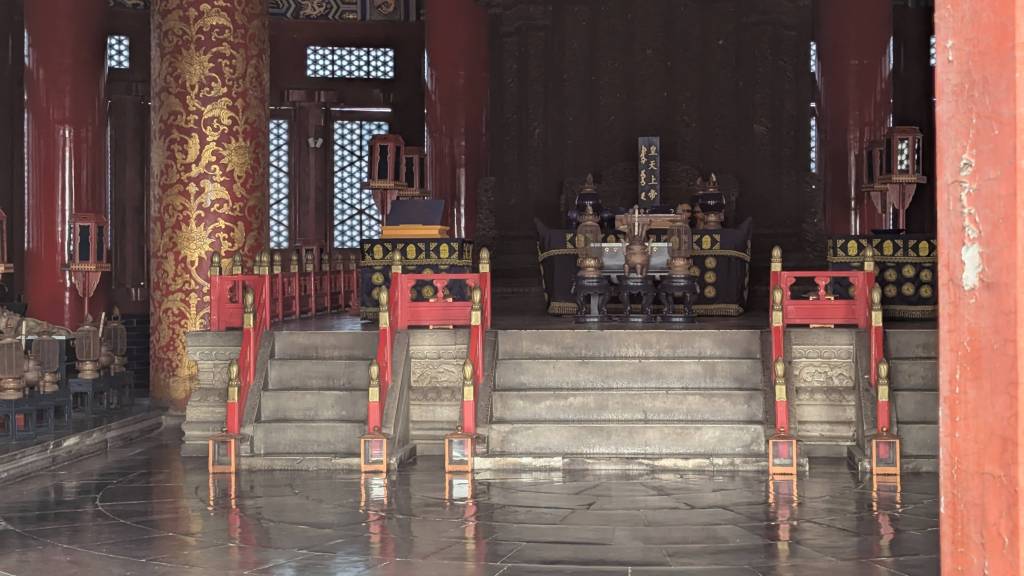
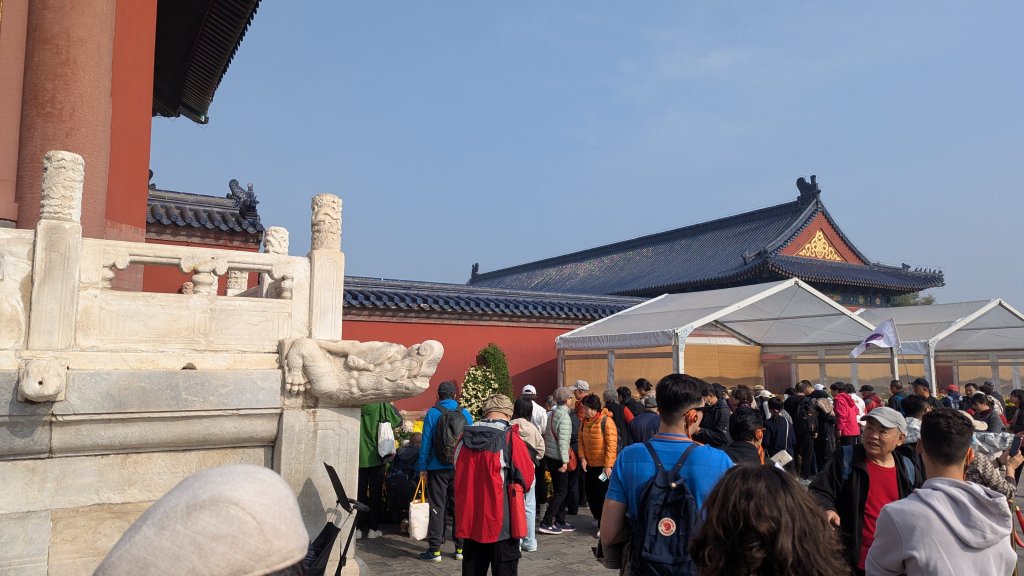
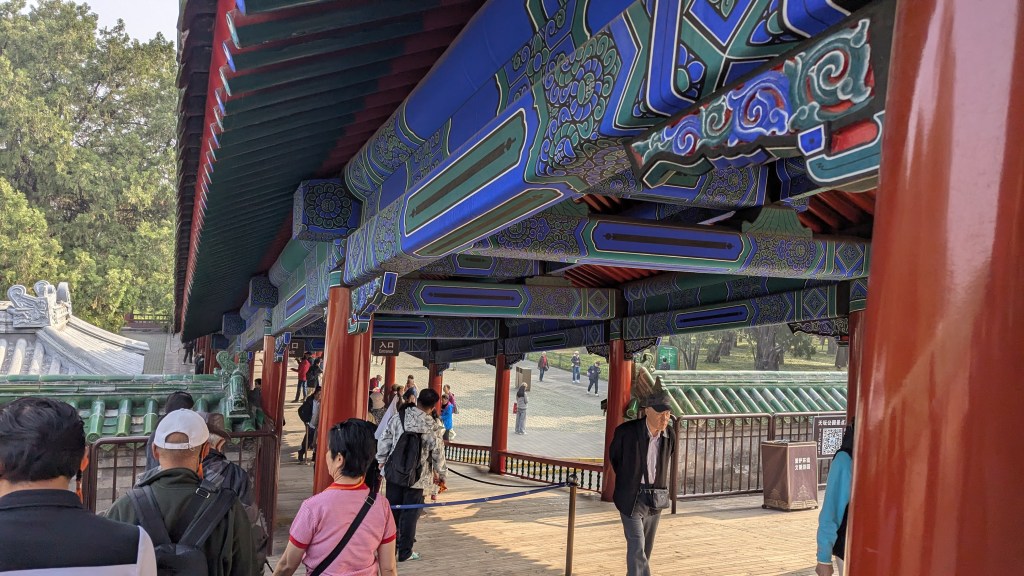
Finally, at 10:50 AM we were entering the main temple. There was an extensive cattle entry system to enter, but fortunately there weren’t that many people, so we got in very quickly. This main temple is the hall of prayer for good harvest, and It’s 38.2 meters tall. There was a lot to see there, including a beautiful flowering tree contest display. At Andy’s urging, I and a couple of other people pushed our way through the crowd to take a picture of the interior.


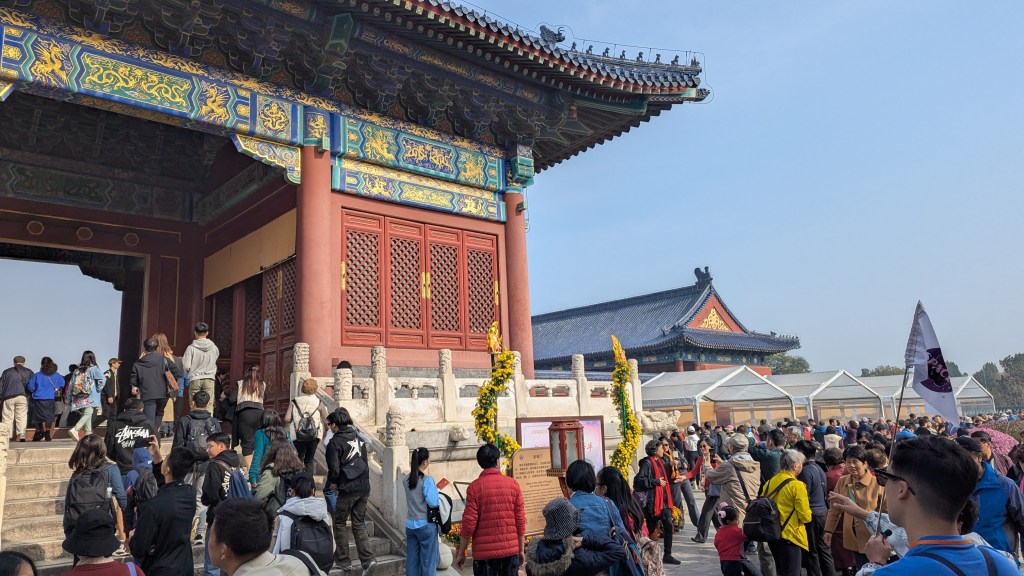

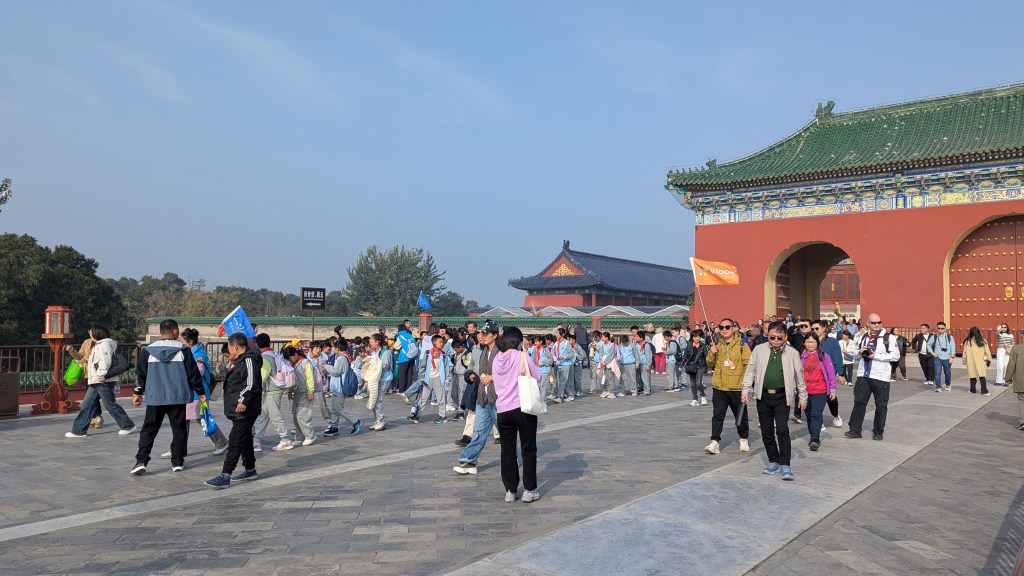
We finished up there at 11:15 AM and headed out towards the minibus, arriving at 11:29 AM, then taking a forty-minute trip to C2 Xiyuan where Andy released us to get lunch on our own until 2:00 PM when the next part of the tour would start.


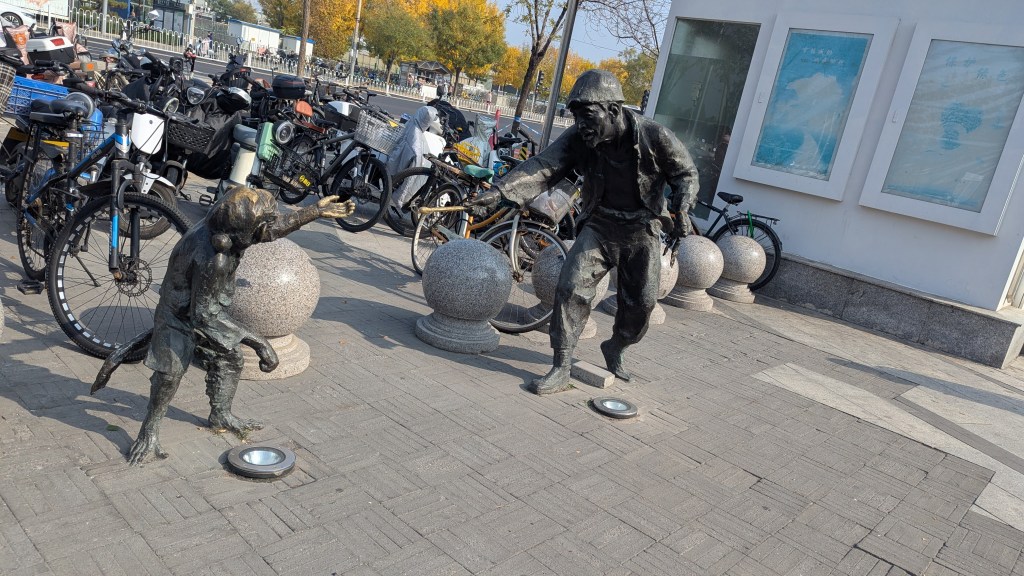
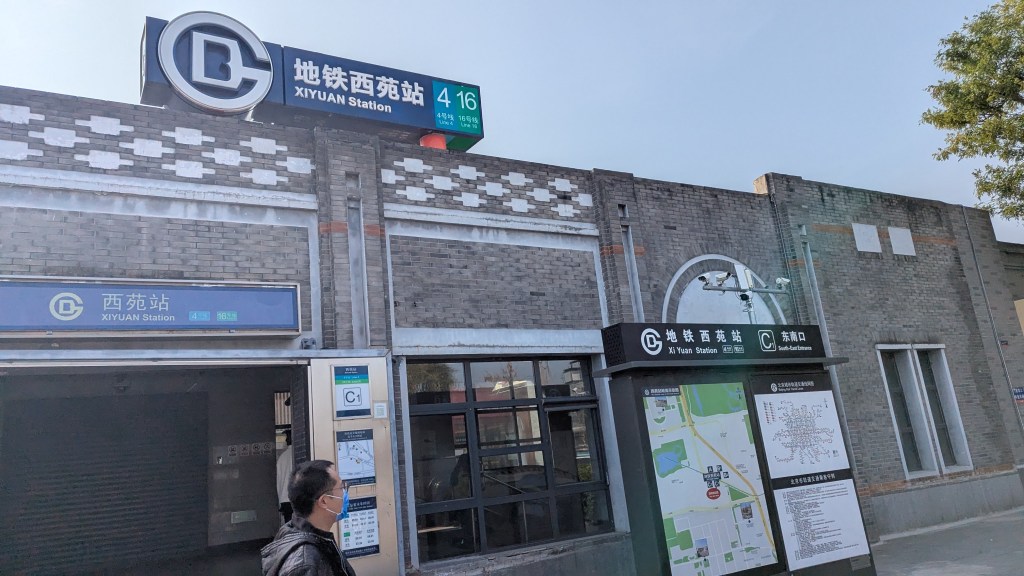
There were several “western” chain restaurants in this as well as various street sculptures. There was also a different area which was like a more local Chinese food court, and I sort of wanted to eat there, but I was afraid of accidentally getting lobster or shrimp in my food (I have an anaphylactic reaction to both), since there was no English anywhere and when I attempted to talk to a couple of sellers, they either did not understand me or didn’t want to deal with me. Regardless, the food court area also did not really seem to be a place for solo travellers/eaters.
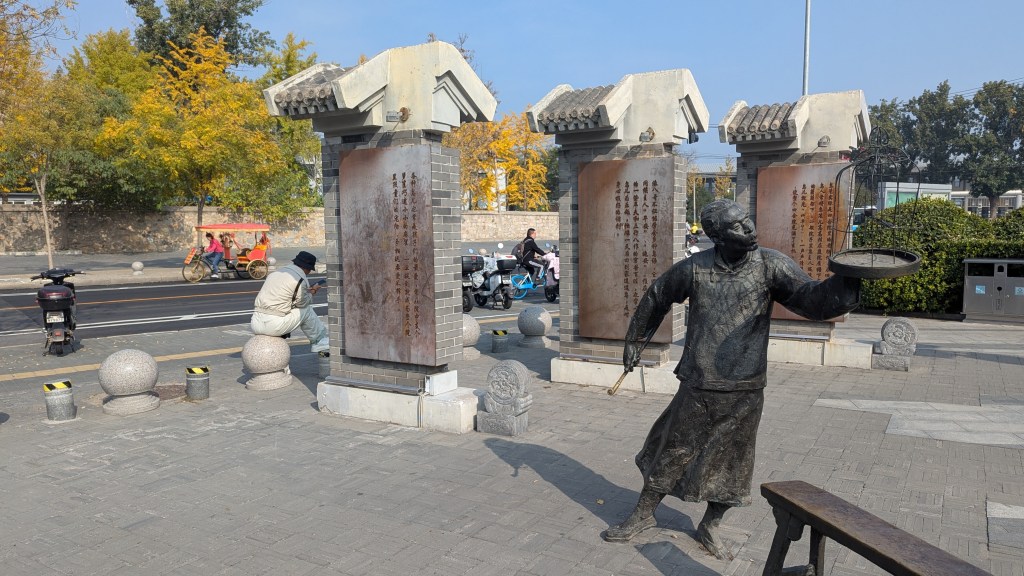
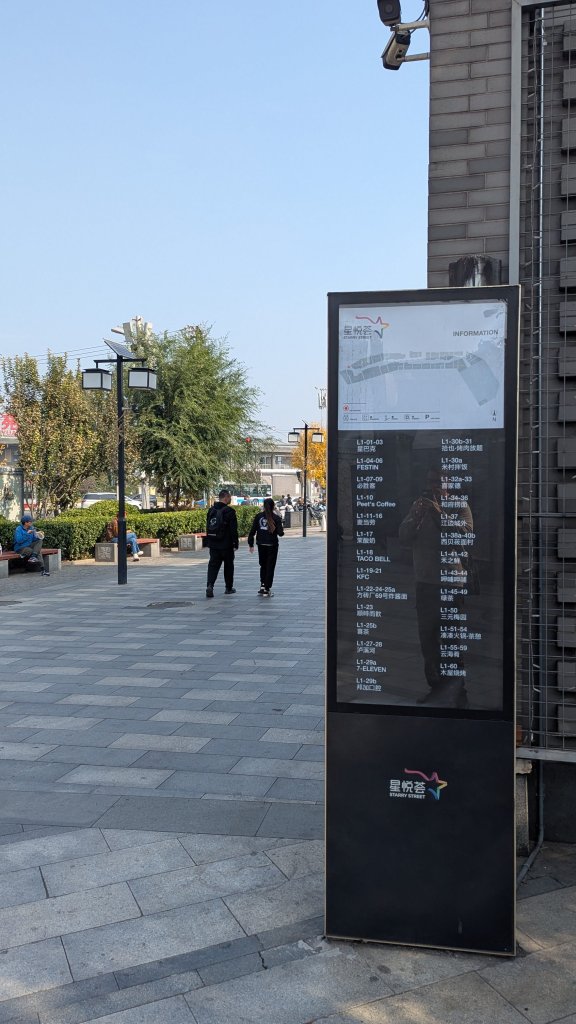
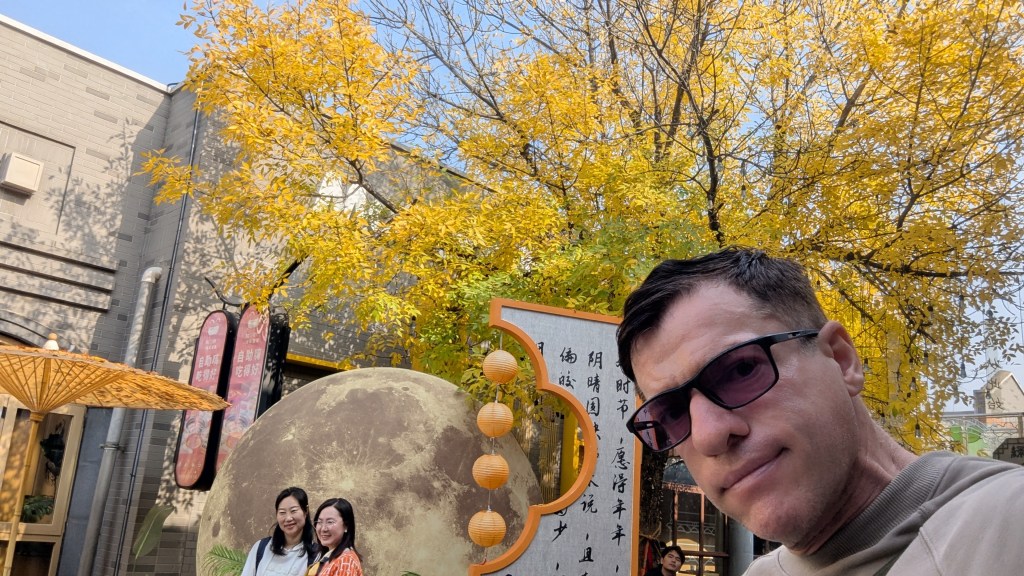
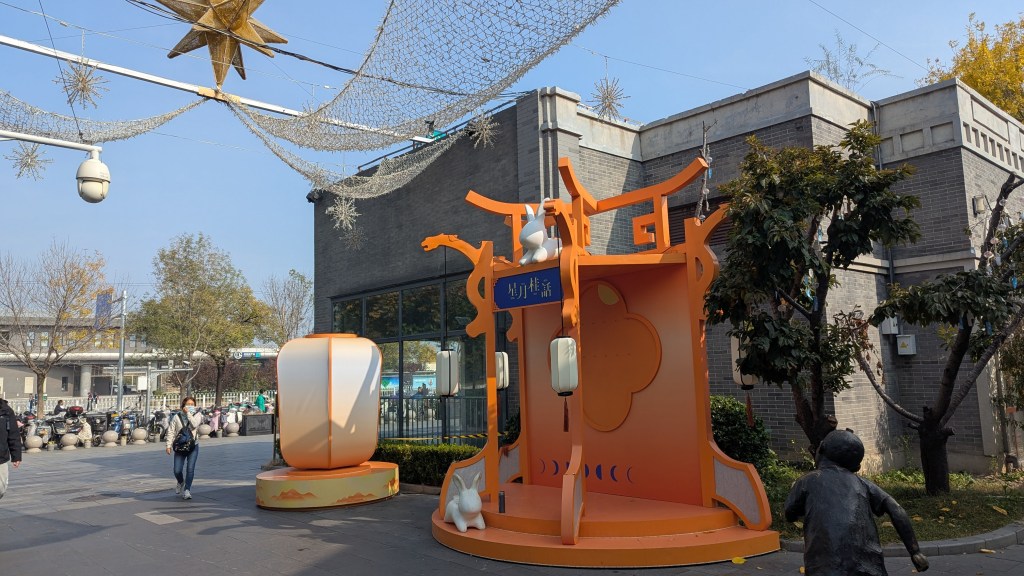
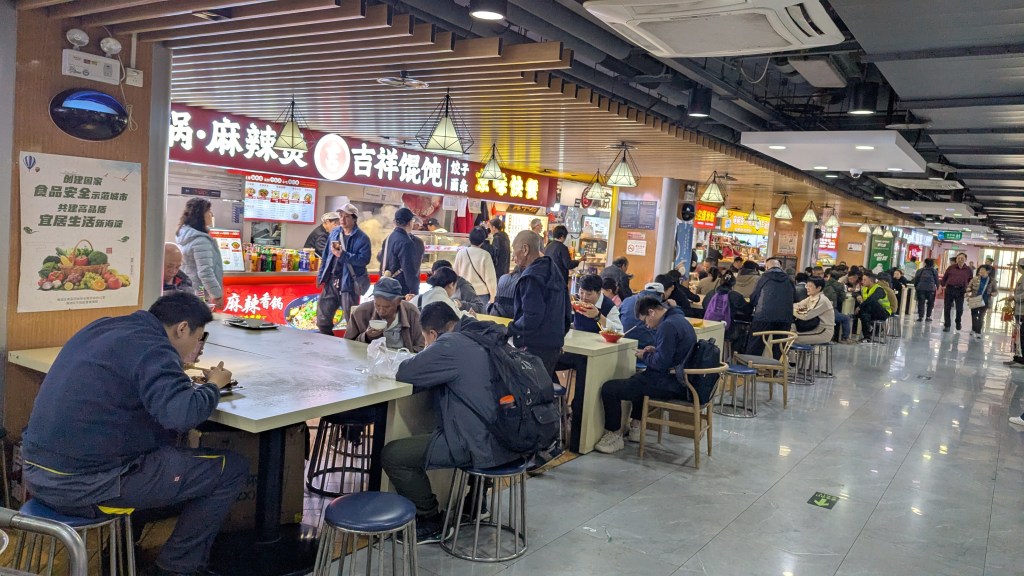
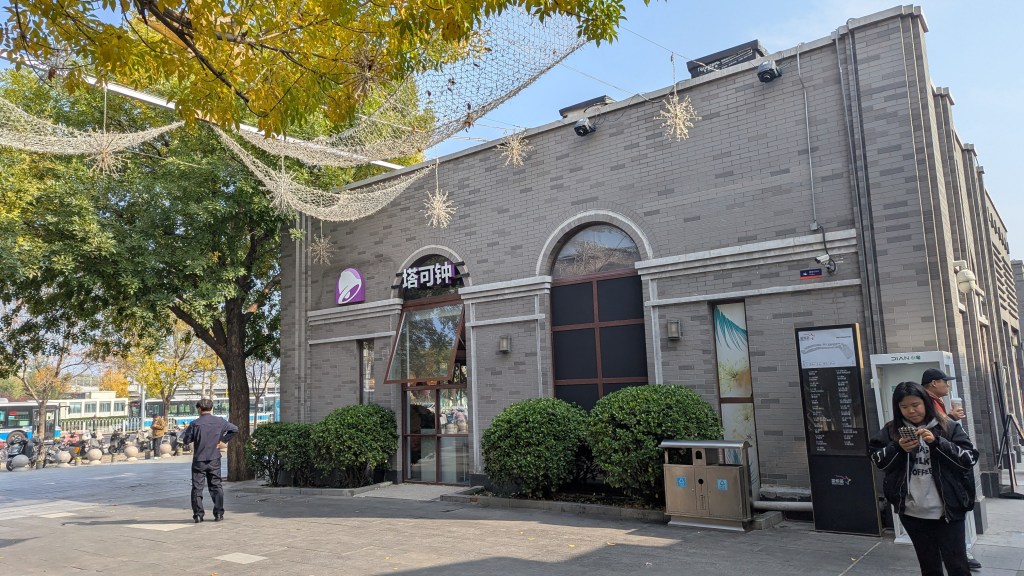
So finally, at 12:42 PM I opted for Taco Bell. Yes, I know, but I actually DO LIKE Taco Bell, and I can’t get it with beef in India. My meal was 34.9 CNY ($4.90 USD) and I paid for it using my WeChat pay wallet. The food which arrived at 12:50 PM tasted exactly like a standard Taco Bell taco. The only downside was that the only sauce they had was ketchup. The french fries were also very tasty. One thing I noticed here was that everyone except for me used a disposable plastic glove to eat this sort of finger/hand food. This was odd for me since there was a prominent hand wash station right there (which I used) with soap and everything. My drink cup was also plastic, but the lid at least was ostensibly recyclable.


While I had tried to drag out my lunch as long as possible, by 1:31 PM I was outside sitting on a red bench, where I did some personal musings and people watching. While sitting there, I once again noticed that public smoking, at least by men, is still quite common here, but I haven’t seen any women. I also once again reflected on the fact that all the metro safety officers and the sidewalk sweepers in Beijing seem to be at least sixty years old. Are these specially reserved jobs perhaps for lower income senior citizens?


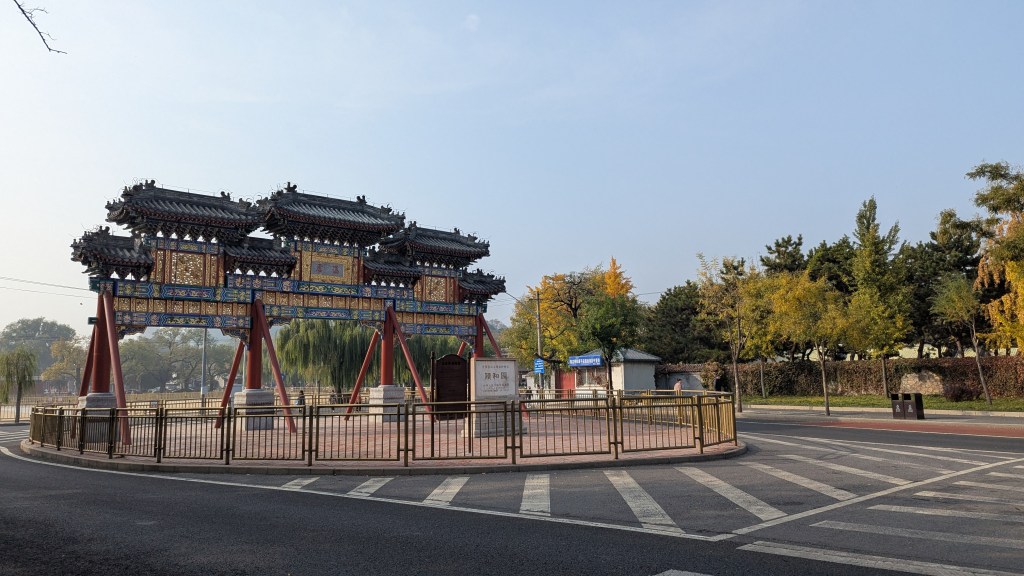
Finally, at 2:05 PM our guide Andy walked up again, along with a few new tourists, and we were off once again seeing beautiful sites and learning all sorts of fun facts about the area. The Summer Palace, which is both bigger than Macau and 3.5 times bigger than The Forbidden City was made for the emperor’s mother. The garden itself is 100% manmade, including the bat shaped mountain. The emperor who made the palace was Manchurian and was the longest serving emperor in China.

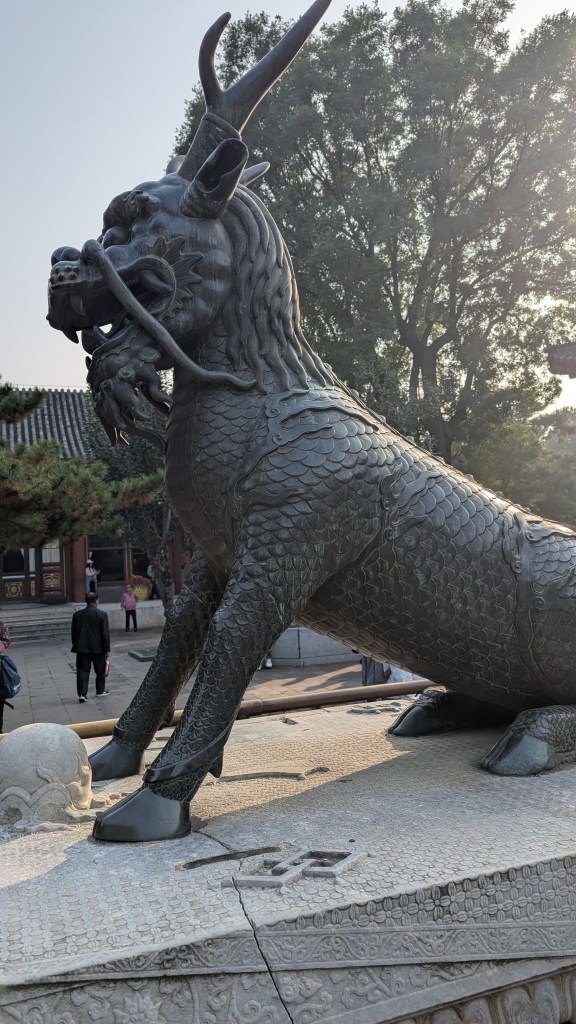
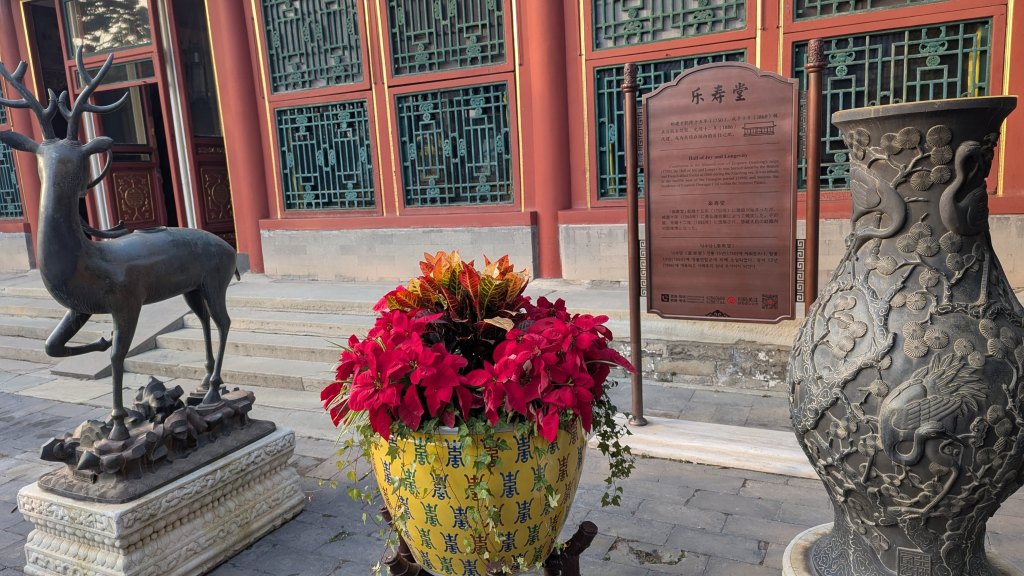
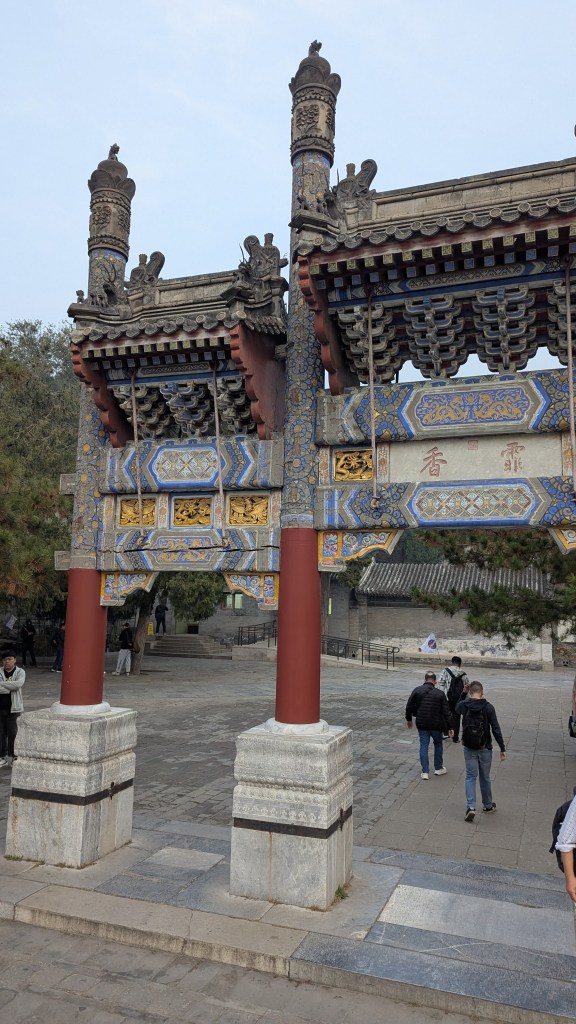
After walking through several gates, all with different names and symbolic meanings, at 2:48 PM we saw this sculpture of a mythical creature called a Chin. This particular one had actually originally been in a different even larger garden which had been destroyed by the French and the British. At some point, the front legs had been broken off, so the ones seen now are reconstructions.


At around 2:56 PM and for some time afterwards, Andy talked a lot about the Empress Dowager Cixi, who is considered to have been the most powerful woman in all of Chinese history. It is from her that we get the saying “The woman behind the curtain”, since she would sit behind the curtain and tell the emperor what to do. According to history, her son (who was six when he first ascended to the throne) and the first emperor she “controlled” died from syphilis. at the age of nineteen. I took issue with them saying that he got syphilis from going to prostitutes . . . I am fairly confident that he could have gotten syphilis from sleeping with anyone and also confident that there were no STD tests nor common preventative measures at the time. But anyways, that is the story.
Anyway, when her son died at the age of 19, she somehow orchestrated things so that the next to ascend to the throne was only four, and she stayed on as the Empress Dowager.
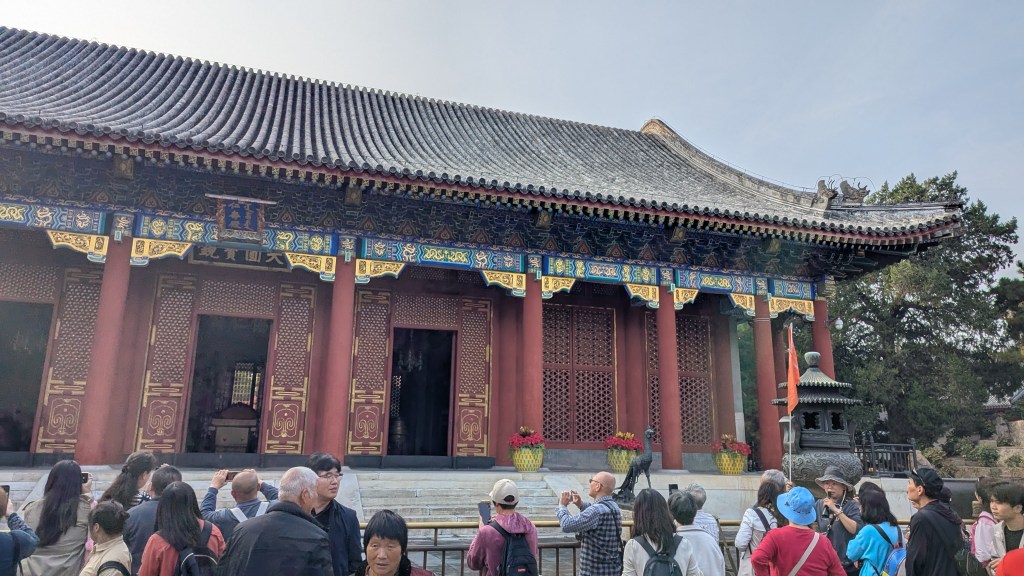
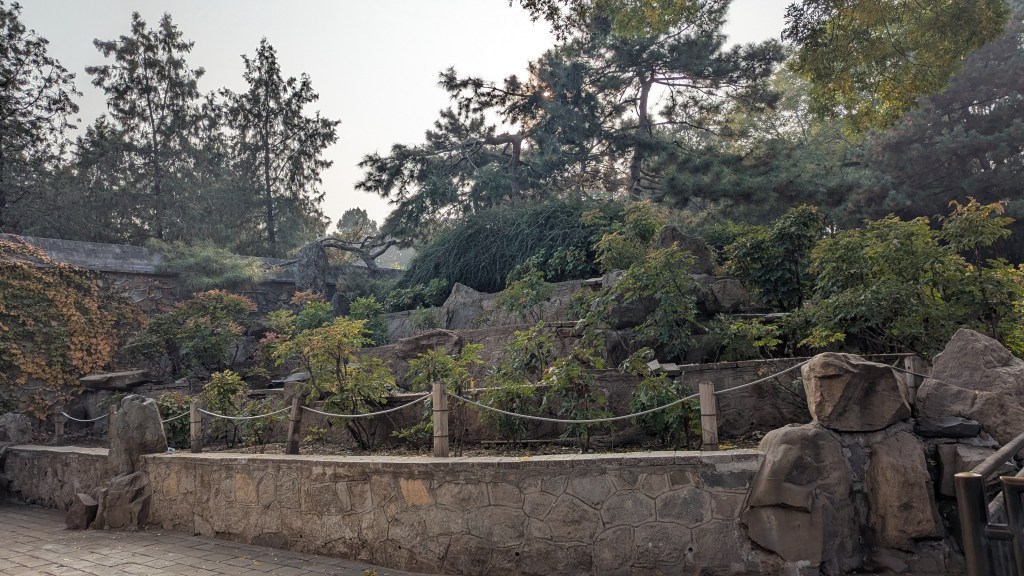

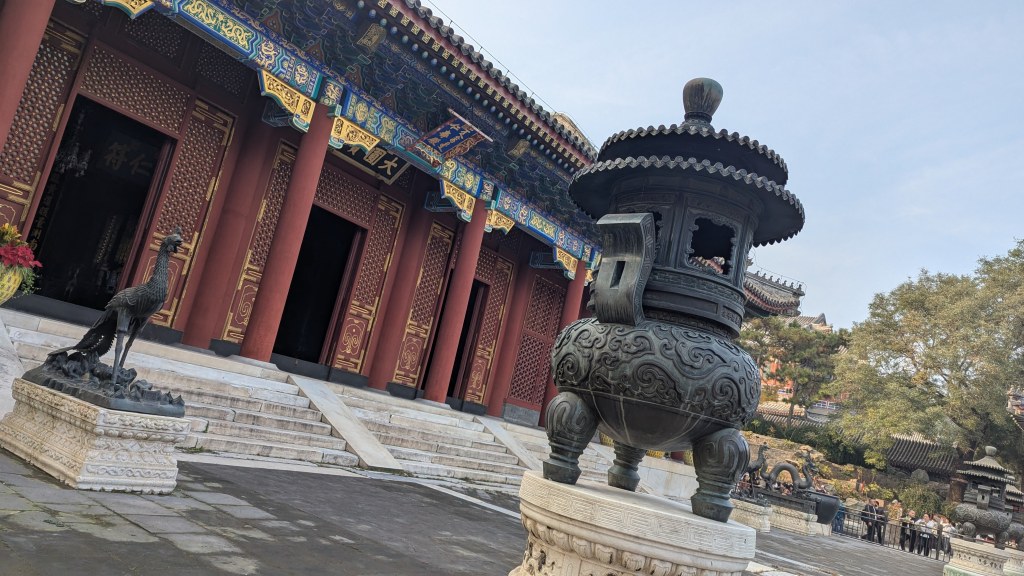
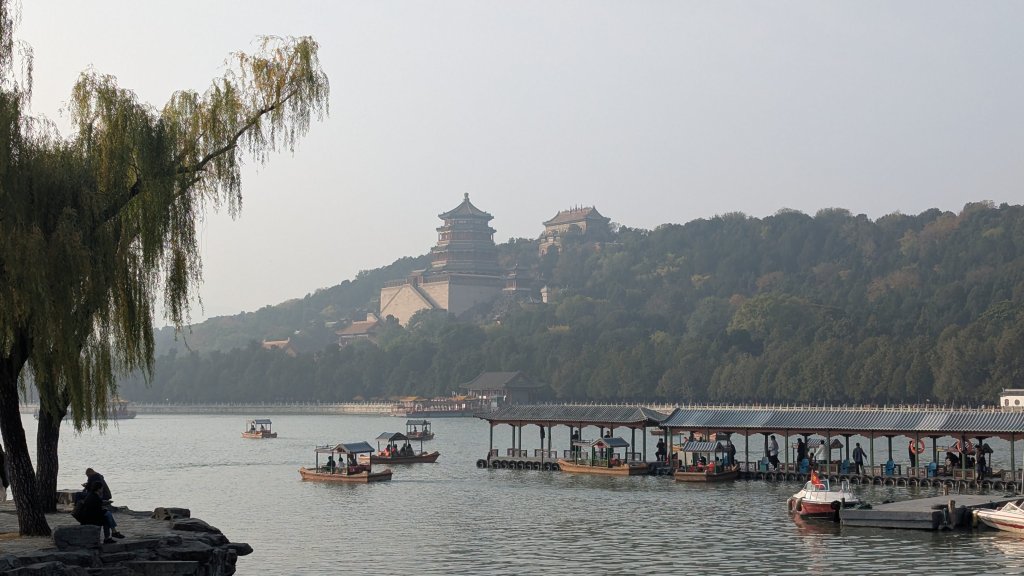
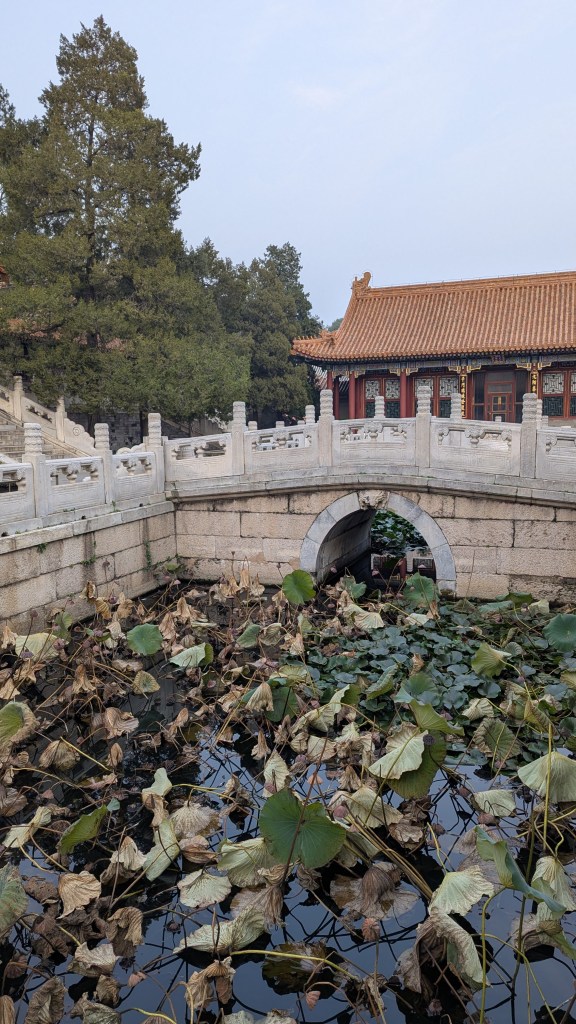
Like everything here, the lake is also manmade, and the dirt which was dug out to create it was what was used to the make the bat shaped mountain. Also, since the mountain is completely artificial, it is all dirt with no stones. At 3:22 PM Andy gave us the option of taking a boat for 160 CNY ($21.92 USD) each around the lake. He was clearly really pushing the boat idea, but on this one the entire group rebelled since we had come here to see the architecture rather than needlessly float around on a boat, even though we acknowledged that it would have been pretty. However, it seemed like things were already quite beautiful on the shore, and we all wanted to see as much as possible.
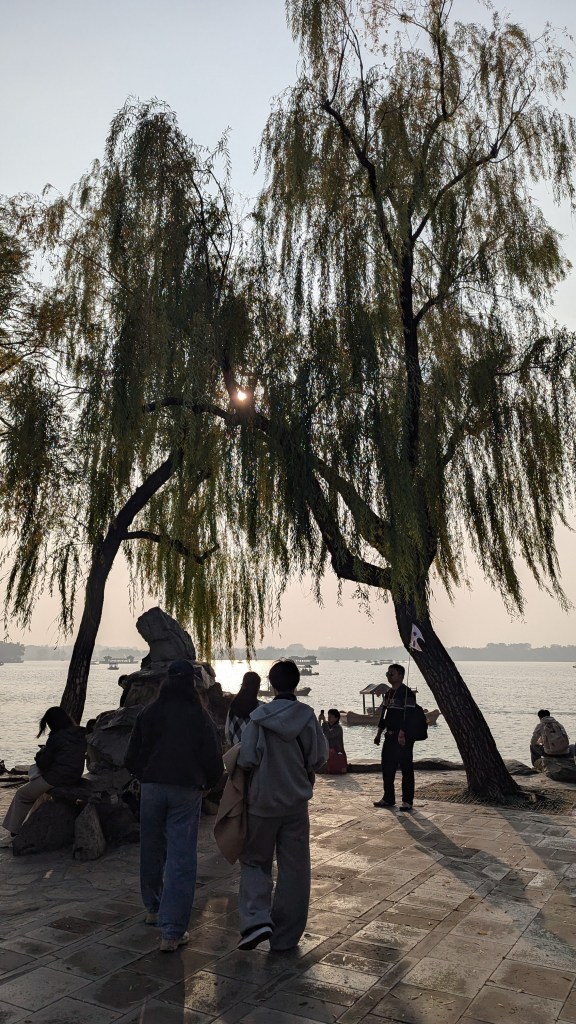


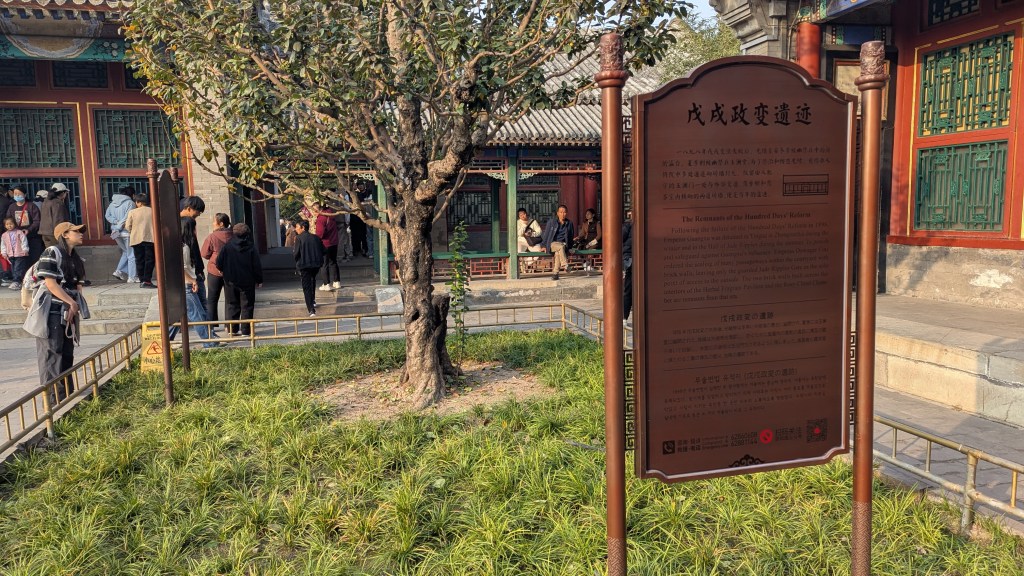
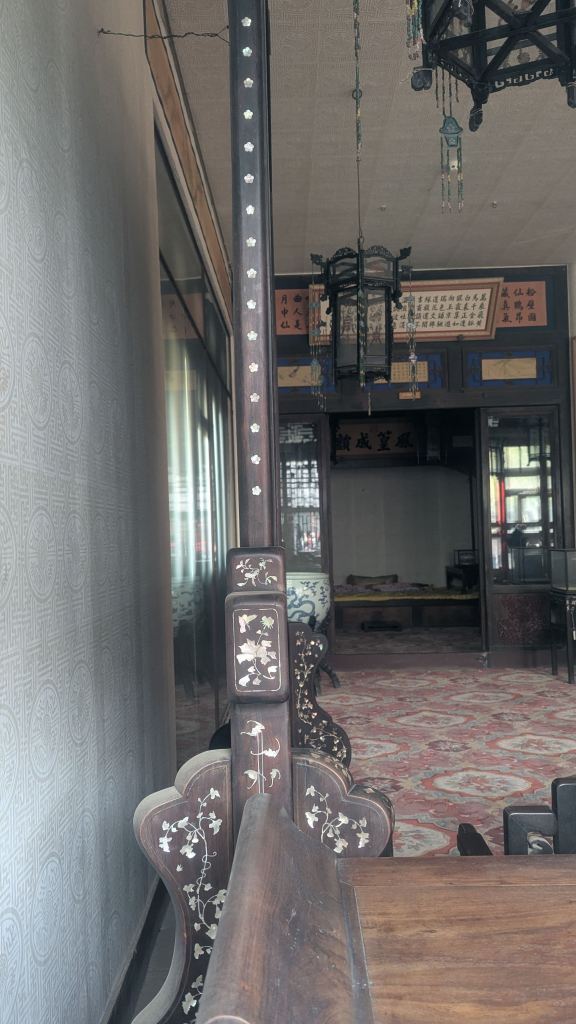
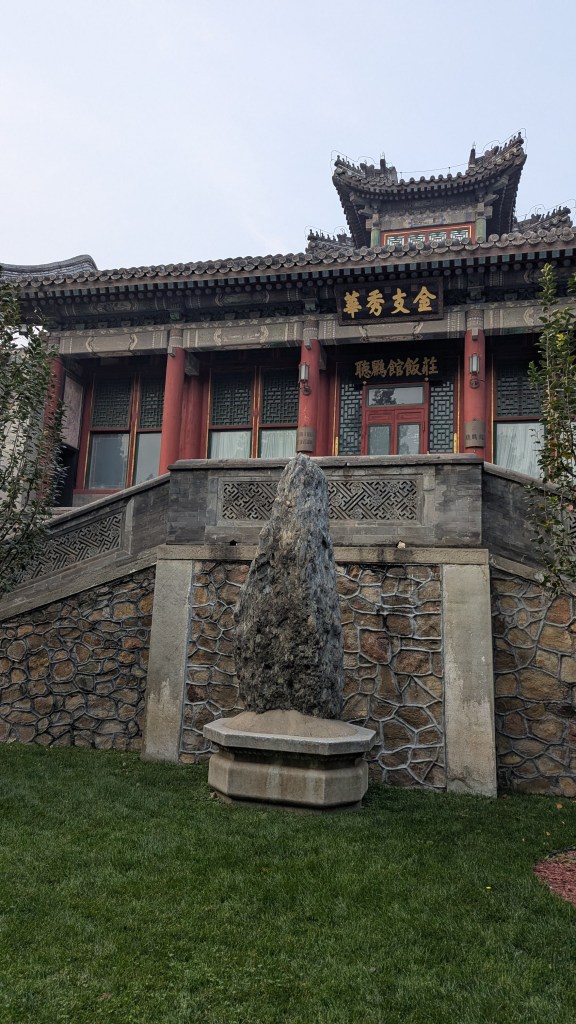
At 3:26 PM we were where the Emperor Guangxu was kept prisoner by the Empress Dowager Cixi when he attempted to throw off her influence. He spent the last ten years of his life imprisoned in this reduced area of the garden. His wife, the Empress of Guangxu, also stayed here, but it was unclear to me whether or not she was also a prisoner. Regardless, it was all a sham marriage, since she was the niece of Cixi and never actually consummated the marriage to her husband. All the furniture we could see here was original, and it was notable the Empress of Guangxu had a very simple single bed. As with all rulers, the Empress Dowager Cixi clearly was not managing all of this on her own, but I was very impressed at how she was able to maintain power for so long; later on, I would like to read more about her.
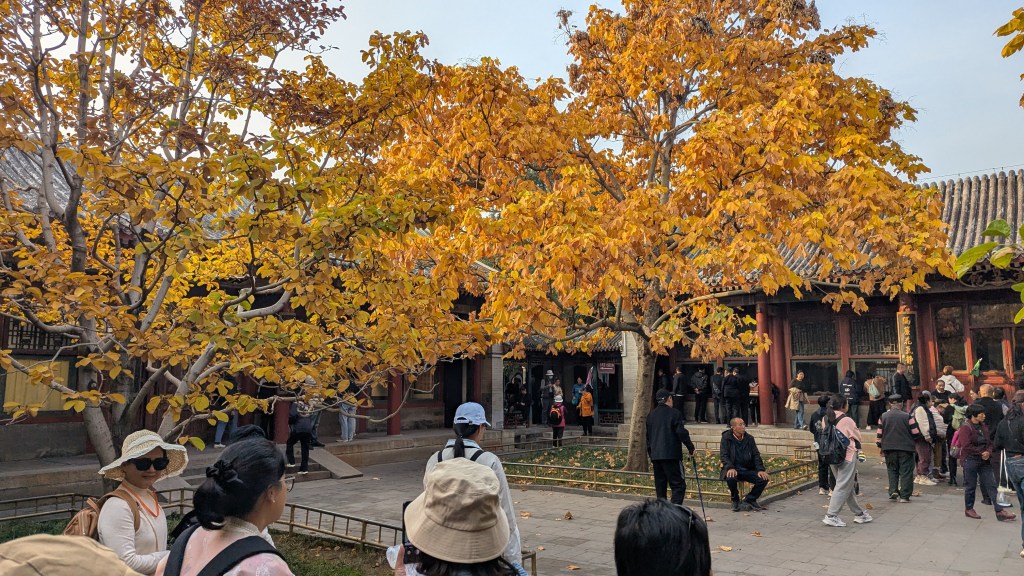


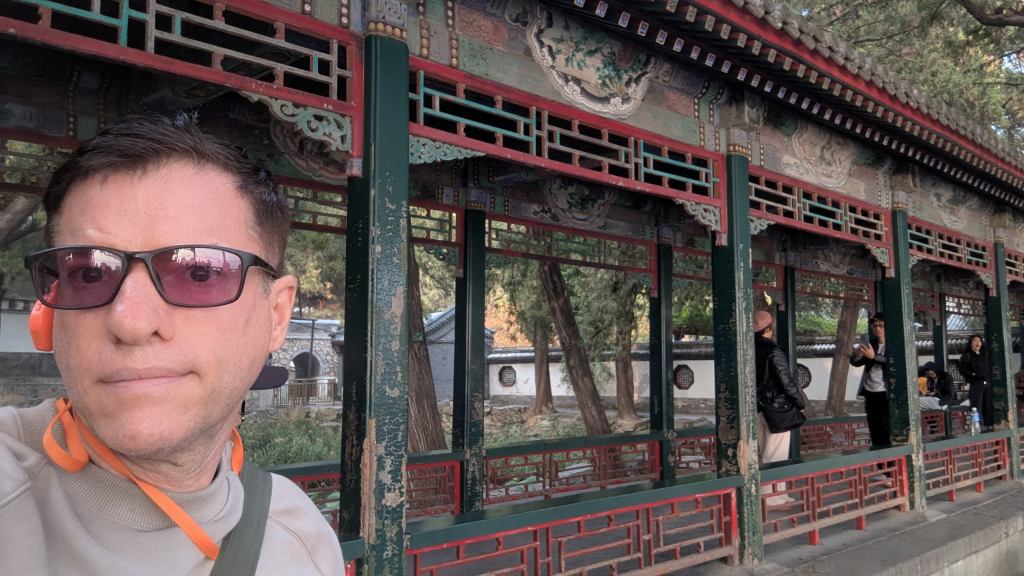
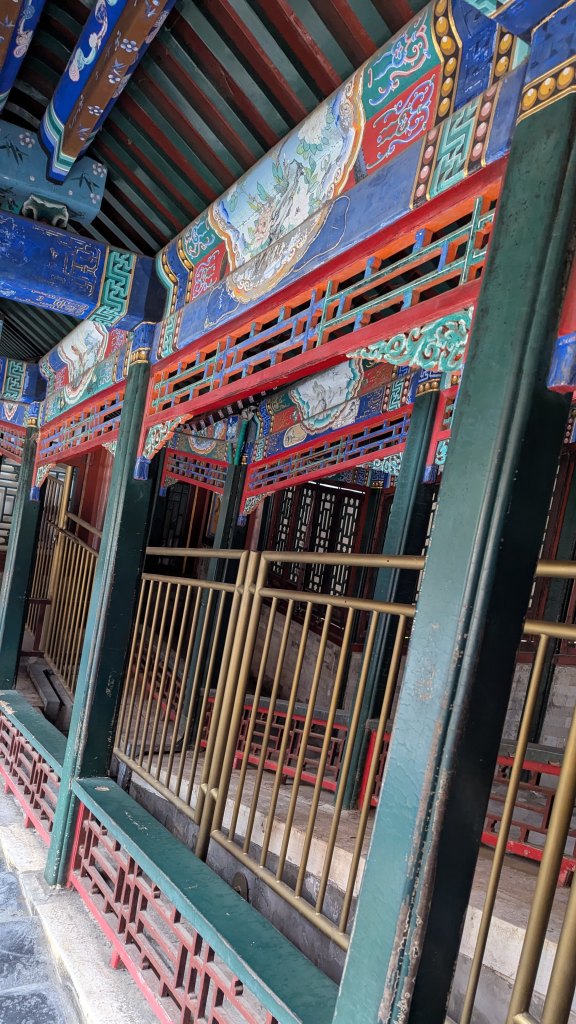
At 3:45 PM we were walking down what is supposedly the longest corridor in the world. It is more than 700 meters long. Honestly, I had my doubts about this claim, but I suppose it all depends on how you define “corridor”. Regardless, all of the different paintings, again, supposedly none of them repeated, were impressive.


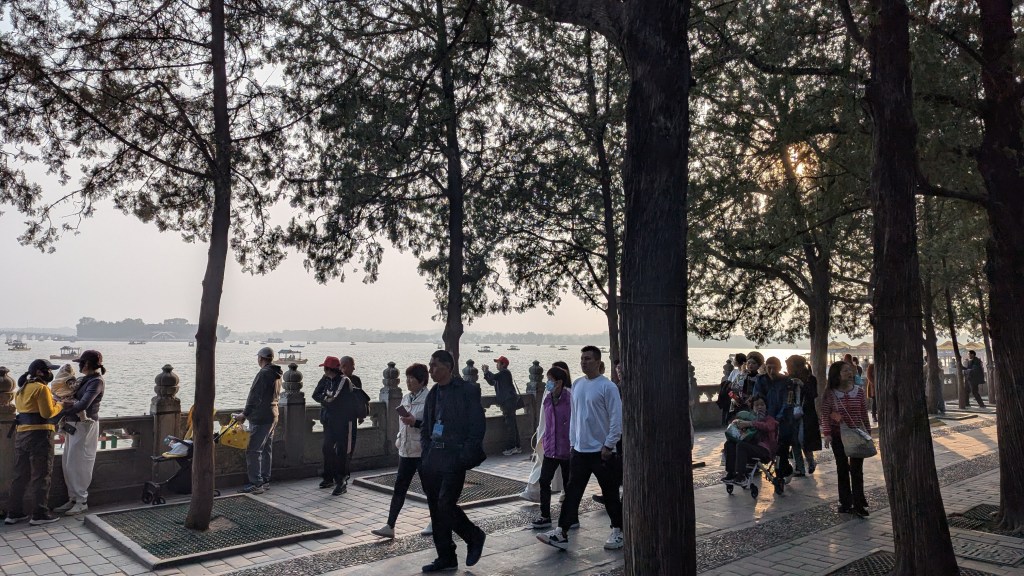
At 4:01 PM I was thinking about how it really was very beautiful here, but for me at least, there were just too many people. I couldn’t begin to imagine the masses of people who would be here during high season. Certainly, this was most crowded place I had been during my Beijing trip.

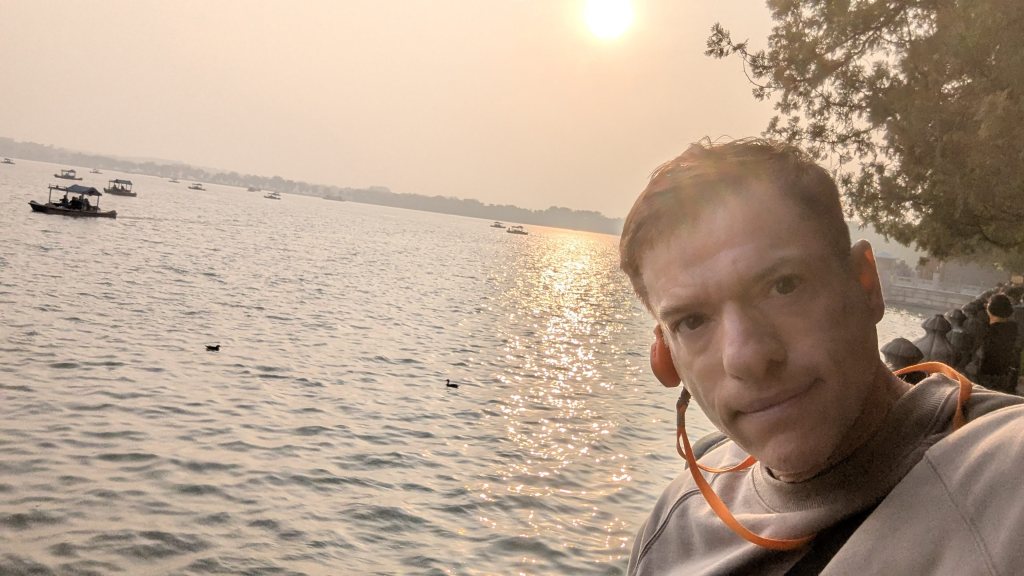

At 4:03 PM we arrived at the main tower, which has a separate entry fee of 10 CNY ($1.40 USD). To climb to the top and back down can easily be done in forty minutes, so the guide announced that he would wait forty minutes for those who just wanted to wander around a bit and for the others who intended to go up. Nobody else in my group seemed keen on climbing the tower, but I figured that I may as well . . . it was unlikely that I would be here again anytime soon. Mercifully, either due to the climb or due to the separate entry fee, this area was much less crowded.
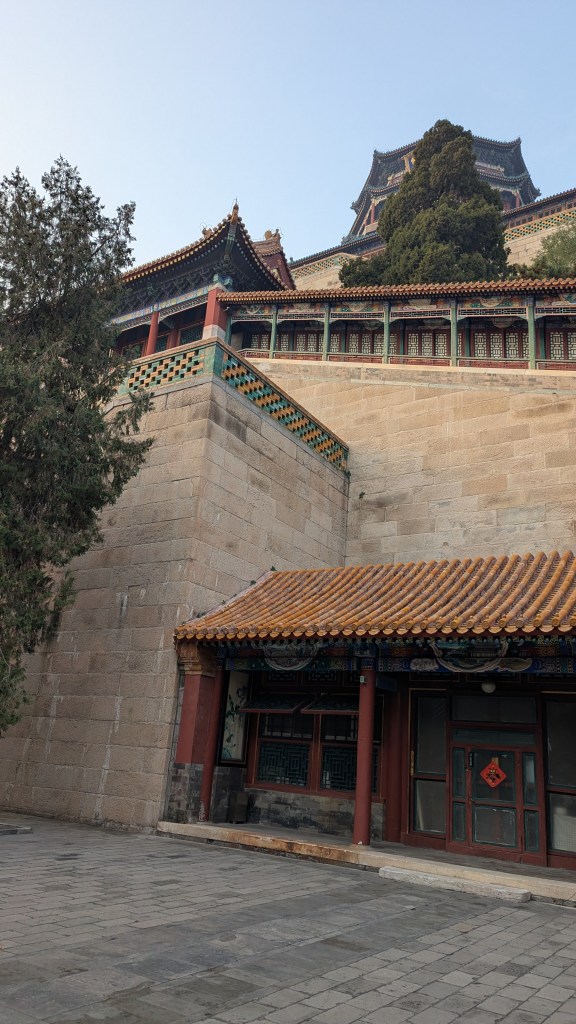

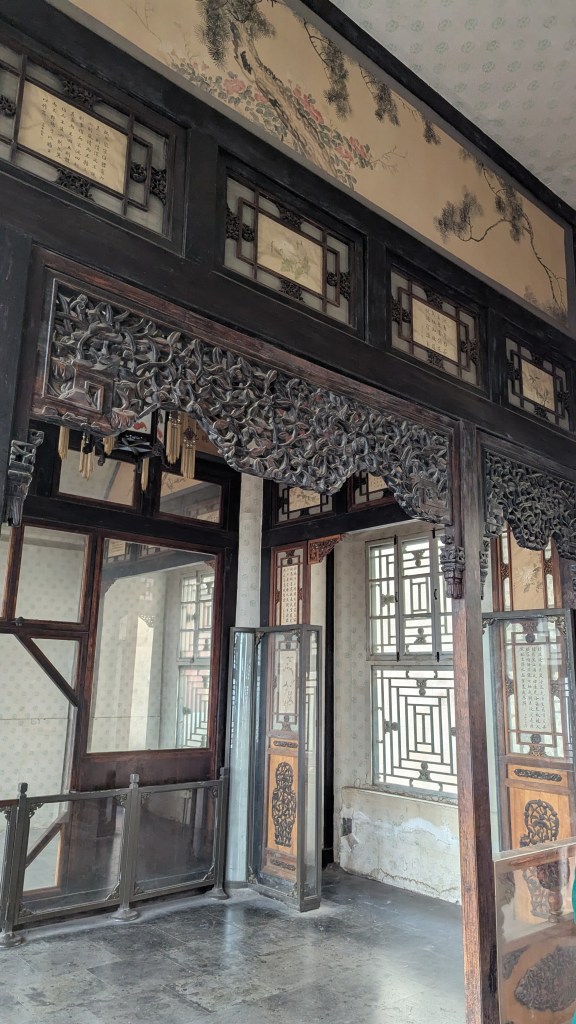
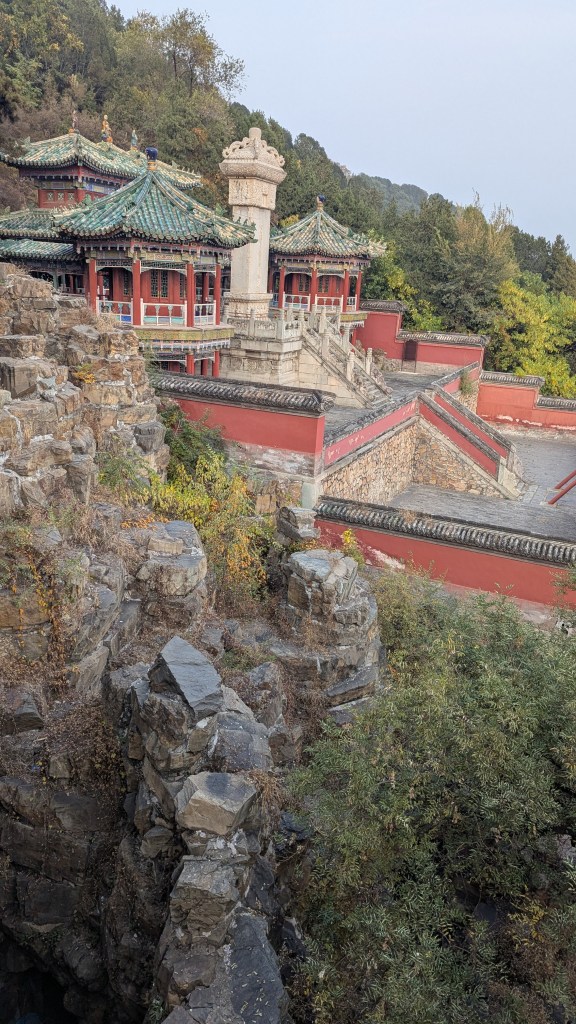
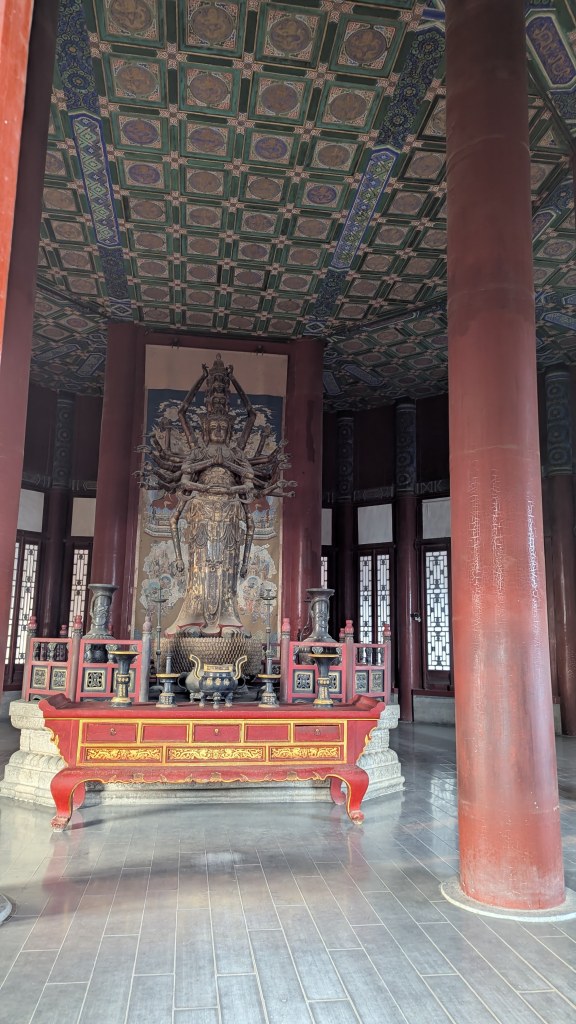
When I reached the highest point where access was allowed at 4:19 PM, I saw that there was a statue, presumably a version of the Buddha? A lot of the tower is off limits, but if you are feeling up to it and the temperature is pleasant, there is still quite a bit to see, and the light from the setting sun was also great at the time.
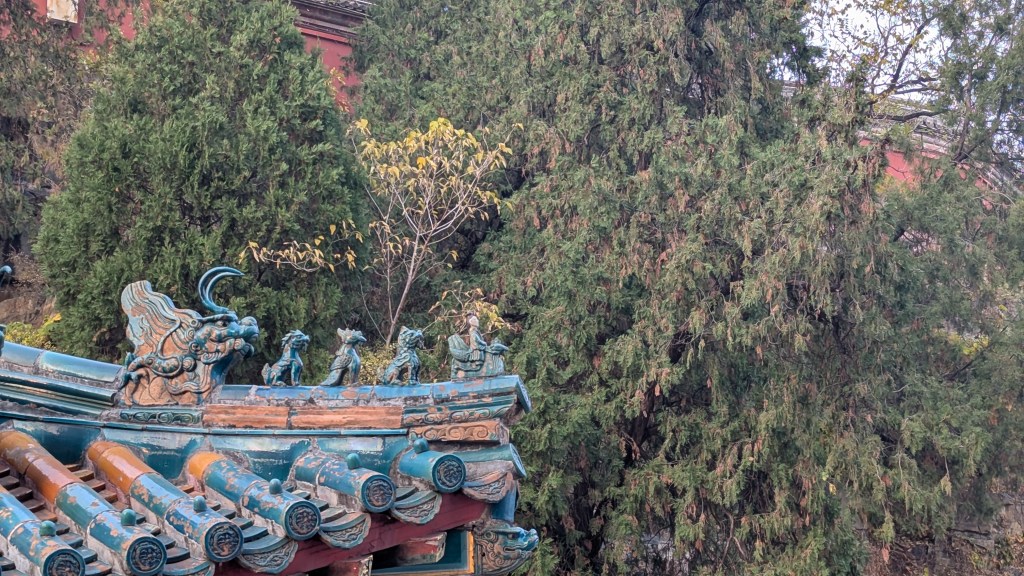
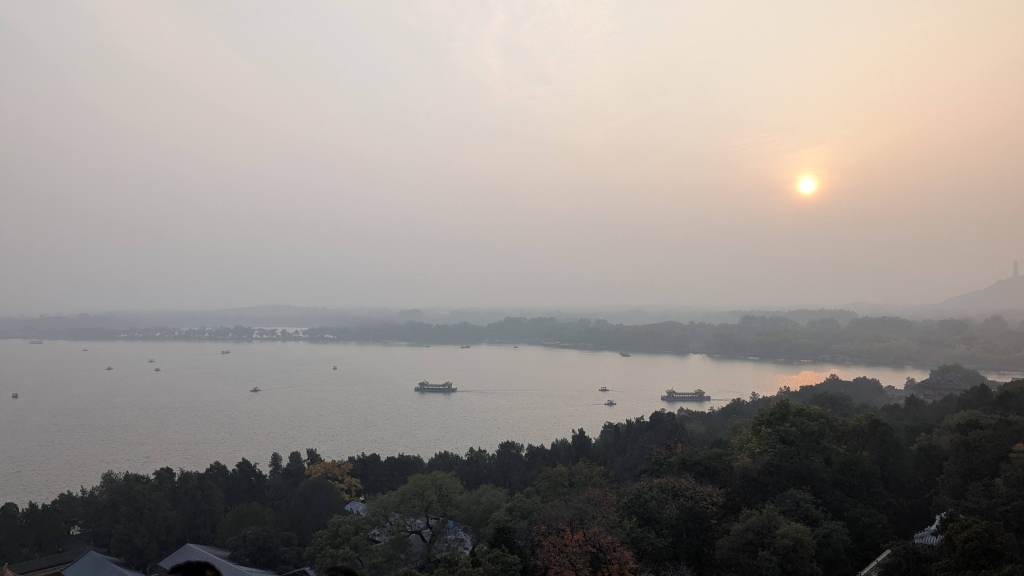
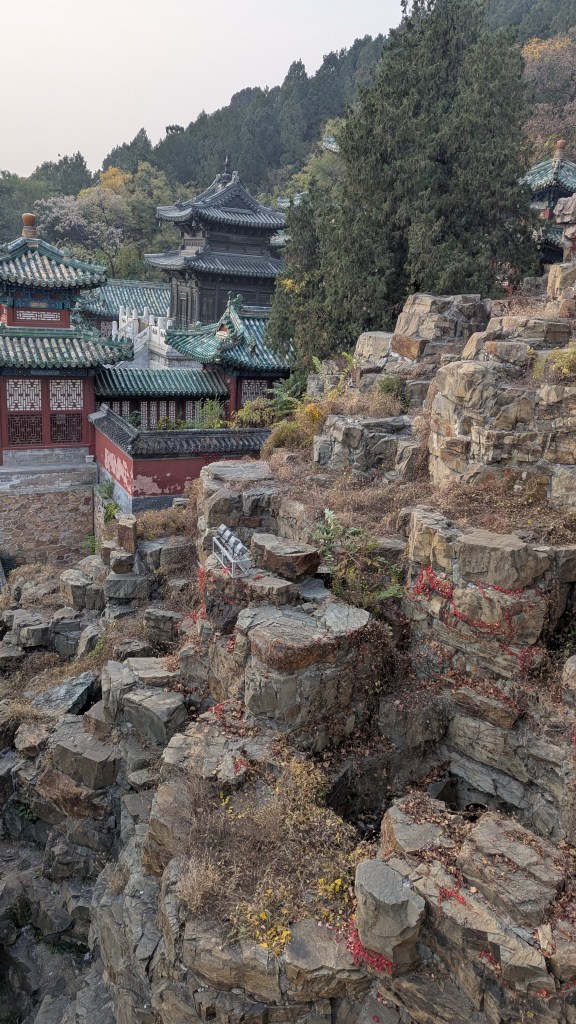


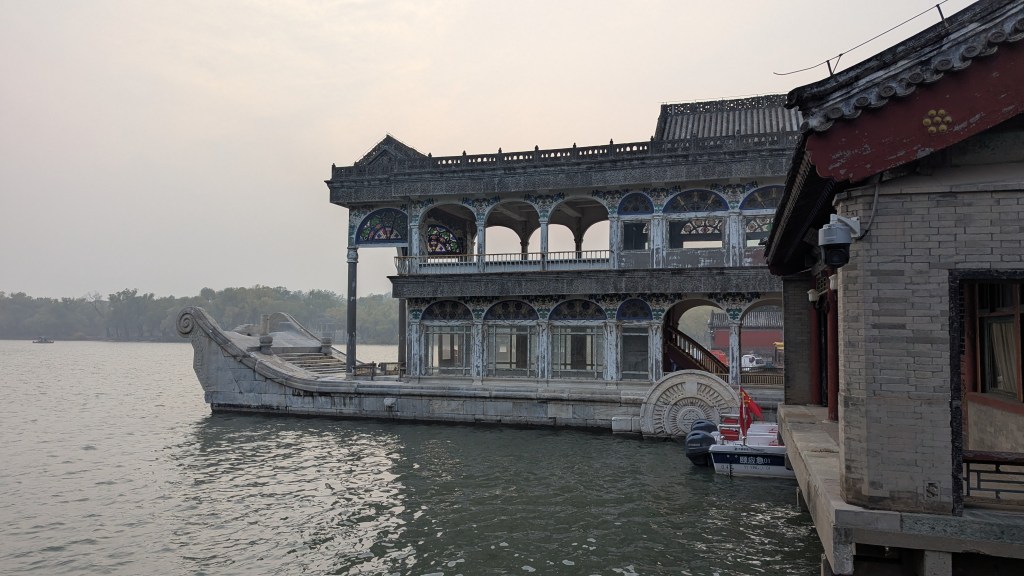
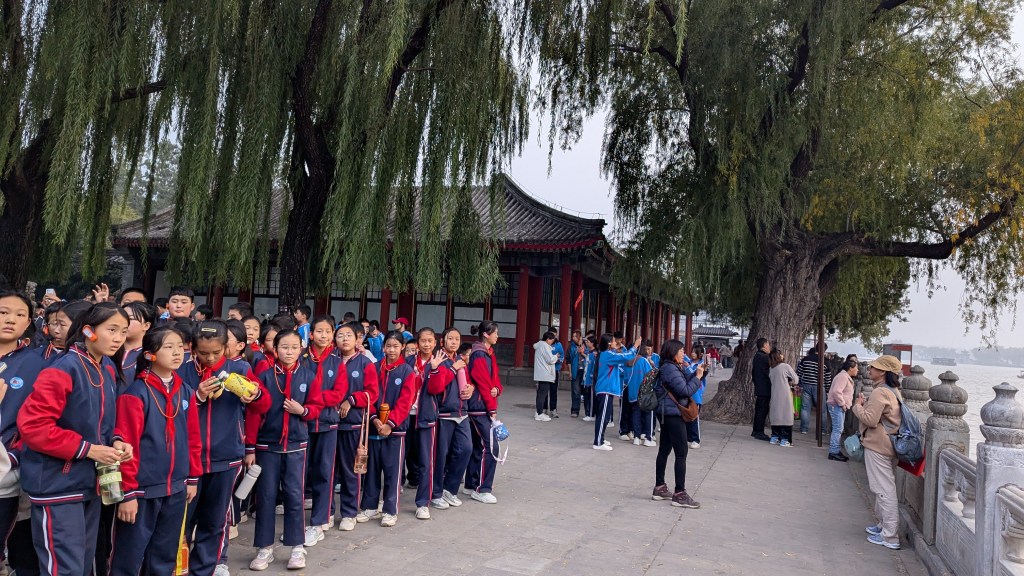
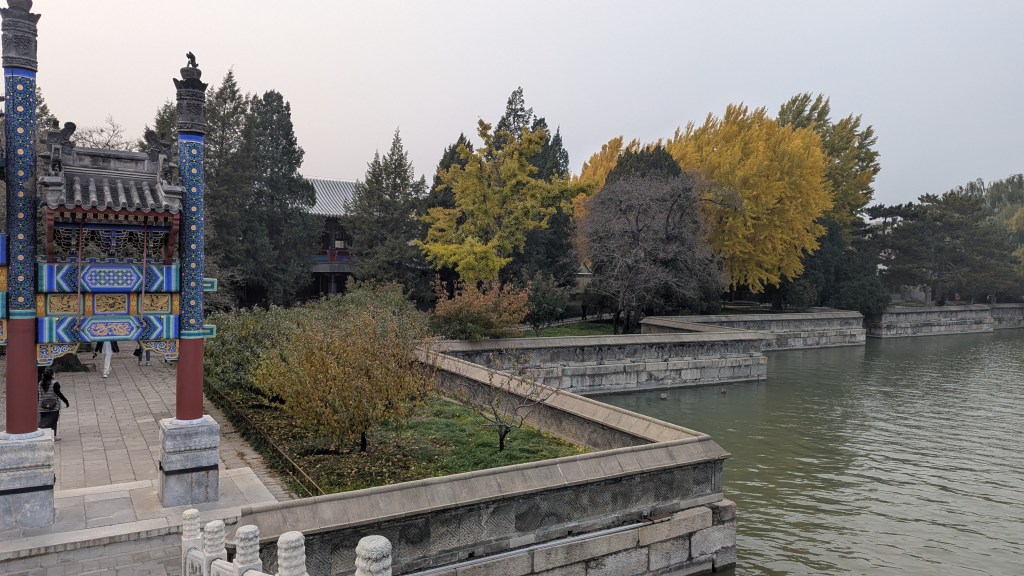
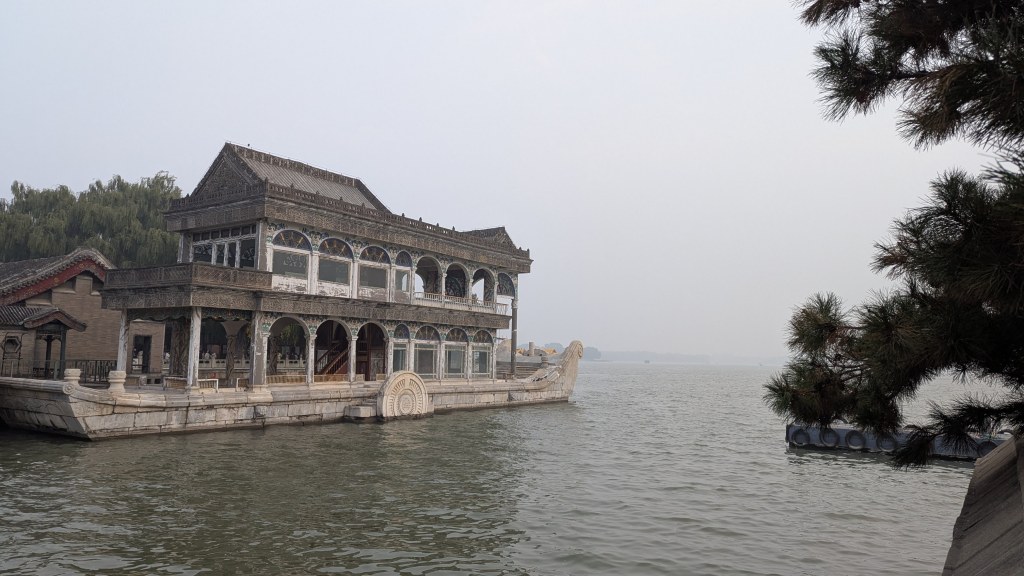
At 4:34 PM I walked down and rejoined the group. As we started walking out, we saw the opera building and an interesting boat shaped building. The tour itself actually ended at 4:55 PM, but we were welcome to stay in the park until closing time at 8:00 PM, even though it would be dusk at 5:30 PM.


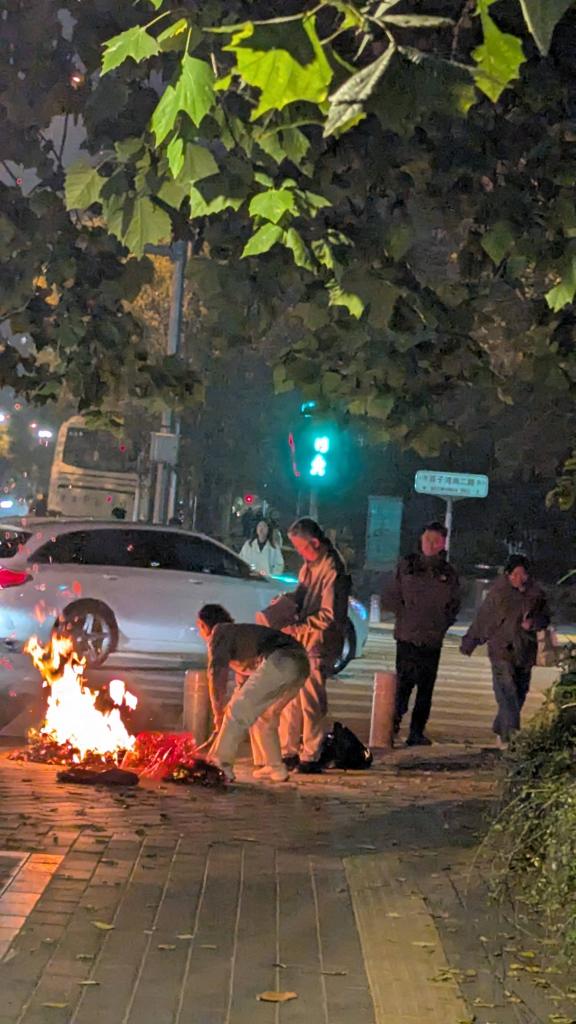
By 5:10 PM I was outside and then quickly headed towards the subway where I paid 6 CNY ($0.85 USD) to ride on two different trains before getting off at Jiulongshan at 6:21 PM. From there I set off walking to meet up with a friend, who was a former colleague from my job in Bengaluru, for dinner. Along the way I was curious about the burning taking place in circles which were drawn on the sidewalk, but later on my friend explained to me that this was part of a religious ceremony which is permitted on certain special days. To overly simplify things, I think it was a type of ancestor worship.


Then came the unexpected highlight of the evening when I got to meet up with Mohammed for a delicious meal which his wife had graciously prepared. We had a wonderful conversation which could certainly have gone on longer, but as it was getting late, at 10:40 PM Mohammed very kindly arranged for a car to take me back to Shunyi, where I arrived at 11:20 PM. It had been a wonderful way to end a perfect day in Beijing. Thank you so much Mohammed!


So, wow, that was certainly a jam-packed day. While Beijing no doubt has many amazing more sites to be seen, I had finished off all of the “must see” sites and have also been able to visit with several outstanding friends. At this point I was thinking that it might be better to plan to take it a little easier the last couple days, but I still had not decided. Regardless, with such wonderful friends to visit, you can bet that the last couple days in Beijing were also outstanding. Of course, in order to be sure, you will have to keep reading the upcoming entries. Will you keep on reading, or have I finally exhausted you?

 Travels with Jay