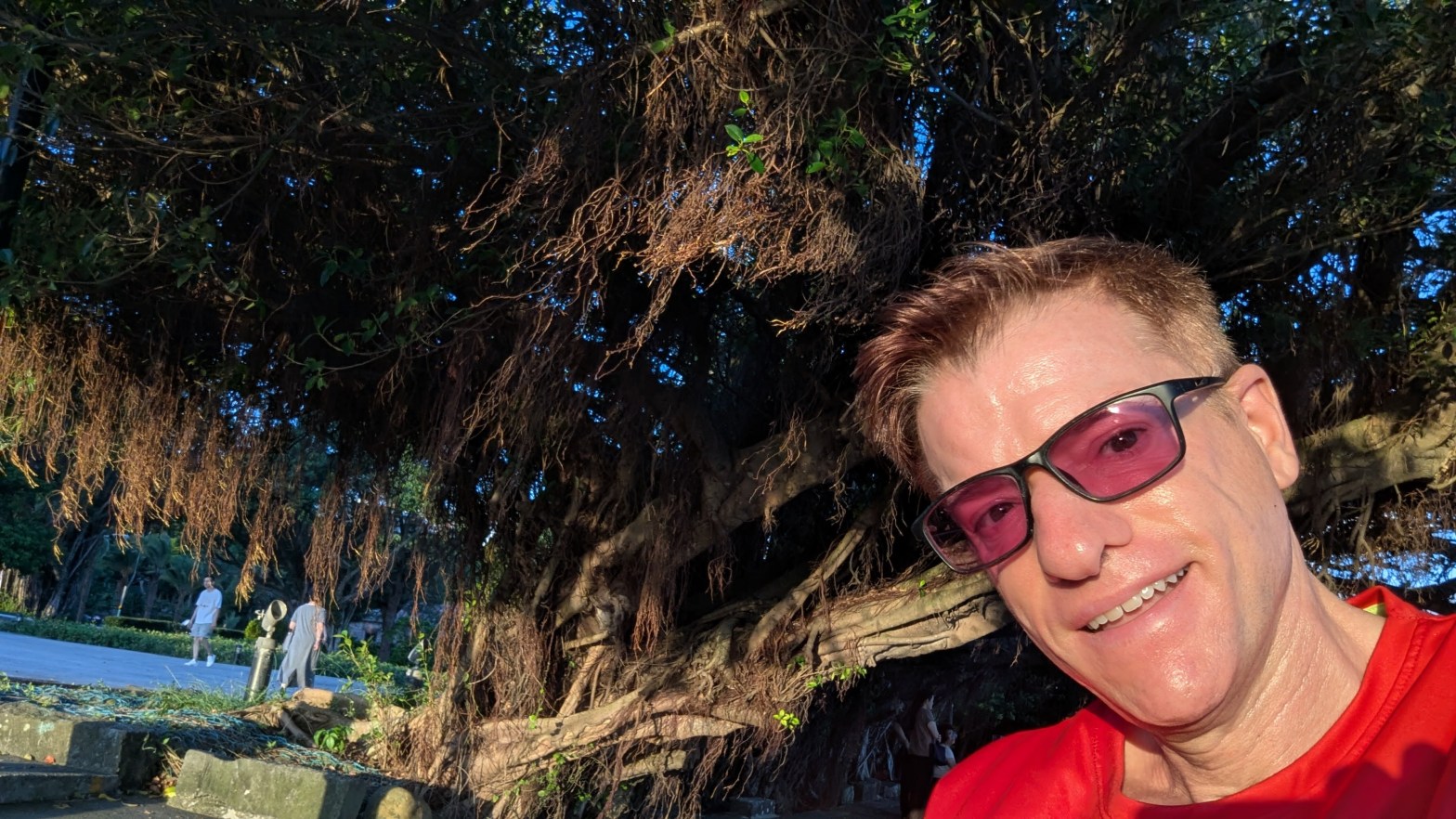
Hey there everyone, thanks for once more taking the time to follow along with my overly verbose thoughts on travel. Whereas Day 2 was all about travelling around to different tourist sites, mostly outside the city itself, Day 3 was calmer, but I think quite typical of a visit to a new city.
I left Haowen´s apartment near Nangang MRT station at 8:55 AM but decided to try taking the bus today. Google maps quickly directed me to several possible stops, and at 9:03 AM I was already on the R25. I used the same metro card as the day before, tapping in an obvious spot as I entered and quickly taking a seat. While there wasn´t a huge amount of seating available, I still had no problem snagging a spot. The bus was comfortable and cool.
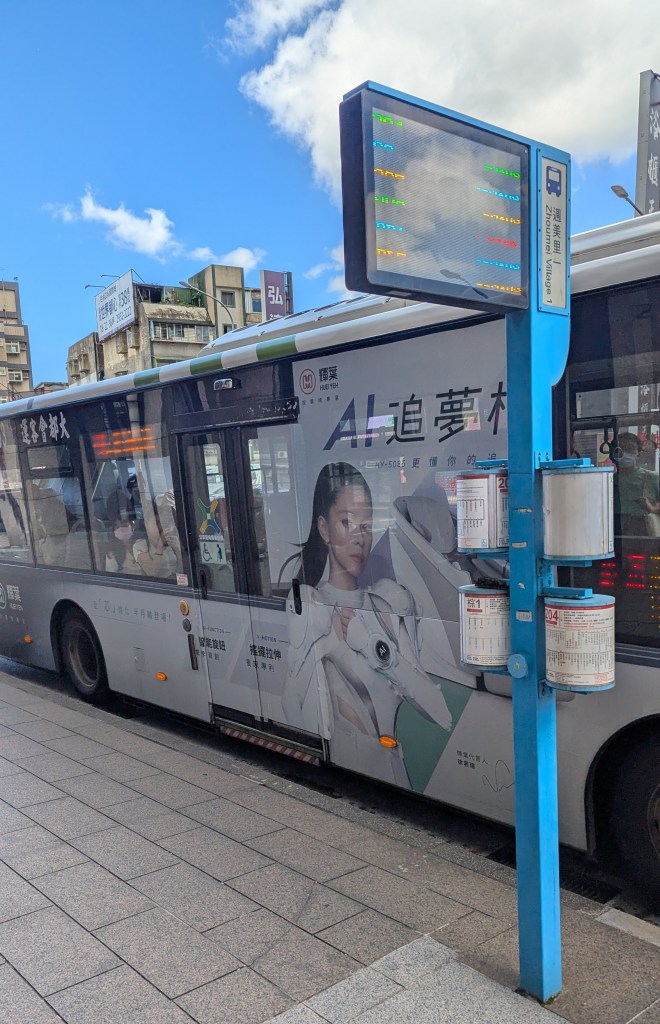
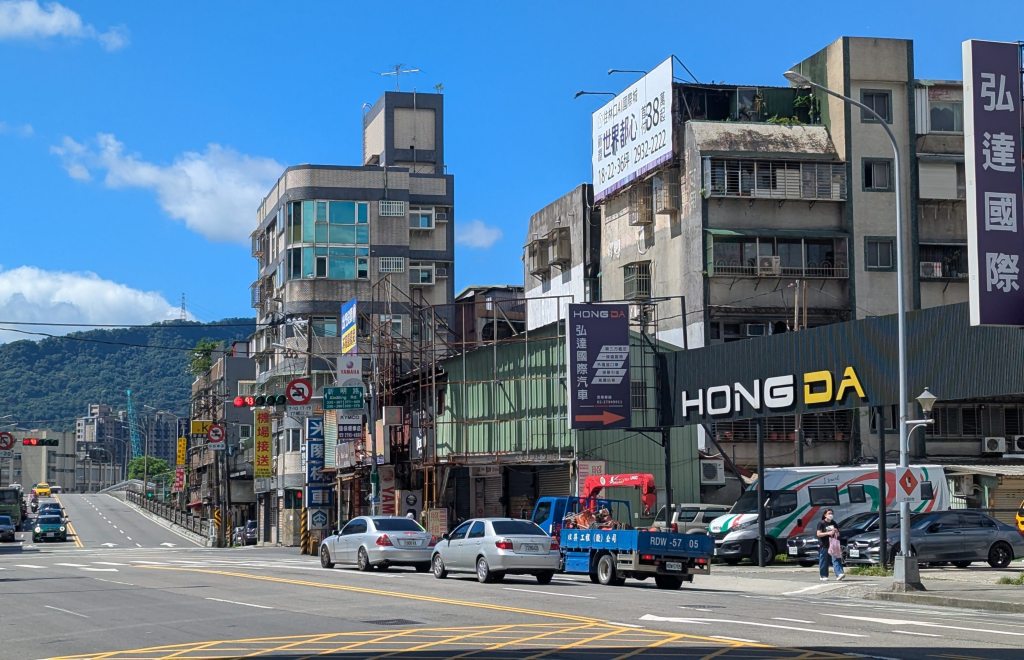
At 9:11 AM I tapped out of the first bus and walked towards my connecting spot. While there, I bought a simple street sandwich for 50 NTD ($1.69) and continued waiting for the BL7 at Zhomei village 1 stop. There are these electronic signs that tell you the number of the buses and also when they are arriving. From what I could see, they tell you the one arriving next, and the one which will arrive after. So, I was waiting for the BL7, and it showed the time of the one which the most convenient, and also the following BL7 arrival time, should I miss the first one. I checked it against Google maps, and the times appeared to closely coincide.
At 9:31 AM I was on the BL7, which had arrived just one minute after when it said it would on the LED sign. Again, the bus was clean and comfortable, but even less crowded than the first one. An important practical and cultural note is that there is no eating nor drinking allowed on any of the public transport in Taipei. From yesterday you will also remember that while street food is abundant, there usually isn´t an obvious place to eat it. So, you either take it along with you until you find a place or sneakily gulp it down right there.
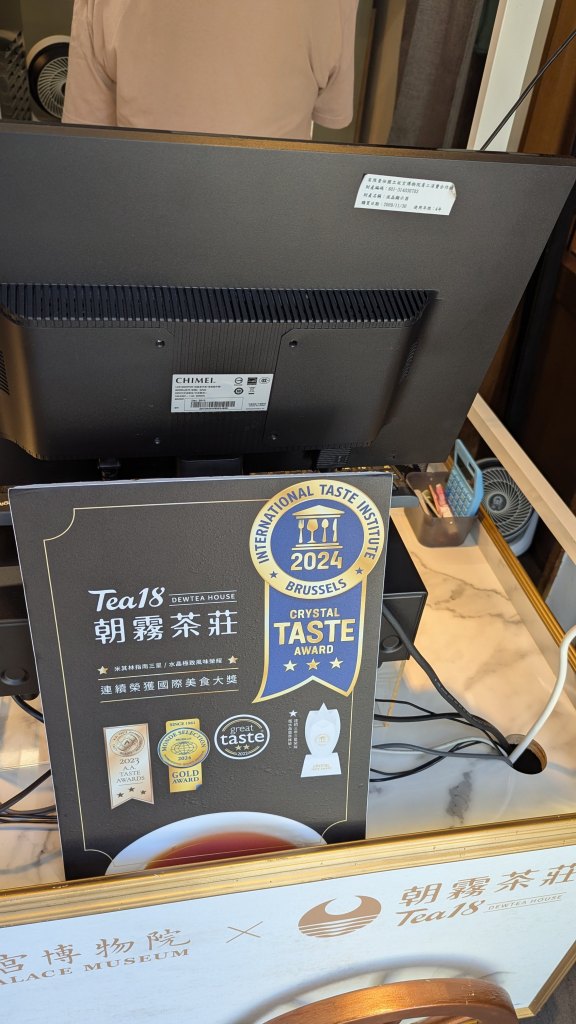
At 10:10 AM the bus stopped right in front of the National Palace Museum. Right near the entrance, there was a sign for some black tea ice-cream, something which sounded not at all appealing, but they had a sign with all sorts of culinary rewards. It was only 150 NTD ($5.06 USD), so I figured why not? There was no line, and the woman suggested that rather than sitting at the very sunny concrete tables which were sort of positioned near the ice cream joint, I should instead go into the Museum gardens which had free entry and would be much more comfortable.
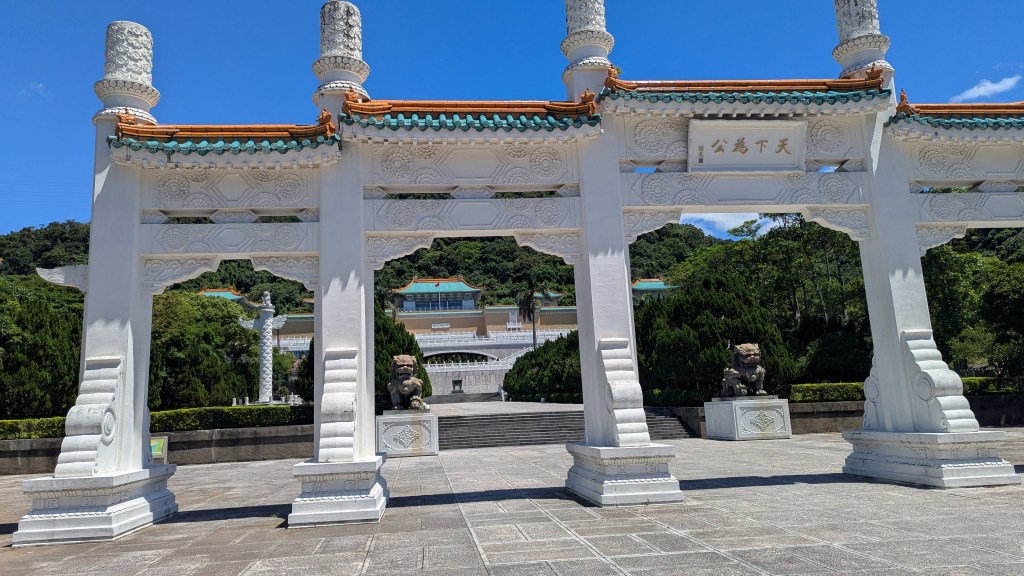


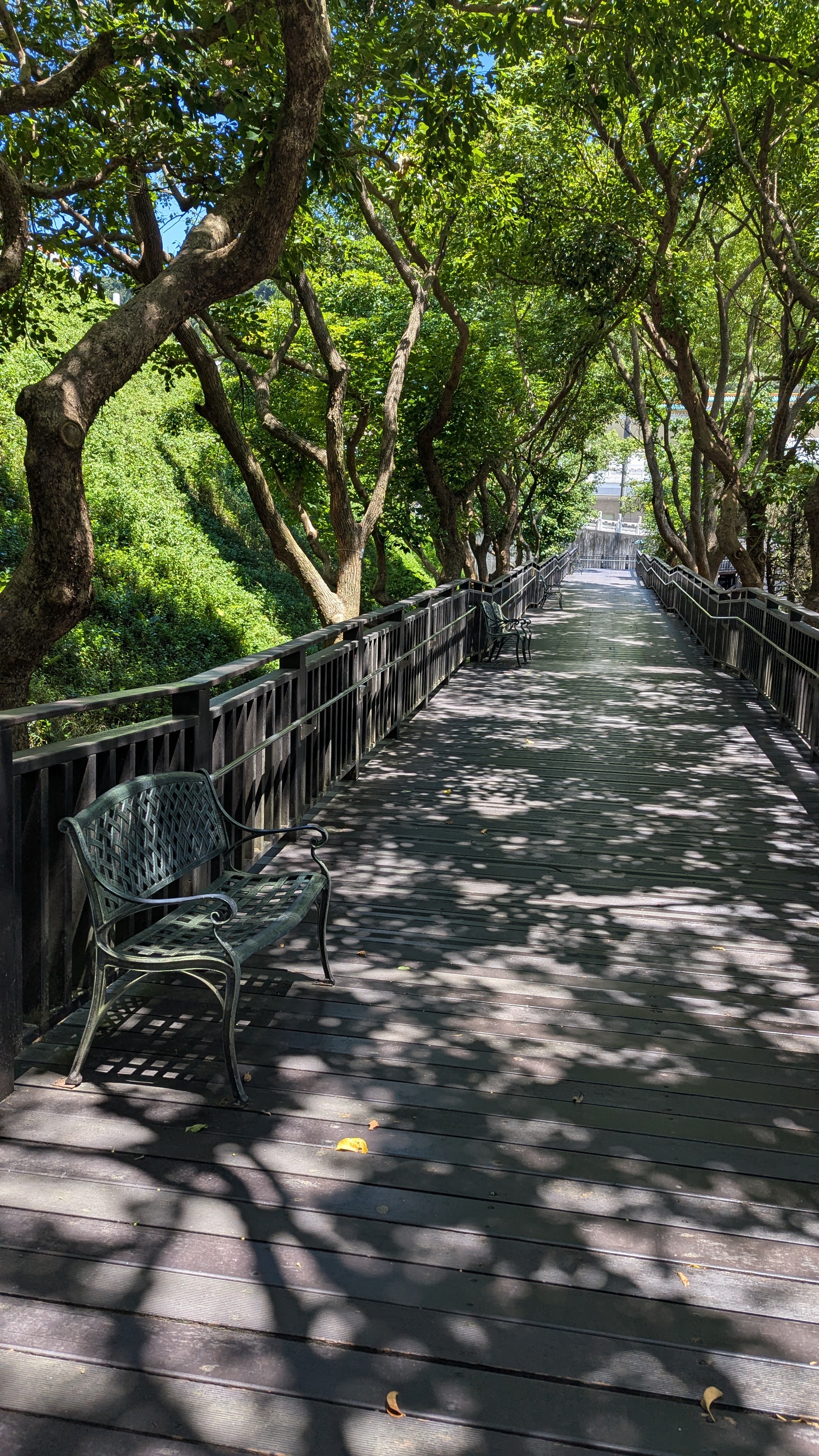
At 10:31 AM I had finished up and headed into the museum. Rather than walking up the imposing main steps, I decided to walk up the wheelchair accessible ramp which was in the shade. There were also benches frequently placed as one continued up the ramp, but I didn´t really see how the whole wheelchair accessible thing would work, since the ramp didn´t go all the way up. However, there was a button clearly marked to ask for wheelchair assistance when the ramp ended, so maybe they just send several strong people out to carry the person inside? I clearly did not try out that theory, so it is just a supposition.
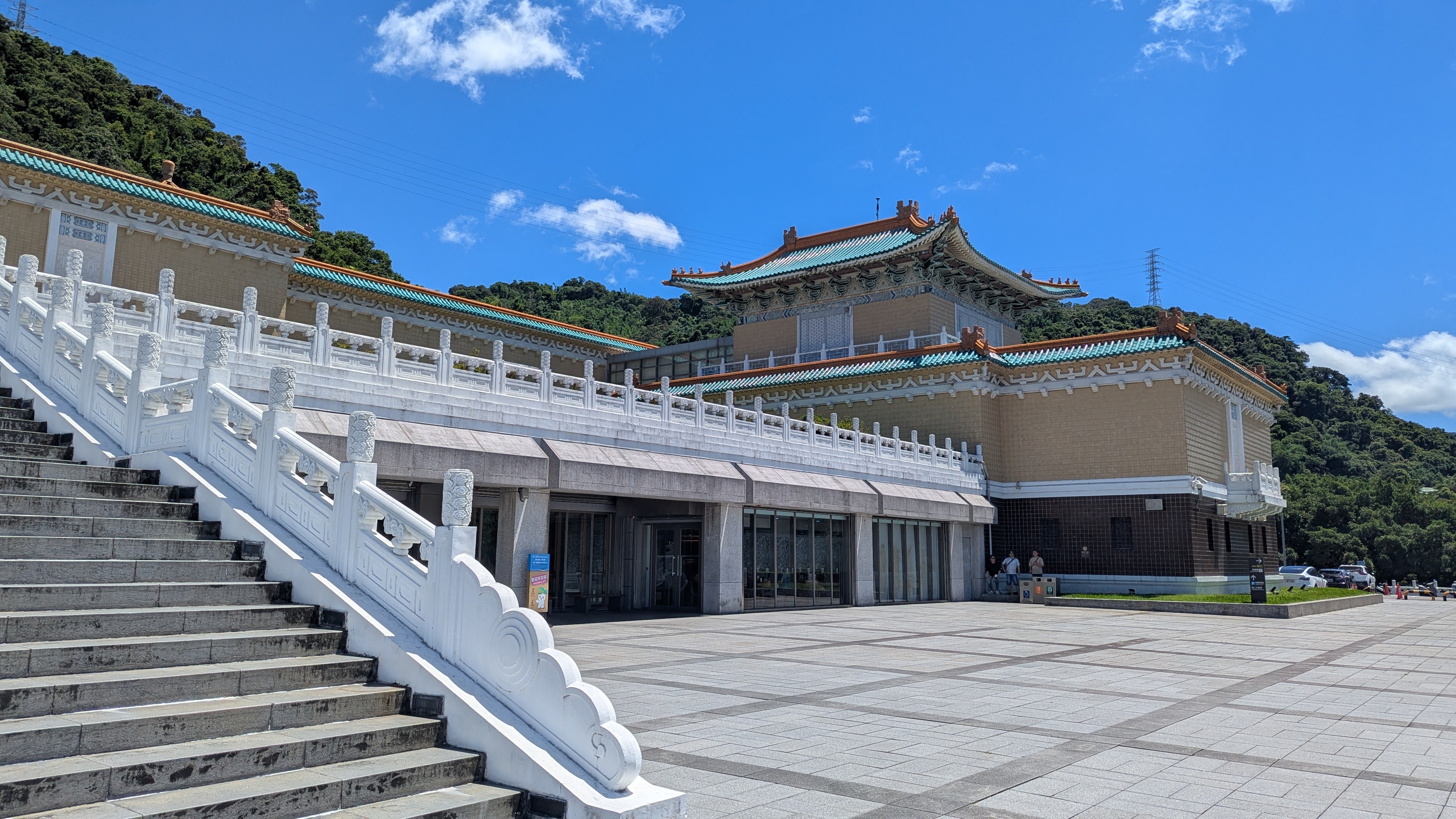
At 10:40 AM I was already in the museum. There was a line to pay a person and also several eTicket machines. I opted for the machine option, and as a foreign tourist paid 350 NTD ($11.81 USD) using my international credit card from India. That is significant, since most places in Taiwan don´t seem to take cards, and if they do, they are only local cards. There was also a sign to rent audio guides for 150 NTD, but checking online it seemed that there was also a free version one could use on one’s own phone, so I opted to go for free.

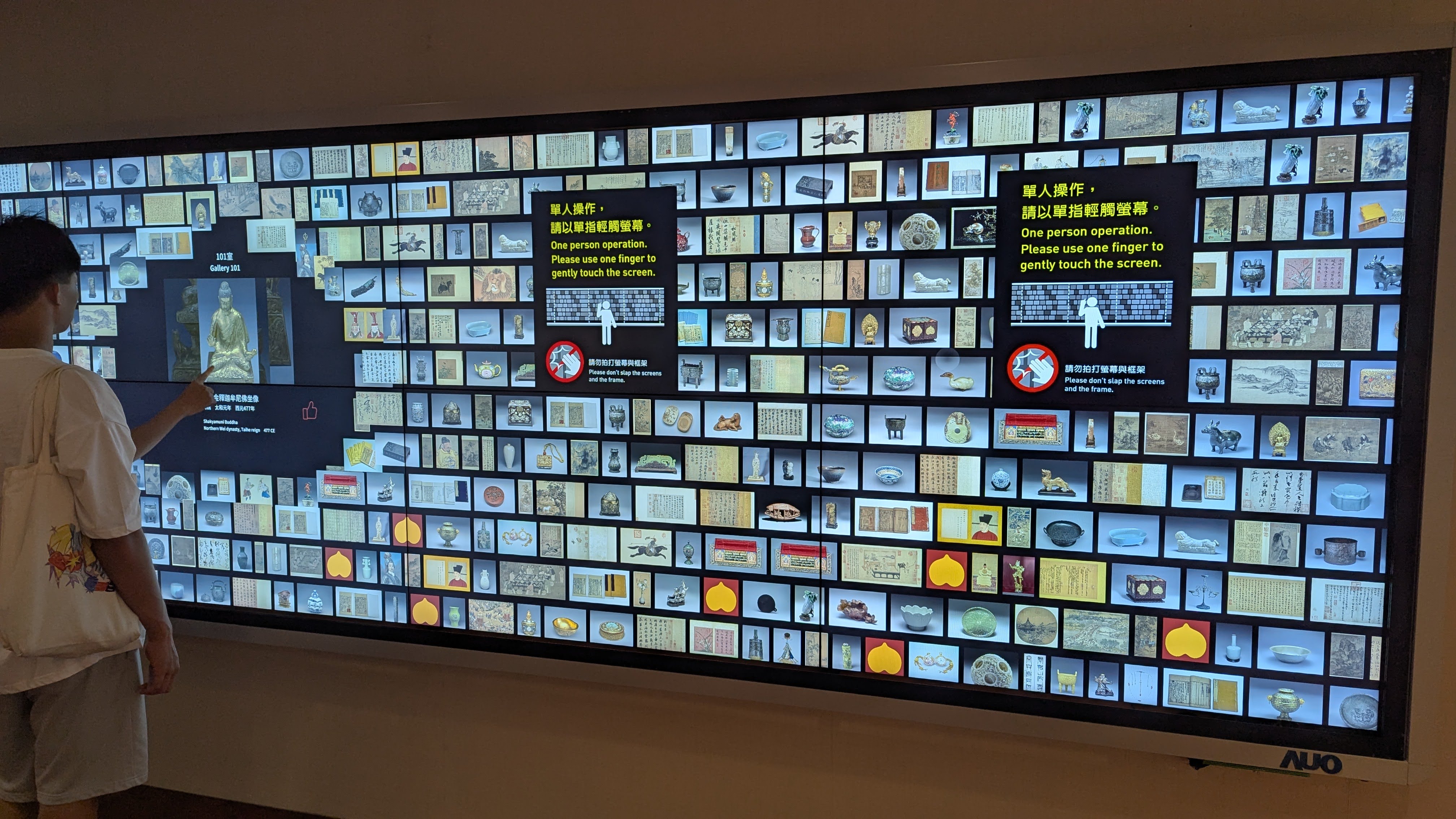
Like everywhere I had been in Taipei, the air conditioning was strong and as one would expect from a national museum, it was impeccably clean. Again, unsurprisingly, seems seemed very well organized, so I headed into room 102, the orientation room at 10:48 AM. The collection wall was interesting but seemed a bit pointless . . . why have an electronic, touchscreen wall to show the exhibits of a museum where you were physically already visiting? Anyway, it was there, but I wasn´t all that interested.
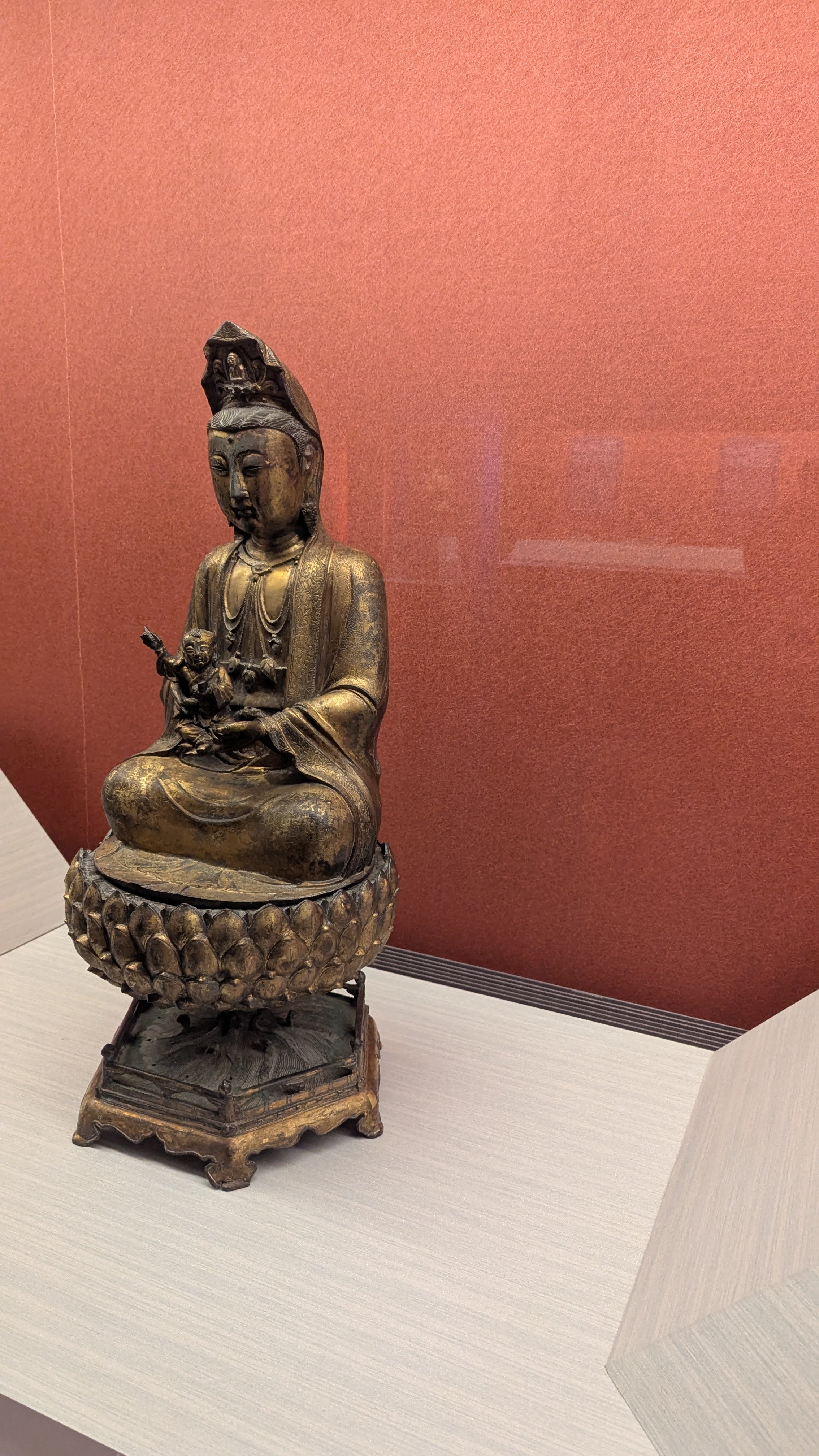
Nearby was room 101 “Connotation and wisdom: religious scriptural arts”. There were many bronze Buddha statues, but it wasn´t cluttered nor overpowering, and the emphasis seemed to be more on artistic placement than on quantity. At 11:04 I saw something which was a first for me, a “Buddha” holding a child. They had what I thought would be helpful signs to indicate when audio guidance was available for an exhibit, but I quickly discovered that it was far from a perfect system, as the number of the exhibits frequently didn’t match up with the numbers on the app. It may however be that the numbers correspond to the paid guide, and free app users just have to make do. Still, it was helpful, if imperfect.
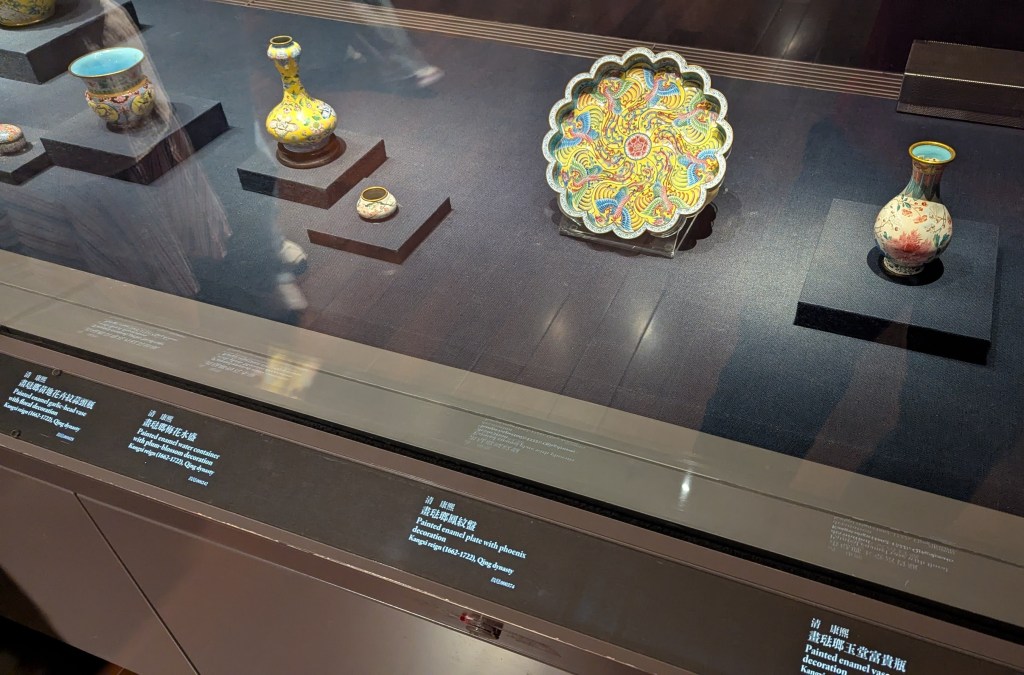
As I walked out at 11:23 on my way towards 104, I saw that there were several conveniently placed resting benches as well as well-accommodated washrooms. However, 104 was temporarily closed, so I instead made my way to room 106 “Garland of Treasures”. Of course, there was a lot of interesting stuff in here, but the first thing that really caught my attention was a conjoined, painted enamel jar with a lid. I did not really see how making it that way added any utility, so I assume it had just been an artistic decision. Again, the mismatch between the audio guidance numbers and the images in the app was a bit frustrating but still have more context than breezing through without any context given on the exhibits. Of course, there was also quite a bit of written support, but that tended to be for general collections rather than individual exhibits. For instance, after hunting though the images on the app, I learned that eastern pearls (freshwater pearls from northeastern China) used to be a very big deal.


As I continued along, at 11:53 AM I was a bit overwhelmed with all of the rules etc . . . associated with court jewellery and dress. Who would have the time to understand all of that, let alone actually learn it in the first place. The answer of course, obviously being really rich members of noble families and their various hordes of servants who were no doubt the ones actually in charge of making sure everything was setup properly. Looking at the various fancy hairpins at 11:58 AM, I thought that at least these seemed to have a practical purpose for people with long hair, but still, lots of complicated rules about what materials, how to wear them, etc . . .
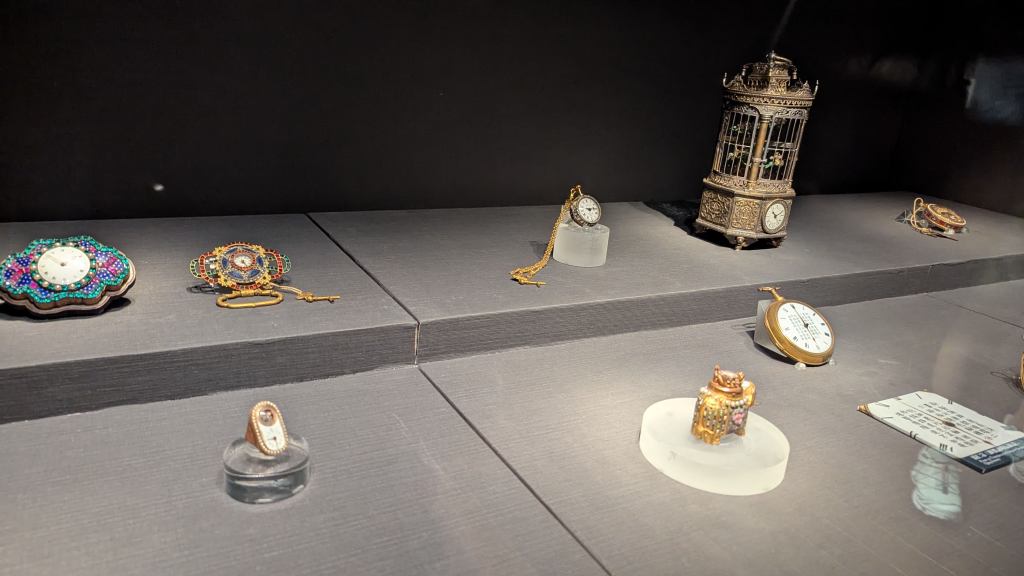

While this is not particularly insightful, it drew my attention at 12:02 PM that based on what I was seeing here and also my experiences in other parts of the world, prayer beads are definitely not exclusive to any major (or even non-major) religion.

But what was the deal with the 10 cm long fingernail guards? To begin with, was that ALL of their fingernails that were that long? If so, how did they do anything practical with their hands? I mean even just the most basic needs of going to the toilet seemed like it would be a bit of a challenge. However, they no doubt had their system. To be fair, while 10 cm is definitely over the top these days, I also wonder the same thing when I see some of the absurdly long fingernails worn by modern contemporaries in some parts of the world.
From what I could tell, pretty much everything in this room was from the Qing court, even though a lot of it was much older than that time. Maybe that was just the last court in China?
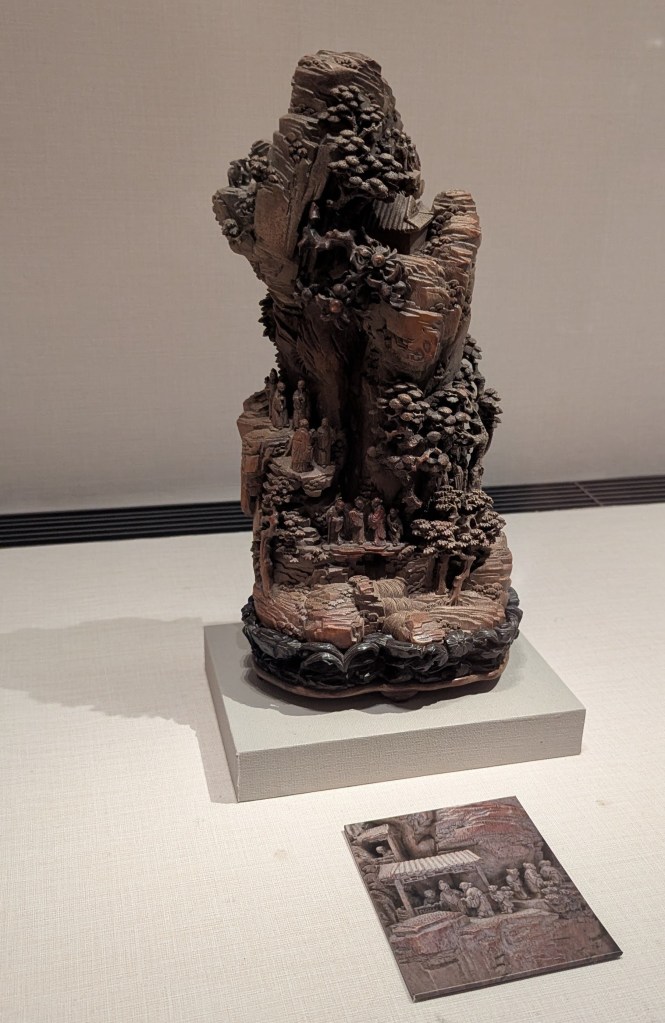
At 12:15 PM I was a bit impressed with all of the different types of carving which had been done with different materials. People usually think of ancient sculptures being made from elephant tusks, but they also had a lot of carved rhinoceroses’ horns, carved bamboo roots, different types of seeds and bone, and even tiny seeds!

I exited that room at 12:28 PM and headed towards 107 “Special exhibits.” On that day at least it just seemed to be lots of fancy use of technology . . . nice for kids and maybe for frequent visitors who want to see something different, but I decided to skip it and head up to the third floor and then work my way down to the second before heading out. At 12:40 PM, I decided to also give room 301 a pass, but at 12:46 PM I was in 302. This is the room to go if you just want to see the two main “trophy pieces” of the museum, the carved jadeite cabbage (Bok choy) and the carved piece of pork. The cabbage really was amazing when one considers that they achieved all of that affect from carving a single piece of natural stone, but for whatever reason, the “meat shaped stone” was not on display that day.

At 12:28 PM I went into 303 “Inkstones”. Yes, there was A LOT of information about different types of inkstones, way more than any average person would reasonably want, but if that’s your thing, then get ready for a delightful visit to room 303. I however exited at 1:07 PM and went into 305 “Masterpieces of bronze”.


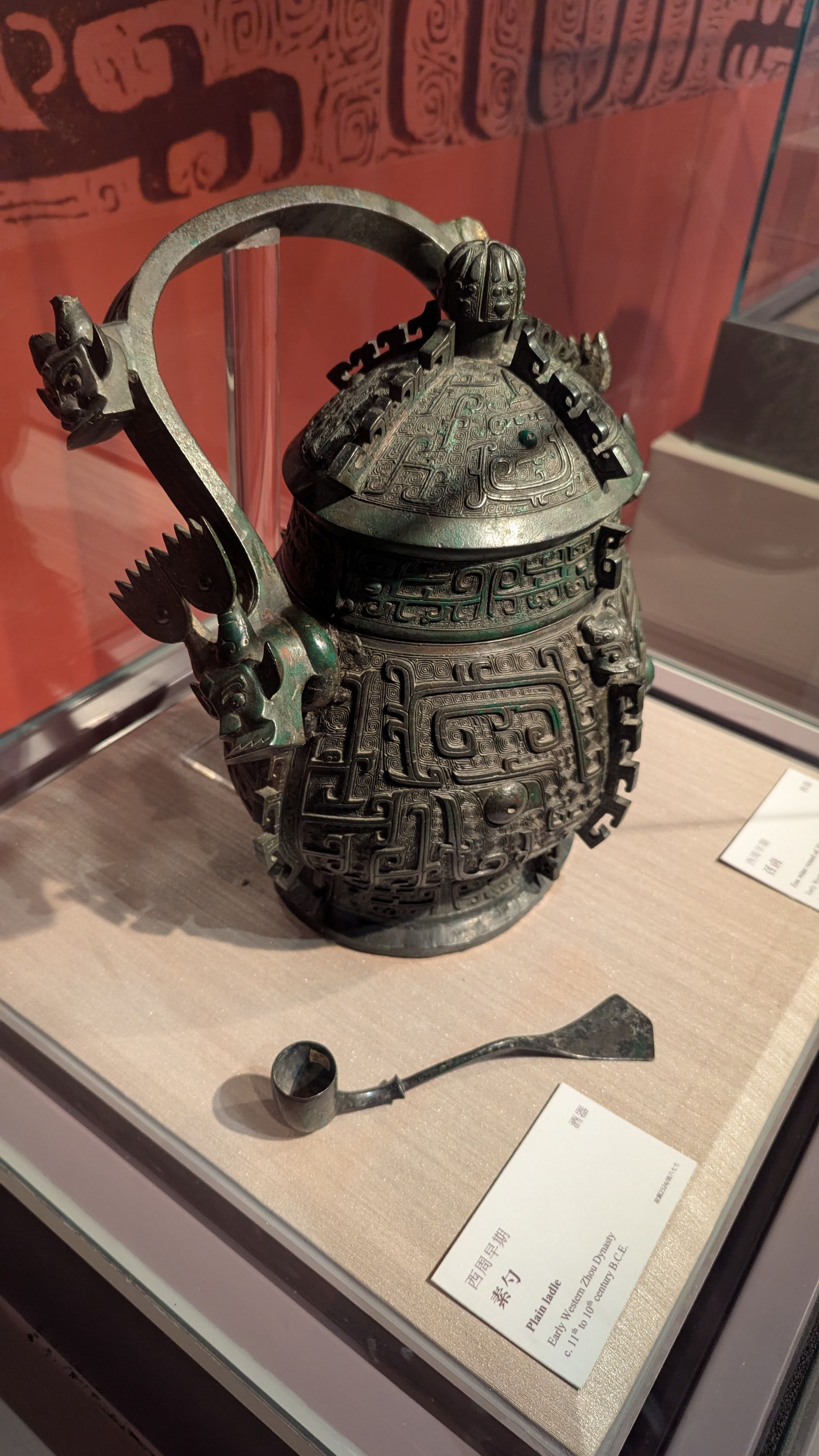
I guess that I had never really thought about it before, which I also guess is sort of the point of museums, but it makes sense that in 1500 BC and for a very long period afterwards, bronze items would have been highly valued. Staying within the same theme, at 1:18 PM I found out that in the 11th century BC, the Ya-ch’oy Clan were a big deal since they used many square bronze vessels rather than round ones . . . Who knew?


Again, not particularly insightful, but at 1:24 PM I was struck by the fact that many of these pieces had actually been prized archeological finds which had been discovered in times which we now would consider the far distant past. It turns out that humans have been around for way longer than most of us can actually appreciate, and that in at least many parts of the world, were also way more advanced than most of us generally realize.
At 1:26 PM I also realized that I had previously had no idea that wine was such a big deal in ancient China, as evidenced by the prized collection of ancient wine vessels. Maybe that was rice wine rather than grape wine, or maybe it was something else entirely? For sure, I was fairly certain it was some sort of at least partially fermented drink. The fact that they already had a well-established writing system really helps to identify pieces and their purpose. I also rather enjoyed that many otherwise simple decorative pieces also carried important political, legal or even moral messages.
Moving on to 306 “Jade Masterpieces” I reflected that I had always just sort of thought of Jade as being used more for decoration. So, it was interesting to see that between two and three thousand years ago, it was frequently used to make practical tools, but maybe many of those had more of a ceremonial nature? I am sure that with a minimum amount of investigation I could learn more, but that is a project for another day.
Again, even 5000 years ago, the level of fairly well-documented cultural and political development in China was crazy. I mean I had never even heard of the Hongshan, but then I am also not incredibly well-read, so maybe for you it is all just common knowledge? I also learned that nephrite is the more technical term for the jade more commonly associated with truly ancient China; whereas jadeite is the more brightly colored and shiny red and green stone which most of us think of today. There was a lot more to see, but I was already experiencing museum fatigue, so I headed down to the second floor at 2:01 PM.
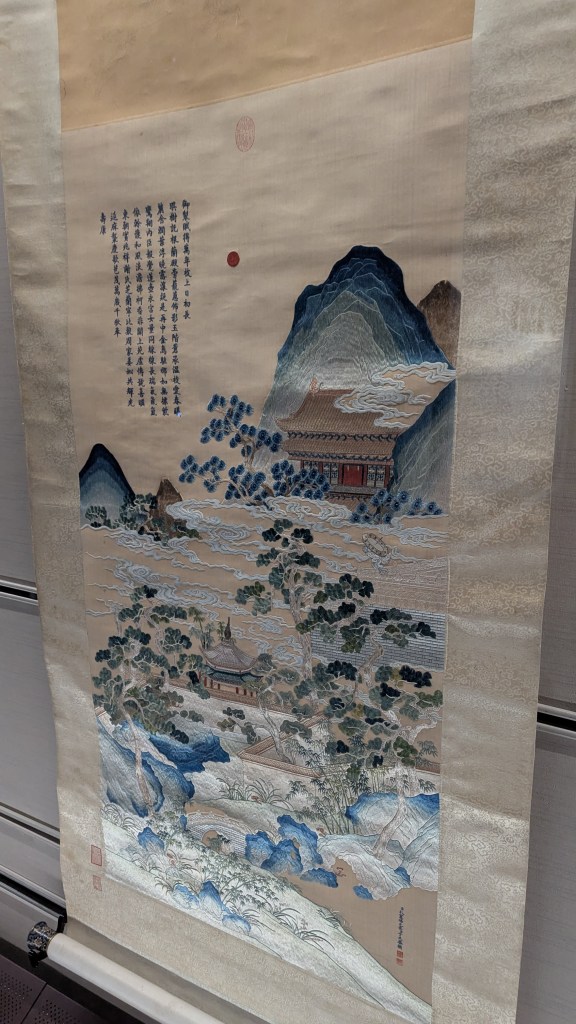
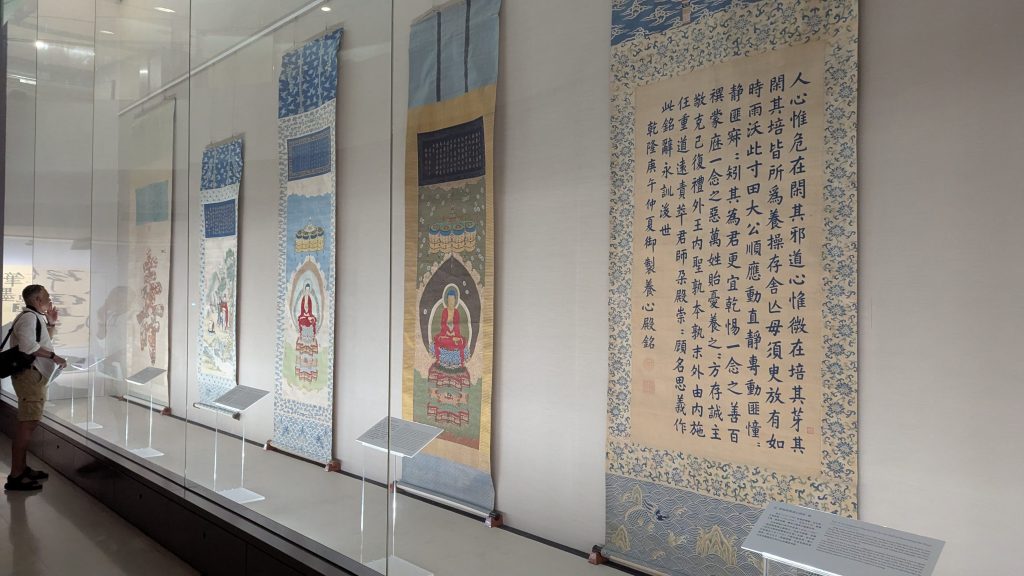
One side of the second floor is mostly paintings and calligraphy, and the other side is ceramics. The paintings were all very exquisite, but they were difficult for me to properly appreciate since I didn´t know much about the style. Similarly, there were also some amazing, embroidered pieces. The roles on which most of these works were mounted seemed very practical, as that would easily aid in the process of storage and transport, not without its own limitations, but in my opinion, far more practical than canvas mounted on a wooden frame. I could have spent far longer in the painting and calligraphy area, but at 2:12 PM I headed over to the ceramics side.

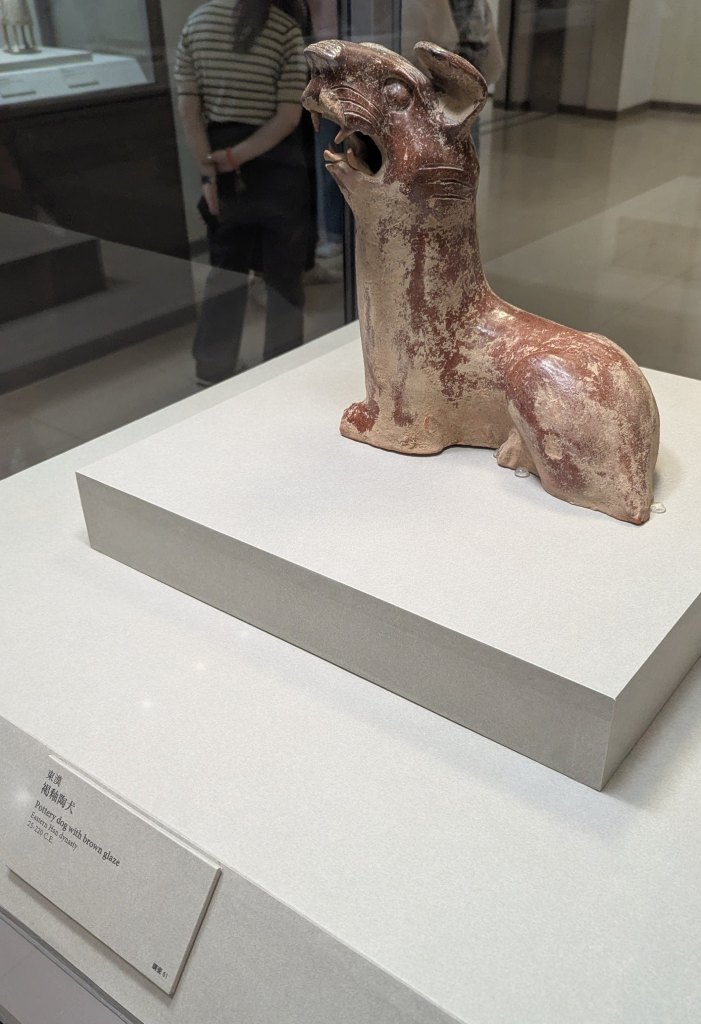
One thing that probably shouldn’t have impressed me as much as it did around 2:15 PM was when I saw that even as early as 200 BC, they even were using pottery to make animal decorations. However, I believe much more rightfully impressive was the fact that so much of this pottery, many of it very large pieces, had been taken care of well-enough to still not be broken after more than 2000 years! I mean I frequently can’t manage to keep a delicate piece of porcelain from being chipped for 5 years . . .


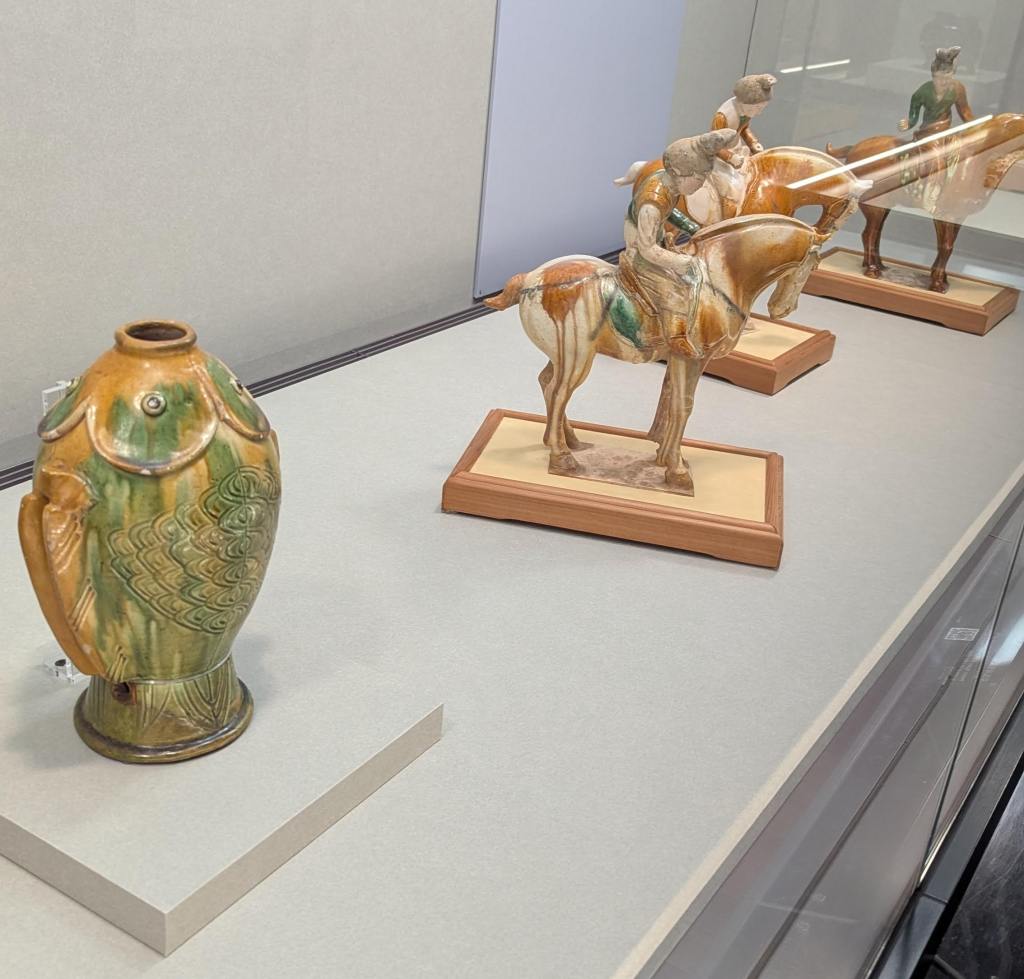
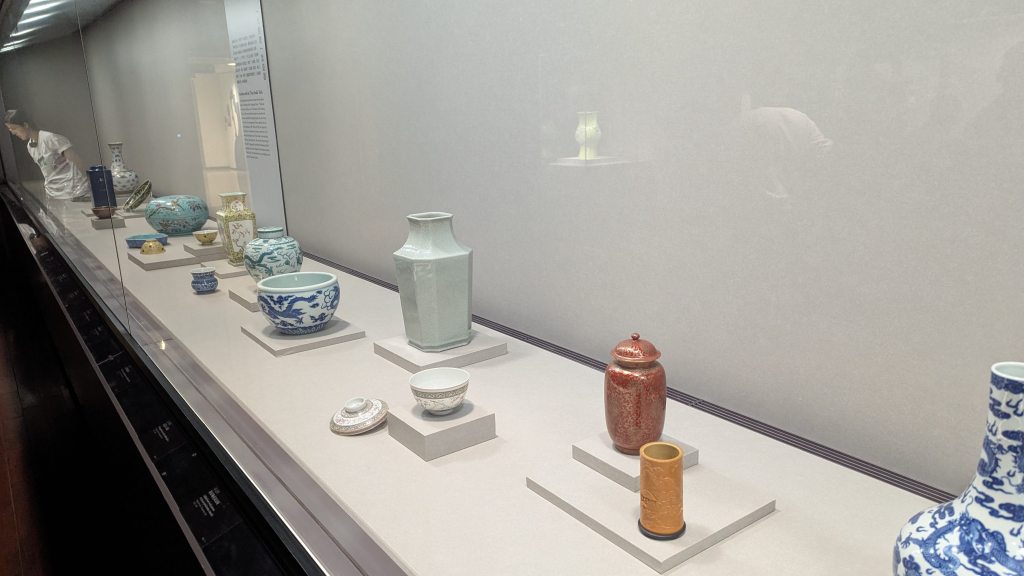
As I said earlier, museum fatigue is real, so despite all the amazing things left to see, at 2:30 PM I was ready to tap out. Thinking about it objectively, one should dedicate a single day to each floor, planning on spending between 3 and 4 hours on each floor. That way one will be mentally fresh for each floor and will actually appreciate things more. I did not have three days, so that’s not what I did, but I was still glad that I had come, but also glad to exit the building at 2:50 PM.


Since it looked like from here the only option would be bus, I decided to walk a bit to find a place to recharge the metro card which Haowen had lent me. I think I read somewhere that it is possible to pay with coins on the bus, but I certainly hadn’t seen anyone do that. Fortunately, it’s easy to recharge the card at any convenience store, which is what I did at a nearby Family Mart at 3:10 PM, this time putting 200 NTD ($6.75 USD) on the card, and then moving on to wait for bus 957 at the CMPC movie city bus station headed towards Tamsui district.
At 3:24 PM I got on and immediately found a comfortable seat. There were a couple of suggested faster routes which had come up on Google Maps, but by just staying on the 957 I would be able to get there without changing to any other buses or subway and it would only be a ten minute later arrival. Furthermore, as I had only been on a single bus, when I got off the bus in Tamsui at 4:20 PM, I saw that the total cost of the ride had only been 15 NTD ($0.51 USD), and it would be a 15 minute walk to the Santo Domingo Fort.
Unfortunately, when I arrived at 4:44 PM, they said that even though it was open until 5:00 PM, the last people in had to enter no later than 4:30 PM, so I did not get to visit there. However, this whole area was quite nice just to wander around, so that’s what I did.
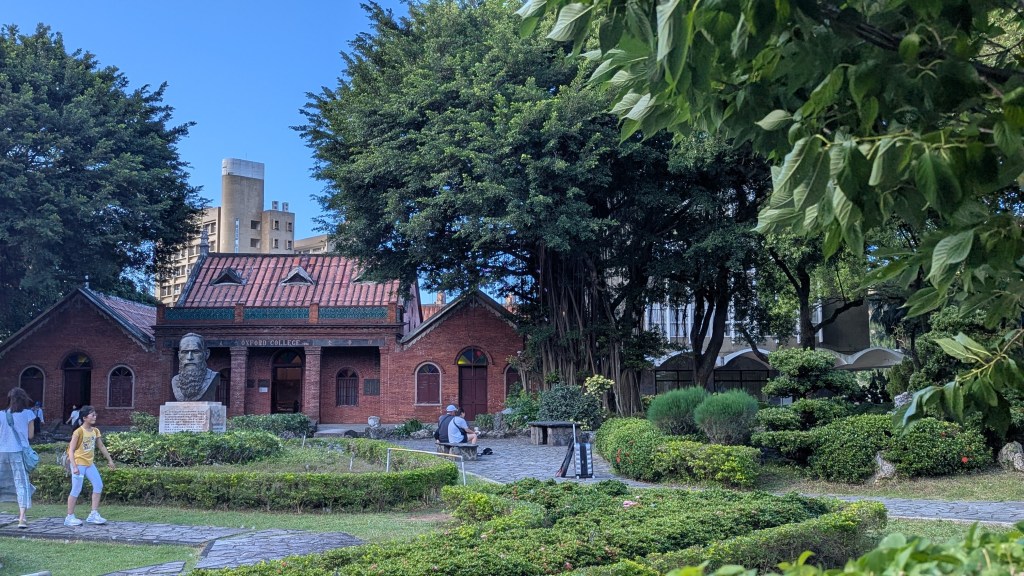


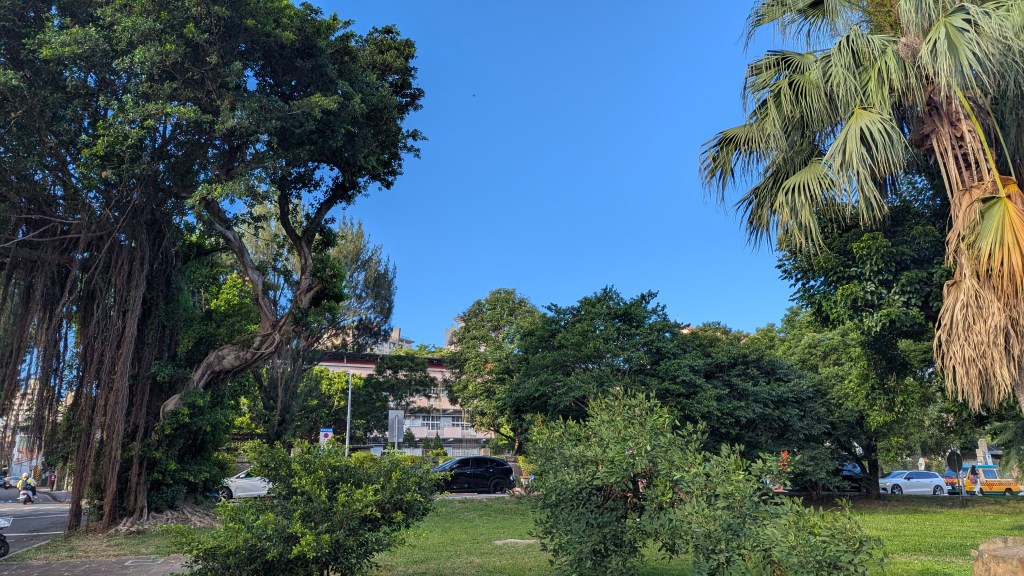
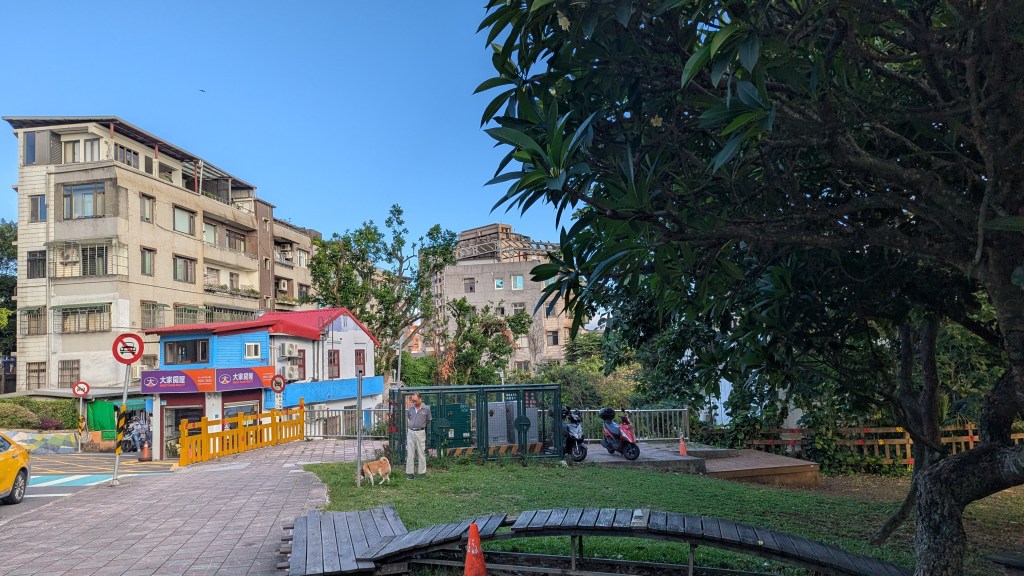

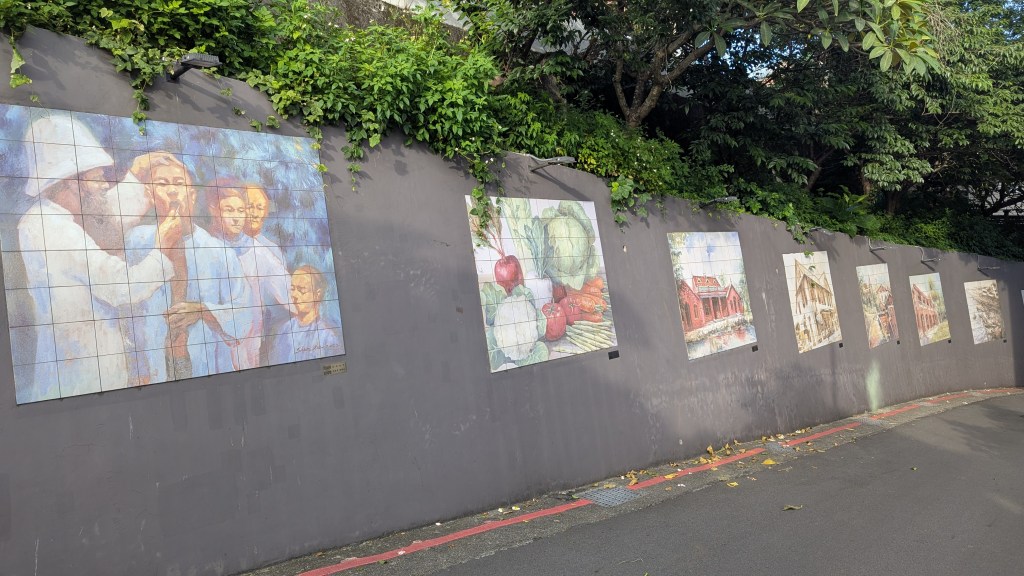

At 5:13 PM I found myself walking along the seaside, where I ended up just relaxing and sightseeing in different areas along the edge of the water. As the sun was about to finish setting at 6:25 PM, with the sound of the river next to me and the pleasant wind on my face, I was truly and fully thankfully grateful to be alive just to experience life at that one particular moment.


Having finished the whole sunset experience, I went walking toward old street and at 7:04 PM decided to buy some fried cuttlefish (squid) and fried king mushroom. These two purchases were 300 NTD ($10.13 USD). Both of these were delicious as I sat in a sort of park area, and I was sorry that I did not live in an area where king mushroom and quality squid was easily and affordably available, but then also reflected that I would probably not appreciate it as much if it were something I could get all the time without much effort.


Despite how much I was enjoying myself just being in the moment, at 8:19 PM, having finished the leisurely meal of my tasty street food, I headed towards the nearby subway station where I was once more in motion at 8:28 PM. The 42-minute MRT (subway) ride to Taipei main station resulted in a 50 NTD ($1.69 USD) deduction from the transit card. Having already had some mishaps with MRT vs local train to Nangang, I decided to go old school and ask for help, which was quickly and politely given in perfect English.

At 9:16 PM I was at the platform waiting for the 4248 train to Yilan, which I was to ride for two stops. However, as had happened to me earlier with the local trains, I once again got confused, partially because the 4248 was late and partially because I was just a bit clueless, so at 9:48 PM I ended up asking for help again and was immediately put on some other random train in which the next stop was Nangang, arriving at 9:55 PM. This little mishap could have been frustrating, but I tend to be easygoing with such things while travelling, especially when not working with a set timetable. Nevertheless, it is worth noting that the local trains seem more difficult to navigate than the MRT (subway lines).
It was pleasant when I reached the street level exit at 10:01 PM and given that I had earlier not had anything to drink besides some plain drinking water from a public drinking fountain, I bought an oat milk and a sugar free Sprite for 49 NTD ($1.65 USD) before arriving back to the apartment at 10:18 PM.
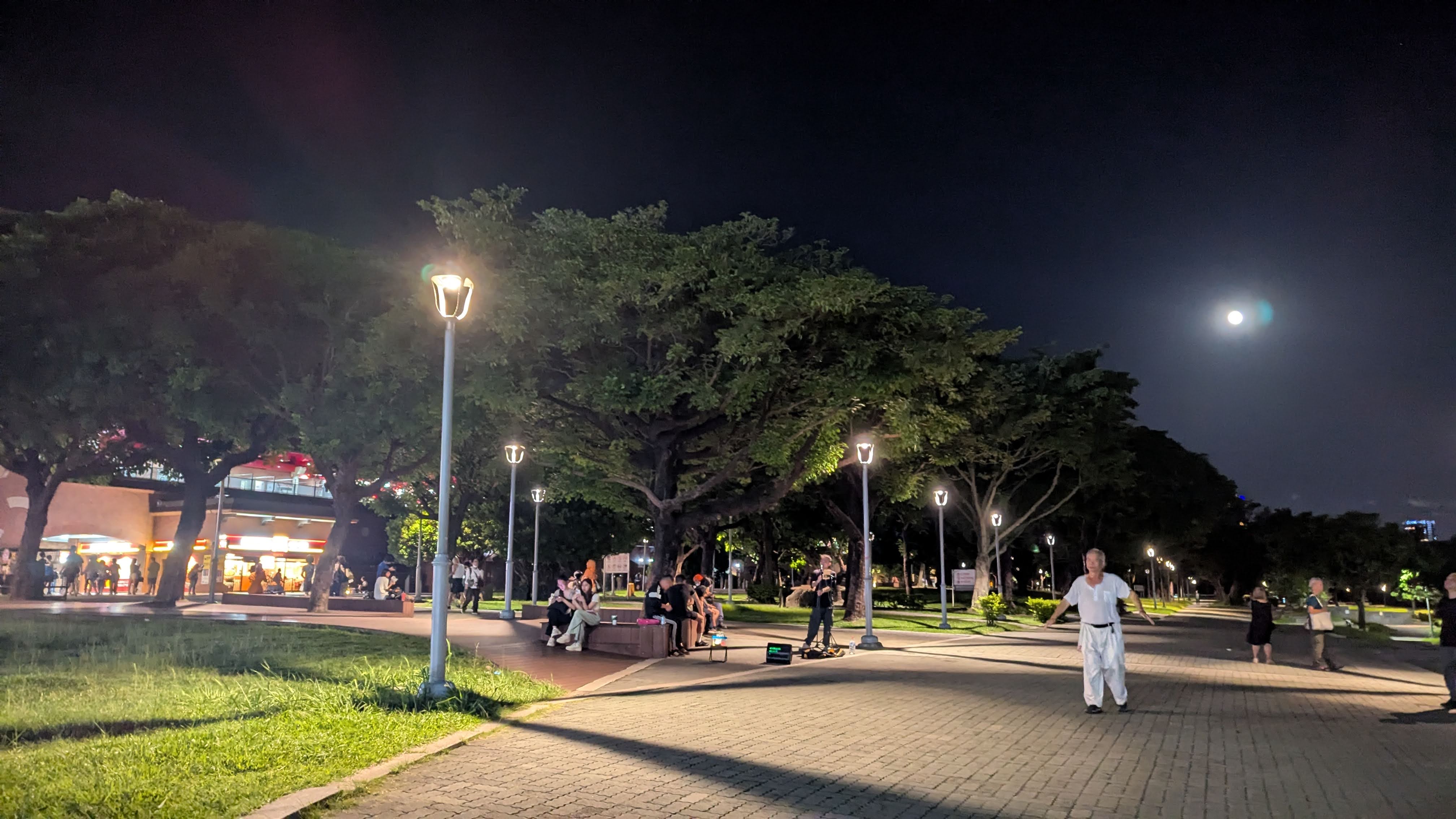
Thus, my second full day in Taipei was finished. It was quite different from the first full day, but I had still really enjoyed myself. What about you? Did you like yesterday better or today? Let me know in the comment section below and also let me know if you have any additional questions. Finally, if you like what you have seen so far, keep a lookout for the Day 4 entry, and if you REALLY like it, consider scrolling backwards to checkout earlier trips over the past few years. Whatever you decide, I hope that you have found something of value in today’s entry and I hope you will read more in the future!

 Travels with Jay