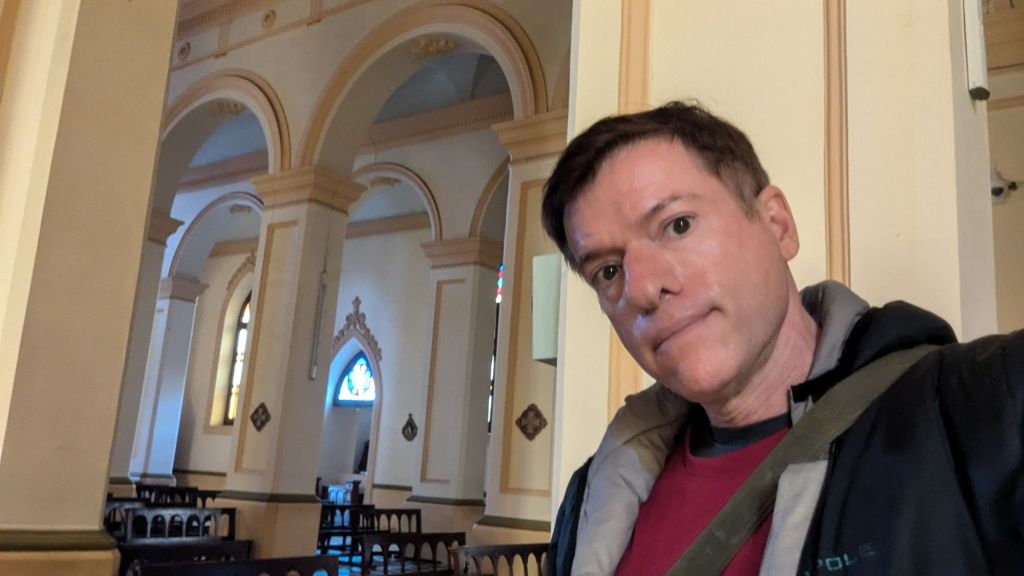
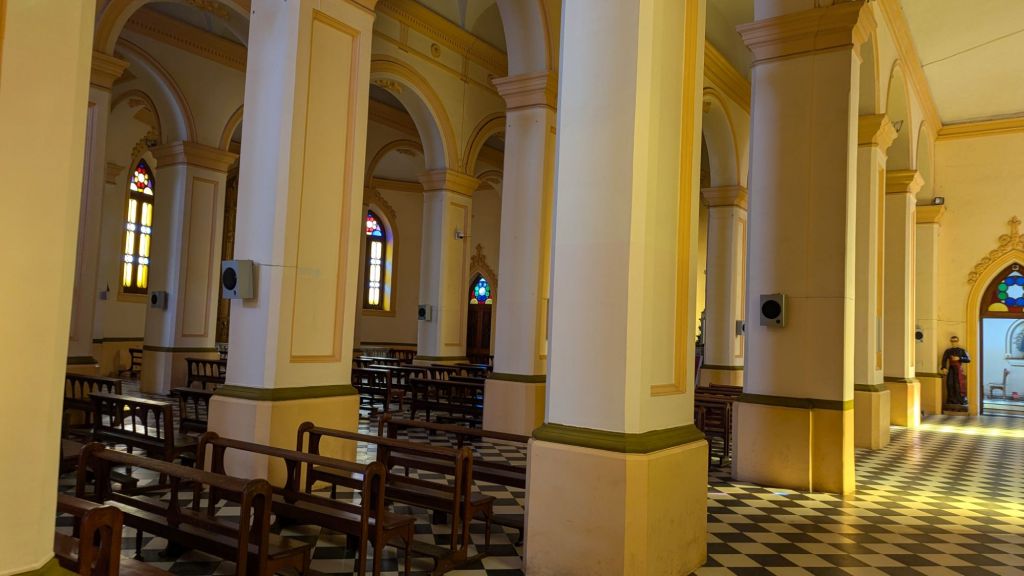
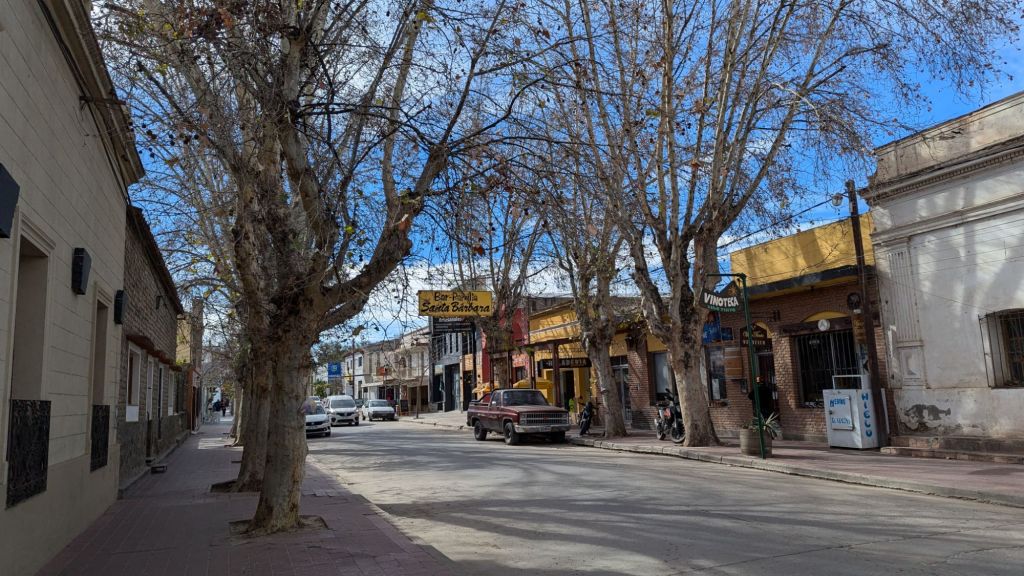
Argentina trip: Day 14 (28 June)

Hey there everyone, so day 14 was a bit different from the previous days, because nothing definite had been arranged ahead of time with any tour provider.

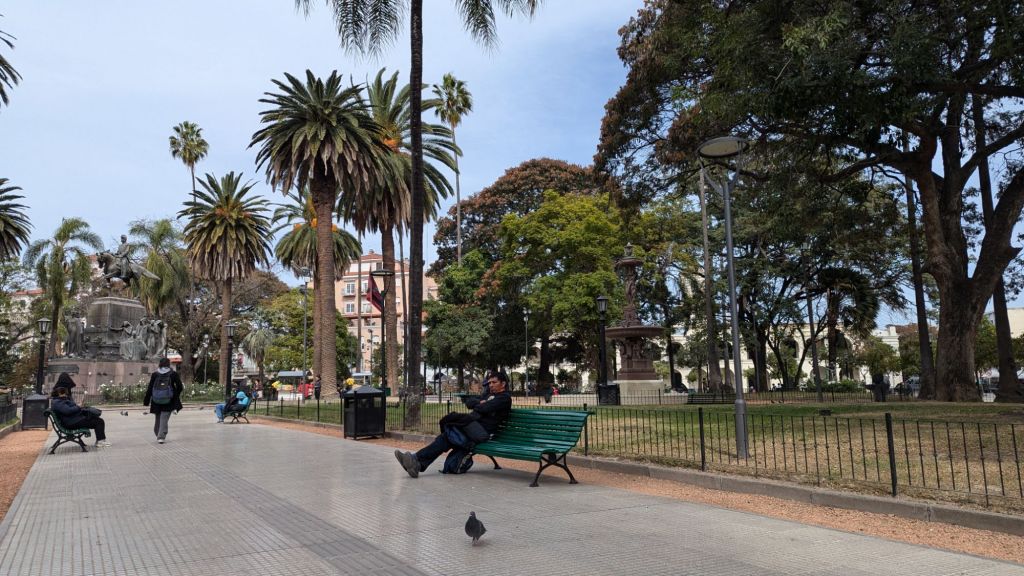
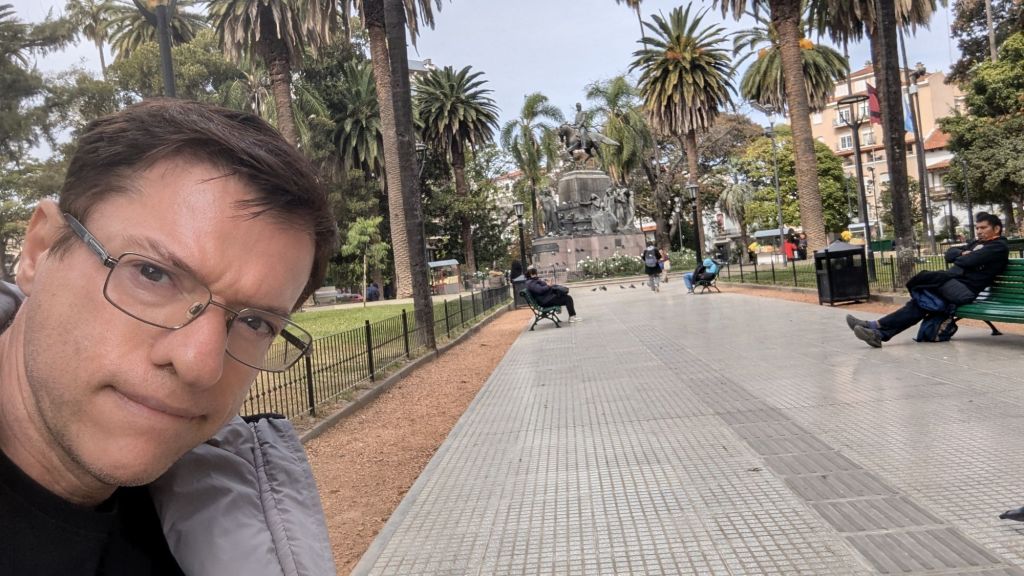
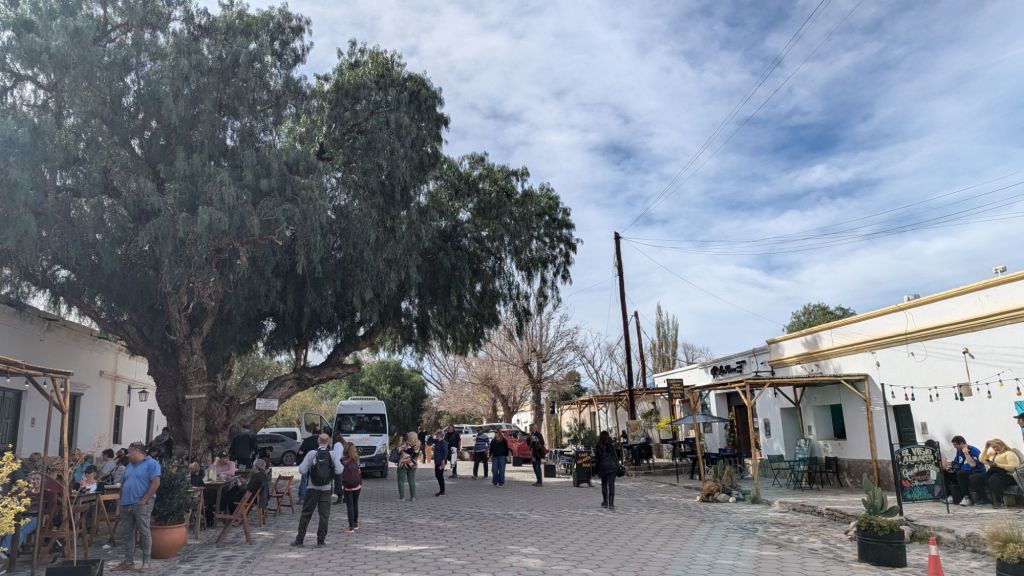
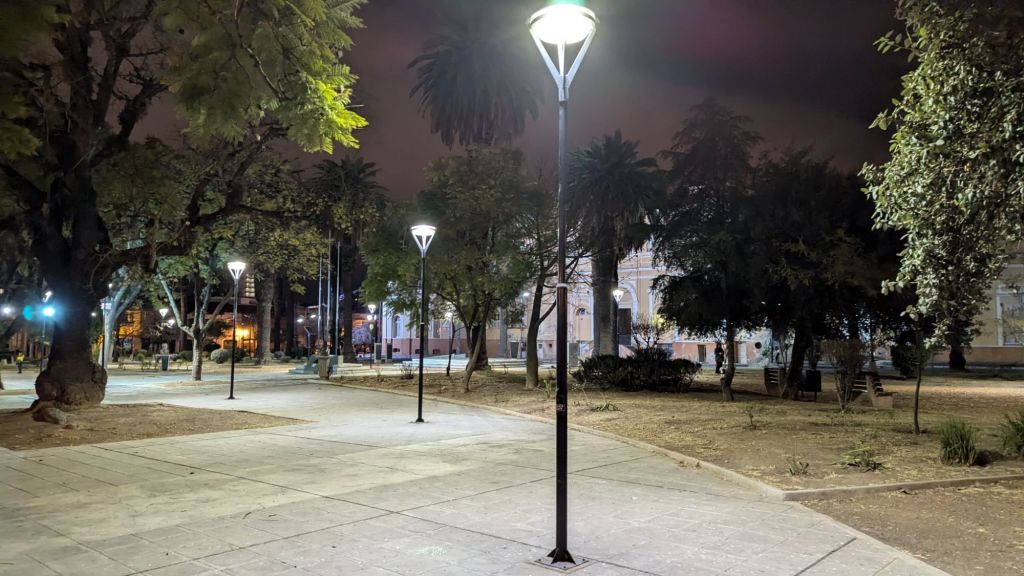
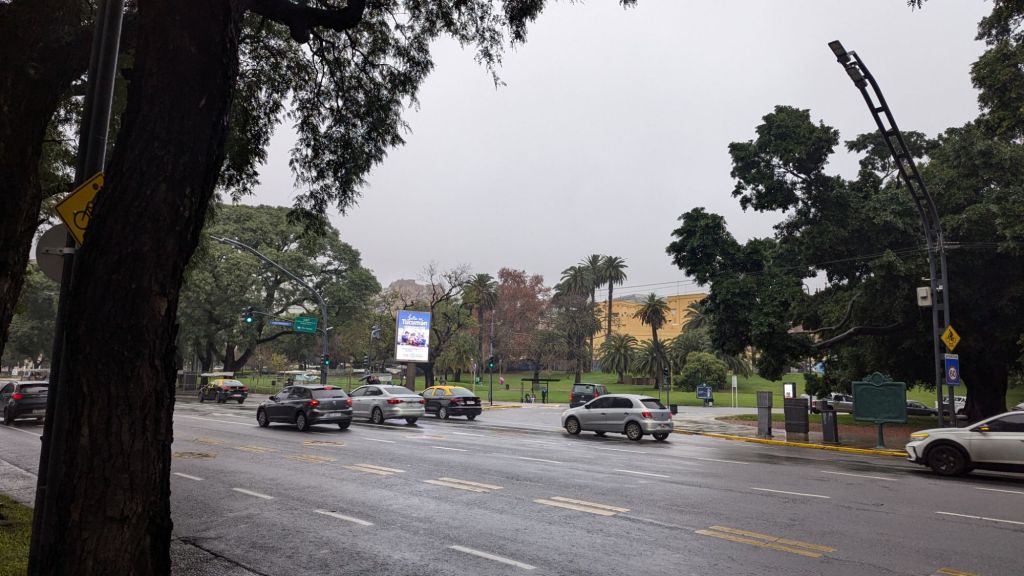
As such, I got up at 7:30 AM and started taking care of preliminary packing, then leaving the apartment at 8:25 AM and walking towards Plaza 9 de Julio.
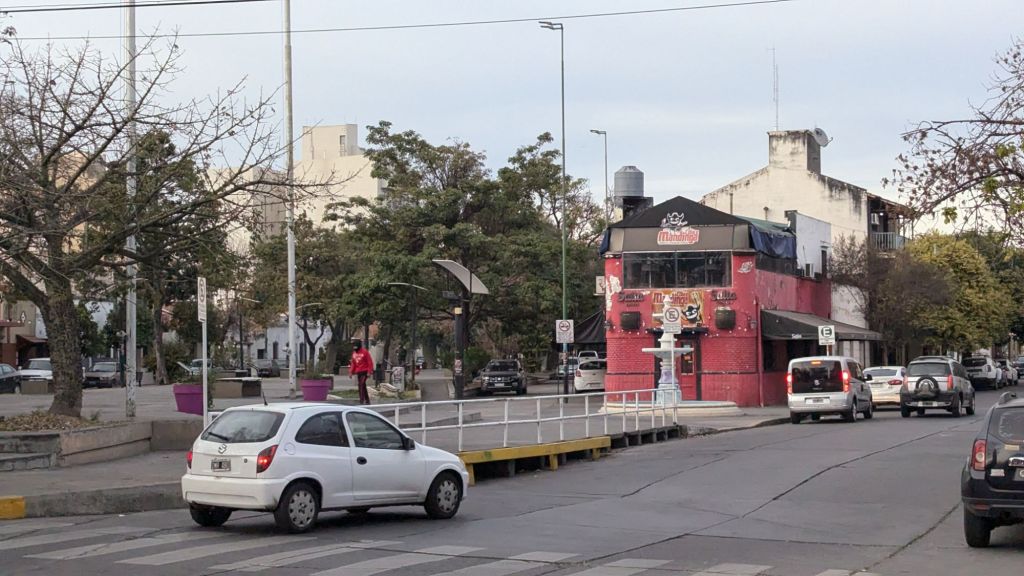

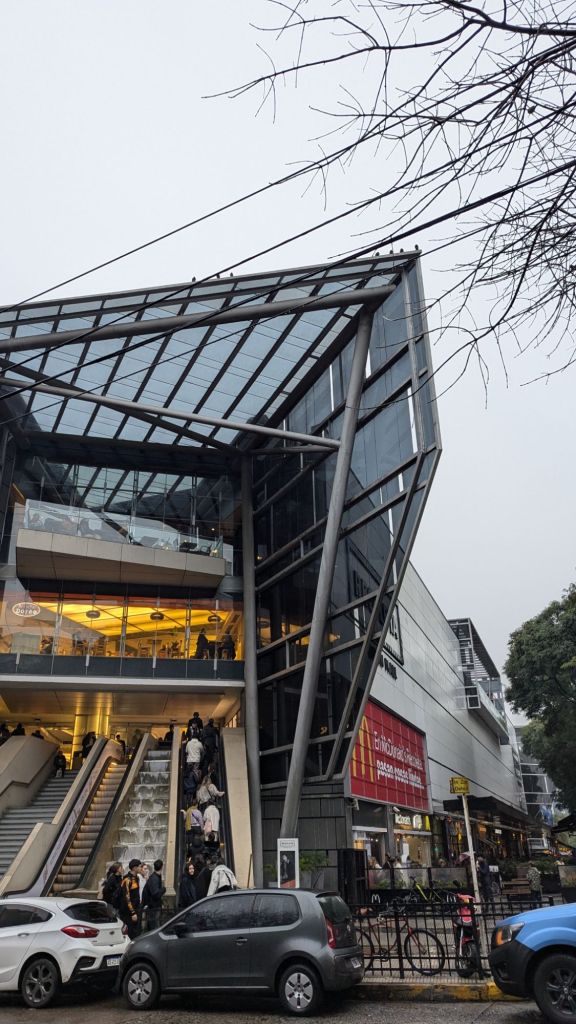
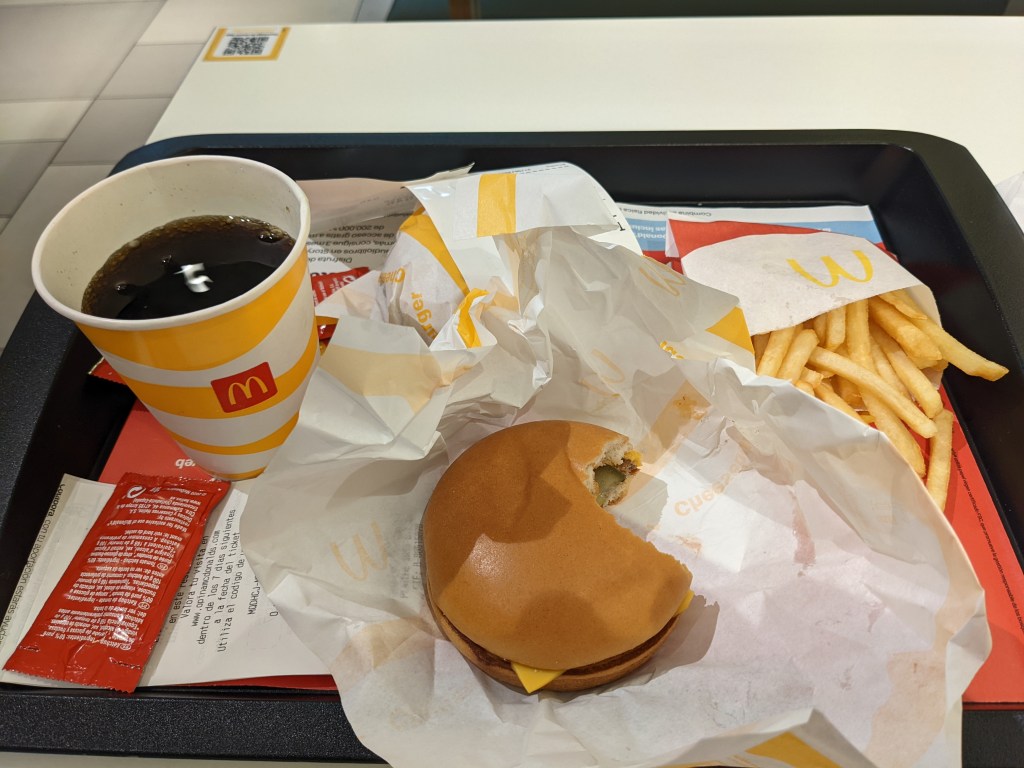
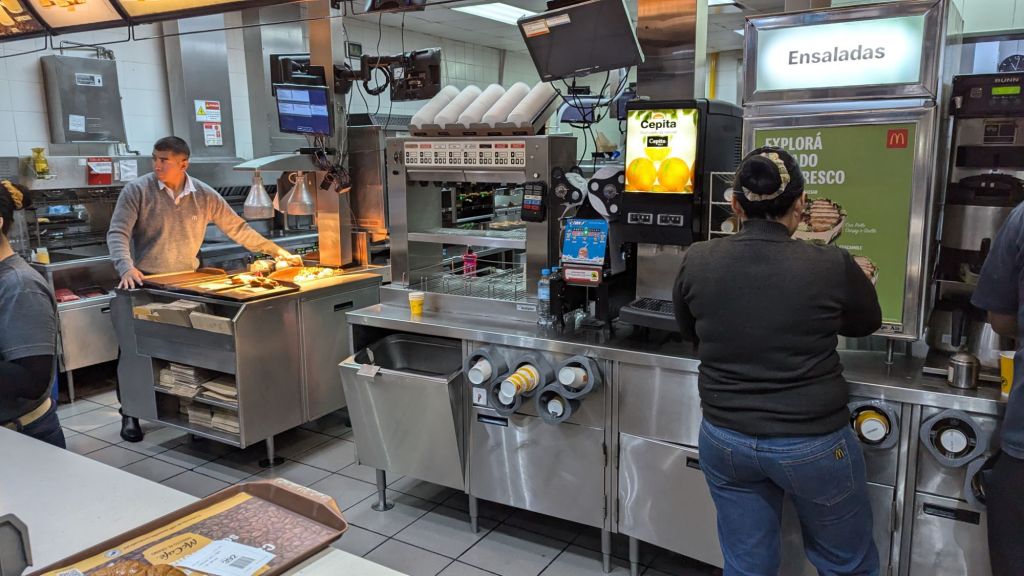
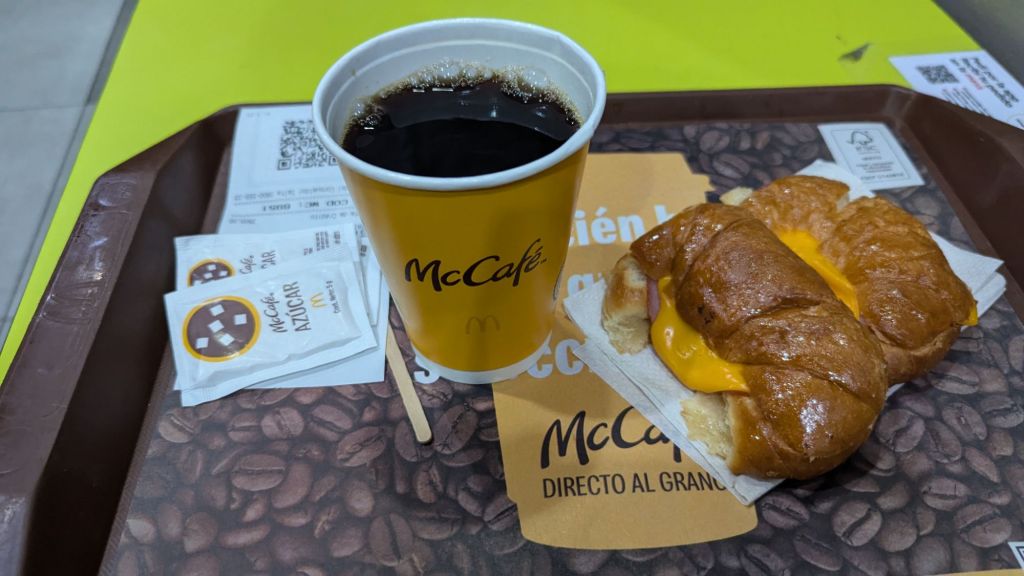
At 8:42 AM I decided to get a simple and fast light breakfast at McDonald’s. I ordered a café Americano + 2 media lunas for 3500 ARS, which I paid for with my Indian credit card (235 INR – $2.82 USD). At 8:50 AM I sat down with my food.

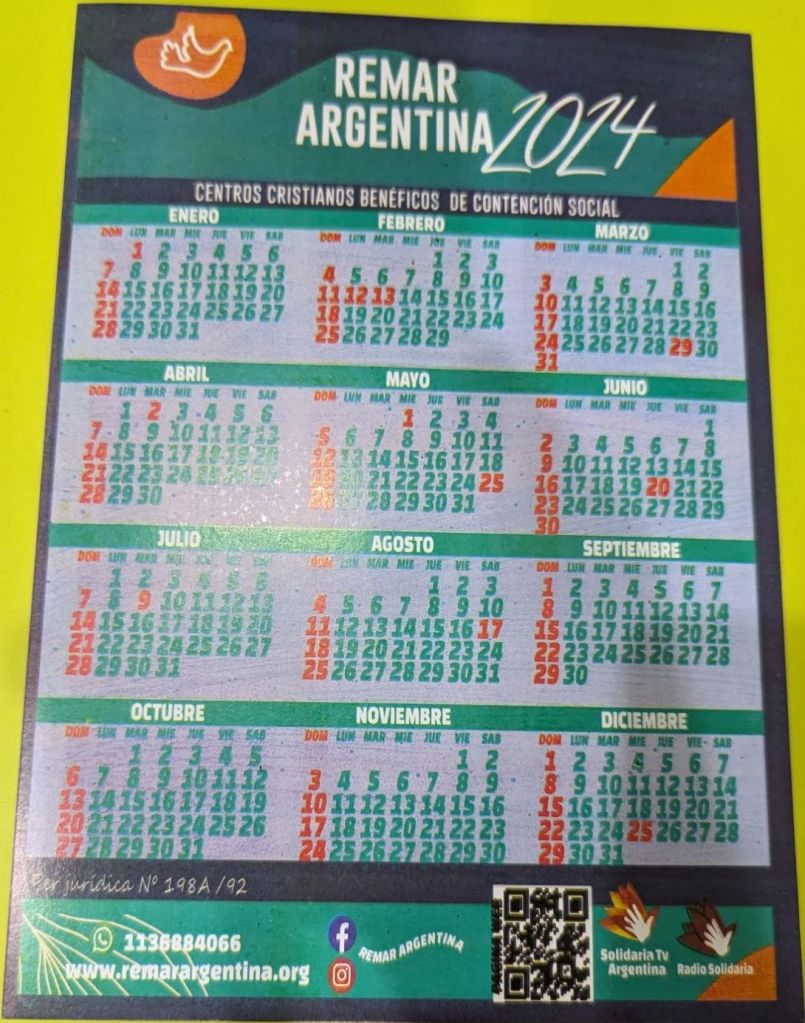
At 9:08 AM I gave 200 ARS to a guy seeking money for Remar Argentina. He gave me a calendar which of course nobody these days would ever use. I’ve noticed that if you had out around this central plaza, there is a good chance of something similar being sold or there being some similar solicitation of funds. However, when I checked with locals, they confirmed that these are legitimate organizations doing good work in the community, so I was happy to contribute, even when doing so in a minimal fashion.
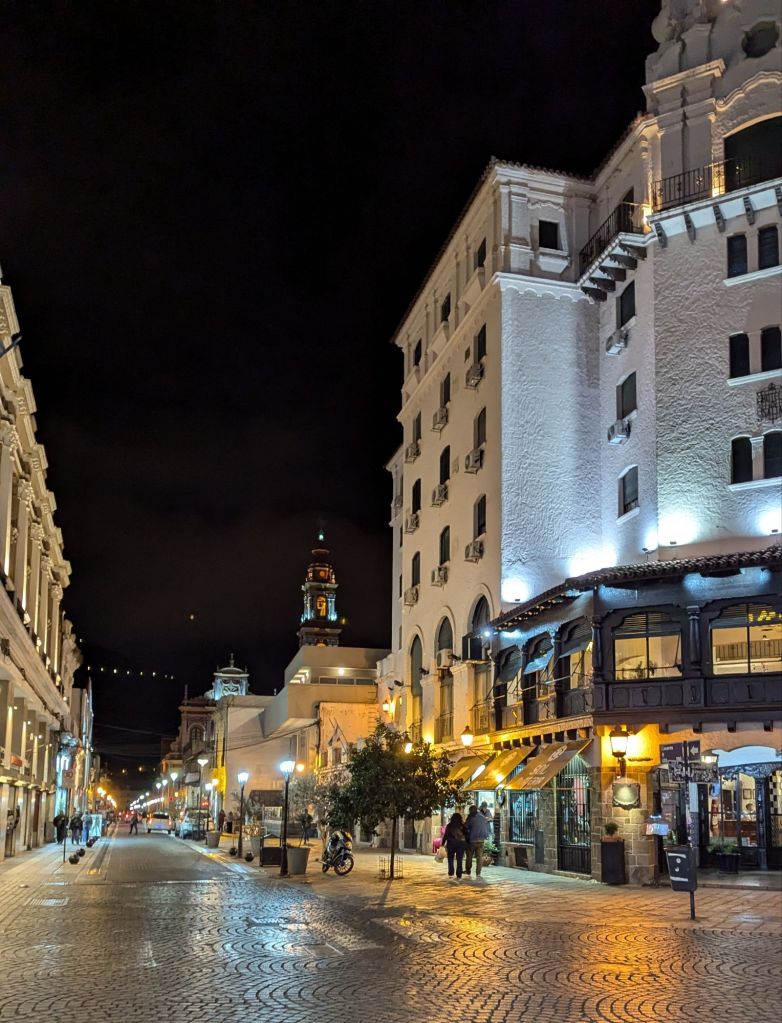
At 9:18 AM I left and went towards the meeting point in front of Hotel Salta for a “free” historical walking tour of the center which was supposed to take hours. I put free in quotations, because you are expected to give a tip. In Europe this is usually a minimum of 5 euros, but I was not sure what would be expected here.

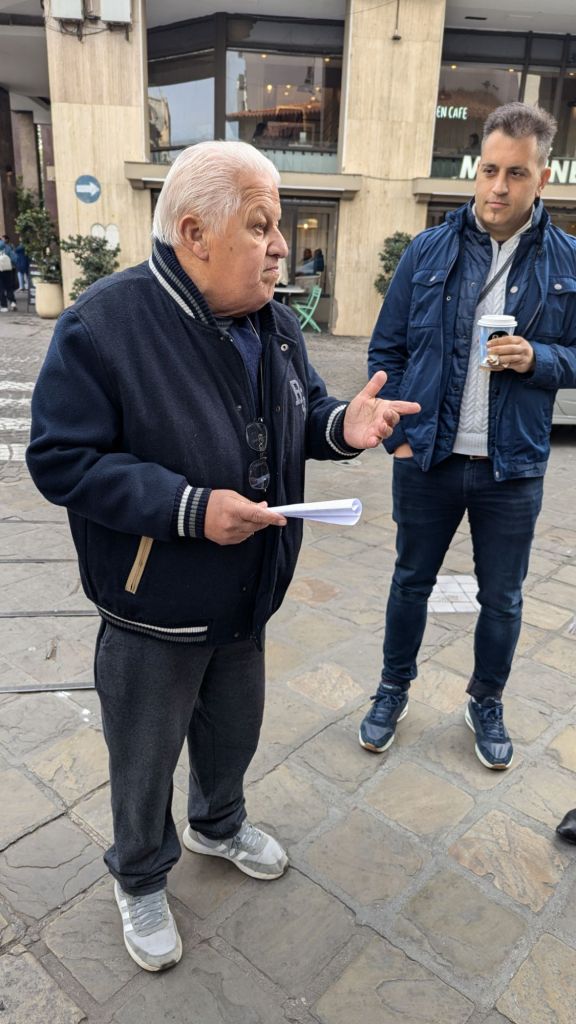
At 9:23 AM I arrived and met a much older retired gentleman who was to be our guide, Jorge Luis Acuña. As he understandably wanted to give time for stragglers to arrive, we didn’t get started until 9:45 AM. Right off I understood that this was going to be more like a historical chat with an older relative, but he was very likable, and since it was free anyways, I figured it would be fine. If I decided I didn’t like it, I would just leave. Unfortunately, I had only just learned some background about Hotel Salta, including that it had started operating as a hotel in 1945 when at 9:50 AM I received a message from my ground transport provider for the next morning, informing me that my morning flight with Flybondi had been cancelled.

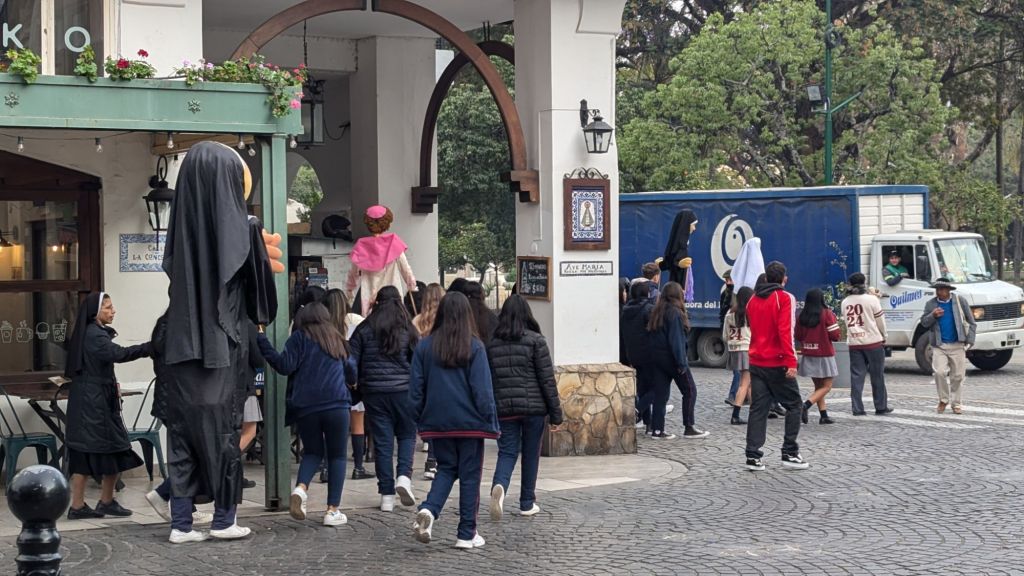
To the left is Jorge Luis Acuña

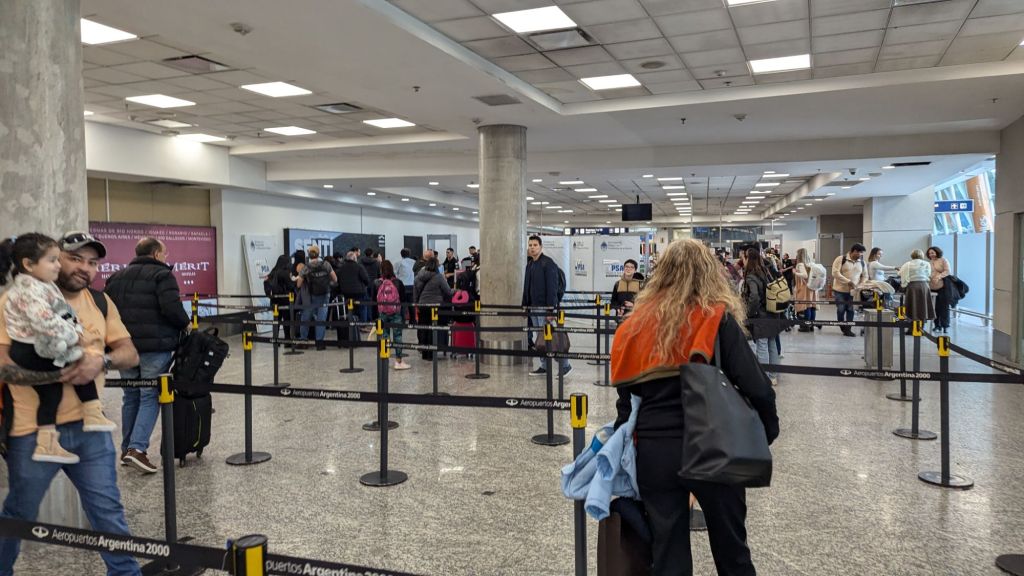
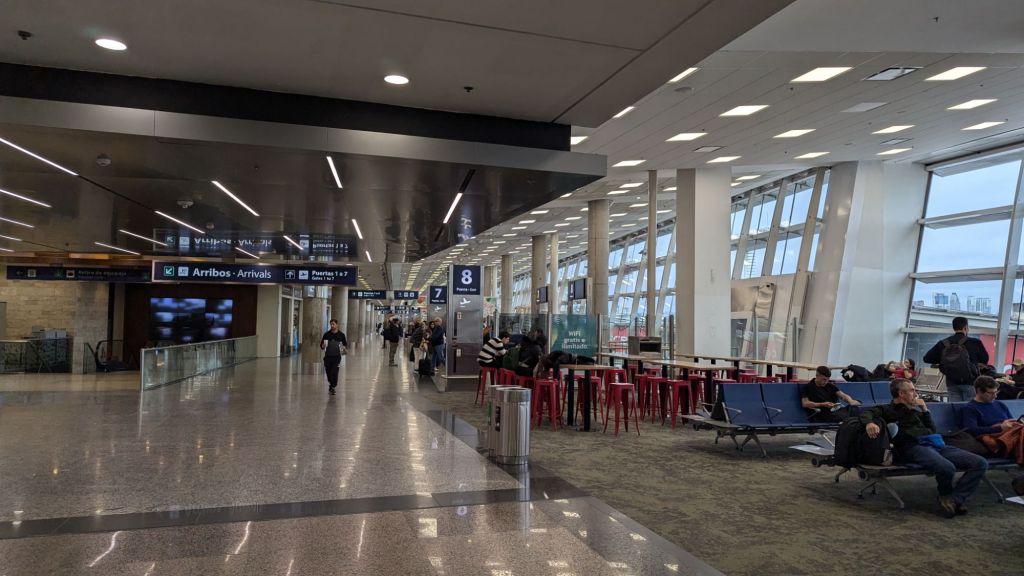
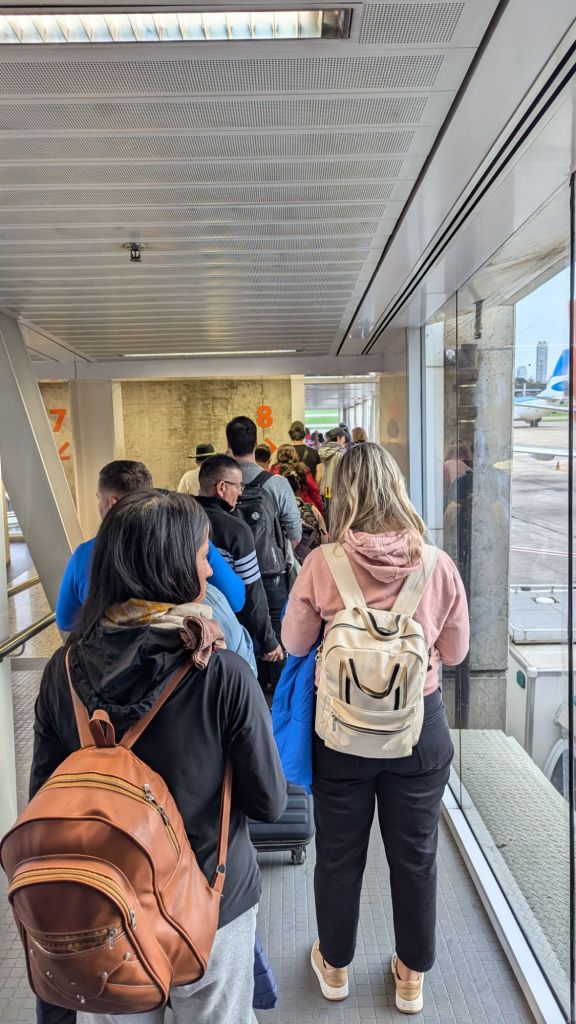
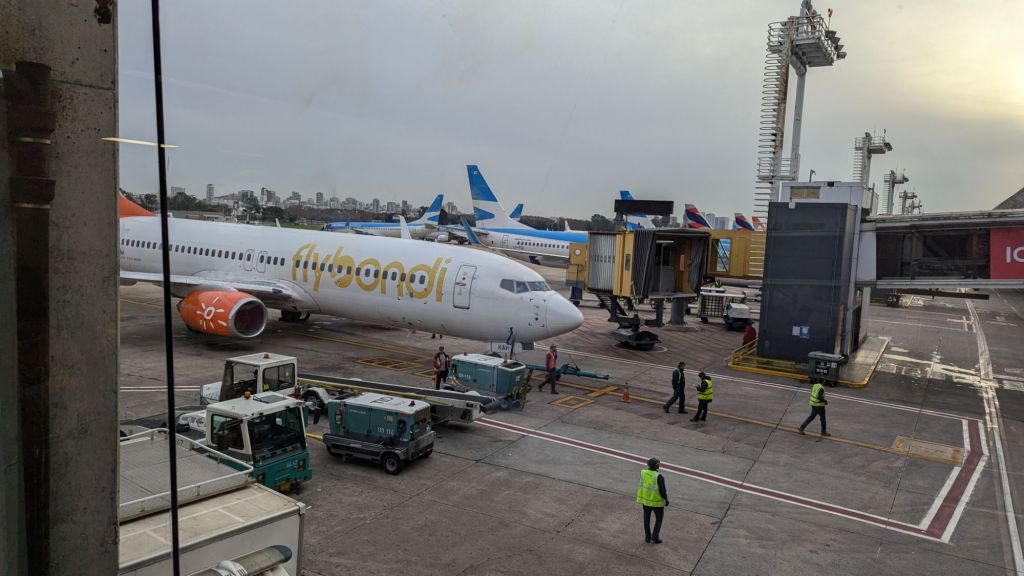
Unlike most other airlines which automatically reschedule you, I needed to make arrangements by calling them. They only had an option at 2:00 AM or one at 8:15 PM tomorrow; my original flight had been at 10:30 AM. I also found out that I would now have to fly into Ezeiza rather than Aeroparque, which was inconvenient, but not a disaster. What I did find absurd was that it took them 30 minutes on the phone in order to get my reservation changed. They said another email would arrive later in the day with the final confirmation. Now I understand why people don’t recommend FlyBondi. . . Evidently this flight got cancelled on the 26th, but last night when I did the web check-in, it showed up as fine, also permitting me to do the check-in.

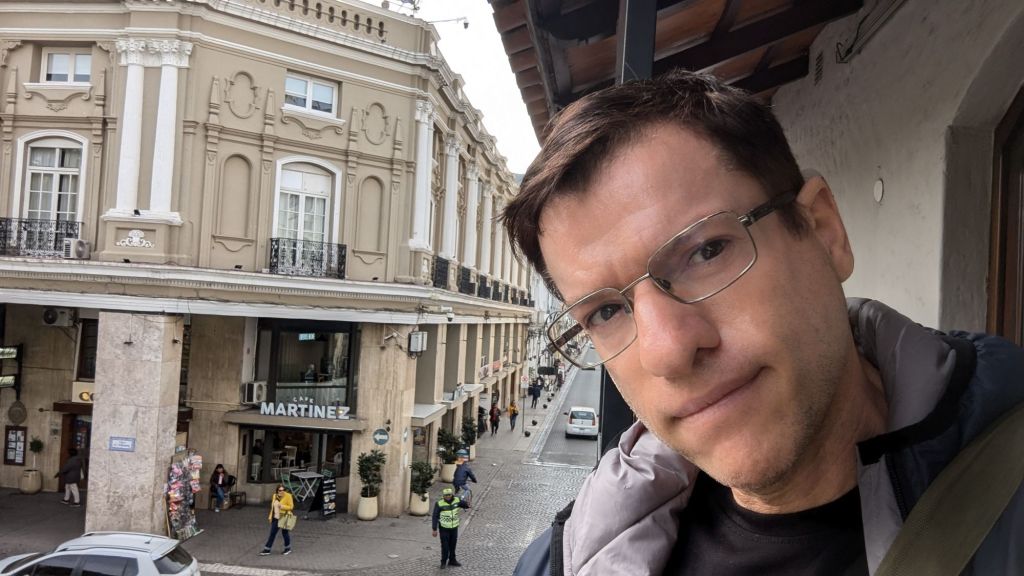
At 10:44 AM I was able to join up with the group again at Hotel Adobe. 1750 was when the original house was made. Calisto Gauna lived here (not the original family owners), but he was born in Sumalau (some of the spelling might be off). There was a lot of name dropping going on of important historical figures from Argentinian history, but most of it meant little to me. However, almost everyone else on the tour was Argentinian, so it was clearly much more meaningful for them. Even though I didn’t personally connect with the names, he was incredibly knowledgeable and made the history come alive.
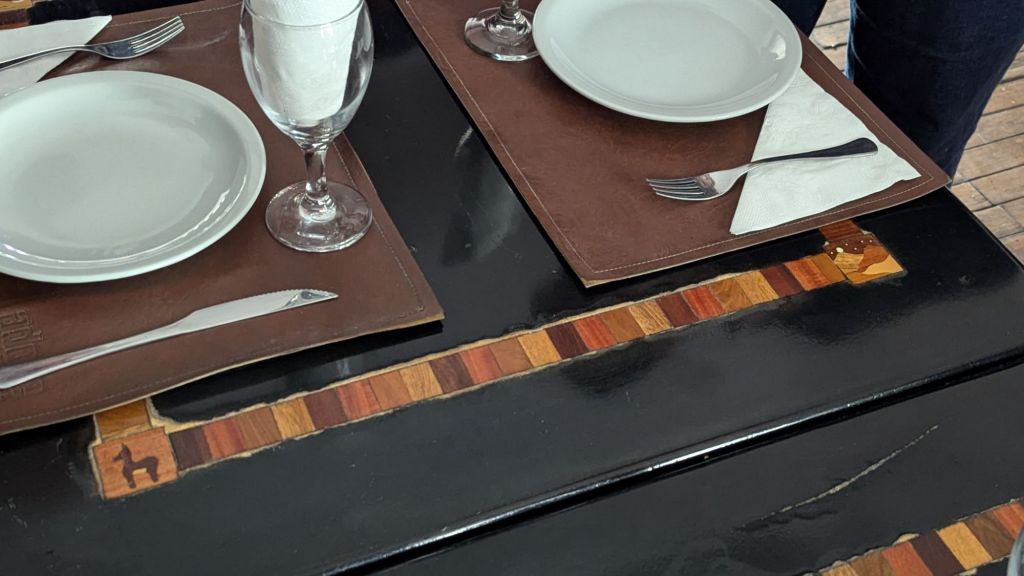
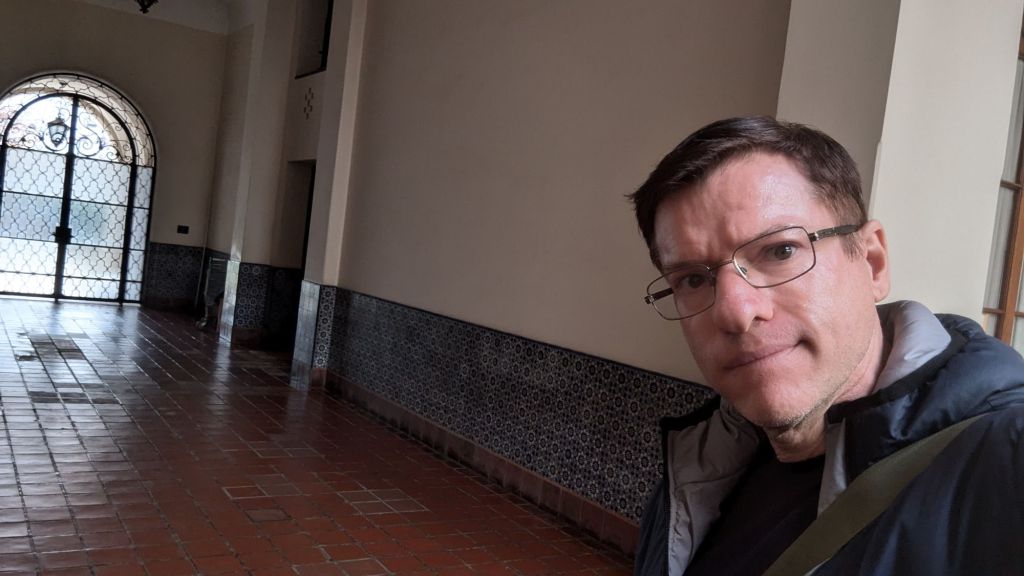
This is inside Hotel Adobe
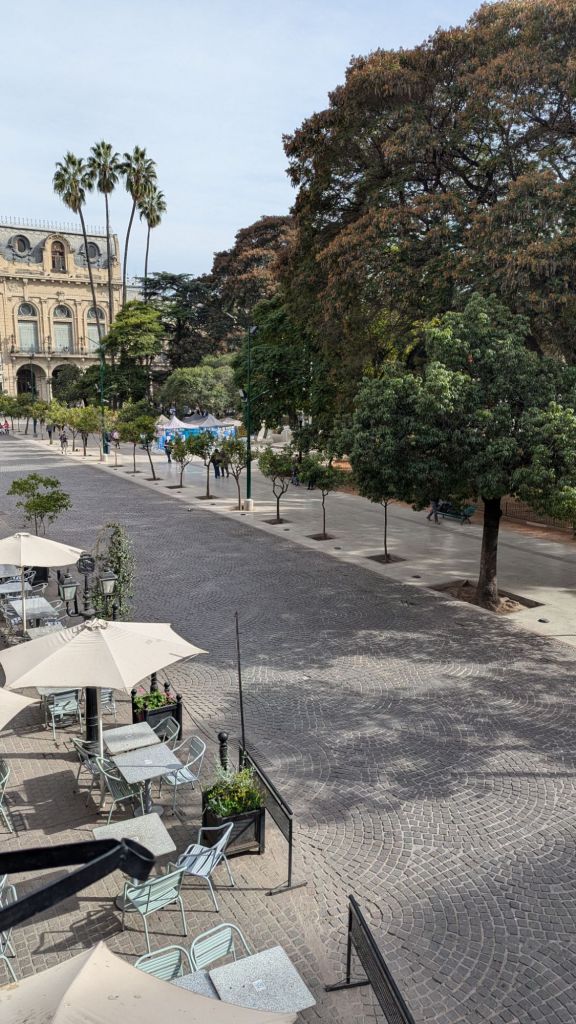
Picture from the balcony of Hotel Adobe

At 11:03 AM I was still on the tour.  Evidently Gauna’s family still lives there in his house in Sumalau. What is clear, is that this whole area is steeped in important Argentinian history. Again, Don Jorge mentioned many names and events that the Argentinians knew, but I of course did not. As I assume that most of my readers, like me, will find a lot of the information to be overwhelming, I will condense down to points which I either found more interesting or which might be of interest to people outside Argentina.

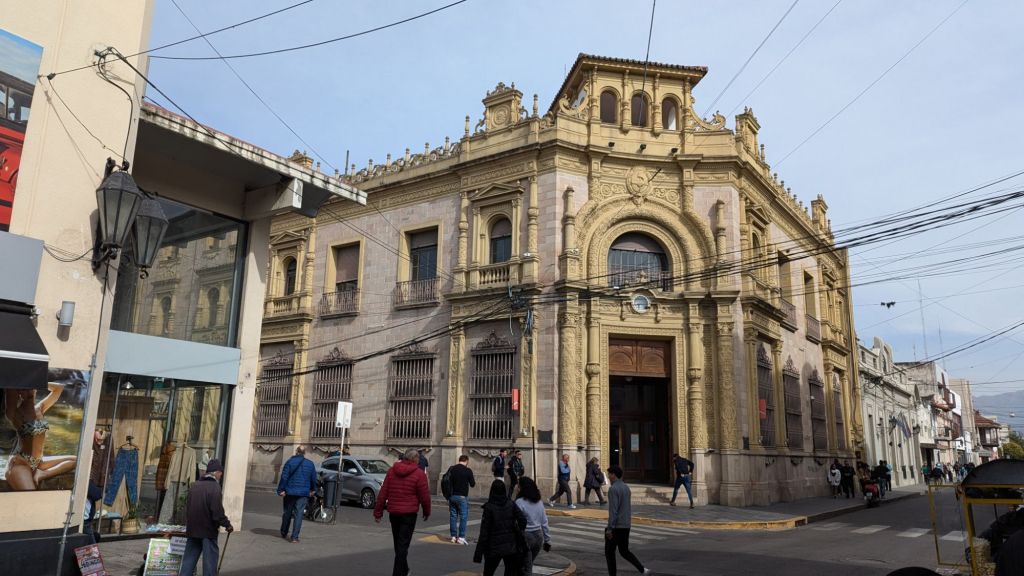
At 11:29 AM we were at the main cathedral. In 1582 the first church was built here, but they finished construction of the current church in 1852. On the 13th of September at 3 PM a huge group of pilgrims arrive here from all over the north of the country, some having walked 14 days.
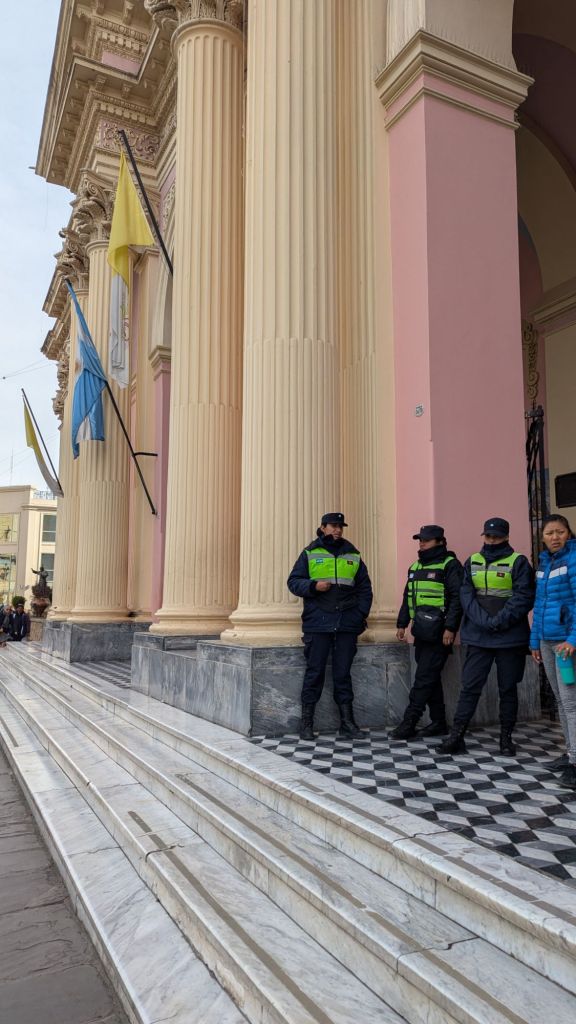
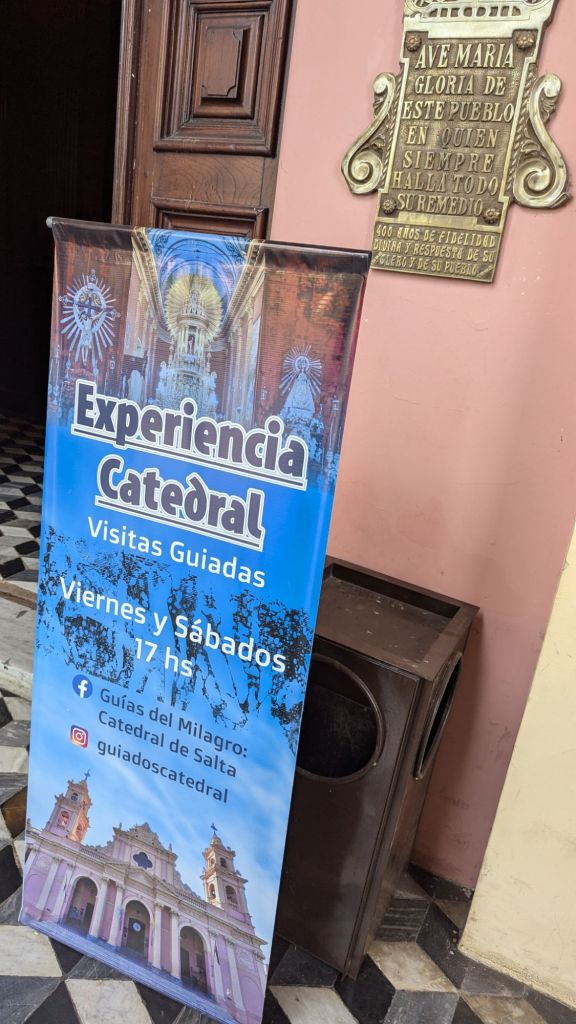
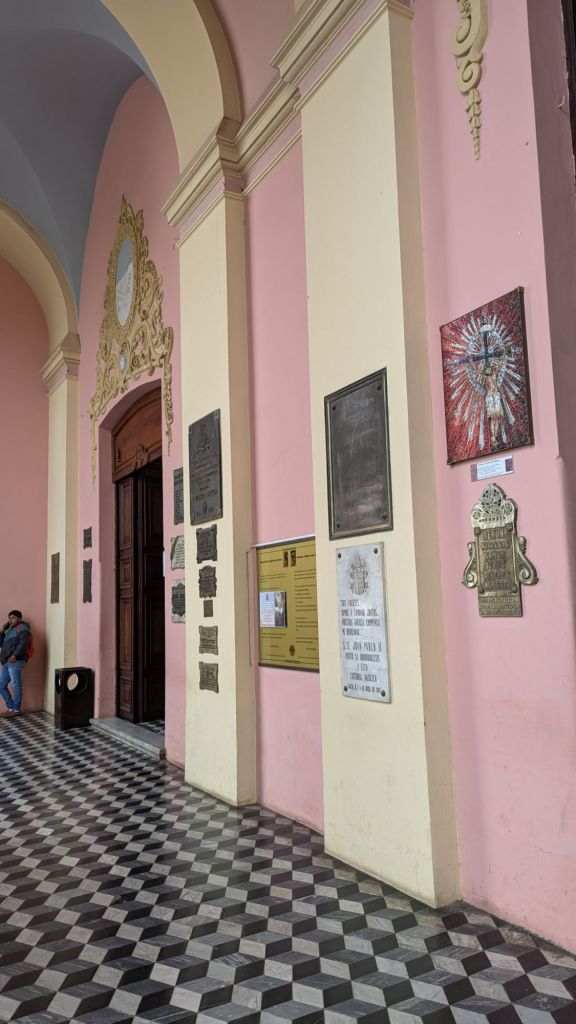
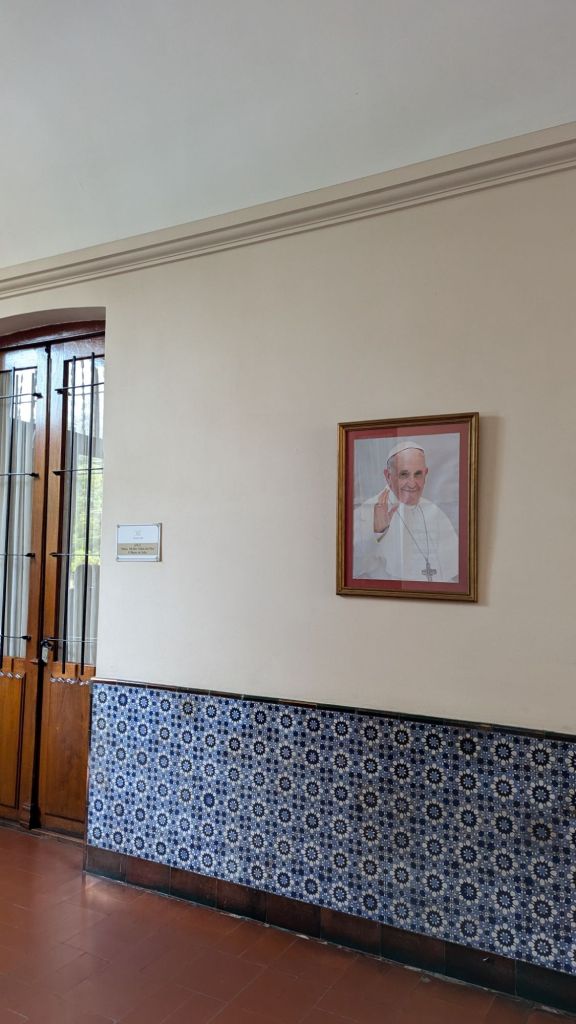
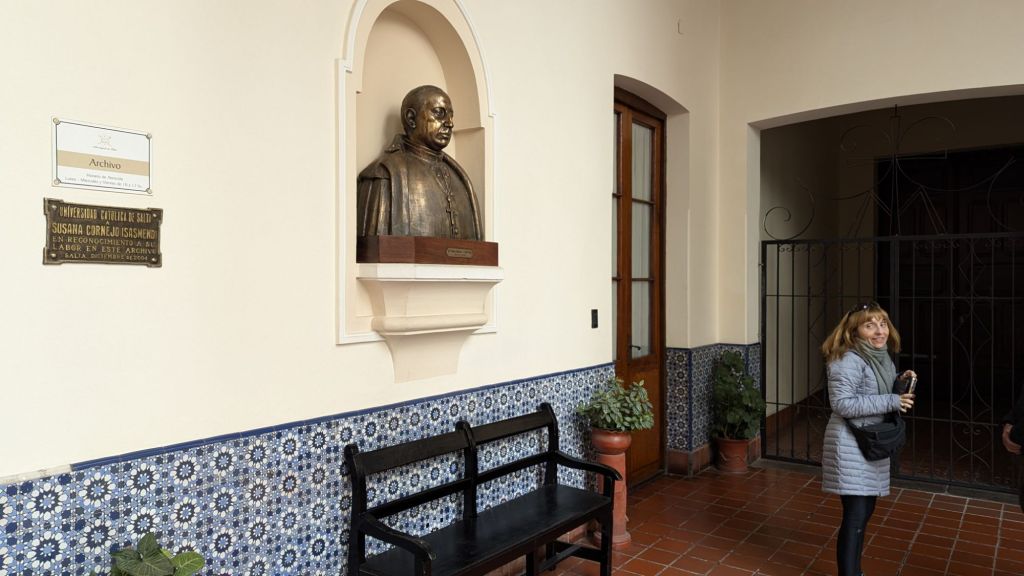
At 11:51 AM we saw the Archbishop’s residence. Don Jorge was quite proud that Pope Juan Pablo II slept here when he was visiting Salta.
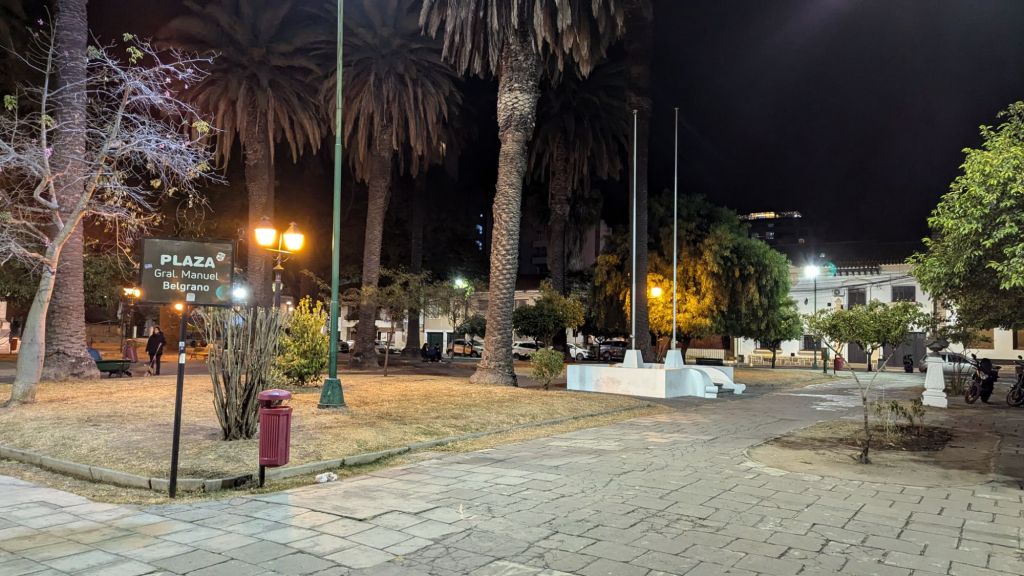
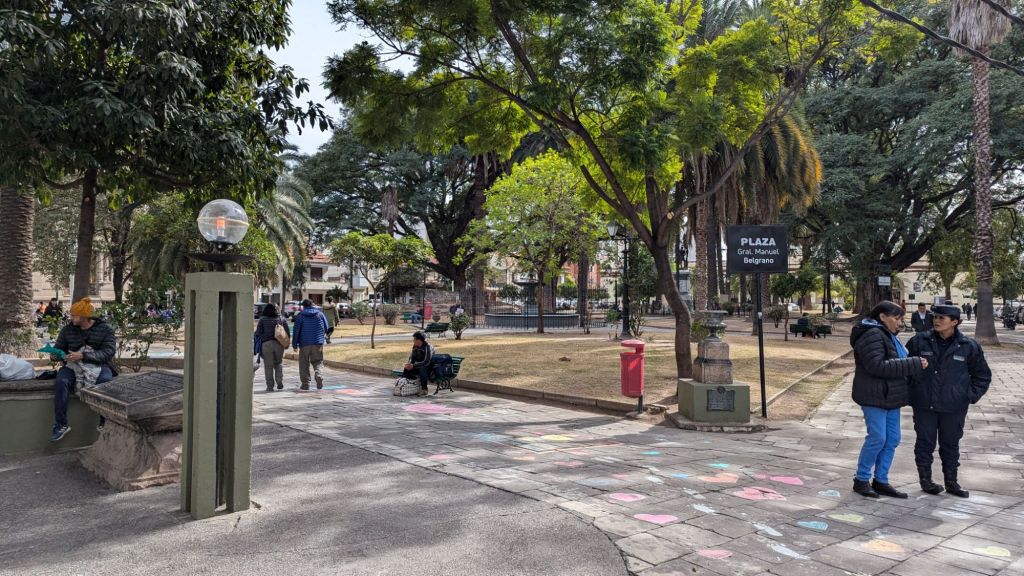
At 12:07 PM we were in Plaza Belgrano. When General Güemes was 14, he joined the infantry. Later on when he was injured on June 7, 1821 by a competing revolutionary faction, he could have been saved by Spanish doctors, but a condition of doing so was that he would renounce control of northern Argentina in favor of the Spanish. Rather than betray his command, he refused medical attention and then days later he died.
12:31 PM we departed the plaza. This guide is extremely knowledgeable and had a wonderful way of presenting. The guide recommended Museo de Güemes, a good free museum with lots of outstanding historical information.

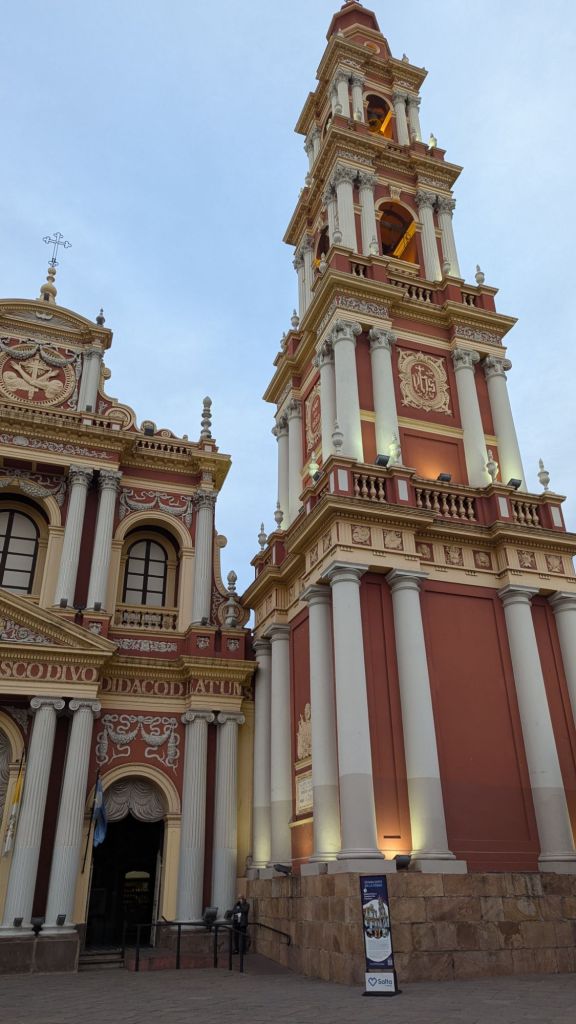
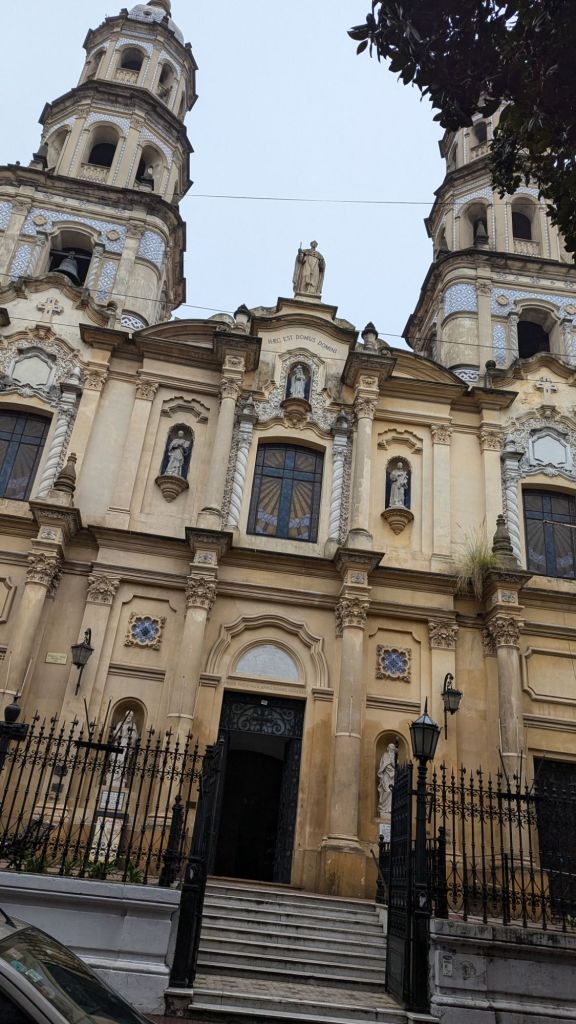
At 1:07 PM we were in front of the Iglesia San Francisco (where I had made a sorry visit on my own a couple days earlier). The bell which is shown in front is from 1860 and weighs 1300 kg. It was made in Italy, but it broke after just a few years since it was badly made. At 1:10 PM we finished. Although others were giving less, I gave a tip of 2000 ARS. I think it might have been better for local Argentinians, but I still was very impressed with his passion. I went off on my own from there.
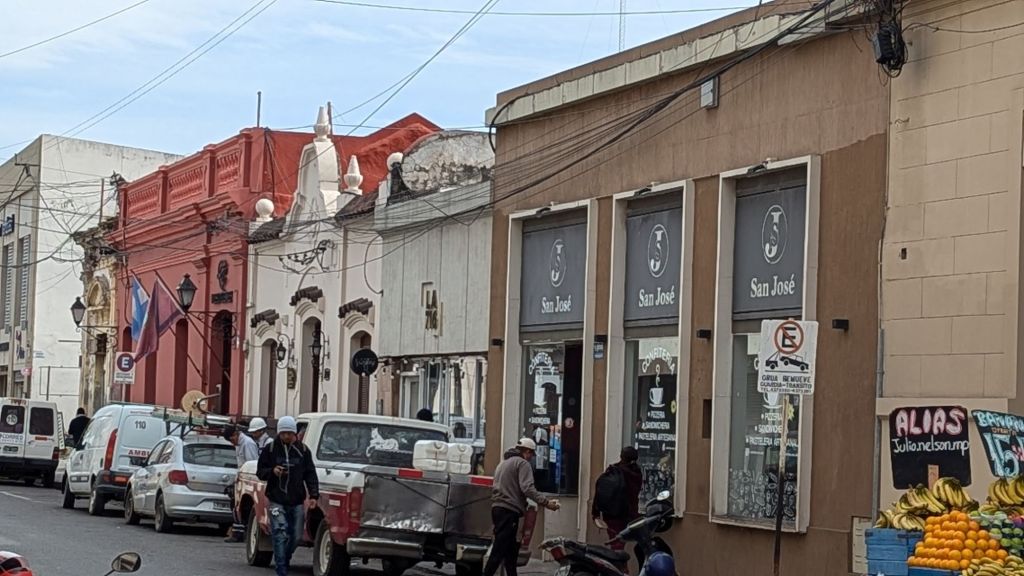
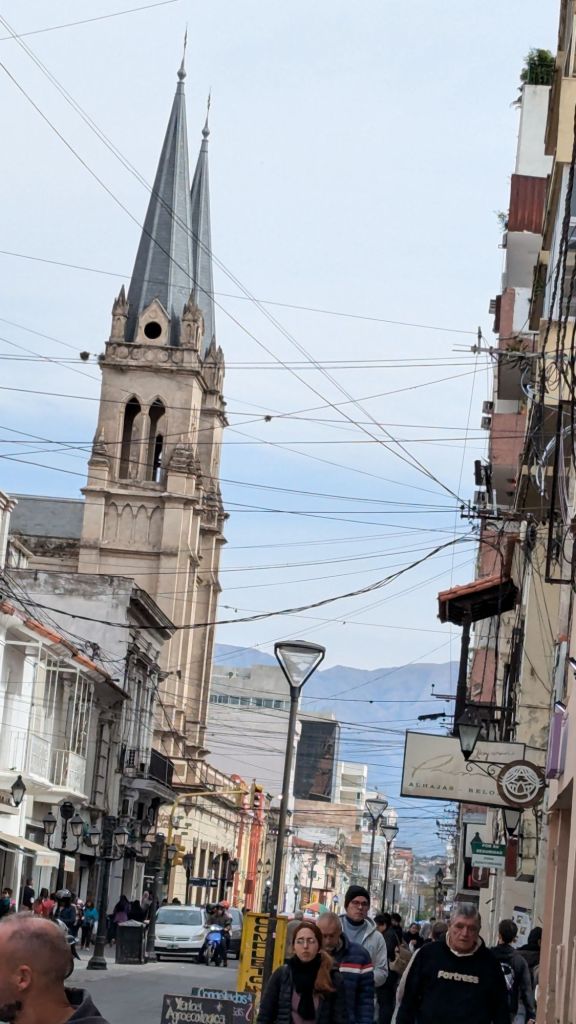
If you look closely, the building with the red flag is the museum which Jorge recommended.
After so much time together, I asked if we could have a picture together.

At 1:56 PM I saw a street dog which was officially identified as a street dog belonging to the center of Salta.
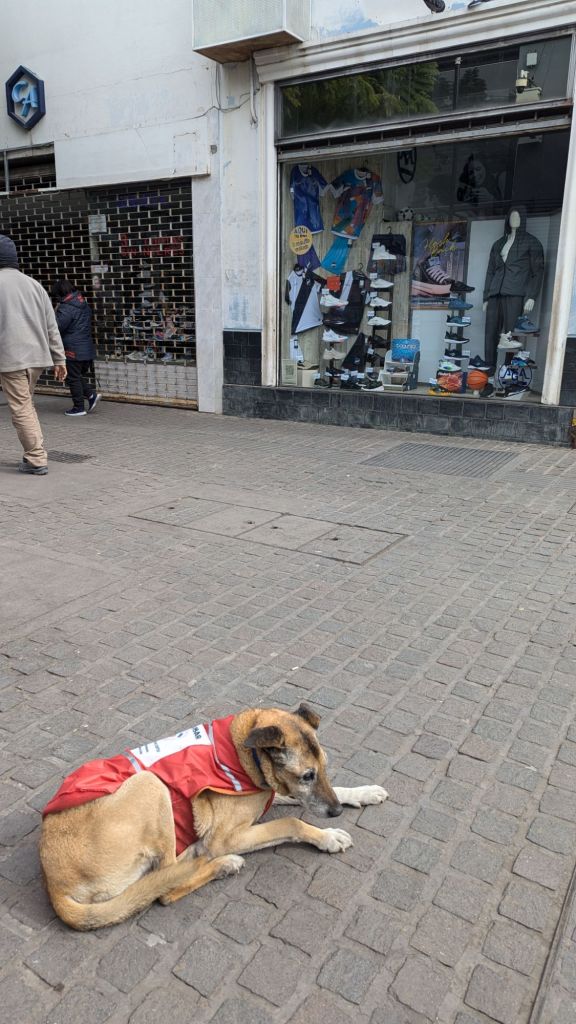
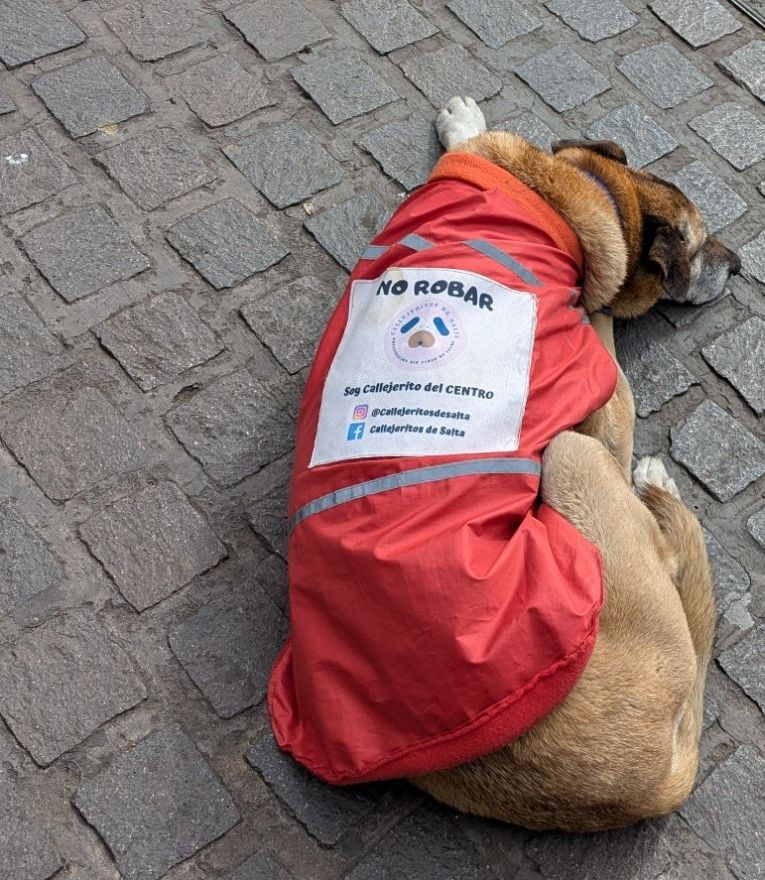
This says “don’t steal”. I’m not sure if it means the dog’s jacket, the dog herself, or just in general.

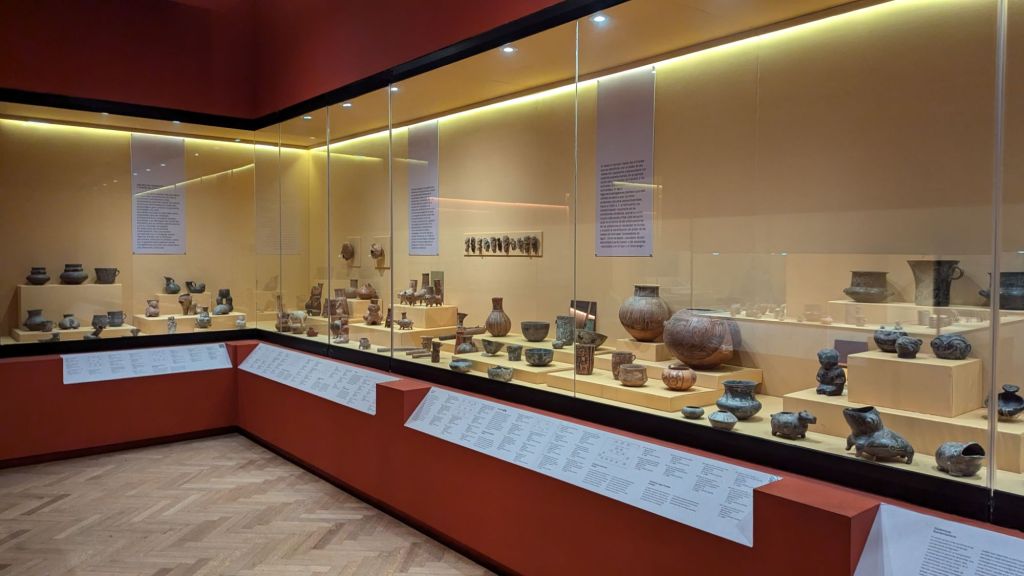
At 2:00 PM I went towards the counter of the High altitude archeology museum, arriving at 2:21 PM. After some internal debate, I decided to wait in the 9 de Julio Plaza until 3:00 PM in order to register for the 4:30 guided tour (Registration was not allowed until 3:00 PM sharp, and it was first come first serve). I think no pictures are allowed inside, but it is considered an obligatory place to visit in Salta.

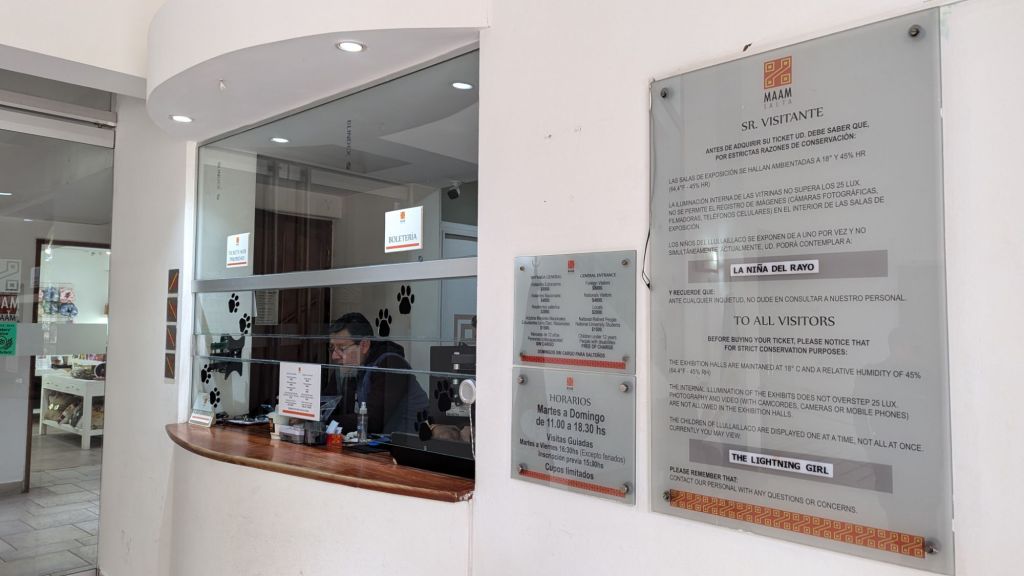
At 3:12 PM I bought my ticket to the museum paying 8000 ARS (538 INR – $6.45 USD) and I signed up for the guide tour at 4:30. They said I needed to be there at 4:25 PM.

As I wanted to get some lunch which I would quickly receive and would be able to eat before the tour, at 3:32 PM I ordered a Grand McBacon Doble with fries and a drink, paying 11900 ARS (800 INR – $9.6 USD). I felt a bit ridiculous buying McDonald’s for a second time in one day, but my double grand bacon burger was incredibly delicious, and I was able to have it quickly.
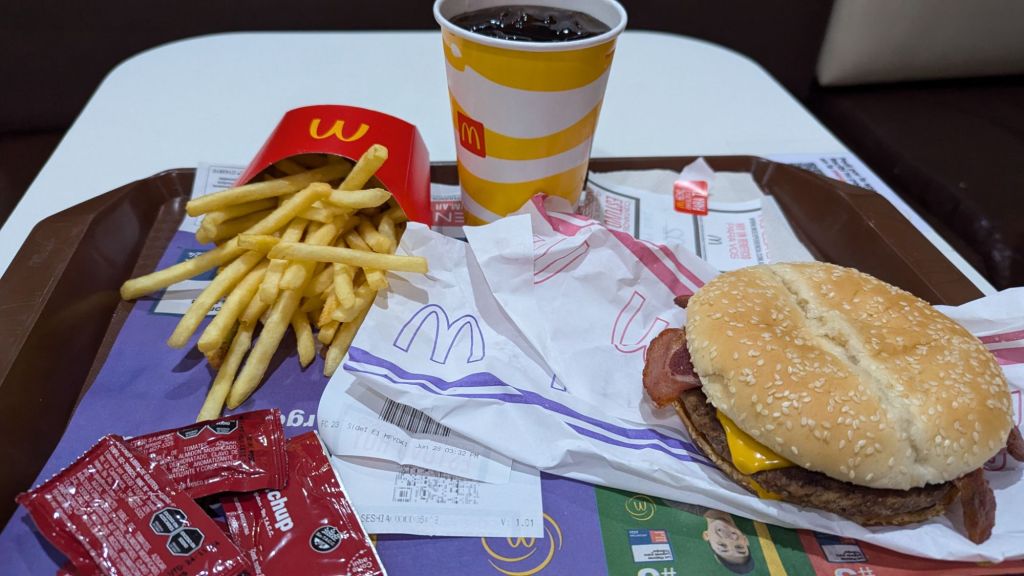
At 4:05 PM I had finished my food and was feeling quite satisfied. I sat there comfortably waiting for a bit, and then walked over to the nearby museum, arriving promptly at 4:25 PM.

The tour started right on time. While the artifacts were not especially fancy, it’s extremely impressive how well the funerary objects were preserved, especially considering the materials which were used in many cases, such as cloth, feathers and leather.

It was also interesting to learn that the Incas only arrived in this area a relatively short time before the Spanish. They came between 1480 and 1532, the Spanish invaders then arrived in 1532.

5:47 She suggests El museo de antropología detrás del monumento Güemes.

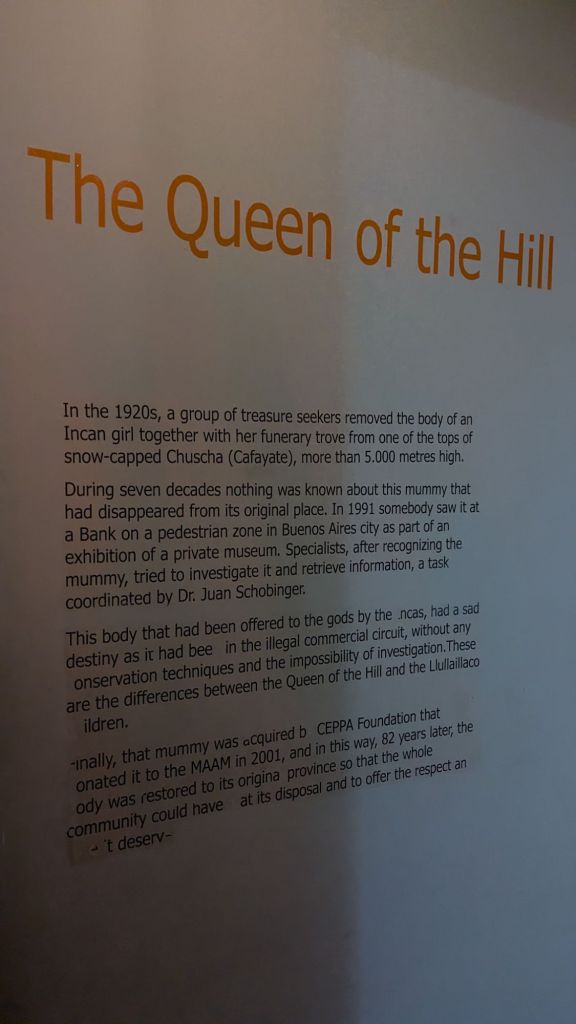
When it was my turn to see the mummified child at around 5:46 PM I found it incredibly impressive how her eyelashes and teeth and even the braids in her hair were perfectly preserved. At first I thought that there had been some posthumous deformation of her head, but they explained that it had been intentionally shaped into a cone shape during her life as a means of showing her high social standing. The current shawl she is wearing is the only thing which is not original, as her original covering was partially burned, as was part of her body, by a lightning strike, believed to have taken place 300 years ago. Locals from the area insisted that she be properly covered if she were to be viewed by the public, so they provided a shawl which would have been very similar to what she was originally wearing.   Today only the lightning girl was on display; only one of the children is permitted to be displayed at a time, both to avoid further upsetting local native/first peoples and also for conservation purposes. At 5:47 the actual tour ended.

In the next rooms pictures were permitted, but in most cases that was taking pictures of pictures. As mentioned before, the textiles recovered look brand new, just like what you could buy today in the market, if it were good quality. I also found it interesting that the boy had short hair. What is the universality of shorter hair in men that took place in many cultures across the world despite their separation?
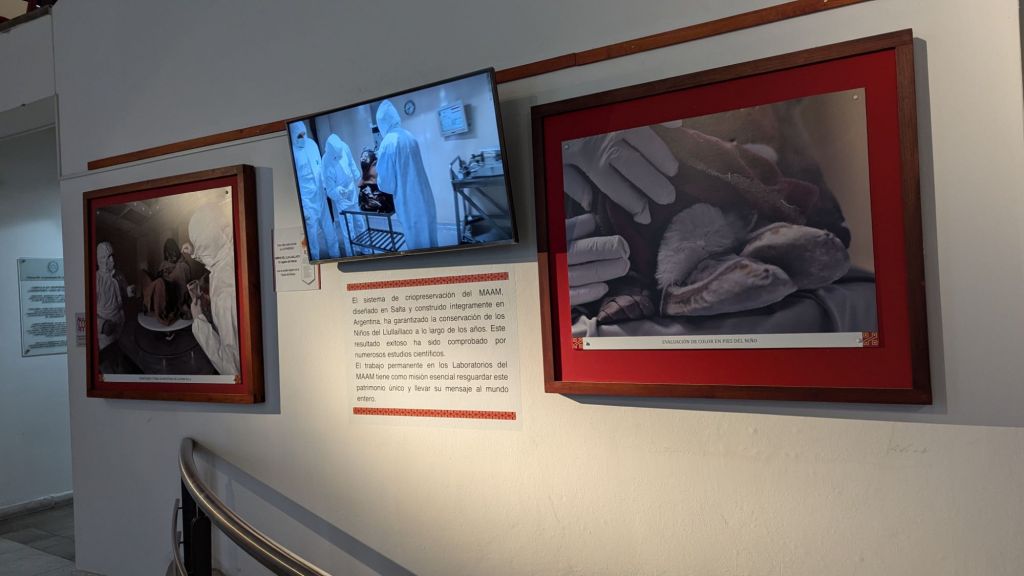
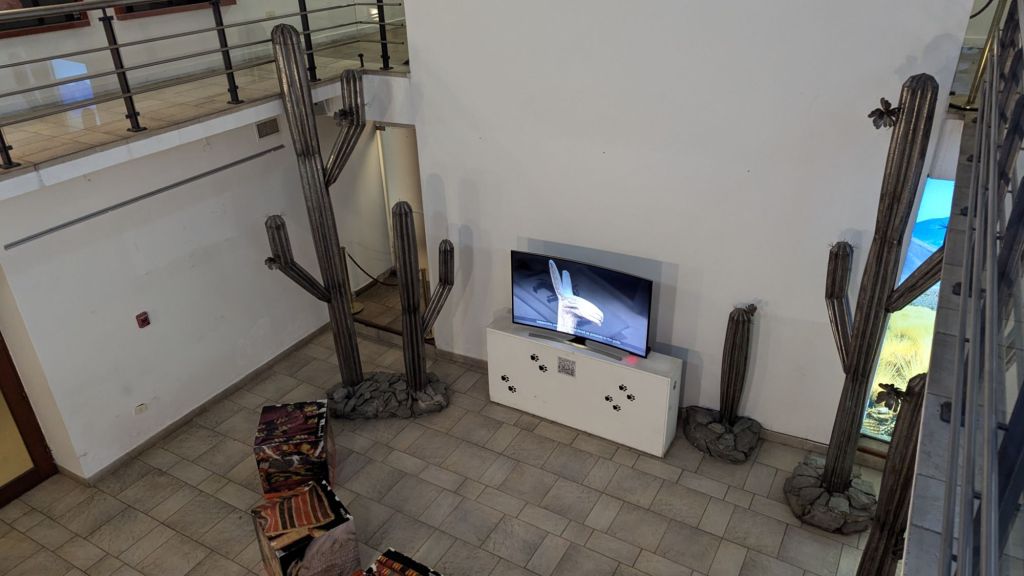
As alluded to earlier, no photos of any type were allowed in the area with the burial objects and the current mummified child on display. Despite the lack of any visible guards, everyone seemed to respect this rule. There are however high quality videos and pictures available which can be seen online for free. Despite this online availability, I’m very glad that I was able to see this in person. The mummies and funerary objects here were “naturally” preserved due to the climactic characteristics of the region, target than being artificially preserved in any way.

At 6:31 PM in a different part of the museum, it was notable to compare the state of the mummy and objects which were robbed in 1920, with the robbers and subsequent “owners” not observing nor having knowledge of how to properly preserve the findings. However, even within that context, even the 1920 tomb had remarkably well preserved pieces, including much of the mummy itself, which now is kept under optional preservation conditions to keep it from further deterioration.

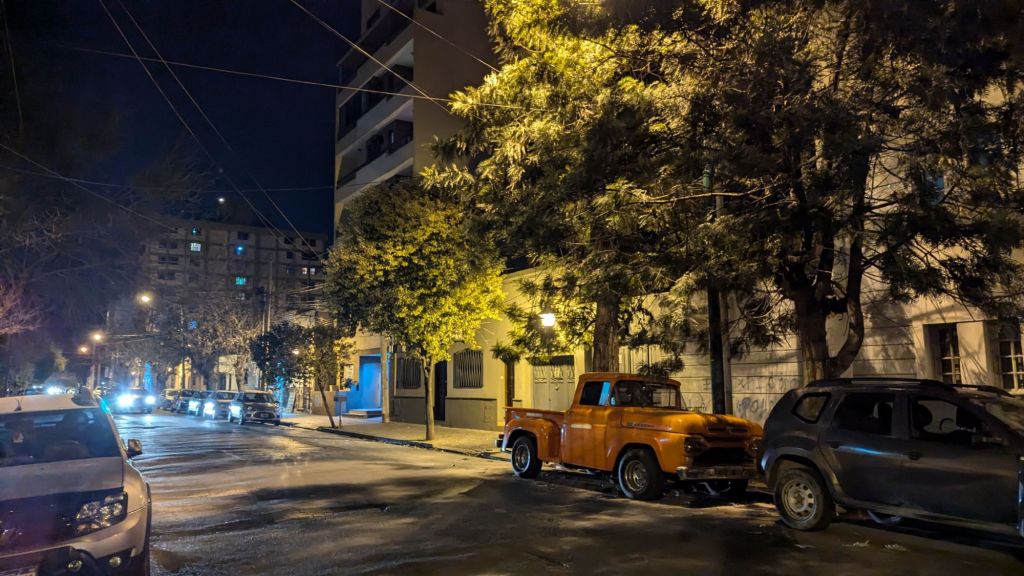
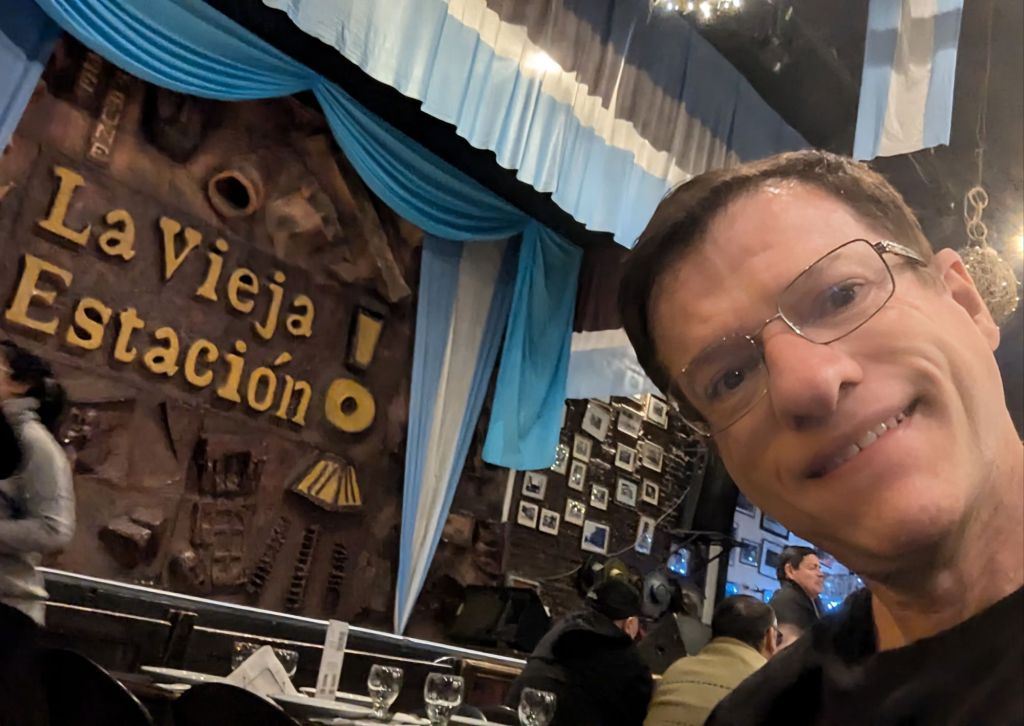
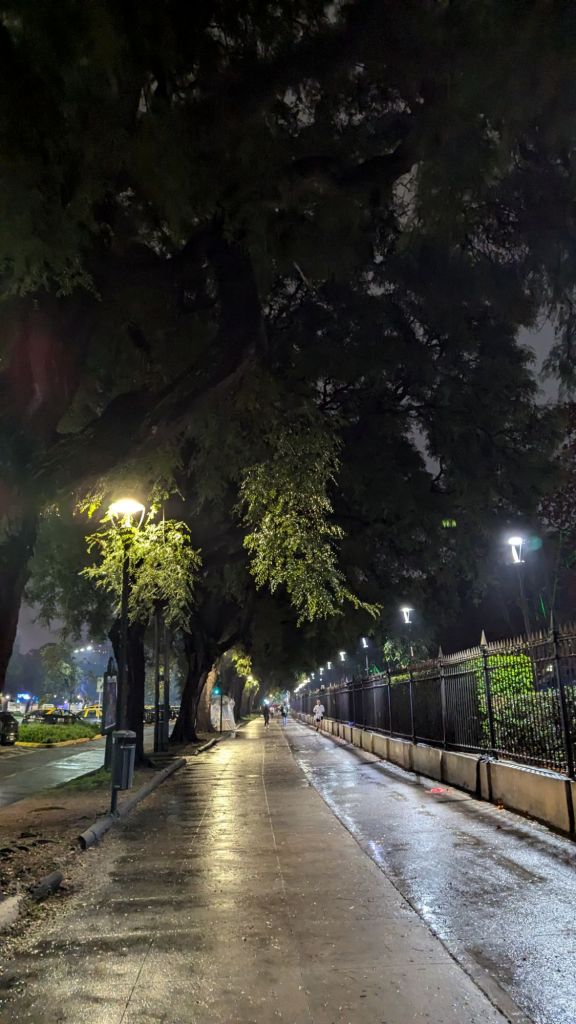
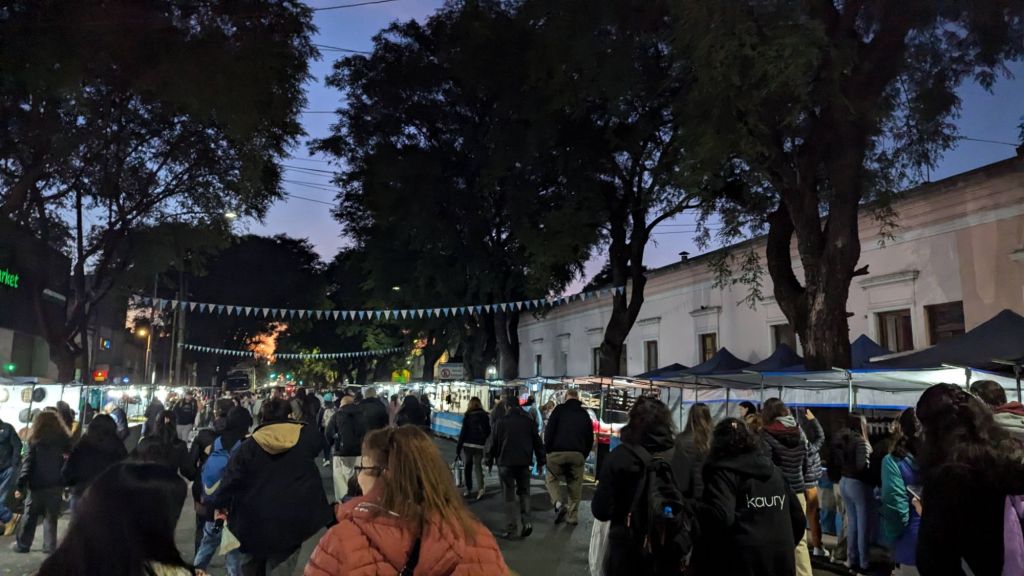
Finally at 6:41 PM I came out of the museum and decided to go back to my apartment before meeting up later on with Natalia to go to La Vieja Estación Peña. I headed back towards the apartment, noting at 7:01 PM that it was crazy how quickly the temperature drops later in the day

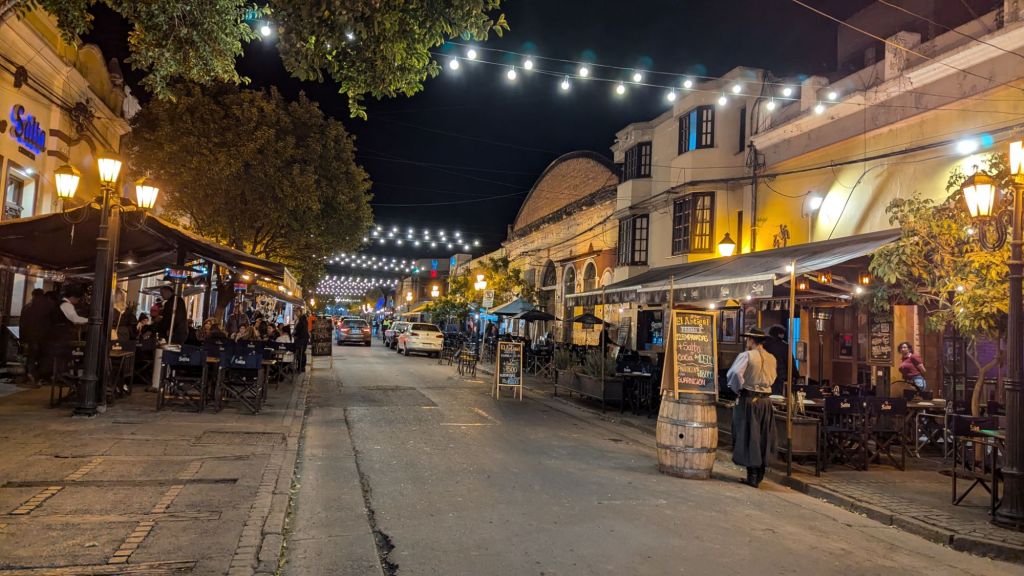
From 7:20 PM to 8:12 AM I was at the apartment, and then headed out walking towards La Vieja Estación. I was really grateful to Natalia for saying that she would go with me, since it’s a bit odd to go to these places on one’s own.
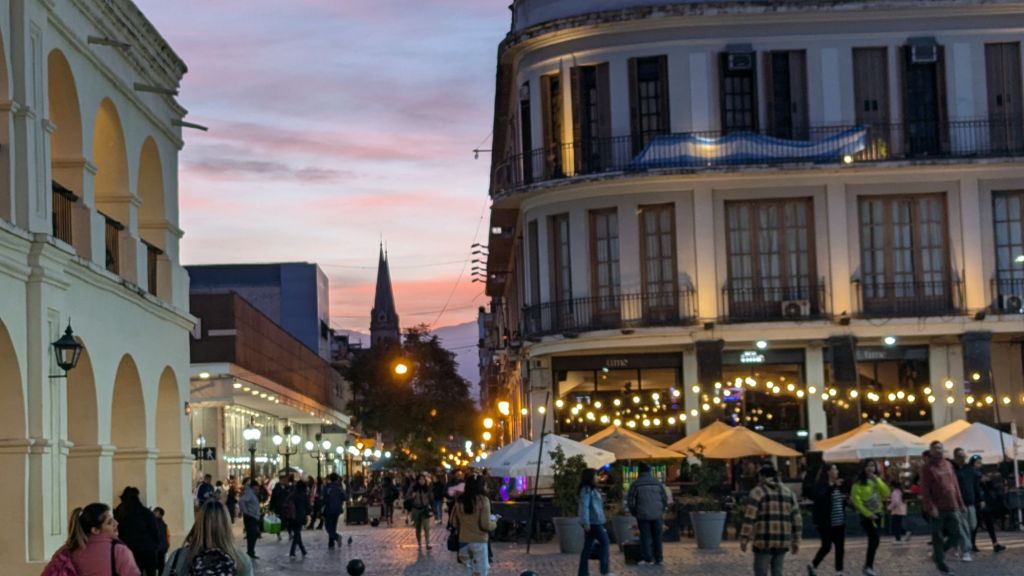
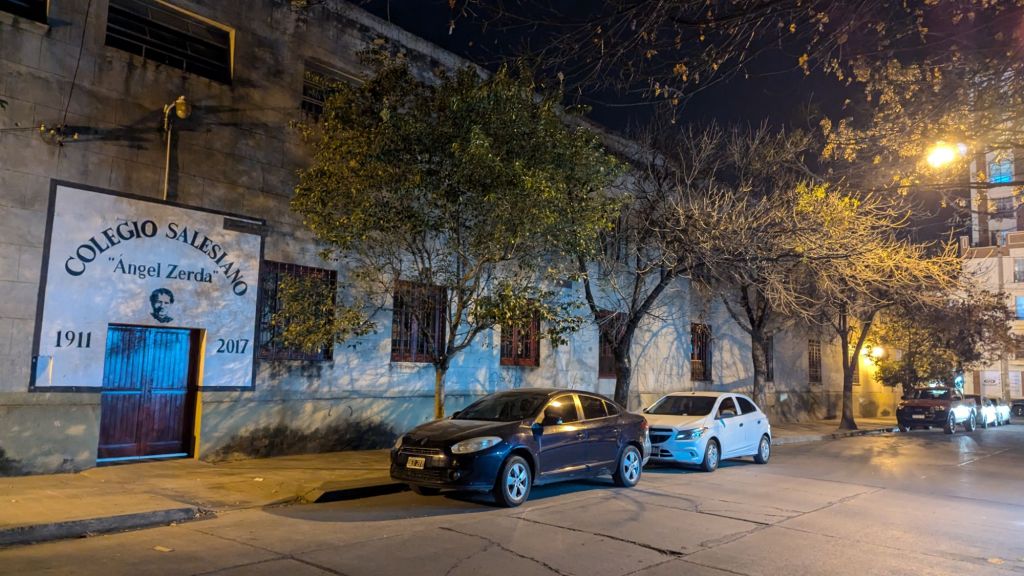
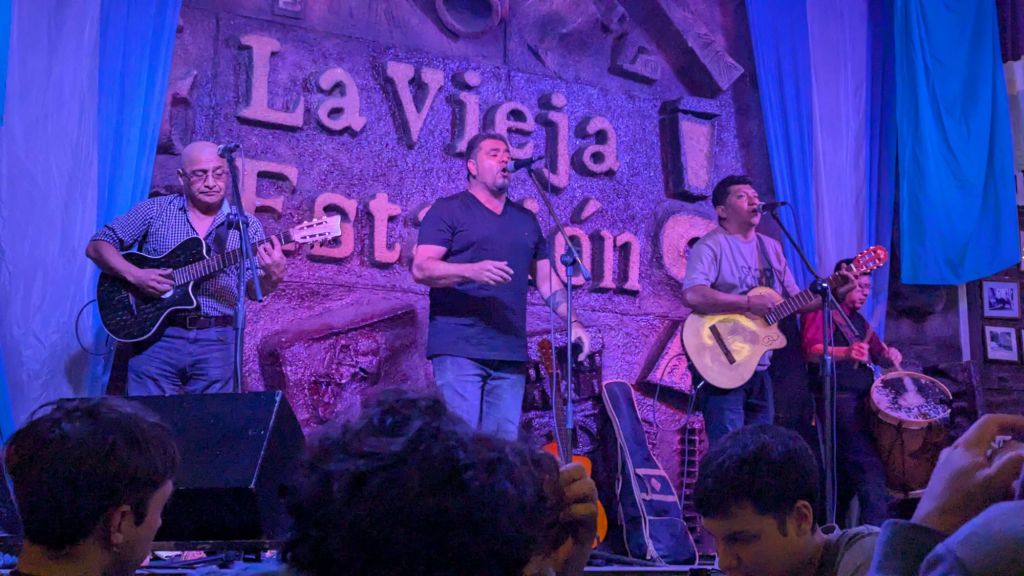
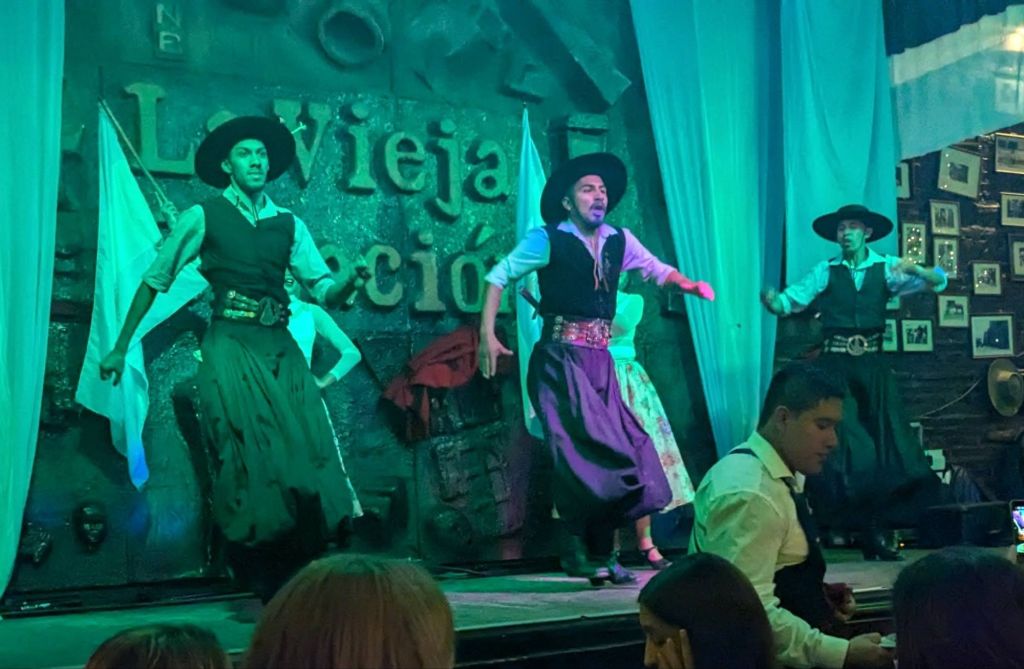
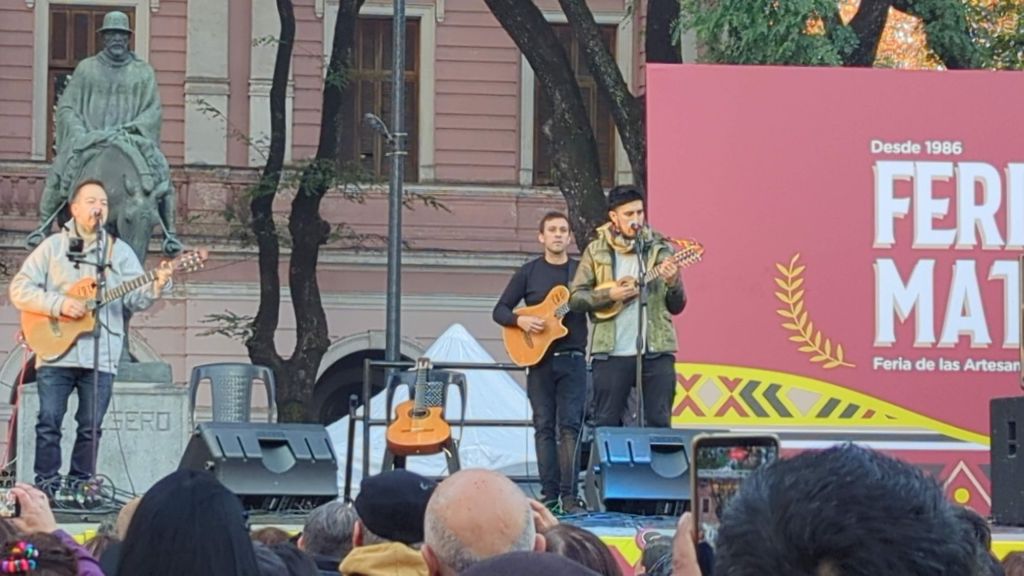
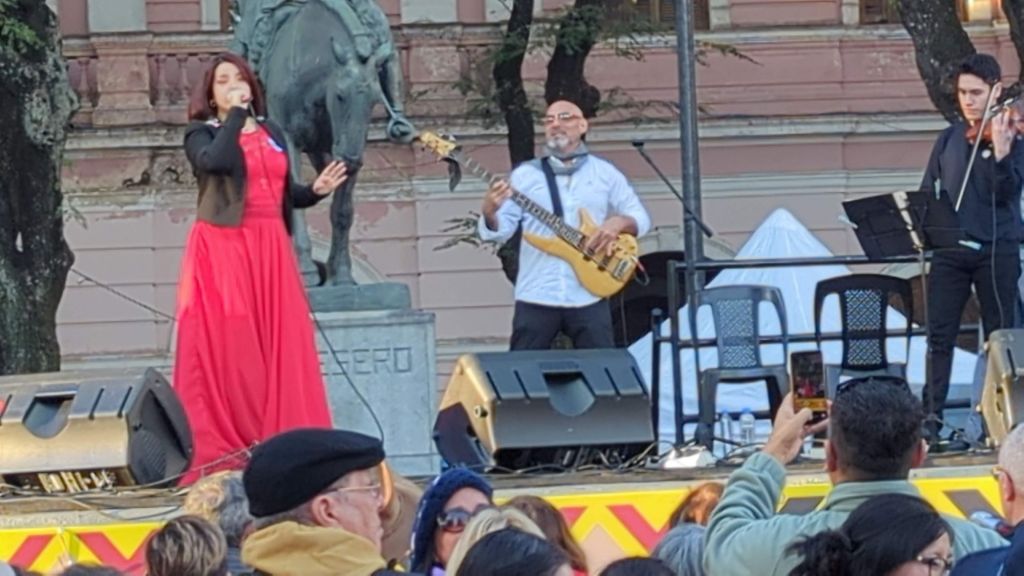
When I arrived at 8:40 PM, they immediately seated us in a spot with a decent view of the stage. At 9:30 PM the show started, save I also noticed that I had another message from Flybondi saying that now my rescheduled flight would depart at 9:30 PM. At this point I didn’t believe anything from Flybondi, but I was eager to just enjoy the show.

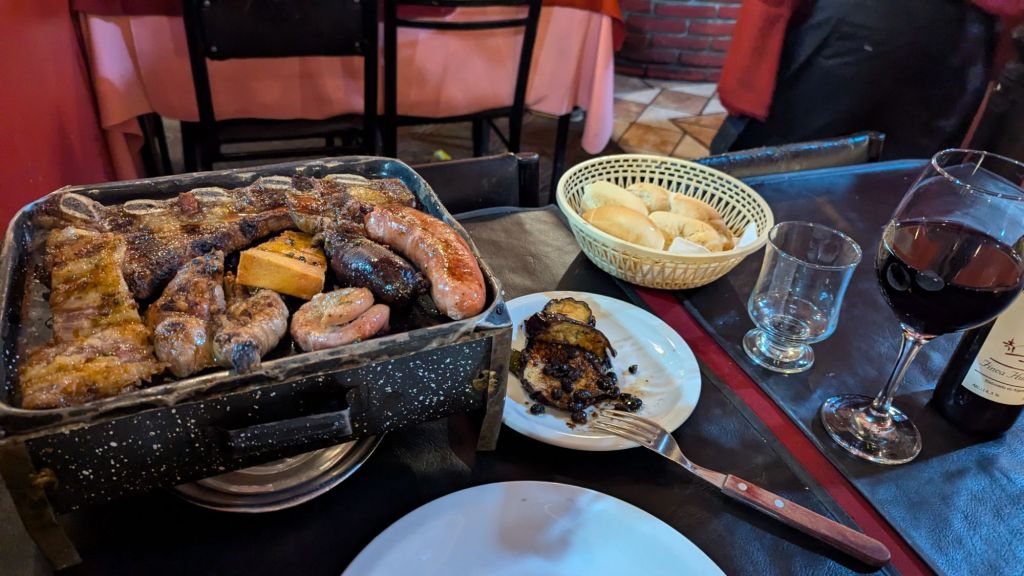
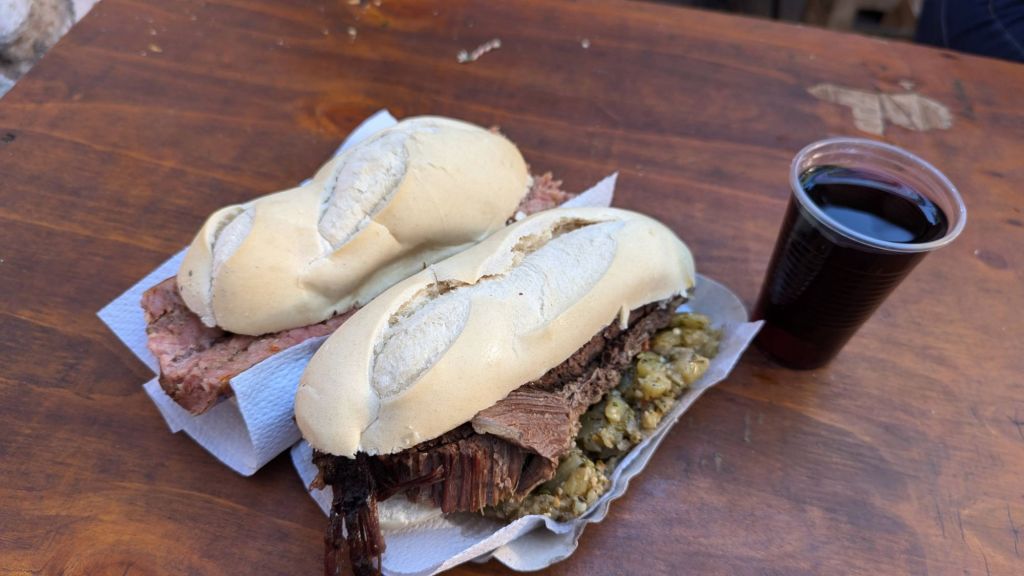
At 10:56 PM I reflected that so far, everything about the show has been fantastic. Due to the lighting, photos didn’t come out well, but here you can see some videos. Yes, it’s a bit expensive, but if you can pay for it, then it’s worth it. When I paid my bill, it was 23800 for one glass of wine, 1 small dish of sweetbreads and 1 bread pudding. It was a bit more expensive because I paid with a card. I have discovered that many places here either charge 10% more if you pay with a card or essentially the same thing, give a 10% discount if paying with cash.

At 12:42 AM the main show was over although they continued with live music, and we left walking. On the way I left Natalia at her nearby hotel at 12:51 AM then continued walking back to my lodging where I arrived at 1:12 AM.
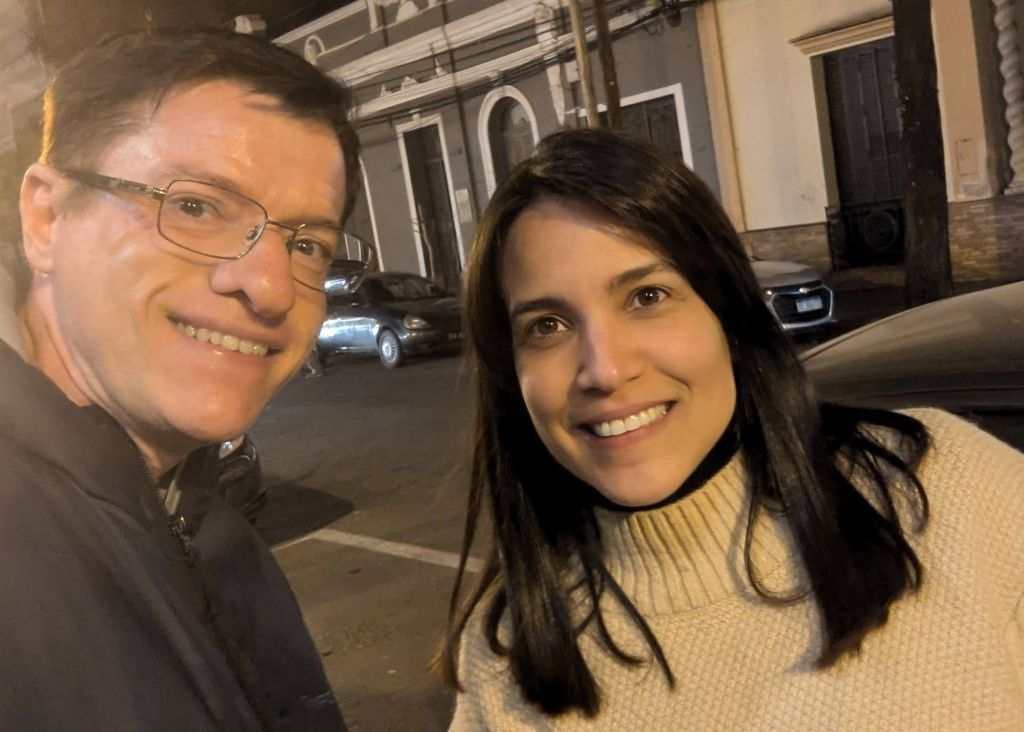
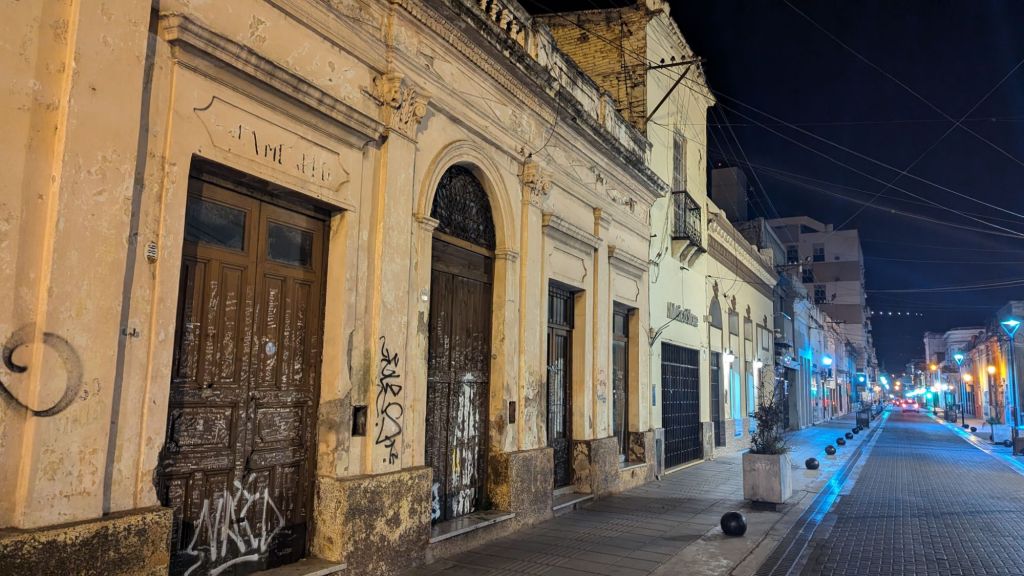
So it was annoying to have so many changes with Flybondi, but if this hadn’t happened, I probably also wouldn’t have felt comfortable staying out so late when I had an upcoming morning flight. Furthermore, like I said earlier, the morning walking tour was a bit of an information overload, but it was nice to not just think of my surroundings as a bunch of random old buildings. Given that I would now have most of the day in Salta the following day, I was also resolved to take advantage of the time by checking out other sites which I had earlier missed. As to whether or not the Flybondi flight ever actually left, that’s a mystery that won’t be solved until day 15!

Argentina trip: Day 13 (27 June)

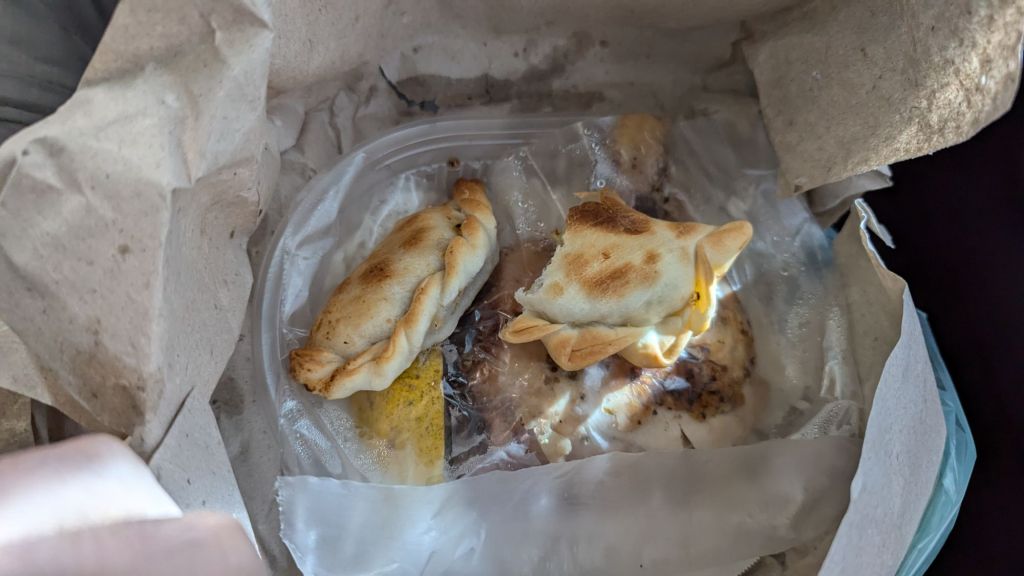
Hey there readers. I really hope things are going well for you. Today, as with the previous several days, I got up at 6:00 AM and for breakfast at 6:30 AM heated up some of the empanadas and the simple pastries I had bought from the street vendor.

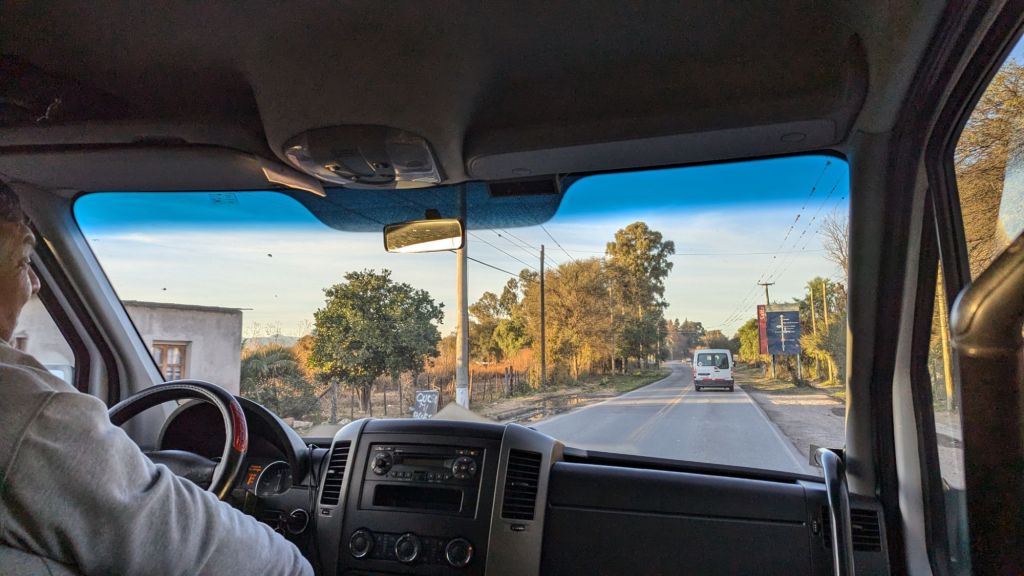
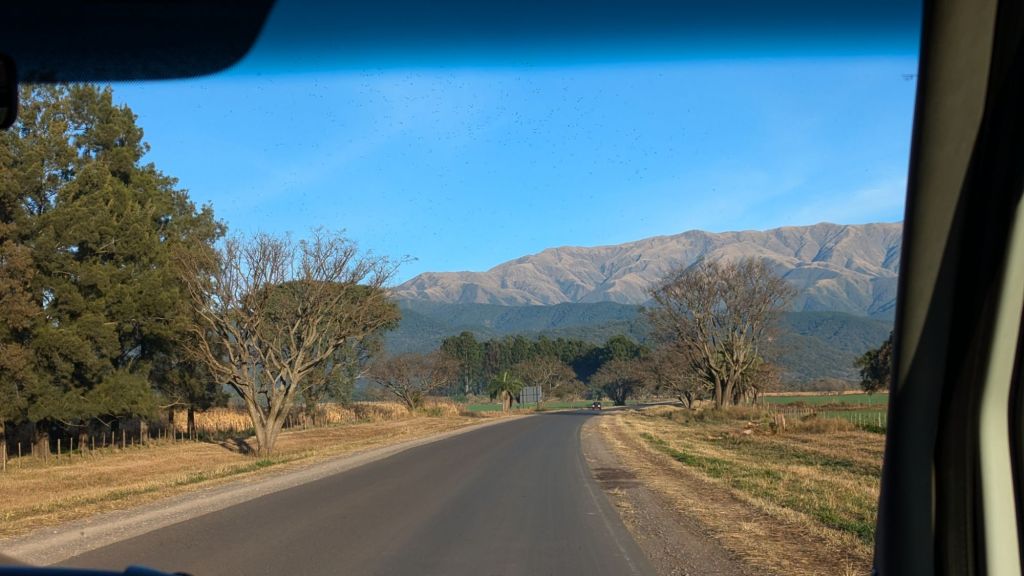
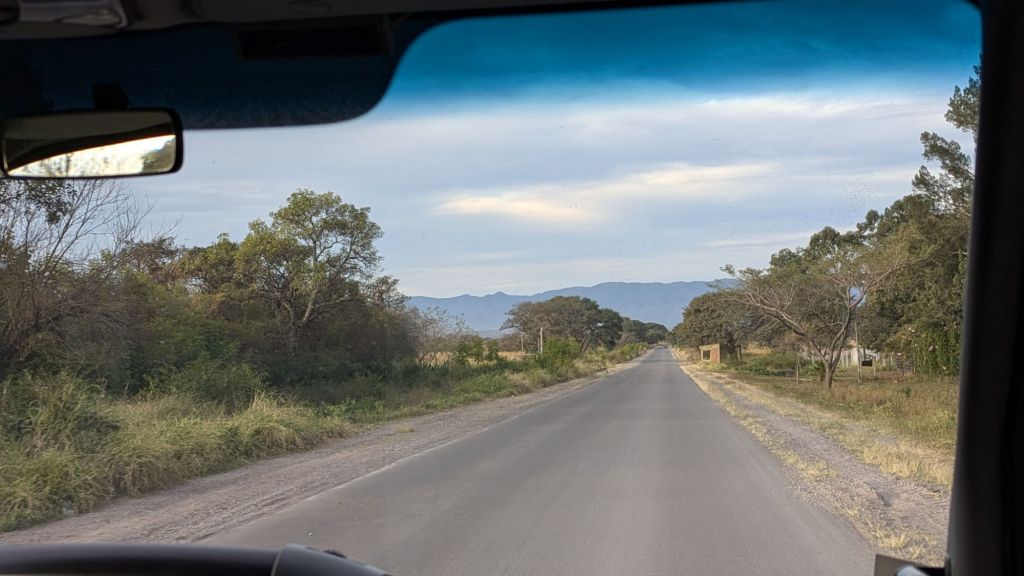
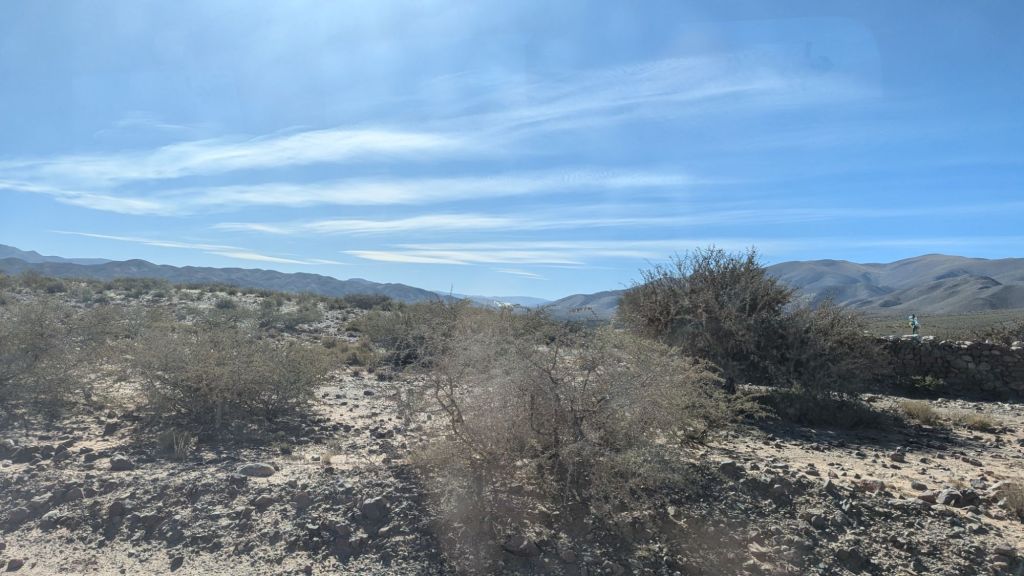
It wasn’t until 7:54 AM that the minibus picked me pick up. It looked like this would be the biggest group so far. There were 14 passengers with me, and 2 more entered at 7:54 AM. Today I scored the coveted single front seat, so I will have a good view of both the front and the side (get ready for lots of windshield pictures). The driver/guide’s name was Marcelo.

Around 7:58 AM Marcelo started with his running explanation, all in Spanish. That was fine with me. The sky was clear, and at 8:04 AM it was already fairly light out. Interestingly, while there are various spices and other agricultural products here, the paprika from this area is considered one of the two best varieties of paprika in the world. Among the other major products of the region are sugar cane, biodiesel, and tobacco.

At 8:14 AM the driver stopped speaking and we were given time to rest and just enjoy the scenery.

At 8:17 AM we passed Cerrillos, and then at 8:32 AM through Mercedes.

By 8:41 AM since I think everyone else on the excursion today was Argentinian or a local resident, the ever present mate thermoses and “bombas” were out in force. Before coming here I had thought it was just a custom to constantly drink this herbal infusion, but I have since learned that while there is clearly a strong cultural element, it is partially also an addiction, since mate contains various degrees of caffeine. However, similar to green tea, without the caffeine jitters at times associated with coffee. Regardless, as an outsider, it’s certainly odd to see the way they lug those Mate kits everywhere. I guess it’s no stranger than in some countries, people carry water bottles everywhere. The only difference is how the Mate is drunk out of an open cup.

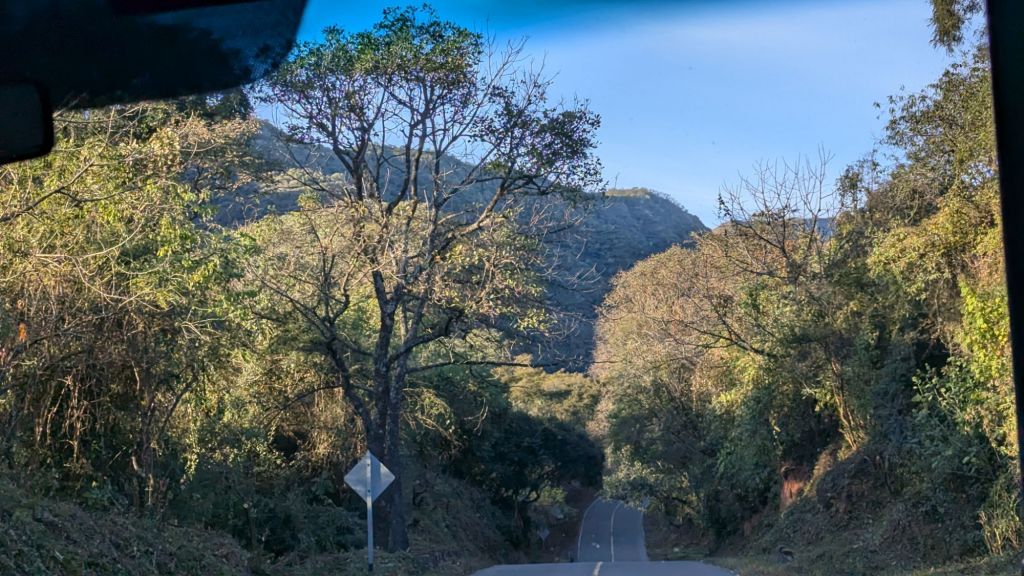
At 8:51 we were in a transitory jungle/forest (selva de transición).

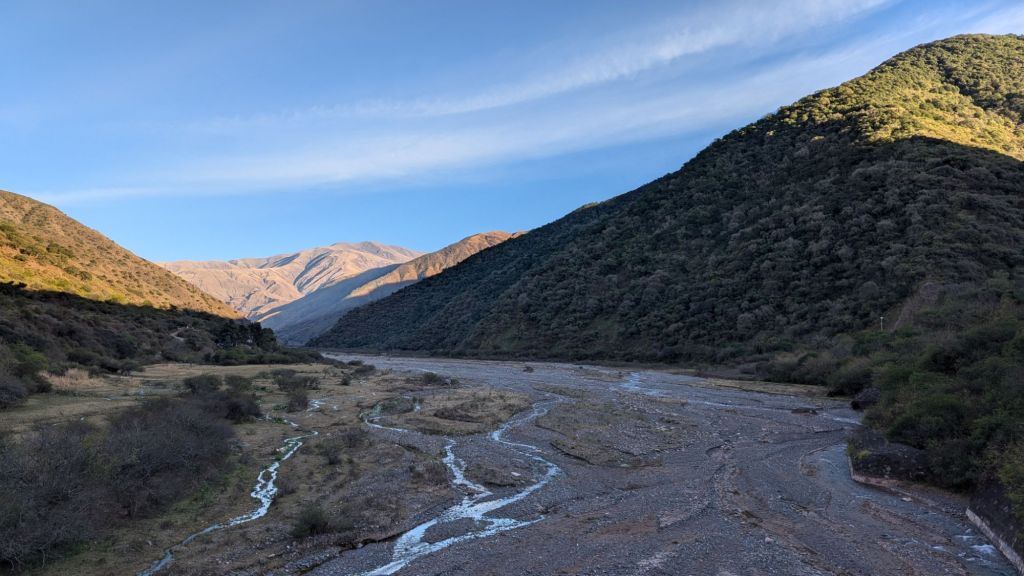
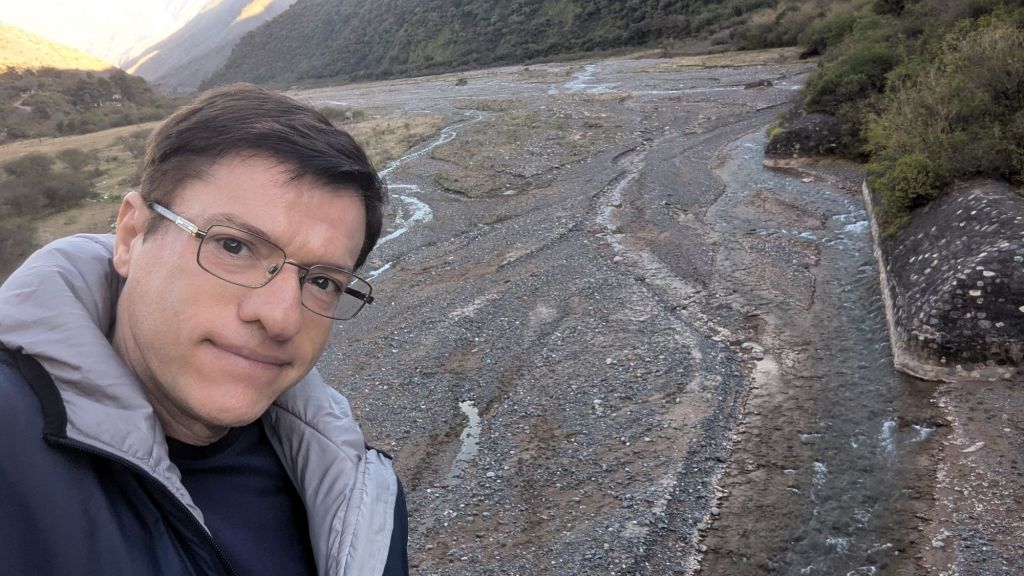
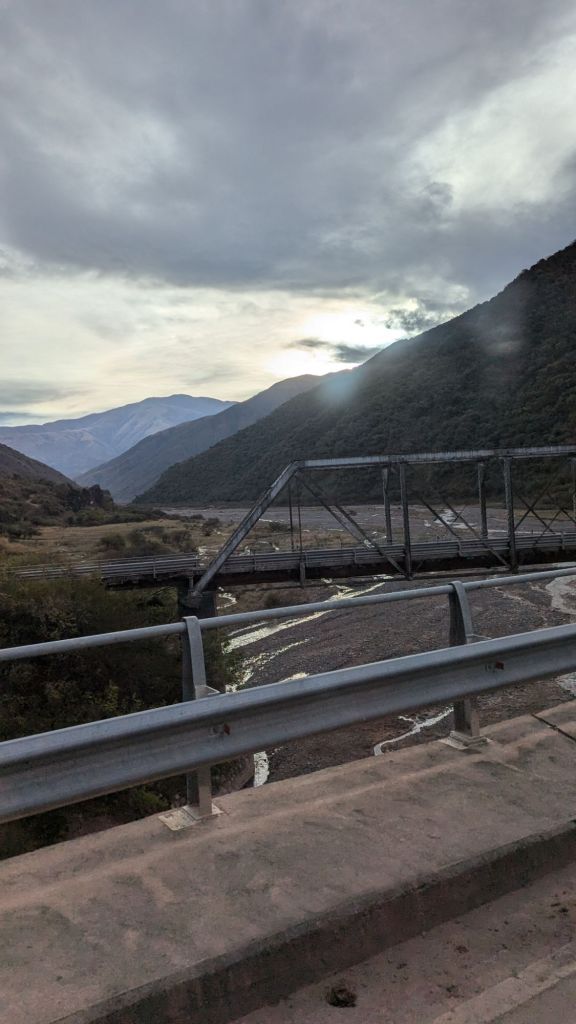
Then at 9:05 AM we stopped at a bridge (Cuesta del Obispo –  Bishop’s Hill) to take pictures. The bridge we walked across is still good for pedestrians but no longer for vehicles.

This is the modern bridge now used for vehicles.

At 9:14 AM we got back on the bus.  Marcelo pointed out that the vegetation on the right is much more exuberant than the left because of the direction of the winds. He was also full of other tidbits like how in the late 1970’s domestic tourism and then international tourism in this area started to develop because of the influence of Sol Jet, which was a subsidiary of Aerolíneas Argentinas.

At 9:32 he was still talking, and I certainly found much of it to be interesting,  it was too much to write it all down. Again though, here is some that he shared. He told all the rocks in the area and why there are differences and what each type means. He also mixed it in with many stories and legends, kind of like a grandpa. At 9:40 one of the stories, who knows if it was true, was that during carnaval people could do a trial marriage for one year, but they were only allowed two attempts. If the second one didn’t work, you were allowed to separate, but had to remain single.

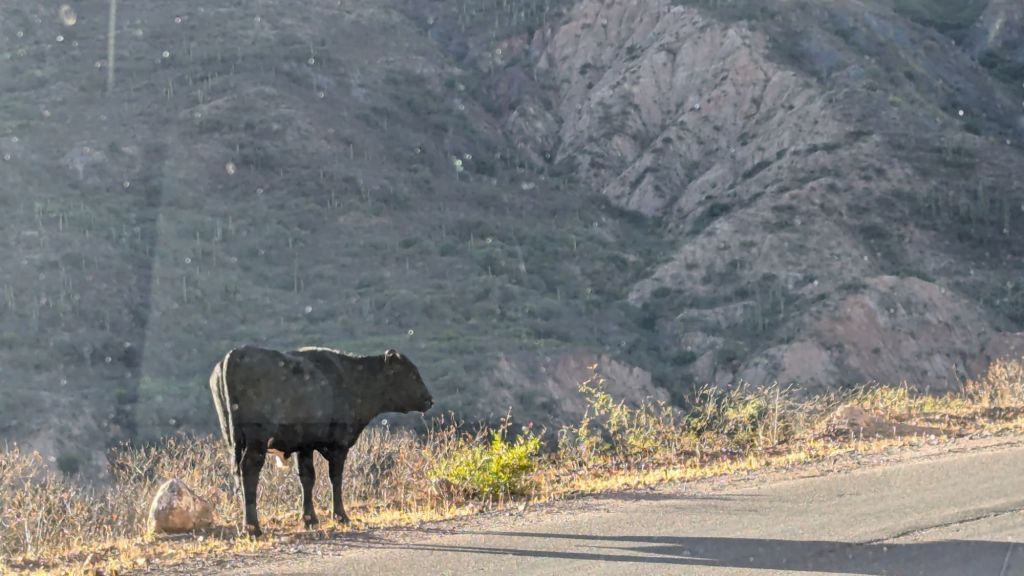
Random cow
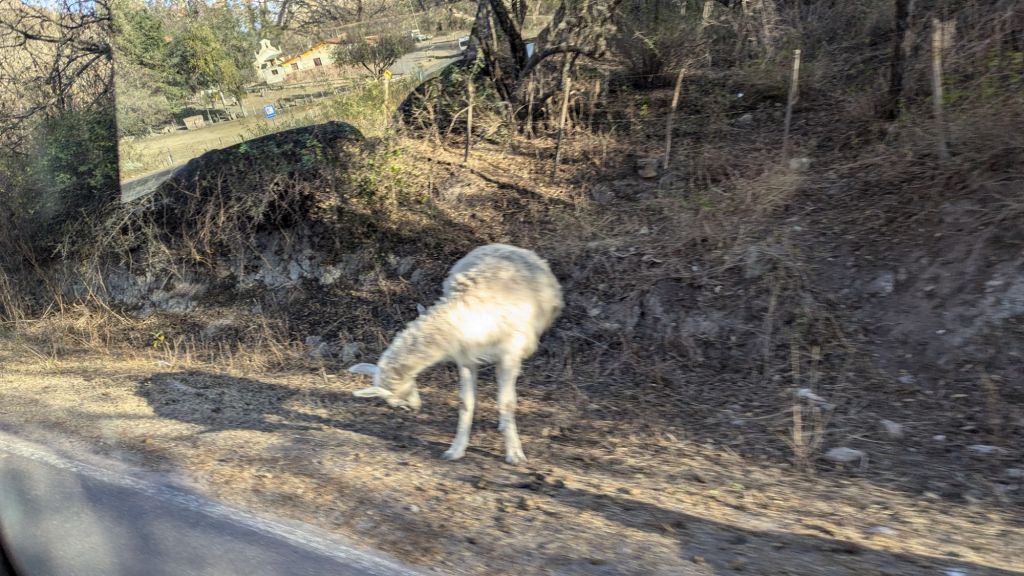
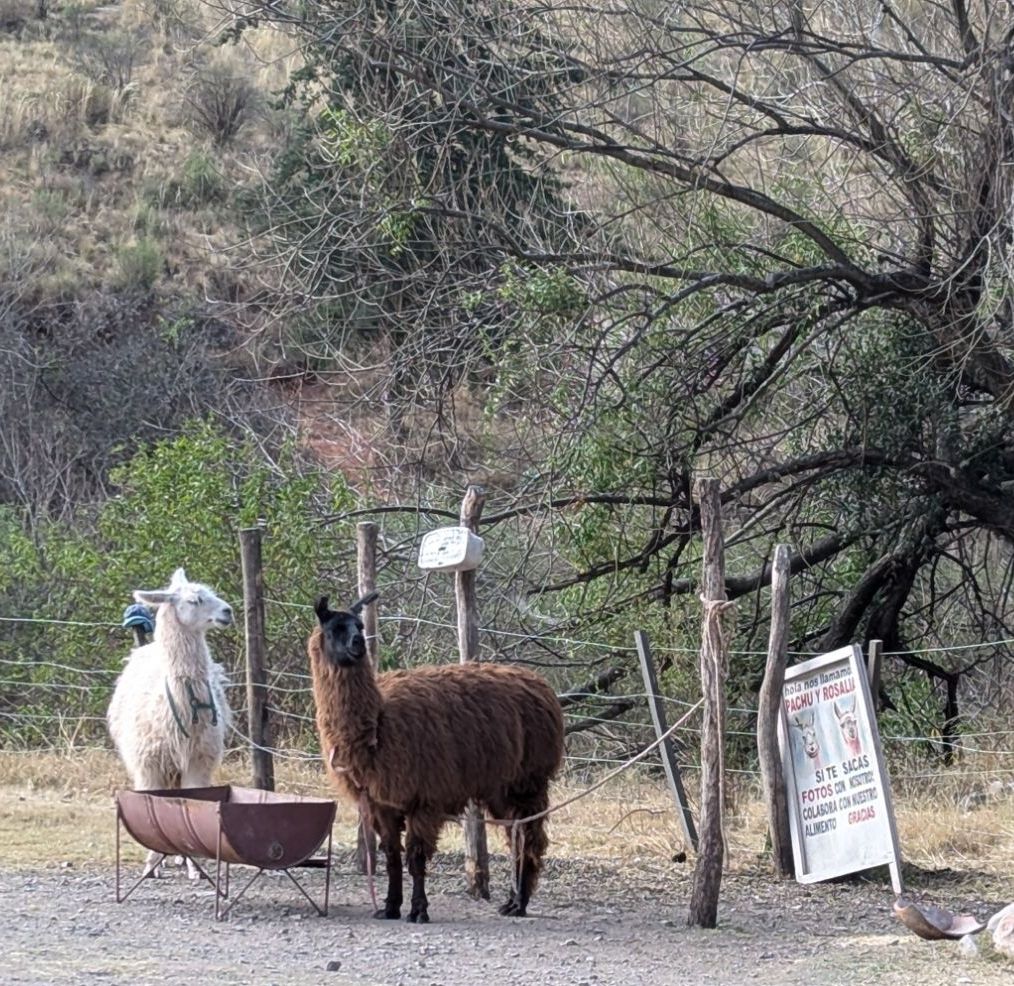
Random llama

At 9:42 AM we had a rest stop. I paid 2800 ARS ($2.26 USD)  for my coffee with milk, Alfajor and a bottle of water. It drew my attention that the cup was styrofoam and the spoon was disposable plastic. The woman who was selling was running all over the place. I had decided to buy another bottle of water since I noticed that I had already drunk half of the one I had filled in the apartment, and I decided to not risk filling it here, even though the tap water was probably perfectly good.

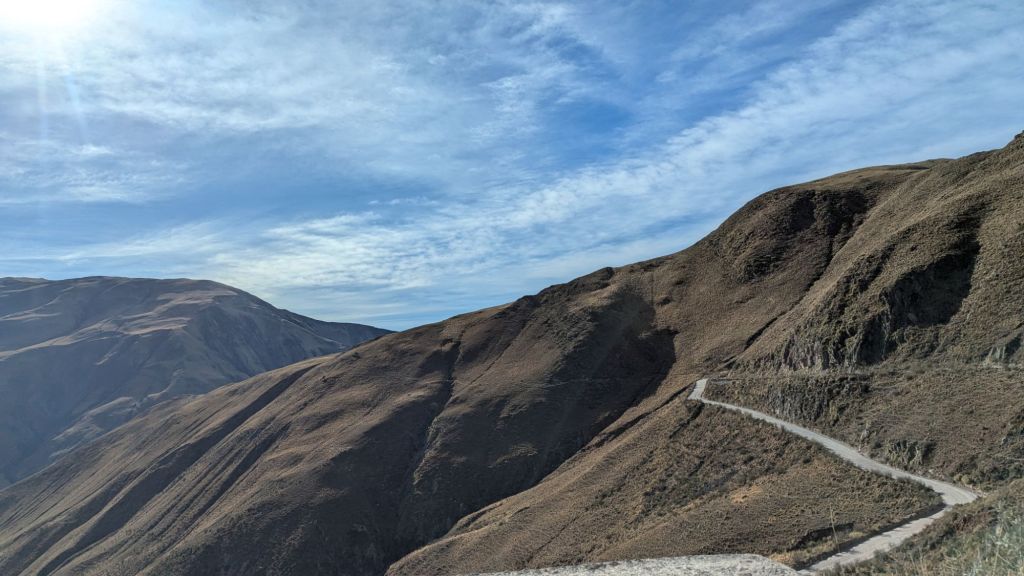
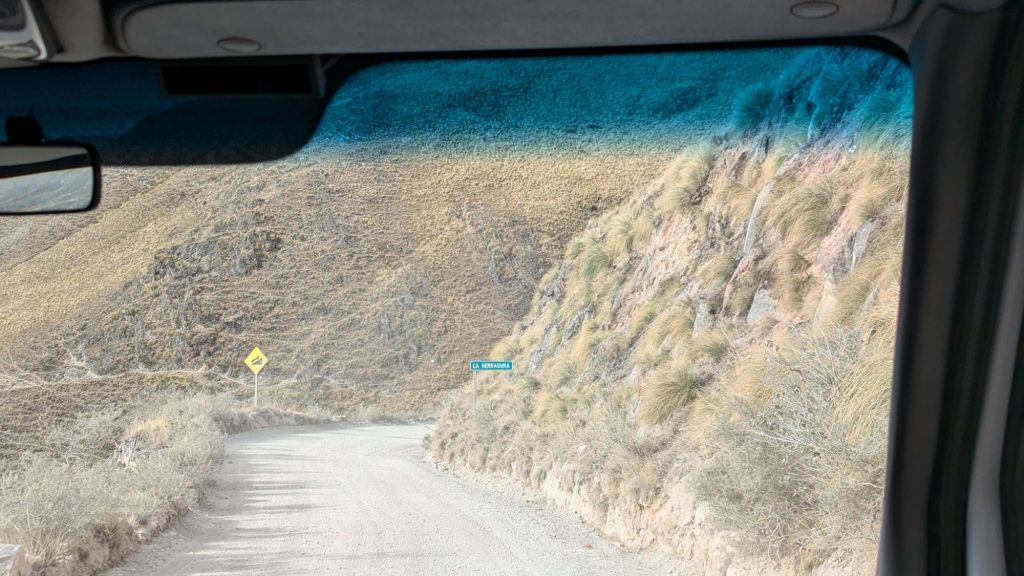
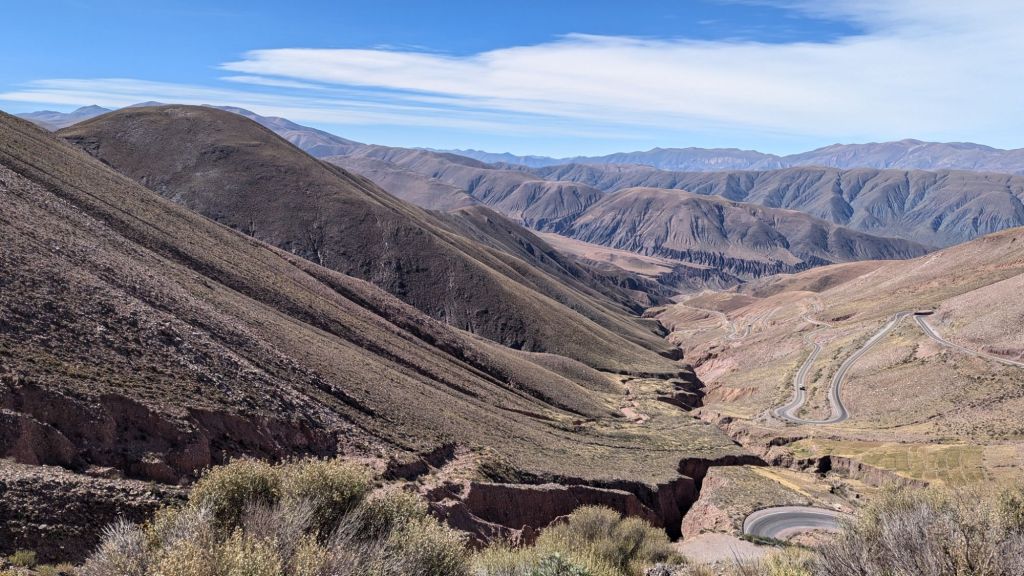
At 10:04 AM we were promptly back in the van and moving. Again, Marcelo was commenting the entire time. We moved onto an unpaved road, which was not permitted to be paved as a preservation effort since much of this route was a historic Incan road. While I agree with the theoretical desire to preserve, I don’t really see how this is a preservation effort when it is still constantly used by cars and vans, even with pressed down gravel; regardless, I’m not a conservationist, so who knows. Interestingly,  only 20 km is unpaved because when the road moves into the national park, the national government does not recognize the preservation of the road which was declared by the provincial authorities.

At 10:12 AM we were heading up in a steady fashion.

At 10:20 AM Marcelo, who is clearly an apologist for the Spanish invasion and colonization, started making the argument that the Spanish left the Americas better than they had found it. Of course, that assumes that everyone judges better/worse using the same criteria. However, he recognized the many benefits also brought by the Incas (who were also invaders to this area), many of which still remain, both physical and cultural/practical. No doubt the first peoples of the area might have a different interpretation, especially when considering the abuse/enslavement/even genocide which took place of many tribes, but none of them were in the tour group. At 10:27 AM I acknowledged to myself that certainly his discourse in favor of the advantages of the fusion of cultures which took place in the Americas is practical for attempting to maintain peace and cohabitation of cultures today. Around about this same time, he pointed out that there are no longer trees here due to the altitude, but there was still plenty of short vegetation.

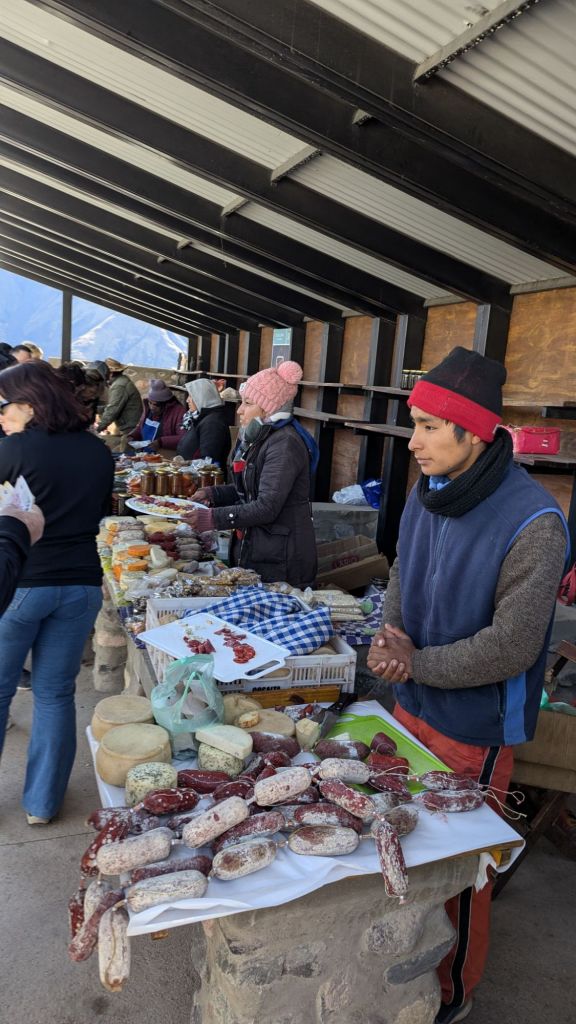
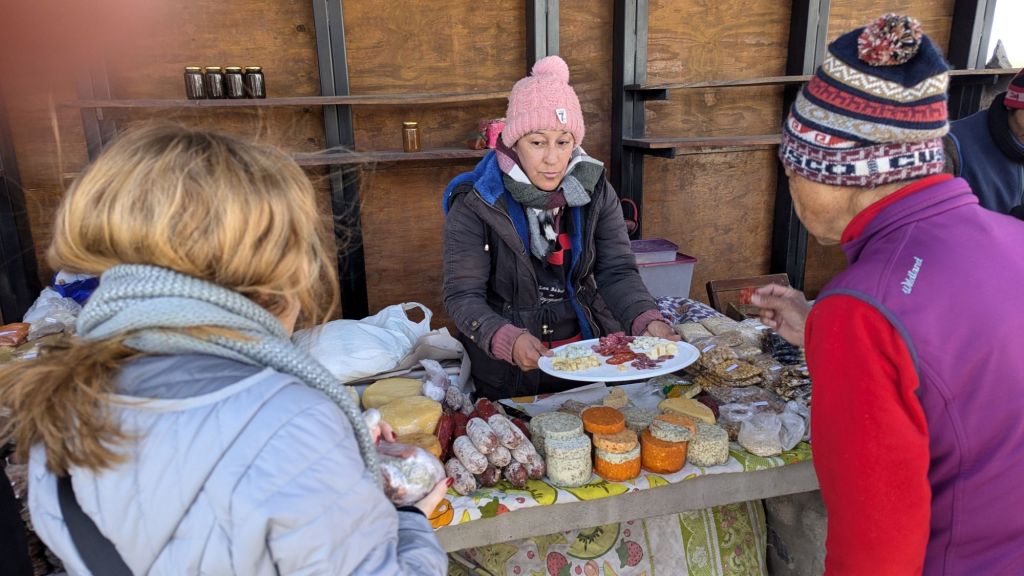
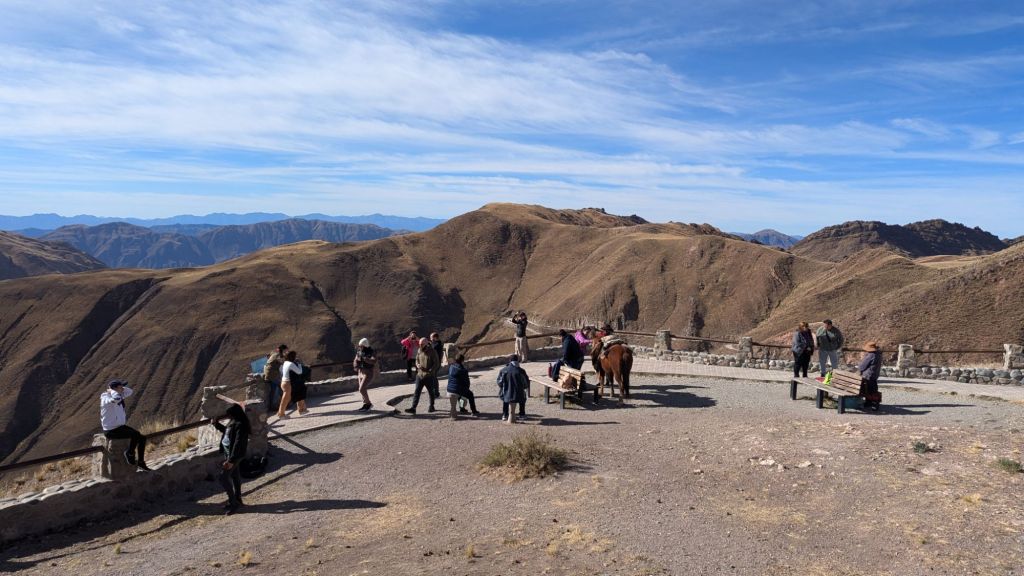
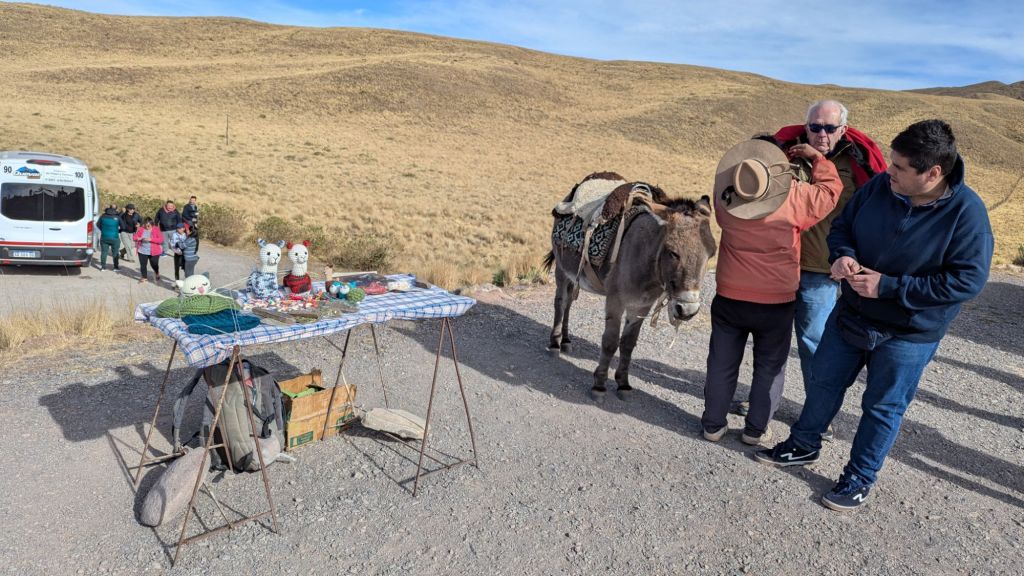
At 10:42 AM we stopped for the viewpoint and to try salami and queso made by local producers. While there were several tourists here, it definitely wasn’t crowded. There were also some local sellers of handicrafts, but they weren’t intrusive or annoying.

I noticed at 10:55 AM that they were selling llama salami and goat cheese. It wasn’t expensive at all. However, I didn’t see how I could take it back to India with me to Costa Rica or the USA. One of the people I was talking to told me that there was mostly domestic tourism in the north, partially because it’s cheaper, but it’s also considered heritage tourism. In contrast, the far south is more expensive, mostly pure nature tourism, and more where there is international tourism. In general I found it to be a good stop, but was also ready to get back in the vehicle at 11:06 AM.

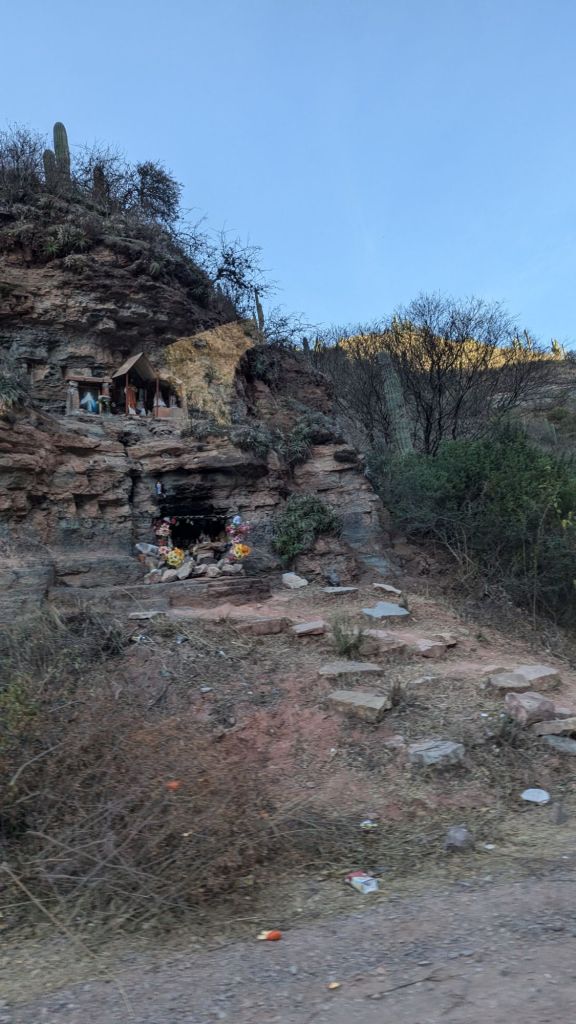
Shortly thereafter at 11:12 AM we stopped at another viewpoint which is known for being where a large millstone was left abandoned when a cart broke. There was more to the story, but he was talking so much that at some points I just didn’t really pay a lot of attention, even though he was mostly entertaining and at times extremely informative. There was also a small chapel here, which I think had something to do with the whole millstone story. If you come here later on, you can ask for the additional details. Alternatively, with these modern days it’s probably also all available somewhere on the internet without too much research required.

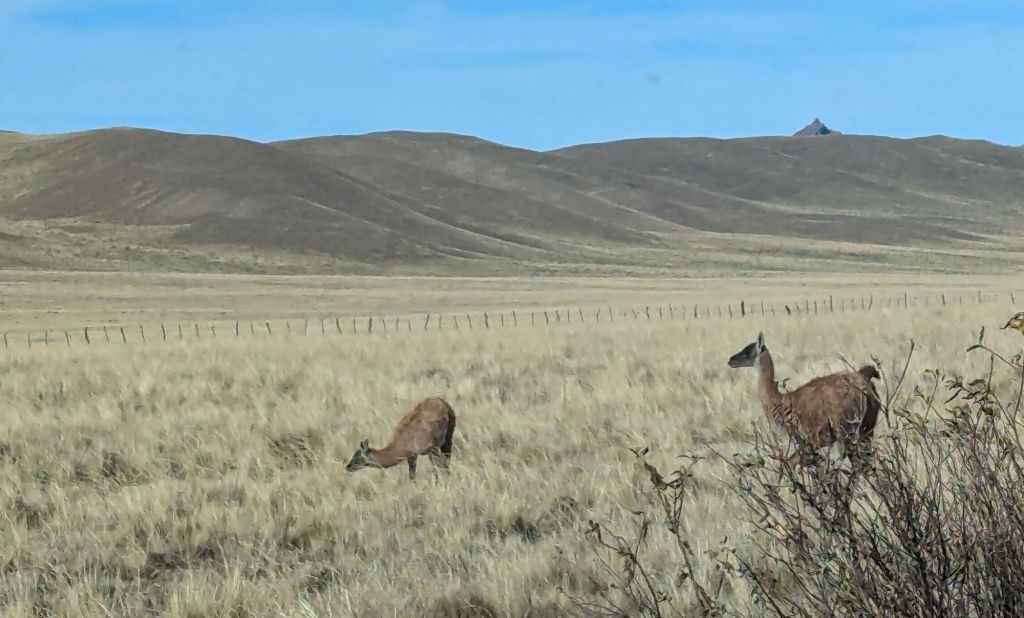
At 11:22 AM we got back in the van. Marcelo commented that the highland valleys have a different name: “Puna” which distinguishes them from lowland valleys, simply called “vales”. In the distance we saw some guanacos which are protected in this national park. They have black faces, which distinguish them from vicuñas. Here the vicuñas and guanacos are protected animals, unlike llamas, because these first two are not easily domesticated.

Furthermore, guanacos have only one calf a year, and the vicuñas which live even higher up have only one calf every two years. In contrast, the llama is not protected, because it is easily domesticated, lives at a much lower altitude, and has two calves a year.

Vicuña wool is evidently incredibly expensive. Even in vicuñas ranches, where they have semi-domesticated animals, they are only permitted to take 200 grams of wool a year from the male vicuñas. They are not permitted to take any from the females, since it’s too cold and taking part of their wool could result in the death of the gestating calf and even the mother. As I said, assuming it was true, much of Marcelo’s information seemed useful and interesting, whereas other things were just him talking. Nevertheless, almost everyone seemed to find him to be very enjoyable.

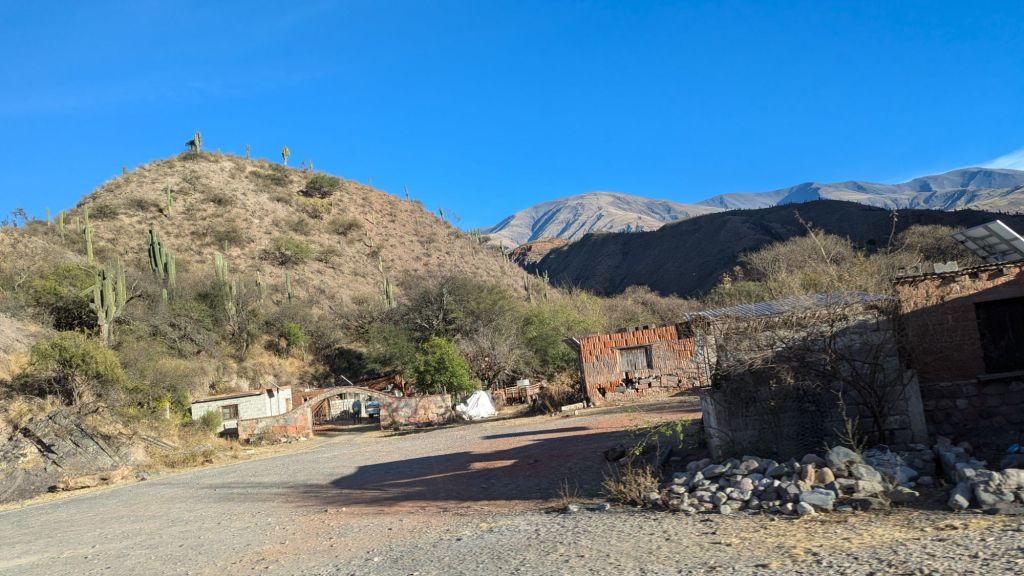
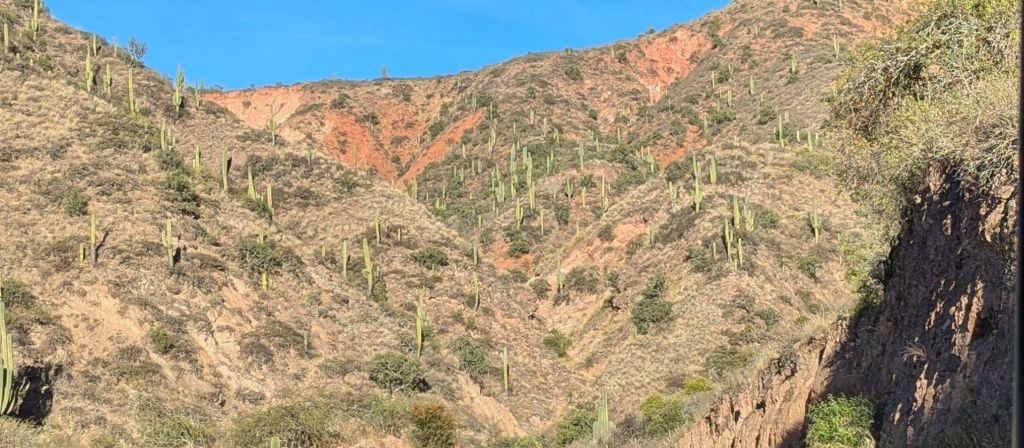
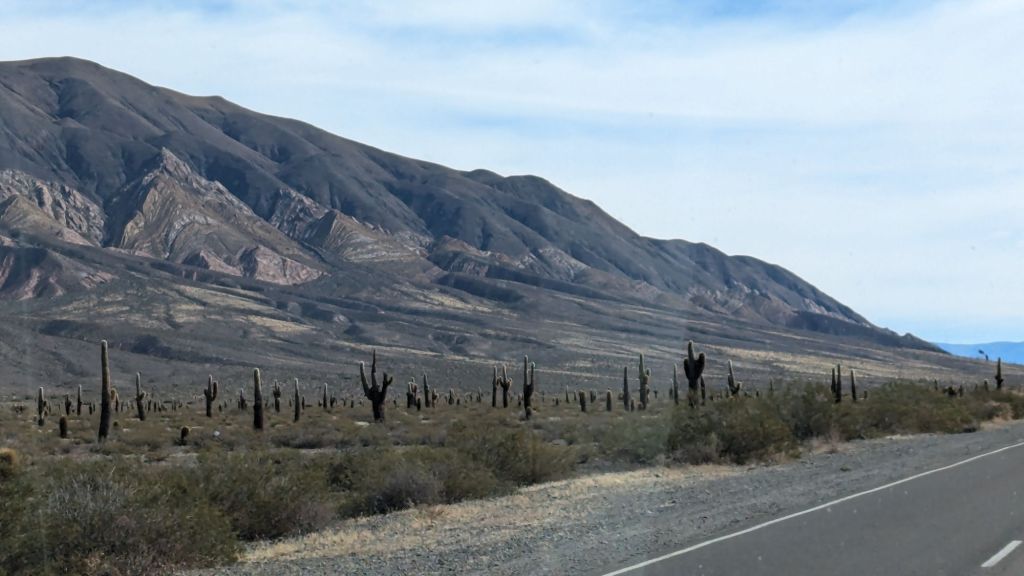
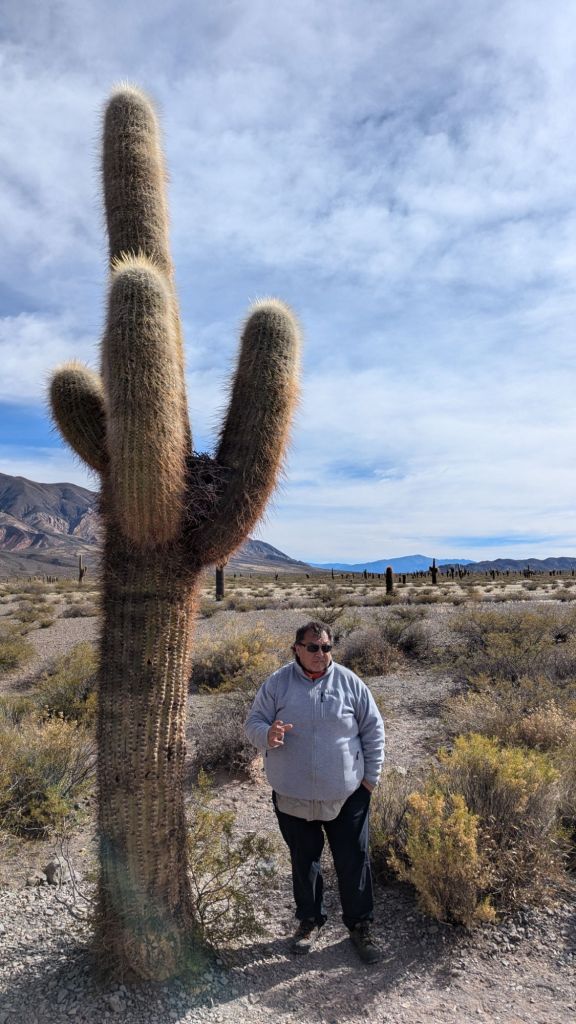
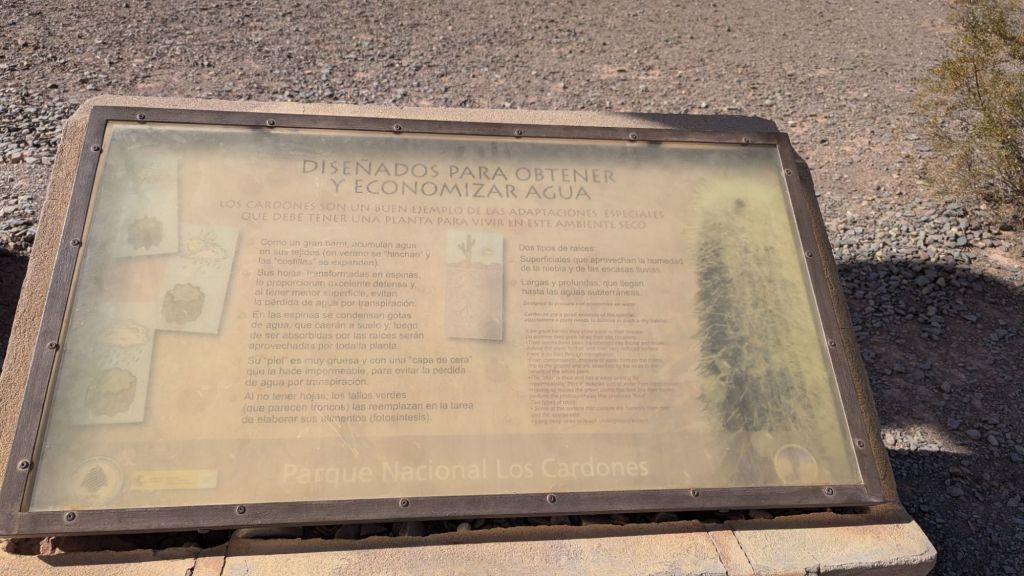
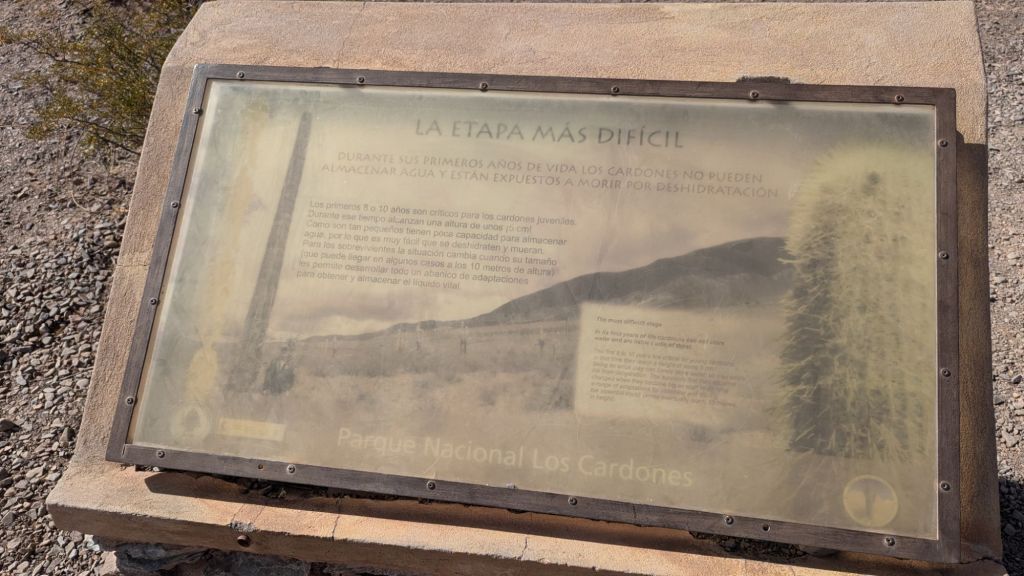
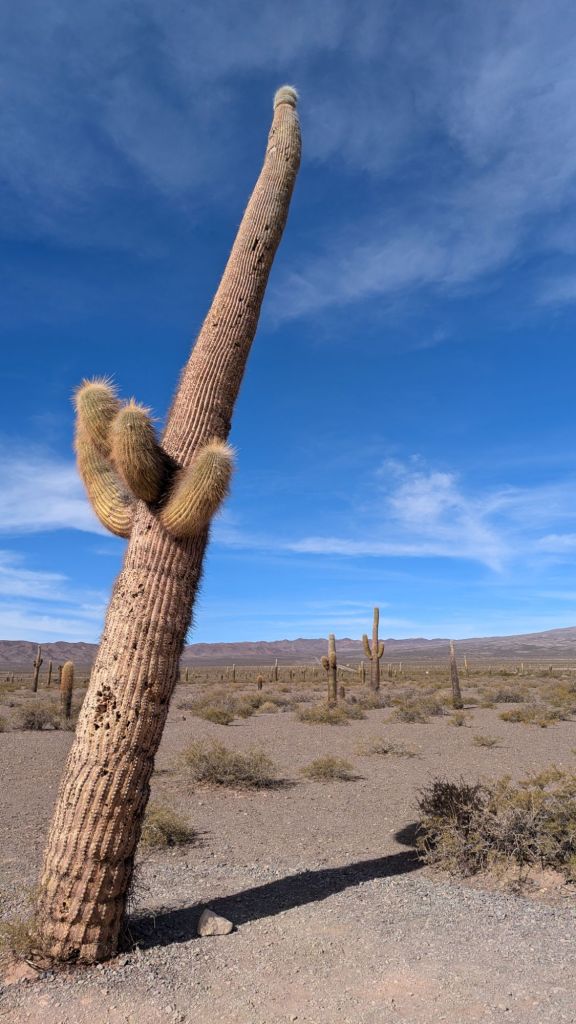
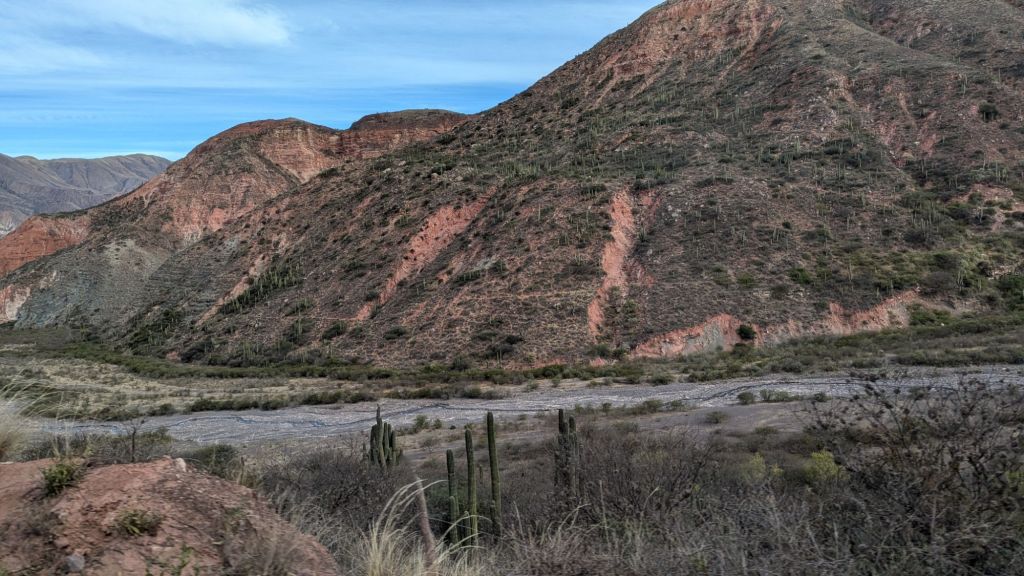
At 11:39 AM we are on a rather large plain. Where I could increasingly see more and more of these larger cacti. Happily, at 11:42 AM, we stopped to learn about this tall cactus which is called a Cardón. He was another time when Marcelo appeared to be both very knowledgeable, and passionate about conservation. These large plants are technically considered to be trees, because inside their thick protective covering, the adult ones have wood. Due to excessive clearing of the land, and their slow growth, these must be protected from further deforestation. The Cardones, which are hermaphrodites, only grow 1 cm a year. During the first ten years of life, they depend almost entirely on the symbiotic relationship they have with the low bushes to get their water. Then they develop their interior pulp. The woodpecker takes water from them, but the cactus heals itself within a few days afterwards.

They reproduce when an arm falls off, and then rolls, until stopped by the symbiotic bush which they need for water. Initially they remain lying on their side until they finally are able to develop roots and then stand up. Really, it was all very fascinating and I was especially awed to see how many of them in this area were several hundred years old . . . If I understand correctly, the oldest of them can be around a thousand years old, but there were many here that were at least 500. I really do hope that they stick to their conservation efforts as it would be incredibly sad to lose this desert “forest”.

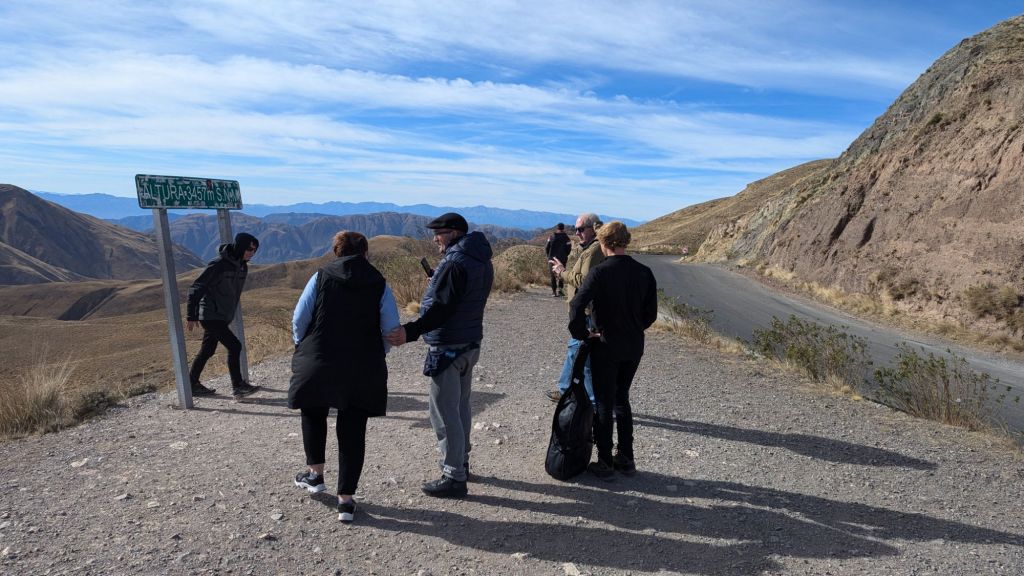
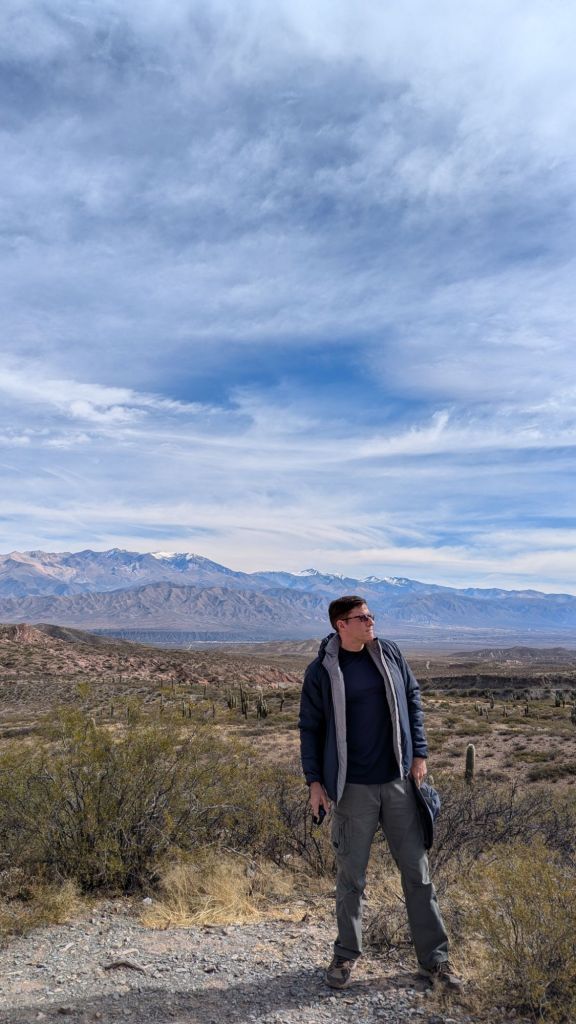
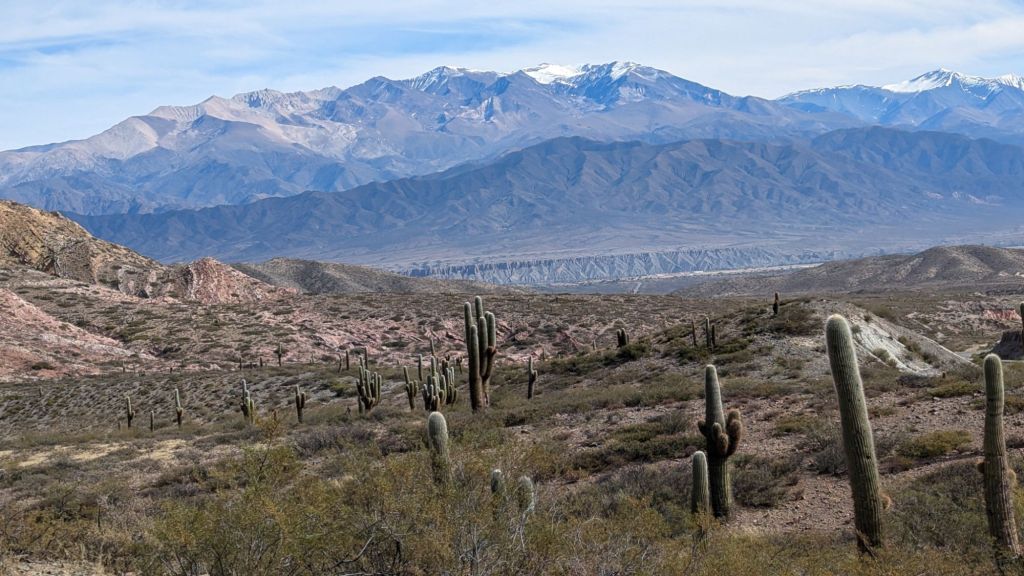
At 12:15 PM we got back in the van, then having another mini stop at 12:26 PM to take pictures of the snow capped Andes in the far distance, which are something to see with the Cardones trees in the foreground.

Coming in from India, at 12:37 PM it was interesting for me to see them selling local spices and talking about the advantages of those which are of course quite common in India and I think most of them originally come from India.  However, in this area the mostly native/first/indigenous peoples have developed their own local spice agriculture, which they really value. They especially talked about the advantages of turmeric. I thought that all of my friends and coworkers back in India would be delighted by this.

At 12:42 we got in the van again,  passing through Payogaso at 12:55 PM . Here they are extremely well known for paprika. It was interesting to hear Marcelo talk about the internal conflict of nationalized vs  provincial commodities. For instance he was saying that in the north they don’t want the salt flats nationalized so that the lithium dollars will stay within the province rather than being redistributed throughout the country.

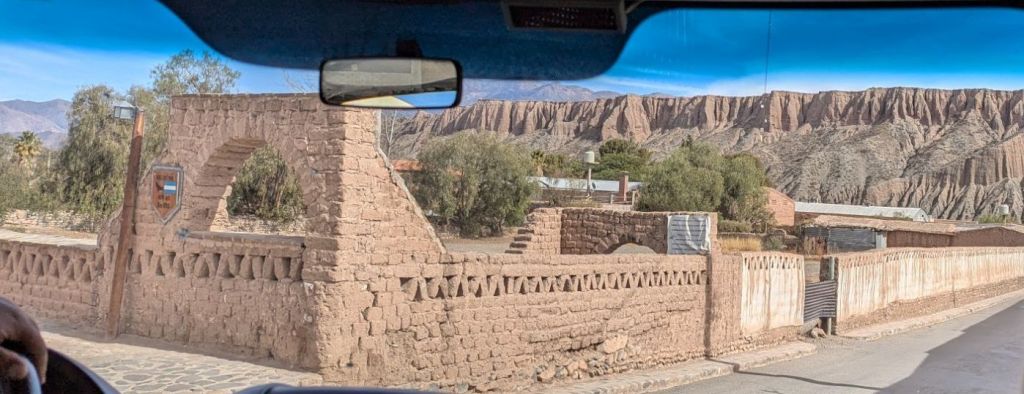
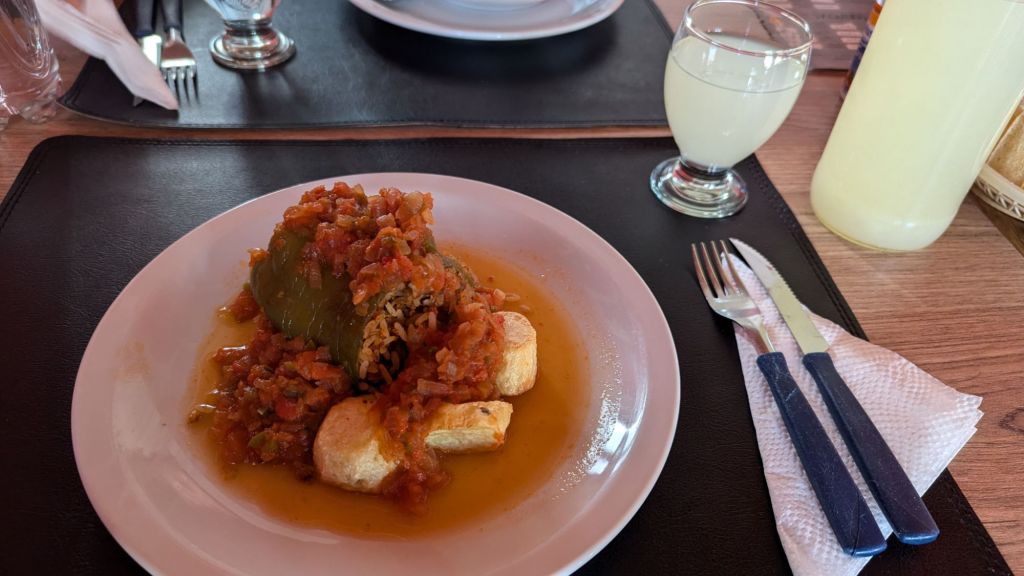
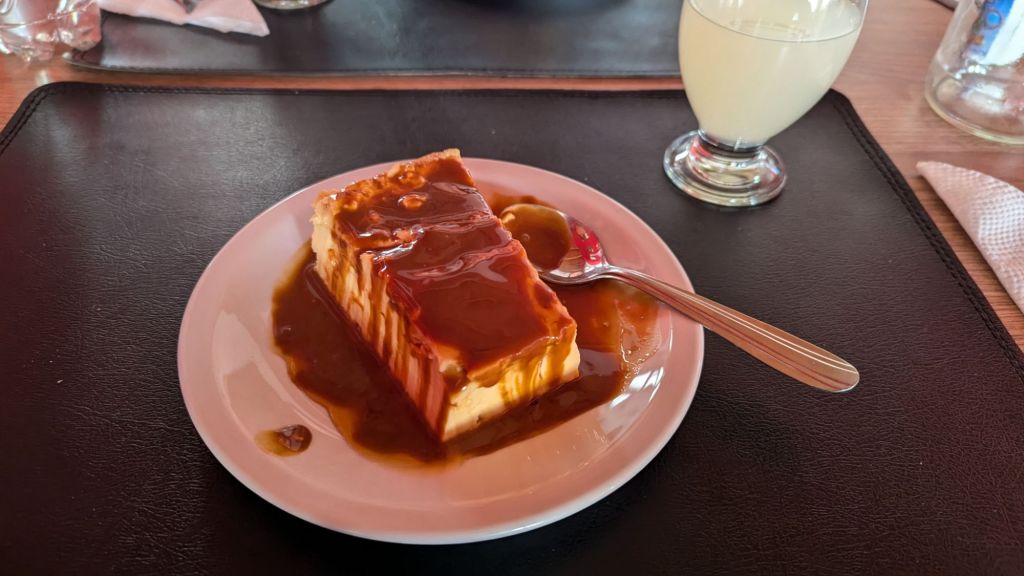
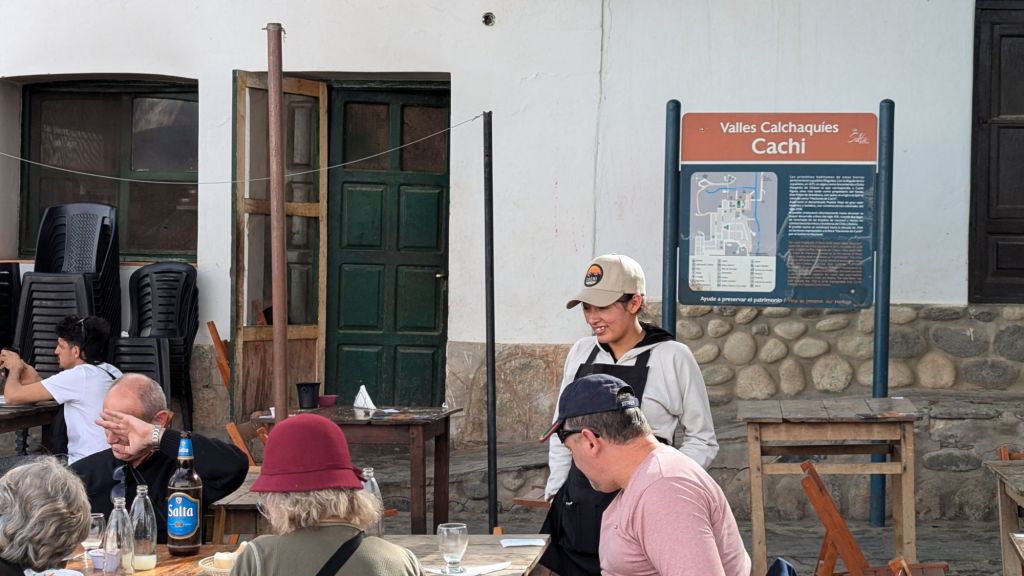
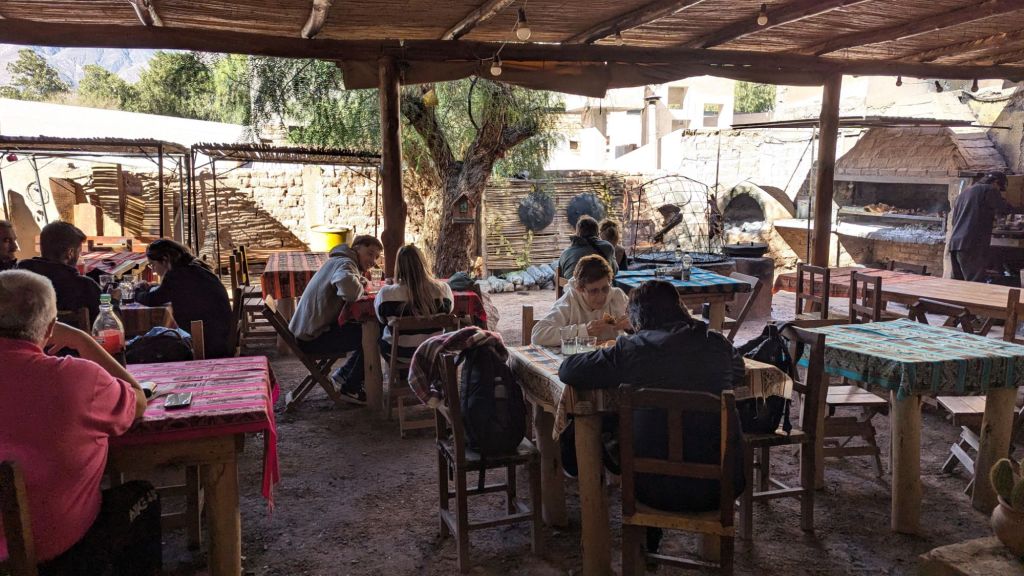
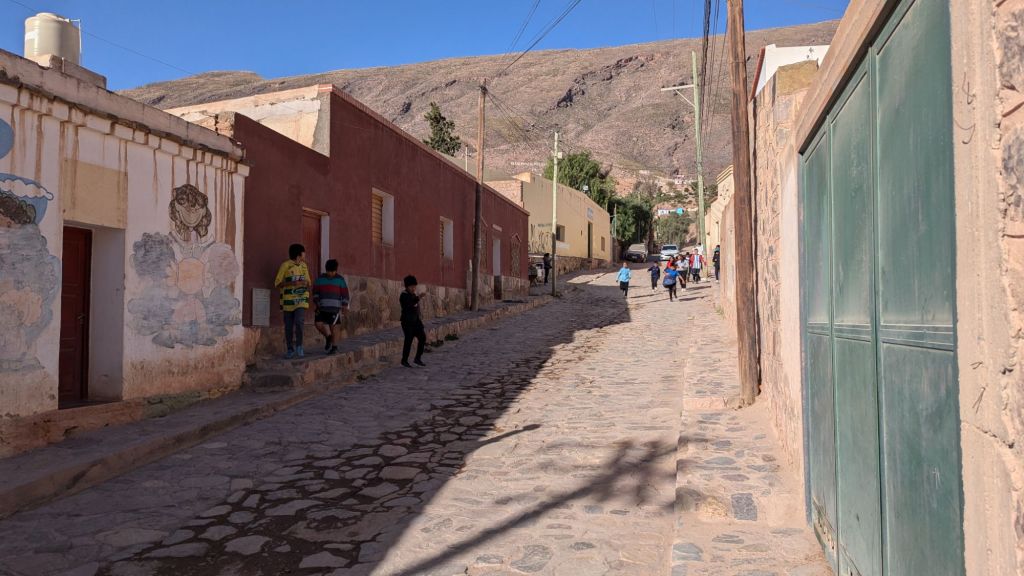
At 1:15 PM we arrived at Cachi, it’s kind of like Antigua Guatemala. Everything seems frozen in time. At the recommended restaurant, I had stuffed bell pepper, custard and lemonade. I stayed longer than I would have otherwise since I was having a nice conversation with another trip participant, a Venezuelan engineer who has been a resident of Argentina for seven years. At 2:40 PM I paid 12700 ARS cash + 1000 tip ($11.95 USD total) for my meal.

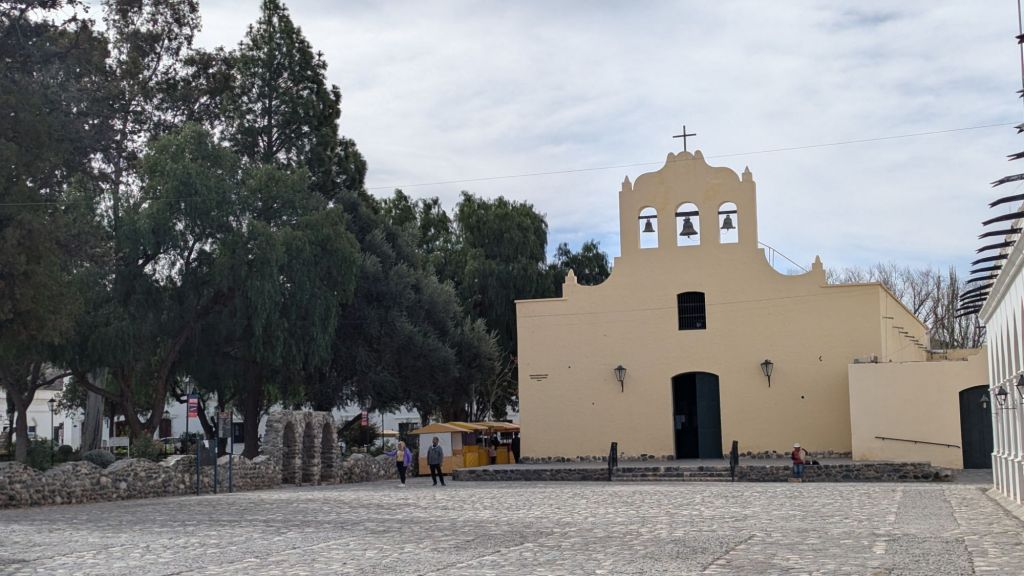
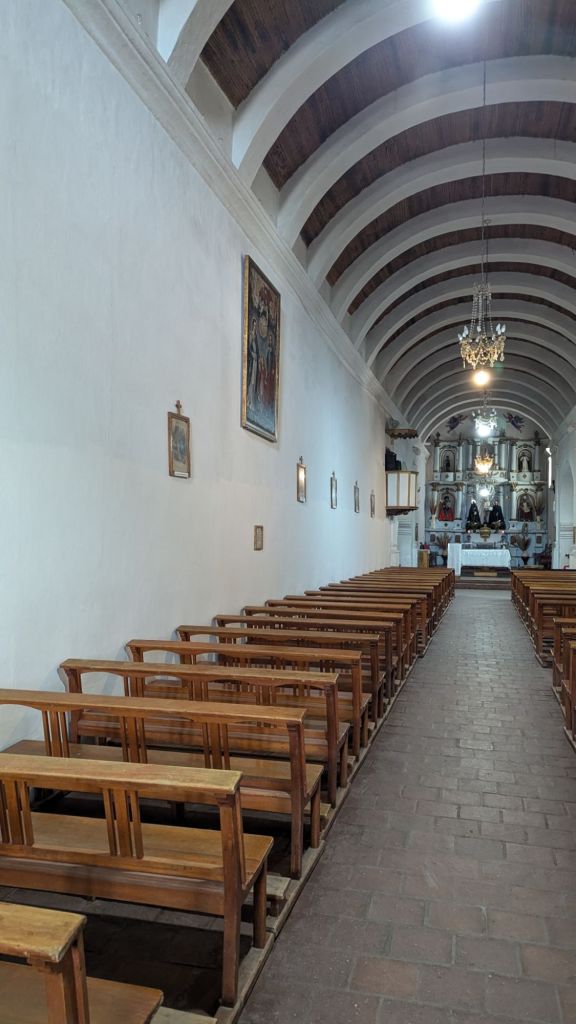
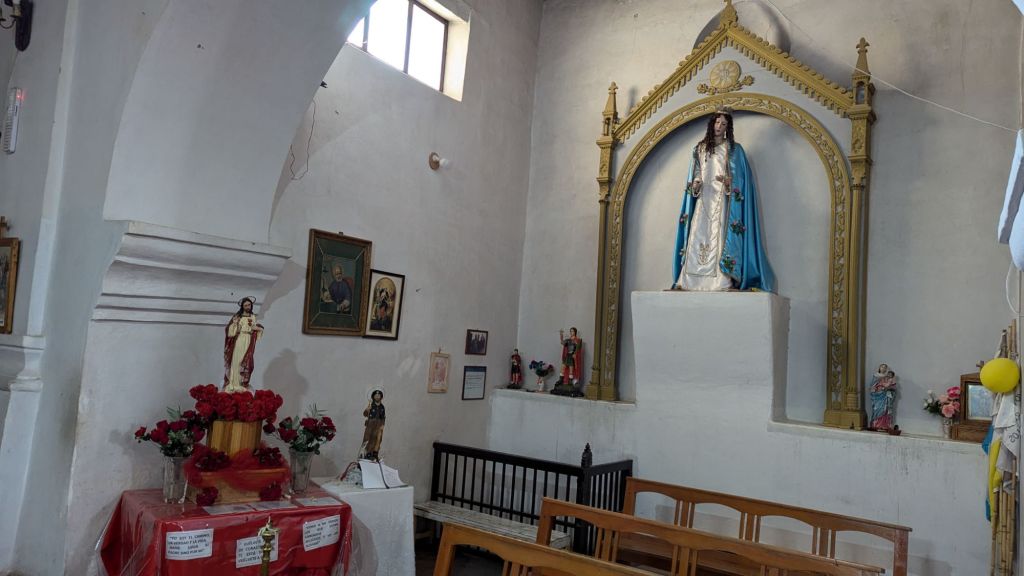
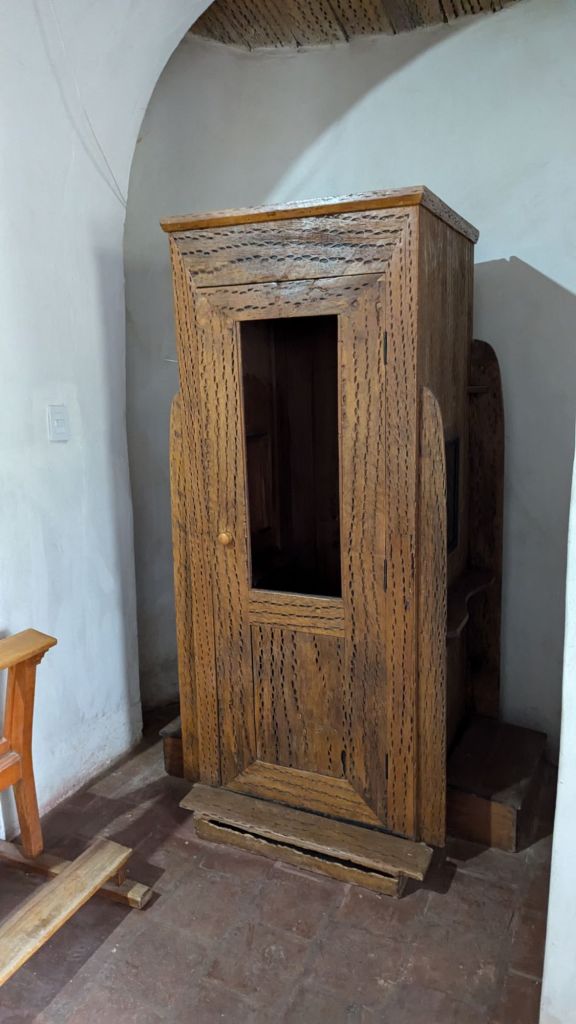
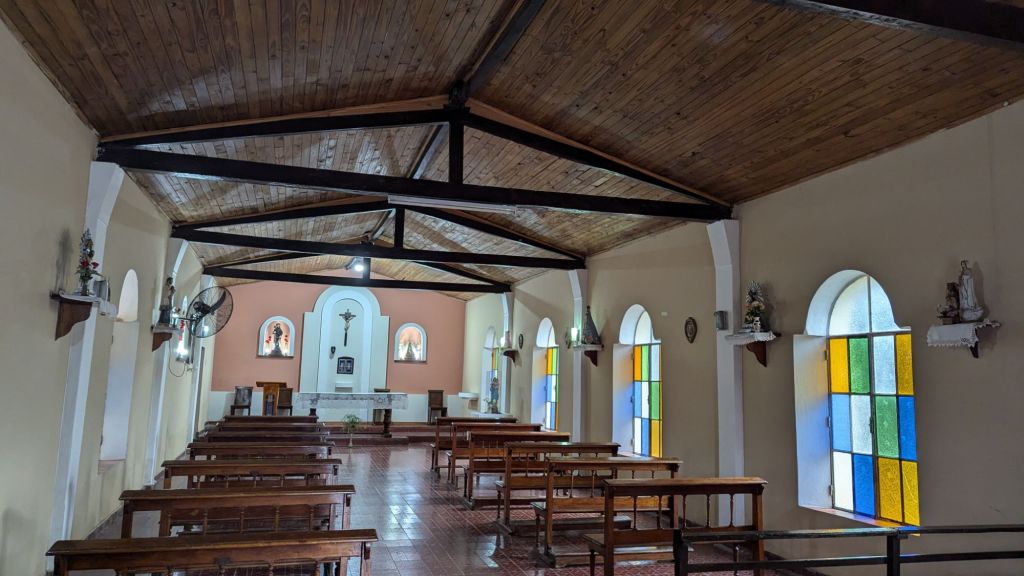
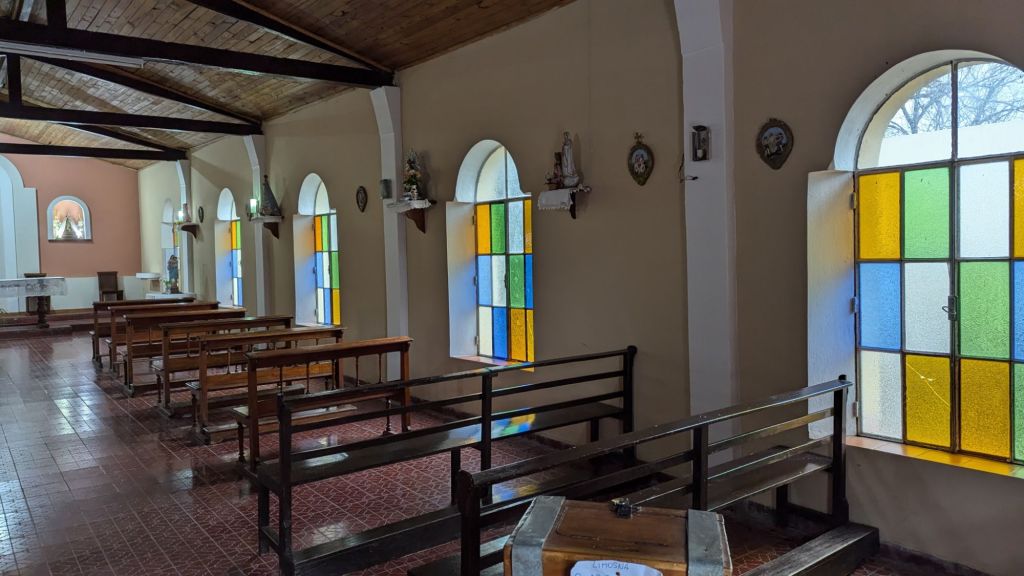
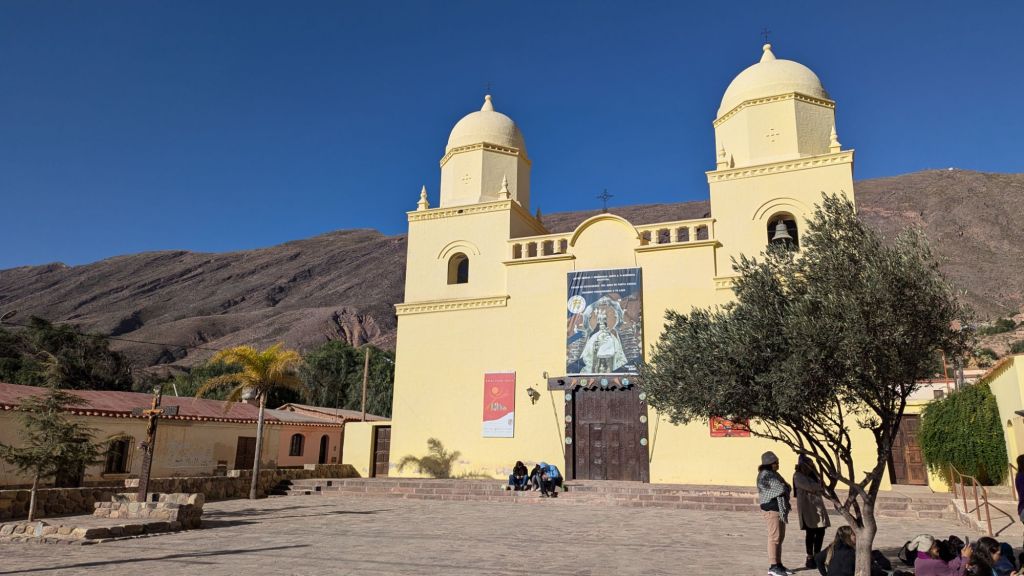
We left the restaurant at 2:56 PM and walked around. I checked out the local church and saw they had used the Cardón wood for the roof, the pulpit and a confessional. The floor was stone.

The confessional looks that way not because it’s old but because Cardón wood has holes like that.

Note, at some time while we were eating, electricity went out in the town, and as a consequence, there also was no running water. They all seemed to take this in stride, so it must be common. I understood the general problem, but thought it odd that they did not invest in water tanks to guard against this inconvenience. In other towns in the area, I had seen the large tanks which are there precisely for this purpose, also being quite common in many other parts of Latin America.

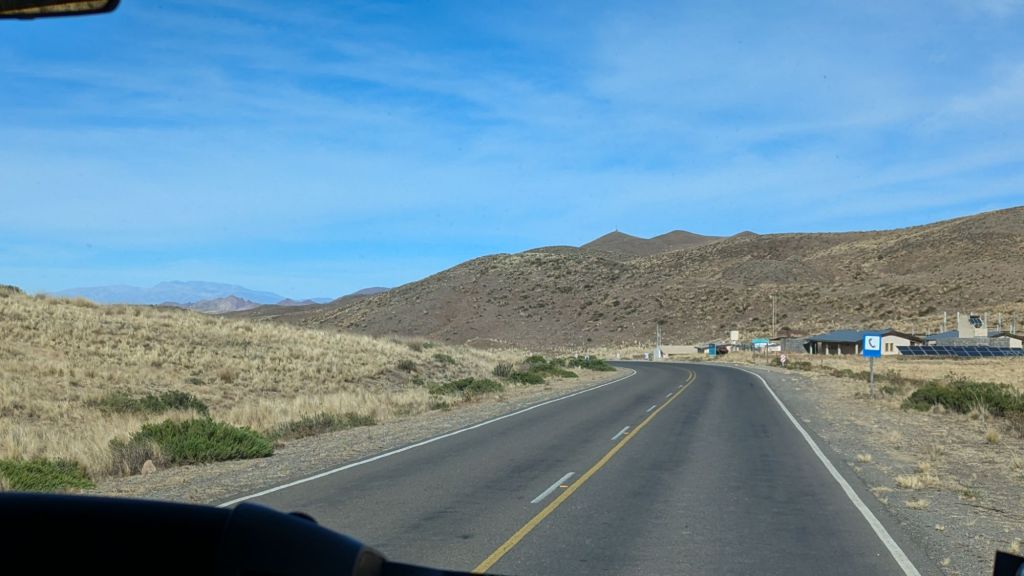
At 3:30 PM we departed from the town of Cachi. Believe it or not, he now turned on the air conditioner! Yes, there is a lot of variability in the temperature in a day, but I think people are also sometimes just too delicate. The road near Cachí was paved, but not as good as in other areas I’ve seen so far in this region.

At 3:50 PM I noticed that now the road quality was again much better.

At 4:24 PM I saw that we were clearly headed downhill again, and at 4:28 PM we were back on the winding, unpaved roads. Despite them being unpaved, they seemed perfectly safe mountain roads, nothing like when I went to Sikkim a couple of years ago.

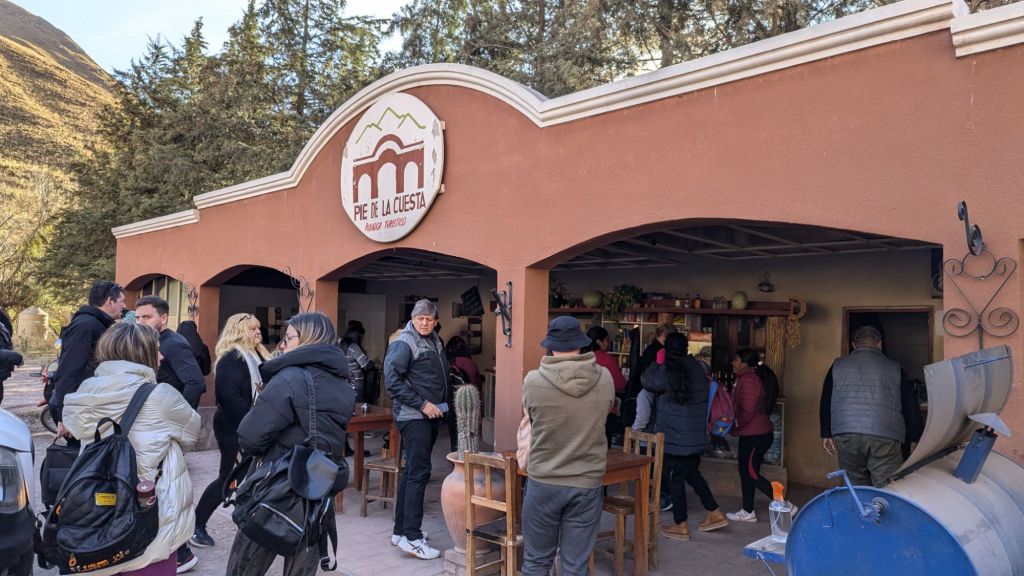
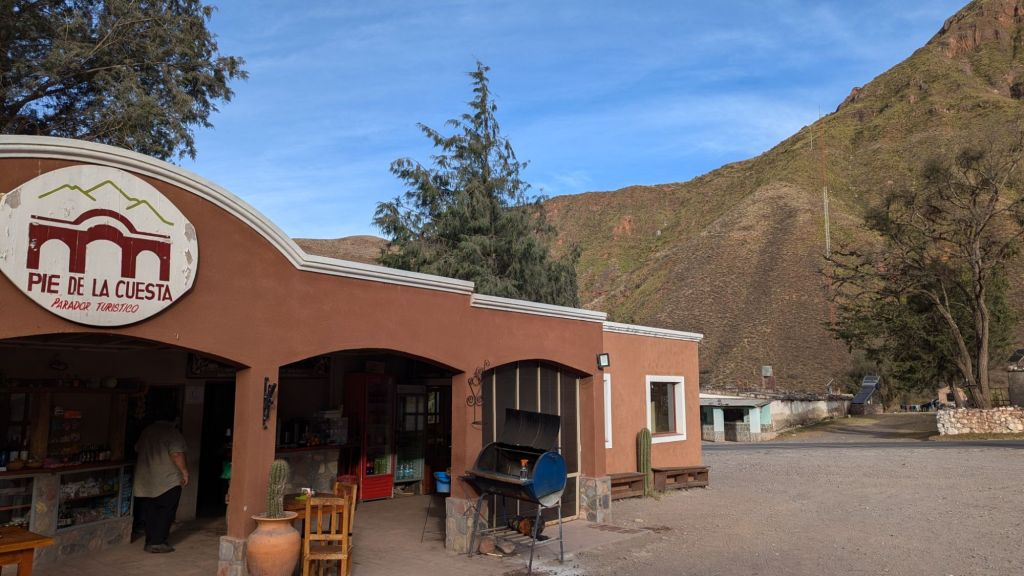
At 4:59 PM we had another rest stop at the same place as before when we were going up: Pie de la Cuesta. This time, as I didn’t buy anything, I paid 200 ARS to use the bathroom.


At 5:15 PM we were on our way again, with traditional music playing most of this time. At 5:51 PM Marcelo said that local people here frequently mix the local wines with other things like Fanta (a type of flavored soda) or juice. I suppose that’s unsurprising, since the wine is ubiquitous and many times has a similar cost as that of a flavored soda.

By 5:58 PM we were all the way down the hill/mountain and on our way again on flat road.

At 6:35 PM I saw volunteer firefighters collecting funds in the town of Cerrillos. It was still completely clear outside, and I hoped it would be that way for tomorrow as well.

The rest of the drive was scenic and relaxing.

When we arrived at 7:10 PM It had originally been my plan to perhaps try to go to a peña (folklore and live music place) tonight by myself, but shortly before we arrived at Salta, Natalia, the engineer with whom I’d had lunch asked if I would like to walk around the center a bit. She seemed like a very nice person, and I thought it would be nice to chat with someone rather than always being alone. I said yes, and we stayed in that area, then also deciding to have a light dinner together. My food was 17400 ARS, paid by card (1170 INR – $14 USD).

At 9:48 PM we parted ways and I departed from near the 9 de Julio plaza and headed back to Donna Alba serviced apartments, where I was staying. I walked by Plaza Belgrano at 10:09 PM and then was in the apartment at 10:25 PM.

Once more, I had a wonderful day. For sure, Marcelo was certainly a character. I especially enjoyed the Cardones “forest” but the town of Cachi was also quite nice. Finally, it was an unexpected surprise to have had Natalia as a conversation partner.

I think it’s quite common to make random friends while traveling when one is younger, but at least as I myself get older, it is less so. Part of this is because of how younger people tend to stay in hostels etc, but part of it is also because I think we just become a bit more particular as we get older. Anyways, I feel like I’m rambling at this point, so I will go ahead and bring today’s entry to a close. I look forward to sharing more with you tomorrow!

Argentina trip: Day 12 (26 June)

Hey there followers, this has been one of my longer trips, so I congratulate you if you are one of those who have kept reading since day 1. If you came in late and would like to catch up, you can just go to Travels with Jay, and scroll backwards. At some point I may do a redesign of the site to make it easier to navigate to past trips, but for now it serves its purpose.

So today I was again up at 6:00 AM and got ready for the day. At 6:50 AM I was feeling a bit insecure because the previous days of programmed excursions, by this time I had already received two confirmation messages, but today I hadn’t  received anything even though I had already sent messages to all the contact numbers I had. There was no reason for me to need the confirmations, but this shows the danger of changing routine. They had previously been very proactive about letting me know that everything was going well for the upcoming day, and now that I didn’t have it, I was worried.

My breakfast doesn’t look appetizing but it was delicious. They were apple crumble pastries.

Breaking the suspense, at 7:00 AM I finally received a message saying everything was in order for today. Although, I didn’t actually know where I would be going 🤣. Shortly thereafter, at 7:26 AM I was picked up and off we went towards Cafayate. This was again a slightly different type of minibus from the previous two days, but it was still a similar design. 

Today, Juan was the driver and Jazmin the guide. Today’s bus was a bit more comfortable than yesterday

Unlike the other days, today at 7:57 AM they collected all of our documents to make a list. They also advised us that it was likely the police would be making stops and asking questions. I think this was related to the current national obsession with the case of the missing boy Loan. Regarding that, from what I can tell, it’s playing out in a similar way to the John Bennett Ramsey case in the USA many years ago. It’s curious how so many children go missing (usually with a family member) but you never hear about it, but then there are these huge cases which capture everyone’s imagination.

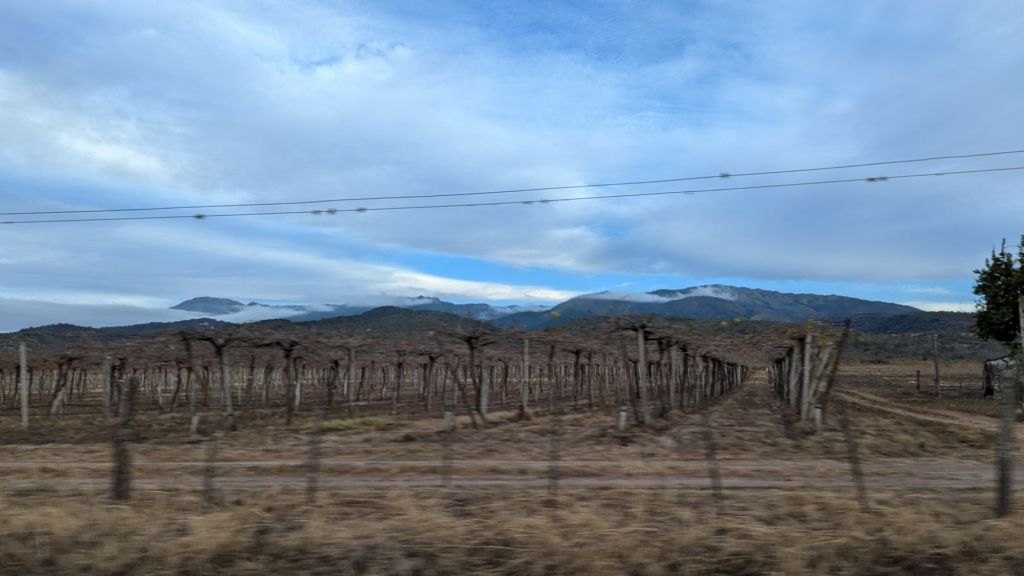
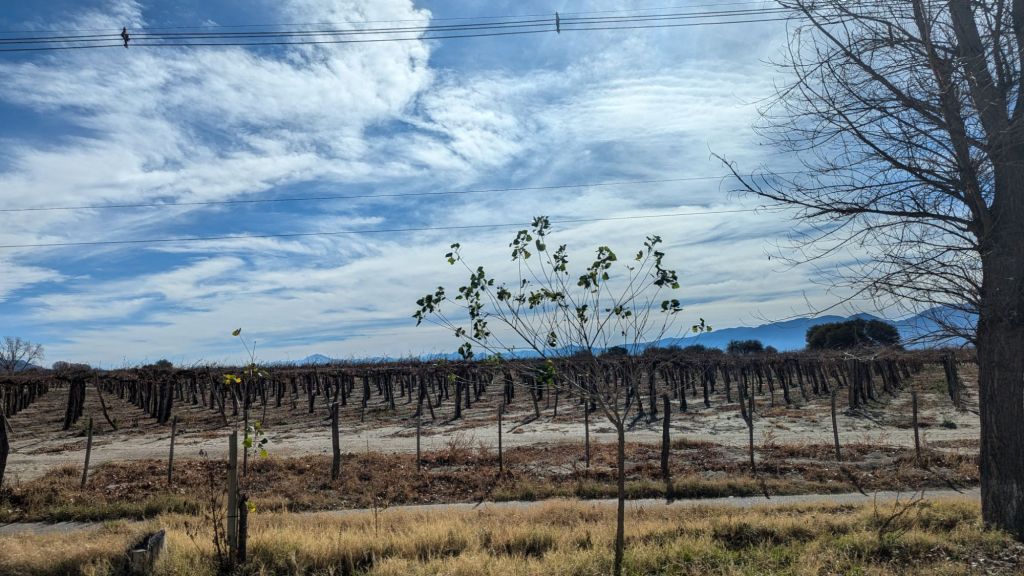
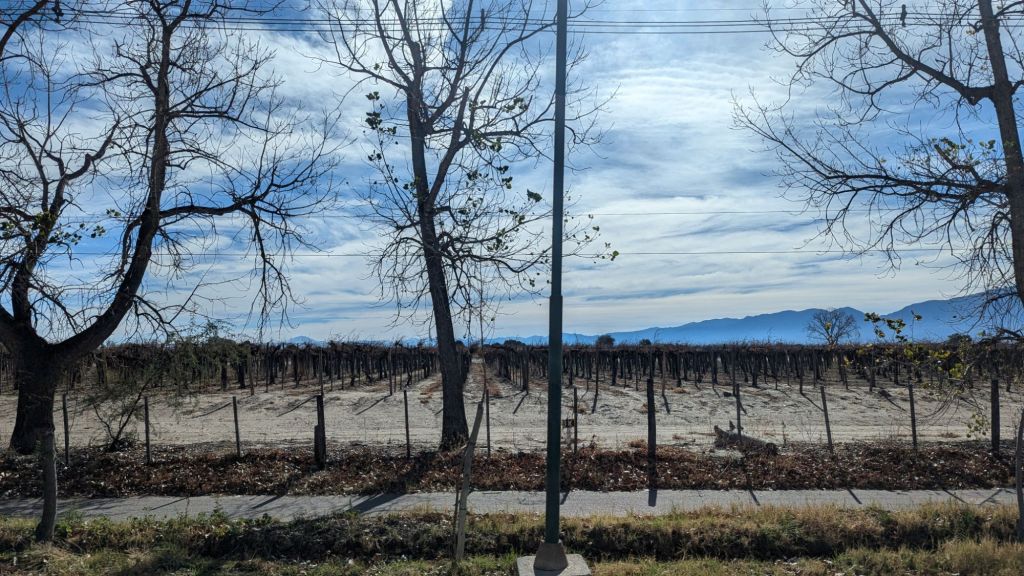
At 8:34 AM I noted the pleasant, mostly flat (unlike previous days) scenery, with mountains in the distant background.  Then around 8:37 AM we started to see vineyards, but as it was “the winter” the vines were bare.

At 9:13 AM we stopped in the town of Talapampa. From here on there was no stopping point where we could use the bathroom, etc . .  . Until arriving at the winery.  The bathroom was clean, but the whole place was much more rustic than places from previous days. Note, there was no toilet paper nor bidet facility, and I had been told that is fairly normal in Argentina, so be prepared. Most of the others were getting something quick to eat, but I had made sure to have my delicious apple pastries in the morning. 

Having a couple minutes to spare, at 9:25 AM I peeked into the chapel next to where we had stopped, Capilla San Roque. The temperature outside was 5 C. 

With several other small tourist buses stopping here, it was clear that this was the stopping point for all companies. I suspect that if I had shopped around in Salta I could have found a slightly cheaper package for the four days I had bought, but Get Your Guide generally does a good job of vetting its tour operators, and I also didn’t even really know everything I wanted to do. So far I had been happy with the Tiamar operated trips, with the only hiccup being not having an advance confirmation for today’s trip. Again though, if you are really bargain shopping and have the time, it’s probably better to shop around a bit and also even contact operators directly once you arrive in Salta.

At 9:39 AM  we got back in the van and went on our way. Today’s group had around 14 people, but the van definitely had a couple spots open. The microphone which was used the first day would sort of cut out, but the sound system the last two days had been much better. Jazmin continued giving us the general chat, telling us that we were going to go through la Quebrada de las conchas. She shared quite a few interesting tidbits.

Salta is a province with more rain, even in the dry season, than most of the country. That’s why things have mostly looked green, even though we are in winter. Note, much of the time of my first two days of tours was actually in Jujuy, not Salta, so it was frequently not as green.

At 9:49 AM we passed the ghost town of Alemanía which is now only inhabited by three families. It was the other side of the bus and I could not take a picture. It became a ghost town, because the train stopped operating going through here around 1970. Unsurprisingly, Alemanía was founded by German immigrants.

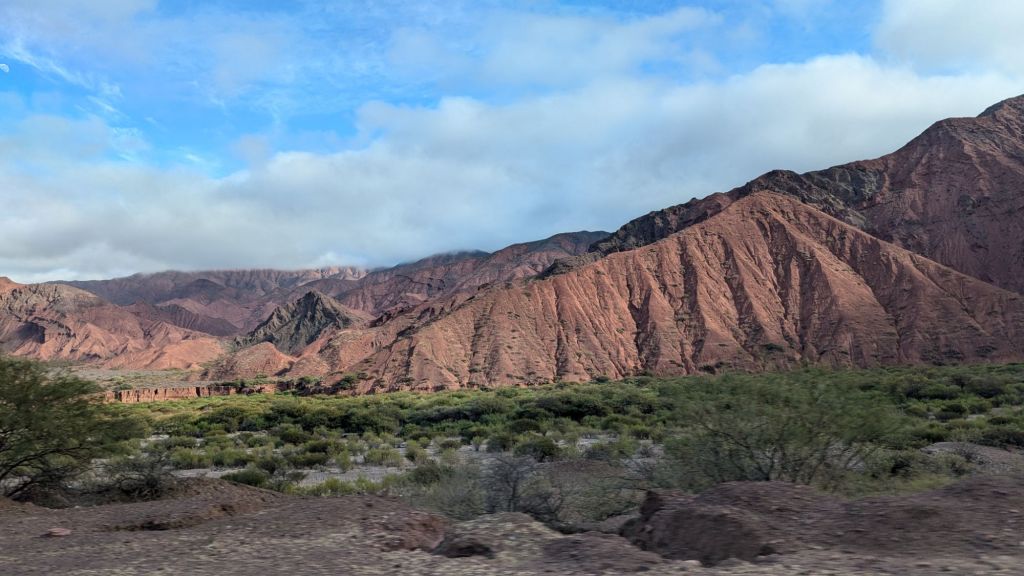
This area was at some point under the ocean, and there are many obvious fossils and remnants in this area. That’s why it’s called “Shell” valley (Quebrada de las conchas). 

At 10:05 AM  Jazmin mentioned that the first/native peoples in Salta and Jujuy held back the Spanish invaders for 100 years as the indigenous communities here were very organized and war like; however, they eventually fell. I couldn’t tell exactly how, but wine and the Catholic church were important in this. Today, Salta is the most religious/Catholic province in Argentina.

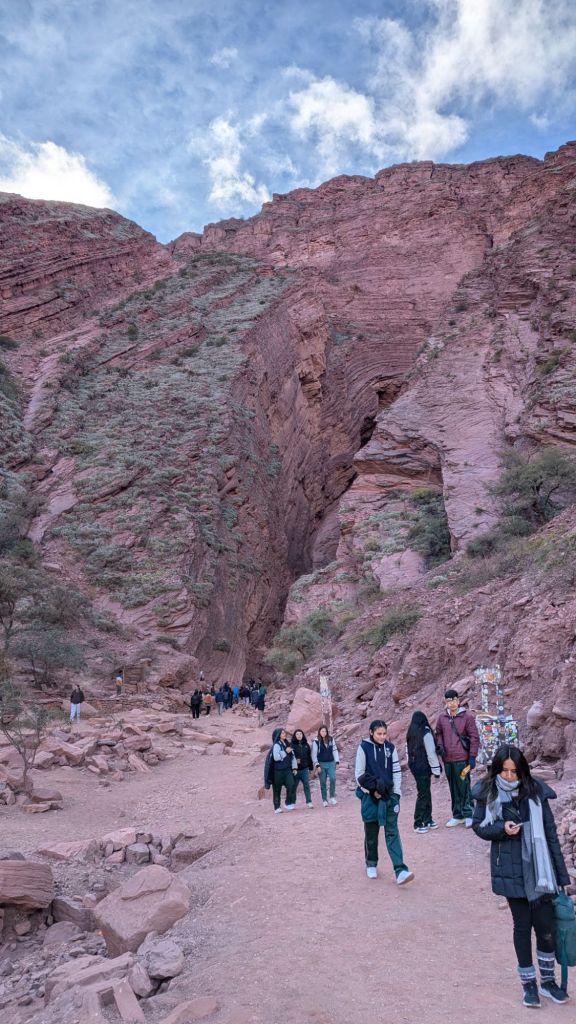
An unexpected surprise at 10:21 AM was when we stopped at La garganta del diablo (Devil’s throat). Sadly, this beautiful rock formation used to be used as a threat by the Spanish, directed at the first peoples. I’m not really sure how that worked, since it seemed that having been here first, they would have known better. However, they used to threaten the local people saying that if they didn’t pay tribute, the devil would come get them, with this rock formation being a type of portal to hell. Honestly, I found that hard to believe, but maybe they were tribes which had been moved here from somewhere else? Incidentally, until only very shortly the arrival of the Spanish, the tribes here were not part of the Incan empire, but they had active trade with them. 

Evidently It wasn’t until 2007 that they started developing tourism here. Jazmin said that other companies irresponsibly allow the tourists to go up on the rocks, but she begged us to not do the same as we could either get hurt or unintentionally damage some of the natural landscape.

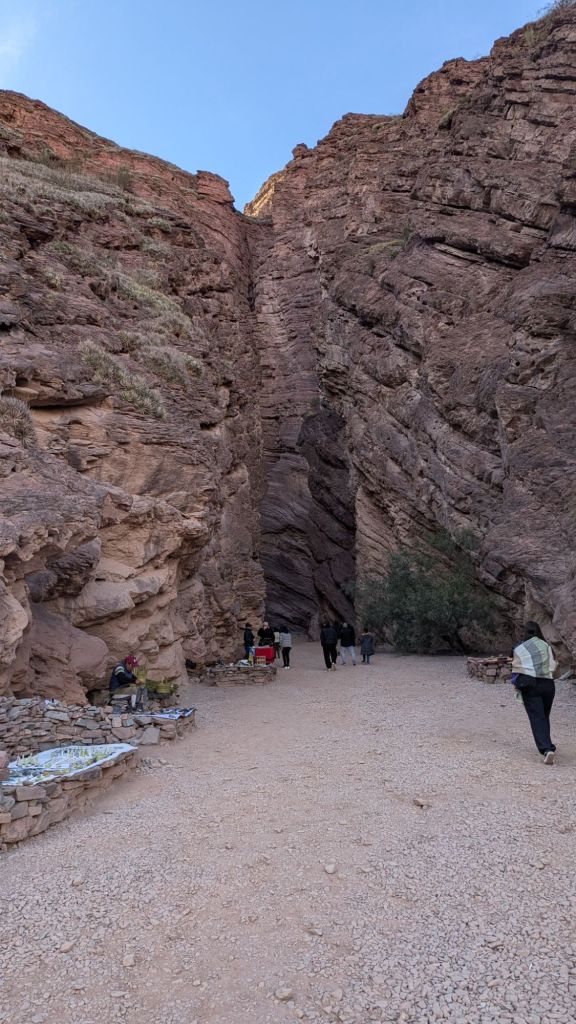
At 10:36 AM I noticed that various sellers had wares there on a cloth, but they respected the main space so that it would look uncluttered.

By 10:46 AM we were back in the van. It had been a nice little stop. As is frequently the case, I don’t think the photos will really show it’s beauty, but still you will get an idea.

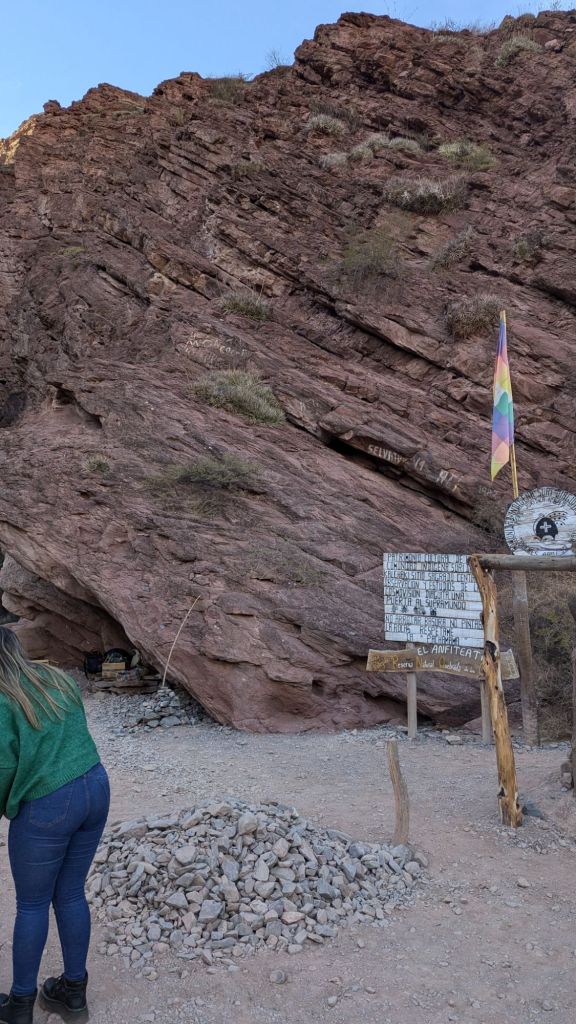
From here we were going to a place they call anfiteatro (amphitheatre) which is well known for its natural acoustics. We actually arrived there very quickly, at 10:49 and were out again. The local people used this site as an astronomical observatory. I could see how this would have been good as an observatory, since it’s structure would keep the view to a limited section of the sky which would change over time. There was a guy singing as well, and yes, the acoustics were impressive. Jazmin said that they do local concerts here in July which go on for several hours, but no sound systems nor amplification equipment are used.

One more we were in the vehicle at 11:07 AM, arriving at “Three crosses viewpoint at 11:13 AM. The legend is that three thieves killed each other here, after they had stolen gold from the revolutionary army. Given the circumstances, I didn’t really see why they would be honored with crosses, but it makes for a good story.

While I wouldn’t say that this is a “dangerous” viewpoint, at 11:20 AM I could see that it was definitely slippery for a lot of people with a couple of women in front of me even falling down. There was also no sort of railing at the top, and a fall from there certainly could have caused greater injury. I may have separately commented on this, but throughout my time in Salta, I noticed that almost all the tourism was local. However, I was told that in the south of the country it was primarily international tourists. For my money, the international visitors are missing out by not coming to Salta and Jujuy, but not having visited the South due to time constraints, I had no point of comparison.

At 11:25 AM I got back in the vehicle, soon after passing the “El sapo” rock formation, which amazingly really did look very much like a frog, but we didn’t stop, and I couldn’t get a good picture.

Whether or not this is true, I don’t know, but at 11:34 AM Jazmin said that the Franciscans were different from other Catholic religious groups that came, because they supported the local population more and also pushed for a greater recognition of the rights of the native peoples. The Jesuits had also tried, but they were expelled by the Spanish crown, and most of their monuments and churches were destroyed. To honor their contribution, they had named a sort of “Friar shaped” natural rock formation “The Franciscan” and we passed this at 11:36 AM.

The frog
The Franciscan

At 11:42 AM the Quebrada was coming to an end. I half slept for a few minutes, when at 11:55 AM I noticed that we were entering Cafayete, which is known probably for its white wine, but there was some red. I think I understood that most of the wine from this region was consumed by the domestic market. 

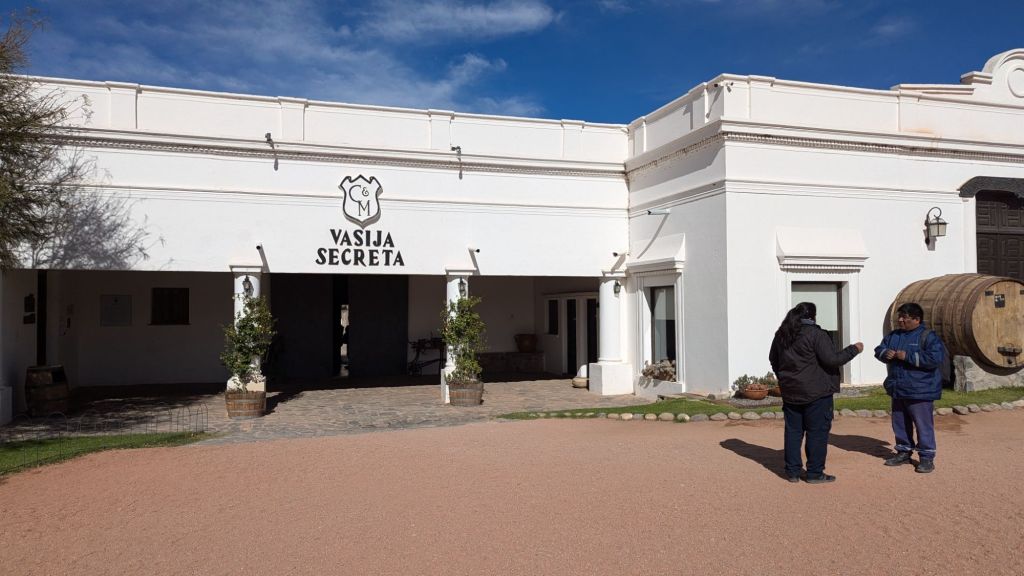
We pulled into Vasija Secreta winery at 12:05 PM. Despite being at a lower altitude, it was fortunately not overcast today. This place must be quite popular, as they do mini tours and wine tasting starting every ten minutes. My group’s tour began at 12:17 PM.

This winery was founded in 1857. There is a type of wine they make which is very limited which only comes from vines which are at least 90 years old. She explained tons of other things, but it was really too much for me to mark down. Also, much of it was particular information for people who know more about wines, and that’s not me.

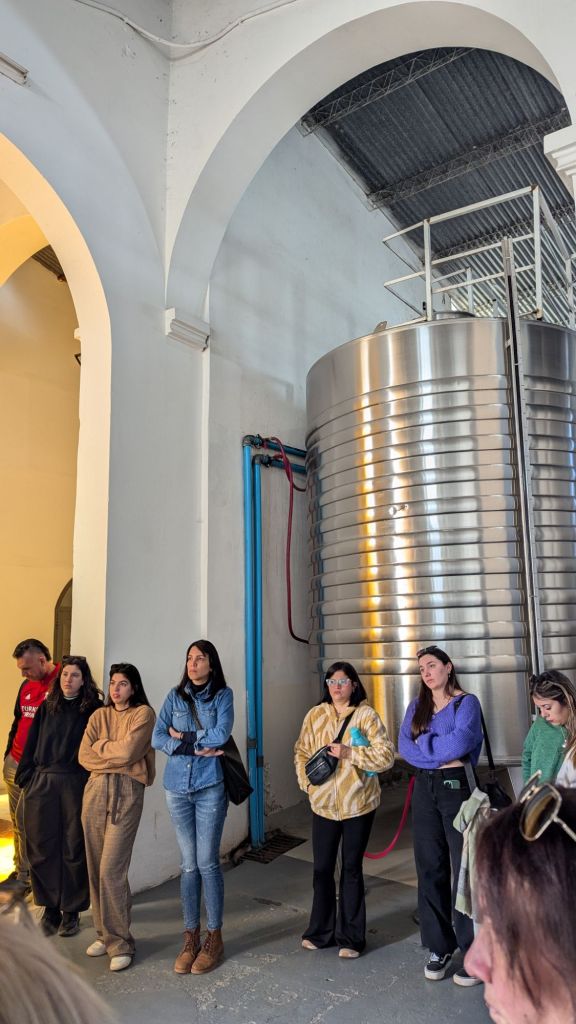
At 12:30 PM the vineyard guide said that the metal tanks of the white wine were designed like this in order to maintain a cooler temperature, without using electricity. She explained about how different rooms have different characteristics because they need different climactic conditions to make different wines. This is of course more important for a traditional winery like this one.

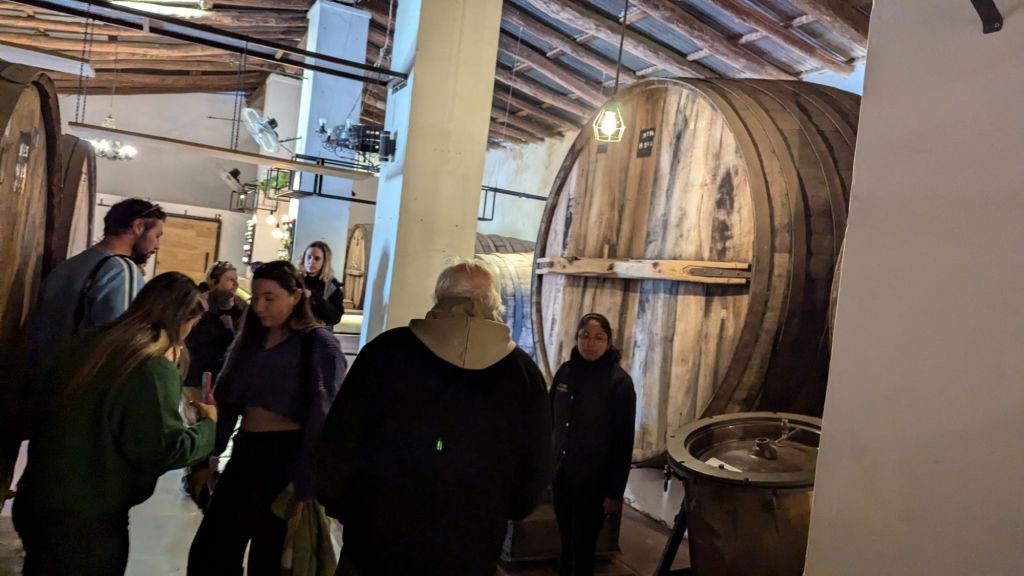
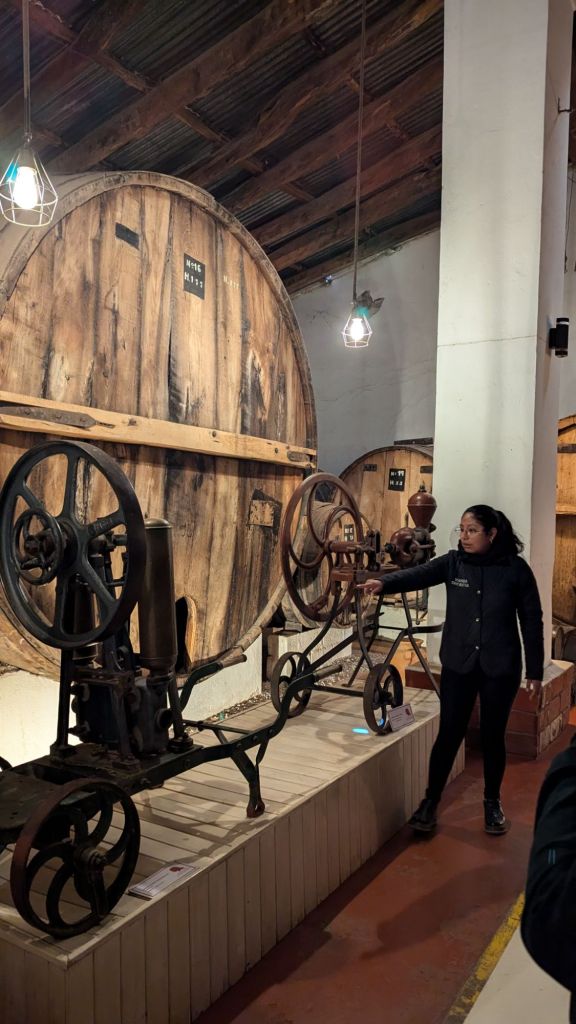
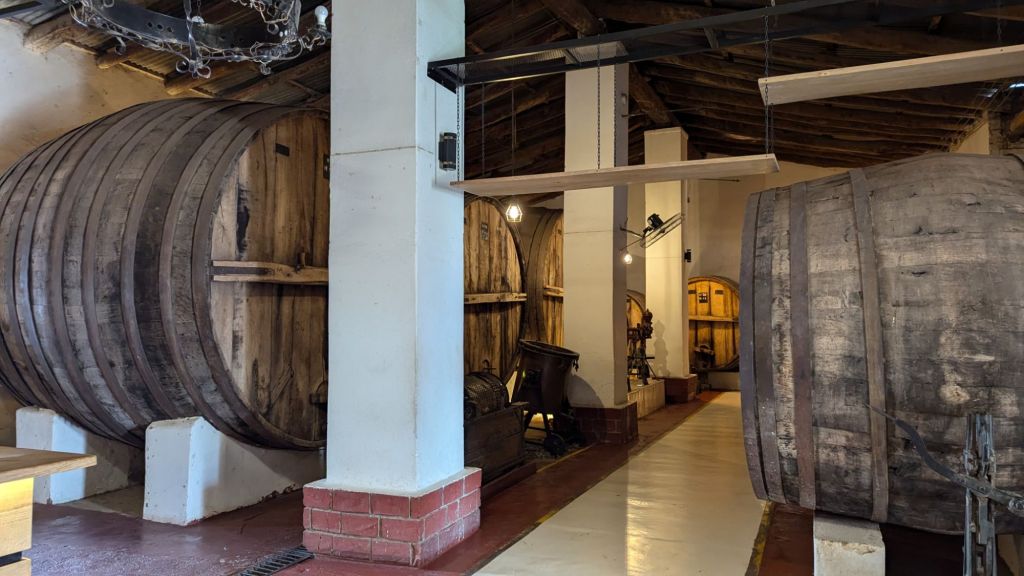
At 12:37 PM the big room with huge wooden casks was actually a museum. While their wine is still considered artisanal, they have included a lot of aspects from the industrial revolution. For instance, they don’t stomp the grapes here. A machine does that. The skins used to be fed to animals, but now that mostly goes to cosmetic use, but some is used to make Grappa.

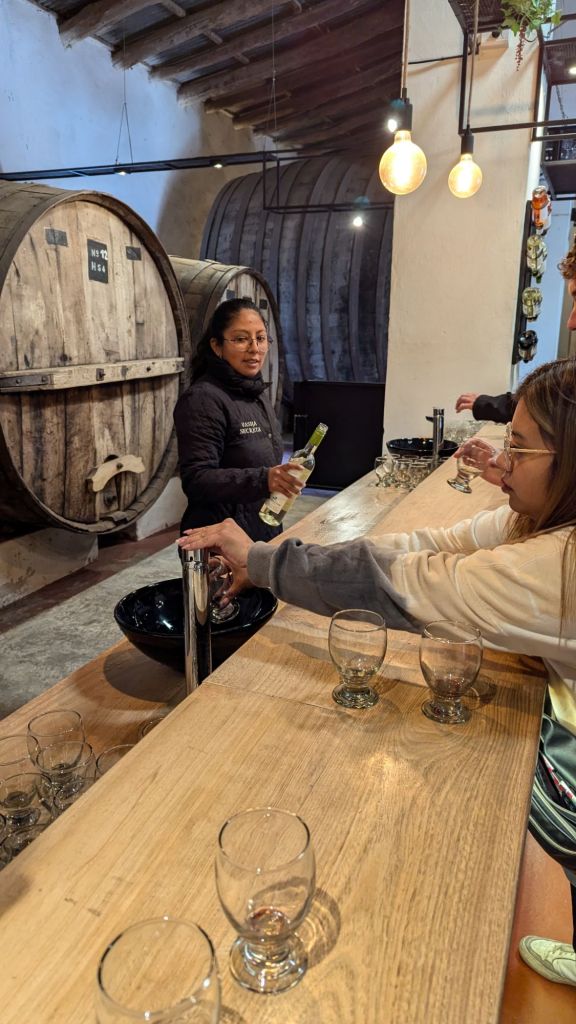
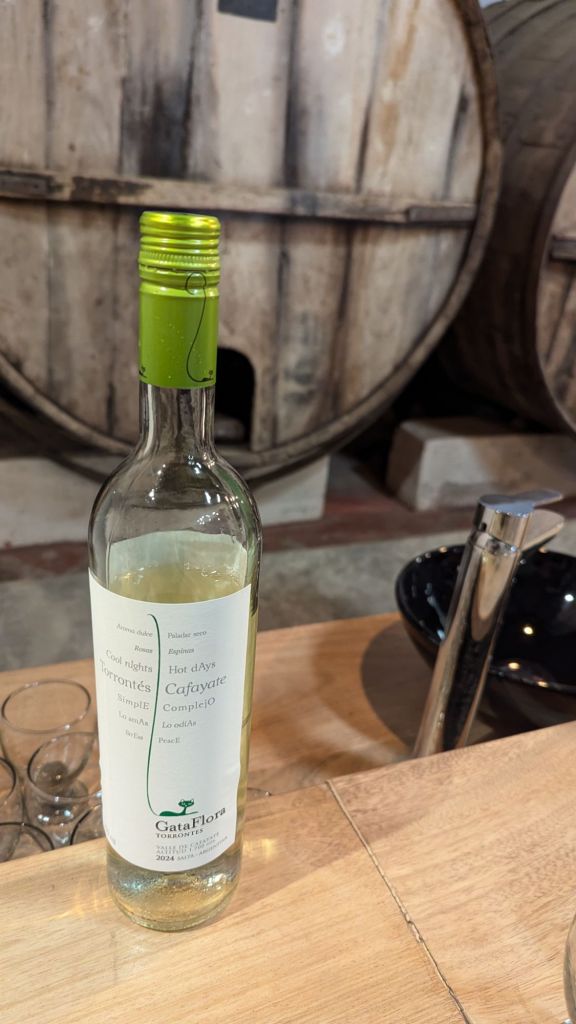
At 12:43 PM she explained that generally speaking, Argentinean wines are considered a bit sweeter than others. After trying the Malbec Cafayete, we rinsed our cups before trying the next one. This was a Torrontés Cafayete and yes, it was quite sweet but pleasant. According to her it’s semi sweet, but I think many from outside Argentina would find it fully sweet. I did like it, but I suspect it isn’t sold much outside Argentina. I thought of my friend Dorothée and was sure that she would not have liked it, but she would appreciate learning about a different type of wines.

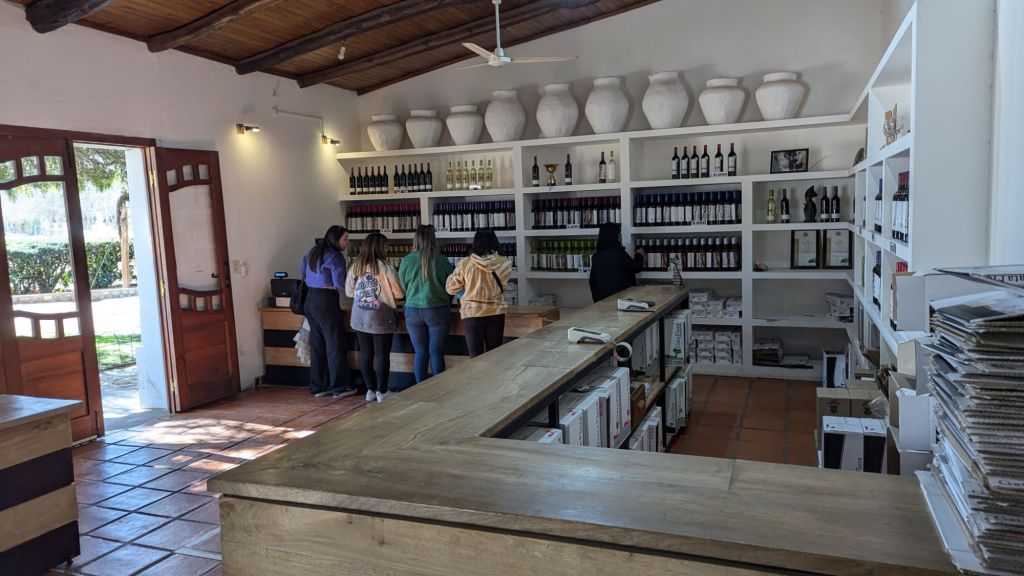
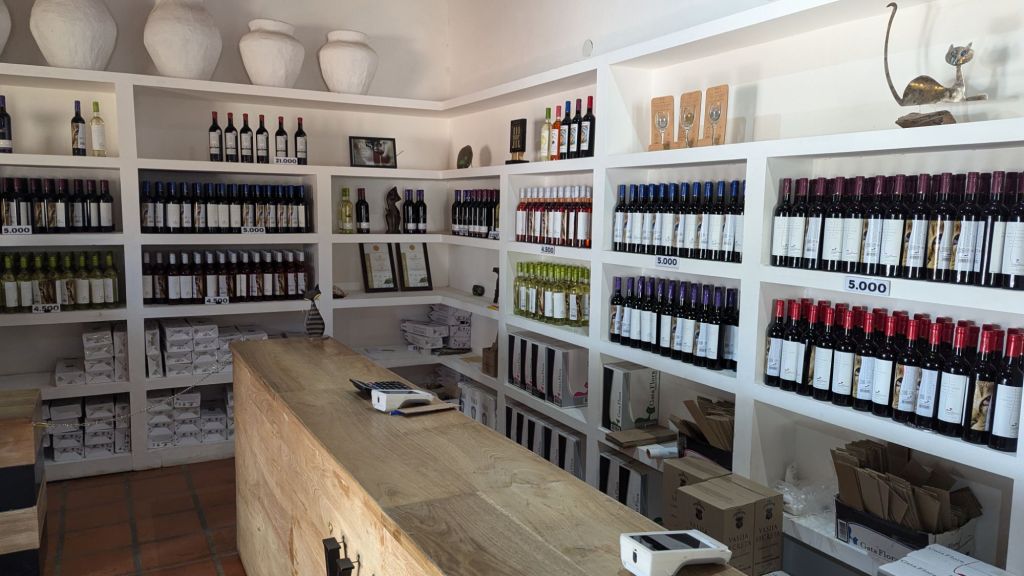
At 12:51 PM there was a store where one could buy, by my standards, quite cheap bottles of wine, costing between 4500 ARS and 16000 ARS a bottle. The locals confirmed that buying right here was a bit cheaper than buying from a store; this of course made sense, since they make the wine right here. I would have liked to buy some to take home, but in my case, due to continued travel and still having planned to visit a couple more countries on this trip, that didn’t make sense.

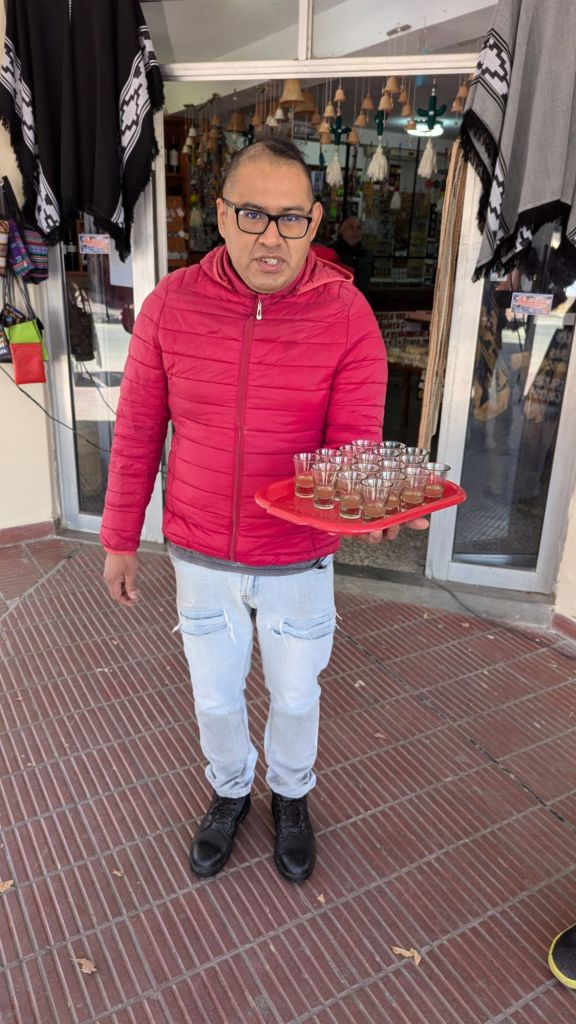
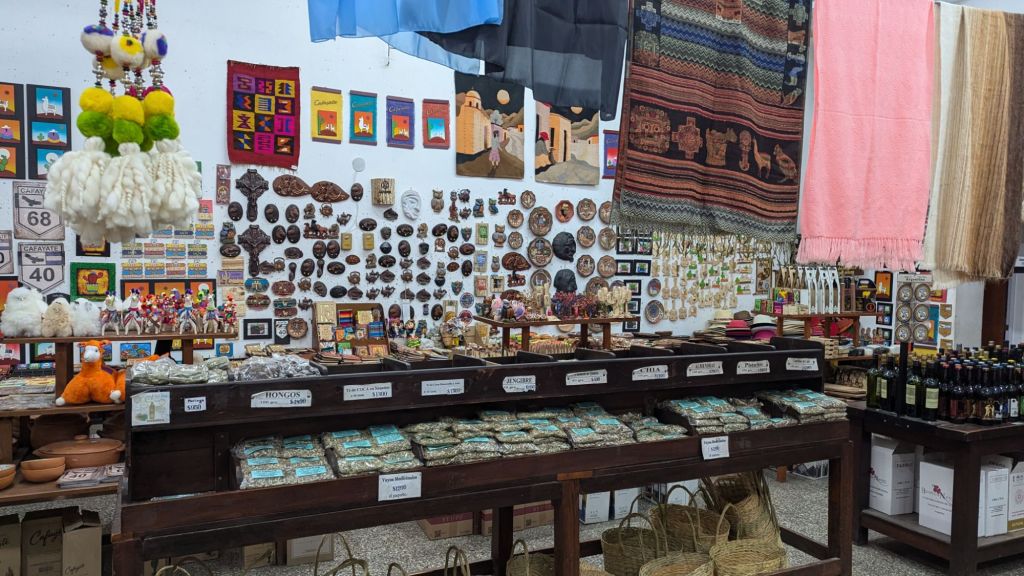
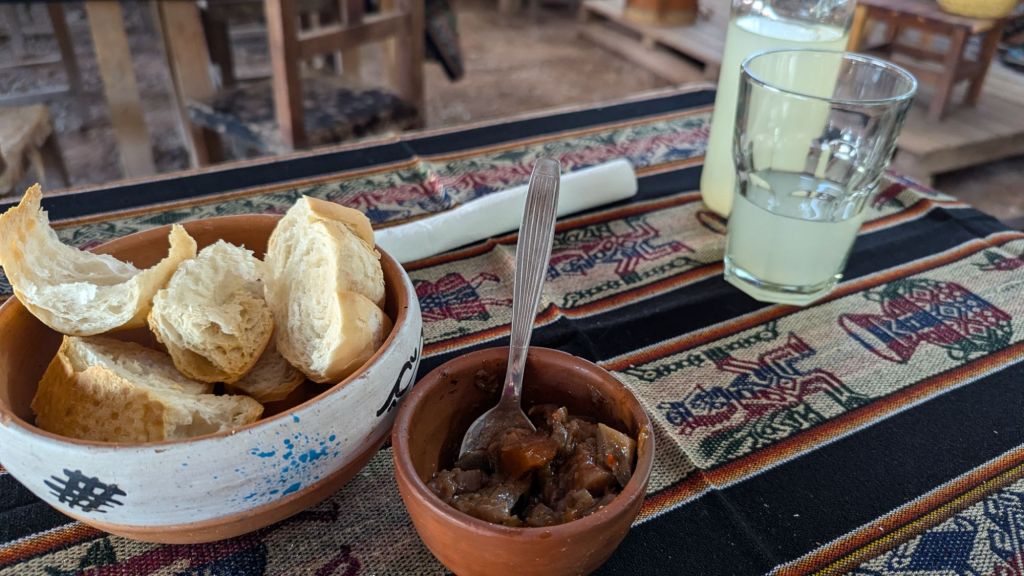
At 12:59 PM we were back in the van, making a quick stop at Feria Artesanal Cafayete where they offered us vino mistela, which was way too sweet, and some local raisins. The prices of the food items were good, and it would have been nice to take some, but all but impossible to reasonably transport the way I travel. The costs of the other souvenirs were also reasonable. I would in particular have liked to take escabeche de llama and ciervo with me, but I’m pretty sure you are only supposed to eat very small amounts at a time and I definitely didn’t want to juggle glass bottles in my luggage.

When I got back in the transpory at 1:16 PM, I asked the other passengers, and they told me that the meat escabeche is eaten with bread. 

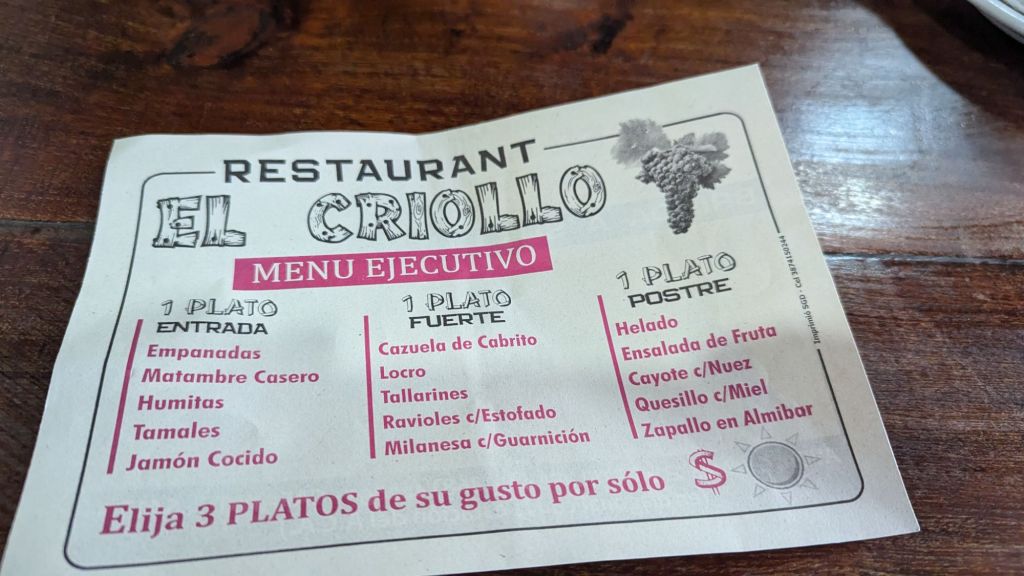
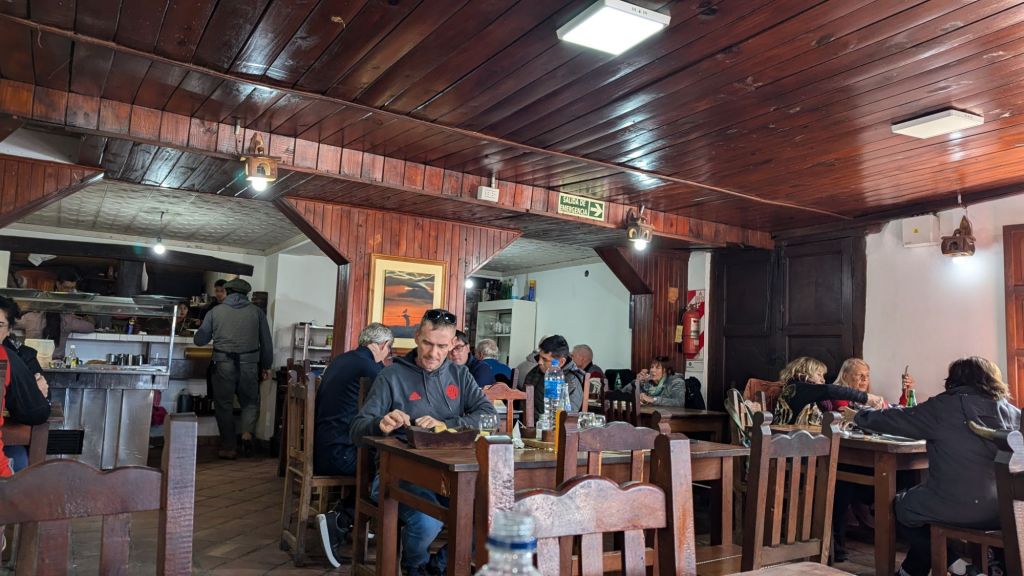
Shortly thereafter at 1:21 PM we stopped at the recommended restaurant, El criollo. I didn’t want to wander around before choosing where to eat. I ordered the plate of the day which included Jamón cocido, locro. It was cool inside but not cold, so I put on my long sleeve shirt over my other shirt but kept the coat off. I had done the same thing yesterday. The Jamón cocido appears to just be pork ham, basically lunch meat. The tiny piece of cheese was nice. It was basically a “new cheese” similar to queso Turrialba in Costa Rica.

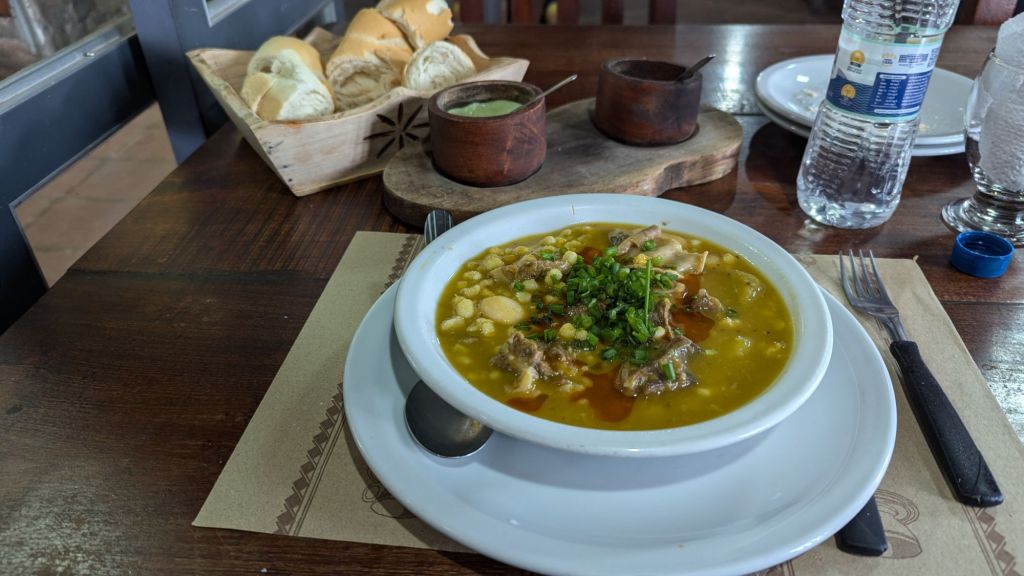
At 1:36 PM my locro arrived. This was my first locro in Argentina. It’s basically a hominy (the main ingredient) and butter bean stew with rather chewy beef. It was alright, and good for the cold weather, but I thought it would have been better with a bit of chili or at least some black pepper. I’ve noticed that in Argentina people will add salt to their food, but I haven’t seen pepper or chili on a table. I don’t think Indians would like this food at all. . . I could see myself making something like this stew, but I would add a splash of vinegar.

Around this time I was also thinking that for dinner I would try to see if that empanada place near my apartment was open when we got back, and I would also get a couple for tomorrow morning. Separately, I think I would like to TRY mate, but I definitely don’t want to buy a big thing of it. I strongly suspect that I won’t be all that impressed, that it is an acquired taste.

At 2:02 PM I opted for Cayote con Nuez for my dessert. It’s basically sweetened squash with walnut. It was a tiny bit too sweet for my taste, but that’s also the way it’s usually made in Costa Rica. At 2:16 PM I left 1050 ARS tip on the table and then paid 11500 ARS cash ($9.27 USD) for the meal and drink. I had thought about paying with a card, but there was a 10% surcharge, and I seemed to have enough cash with me.

I departed at 2:19 PM and decided to try to check out the plaza which was near there. Upon arriving at 2:29 PM I understood why they had prohibited the tourist vans and vendors around the square. It was much nicer without them, and there were plenty of other places to buy crafts without it being there.

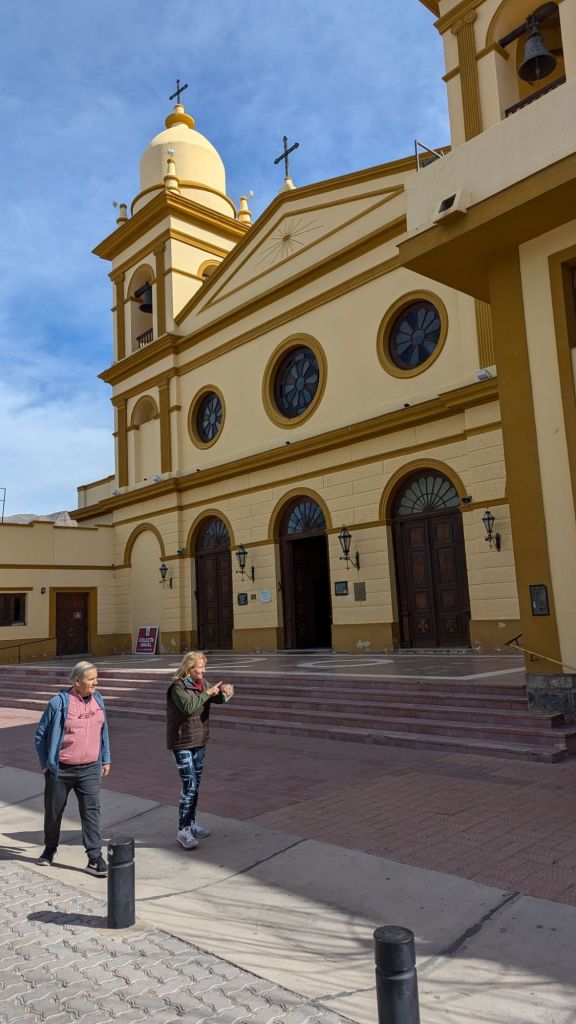
At 2:33 PM I entered the Catholic church. It had a simple but elegant design. I found the flooring to be of particular note, as I didn’t think I’d seen that before in a church.

I departed at 2:40 PM walking back to our transport. The plaza was very peaceful. The theme of the city/town of Cafayete seemed to be “simple elegance”. It was not overly adorned in any way, but things seemed to be cleanly organized and in an attractive fashion.

I was back in the van at 2:52 PM waiting for stragglers. Today had definitely not been a walking day. I will probably try to do more walking when we get back, even though I had sort of thought of keeping it a simple evening near the apartment. I was feeling a bit bloated from too much food.

The vehicle departed at 2:56 PM. The guide mentioned that here in February there is a huge folklore festival, and it’s always closed by several hours of el Chaqueño Palavecino (a very popular local assist) singing.

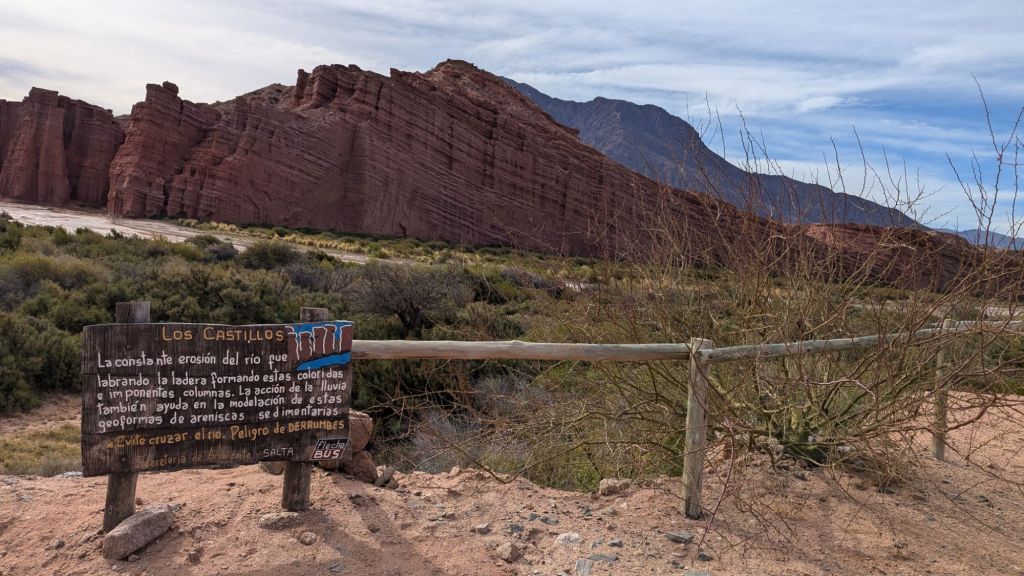
At 3:15 we had a photo stop to take pictures of what they call “Los castillos” (the castles). It was fine, but I thought the earlier things we had seen were more noteworthy. Then at 3:25 PM we were on our way once more. That was the last “tourist stop” of the trip.

However we did make a quick rest stop at 4:29 PM at the same place as before, being back on the road by 4:45 PM.

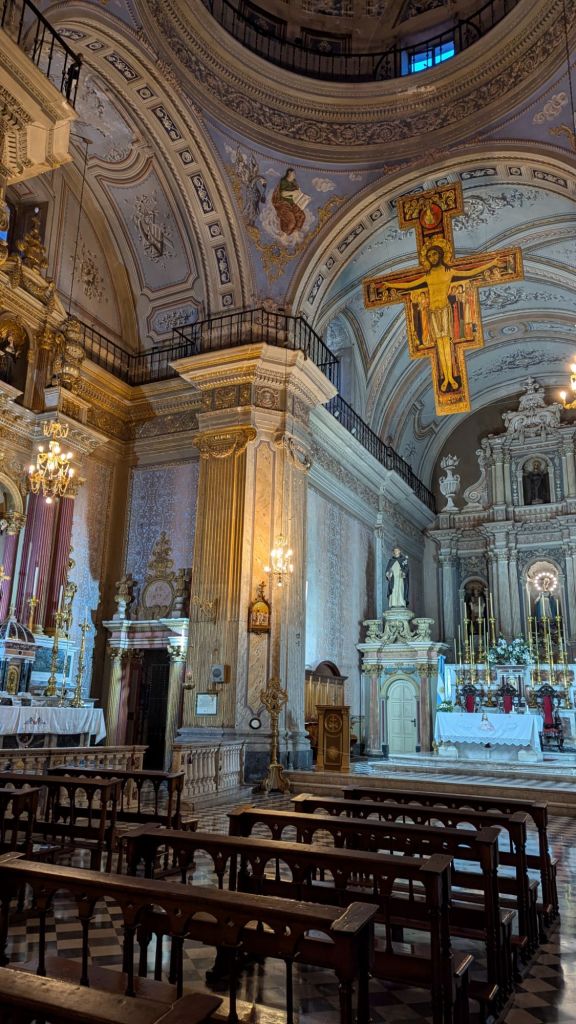
I was pleased to get off the minibus at 6:24 PM, right in front of Basilica Menor y Convento San Francisco in Salta. I decided to go into the main hall where I saw that this Catholic church was more like the ones I’m accustomed to visiting as a tourist in Latin America. Adding to the solemnity, they had beautiful religious music playing at a reduced volume. 

At 6:45 PM I had to admit that even though I had only been there for a few minutes, this church left me with a feeling of peace. I’m very happy that they dropped us off here, as otherwise I probably wouldn’t have wandered inside. I left at 6:50 PM with no particular destination in mind, just wanting to see more.

At 7:07 PM I found myself back at Plaza 9 de Julio. Then at 7:22 PM there was some sort of a peaceful street protest related to education. It was very orderly. While hanging out I bought some pastries from a street vendor for 1500 ARS.

My general impression at 7:34 PM was that everything was very beautiful and there was a lot of action around the plaza. It was nice, but I decided to walk back to where I had eaten on Sunday. I had liked it before, and wanted to patronize them again.

When I arrived at 8:17 PM the gate was locked, but I knocked and they were happy to let me in where I ordered 2 of each of the types of empanada she had (6 total). I sat while she baked them. 

At 8:39 the six empanadas were turned over to me for only 3000 ARS cash and I headed to the house, where I arrived at 8:45.

I washed clothes, ate, and read in bed until 10:30 PM

Today’s excursion had definitely been more low key than the previous two days, but it had been good to have a bit more relaxation. What did you think? Did you prefer today or one of the other days of excursions? Let me know in the comment section below.

Argentina trip: Day 11 (25 June)

Hey there everyone, so today is another excursion day, so I was again up at 6:00 AM, at 6:15 AM reheating pastries from two days ago for breakfast.

At 7:15 AM I was picked up and we were on our way. There were several people in the vehicle already. At 7:51 our guide Eduardo started with the spiel. Today there was one “guide”, and a separate driver, Ramon Luis. He mentioned that we would be going about 90 minutes before our first stop.

At 8:14 AM I was really feeling that yesterday’s bus had been a bit more comfortable, still at 8:22 AM I tried to sort of sleep, but it didn’t work well.

At 8:36 AM we passed through General Güemes, and then at 9:24 AM made a rest stop at a gas station in San Salvador de Jujuy.

By 9:52 AM I was back on the bus and Eduardo was continuing with his running commentary. Unlike yesterday, things are done in both Spanish and English. Maybe that’s why there is both a driver and a separate guide today.

At 10:13 we passed León. The part near the road looked kind of poor. Nearby I saw that the Rio grande riverbed is very large, but it has almost no water. They said it’s pretty much always like that.

Then at 10:21 AM we started the drive through the cloud barrier

At 10:29 AM we saw a small train which is evidently solar powered. Obviously, it must have a battery in order to get through the cloudy section.

It was great at 10:30 AM to see as we were almost through the cloud barrier. There were now patches of sun.

Then at 10:32 AM And we passed both Tumbaya and the final remains of the cloud barrier. I’m glad that I actually saw it happen this time!

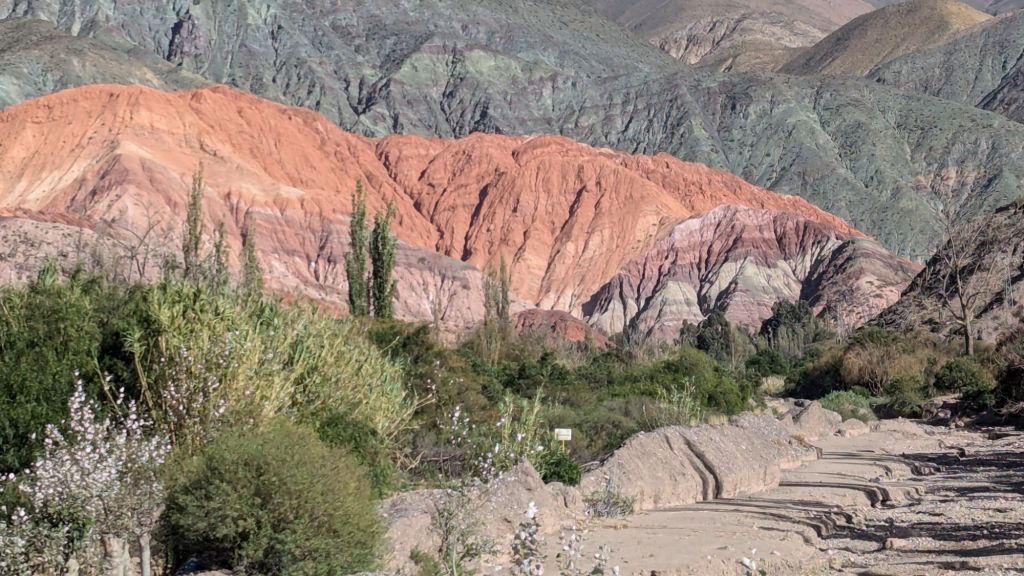
At 10:46 AM we stopped just outside Purmamarca to get a different view of the seven-colored hill. This was a good stop, as it allowed for an unobstructed view, albeit from a distance.

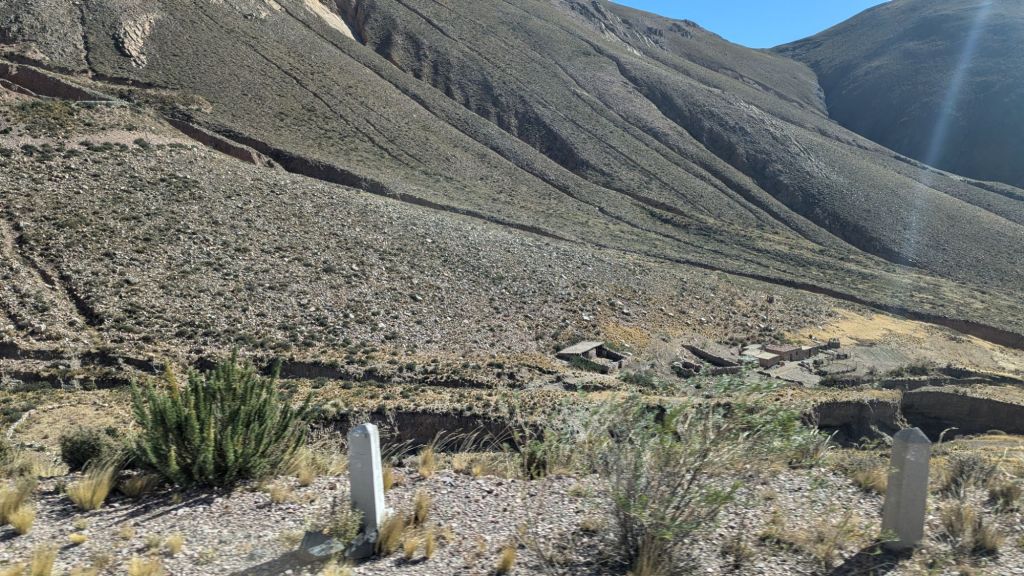
At 10:51 I was back in the vehicle and we continued going upwards. Eduardo said that the isolated, different homes lived in here that we could at times see are almost always lived in by native/first people’s. They don’t own the land, and if they temporarily move away then they no longer have a right to return to the same spot, so in many ways they are trapped here.

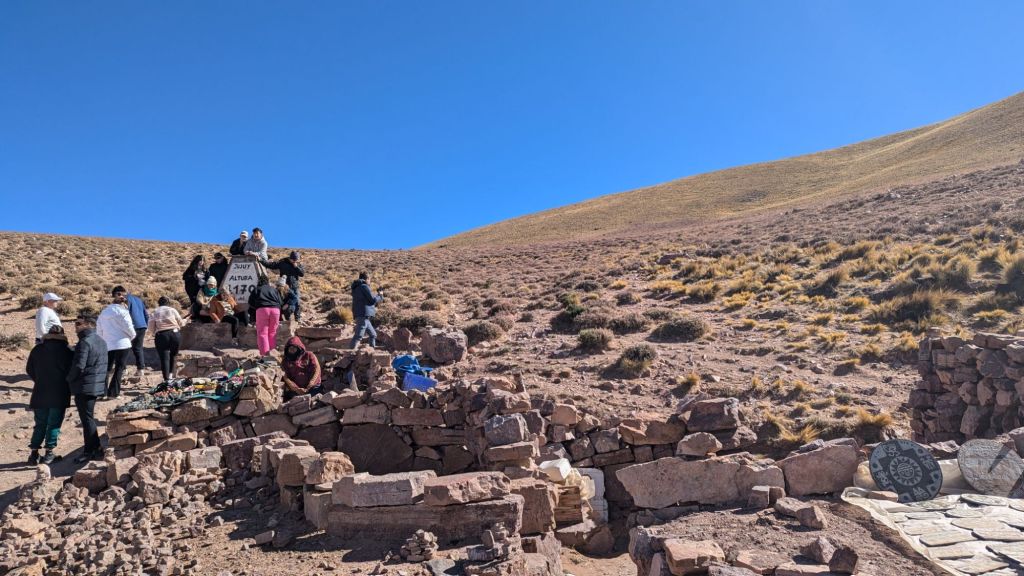
At 11:25 AM my head was starting to feel a bit full as we went up, so I asked for a couple of Coco leaves to put in the side of my mouth. Then at 11:39 AM we stopped at the 4170 meter high spot for a picture. I bought some coco candies for 1500 ARS the bag: 15 candies in one bag. Supposedly you are only supposed to take 3 in a day according to what it says on the bag.

Of course at 11:45 AM I got my obligatory photo at the attitude marker.

At 11:51 AM I was again back in the van heading down to Salinas Grandes. The view really was amazing, even from the window of the van.

At 12:01 PM we had to stop as one of the passengers was not feeling well, so it was another opportunity to get outside, but it was a quick stop and we were again on our way at 12:04 PM.

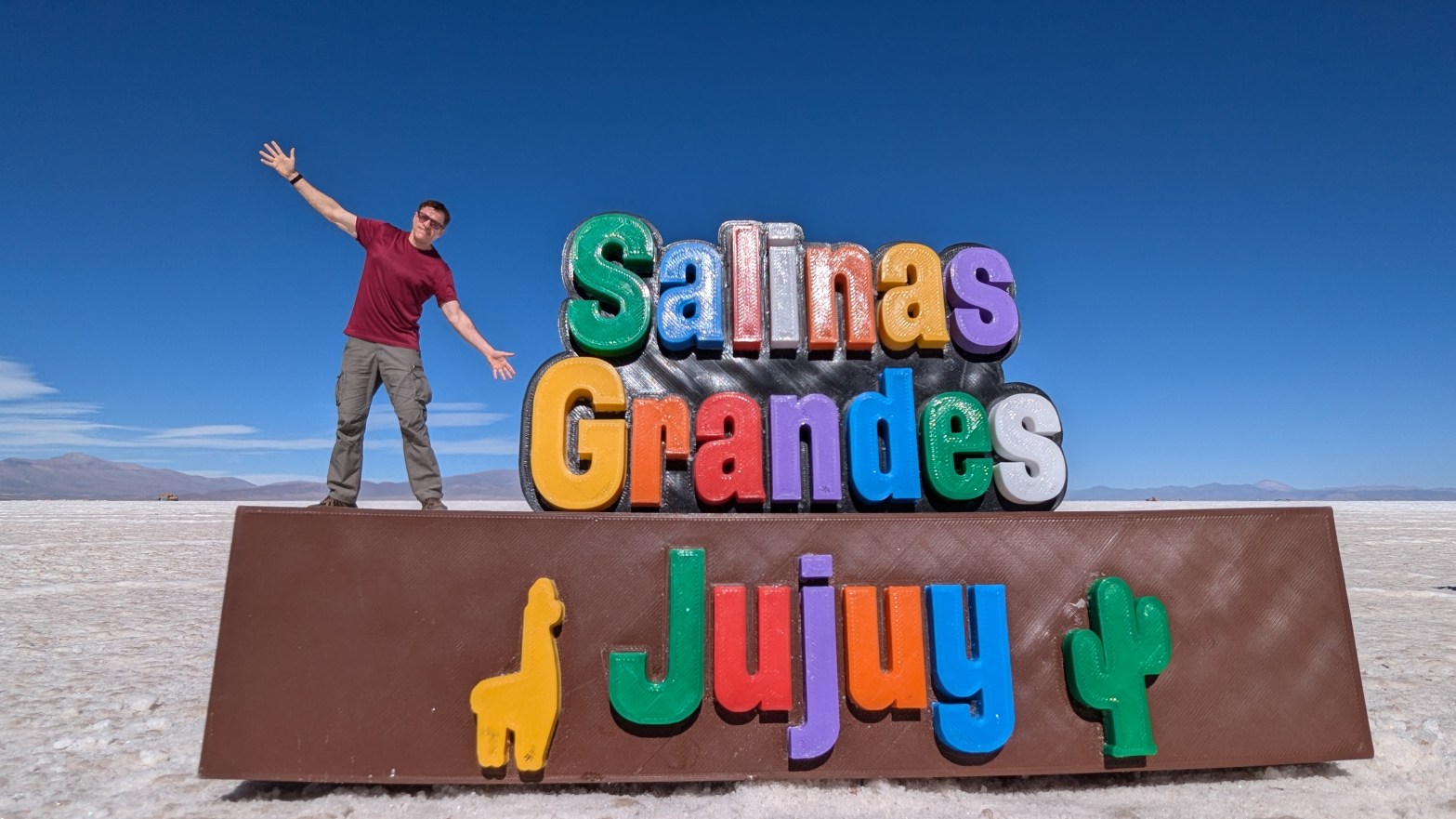
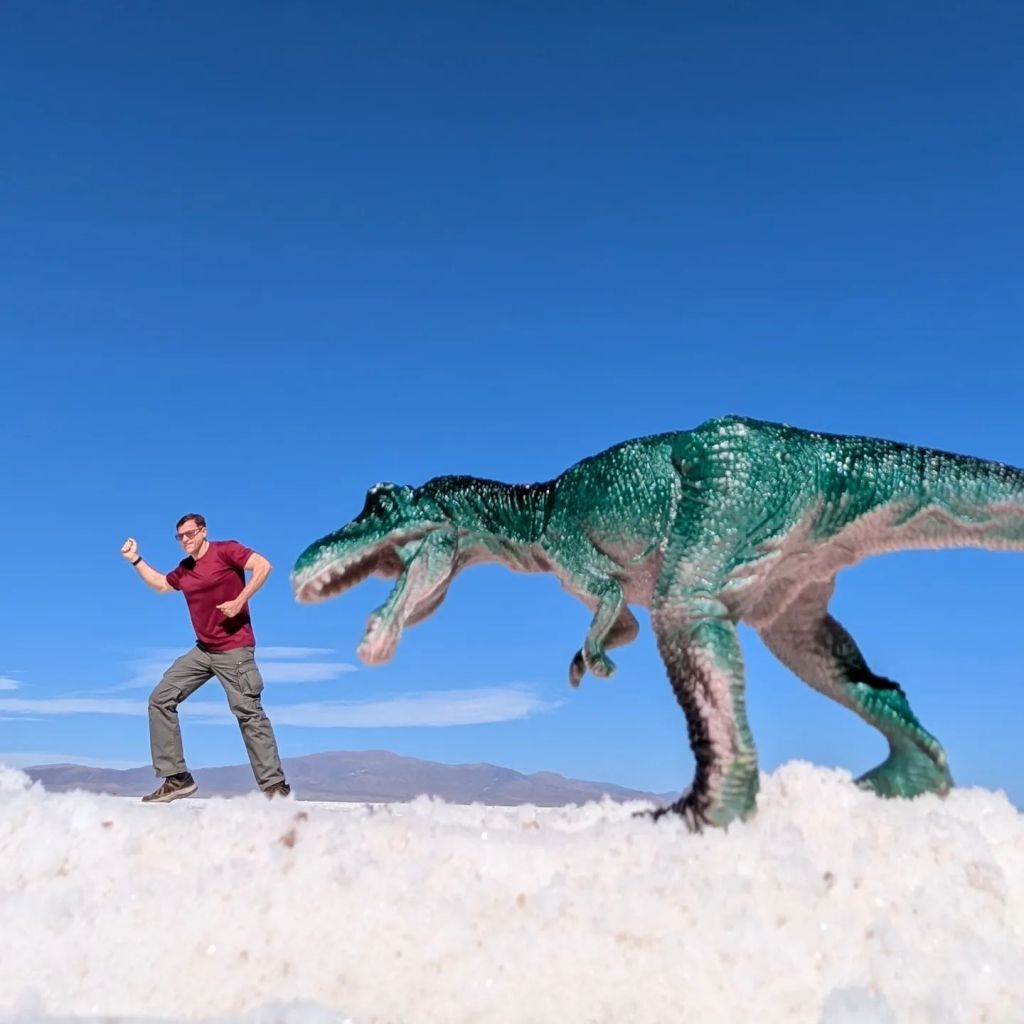
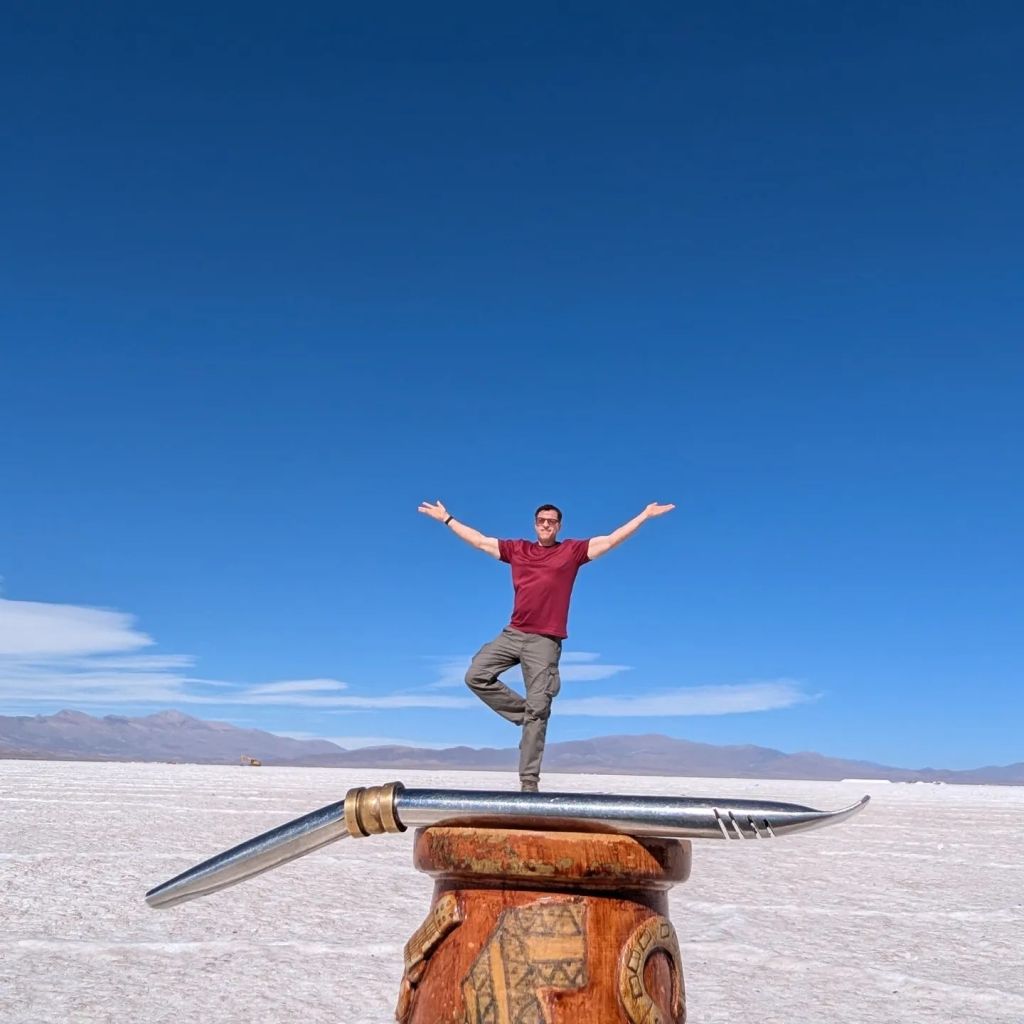
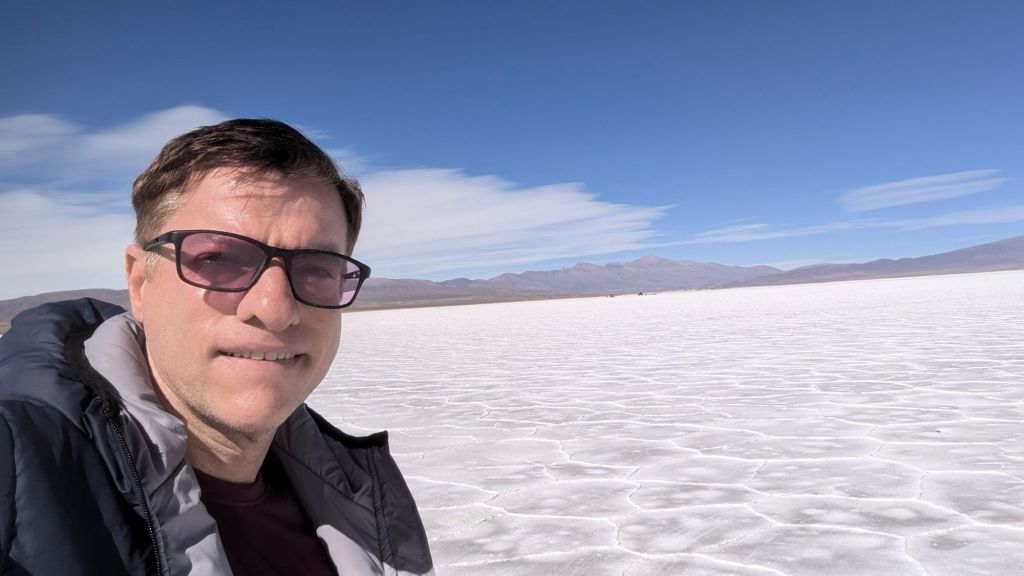
Finally at 12:20 PM we arrived. In order to gain access to the salt flats tourist area we had to pay 2000 ARS cash but that really was a huge bargain as this payment also included the “artistic photo” service, and they really did a good job with these funny pictures. I had fully embraced my tourist identity, so at 12:33 PM I was in one of the several short lines waiting for my turn to get pictures.

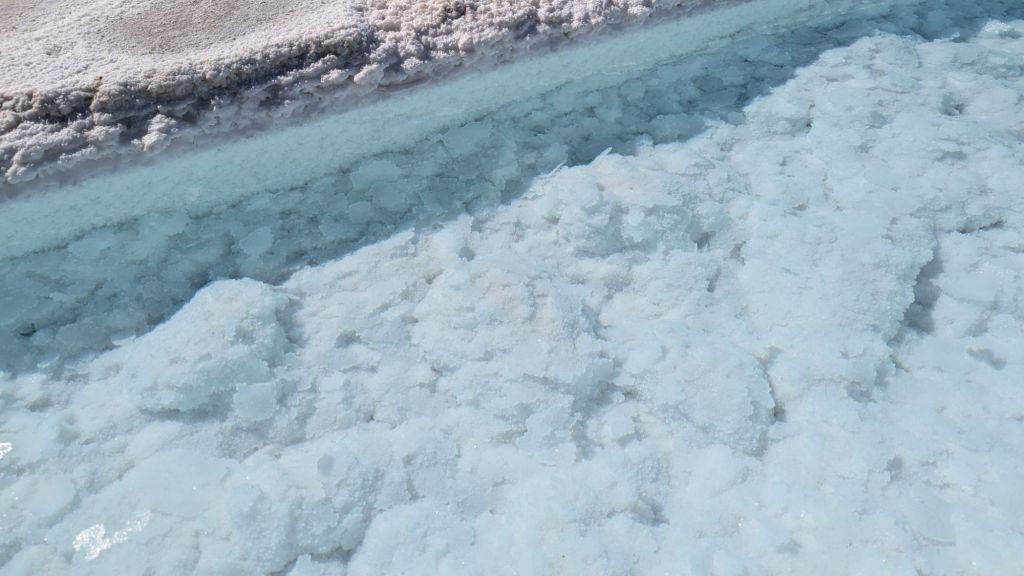
By 12:40 PM I was finished with my silly pics and moving on to where there were the evaporation and crystallization pits. Even though it was undoubtedly a bag idea, at 12:49 PM, I scooped some of the salt crystals which were floating on top of the water and tasted them. You guessed it; they were VERY salty!

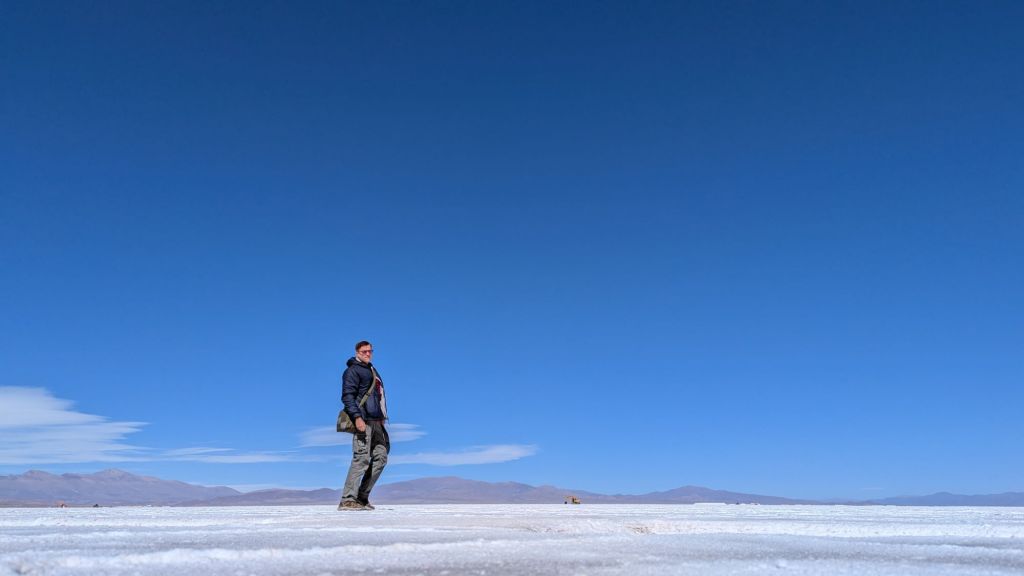
Then I decided to do some more silly pics on my own. Really being here was like being in another world. It was just amazing.

At 1:14 PM we were back in the van. Eduardo said that the local people working here taking the pictures couldn’t do it a long time because the salt in the air affected their eyes and lungs over time. It’s just a temporary job. Most of the people here don’t have cellphones themselves, since they are useless here as communication devices (no signal), but they learn how to use the camera function in order to take pictures of tourists.

At 1:20 PM we had to depart.

At 1:48 PM we had a quick five-minute photo stop and then continued on our way back to Purmamarca.


Then at 2:31 PM we arrived at Purmamarca. I was happy to learn that today we would have two hours here.

While I did want to explore, I also wanted a proper lunch today, so at 2:38 PM I went into the recommended restaurant and was pleased to see they had a live singer who was really quite good.

My food arrived at 3:01 PM and shortly thereafter I noticed this little boy who was just enchanted by the music and kept creeping up until the singer invited him to play the drum. I decided to give the singer a 2000 ARS tip which seemed to me the maximum that others were giving. He was a very good singer and also a good sport with the little kid.

I was very happy with my Cazuela de cordero. I’m sure I could have eaten for less, but the singer was very good and it was especially fun when the little boy kept wanting to join him.

Then at 3:39 PM I finished and paid 11500 ARS with my Indian credit card (795 INR – 9.53 USD). After departing at 3:53 PM I soon went into the Santa Rosa de Lima church. I loved the sound of the birds outside. It was very rustic inside. I liked it.

At 4:00 PM I left the church to wander around a bit more.  There were handicraft shops, eateries and lodging places everywhere. Amazingly, I was actually even tempted to buy some things. I wondered what it must be like to grow up in a place like this, so tourism focused but also so perfectly surrounded by the beautiful hills. No doubt similar to how the natural beauty anywhere else is taken for granted and almost forgotten after a short time living in other places, I suspect the same happens here.

At 4:35 PM I was back in the van. I had sort of wanted an empanada rellena, as they looked good, but I reminded myself that I had just eaten and would also want to eat something this evening.

At 5:01 PM we were about to hit the cloud wall again, and just like that at 5:02 PM we were in the clouds again. It was now 5 C outside vs the 26 C that we were in ten minutes ago. Amazing right?

At 5:47 PM we again stopped at a gas station. Here they call bathroom breaks “technical stops – parada técnica) I paid 2980 ARS with my Indian credit card (206 INR – $2.47 USD) for a sweet treat (basically a prepacked Alfajor) and a coca cola zero. I actually wanted a coffee, but this bus while having a much better sound system than yesterday’s, did not have a place to put drinks. . . As such I didn’t fancy juggling a hot cup of coffee.

At 5:55 PM I was once more back in the van, and then at 7:38 PM I had them drop me off near Plaza 9 de Julio where I walked around the area a bit.

At 8:24 PM I decided to eat at Vaca Club located right on Plaza 9 de Julio.  At 9:10 PN I asked for the bill. It was 17000 ARS which I paid with my Indian credit card (INR 1167 -$14 USD) and left a  cash tip of 1700 ARS. I had eaten pepper beef and a glass of Trapiche Malbec wine.

From there, I walked back to my lodging, but at 9:49 PM I paid 4000 ARS cash for two nice looking, hearty, apple pastries which I planned to eat for breakfast tomorrow, finally arriving at the apartment at 9:52 PM.

If tomorrow is half as amazing as today, I will be incredibly happy!

Argentina trip: Day 10 (24 June)

Hey there everyone, welcome back to my Argentinean adventure. Today is the first of four day-trips around Salta which I booked through Get Your Guide for a total of  $183 USD. These trips themselves are operated by Tiamar Travel. There was a similar package offered on Get Your Guide for about $50 USD less, but it’s ratings were a bit lower, so I decided to go with the more expensive, but also more popular and higher rated option. I’ve several times used Get Your Guide in the past for small group excursions, and my experience has been that they are generally good at curating the best offers in a given area.

So I was awakened by my annoying alarm at 6:00 AM, and I started getting ready. At 6:48 AM I ate a couple of reheated pastries from the day before. It’s supposed to be quite a bit colder today, 11 C (52 F), but we will see.

At 7:24 AM I was still waiting, and I noticed there were a couple of people waiting outside the main door of the apartment. Then a message came at 7:26 AM indicating that my driver was about to arrive, so I went out, and sure enough the van pulled up almost immediately. There were already several people (maybe seven) inside. However, those waiting outside my lodging were not among them; perhaps they were waiting for another tour operator? Anyway, I found my seat and at 7:29 AM we were off.

At 7:33 AM we picked up five more people. I think this was a family. Perhaps since most people in Argentina look very similar to me I had assumed that there were not many tourists wandering around, but based on what I was seeing today, evidently Salta at least had plenty of tourists in the area. It appears however that most of the tourism at this time of year is domestic.

At 7:43 AM three more people entered. It looks like we will have a full vehicle. It’s still dark out.

At 7:45 we start the official tour with Julio giving a commentary via microphone and quality speakers. Today is what was listed as “day 4” in the package I had bought. We are going to Hornocal. Evidently the altitude to which we will be arriving is high enough that many people suffer from attitude sickness; he spends a lot of time talking about that.

At 7:56 AM we drove through autódromo. It appears to be a poorer section of the city but definitely not a slum. Finally at 8:04 we were completely out of the city, moving along swiftly on a very smooth road. Outside, it was all rolling hills

At 8:30 AM we passed through the town of General Güemes. It looked like a fairly nice place. The windows were constantly fogging over, so in order to see outside I would use the sleeve of my jacket. At 9:13 we were still on the road, and most of the people in the bus were asleep.

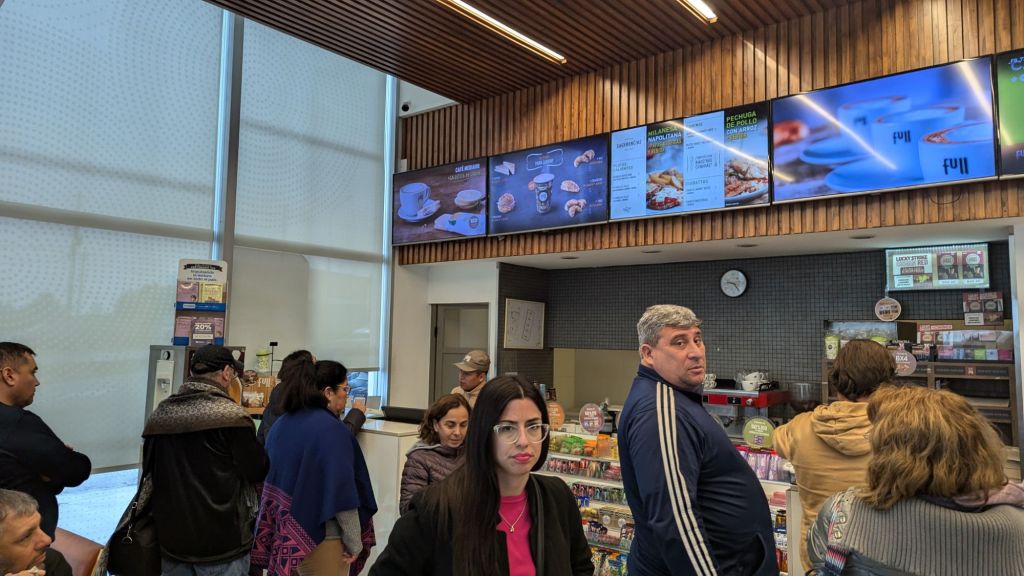
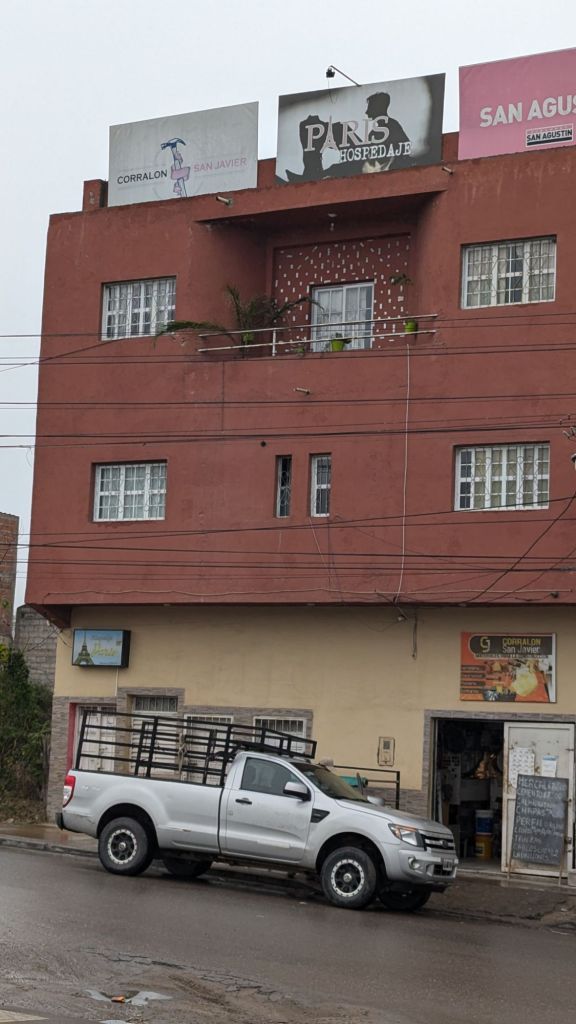
At 9:16 AM Julio indicated we were about to make a stop and he suggested that if we planned on buying drinks or snacks we do it then, since the future stop would be “touristic” and we wouldn’t want to waste time. He also said that after this we would steadily be gaining altitude. As announced, at 9:21 we had a 15 minute gas station stop. I think we were in San Salvador de Jujuy in San Pedrito neighborhood. Lots of people were getting food, but I had eaten beforehand so thought I would be fine waiting until lunch. At 9:35 AM the advert sign for Paris lodging left little to the imagination as to the intended clientele. Then at 9:39 PM I was waiting again back in the bus. It was rather overcast and quite cool (10 C), but Julio seemed to think the sky would be more clear where we were going.

At 9:45 we were on our way again. Julio was doing a running commentary as we went. Evidently, here due to weather patterns, you are much more likely to find snow on the mountains in the Summer than you would find in the winter. That was an interesting tidbit.

At 10:50 AM I had sort of fallen into a half asleep state the last hour, so when I opened my eyes, we were just then arriving at  Purmanarca and yes, it is now completely sunny here. It’s a picturesque village, and I understand why people like to stay here overnight. I was a bit sorry to have missed the gradual change of scenery and climate, but it was a beautiful thing to open my eyes to after the dreary overcast weather in Salta.

I saw at 11:06 that there was a lookout point (Mirador el porito), but it was 5500 for foreigners (300 nationals) but it didn’t seem that one really got to see anything all that special by going there. Just to stand there didn’t seem worth it. This reminded me of similar silly things which were charged for when I was visiting China.

It was very nice to walk around a bit, but I think I would have liked it for longer than 40 minutes.

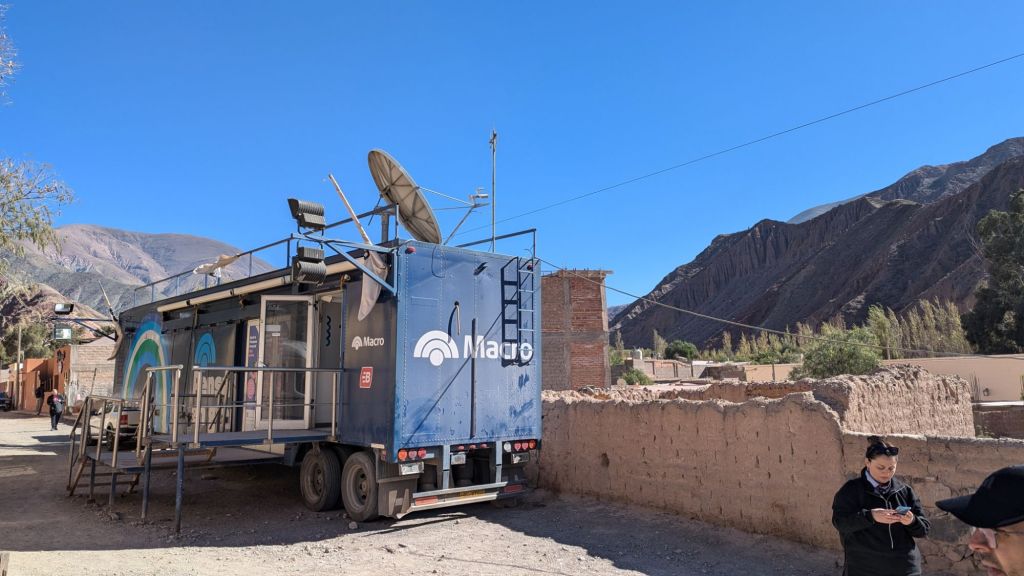
At 11:34 AM I was again waiting again for the transport. There was a mobile ATM installed, as the physical one in the town was not working and the closest physical bank is 30 km away.

Then at 11:40 AM we departed, only 10 minutes later than had been projected. So far, this entire trip, I’ve found the roads to be excellent.

At 12:00 PM we passed Tilcara. For much of the ride, Julio, who is also the driver, keeps up his running commentary. Similar to when I was in the area around Ladakh, I found it all to be constantly beautiful, but I could also understand how full time residents would find it monotonous after awhile. Different from the area around Leh, where the mountains look barren, here the mountains many times had a green sheen due to low growing plants.

At 12:11 PM we made a quick stop at Huacalera where there is a monument to mark the Tropic of Capricorn line. There I took a couple of obligatory pictures. Throughout the trip I’ve noticed that while there are frequently opportunities to buy souvenirs, the salespeople don’t hassle or chase after you. This might be because bargaining isn’t a big thing here . . If you like the price, you buy it. If you don’t, you don’t, and everybody seems fine with that.

At 12:37 PM we arrived at Humahuaca, and at 12:42 PM we got off the bus and into the restaurant. The flag which is hanging is the flag of the pueblos originarios, which now has a similar status to the national flag which is blue and white. That’s why both of them were raised on flag day. I paid 9000 ARS ($7.26 USD) cash for my take away lunch and then at 12:51 PM was picked up by the next transport to Hornocal. Cachete is the guide and with this group we go to Hornocal.

He gave us a Coco candy and also suggested that we put some sort of liquid inside the nose. I have no idea what it was. He was talking the whole time, but I couldn’t hear him for most of the time because of a fan they had turned on right above me. At 1:45 PM for some reason Cachete asked us each to pay 500 ARS more which I did along with everyone else. I guess it’s an entry fee charged by the Hornocal community. Again, I couldn’t really understand anything, so who actually knows.

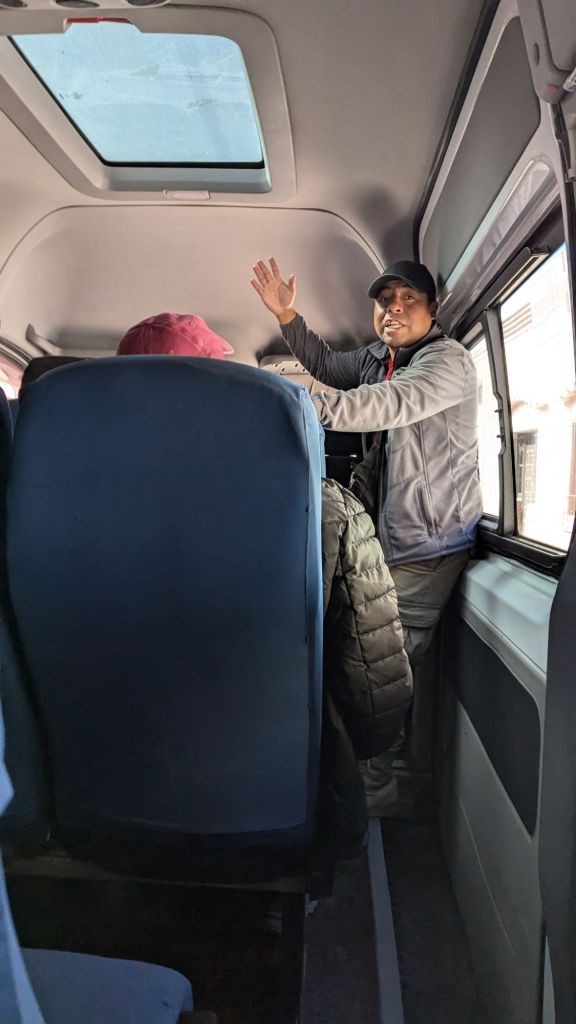
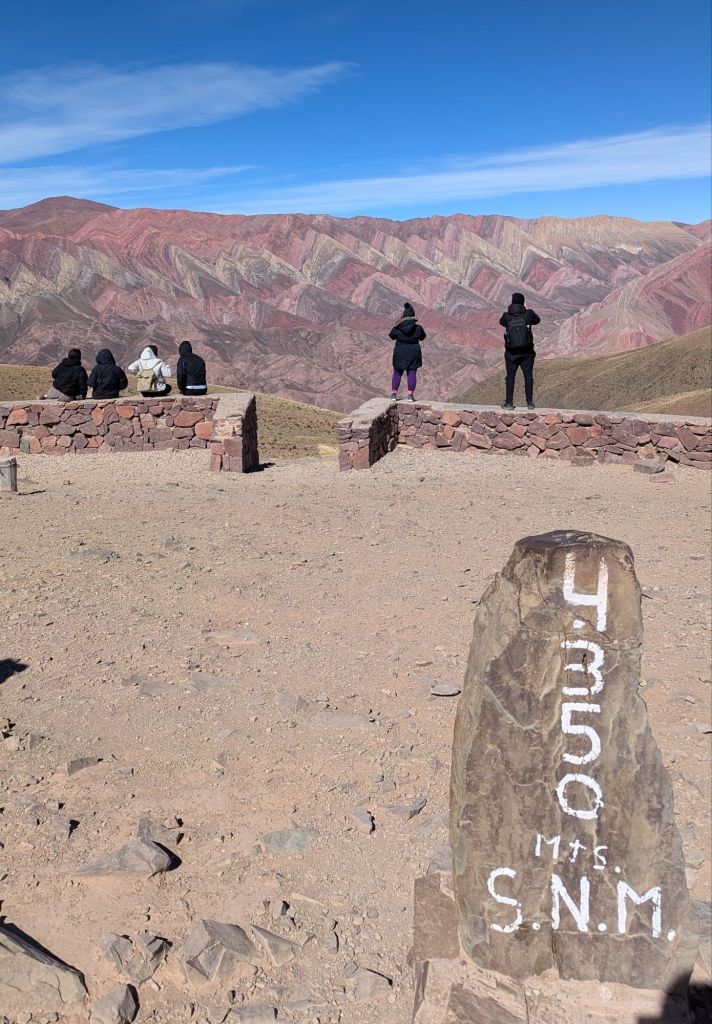
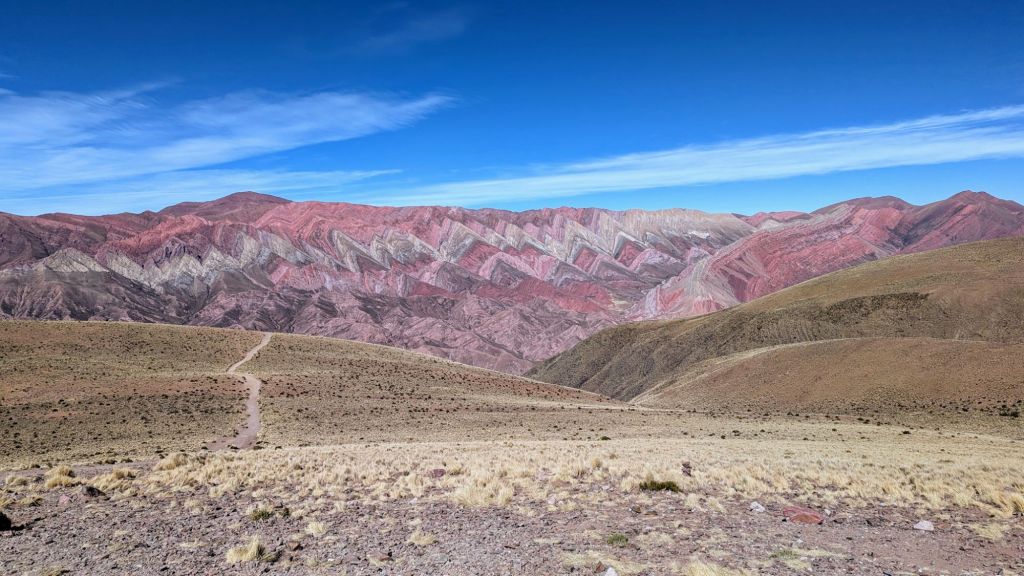
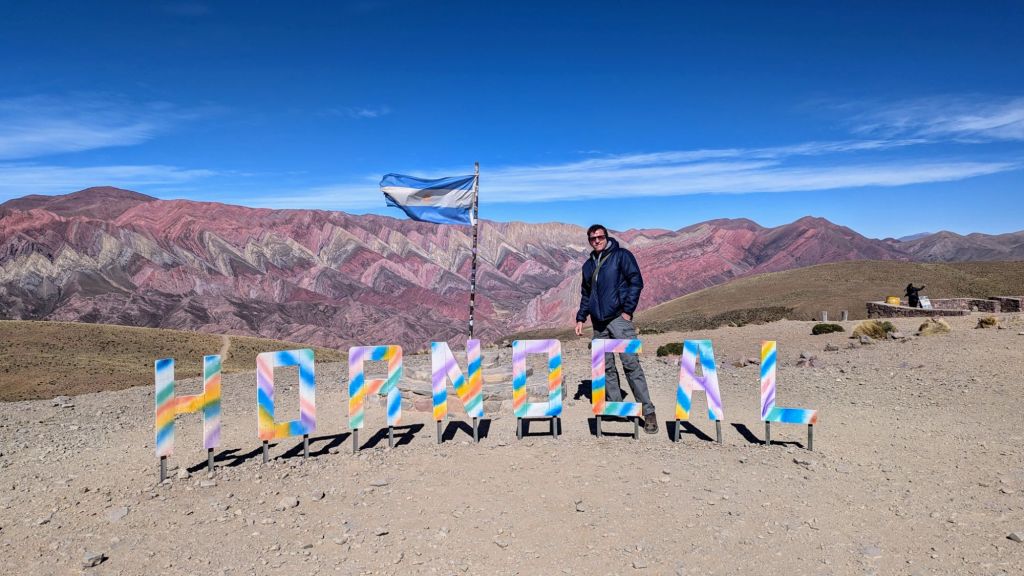
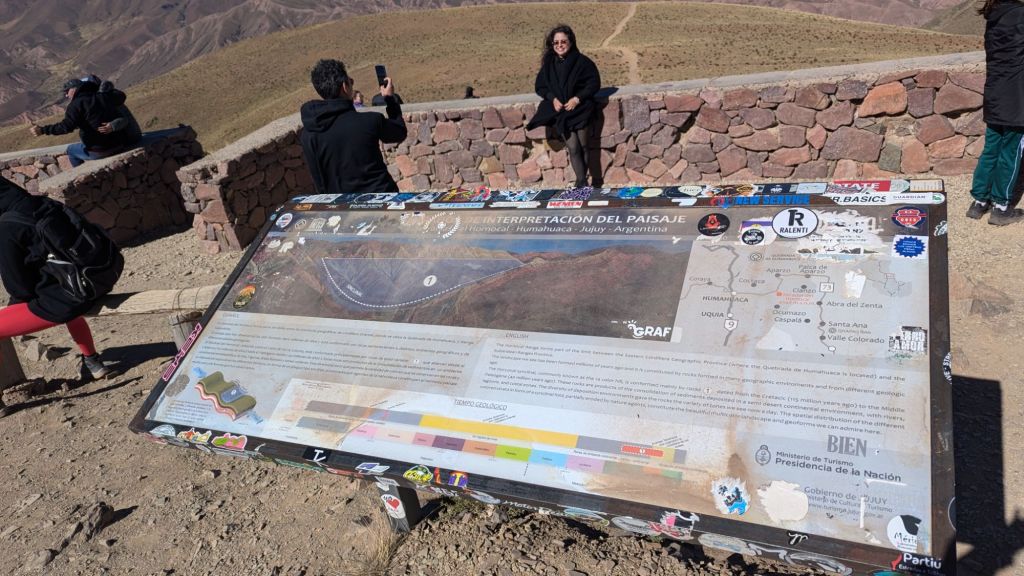
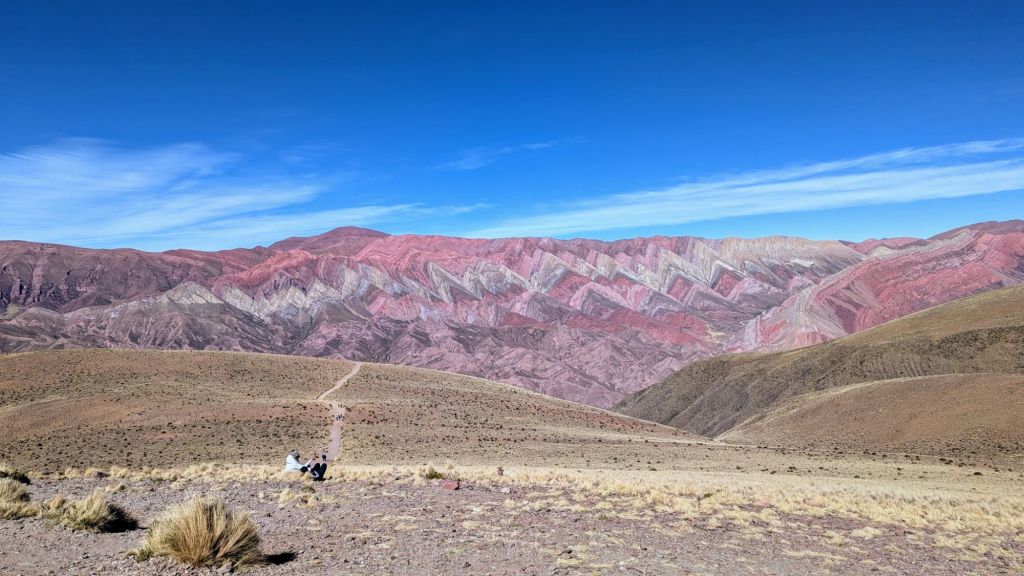
Finally at 1:53 PM we arrived. We were told to be back in the transport at 2:20 PM. So anyways, this was the famous 14 color hill. Yes, it was impressive, but I understand why a lot of people stayed back in the town. At 2:10 PM everyone was taking turns helping take pictures of each other next to the Hornocal sign. Despite being at 4350 meters above sea level, I fortunately didn’t feel any altitude sickness. That might have been because of the coco candy and the liquid, or maybe I just wasn’t affected. At any rate, I was happy to not feel sick. It was quite windy.

As instructed, at 2:22 PM we were back in the van and heading back down. I wasn’t really sure why we had brought this food before heading up. With how bumpy the road is from Humahuaca, it certainly does not make sense for us to eat it in the van, and there also was no time to eat it at Hornocal.

I noted that for some reason while they had thought we needed that deafening fan on while we were coming up and the guide was talking,  on the way down we were without the fan. I’m glad I at least saw the hill, since it’s one of the emblematic sites of the area, and yes I would have been sorry to come this far and then not see it.

Perhaps in response to my thoughts, at 2:40 PM they turned on the fan again, I’m not sure why, but at least nobody was talking this time. Then at 2:49 we stopped, because an older woman in the van who had not been feeling well needed to get out. I’m not sure where they took her, but I think it was to get some sort of medical attention. As if altitude sickness were contagious, at 3:02 PM while we were waiting, another passenger took ill, fainting, and they had to bring the first aid people to give him oxygen. As you may already know, not everyone responds the same to high altitudes, and I’ve been told that even someone who was fine in the past at the same altitude may take ill later on during a future visit to that altitude.

Fortunately at 3:14 PM we were on our way back down again, arriving to Huacalera at 3:46 and immediately transferring to the other transport. Cachete came through to ask for tips, and I gave 1000 ARS even though I didn’t hear anything he had said. However, he had given me a coco candy and several sniffs of his magic liquid, which might have helped with me not having altitude sickness. I would have also like to walk around the town of Huacalera a bit, but there was no time.

Once we were under easy, I, like the others who had gone up to Hornocal, ate my lunch on the bus, finishing it at 4:13 PM. The roasted chicken, 2 small empanadas, rice and a badly bruised apple were not delicious, but they were perfectly adequate. The beef empanada was notably better than the chicken one.

Again at 4:17 PM we stopped on the side of the road because the woman who had fainted earlier was again sick. Fortunately she seemed to recover quickly and then minutes later at 4:27 PM we pulled into Tilcara. We had 30 minutes to walk around here. I think this is a town I would like to stay in even more than Purmamarca, since it seemed more “real” and Purmamarca appeared to just be a tourist village/trap.

At 4:42 PM I thought that this looked like it would be a nice place to live, but I can only guess at how easy or difficult it is to make ends meet. Here for sure though, I suspect one needs a car. But who knows, maybe there is a local bus that goes around to nearby villages etc. . . At 4:45 PM we departed.

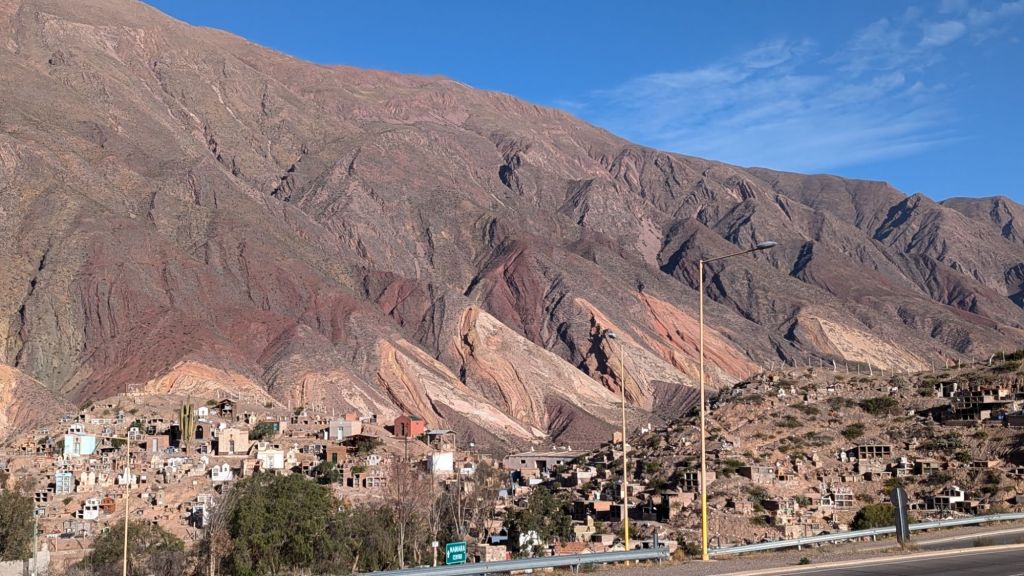
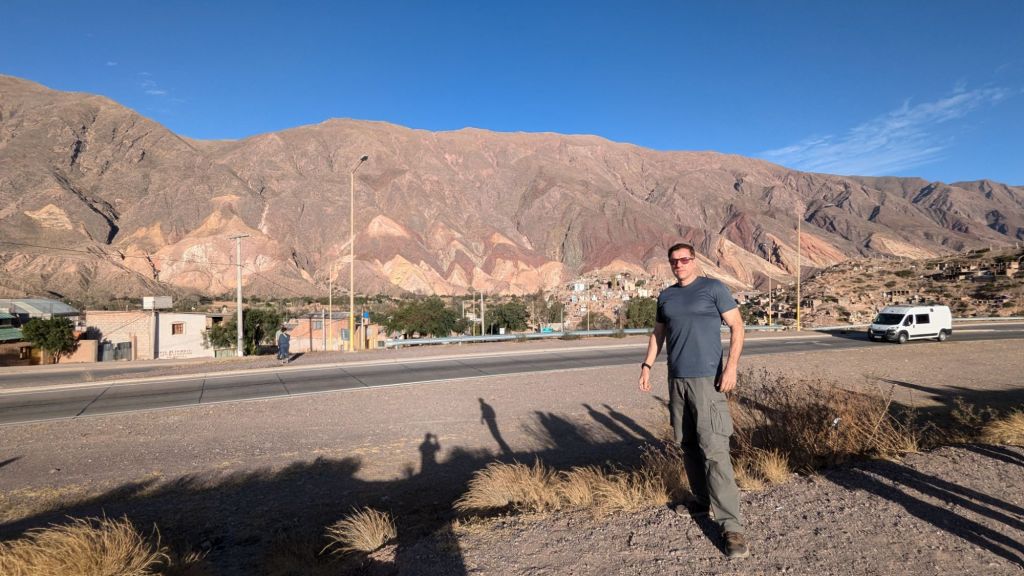
However at 5:10 PM we stopped again for 5 minutes to do photos at Maimara. There was an interesting cemetery there as well as another multicolored hill. One of the other passengers there kindly gave me his SAETA (Salta public transport) card, saying that he would no longer need it. That was much appreciated, as I hadn’t been able to find one the day before.

At 5:41 PM we again started  through the magical cloud boundary. I imagined that when we emerged, it would be all overcast etc again the same as it was in the morning. Sure enough when we got through at 6:00 PM, yes, that’s what happened.

Then at 6:28 PM we stopped at the same gas station as before and I bought an over-priced coffee with milk for 2750 ARS cash. Shortly thereafter we continued on our way, and at 7:50 PM I noted that we still had 45 minutes left of travel

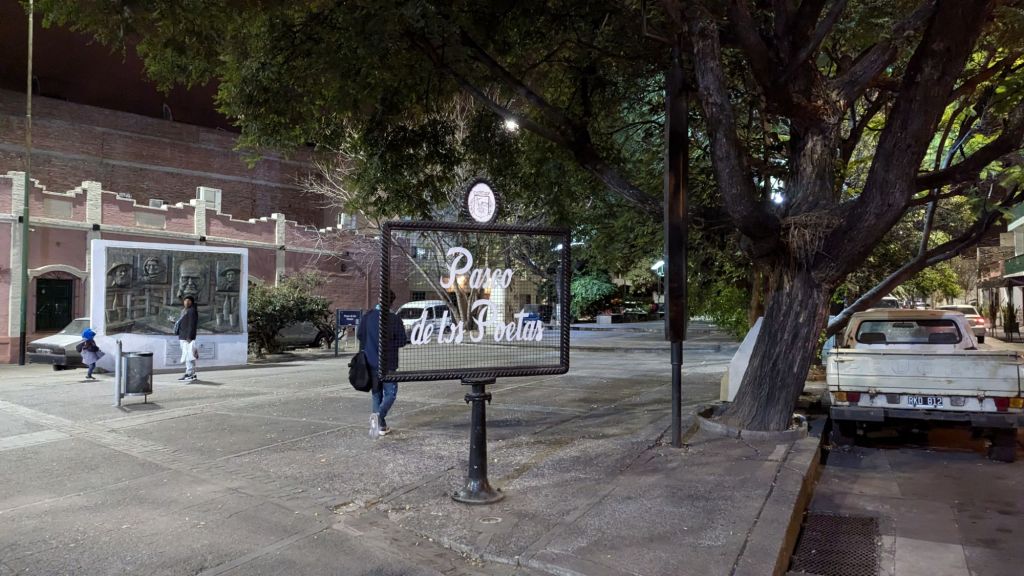
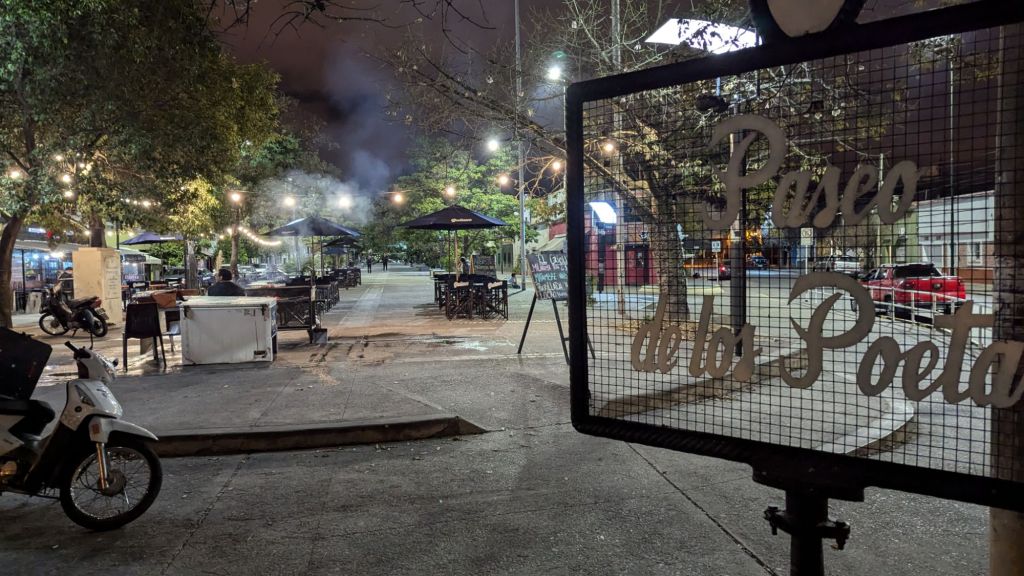
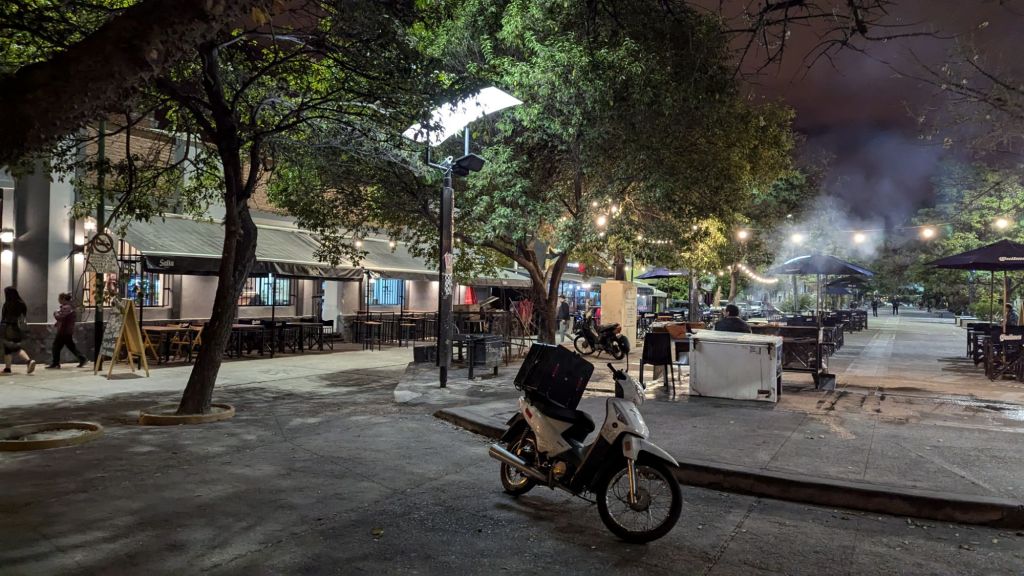
Finally at 8:41 PM I was dropped off right outside my apartment in Salta. However, I decided to go straight to the nearby Paseo de las Poetas to get food. While I quickly arrived at 8:46 PM, I immediately saw it much less busy than last night. Almost nothing was open. Incidentally, I again saw two police officers. To be sure, I see police here everywhere. Was there really that much crime, or would it be chaos without them?

So at 8:52 PM, despite what might have been the case last night, I came to the conclusion that this definitely wasn’t a place to get food on a Monday night. I decided to check nearby for somewhere else. I guessed the Plaza de 9 de julio would work, I headed that way, but was resolved to stop somewhere else that looked okay should I encounter it before reaching the plaza.

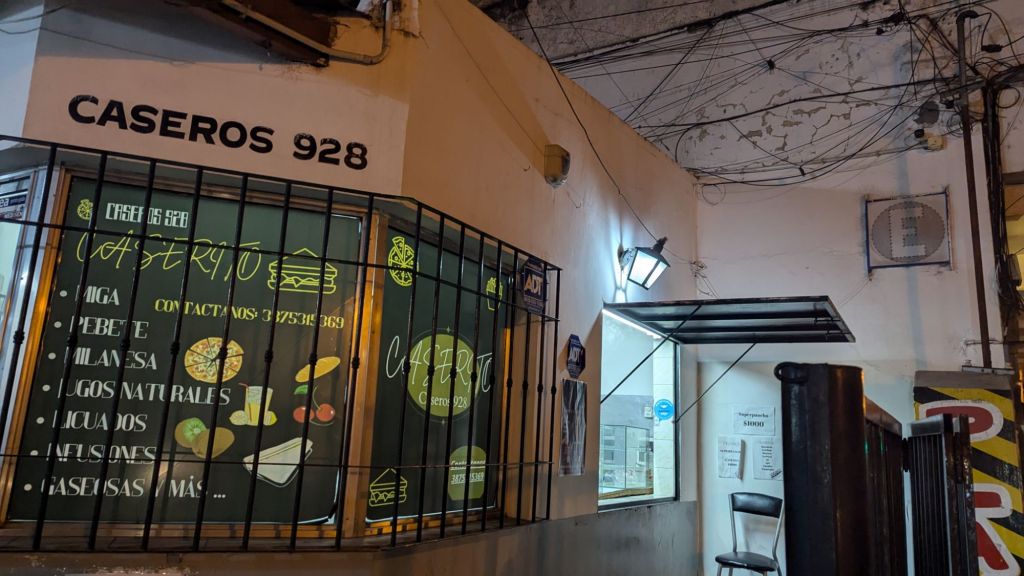
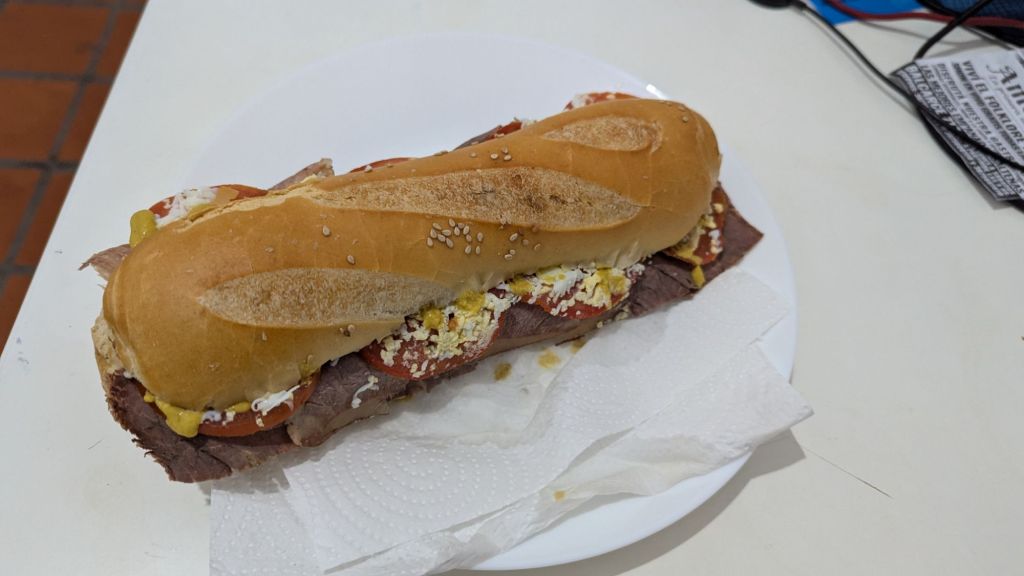
Sure enough at 9:07 PM I saw a tiny sandwich place and decided to just go there, where I only paid 1600 ARS cash for a large subway sandwich. The lady working there was incredibly nice. I thought I might go back there again. I turned around and headed back in the direction of the apartment. Then walking back to the apartment. On the way at 9:12 PM this was the second time I had seen a local dance studio. . .Laura López studio. This sort of leisure class to formally do face must be very popular for people here.

By 9:22 PM I was back in the apartment with my sandwich! I continued working on my blog until 11:35 PM, when I was finally able to sleep. So that was my first small group excursion in Salta. I thought it was great. What about you? Let me know in the comments section below.

I was so happy to have this sandwich!

Argentina trip: Day 9 (23 June)

Hi there everyone, so today was my first full day in Salta, but given how late/early I got in this morning (read Day 8 for details), I obviously would not be making a full day of it.

Surprisingly though, I woke up on my own at 10:30 AM and started taking care of practical chores like washing clothes and bathing. This took some time, and I also was not in a big hurry, so it wasn’t until 1:47 PM that I departed walking from my lodging at the corner of Lamadrid and Alvarado.

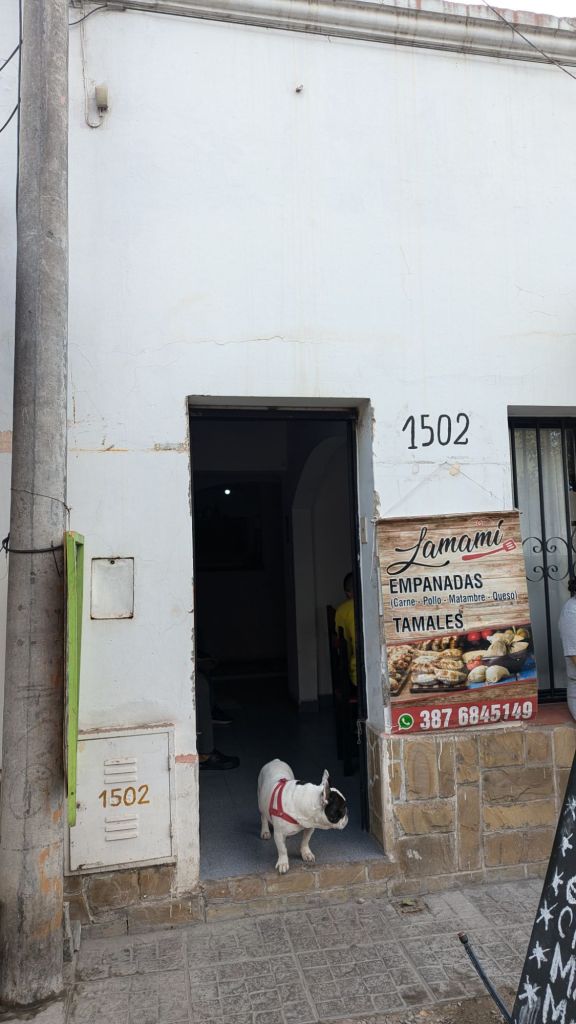
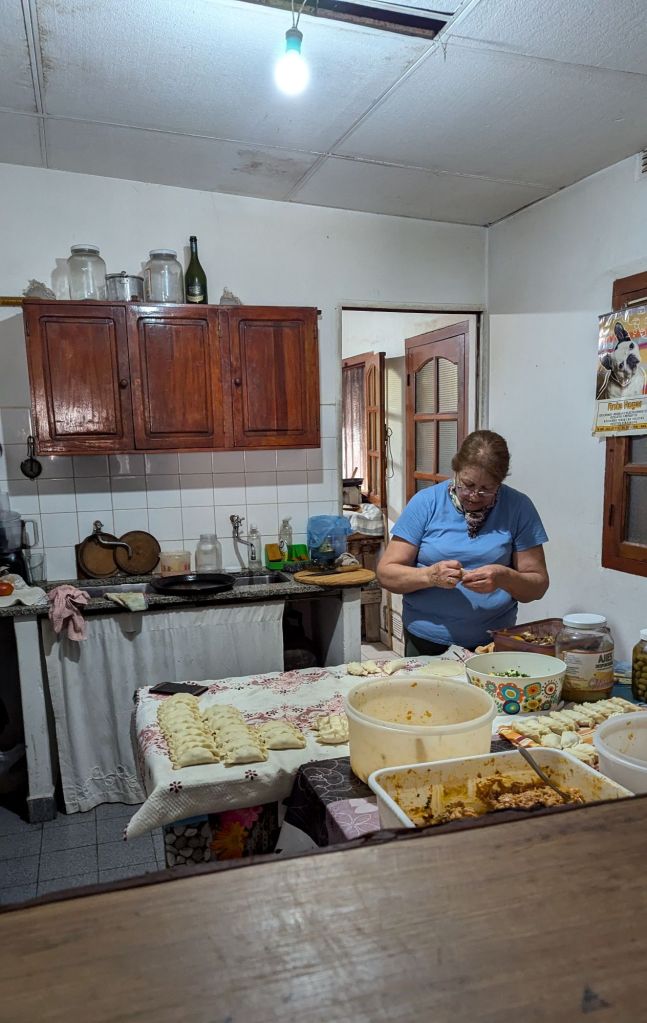
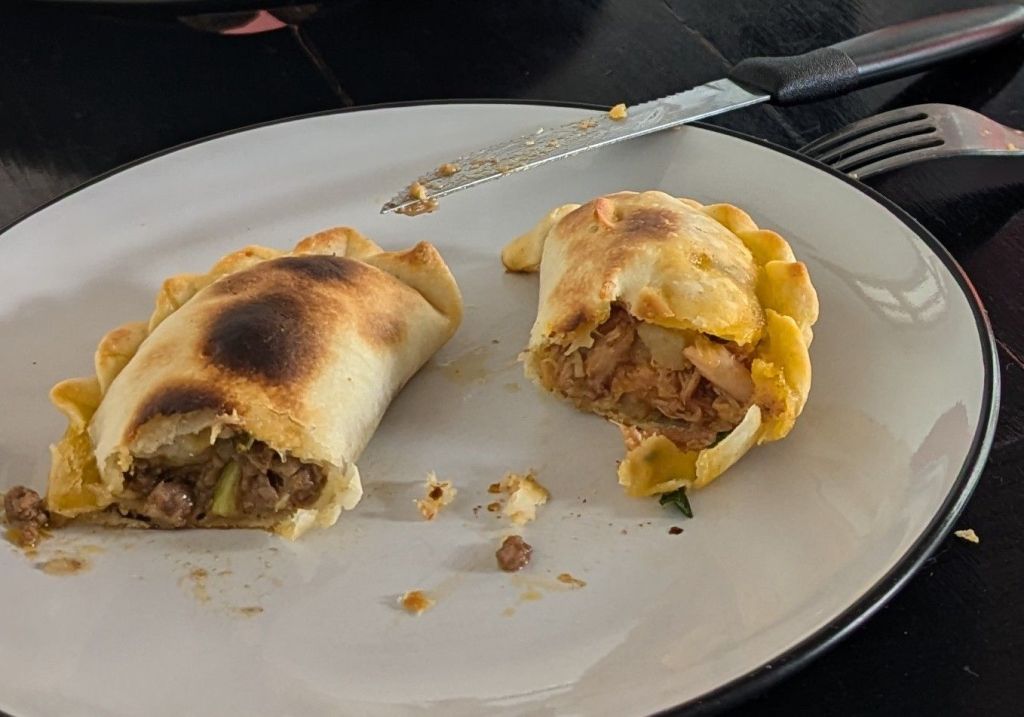
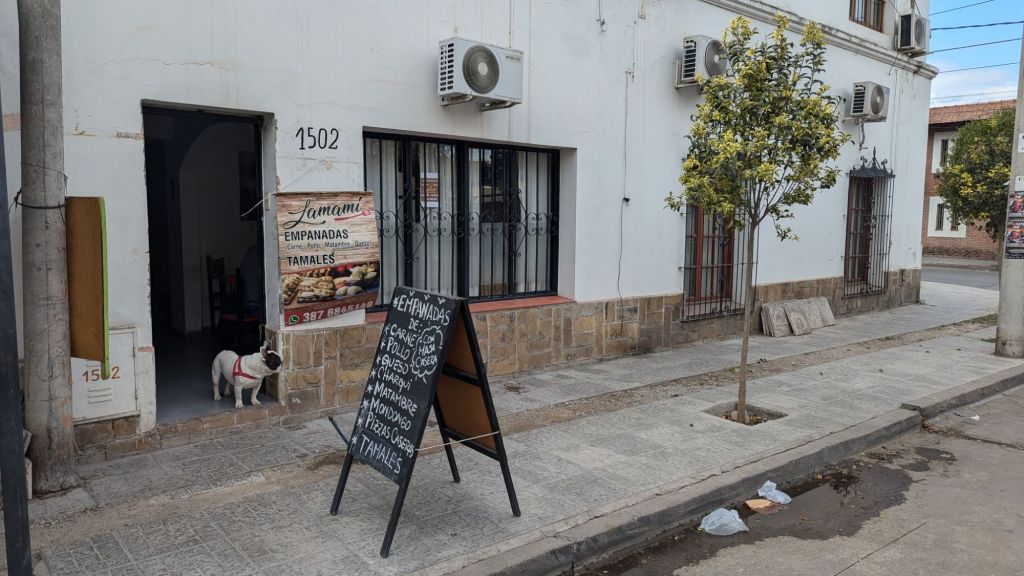
Nearby at 1:55 PM I saw La Mami Empanadas y Tamales. It looked like a simple neighborhood place which no doubt would have good food. When I walked in, I saw that the window where you order actually shows what appears to be a household kitchen, where two women were hard at work making the fresh tamales and empanadas. I ordered two tamales, 1 empanada de carne, 1 empanada de pollo and some sort of local red soda called Ice Granadina. Then, as directed, I sat down to patiently wait.

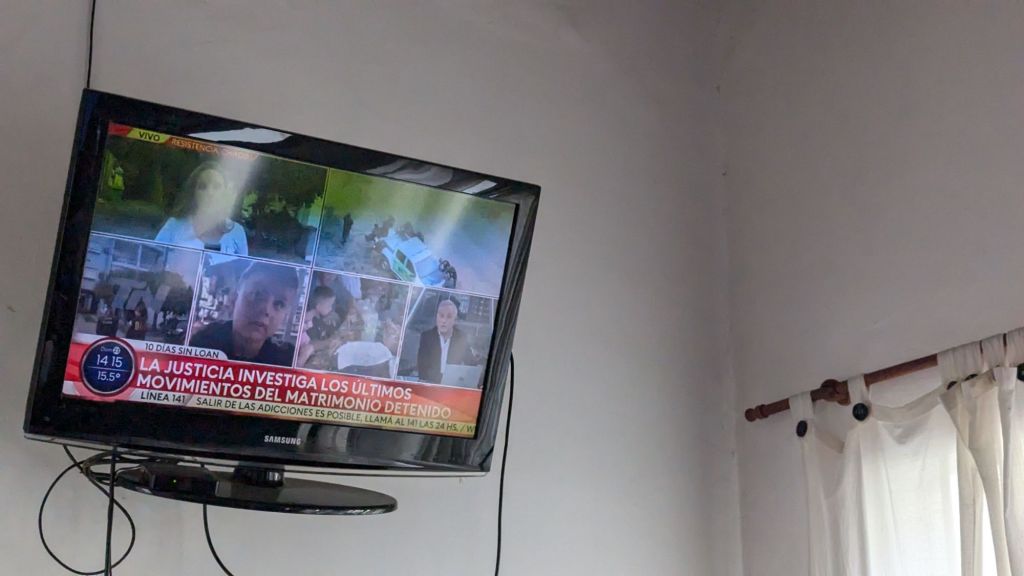
At 2:12 the tamales came out. During this whole time there was some sort of a local news broadcast on, and I noted that the reporters, especially the woman were very agitated about what they were reporting. I think it has to do with a missing boy named Loan.

At 2:28 PM I noted that the tamales were nice, quite different from the ones in Costa Rica, but still tasty. Although the room was small, there were several people still waiting for empanadas. Presumably the tamales are faster since they are prepared more beforehand and only need to be boiled, but there empanadas are either freshly baked each morning or throughout the day.

At 2:45 PM the empanadas arrived. They were very hot, presumably having only just then come out of the oven. Both were delicious.

Finally at 3:15 PM I paid and left to head back to use the restroom before going to the cerro a la virgen. I paid 4500 ARS cash, which based on my most recent currency exchange in Buenos Aires, was roughly equivalent to $3.63 USD

I was back in the apartment at 3:20 PM at the apartment and then 3:28 leaving, with the intention of walking towards Cerro de la virgen. I realized though that it was much further than I had thought, so at 3:37 I got an Uber. Even with a local public transport card, which I still didn’t have, it would have been very difficult to go this late in the day, because it would have been a 90 minute trip.

In Uber, it was much faster, and at 4:05 PM the driver was leaving me at the bus transport point, as no other vehicles are allowed from this point on.  The bus you take there looks like a standard public bus, but it’s free to go up and down from this point. I paid the UBER driver 5000 even though it said 4000 on the app; he seemed like a nice guy and he certainly drove well. So the trip had a cost of roughly $4 USD with the tip included.

At 4:06 PM the bus headed further up the hill; there weren’t too many people. At 4:12 PM we had arrived. I noted that everything was incredibly organized. With that in mind and given the very small number of people, at 4:16 PM I was already in the short line to see the virgin, arriving at the viewing area at 4:21 PM.

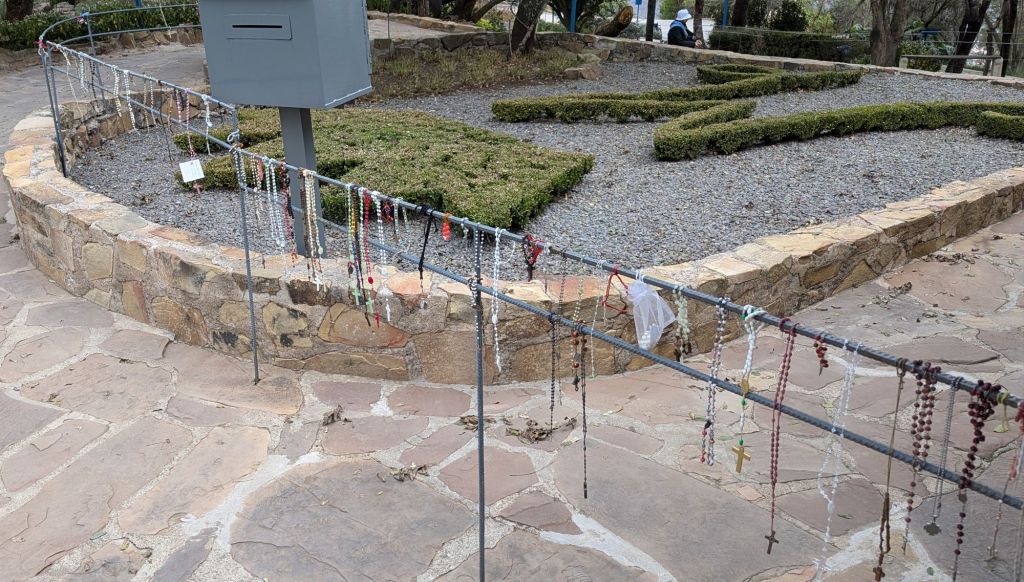
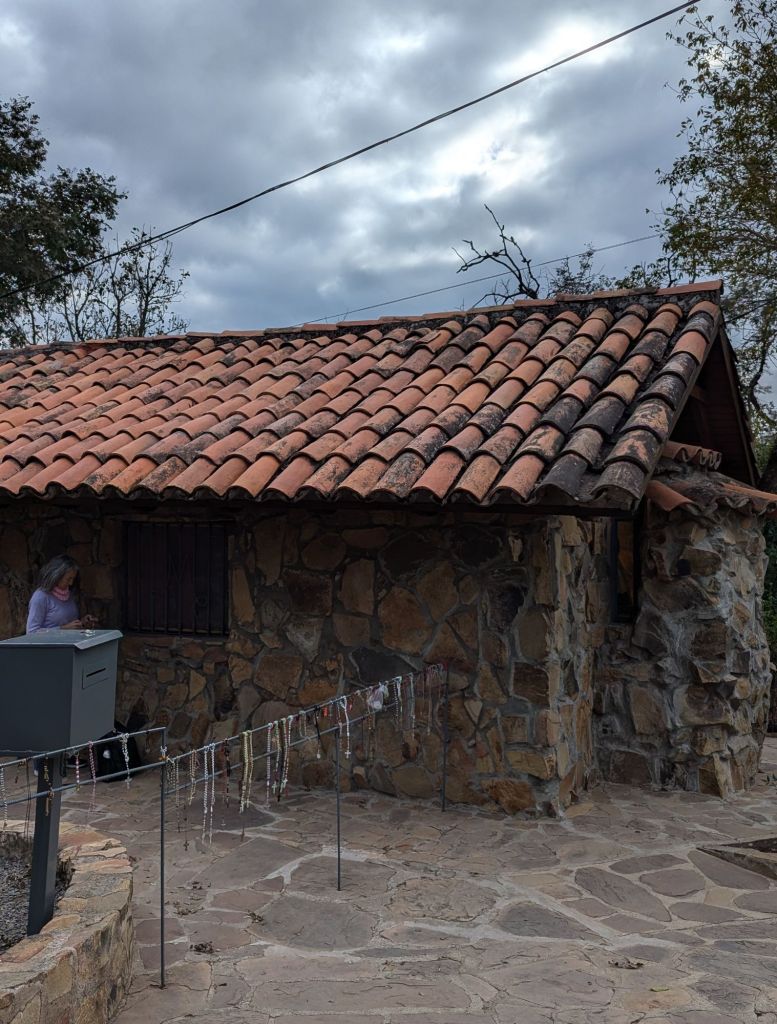
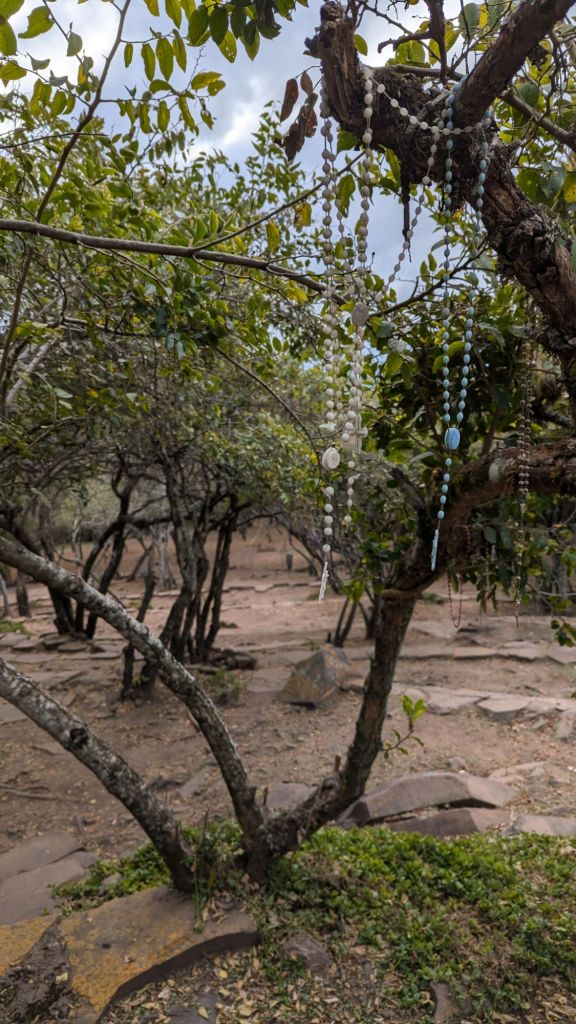
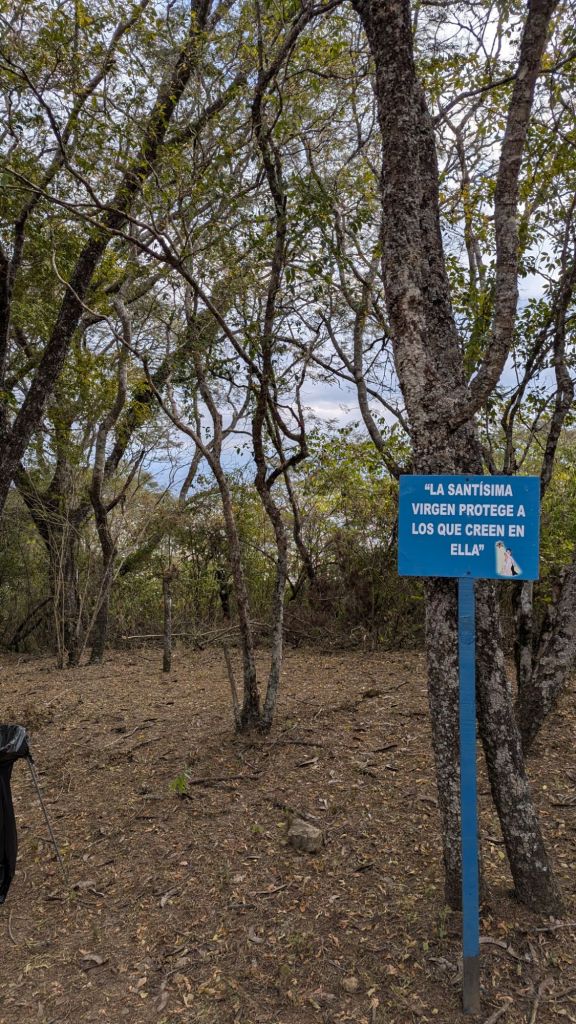
This is In no way meant to take away from the sacred nature of the site for believers, but honestly it was way less impressive looking than I had expected. It seemed to be a thing to leave rosaries hanging various places around here. I presume first they do a full rosary prayer and then leave it, but I don’t know anything about the system. 

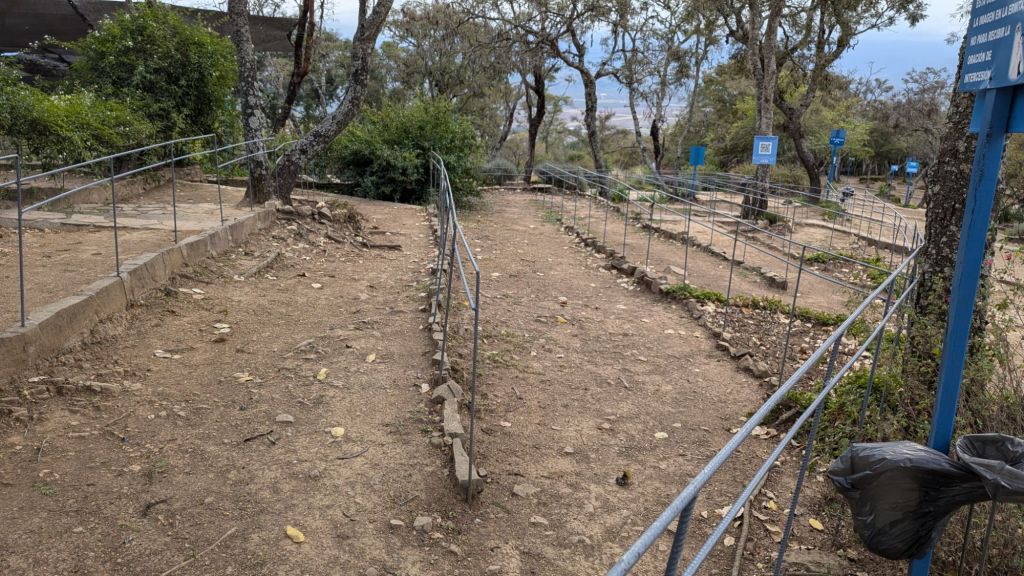
Trying to understand what it was that evidently draws large numbers of people to this place, at 4:24 I was just walking around the area a bit. They have a huge human corral system so evidently sometimes this place is massively crowded, but definitely not now. Again at 4:32 I noted that rosaries seem to get hung on stuff all over. I wondered, how long do they get left and what happens to them when they are removed? As this is a religious site, presumably they don’t get thrown out. . . Perhaps they have some acceptable way to dispose of them. . . Saving them seems like they would have a mountain of them after some time, especially after a major visit.

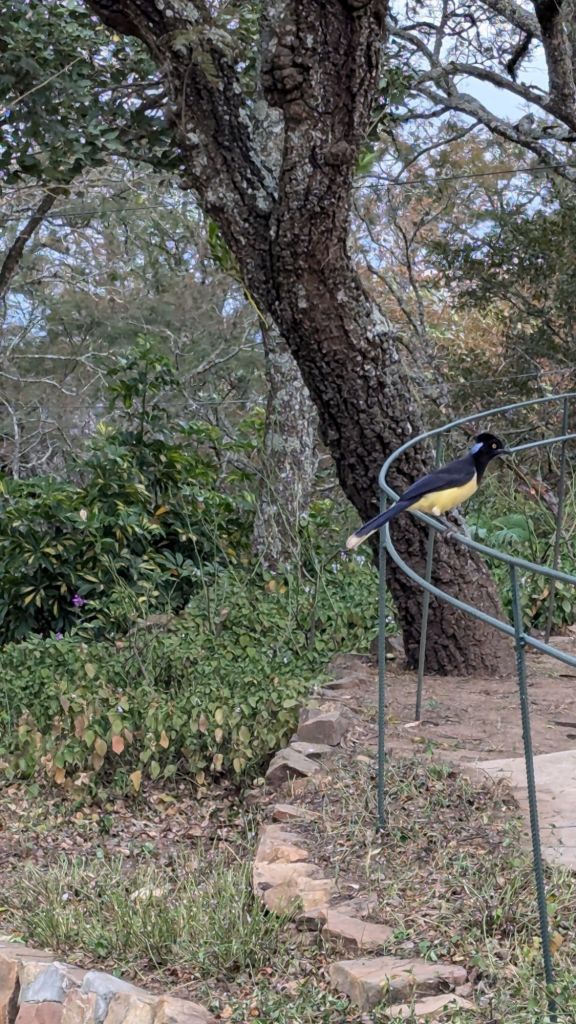
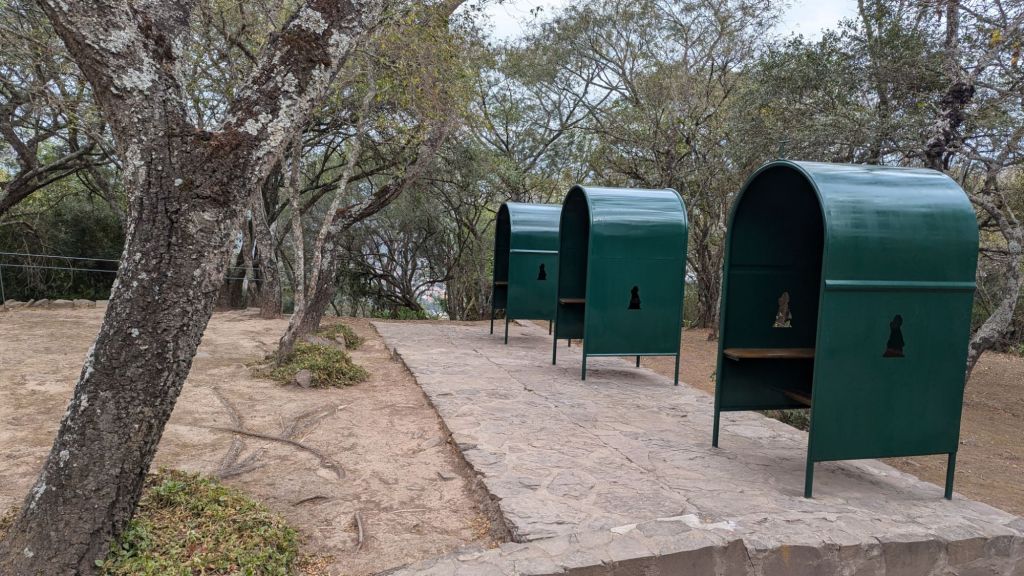
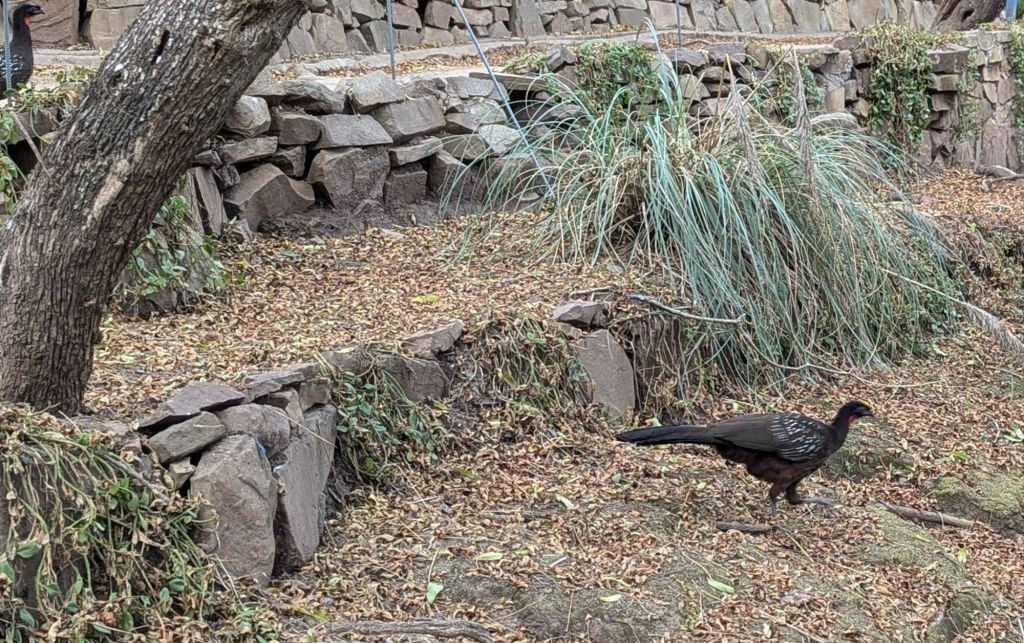
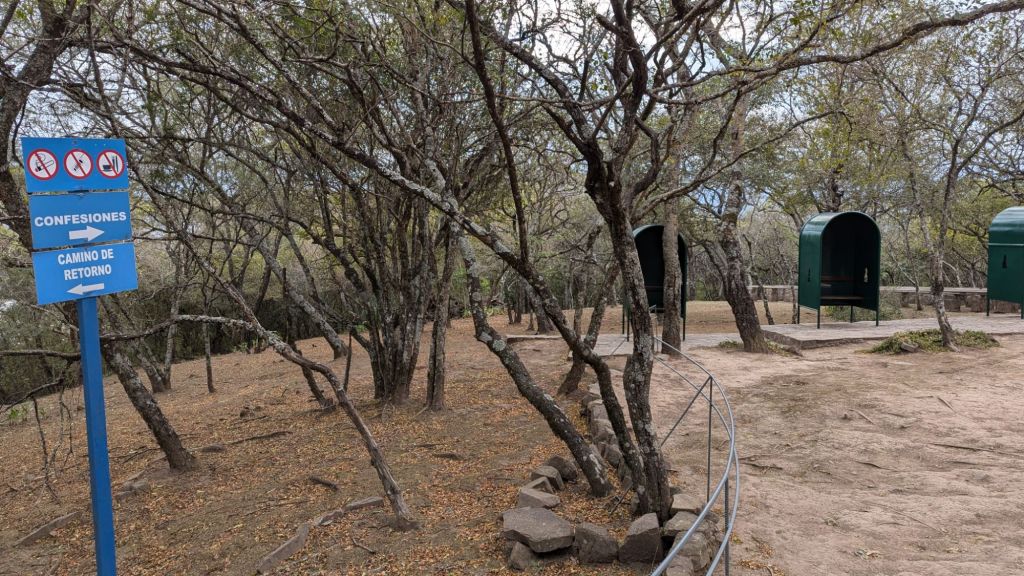
At 4:31 PM I saw that there were these larger birds like the size of a duck or large chicken. They seemed capable of flight but to prefer walking. As I looked at these green structures, I just couldn’t figure out their purpose. I thought maybe they were some sort of open air confessionals. Sure enough, shortly thereafter at 4:44 PM I saw a sign pointing towards the green structures, and it said “confessions”.

Well, I had thought that perhaps by walking around everywhere in silent contemplation, I would come to understand the attraction of the site, but at 4:50 PM I realized it just wasn’t going to happen for me. Honestly, it was all very anticlimactic. Undoubtedly if there were a couple thousand people, all in silent prayer it would be a different effect, but as it was, being a non Catholic simple tourist, it was pretty and all, but not amazing.

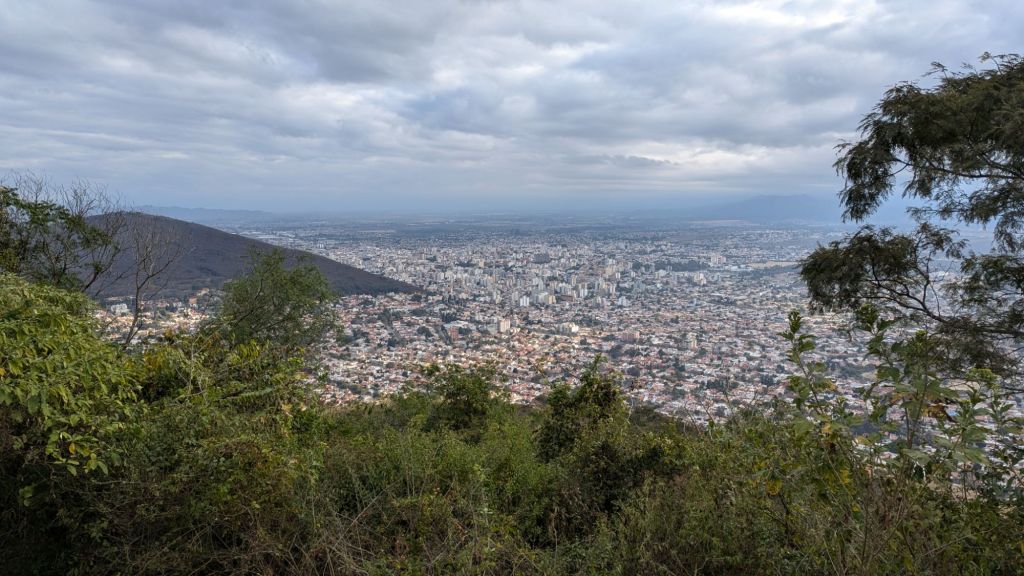
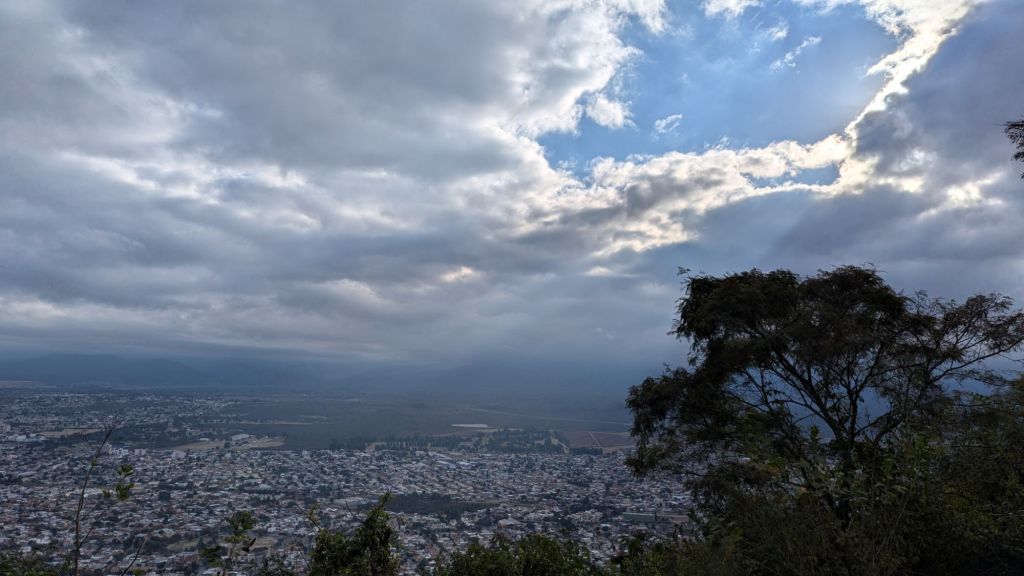
Happily at 4:54 PM I did at least finally find an unobstructed view of the city; that was at least fairly impressive. For most of the area, the trees and shrubs block the view. From here I could also understand that the city of Salta was much bigger than I had initially understood. I sort of started walking down, and at 5:00 PM I thought I might have found an alternative walking path used down. I thought maybe this was what was used by serious religious pilgrims who come here. However, this is all complete supposition.

Continuing to try to understand the impact of the site on many visitors, at 5:03 PM I thought that if people really did respect all the “silence” signs when there are a few thousand people here, that would certainly be something to see. The area itself is quite large, so that would be a ton of silent people waiting hours and hours for their turn to see the virgin.

As this was not me, she had not helped me understand why people come here in large numbers.

Walking down the pedestrian path, at 5:08 PM, I saw a couple of local people ignore the white tape which blocked access to the road, so I decided to do the same. While I could guess at the purpose of the tape, it didn’t say “Don’t pass”, so I reasoned it must not be a big offense.

At 5:14 I was now walking down the road, presumably to where the bus had picked me up previously. it didn’t take long, and at 5:28 PM I arrived at the bus area where I decided to just continue walking back to Salta city.

At 5:57 I was down to the start of the city. This section initially assisted to clearly be an upper class neighborhood, but as I continued walking, I refused my initial assessment to call it a mixed middle class and upper class area. Still, it was fully residential and without a doubt a nice place to live. I think this neighborhood was called Tres Cerritos. Here I sat reading in a small park until 7:47 PM and then decided that I should continue on my way.

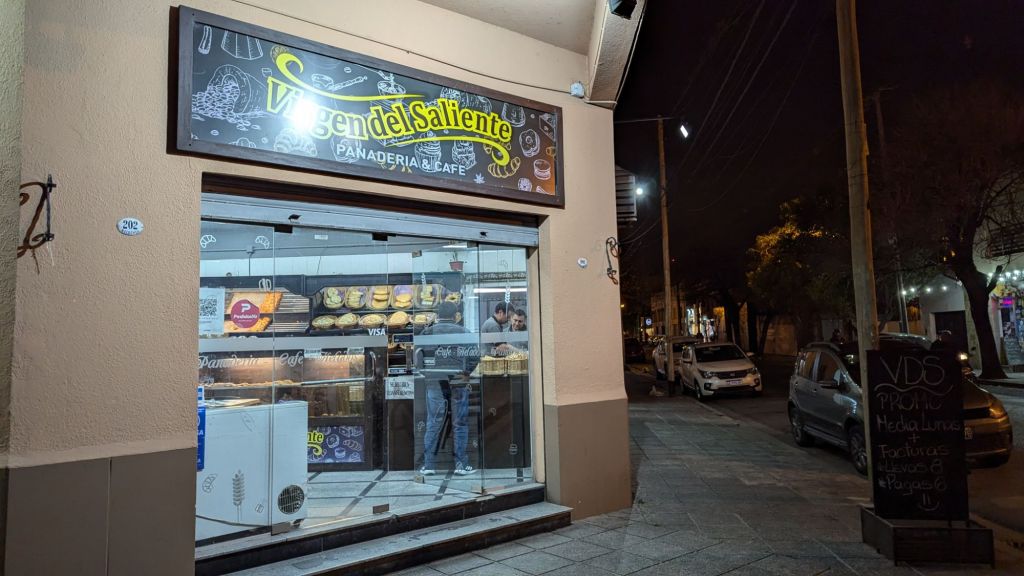
At 8:24 PM I bought 5600 ARS in cash of various bakery items (4 media lunas, 4 of some sort of cheese and sausage pastry and a large, chocolate covered Alfajor) from a Virgen del Saliente bakery and cafe. I ate the Alfajor almost immediately while I was walking and it was delicious.

By 8:36 I was passing the Plaza de la Democracia and then at 8:46 PM the Plaza 9 de Julio. This second plaza appeared to definitely be a place I should return to the next day. There was a theatre and also many different places to eat.

Then at 9:02 PM I walked by the Paseo de las Poetas, which also appeared to have several good places to eat, even though it was much smaller. Finally at 9:09 PM I was back at the apartment and in bed by 10:10 PM

So there you go everyone, that was my first full day in Salta. Tomorrow I have an early day, since my first of four day-trip tours begins at 7:00 AM. Today was much more relaxing than yesterday, and while I didn’t see anything particularly amazing, it was still a good way to get settled into Salta. As always thank you for reading along, and don’t hesitate to put your questions and comments in the section indicated below. Finally, if this sort of detailed travel blog looks like something you’d like to see more of, go ahead and subscribe so that you never miss an entry.

Argentina trip: Day 8 (22 June)

Hey there followers, as this is the day I head north to Salta, I have an important errand to take care of ahead of time. Since, I’m not sure about how easy it will be to exchange dollars out what rate I might get, I left the apartment walking at 9:00 AM to try and exchange dólares at a western union which was close. I wanted to compare this to my earlier experience to see what would be better.

One big advantage was that it was a lot closer. At 9:15 AM I was already at the San Telmo Western Union branch where I changed $100 USD for 124000 ARS. They gave me 2000 bills, with a slightly better exchange rate than I got a week ago at an informal exchange place. If that is the tendency, it’s probably better to just exchange at the Pago Facil Western Union branches. According to the Dollar Blue app it should be 127000 for $100 USD but I assume nobody actually gets that amount, and again, at the end of the day, for me or didn’t make that much of a difference. Perhaps if I had asked around in several places, I could have received even better, but as a tourist for a couple of weeks, I was happy with this exchange rate. I was also happy that I got 2000 bills, since it was a smaller bunch of cash.

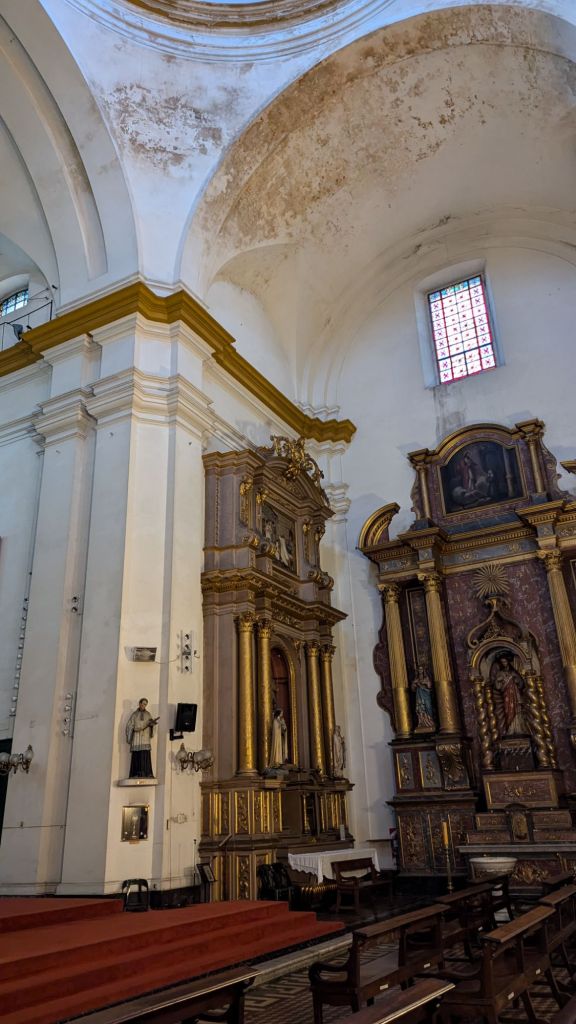
I left the exchange house at 9:20 AM on foot, deciding to stop in at the San Telmo church at 9:27. It was simple by Catholic church standards in Latin America go, but I liked that. This place exists as a neighborhood place of worship, not a tourist spot. 

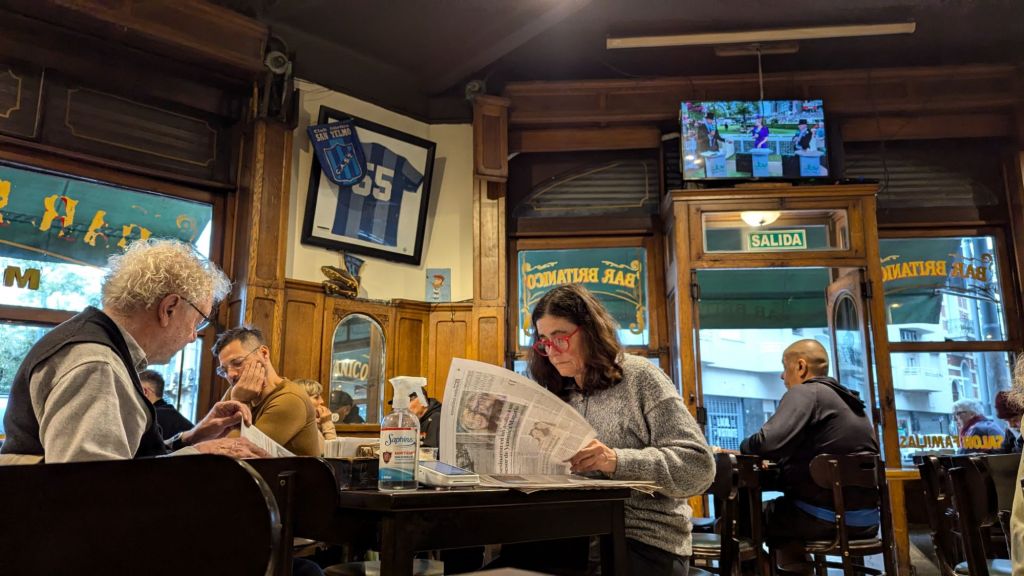
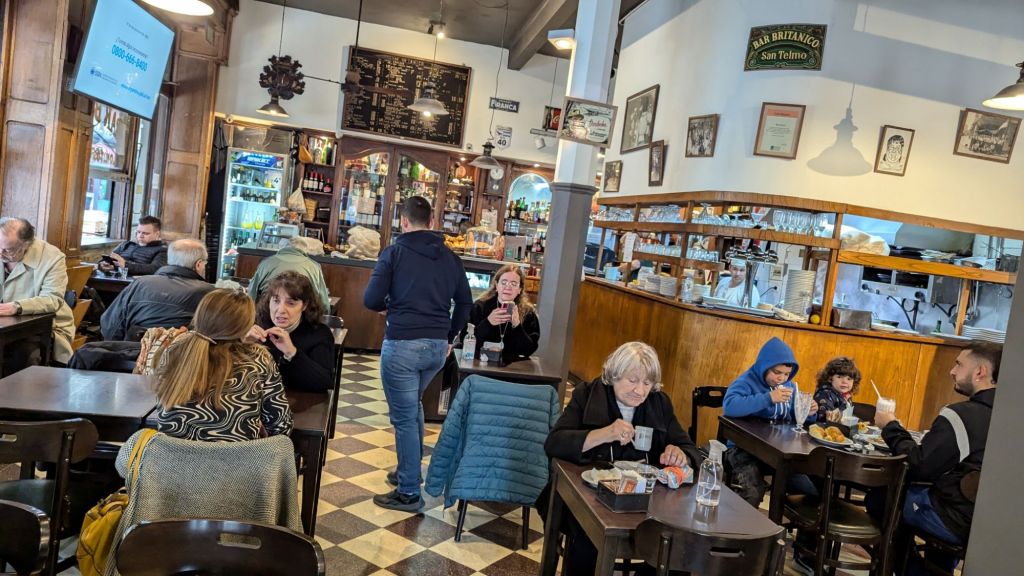
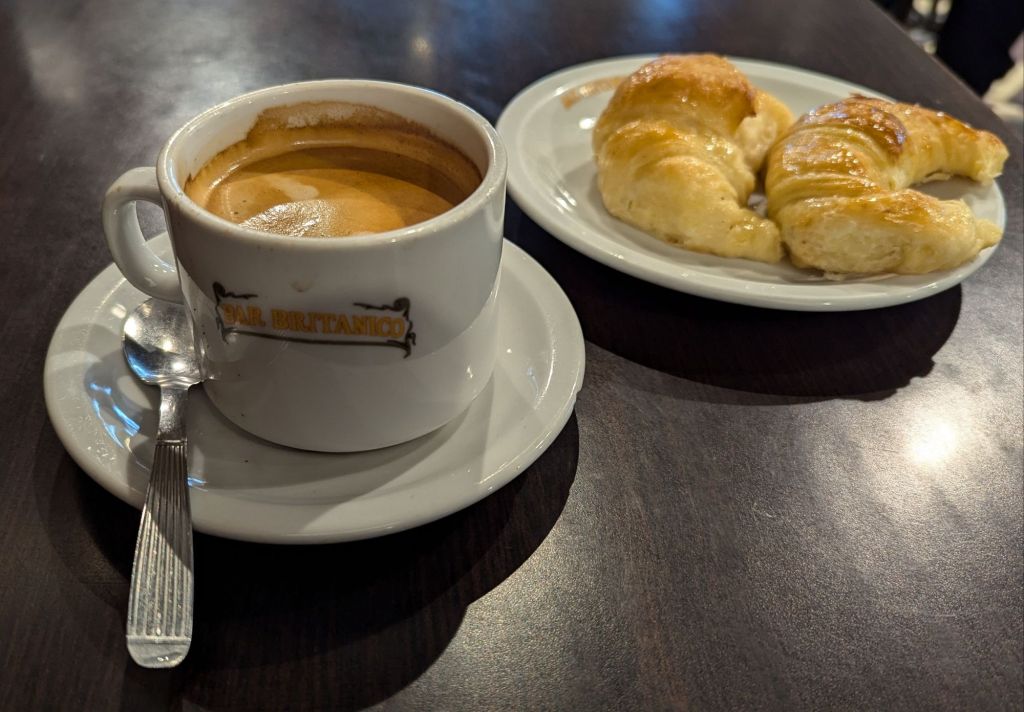
After a brief walk through, I left at 9:35, headed towards the nearby apartment, but before arriving I stopped into Bar Británico at 9:54 to get a café doble and two media lunas. Again, I didn’t really know what I was asking for in terms of coffee, but that was one of the options. There were lots of people there, so I figured it must be a good place to get a light breakfast.

At 9:59 AM the coffee and pastries were served. These were my first “media lunas”, which is sort of significant since that seems to be the default morning food here. They are a sort of dense, lightly sweet, croissant shaped pastry. I paid 4200 ARS cash + 420 ARS cash tip.

I was there until 11:04 AM when I decided to exit since it had been getting a bit warm inside for me, as I had on my coat, so I walked across the street to Parque Lezama where I stayed sitting for a while.

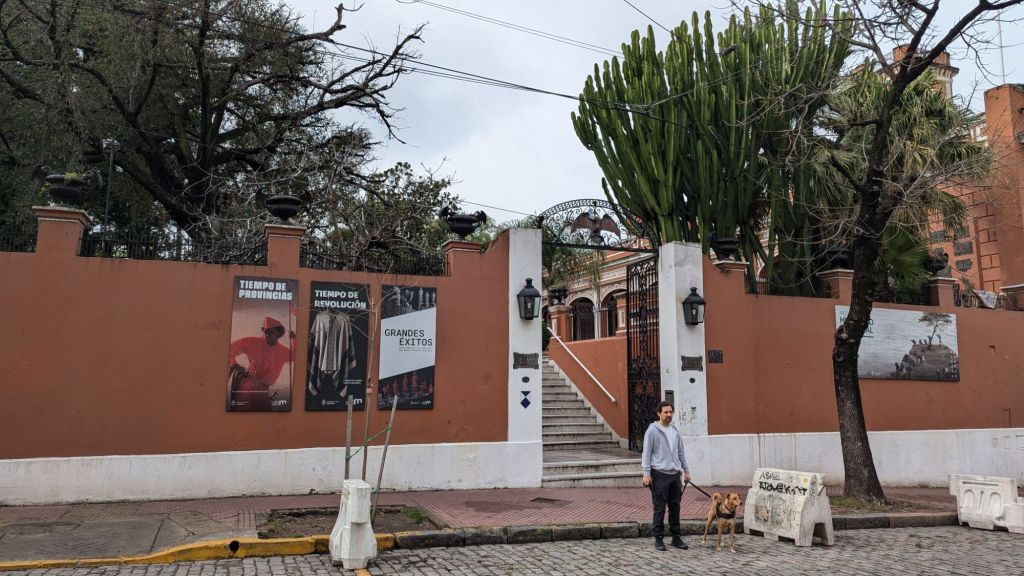
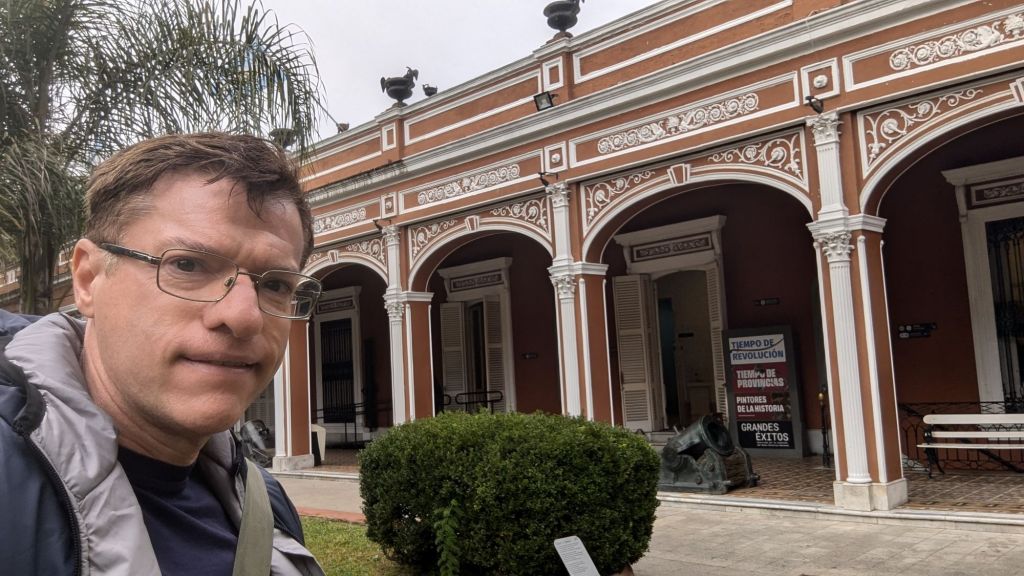
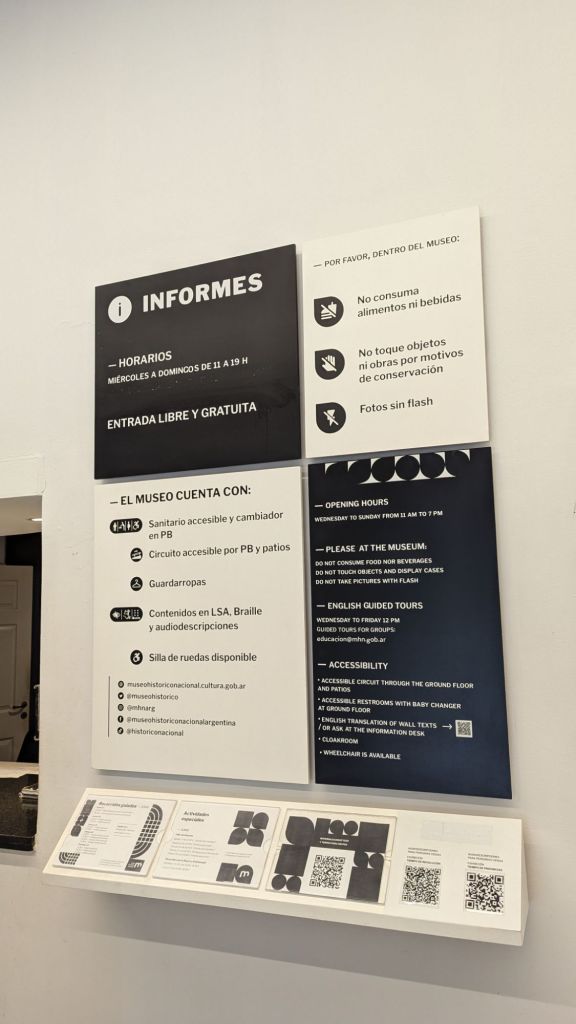
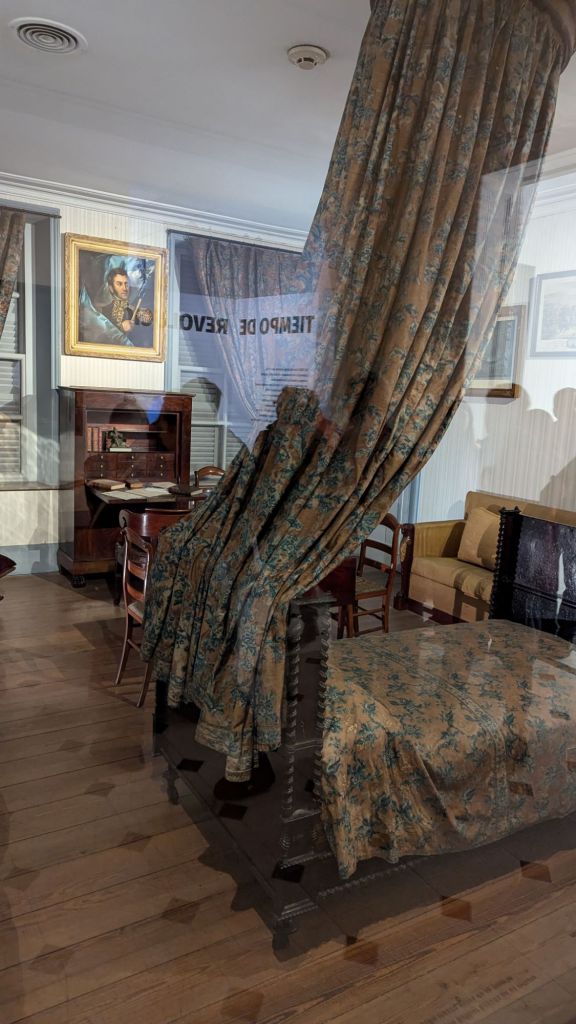
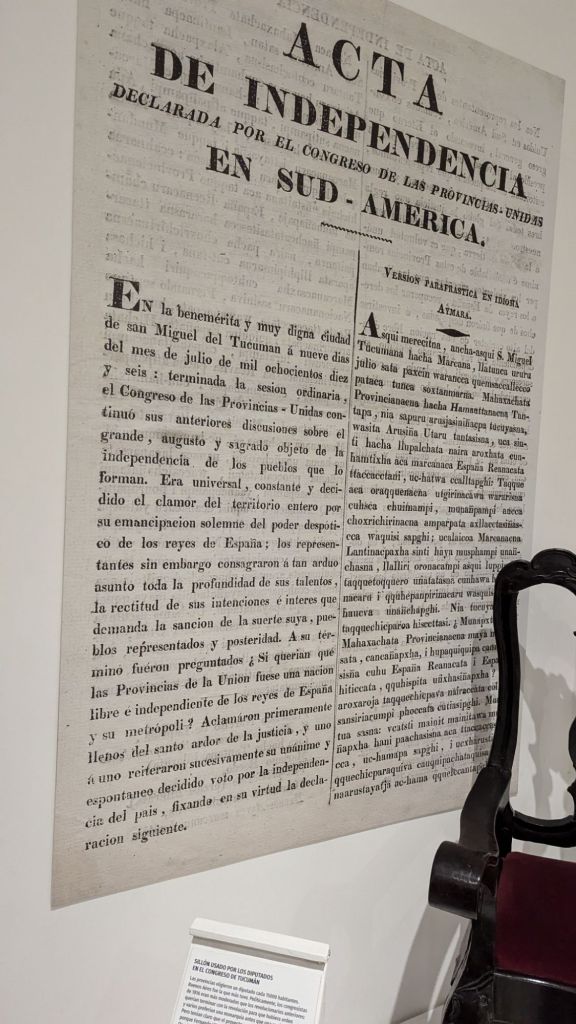
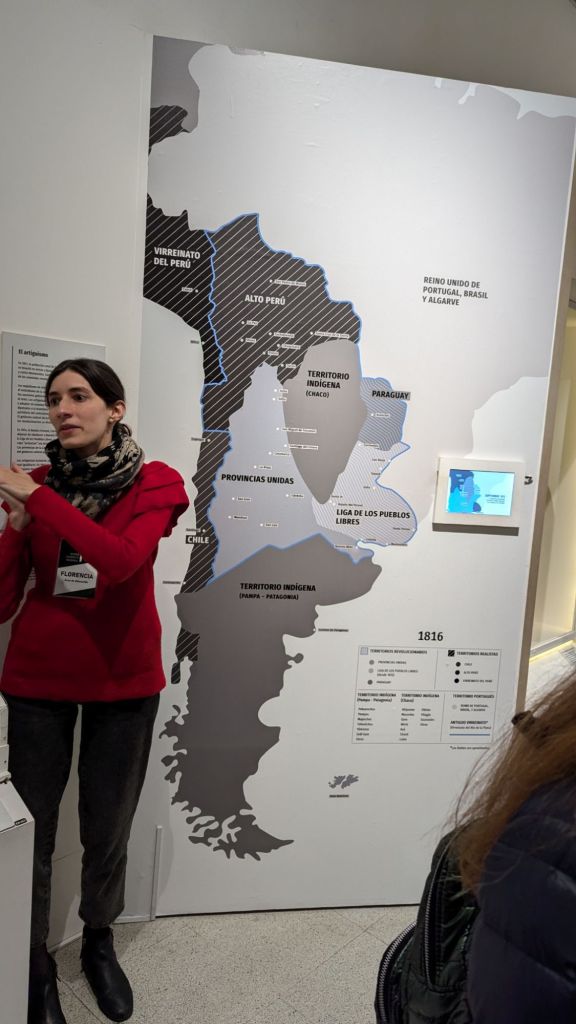
Then on a whim at 11:30 AM I decided to check out the nearby Museo Histórico Nacional. As luck would have it, there was a free guided tour (in Spanish) which had started right at 11:30 AM which I was able to join. Entrance to the museum was also free. 

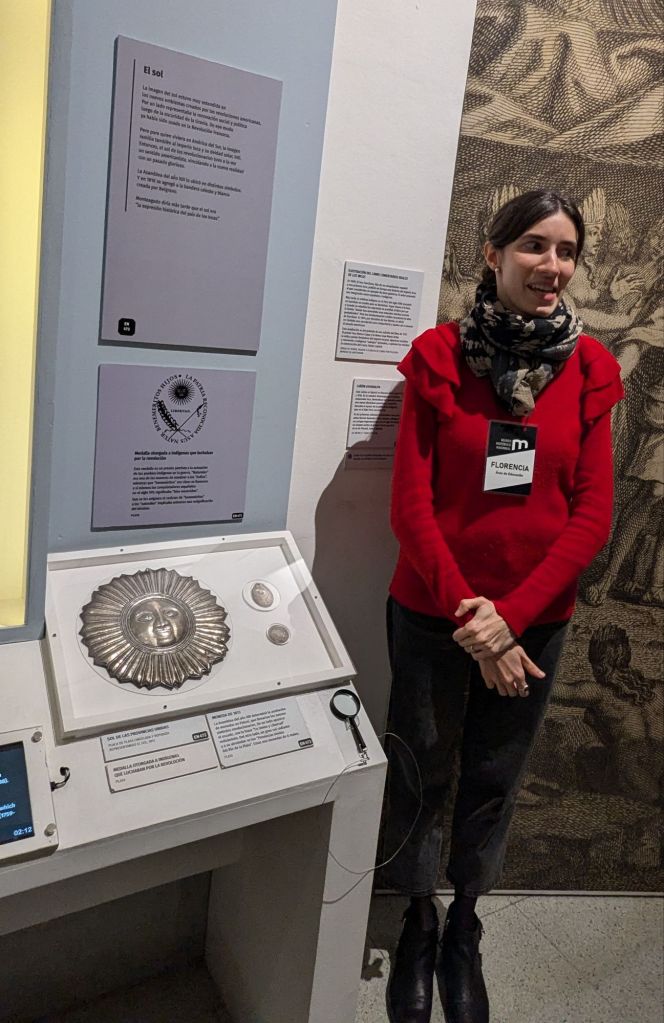
I learned that the museum and park was previously a private residence which was donated by the Lezama family. At 11:42 AM the guide was doing a great job, and really made the story of San Martín come alive. She was very expressive, making things interesting. Her name was Florencia.

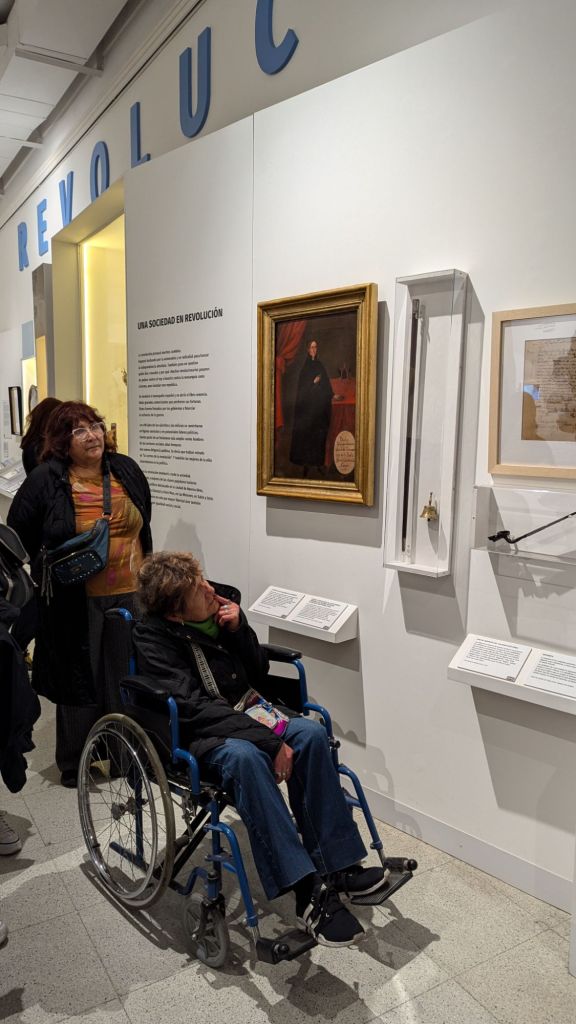
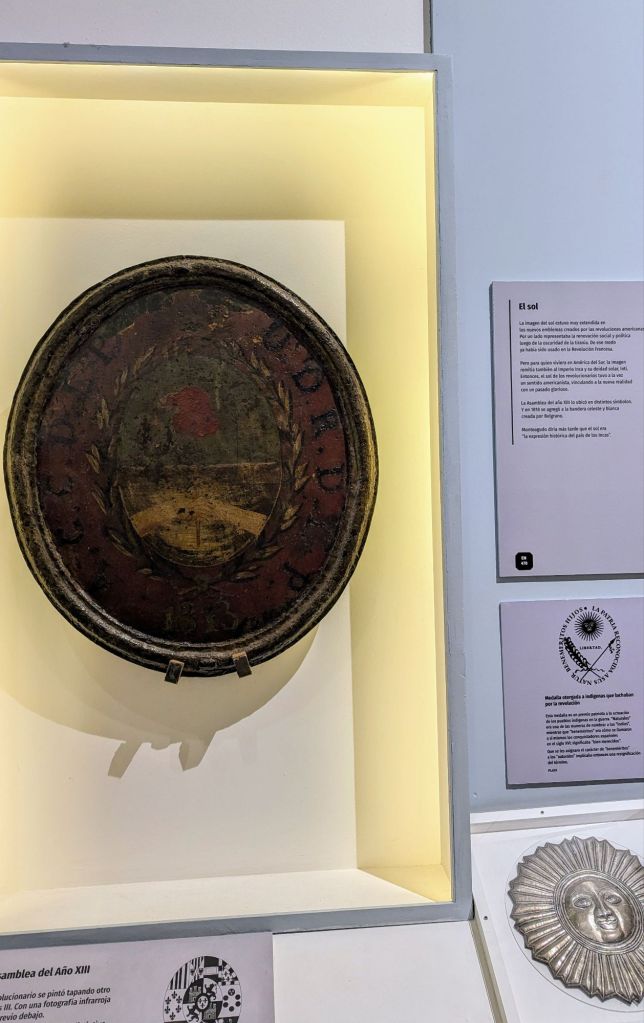
At 11:49 I was also impressed that the guide had a chair brought for an older woman who was having problems remaining standing throughout the tour. At 11:54 she told us about the first “National shield” that is known to exist in Argentina. It was actually painted on top of an older sister shield from before the declaration of independence. 

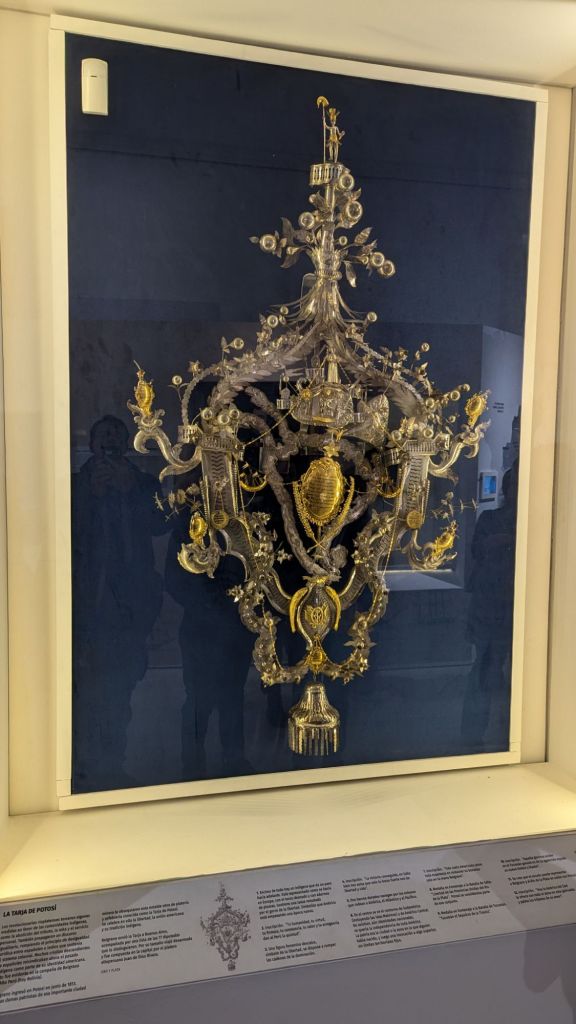
I also learned that in 1813 in Potosí there was clearly a discourse in favor of abolishing the inequality of the indigenous people which took place under the Spanish. A clear symbol of this was the Tarja de Potosí. However, as noted by the campaña del desierto, that didn’t really apply to all the indigenous peoples. The Tarja itself is made of silver and gold. Note the representation of an indigenous man at the top of the Tarja.

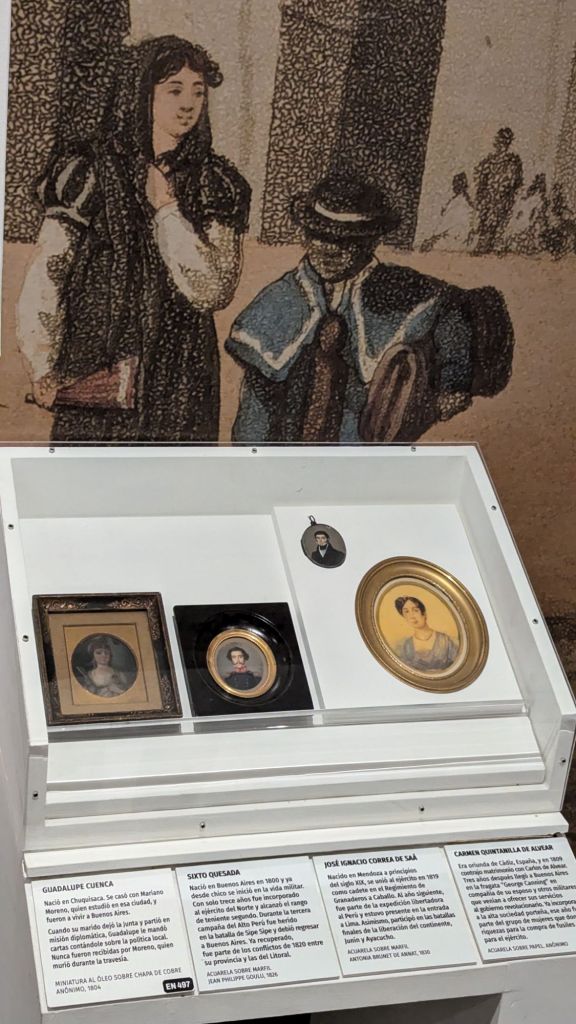
At 12:09 the guide mentioned that in the early 1800s even tiny portraits were very expensive, and as such tended to only be for wealthy people. The mini ones would have been similar to how people used to carry a few pictures of their family in the wallet, but again, this was only for the very wealthy. 

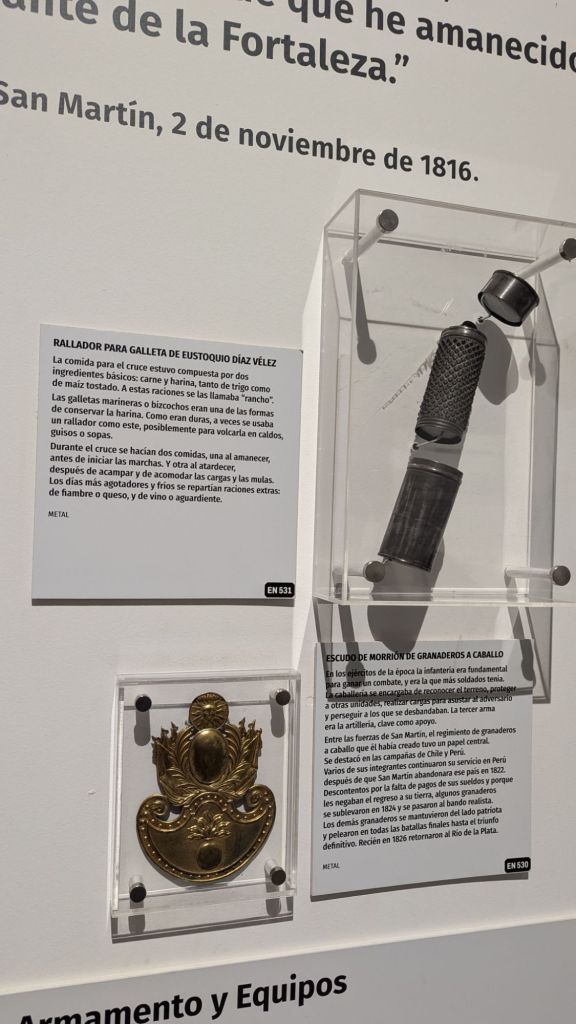
Another interesting tidbit learned at 12:25 PM was that during the war in 1816, most of the food that the soldiers ate was in the form of crackers that were so hard that they had to use a special grater to get dust from them which was then put into hot water.

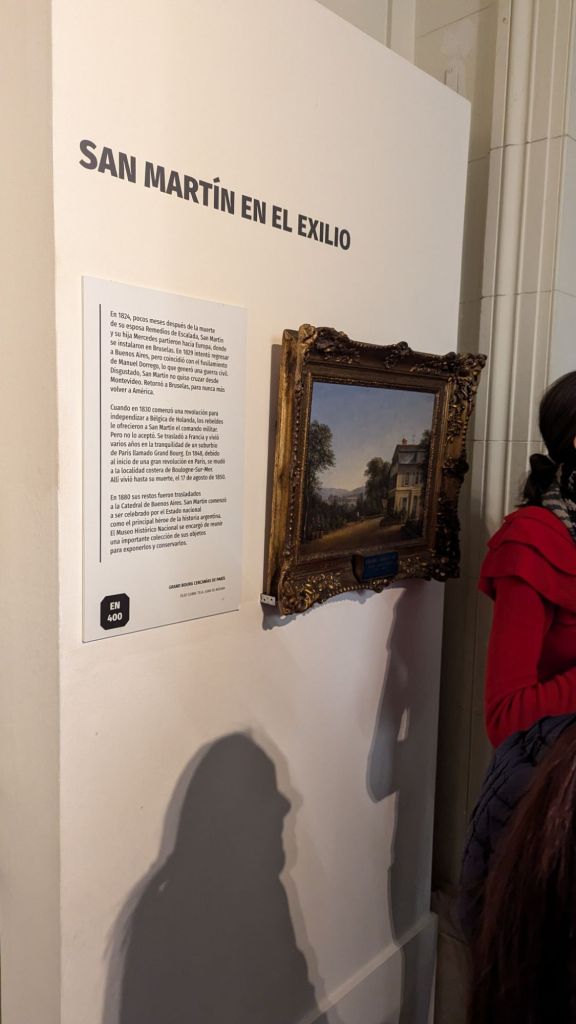
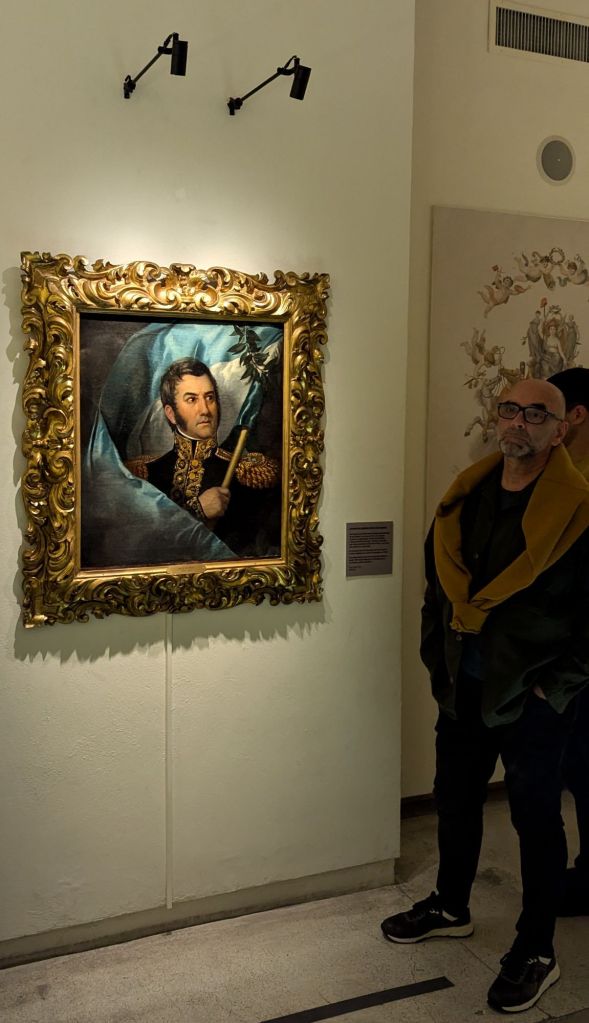
Then at 12:40 PM I found out that despite being the national hero San Martin in 1824 left the area for Europe because he was no longer in agreement with the governmental system which had emerged. He remained in voluntary exile for the rest of his life.

At 12:44 PM I was able to see the original San Martin de la bandera portrait which he had hanging in his room in exile in France, and which is also the most copied image on currency and for reproductions.  The painter is not known, but it is believed to have been his daughter’s painting instructor, but it may actually have been painted by his daughter or even a partially collaborative effort. In summary, they don’t know.

Right here was also San Martin’s saber which seems to be considered almost sacred. It’s in a very special climate controlled chamber. It has a special military guard next to it. He actually bought this year’s before in London. Historical studies indicate that it was at least 100 years old when he bought it and it was made with Damascus steel. 

At 12:55 PM The official tour ended, but I stayed around to see the change of the guard for San Martin’s saber. The guard is very respected and loved by most Argentinians. The change itself happened at 1:03 and then I wandered around a bit more on my own.

At 1:11 PM in some ways it seemed to me that once they got started fighting, they just continued. The dispute between the federalists and the unionists, as well as military disputes with neighbors continued, then later on there were various military coups and dictatorships.

As of 2023, they had finished 40 years of uninterrupted democracy, the longest in Argentinian history. 

At 1:23 PM I saw one of the oldest known white and blue Argentinian flags. It was found in 1883, having been protected there in hiding from opposition leaders. Originally this flag was used by those who supported keeping the Spanish king, but with Argentina being autonomous from Spain. 

Just to see, at 1:31 PM I checked out the small gift shop, and noted that there were various attractive and mostly affordable items available for anyone wanting a souvenir.

Finally at 1:36 PM I left the museum and headed back to the apartment to get ready to go. As I walked across Parque Lezama, the sound of the parrots was constant.

At 1:46 PM I departed the park and headed back to the apartment to get my stuff out. In the distance at 1:49 PM I noticed some graffiti high up on the side of a building, and I wondered how they had done it.

Soon after, at 1:54 I arrived at the entrance to the apartment to gather my things.

I had some tense moments when I couldn’t remember exactly where I had put my other passport and cash in the many pockets of my green bag, but these sort of last minute jitters are common when traveling.

At 2:13 PM I was out the door and at 2:25 PM I was then on bus 33 headed to AEP airport. Along the way at 2:46 I saw what appeared to be low income government housing. There was a street mural honoring Padre Mugica in this area but I couldn’t get a picture. The vibrations in this bus when stopped were crazy, it was like being in an out of control massage chair! 

I got off the bus a couple stops early (this time on purpose!) at 2:54 PM as I wanted to see some things right there nearby, and I had plenty of time. 

Still, it didn’t take long and at 3:02 PM I was in the airport and then in the quickly moving Fly Bondi line at 3:07 PM, next heading up to security at 3:17 PM. This line was also fast and I was through to the departure area at 3:30 PM.

At 3:43 PM at Pizza Zen I paid 9400 ARS (660 INR – $7.9 USD) with a card to have 1 humita empanada, 1 roast beef empanada and 1 cerveza Patagonia. 

The airport wasn’t crowded, and this was a peaceful place to wait until 4:43 PM when there was a boarding call and I headed over to gate 8, already finding my seat on the plane at 5:06 PM.

I was a bit confused because when I bought the ticket it said that all hand luggage had to go under the seat, but I see a lot of maximum size carry ons. . . But also when I asked as I was checking in, they clearly only wanted me to check it in. . . I should look into this more on the flight back. I just checked, and technically it wouldn’t be allowed in as my bag weighed 7.5 kilos, but I doubt anyone actually checks the weight. 

The plane didn’t actually take off until 5:44 PM. It was not especially comfortable, but I figured it would be fine for two hours.

At 7:35 PM the plane touched down. The flight itself and also the touchdown was very smooth. I guess there would be no problem with my checked bag, but based on what I had seen so far, despite numerous online recommendations to the contrary, flying with Flybondi seemed like a good option. Oddly, as we finished moving down the runway into our parking spot, at 7:37 PM the passengers applauded. Previously I’ve only seen that in the United States.

The moment we stopped, just like in India, almost everyone jumped up out of their seat before the seatbelt sign was turned off so that they could open the overhead bins and get their things down, as if that meant that they would be off the plane any faster . . .

At 7:46 I walked off the plane and straight into the airport where people were already waiting at the luggage belt where my bag quickly emerged at 6:52 PM. The exit was also right there, and my driver was waiting just outside with a sign that had my name. As luck would have it, I was the only one who had contracted the transfer, so I had a private van transport for 6500 ARS. It goes without saying that I recommend Transfer VIP NOA, especially for solo travels coming in later in the day.

The road from the airport to Salta was in excellent repair and the driver appreciated the 1000 ARS tip I gave him when we arrived outside my lodging at 8:05 PM. For some reason I had not been able to get the online payment/reservation system to work, but when I contacted them via the WhatsApp contact on their webpage they quickly helped me reserve and said I could pay in cash directly to the driver.

After getting settled in, at 9:52 PM I left the apartment walking towards calle Balcarce, which had been recommended to me by several people. At 10:21 I passed by a huge park and a statue at the roundabout.

So at 10:54 I arrived to calle Balcarce, and while the area was very nice, full of restaurants with live music and traditional dance shows, it clearly was not made for people to come alone. I went up and down the street a few times, wanting to be able to go into one of the places, but they were all packed. There was no way I was going to be able to get food there and much less get a table where I could in any reasonable way appreciate the music and shows. So, I finally gave up at 11:52 PM and set off to try to find somewhere I could at least get some food.

Finally, very hungry, at 11:59 PM I found a place that was also fairly crowded with no smaller tables, but when I asked if it would be okay for one person to eat alone, they were quick to assure me that I was very welcome, and they put me at a table for four. At Don Juan Alberti I had a delicious parrillada for over and a small bottle of wine. At 1:49 AM I paid 23700 ARS (1663 INR – $19.94 USD ) with my Indian credit card, and also left a tip of 2200 ARS cash.

Then at 2:08 AM I started walking back. It should have been a faster walk, but I was meandering quite a bit, so it wasn’t until 3:01 AM that I finally got back to the apartment and promptly went to sleep.

So it was a very long day, but despite my initial issue getting dinner, it was also a very good day. Who could tell what time I would finally wake up, and I also had no set plan, so if you want to find out what happened on Day 9 you will just have to wait for the next entry. Let me know your thoughts in the comment section below.

Argentina trip: Day 7 (21 June)

Hey there everyone, it’s hard to believe, but I’m already on my seventh day in Argentina, or more specifically, my seventh day in Buenos Aires. For those of you who have been reading along, you know that things have been going pretty well so far, and that yesterday in particular was a completely unexpected treat. For today, as I have not yet visited any, I decided to make this a museum day. 

So at 9:45 AM I was looking out the window before heading to the Museo Nacional de Bellas Artes. It had been my plan to walk there, arriving just before they opened at 11. However, it was drizzling, almost to the point of full on rain, so I figured I would wait a bit. Normally I wouldn’t mind, but with the cooler temperature (14 C – 57 F). At 10:26 AM it was still clearly drizzling, but I decided to go out anyway, but with the plan of taking the bus rather than walking .

So, at 10:45 I was waiting for the 62A bus near the entrance to my lodging. Initially I had tried for the 130, but I missed it. Then at 10:53 I moved back to the 130 as I had already seen 3 of the 130 buses go, but no 62A. Finally at 10:55 AM I was on the relatively empty bus.

Traffic went smoothly, as it has normally appeared to do in this area of Buenos Aires since I arrived, and at 11:11 I got off the bus. Right off I noticed a rather impressive utilitarian looking building, but there was no obvious sign and it appeared to be closed. Nearby there was also a nice sort of green space, not exactly a park, right next to where the museum is located. It had a couple of interesting sculptures. I took a picture of “The wounded centaur”. For obvious reasons, I was then separately reminded of one nice thing I’ve noticed here in Buenos Aires. If someone barely accidentally bumps into you, they immediately excuse themselves . . . nothing like San José, Costa Rica in that regard.

But getting back on track, at 11:21 I entered the museum and was pleasantly surprised to see there was no entry fee. I decided to start at the top and work my way down. Right off I noticed that throughout the museum, many of the pieces have QR codes which can be scanned to get rather complete additional information. It’s all in Spanish, but one could of course easily use automatic translation.

Walking up the stairs, at 11:29 AM I started on the top floor of three.  Here I found a photography exhibition made of commentaries about books written by Facundo de Zuviría in the initial days of the COVID-19 pandemic lockdown. I was a bit impressed by how much he was able to read (or remember about having previously read) during that time. It made me think of my own COVID time in India, which went much longer (like many countries in Asia) then here. As I had been working full time online at that time, I guess I didn’t experience the sort of loneliness, fear and frustration which others did. I was so incredibly busy preparing and then doing online lessons, that I really didn’t have time to feel deep thoughts.

Of course, I did do a lot of walking with my dog Hannah at the time, 3-4 hours a day, since in India, walking a dog was one of the only ways you were allowed to be outside. Fortunately I also was living on the outskirts of the city, so there were plenty of wide, green spaces where we could go. Was it really only in 2020 that all of that began? It seems so far ago now, despite how long things were dragged out in India. . .  It was an unusual time, and in many ways tough, but my comparative wealth in India and a full time job that needed to be done sheltered me from much of it. Still, I remember that was also when I did a lot of online training and also when I really started earnestly learning Hindi. I know that for the more vulnerable people in society, it was a truly horrible time.

At 11:47 AM I walked down to the middle floor (Piso 1) and at 11:51 into room 25 “Argentina and the rest of the world 1900-1820”. Shortly thereafter at 11:55 then into room 26 “Latin American art 1910-1945”, in addition to the set itself, I  saw that they actually have many ways that people can connect and get more information, not just QR codes: QR codes, NFC and Bluetooth beacons. Again, most of the information is in Spanish. However, this extra information was not available for all pieces. Still, there was way more than any single person would want.

Continuing on at 12:04 PM I wondered if much of this “new art” might have simply been a backlash against photography? What was the point of realist painting if photography was increasingly so common? Then at 12:07 PM I entered the Maria Luisa Bamberg collection. She wasn’t the painter herself, but rather an art collector. She had been a film director and script writer. Later on I realized that this theme of previously private collections which were then made public through a donation (frequently) or purchase, was quite common here.

It was at 12:19 PM when not being particularly cultured myself, I had one of those classic, delightful art gallery moments when I suddenly see a painting or sculpture by an artist I actually know, such as the Composición con Reloj painting by Diego Rivera and Mujer recostada by Pablo Picasso which I saw in Sala 28. As noted earlier, it seems that many if not most of these art pieces had been donated from private collections.

If earlier had been a delight, at 12:23 PM my thoughts were a bit different. Many times when I see paintings I think, “Why would anyone pay for them, or at any rate, why would anyone pay so much?” But every once in a while there is a painting that for some reason will resonate with me, even though I suspect that it does nothing for others. That was the case with Barista by Raquel Forner.

At 12:29 PM in room 30 I was impressed by Eugenio Daneri’s “La perdida del hijo” (The loss of a child) 1945. The stoic resignation in the woman’s face was powerful.

Then at 12:39 PM in sala (room) 33, there were several sculptures by Maria Juana Heras Velasco, Noemí Gerstein and Maria Simón.. These were good examples of “art” where I simply asked myself “why”? I mean as an example of “personal expression”, do what you want. But who really WANTS to see these?

Again, at 12:51 PM in Sala 35 “Argentinian art 1945-1970” this whole room was like, really? Did these artists honestly believe what they were doing or were they just taking everyone for a ride? I could see how it might be considered “decorative” but is it “art”? For goodness” sake, one of the “pieces” was just a ripped piece of cloth!

Anyways, at 1:07 PM it was time to head down to the ground floor. This floor seemed to be more about classic or traditional art, without as much explanation as upstairs . . . Perhaps there wasn’t so much explanation because it was simply easier to understand.

Right off at 1:13 PM there was this brilliant painting by Giovanni Da Milano from between 1345 and 1370. . . It was amazing to see how vibrant it still looked after at least 650 years.

Then at 1:19 PM I saw a stunning, huge tapestry by Everaert Leyniers III from 1660 “Banquete de Escipión después del triunfo”. It’s size alone, and how much detail was done just through weaving and needlework. . . wow!

I observed at 1:26 PM that this ground floor area in general seemed far more popular than the upstairs areas. With many of these older paintings, it is striking how a single, seemingly unimportant element of a huge painting will really stand out, such as the dog’s collar in “Master Cathcat and dog” by Henry Raeburn 1756-1823.

Then at 1:31 PM, playing to my joy at seeing original works by known artists, it was a treat to see several works by Francisco de Goya y Lucientes. Then at 1:34 PM there was a very big collection of works by Rodin. I hadn’t even known that he had lived and worked many years in Argentina. I was also impressed to read the details about many of his creations, in particular learning that much of his work was the result of a massive failed undertaking in France that was never completed. As a result, he had then repurposed and altered a lot of pieces.

Then at 1:43 PM I was once more surprised to find a painting I had seen reproduced in several books and prints,  “Arlequin Danse” 1890 by Edgar Degas.

Next at 1:47 PM there was a painting by Claude Monet, which I critically had to admit was not really better than many of the questionable works upstairs.

Many of these paintings had been donated by Mercedes Santamarina. While I appreciate that in her later years she donated the work to the public museum, as with other wealthy patrons who collect art and then donate some or even all of it, I found myself thinking that “yes, the donation is appreciated, but one can’t help but wonder at the absurd inequality of wealth, usually coming by way of inheritance.” She had also donated some paintings by Cézanne and Renoir. Again I thought, “The art is beautiful, but with so much suffering in the world, was this the best way to use her money, even if later on she donated the work to the public?” Maybe I should keep these thoughts in check; I suspect that this is the way revolutions get started.

At 1:57 PM there were also several works by Edouard Manet.

Introspection seemed to be my personal theme of the day, and at 2:00 PM I was thinking about how I almost hadn’t visited this museum, since I reasoned that as entry was free, it wouldn’t be that impressive, but clearly I had been very wrong. Especially for art lovers, this is an amazing place to visit. I had no idea I would find something like this in Buenos Aires. Continuing with another recurring theme of the day, there was a huge selection which had been collected by Jose de Guerrico and his son José Prudencio and then donated in 1938.

One thing that really impresses me about this museum is how the pieces are so accessible to the public. Yes, there are guards, but entry is free, and the visitors are allowed to get extremely close to the artwork.

At 2:10 pm I noticed a big collection of beautiful hair combs, all of them being of anonymous origin, but no less beautiful.  I wondered at the work that went into creating them, but the author did not sign them anywhere. . .I guess since they were just considered fancy hair pieces, not meant to be appreciated/remembered on their own. Why were these anonymous, but paint splatters upstairs were proudly titled, dated and signed?

At 2:23 PM I looked at some of the native art and pieces commemorating the Spanish conquest. It was quite uncomfortable to learn that as late as the 1870s and 1880s there was the period of the campaña del desierto which had resulted in the extinction of most of the first peoples native to Patagonia. I learned that something similar was happening in Chile at the same time. This was of course in no way exclusive to southern South America, but that doesn’t make it any less uncomfortable nor less tragic.

So, as is usually the case with art museums, I obviously could have spent much more time here, but at 2:30 PM I was ready to leave. My original plan for the day had been to also visit the Museum of Latin American art, but now I was thinking that might be a bit much. I had already been three hours in a museum today, and while it had mostly been amazing, the mind can only attempt to absorb so much before being overloaded. While at 2:35 PM I saw that it was still drizzling, I decided to go out walking anyway.

At 3:20 PM I suddenly realized I was in front of the famous Ateneo book store. While it’s certainly impressive, this is definitely not a “discount bookstore”. A lot of people, like myself, clearly only come in to take pictures. Perhaps if I lived here or had I not become accustomed to reading on a device I would have taken a picture, but at 3:42 PM I was out walking again.

At 3:44 PM I saw another of these concrete benches throughout the city that look like they are cushioned. It’s a clever idea, and the “button holes” allow water to drain out easily. Continuing my walk, at 4:00 PM I walked into the Recolecta Urban Mall, which I had previously seen from the outside when visiting Recolecta cemetery. However, there wasn’t really much of interest inside, even though I walked through the whole thing, and by 4:26 PM I was once again out in the street walking.

Finally at 4:50 PM I stopped in at Bonafide  – Las Heras to have a coffee and a dessert. The cake and coffee was just beautiful looking, and the cake, despite it’s appearance, was not overly sweet.  I paid 9500 ARS (667 INR with my Indian credit card).

I was there relaxing until 6:10 PM, and then once again left on foot, headed towards Beatriz’s place in Belgrano. Despite the kind of rainy weather, I had found it to be nice weather for walking as long as it wasn’t actively drizzling. Besides, Buenos Aires is beautiful at night, just like during the day.

At 6:34 PM I walked past plaza Italia.

There was then a beautiful, tall sculpture at the roundabout.

Continuing my walk, at 6:40 PM I passed by parque Rosedal and Plaza Holanda, followed shortly thereafter at 6:46 PM by Plaza de la Shoá. Then at 6:52 PM there was the Hipódromo Argentino. You see so many more neat things when you go walking!

Finally at 7:15 PM I arrived to Beatriz’s in Barranca de Belgrano, having just enough time to pick up a bottle of Trapiche Malbec (my favourite Argentinian wine) so I wouldn’t show up empty handed. The card reader wouldn’t work for my card, so that’s a reminder to always have some cash along just in case, which I did, so there was no problem. Then at 7:30 PM sharp I was back at Beatriz’s door

We had a wonderful visit: myself, Beatriz, her daughter Paula, and her son-in-law Roberto. The conversation was great, as was the choripan, empanadas and brownies.

As Paula had to get to work early the next day and I also had a ways to travel to get back to San Telmo, we wrapped up at 11:05 PM and by 11:35 I was waiting for bus 130, which finally arrived at 11:40. The bus was mostly empty at this hour and with no significant traffic, I was getting off the bus near my apartment at 12:18 AM.

Given my early mentioned issue with judging bus stops, I had again got off the bus a couple stops too early, but also as mentioned in earlier blog entries, that doesn’t really bother me, so it was all good. Finally, at 12:30 AM I was in the apartment, and thus

So folks, that was my last full day in Buenos Aires. My fight tomorrow isn’t until late afternoon, but as of now I don’t have any concrete plans. However, I still have several more days coming up in Argentina, so I invite you to keep reading to see how things go. As always, thanks for reading along, and feel free to leave your comments and questions in the area indicated below.

Argentina trip: Day 6 (20 June)

Hey there loyal readers, welcome back to Day 6 of the Argentina trip. So today I had put a couple of free concerts on my calendar, but then sort of late last night I saw that there would be a special Feria de mataderos activity starting at 11 AM but with the main events kicking off at 1:00 PM. I had no idea what this would be like, but I figured that if it was bad, I could just come back for the two free concerts.

At 9:58 AM I left the apartment to grab a bus to the fair, but as I had used my public transport card more than planned yesterday, I first wanted to add more to my SUBE card. As this was a national holiday, Flag day, the nearby national lottery stand where I had recharged yesterday wasn’t open, and I quickly discovered that pretty much all of the recharge points were closed today. As such, I ended up walking to the closest subway station in order to recharge, not being able to do so until 10:35 AM; I put 4000 ARS more on the card.

The tiny yellow sign is the entrance to the subway where I was finally able to recharge.

At 10:40 AM I was finally on a bus going to the fair. One issue I have discovered is that when you get on the bus here, they usually ask you the destination before scanning your card. Today he just asked me if it should be the minimum amount, and I said yes because I didn’t know the stop. It was 300 ARS.

I had to do a bus change, so at 11:00 AM I was off the first bus. I had actually got off the bus a bit earlier than I should have; this wasn’t really a choice, but I seem to be bad at judging the correct stop on buses in Buenos Aires. Still, at 11:02 AM I was already waiting for the 130 bus. Here on the standard street, it didn’t look particularly festive despite being a national holiday. In fact, up until now, the only thing I had noticed that was different today was that I had a hard time finding a place to recharge my SUBE card 🤣.

At 11:08 the bus arrived and this time I properly gave my destination, again with a cost of roughly 300 ARS (ducted from the SUBE card). By 11:38 I was getting off the second bus; again I was off a bit sooner than I should have, but I don’t mind walking since it gives me more opportunities to see things.

At 11:44 AM I walked past plaza de los Mataderos. It’s a very nice, big green space.

Then at 11:48 AM, unsurprisingly, I noticed a bunch of butcher shops in this area (mataderos means “butchers”), and it actually does look like it would be a great place to buy meat. Separately, it seems that this is clearly a lower middle class area, but still a nice looking place to live.

Then at 11:57 AM I saw that parque de los mataderos had a bunch of stands set up. I wasn’t sure if those were supposed to be part of “La Feria” or not, but it was still definitely an area I thought I should check out. This was right next to the arch announcing the Feria de mataderos.

At 1:09 PM I was barreled over! Obviously I’m not Argentinian, but they did such a great job with the genuine street dances and the ceremony that even I felt like an Argentinian patriot! Really, they did an amazing job: video 1, video 2, video 3.

At 1:49 PM there were traditional dance performances and at 1:54 PM I was so happy that I had come here. While this was clearly an activity today primarily meant for local people, it was also outstanding for a tourist like me. All the open air entertainment was nice, and it wasn’t so crowded that you couldn’t easily see.

While I was enjoying things there, at 2:15 pm I decided to go see what was going on in the park. It was obvious that this was clearly the more “common people” feria. For instance at 2:24 PM I noticed lots of clothing was also being sold here. I assumed some of it was used, but it all looked good. Yes, Parque Alberdi was interesting, but at 2:36 I decided to go back to la feria.

Initially I couldn’t handle standing in the huge line, but at 3:04 PM I bought 1 vacío, 1 choripan and 1 glass of wine for 13,000 ARS cash. Then after that I had to get in the line to pick up the food; I guessed it would take me at least 30 minutes. While waiting, I could hear the traditional live music playing behind me.

Finally at 3:30 PM it was my turn at the counter. The food was very good, but it would have been nicer to have someone to eat with. Despite the absurd amount I had bought, at 4:09 PM I finished eating.

I then moved back to the front stage area to continue enjoying the entertainment.

Again at 6:14 PM I was overwhelmed by how great the emcee for this event was. For this sort of patriotic thing he was just phenomenal! Of course all the amazing live music groups were also a big plus. I’m sure it was all carefully prepared, but the way he also recited poetry at different points. . . It was just perfect. I was so very glad I went there.

All amazing things come to an end, so at 6:21 PM I was 18:21 exiting the Feria, having stayed until the absolute last moment. Then at 6:26 PM I was waiting for bus 126, being able to get on at 6:53 PM. It was quite full but we were not smashed together.

Then at 7:38 PM I got off the bus near my apartment, but rather than going back in right away, I wandered around the area until 8:00 PM when I decided to eat at Mostaza, which is essentially a local burger joint. The cost was 6499 ARS (456 INR with my Indian credit card) for a junior double cheddar + chocolate Sundae + coke zero. The restaurant itself was like a slightly upscale McDonald’s, and the food was pretty much exactly what you would expect from the same, except the bun on the hamburger was a bit nicer.  If you like McDonald’s, I’m sure you will also like Mostaza.

Spoiler alert, while eating I bought a 4 day tour package in Salta for 15317 INR on Get Your Guide, a service which I’ve used in other countries, generally having good results. Continuing with the theme of slow eating in Buenos Aires, it wasn’t until 9:00 PM that I left Mostaza and wandered around a bit before finally entering the apartment at 9:36 PM.

Despite having entered relatively early, I didn’t go to bed until 12:17 AM since I spent a lot of time working on blog entries. . . I hope you enjoy them, because they take a lot more time than you might imagine.

So, once again, a hearty thank you to the Facebook group Baires Free for having directed me to another incredible free activity. I don’t know if the regular weekend Feria de mataderos is usually this incredible, but for flag day it was an unforgettable, absolutely amazing experience. Let me know what you think about all of this in the comments section below.

Argentina trip: Day 5 (19 June)

Hey there everyone I hope things are going well. For today, I had asked Beatriz if she would like to go to Tigre with me. Tigre is a nearby satellite city that a lot of people like to visit.

Surprisingly (for me anyways) when I woke up at  7:22 AM, it was completely dark out. I mean I know it’s Winter here, but it was still a surprise. Unfortunately, it was also drizzling a bit, so Beatriz thought it might be better to not go to Tigre today. However, she said that she would check the weather, and get back to me a bit later.

Fortunately, at 9:00 AM she sent me a message indicating that it had cleared up a bit and that the forecast was favorable. As such, at 9:15 AM I left the apartment searching for a place to add money to my SUBE card. At 9:20 AM, I found a national lottery place near the bus stop that would add money, but the system was down. It drew my attention that the worker in the shop appeared to be at least 70 years old, and I wondered if these jobs might be reserved for older citizens who didn’t have adequate pensions; something similar happens with lottery jobs in many Latin American countries. Finally at 9:28 AM the system came back up and I was able to add 3000 to my card. Perhaps I should have added more, but public transport cards tend to be a bit of a money suck for tourists, since we never know how much is good to put on, and we usually end up at the end of the trip with a worthless card which still has credit on it.

Anyways, at 9:30 I was waiting for bus 130 headed to Barrancas de Belgrano (most tourists who make their way here will be going to Chinatown), and I was able to get on at 9:35 AM. The bus ride was fine, and at 10:15 AM I arrived, and sat waiting for Beatriz on a bench in front of the tourism office. This seemed to be a middle class residential and commercial area, not too fancy, but also definitely not depressed.

At 10:40 AM Beatriz arrived, and I happily relinquished control of the day to her.

Nearby, we took a train (also using the SUBE card), with departure at 10:53 AM. The train was very nice and not crowded at all; Beatriz acknowledged this but also said that this was probably the nicest train line which departed from the city of Buenos Aires, so I should keep that in mind should I consider visiting other nearby cities. As we traveled on the train, at around 11:20 AM I clearly noticed when the scenery seemed to be changing from “city” to suburbia. I didn’t take pictures since they would not have come out well through the window. I was feeling extremely happy that I had made this trip, and even happier that my dear friend Beatriz was also able to accompany me once again.

At 11:45 AM we were off the train and started walking what Beatriz described as the standard tourist walk. Honestly, it was incredibly beautiful. It had cleared up completely and the scenery itself was amazing. While Buenos Aires is great, I suspect that if I were to live there, I would be making frequent day trips to Tigre.

At 1:44 PM we finished the standard circuit and we decided to have a coffee in McCafe. Our two cappuccinos and a piece of “decent” cheesecake had a total cost of 6350 ARS ($5.29 USD) cash. We stayed there chatting until 2:43 PM.

From there we headed towards the Puerto de Frutas (Fruit port) which these days is more of a kind of fancy tourist area. No, there didn’t appear to be either an active port or a particular abundance of fruit. However, it was certainly a pleasant place to walk around with plenty of nice things to buy.

At 3:57 PM I saw some very fancy pastries. Evidently these are typically made for national holidays, and as tomorrow is some sort of holiday, they had a good selection. Primarily on the basis of their appearance I bought two. I think it was either 2000 or 2500 ARS total for both, but I forgot to make a note of the cost.

Then at 4:04 PM we decided to eat in a shop that Beatriz likes, el Tandillero. I also thought it looked like a very picturesque place to have lunch and chat. We ordered two local beers, a matambre sandwich and a jamón de ciervo sandwich. I suggested that we split the sandwiches, to which Beatriz readily agreed. They were both very good, as was the beer, but if I had to choose only one, I think I preferred the matambre. I forgot to note down the amount in ARS, but I paid 1946 INR with my Indian credit card, which was roughly $23.30 USD. Considering the ambiance and the quality of the food and beer, that was a bargain.

At 5:34 we left, and Beatriz asked if I would like to try a different train route back, the coastal train. As that stop was closer and she also said the stains were a bit more picturesque, I agreed. By 5:55 PM we were on our way in this two car train, having used our SUBE cards to gain entry. Again, this train was not at all crowded, and the train stations really were quite beautiful. Unfortunately, I couldn’t take many photos since I thought they would not come out well through the window.

At 6:10 PM I could see the San Isidro cathedral in the distance. At least from the train, it looked very fancy. Maybe I will try to get out there to see it before I leave. Our train ride came to an end at 6:27 PM when we got off at Avenida Maipú. I decided to stick with Beatriz a bit longer since so far I had not seen a proper supermarket in Buenos Aires, and she was headed towards one to do a bit of shopping before returning home. As such, at 6:42 PM we got on bus 59, then getting off at 7:15 PM at the Luis M Campos 300 stop.

From there we walked to Jumbo supermarket, arriving at 7:29 PM  This supermarket definitely lived up to its name! Not only did this place have everything, but it was also very clean with a good layout. We were there just until 7:52 PM and then we went to another bus.

This final ride with Beatriz was only from 8:03 to 8:11 PM. She then walked down with me to Barrio Chino (Chinatown) where we parted ways since I wanted to explore a bit.

While it was nice, at 8:48 I was ready to head out to find my bus back to San Telmo. As I was walking, at 9:00 PM I bought 4 empanadas in Costumbres Argentina (This appears to be a “commercial” cheaper bakery chain) for just 3600 ARS cash, and then at 9:08 PM I was in the mostly empty bus 130, arriving near the apartment at 9:45 PM, finishing my final walk back to the apartment at 9:51 PM.

I had a couple of the empanadas, not near as good as the ones that I had bought near my house, but still an okay evening snack, and then headed to bed.

So what did you think of Tigre? I thought it was an incredible, easy day trip from Buenos Aires, but you might not think the same. Let me know your thoughts in the comments section below.