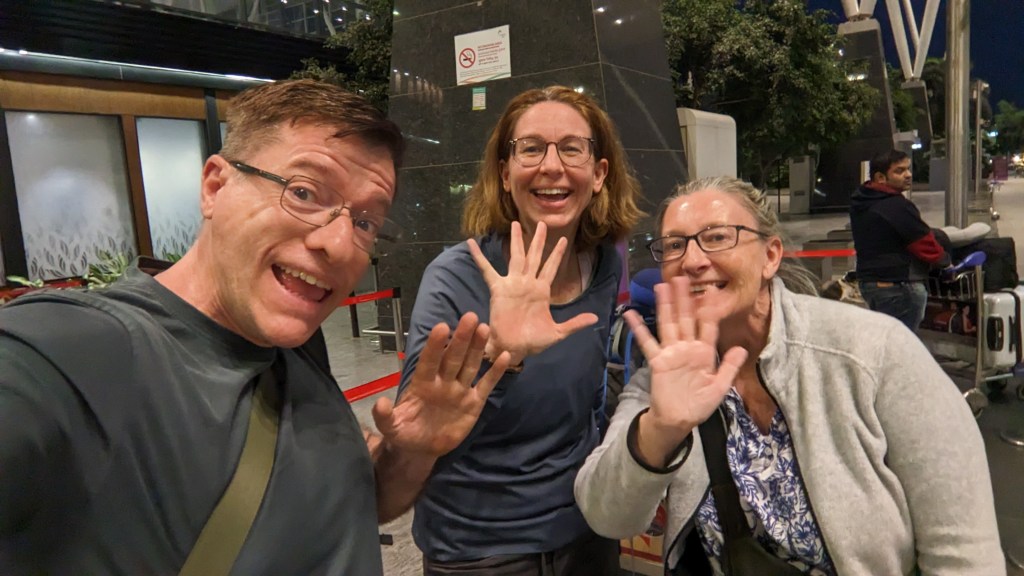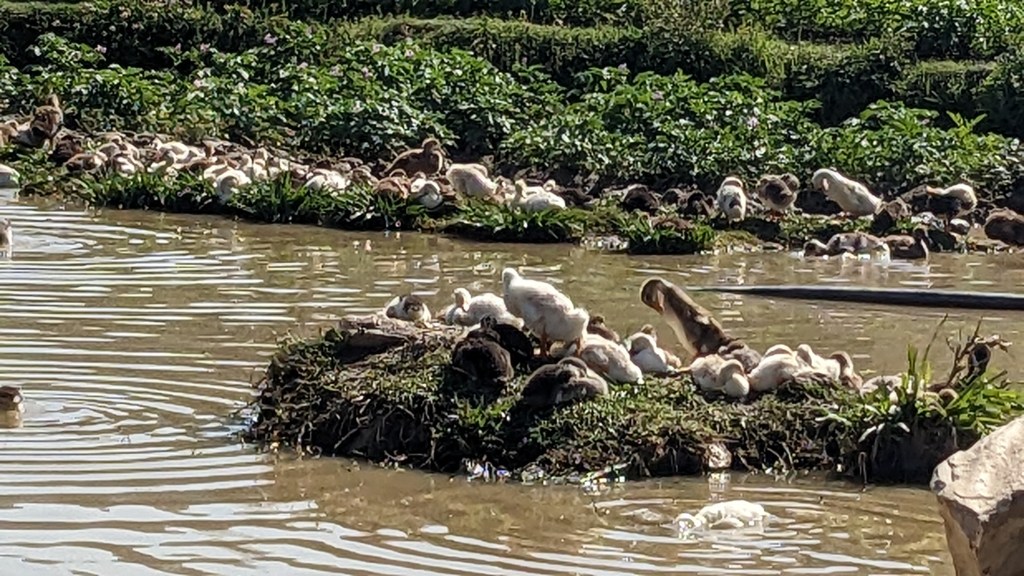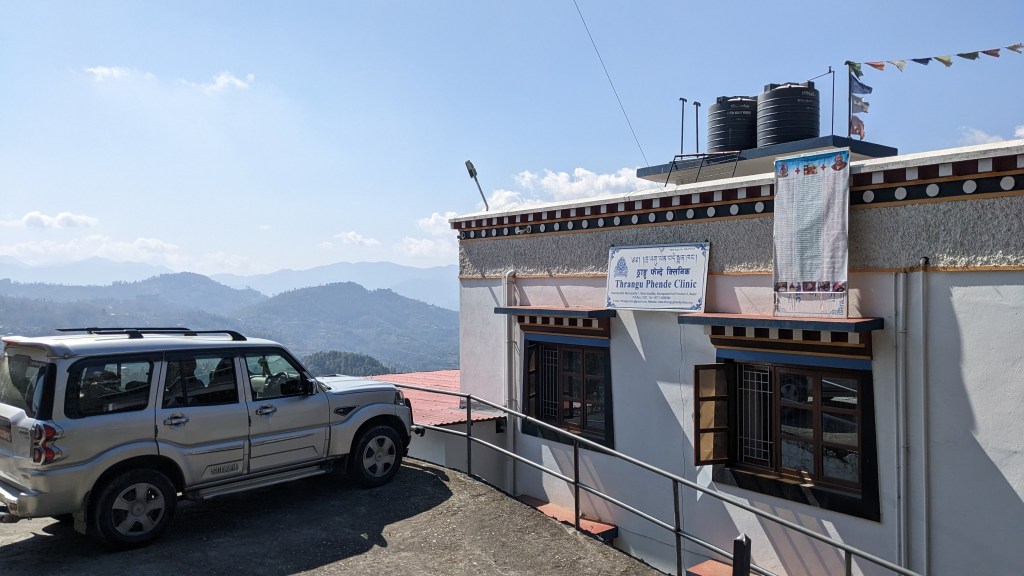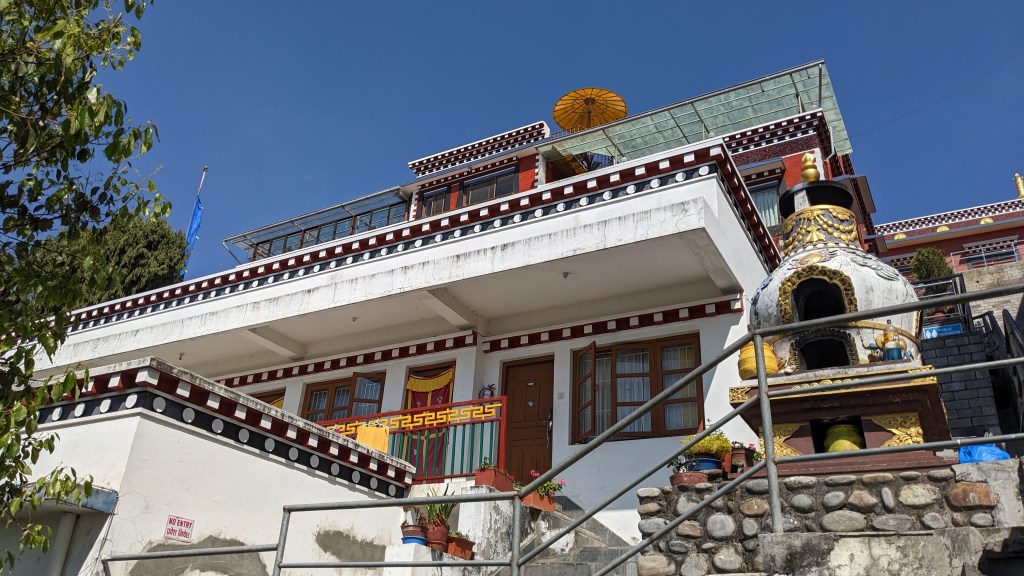
Malaysia trip: Day 1 (23 Mar)

Hey there readers, I hope you are doing well. I know it’s been some time since I last wrote and also know that I left you hanging on the rest of my recent trip to China in December-January. I do still however have plenty of notes and pictures from that trip.

The food was so good in China!

So, I may still get around to writing some more about that soon. However, it’s now time to look forward to Malaysia.

I’m not really sure what I will do once I’m there, but I’m sure I will have a great time since I’m once again visiting with a good friend. Before I get too far into my writing, I’ve actually had a recent hiccup already, because I didn’t do my research ahead of time. Evidently it is now a requirement for almost all visitors to Malaysia to register for the Malaysian Digital Arrival Card before arriving. The process itself is simple, but it doesn’t seem to be instantaneous.

I filled out my application two hours before departure, but when I boarded the plane had still not received either a confirmation nor the document itself. I even tried it with two different emails. Anyways, I’m writing this while on the plane, and will see what happens once I arrive. I’m not too worried though since I’m traveling with my USA passport, and the Malaysian airlines staff told me before boarding that it shouldn’t be a problem even though the official website seems to indicate otherwise. I guess worst case scenario I’ll get sent back to India or maybe even USA?

So like most of these trips departing from Bengaluru, I once again opted to use BluSmart car services to get to the airport. As in the past, the service was punctual, the driver courteous, and the car comfortable and the price reasonable. Do note that it’s generally better to book the car between 24 and 48 hours when you need it since the fleet is limited. The cost today was 759 INR ($9.08 USD). With the entire 25 km trip taking 38 minutes. My only complaint would be that the seat coverings are a bit uncomfortable.

While easy to clean, the lack of breathable fabric can get uncomfortable.

Also like all my trips the last several years, I once again opted to use an ESIM service. While I used to blindly recommend Airalo, I now do some quick comparison shopping beforehand. Similar to my recent trip to China, this time Nomad seemed to be the best option for my needs. As a minimum though, I suggest you always compare Airalo, Nomad and Holafly before choosing. I did however have a problem purchasing the ESIM this time. This seems to be an India only problem, but I thought that Nomad wasn’t affected. Yes, I was able to open the app, choose the plan and even add payment options, I couldn’t pay using my phone in India. I tried two Indian issued cards, a Costa Rican card and then PayPal. I also tried using a VPN even with GPS spoofing, but no.

As a last resort I tried to purchase using my PC, without a VPN, while in India, using an Indian credit card, and this time I had no problem. Does it make sense? No, but if you get stuck, the same trick might also work for you. I bought a 30 day 10 GB data ESIM through Nomad for only $12.75 USD. I had been a little worried that there might be a problem installing the ESIM on my Google Pixel 7 since I had bought it through the PC, but when I scanned the code on my computer screen, the installation went as smoothly as always. I’ve written a lot about ESIMs before, so won’t repeat too much again. Suffice to say, this is the best option for international connectivity when traveling to most destinations and it’s easy to check online ahead of time to see whether or not your device is compatible. These days, most flagship devices are, and it’s even becoming common with midrange phones.

Going to the airport was in some ways a different experience for me this time around since I usually have horrible travel times which require me to either depart very late at night or in the wee hours of the morning. This time around however, I was able to score a direct flight on Malaysian Airlines with a scheduled departure time of 12:00 PM. The round trip price was only about $275 USD with both flights getting direct! So anyways, what was it like traveling at this time.
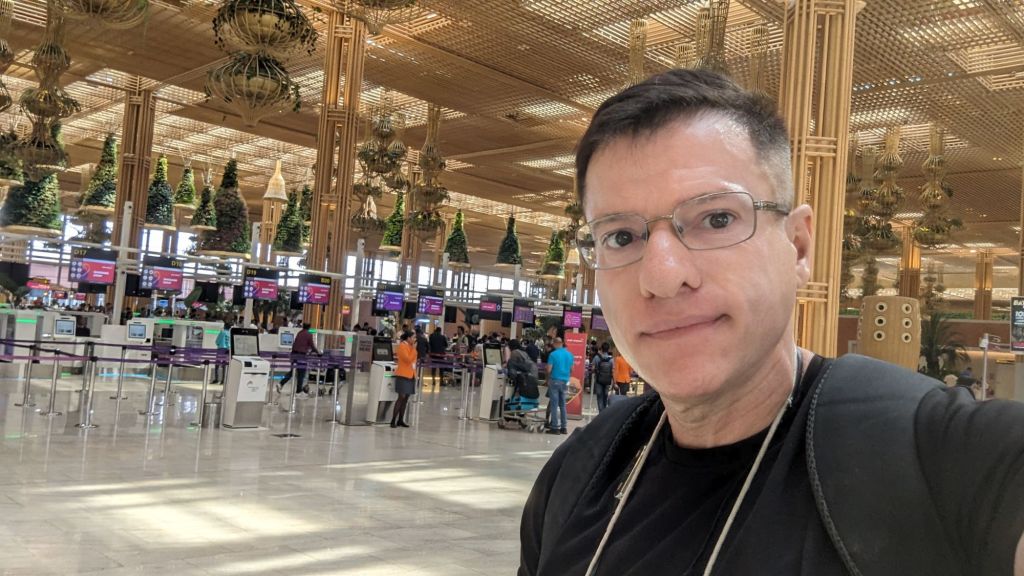
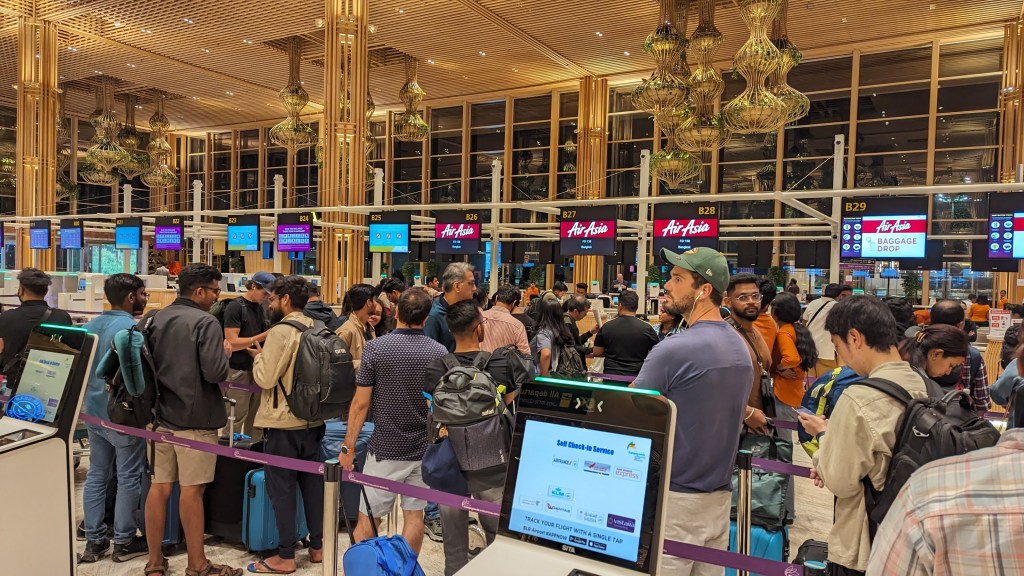
For the most part when traveling out of terminal 2 in Bengaluru, I’ve had very good experiences, but I had been worried that this time around might be more difficult due to the more convenient travel time. However, that was not the case. From the time I arrived at the drop off point, It only took me a total of 27 minutes . . . Even with having a bag to check! Now I know that a lot of you are no doubt gasping to hear that I was traveling with a checked bag; I normally do trips all around the world with a single piece of 7 kg hand luggage. No, I haven’t gone over to the dark side. It’s just that I really love a lot of Southeast and East Asian food which is either very hard or impossible to find in India. So, since my short work trip to Bangkok in September, every time I head this way I try to buy a bunch of foodstuffs to take back; I especially love all the dried meats. So if any of you want to surprise me with something special, you know what to get!
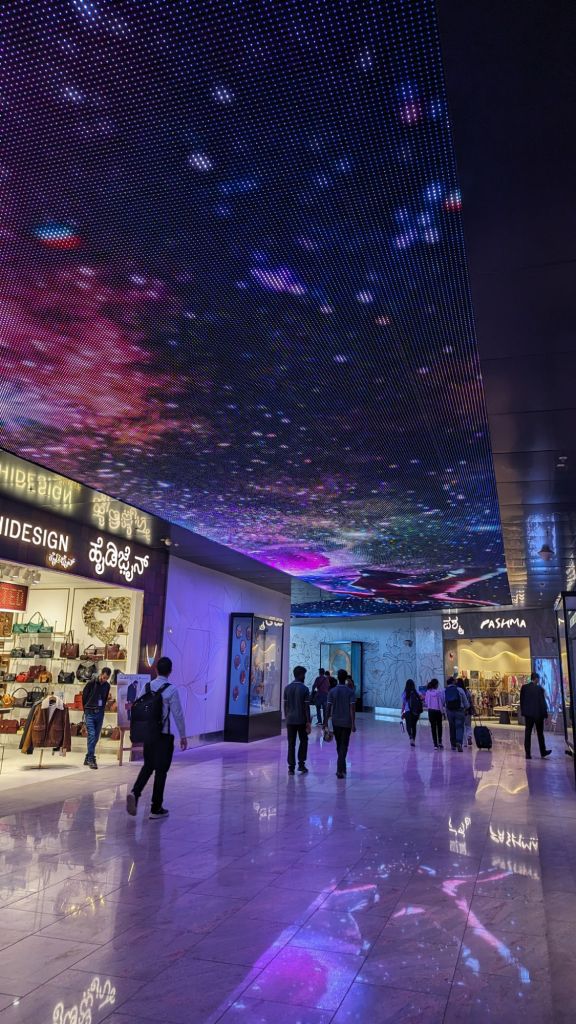
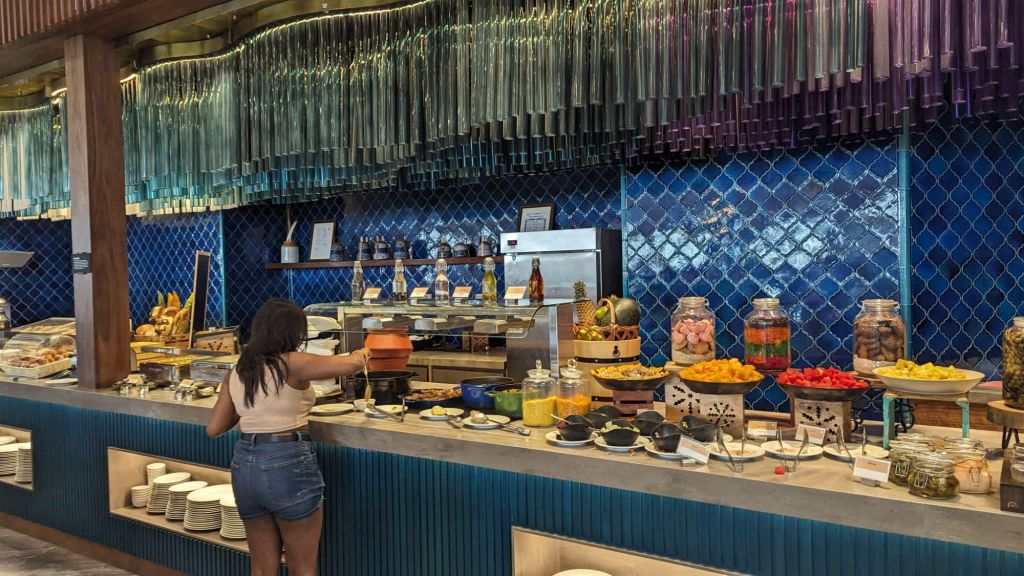
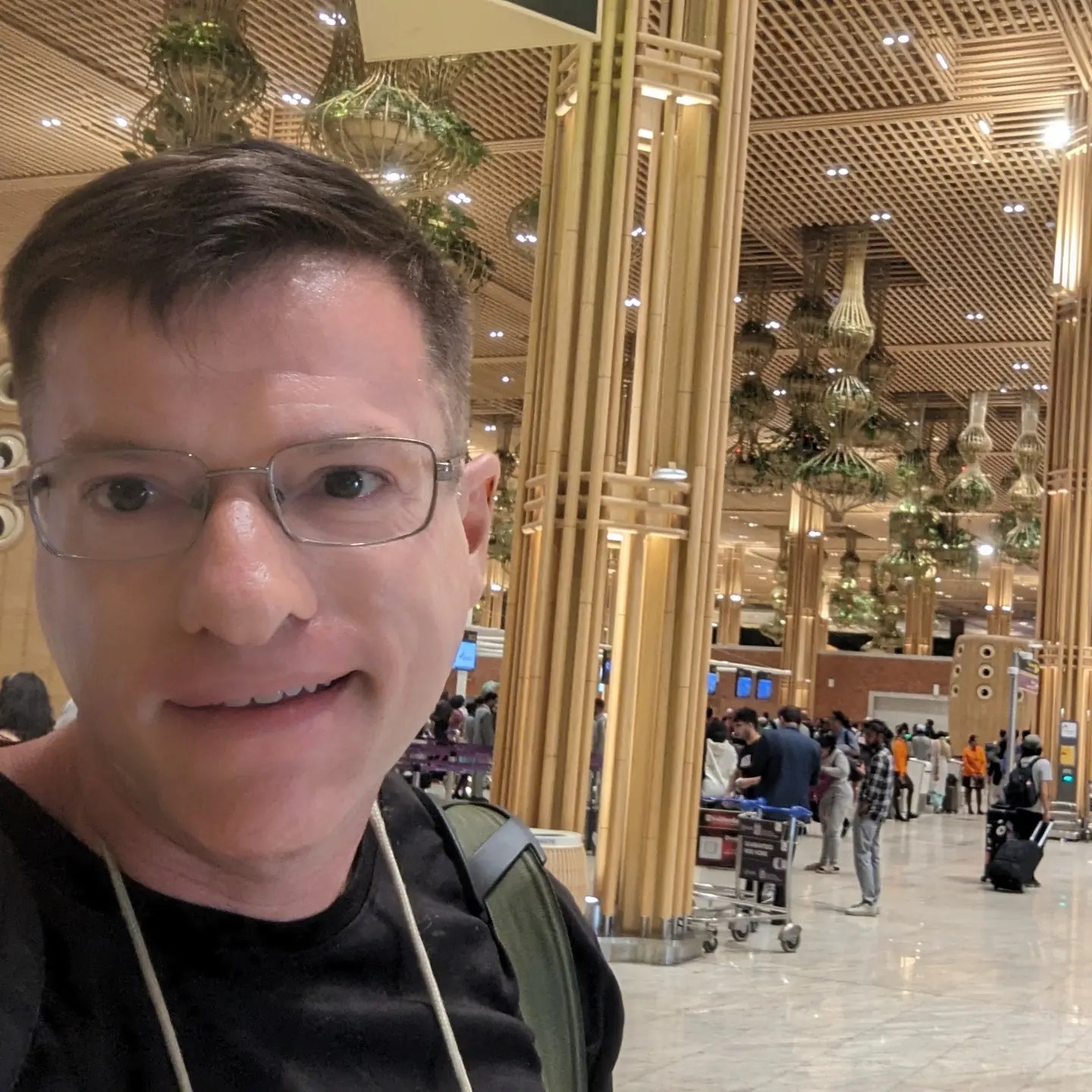
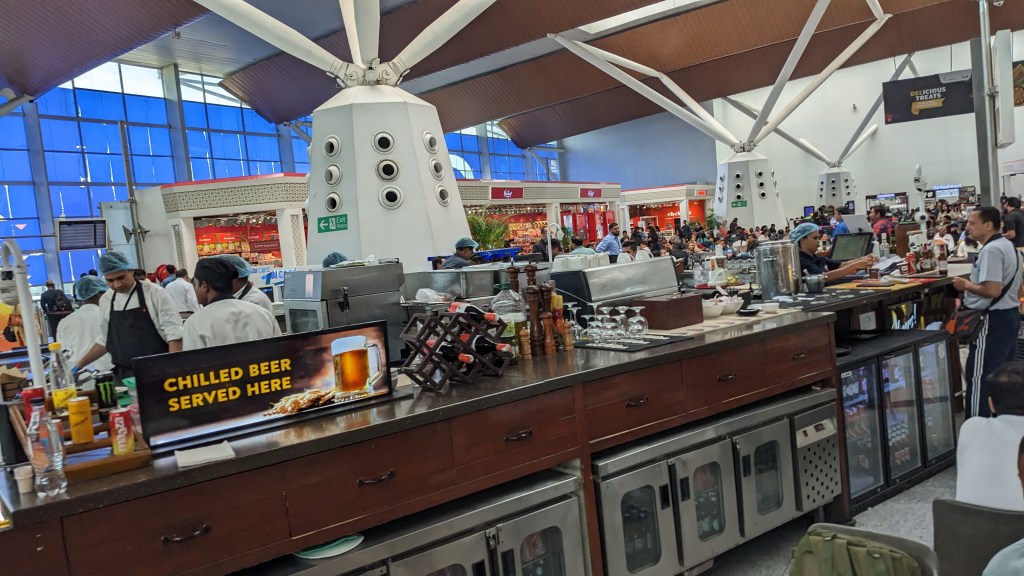
Anyways, even though I really wasn’t hungry, once I was in the departure terminal at 9:35 AM I headed straight to the 080 lounge armed with my recently upgraded Regalia Gold card from HDFC. As most of my Indian readers know, lounge access on Indian cards has been cut back drastically in the last year. Similarly, airport lounge service, while still a nice perk, seems to have greatly decreased over the past two years. The 080 lounge in Bengaluru airport terminal 2 has always had a more exclusive level of access, so I was hoping that it would also be a step up from my recent experiences. Wow! It definitely was.

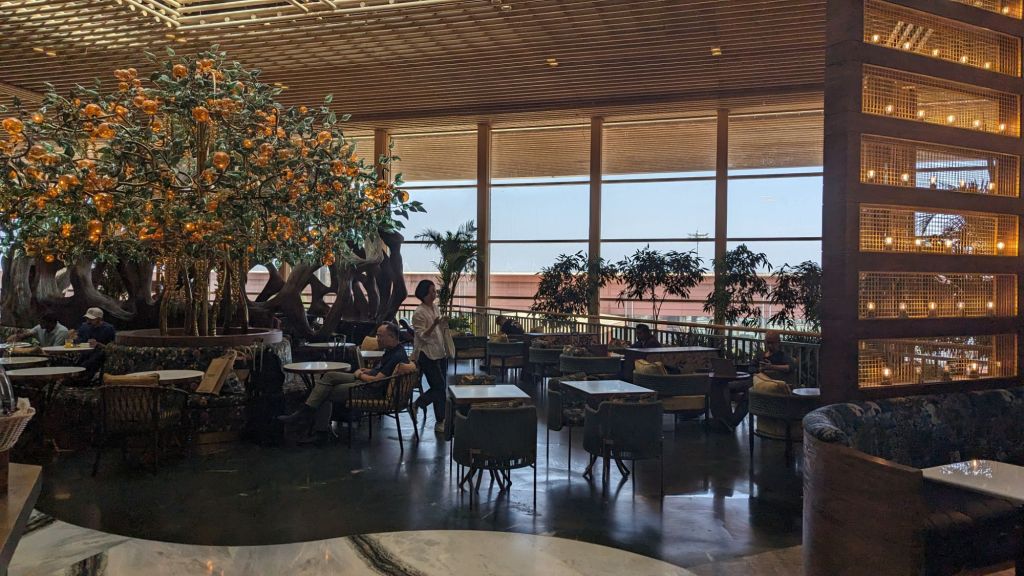
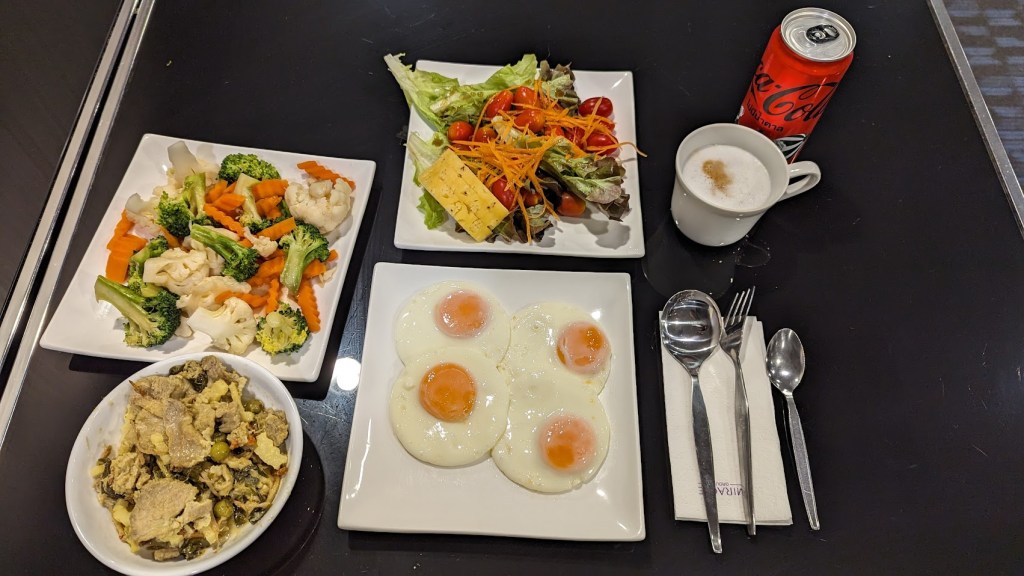
Don’t get me wrong, as most people will say, terminal 2 already has a very pleasant general ambiance which I hope will not decrease as it becomes more and more utilised. But the 080 lounge really accomplishes it’s goal of being a place of gentle relaxation and rest. The pictures really don’t do it justice. The decor, comfort and general atmosphere was a breath of fresh air. Furthermore, while I didn’t use them, my lounge access even included two standard alcoholic drink vouchers. Finally, the food variety was also very good with a nice selection of both Indian and continental dishes including a mound of pork bacon! Did I eat way too much? You be the judge. . .

So, do I feel a bit elitist writing about my fancy lounge access? Yes, I do. However, it’s taken me a long time to get here. Furthermore, if you are going to charge for a lounge program, whether it be to the individual traveller or through a group Bank card access program, the 080 lounge in terminal 2 does it the way it should be, and other lounges in India should take note.

So I stayed in the lounge as long as I thought it was safe, going down at 11:15 AM to wait for the boarding call of my 12:00 PM flight. It turns out that I could have stayed up there longer and maybe enjoyed one of those drink vouchers, since the flight was delayed. We didn’t actually board the plane until 12:13, with the actual liftoff happening just under one hour later.

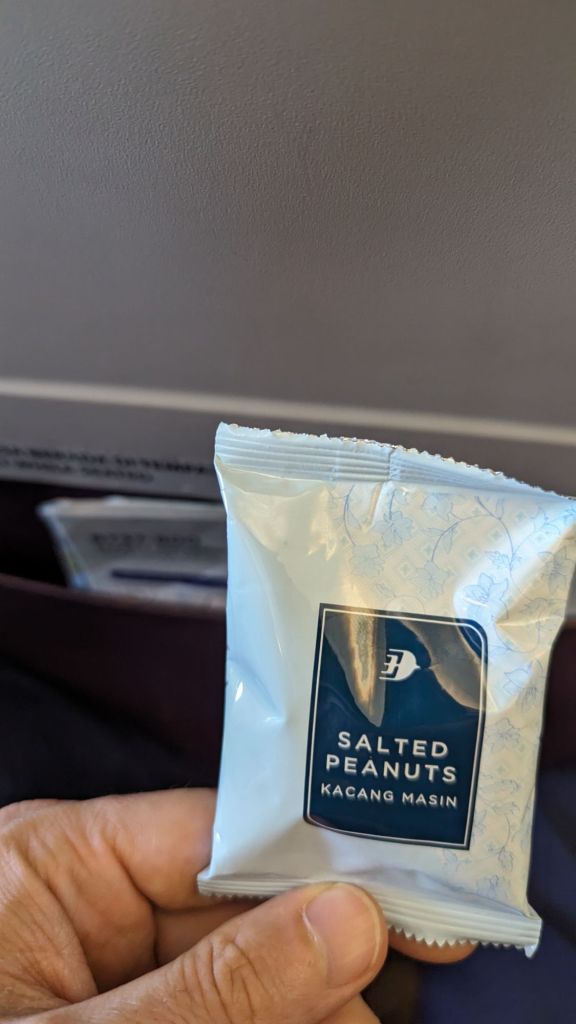
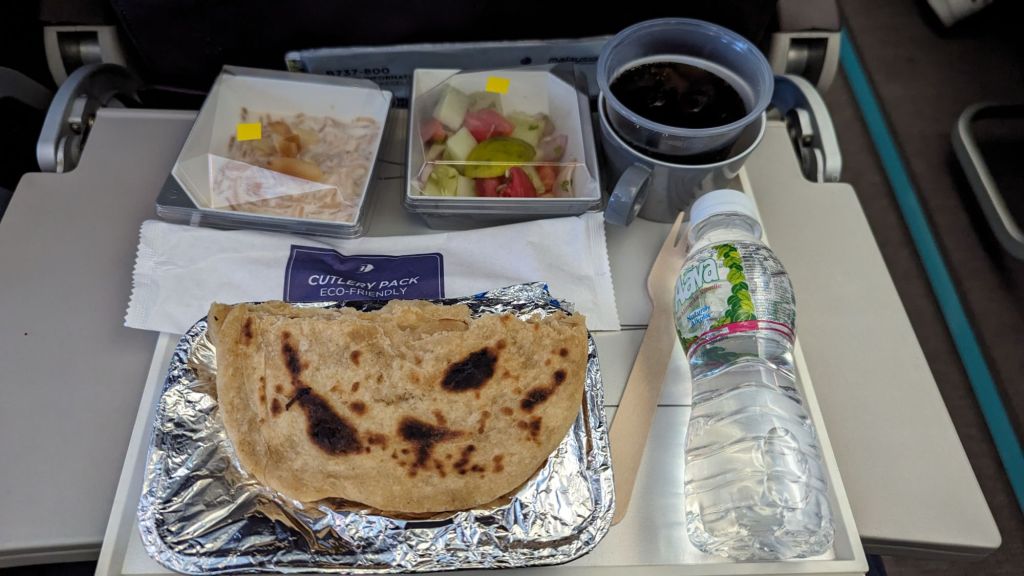
I would have liked adjustable headrests on the plane, a B737-800. However, the inflight entertainment options were decent and the food service decent.
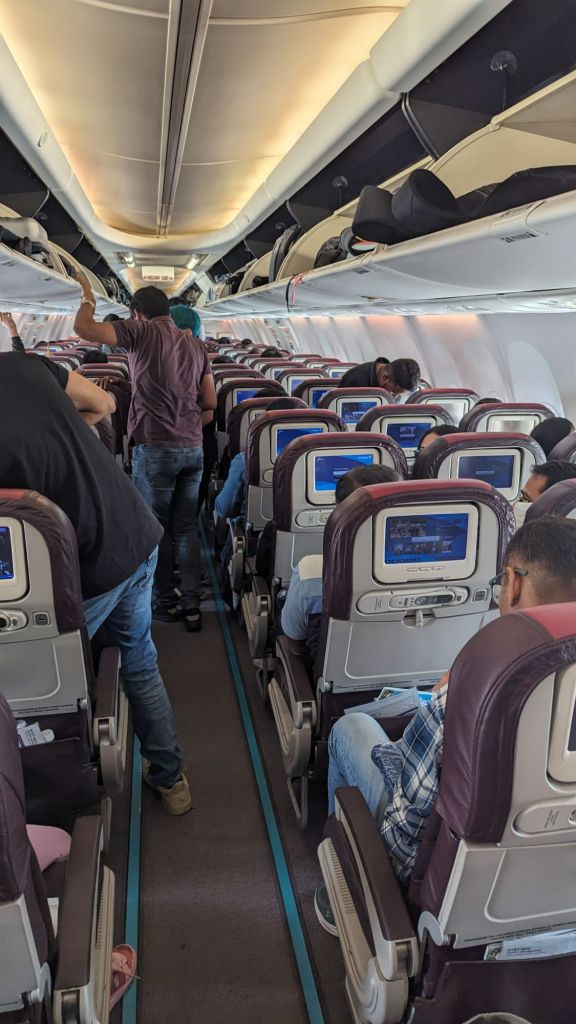
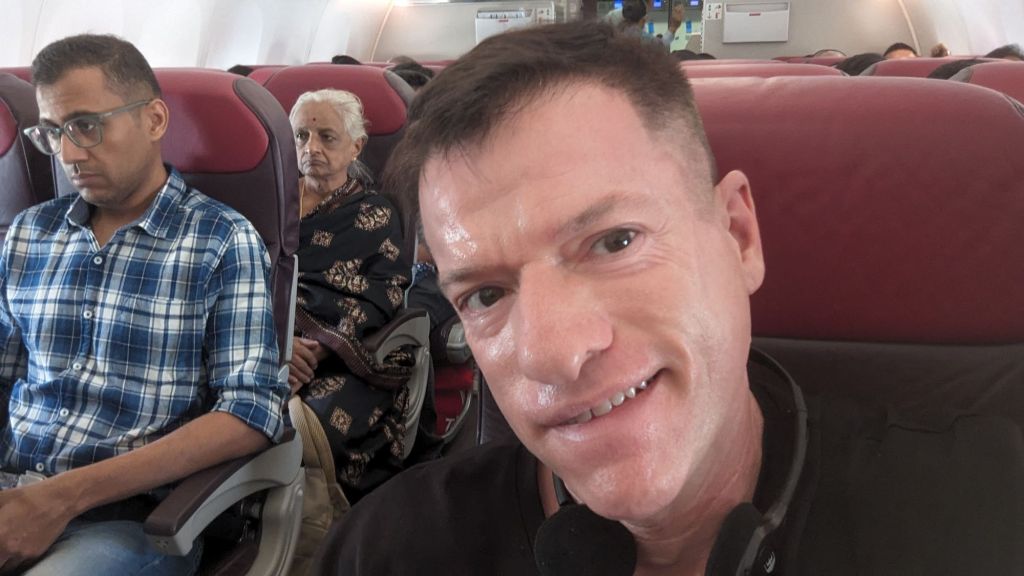
It had been awhile since I had seen these on a plane.

The movie I chose was a bit of a disappointment, the latest Aquaman, but that was my own foolish choice. There were plenty of other great looking recent releases available, but I decided to opt for something lighter . . . Unfortunately, it was just dumb. Aquaman lovers please don’t spam me with your hate comments unless you also bring me back some tasty dried meat snacks from your next trip to this part of the world.

So it’s 4:13 PM India time (6:43 PM Malaysia time) and, they just announced the beginning of our descent into Kuala Lumpur. Up until now it’s been a good flight, with my only complaint being that it’s been a tad bit too warm for my liking. Supposedly we will touch down at 7:31 PM Malaysia time. The actual touchdown time was 7:26 PM Malaysia time, with being parked at 7:34 PM. So far so good. However, upon connecting to  my Nomad esim I saw that the MDAC still had not arrived.

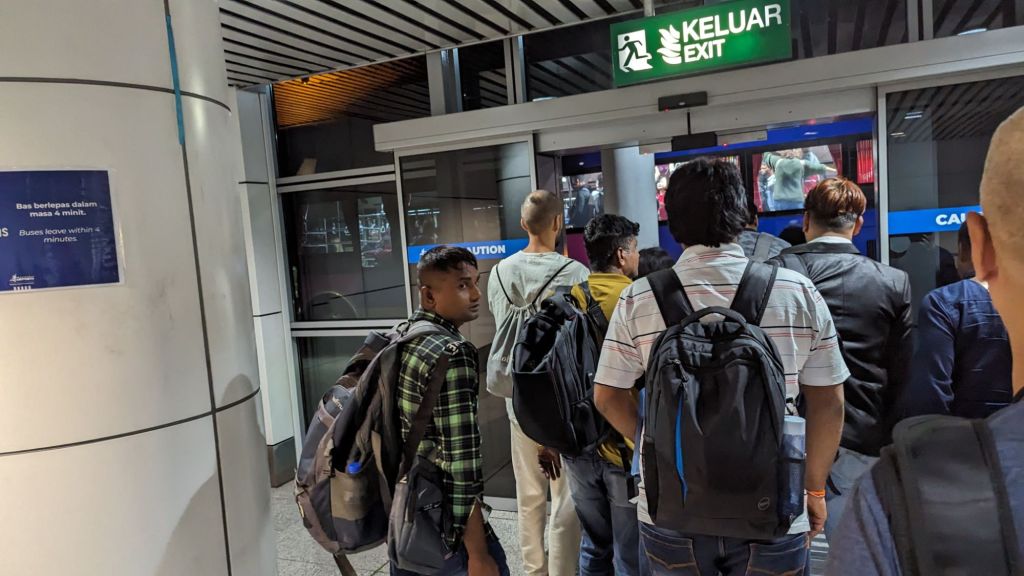
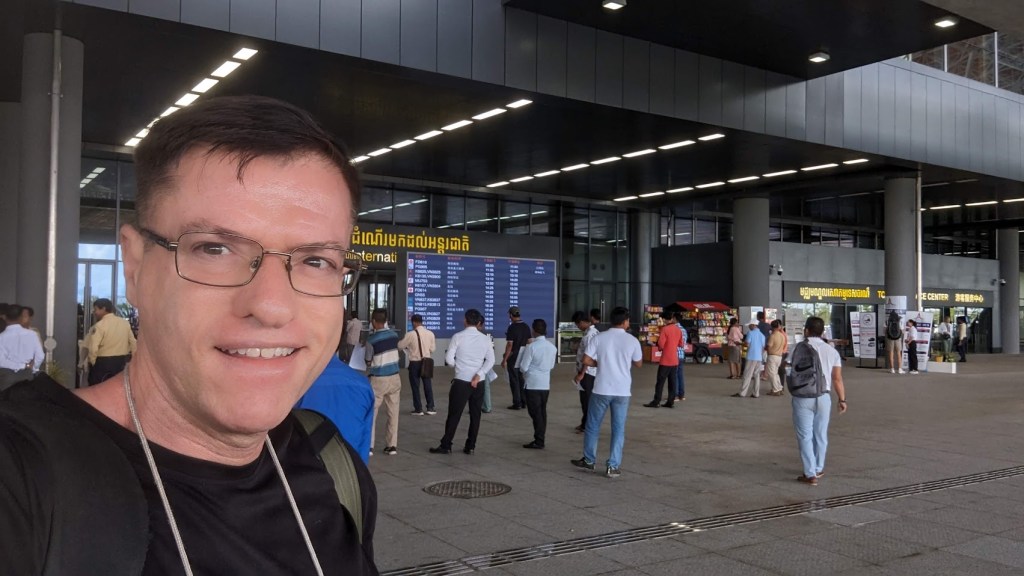
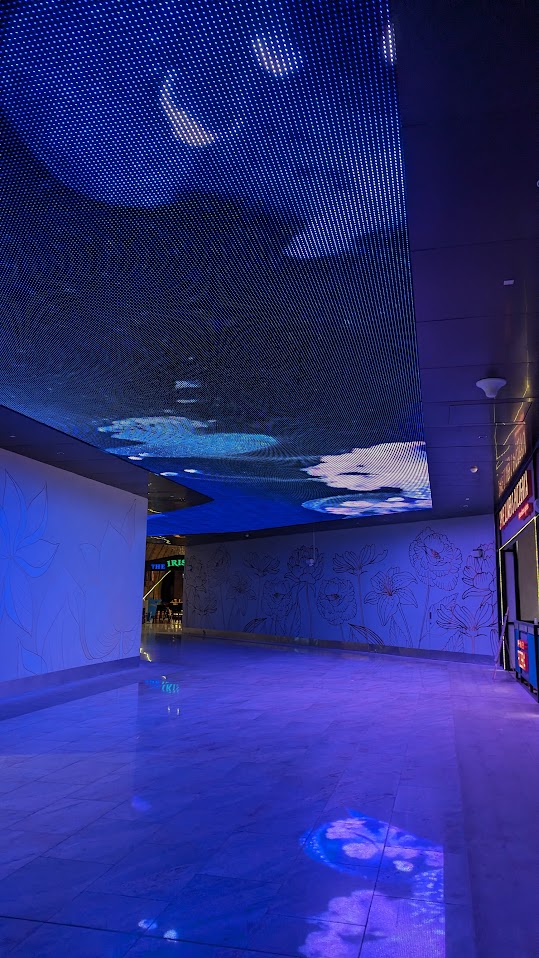
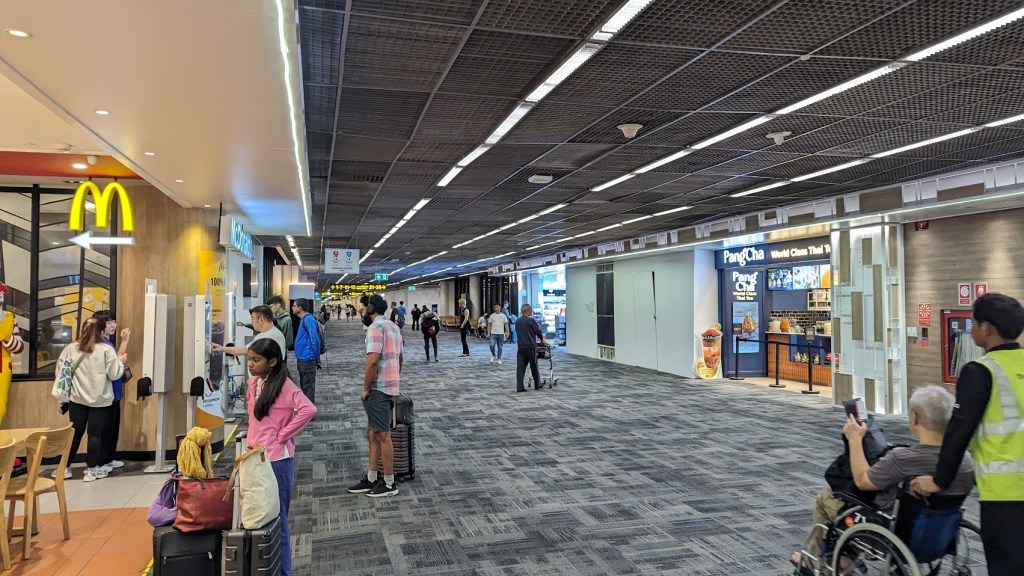
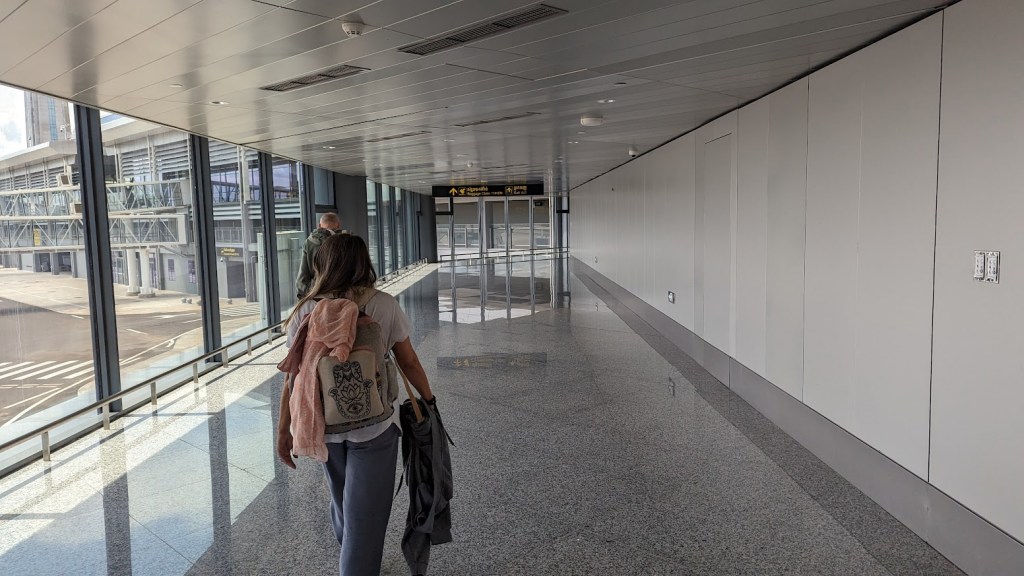
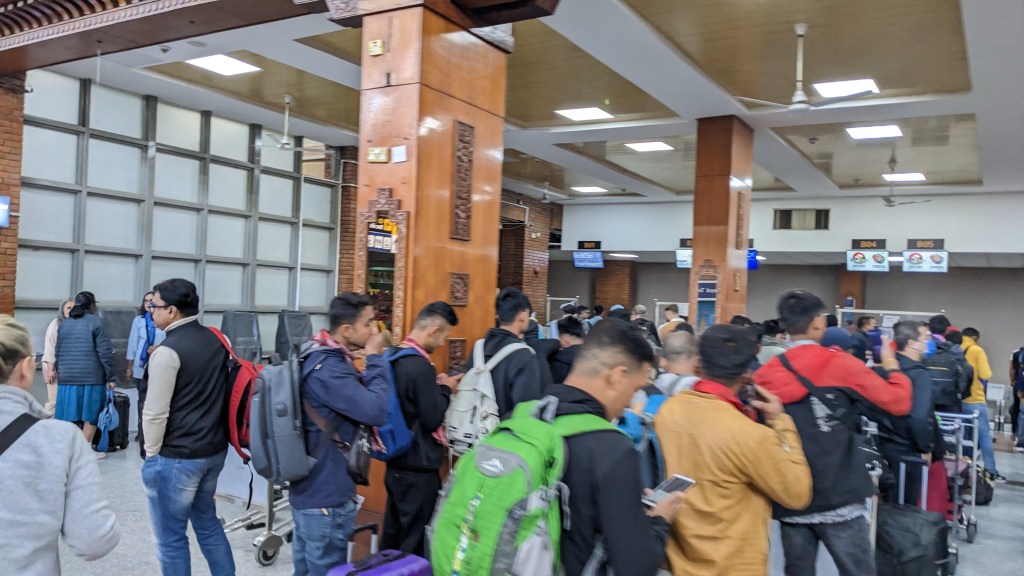
7:42 PM getting off the plane. While it is possible to understand the signage, it’s kind of confusing because they have you all out in the same area as both the transfers and as far as I can tell, maybe even people that are taking off, so it’s a bit difficult to tell where you’re supposed to go. You eventually get to the end of a hall, and then you have to wait to take a bus.
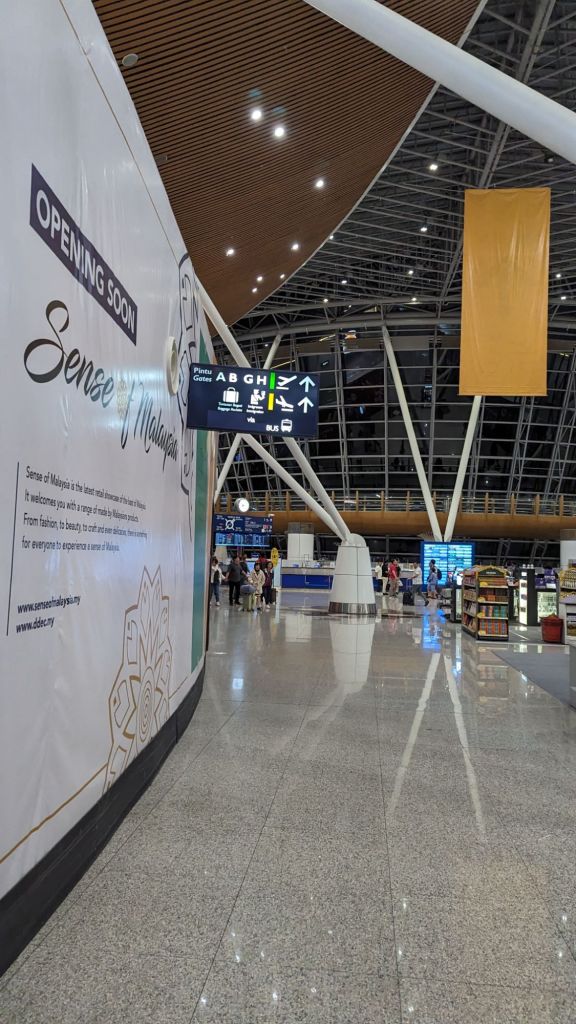
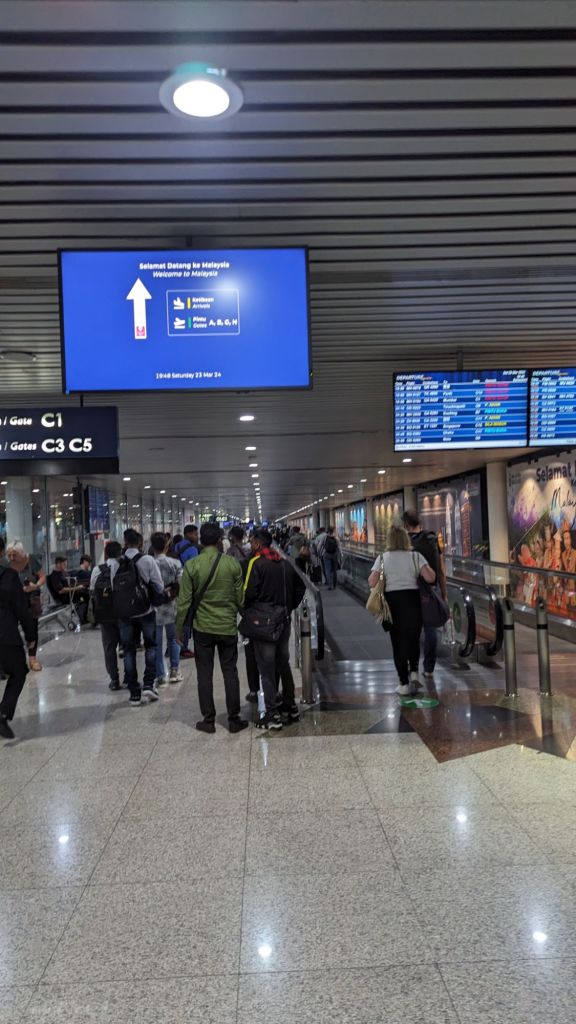
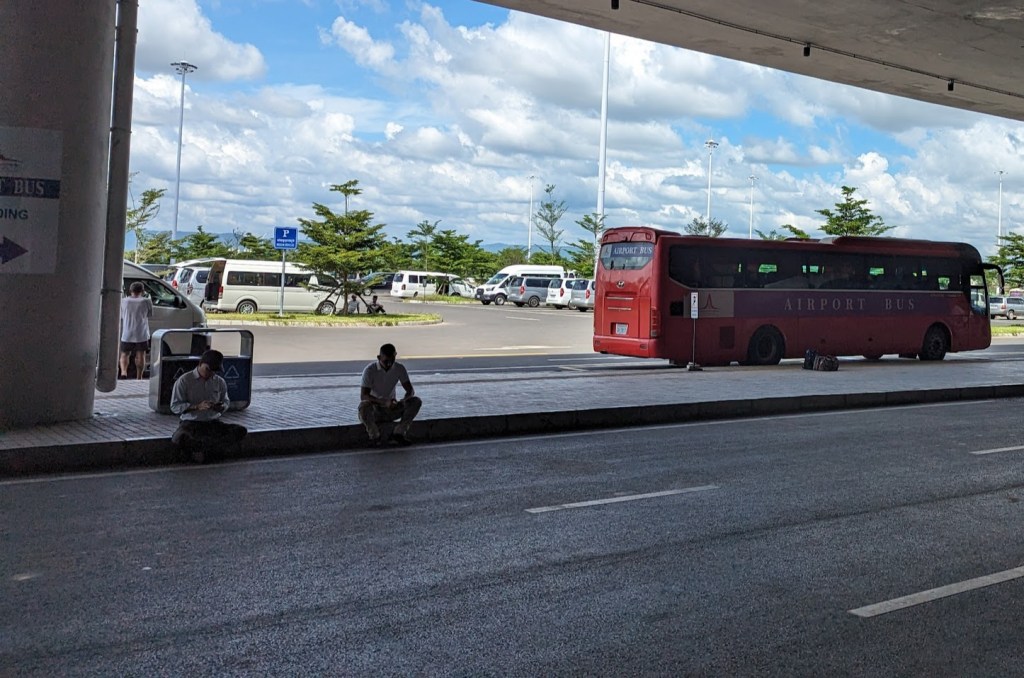
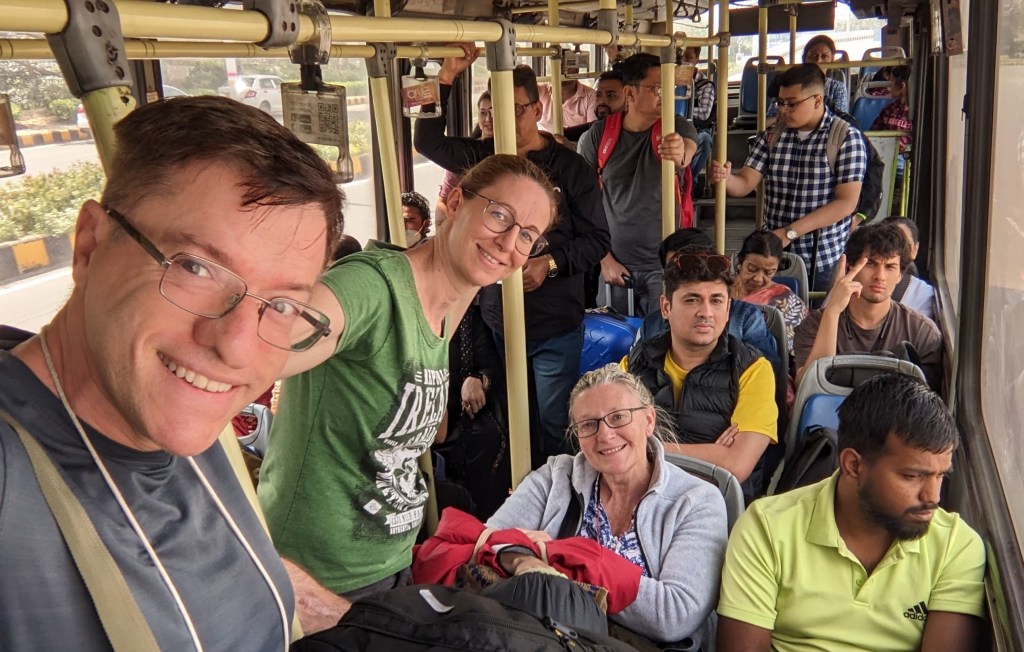
Like I said, it’s doable, i but a bit unsettling. To be certain, when I saw the bus at 7:50 PM, I actually thought that I had made a mistake and started to turn around; fortunately there was a worker there and seeing that I was hesitating, she told me that this was the right way.

7:59 PM the bus arrived at the next building. This one seemed a bit easier to navigate, but once again it wasn’t clear where I was supposed to go. There was a sign with the USA flag pointing to the right along with about 7 other flags, but when I went there they said that was wrong. The earlier sign had said autogate eligible this way, but I’m not sure what it means. Regardless, the official kindly told me it was the wrong place.

8:27 PM I finally got to the immigration office and they didn’t ask for the MDAC, which of course I didn’t have haha. The baggage claim was right there. At 8:31 PM I already had my bag.

8:41 PM I was on the KLIA Ekspres to KL Sentral. It was easy to buy the 55 RM ($11.61 USD) using tap to pay with my international card. I didn’t see any in the airport and I didn’t have any local currency. The train itself was clean, quiet and comfortable.

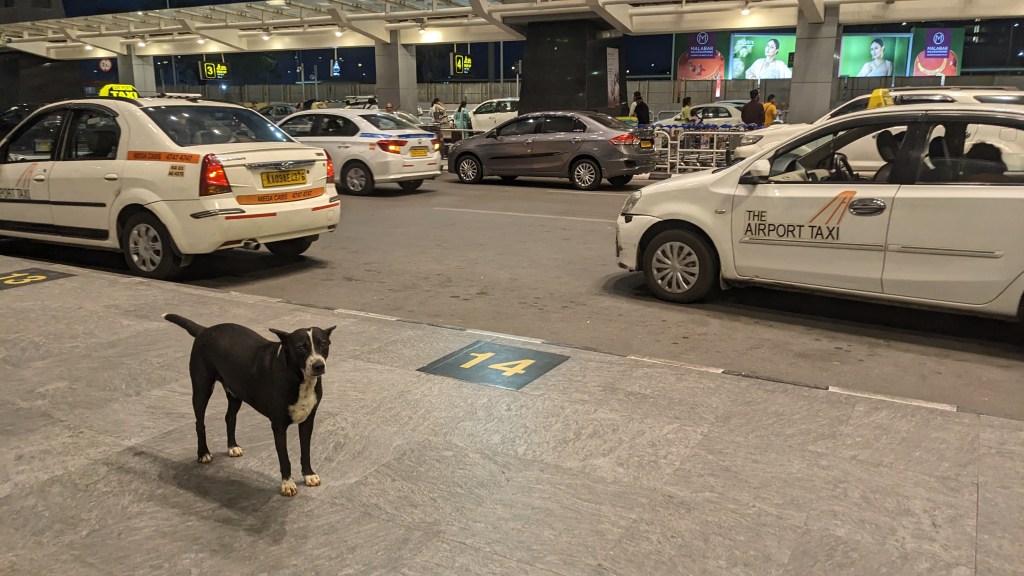
At 9:16 PM I arrived at the station, got out and was happy to see three ATM machines. Right there I also saw a taxi counter where I was able to pre-pay a ticket to Mont Kiara for just 30 RM ($6.33 USD). One copy is for the driver and the other copy is the customer receipt.
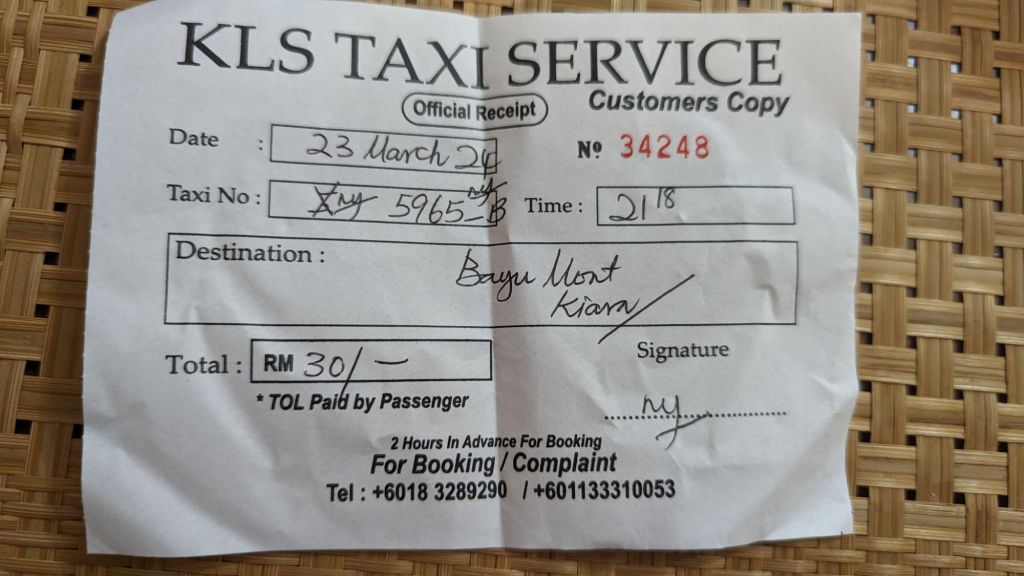
Within 15 minutes I was at my friend’s place in Mont Kiara.
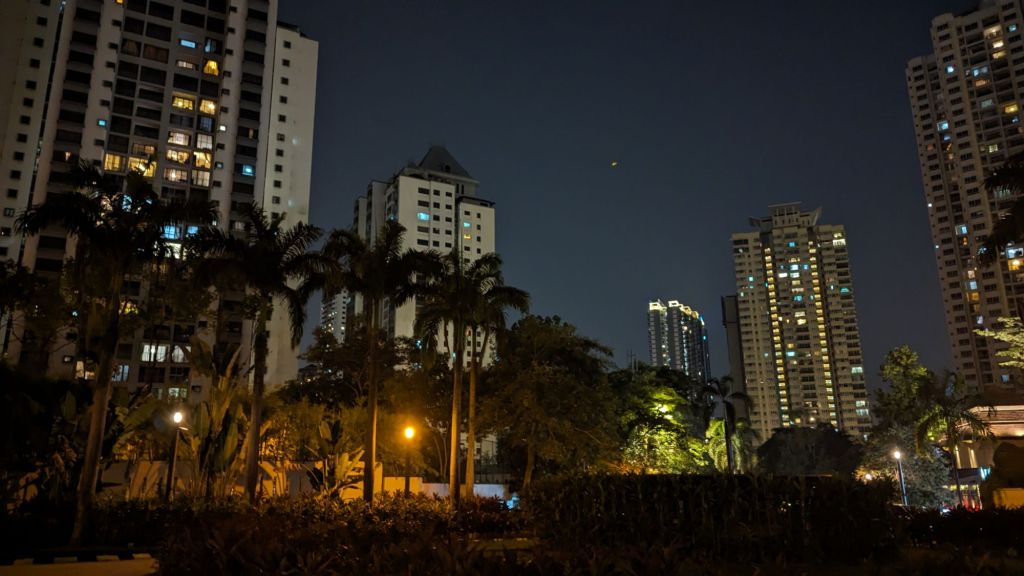
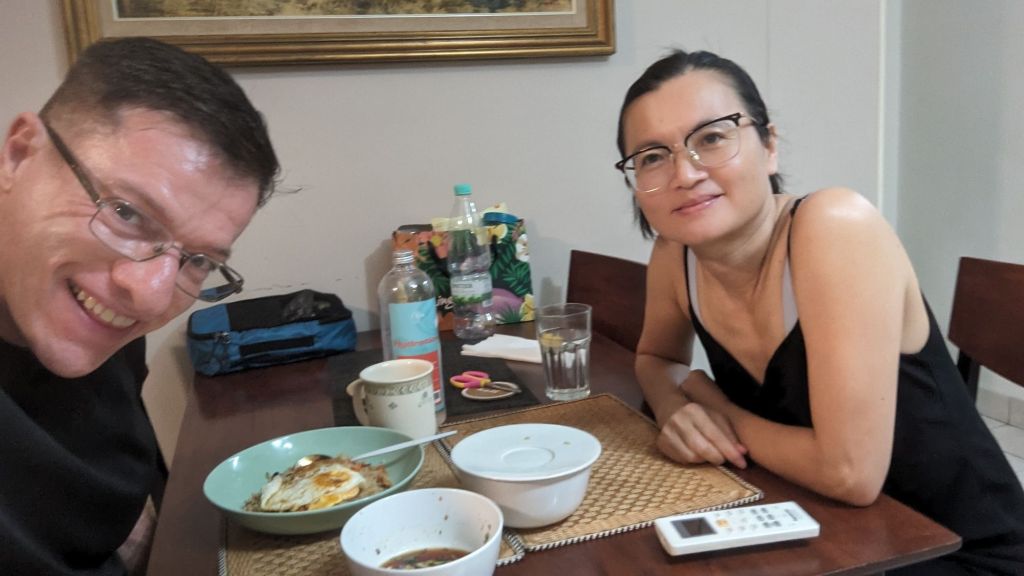
Visiting good friends always makes for a great trip!

So anyways, I know today was a bit boring, but the travel itself is also an important part of the voyage. I know that this entry was rushed, but I also know that if I spend too much time on it, then I will never get it out, so in advance please excuse any egregious errors. As always thanks for reading along and I hope to offer some good tips on your next trip to Malaysia.

Fujian province trip December 2023 to January 2024: Initial advice based on week 1.

Hello there to my loyal readers and to those who are only just now discovering my travels . . .

These Fujian province entries will be a bit different from my normal travel logs, since this trip is more about visiting an old friend and former colleague than it is about discovering Fujian province itself. Also, unlike other similar trips such as when I went to Phuket to visit with my good friend Elisabet, here in Fujian province, especially away from a major city, I am almost entirely dependant on my former colleague, Huixian.

Since Huixian and other Chinese people I have met outside of China all speak quite good English, and I also knew that English was a required subject in school, I had just assumed that all reasonably educated people knew English. As a minimum, I figured they would be able to read without too much effort. Let me be clear right off, that is NOT the case, at least not in Fujian province away from the main city of Xiamen. So, if you do not know some basic Chinese, including being able to read, I don’t think that I can recommend that solo travellers attempt a trip to China away from very major cities. As I know English, Spanish and French quite well, this is the first time in more than twenty-five years that I have felt almost entirely lost when on my own.

Furthermore, all signs and notice boards are only in Chinese, usually only with Chinese characters (no Pinyin) and apps which you have come to rely on outside of China such as Google maps don’t really work here. Yes, there are high quality local equivalents, but they are only available in Chinese. In short, this is not a location for the inexperienced or meek solo traveller. Again, in my case things have been great, since Huixian has made sure that I am always taken care of, but on my own it would be incredibly difficult. No doubt tour groups have a different experience, because then there is someone hired to make sure you are always cared for and shuttled around from place to place.

Furthermore, most of us outside of China have come to rely on our debit and credit cards; good luck with that in Fujian province (and I suspect in most of the rest of China away from the mega cities). Unless you only go to very expensive places, almost nowhere here accepts cards for payment. Supposedly everywhere has to accept cash, but many travellers report that while shops and smaller vendors are in theory happy to accept cash, they never have change, since here almost everyone pays with either WeChat or Alipay.

WeChat is the local equivalent of WhatsApp or iMessage and is by far the preferred option of the two major payment platforms used on a daily basis in China. Like WhatsApp, people use it for messaging, but it also has a payment option built in which is similar to Apple Pay, Google Pay or in the case of India (where I live most of the year), UPI payments. The first hurdle many will encounter, especially if coming in from India such as I did, is how to get a WeChat or Alipay account; again, I recommend WeChat since it seems to be more universally preferred here in China.

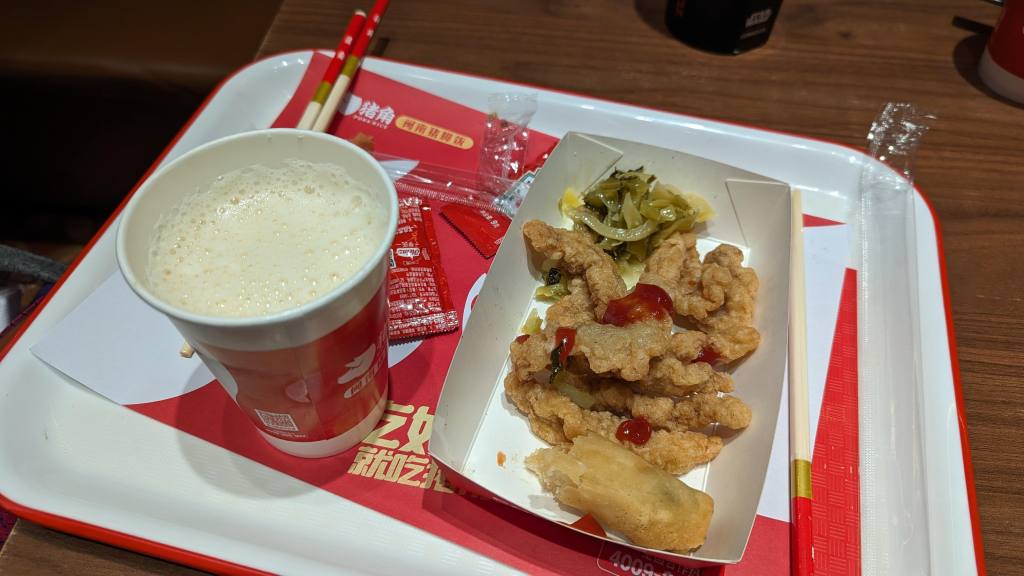
This snack at the train station represented my first struggle with payment in China. I had already added my Indian card to Alipay before departure, but then I couldn’t get it to work. After 35 minutes I was finally able to pay using WeChat pay . . . But later on my Indian bank blocked my card 😥

In India, the WeChat app is blocked on both the Google and Apple stores, so you will have to sideload the same. This is a fairly easy process for Android devices, but I believe it is significantly more difficult for Apple users. Once installed, you will not be able to activate your account with an Indian number, but it shouldn’t be too difficult for most other countries. This is not because WeChat nor China refuses to verify Indian numbers but rather because India blocks the process. In my case I was able to verify my WeChat account using my Costa Rican number. However, initial verification is only half of the battle, because you will then need a mainland Chinese friend to complete the second half of the verification process. Probably if you have already decided to travel to China, you will have someone available to help you with the second part of account verification, even if it is just your tour guide, but if you don’t, then you can’t use the non-Chinese language version of the app. It may be easier to do if you get a local SIM card, but like many countries, this is a rather onerous process, so most international travellers will prefer to either use an eSIM (my recommendation is Nomad esims but Airalo is also a decent but more expensive option). Of course, eSIM will only work for you if you have an eSIM enabled telephone . . . while this is increasingly common, it is still not a given for most budget or mid-tier devices . . . So, let me go back to before my trip started and give my step-by-step advice for those who are interested in doing a trip to China.

First, unless you have a good local friend who is waiting to receive and take care of you, this could even be an experienced local expat, you might not want to attempt to do this trip as a solo traveller. Linguistically and financially, it can clearly be very challenging. My friend Huixian has told me that it is much less of a problem in a mega city like Shanghai or even Beijing, but it would still be quite frustrating. I assume though that reputable group tours will be just fine.

Second, it is extremely likely that you will need to get a travel visa. This may take several days or even weeks to get. For me, this was quite new since I generally travel with my United States passport, which means I mostly enjoy either visa free or visa on arrival travel. As far as I could tell, the process for getting a Chinese visa is similar to the process for getting a visa to either the United States of America or to most European countries. So, if you are experienced with that sort of situation, you will find it to be annoying, but familiar. For me however it was a first-time experience, so it was very stressful. In summary, don’t expect this to be easy and don’t leave it for the last moment. I would say that you should probably at least start the process of figuring out what you will need to do no later than three months in advance, even though in your particular case it may be theoretically possible to do everything in less than a month.

I know that some of you are already thinking that you can’t be bothered to take on the challenge, but there is such great food, and an incredible variety of the same.

Third (this is a big one), prepare ahead of time for how you are going to stay connected with friends and family outside of China while you are visiting. Do NOT assume that your previously used methods will work flawlessly. Both iMessage and WhatsApp currently seem to work in China for text messaging. iMessage seems to be fully featured in China but features such as video and voice call and sharing videos/pictures are blocked on WhatsApp. So, for Android users, I suggest you also get Skype ahead of time for your friends, family and of course yourself. While I assume this is not that big of a deal for the average tourist, do NOT assume that ANY of these are either properly encrypted or private while using in China. For your personal use with friends and family, I would say there is no concern, but assume that government entities can see any of your communications.

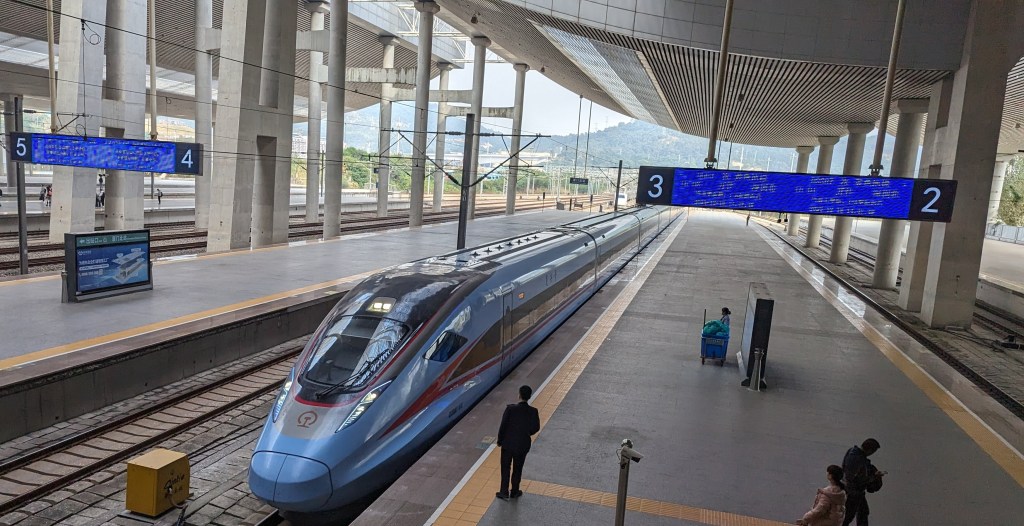
I didn’t attempt to buy a high-speed train ticket on my own, but Huixian assured me that more official places such as this would surely be able to accept CNY cash. She also seemed to think that I would not have a problem making them understand where I needed to travel. The problem though is that once you are in the train, again, all the announcements are only in Chinese . . . so missing your stop is a very real possibility. Also note that when more than one person buys a ticket, it is very common for them to not be seated next to each other. Assuming that one is able to get past all those hurdles, the trains are incredibly comfortable, fast and generally on time.

For those who are interested in going beyond basic communications, you will need to explore VPN options. You will need this if you intend to access MANY common foreign websites and services such as Google services, Facebook, Instagram etc . . . or even to see many basic websites in other countries. Again, there are Chinese versions of all of these services, and they are GOOD options, but they will not be much help when trying to communicate with those outside of China. Furthermore, most of the Chinese options are only available in Chinese. For the common tourist who simply intends to use their smartphone, by far the easiest option is to get an eSIM ahead of time from Nomad or Airalo. These eSIMs use an automatic VPN which will allow you to easily access all of the services which you are accustomed to when outside of China. Buy MORE data than you think you will need, since I understand that you will NOT be permitted to top up your plan while in China. However, even though the Nomad eSIM option in particular for China is affordable, you may want to consider a plan B.

Plan B means actually paying for a separate VPN service. I already had Surfshark which supposedly usually works in China, so I thought I would be covered. Spoiler alert, NO, it did not work. Through my nomad eSIM with the already built in VPN, I bought a month of ExpressVPN, which according to almost everywhere on the internet is the best option for China . . .once again, NO, it did not work. Finally, in an obscure post on Reddit (which of course I could only access using by Nomad eSIM) I found out about a Chinese VPN provider called LetsVPN; this is a reasonably affordable option, and it seems to work fairly well on all the Chinese networks where I have tried. I assume that my communications are not actually protected from being monitored by government entities while using it, but as I definitely have no nefarious intentions, I really do not care. To be clear, like most of you, I simply want to back up my photos and videos to Google photos, post to Instagram, Facebook and here on WordPad, and maybe see a bit of Netflix. Notably, there is another VERY expensive VPN provider called Astrill which many recommend, but I cannot speak to the same. Once more, for ANY of these, if you do get lucky and find that they work for you, assume that they are perfectly good for personal use including having more secure banking when on a public network, but do NOT assume that they are secure from possible monitoring by law enforcement agencies. Still, if you are a simple, honest tourist like me, this really should not bother you.

Moving along to the fourth point, I will assume that you took my advice to get a Nomad eSIM. With that in mind, make sure to turn off background update and backup services ahead of time so that you do not burn through your valuable data. I myself made the mistake of not turning off my daily WhatsApp chat backups and ended up wasting 9 gigas of my 20 gigas of data over a period of four days. I did however want to do daily cellular data backup of my photos before I got LetsVPN activated. If you are REALLY looking to economize your data use, turn off ALL background updates and back up services except for on wifi, and assume that your wifi backups will be blocked (when not on a VPN) with the noted exceptions of anything to OneDrive or iCloud.

Did I already mention the food?!

Fifth, if you don’t already know Chinese, in which case you probably will not be reading this blog entry, get very familiar with a translator app that you are comfortable with BEFORE embarking on your trip. Also save yourself some headaches by advance downloading any languages you think you might need to use. For China, one of these would be “simplified Chinese” and the other would be whatever you feel most comfortable using. The good news is that Microsoft translator actually works extremely well with Chinese, and since Microsoft services are not blocked, even if you have to use an internet only feature, you will have full access. Google translate also works quite well with Chinese, but remember that it will be blocked if you aren’t using a VPN and need any network only features. In a pinch, I think I could completely manage my actual “needs” with just Microsoft translator, but it would make for a potentially lonely trip if doing solo travel. While you will figure this out on your own, the audio translate features of both of these are good, but only if there is not much background noise and the speaker enunciates well. Also, it does take a bit of patience to have a conversation this way, sort of like doing a walkie-talkie conversation.

So, should you come to travel around China on your own? If you are fully aware of these challenges, and are still interested, then stick along with me for the next few entries. Again, my first experience has been VERY protected due to the incredible support of my friend Huixian, but I am already fully convinced that I now want to try another trip on my own, and I think that my experiences could help you to do the same, while also convincing you that it is worth the effort!

As always, thank you for reading along, and feel free to put any questions in the comments section below, and stay tuned for more details about some lesser-known amazing sites in southern Fujian provinces that you might want to visit.

In case you are still wondering about why you might want to travel outside of the major cities . . .

Siem Reap trip: Day 6 (17 Nov)

Hi there readers. For those of you who read Day 6, you know that today I didn’t have anything planned until the evening. As such, I didn’t set me alarm.

However, as I was well-rested, I still got up reasonably early, ate some cashews and canned tuna which I had bought earlier and wanted to finish up before leaving tomorrow, and then once more headed out to a local gym, this time choosing Angkor fitness, where I arrived at 9:55 AM. Similar to Gold Gym where I had gone a couple of days earlier, the cost of a day pass was $5 USD. However, despite the lack of a pool here, which I had no interest in using anyways, I thought this was the nicer of the two gym options. No doubt much of this was due to the time of the day, but I also found the temperature much more tolerable here than in Gold Gym. Finally, while it was not a huge difference, the resistance training area seemed to be slightly better.

I finished up at the gym at 12:16 PM and went out walking with no particular destination in mind.

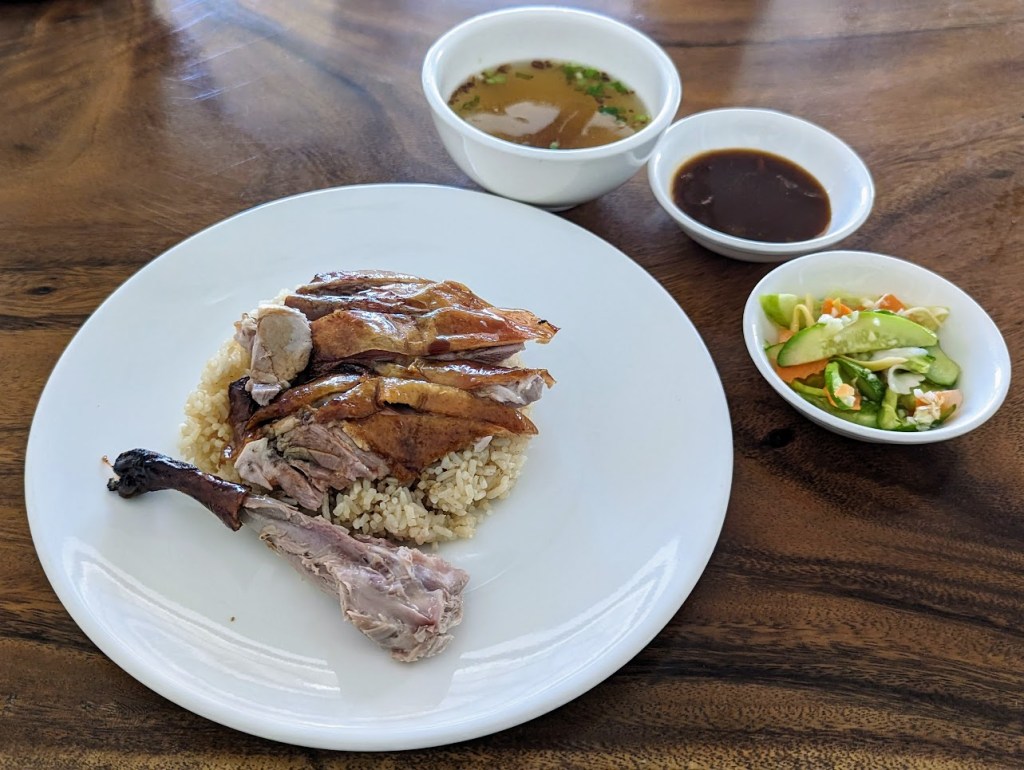
Along the way I came across this shop with rather beautiful wooden carved statues. I didn’t enter to look at anything closer, since I had no intention of even considering purchasing anything, but from the street it looked impressive. Then at 12:46 PM I stopped in at a random restaurant which seemed to specialize in serving only dishes with duck. From what I could understand, at this time of the day there were only two options: duck with noodles or duck with rice. I opted for the rice dish which arrived at 12:48 PM.

The food was simple but pleasant, and with a price of only 10,000 Riel ($2.43 USD) there was certainly no reason to complain. By 1:21 PM I had finished and then walked back to the apartment, arriving at 1:35 PM. As I did not have anything planned until 8:00 PM in the evening, I decided that I should try to still do something else nearby here in town in order to not “waste the day”.

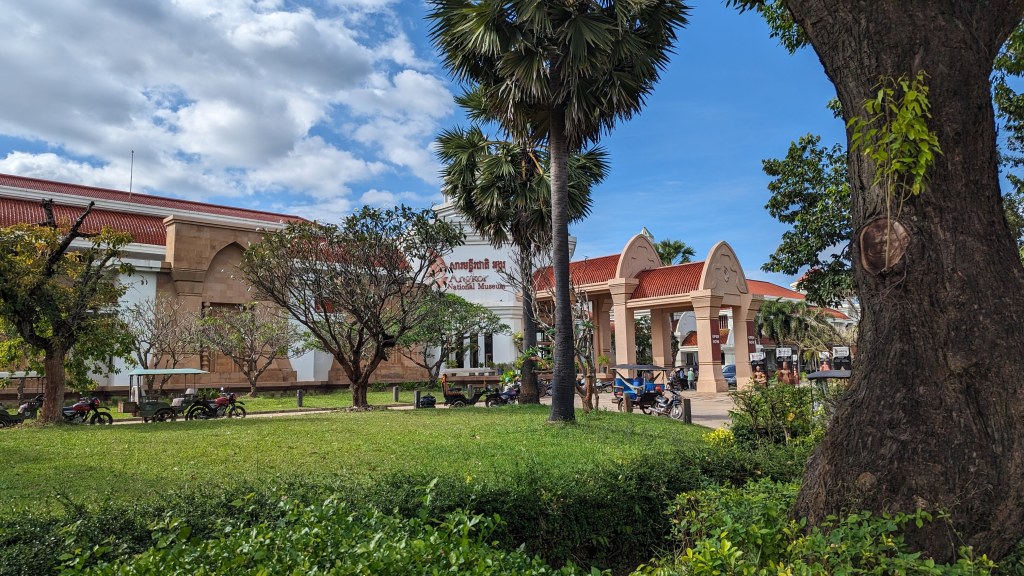
On day 1 it had originally been my intent to go to the Angkor National Museum, but then I had just felt too tired to do it, so since it was rather close to where I was staying, it seemed reasonable to go there today. I took a quick shower, changed clothes, and then headed out walking from 2:00 PM, arriving at 2:18 PM.

The standard cost to enter was $12 USD for adults and $6 USD for children ages 6-11. There was no mention made of special prices for residents vs foreigners. For those without cash, it was possible to pay with a bank/credit card. There is also an audio guide service which I decided to get for an additional cost of $5 USD, but in retrospect I really do not think it was particularly helpful, since it just seemed to generally restate the same information which could easily be read throughout the museum. While this was not a big deal, it was also the one place I encountered where it seemed to be a slight disadvantage to pay with local currency. My total was 71400 Riel ($17.34 USD).

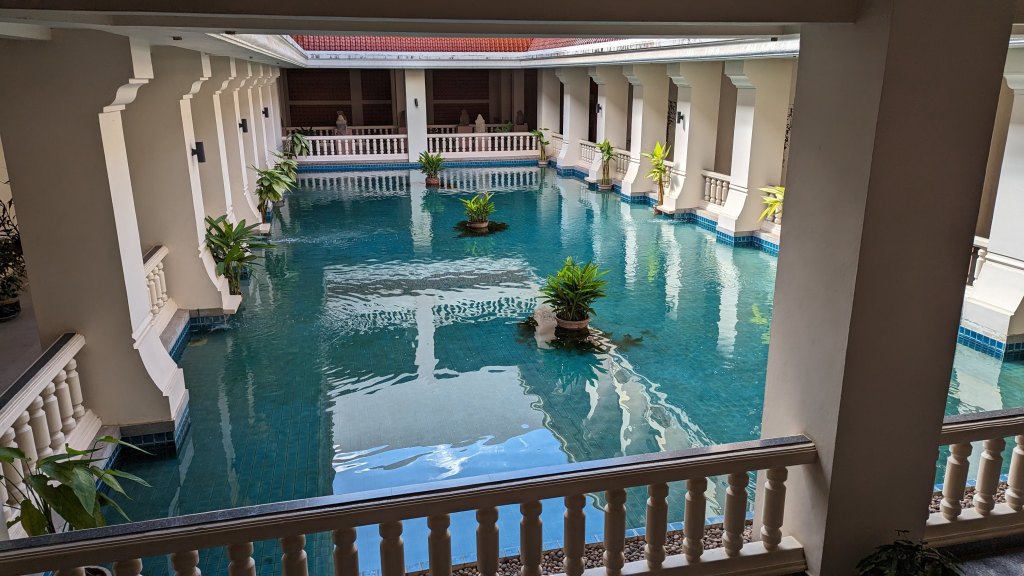
The museum is pleasantly designed with a spiral walkway going past a soothing pool of water as you head up to where the visit begins.

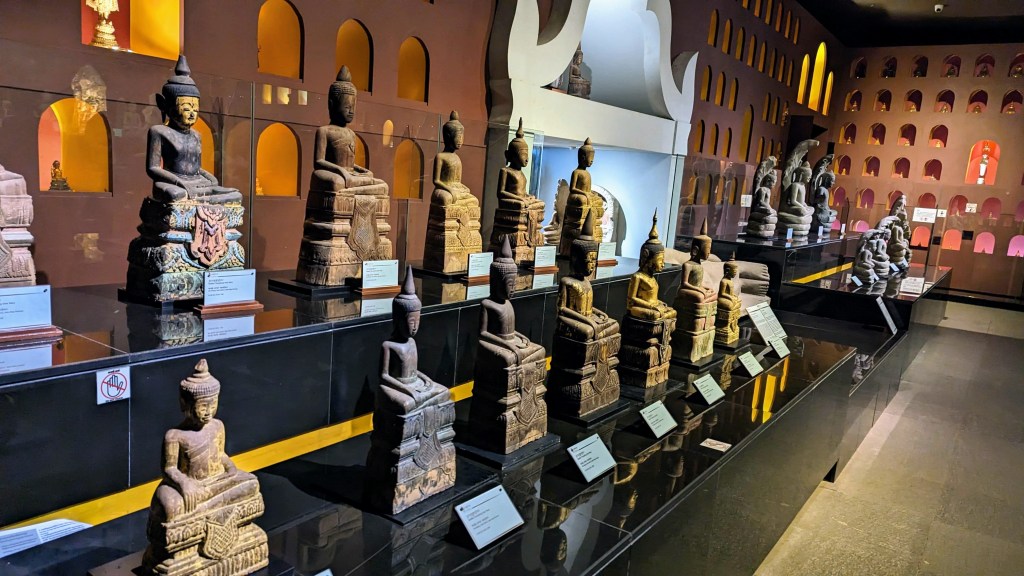
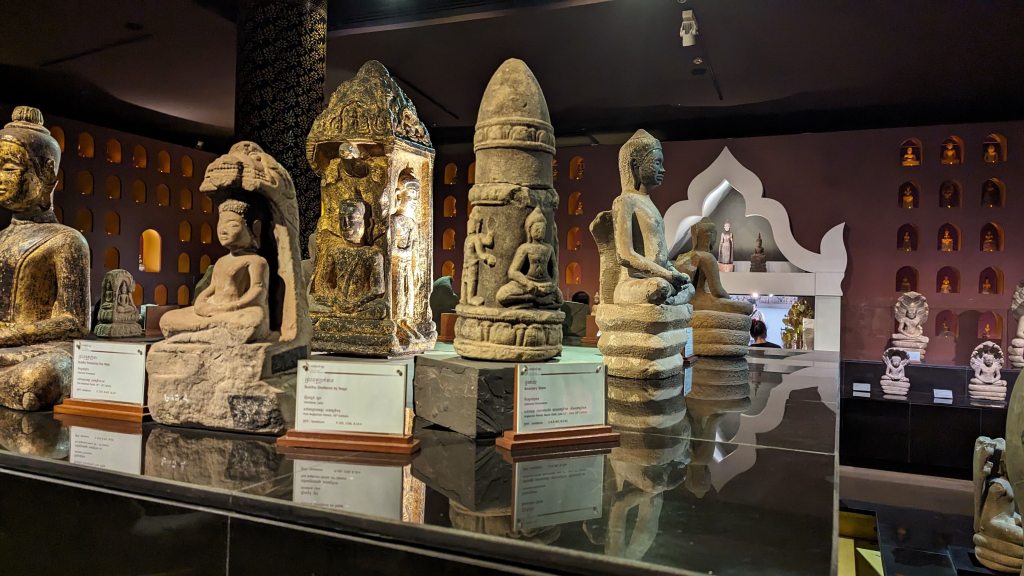
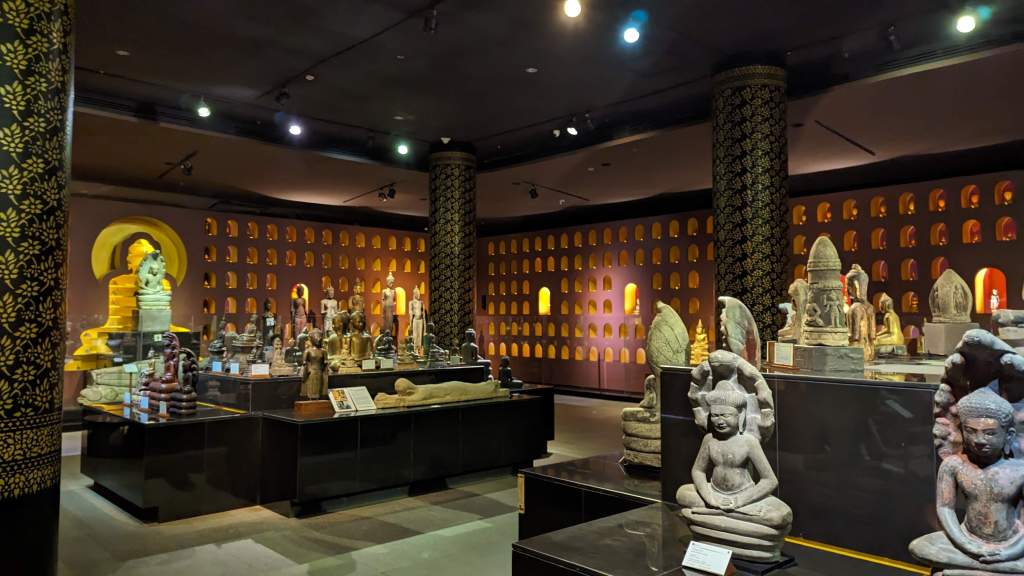
Unlike many museums where you just sort of choose your own adventure, here they definitely want you to do things in a particular order, and there are abundant staff throughout who helpfully direct you along to the next prescribed area. As directed, my visit began with a short briefing video, and I was then pointed to the first Exhibit Hall, aptly named the 1000 Buddha gallery.

I did use the audio guide throughout, but as mentioned earlier, if you actually read things, the English and Khmer explanations prominently placed throughout already do a very good job of explaining things. Some might argue that they do too well of a job explaining. In summary, this was a very educational museum, and I think it would have been much better for me to visit BEFORE my Angkor Wat visit, as had been my original intention. However, while it is very clean, informative, and well-organized, this is definitely not appropriate for most children nor a place for those who are not really very genuinely interested in a lot of the historic background of the ancient civilization around this area.

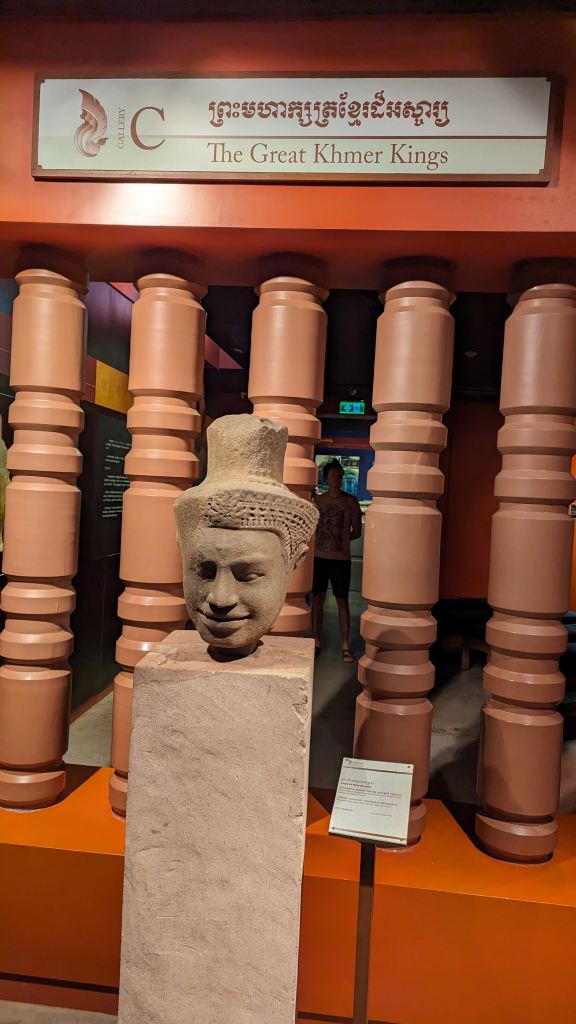
At 2:57 PM I moved on to the next section which was specifically all about Khmer civilization, religion and the great Khmer kings.

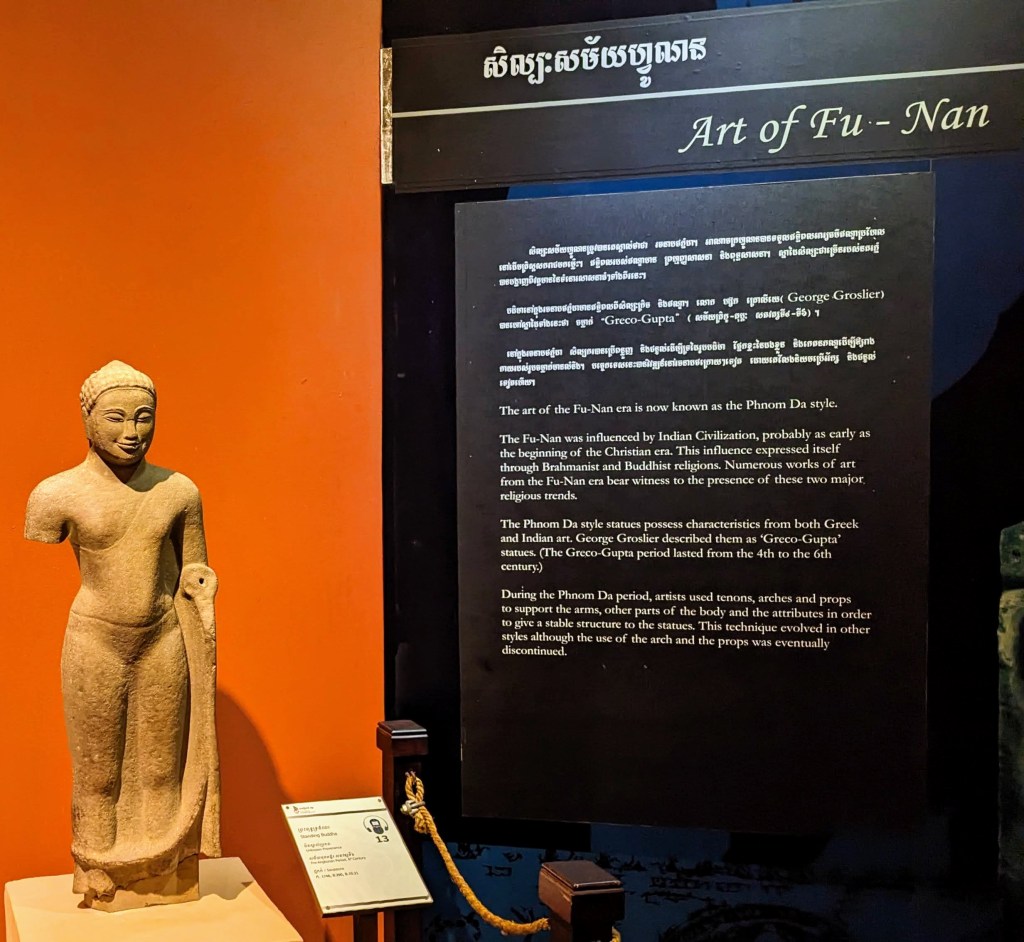
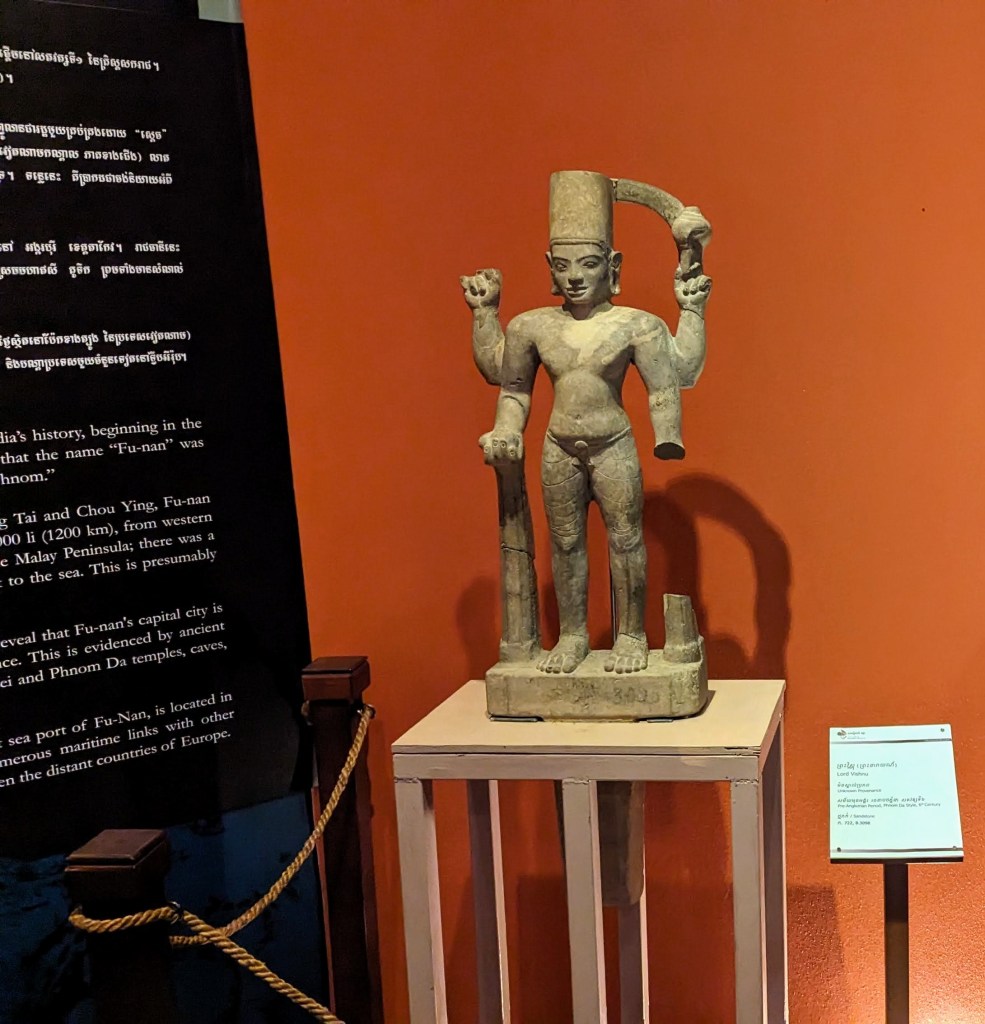
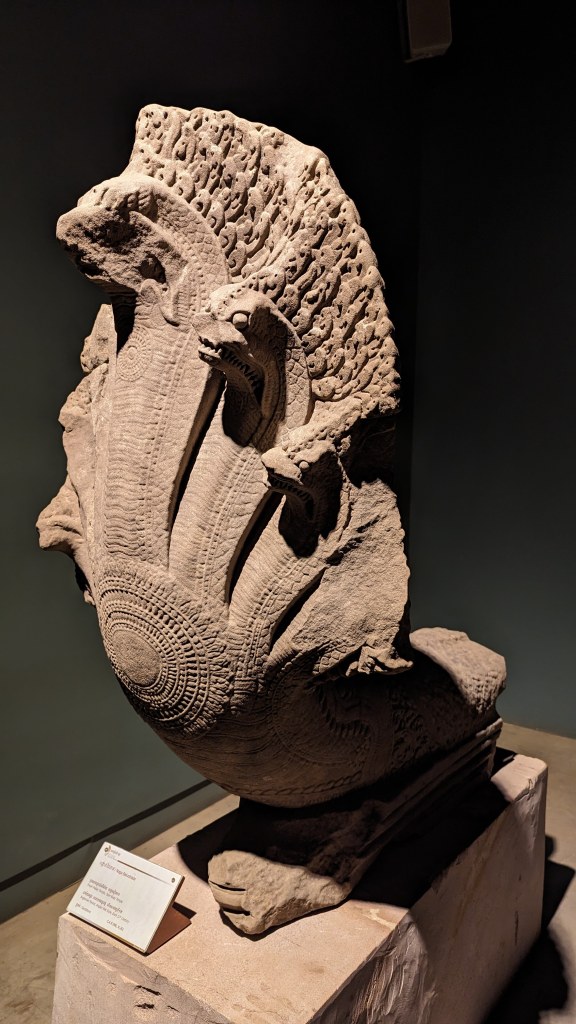
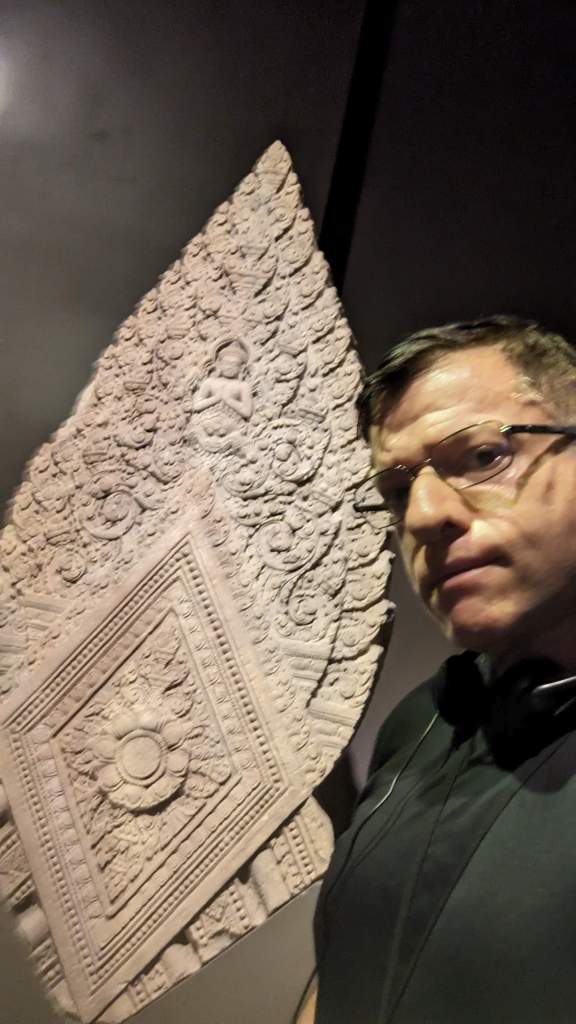
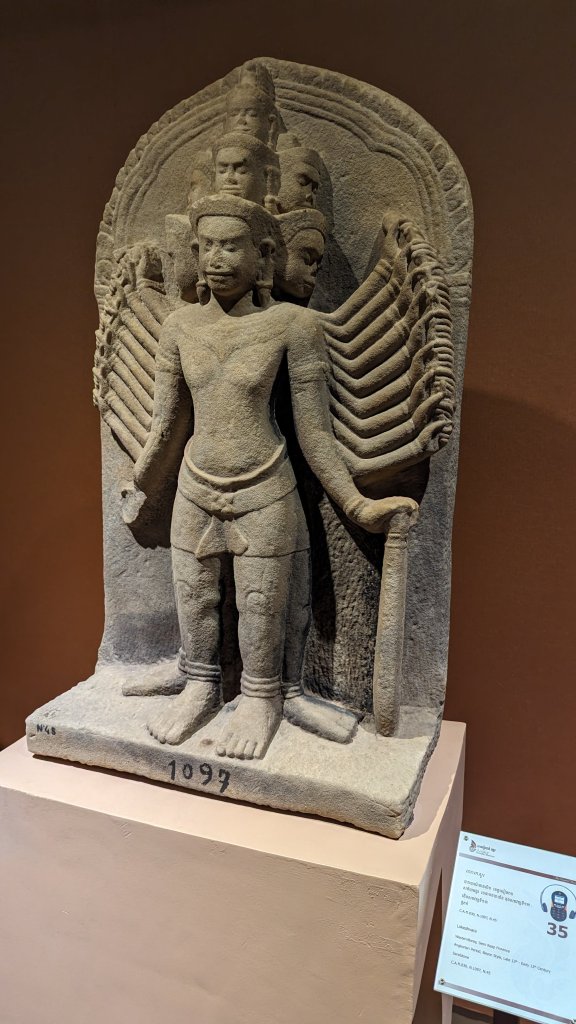
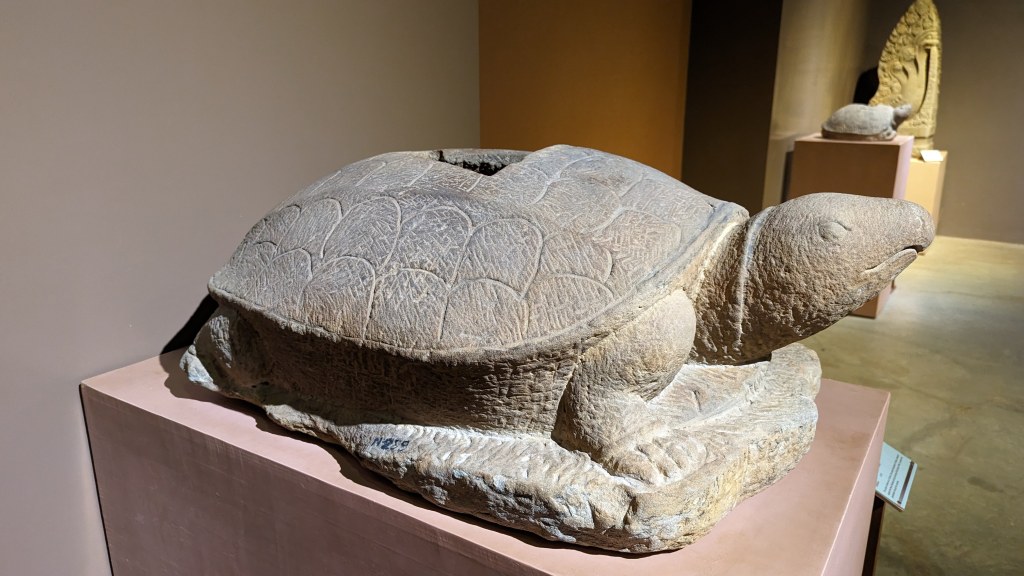
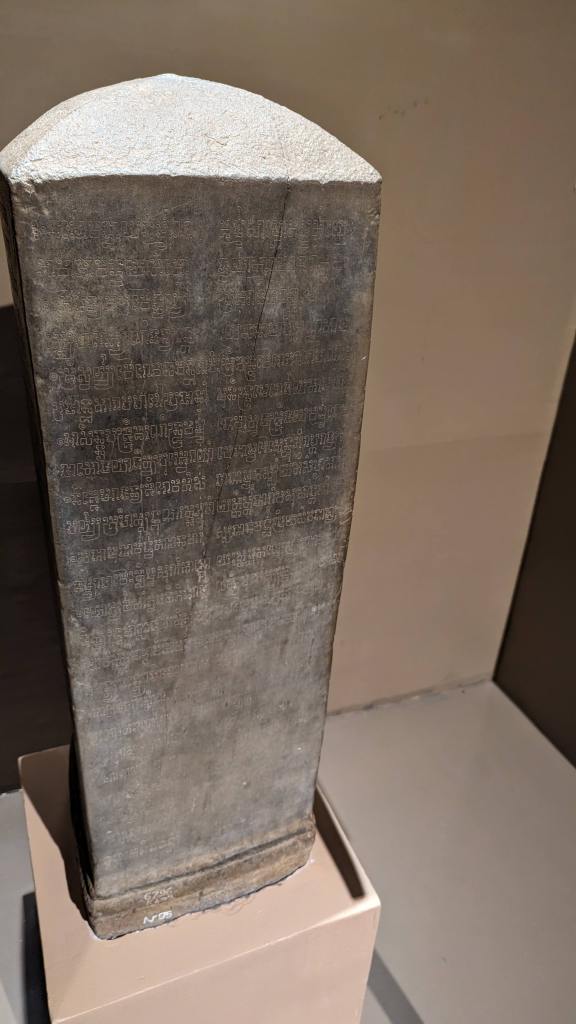
I felt like much of this museum would be extremely interesting for art students, but I will admit that it was hard for me to stay properly interested, even though the explanations were very well-done. For instance, I learned about how Khmer artists would use arches and intentional support structures to give their sculptures more strength and stability. However, similar to what happens in many museums, it could quickly become sculpture and history overload.

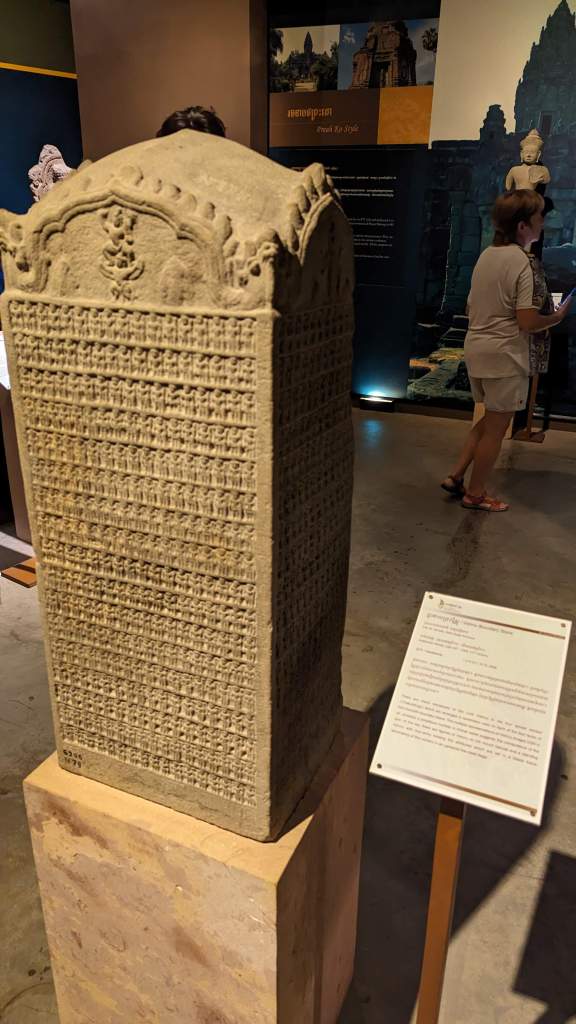
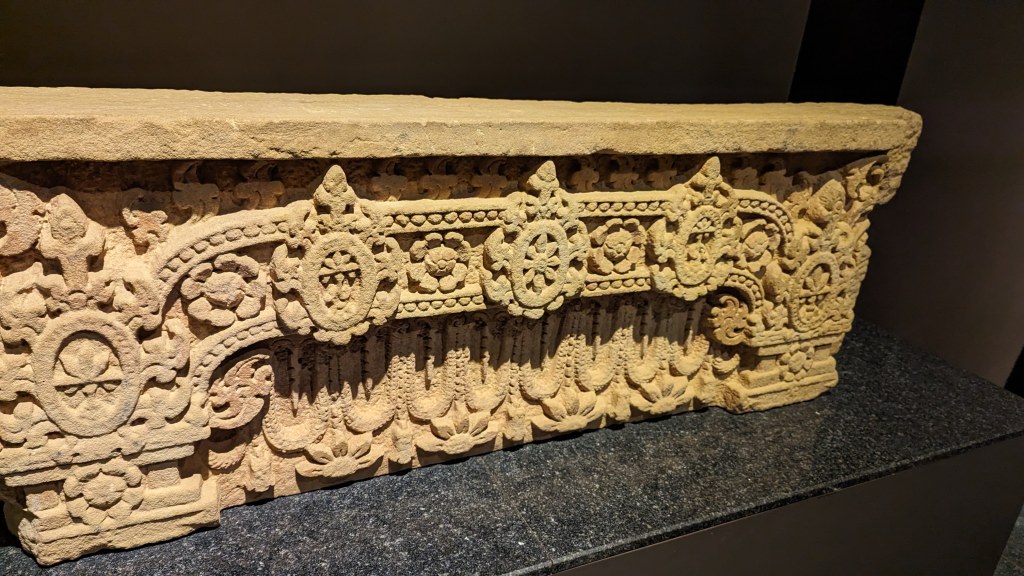
Again though, I did pick up quite a few bits of knowledge, such as the importance of door lintels in a lot of their traditional temple and palace architecture. Furthermore, I was surprised to tell that historians could ascertain the age of a building simply by looking at the design of the lintels. While this made sense to me, I also wondered why some architects didn’t ever decide to intentionally create a different type of a lintel or perhaps purposely copy a lintel style from the past?

Even though it is hard to appreciate in the picture, I was particularly impressed by the carving of this final lintel which I saw. To think that such detail and depth had been carved into sandstone and that nothing had accidentally broken off was truly amazing.

In case you are curious, pretty much everything on the lintel has easily understood meaning, and yes, I did learn about it, but no, I will not force you to also read about it. As I write that, I realize that maybe the audio guide DID have a bit more extra information than what was simply posted everywhere, but I think most visitors would still be fine without paying the extra $5 USD.

Coming out of the rooms with the A-C exhibits there was a welcome display of Batik art, not so much because I thought it was particularly amazing Batik, but mostly because at least it wasn’t just more sculpture.

At 4:30 PM I was in room D, which was all about Angkor Wat. Except for the recreation of sunrise on Angkor wat in this room, I was not particularly impressed, but that might simply be because I had already spent two full days at the real Angkor Wat ruins.

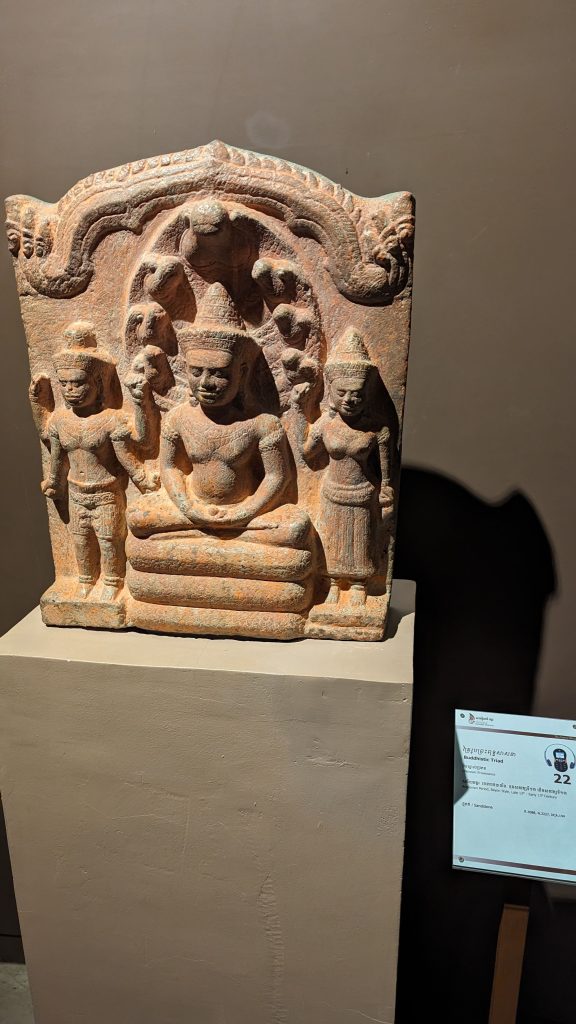
At 10:49 AM the hallway which led to and then the next E room was full of Asura and Deva sculptures as well as many more of Buddha. I was once again struck by the similarities of the relationship between Asura (frequently translated as “giants” or “old gods” or even “demons”) and Deva (the new or “current” gods) and the similarities with other systems of religious mythology/tradition in Greece, Nordic countries, and other parts of the world. Unsurprisingly, the Asura seem to always be depicted as having sort of pouty faces; whereas, the Deva are serene.

There was plenty more to see and discover, but I confess that I was mostly historied out by this point.

The last G room was all about ancient clothing which could be seen in the sculptures, but as I said earlier, at this point I was no longer really paying attention, so lucky you, there are no pictures and no commentary on that room.

At 5:30 PM I exited the main museum and was unsurprisingly directed into a rather upscale gift shop. The museum itself only covers a period of about 1000 years when the Khmer empire was supposed to be the most influential and powerful, finishing up around the 13th century. As mentioned earlier, while it is well laid out and there are good explanations throughout, the place can get a bit tiring. Furthermore, the audio guide really is not necessary for most visitors, but I think it did have a BIT extra information; still, most would probably be happy to skip it. Finally, if you were thirsty, right after the gift shop there was a slightly overpriced, rather under inspiring cafe.

At 5:43 PM I was outside the museum where I found the temperature was very pleasant. With that in mind, and even though it was a little under 4 km to walk there, at 6:09 PM I decided to start walking over to my final activity of the day, planning to stop for some food along the way.

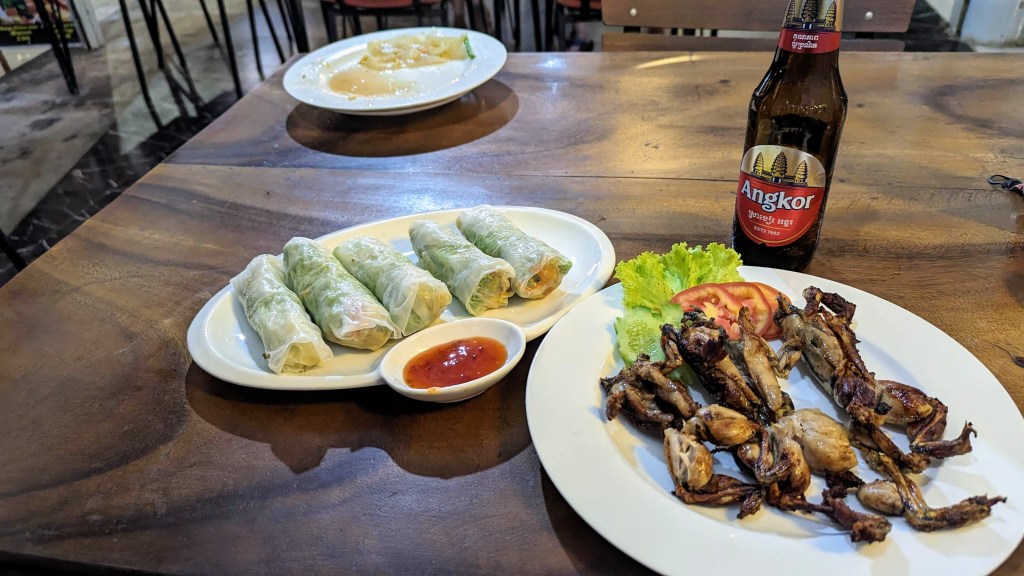
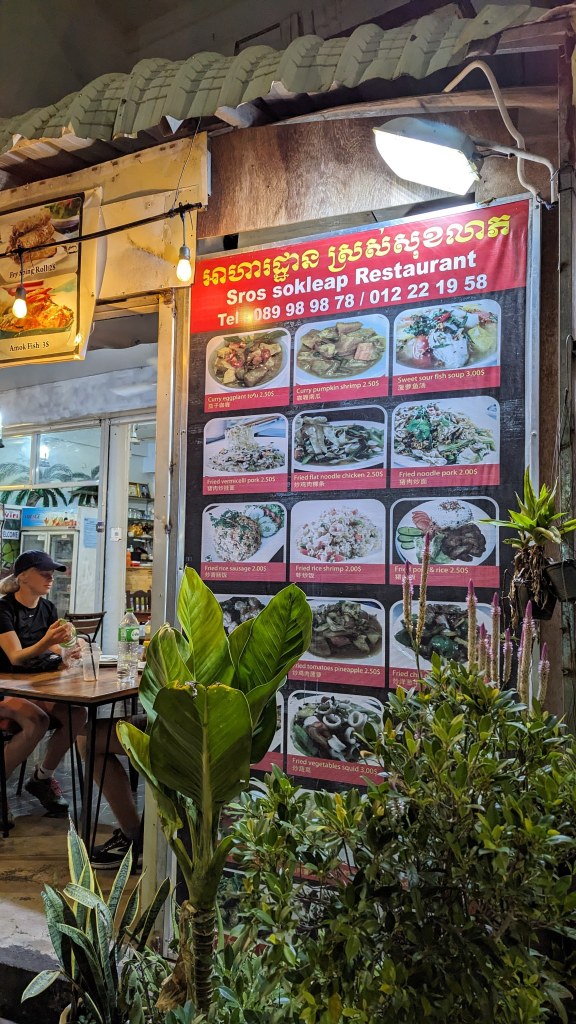
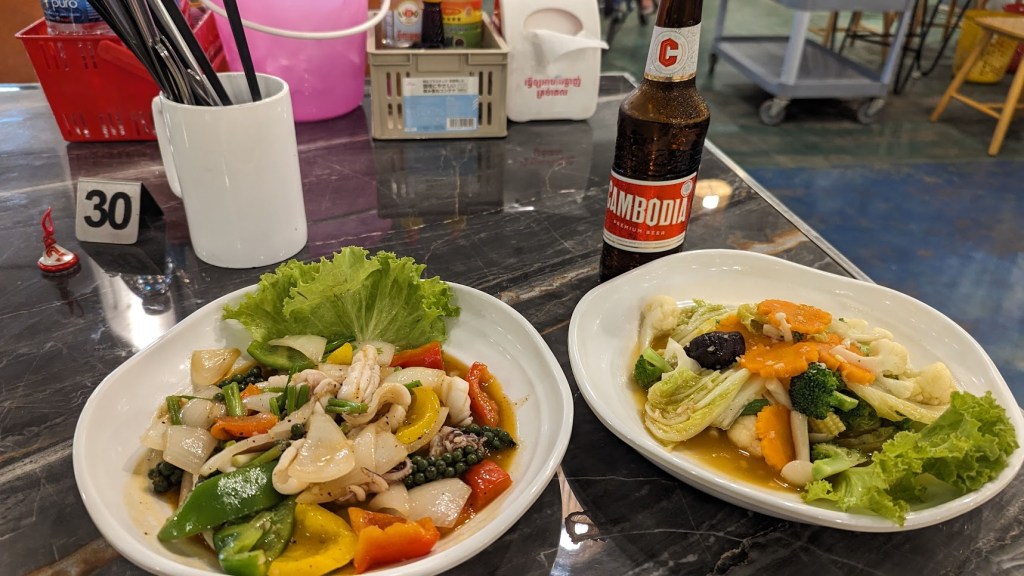
At 6:24 PM I stopped at Sros sokleap Restaurant to get fried frog, fresh spring rolls, fried mixed vegetables and an Angkor beer for 34000 Riel ($8.29 USD).

The food was “nice” but I think I preferred the stuffed frog which I had eaten earlier in the trip. At 7:11 PM I was out walking once more. While this route still felt completely walkable for me, it definitely took me outside of the main pedestrian areas of the city, and I could see how some solitary travellers might think it was better to take a tuktuk.

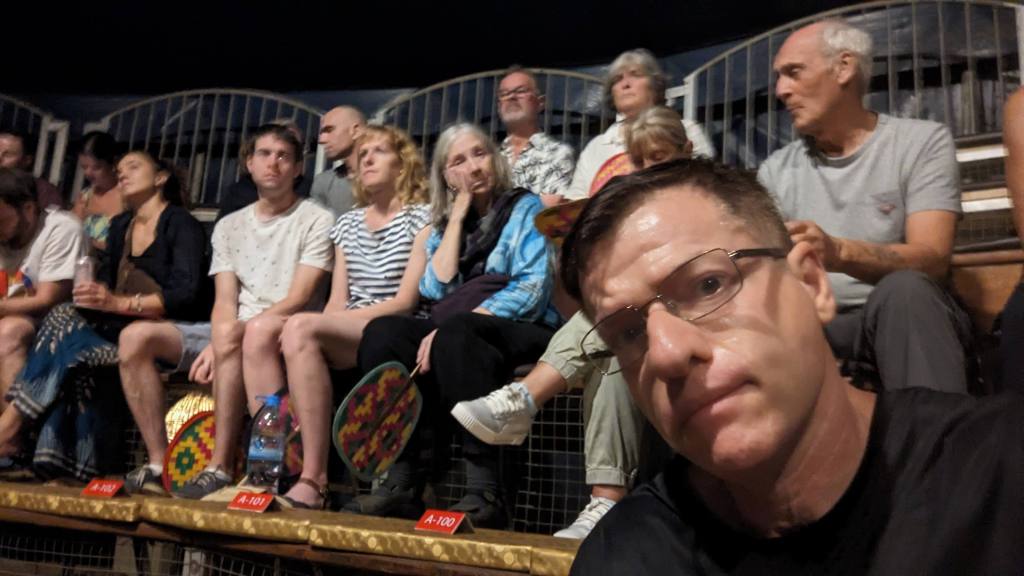
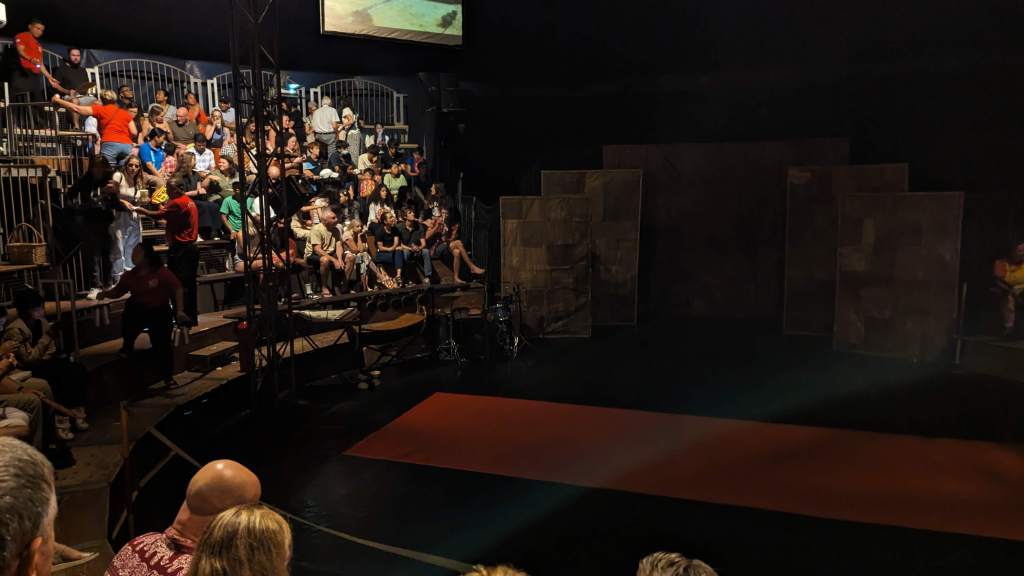
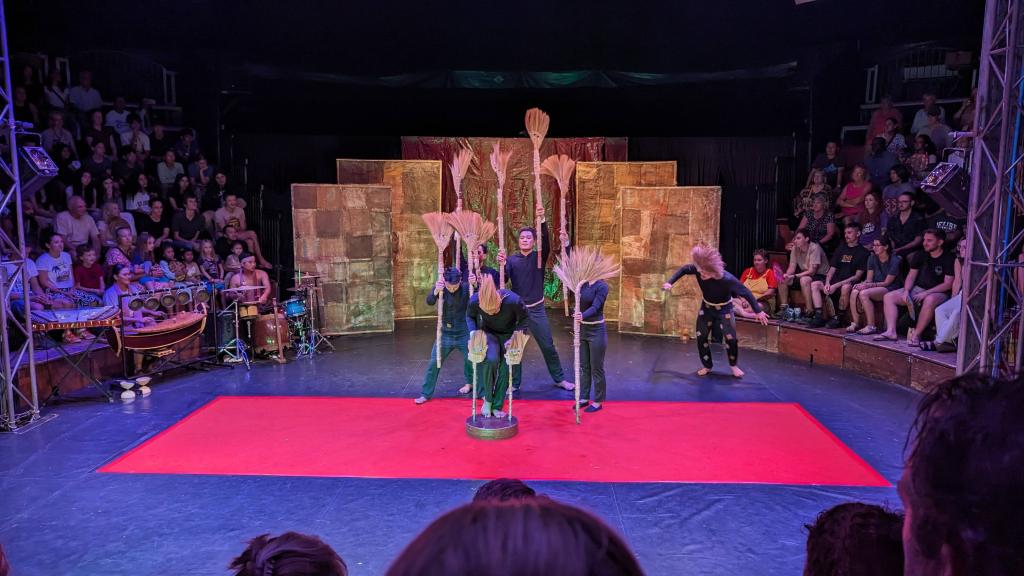
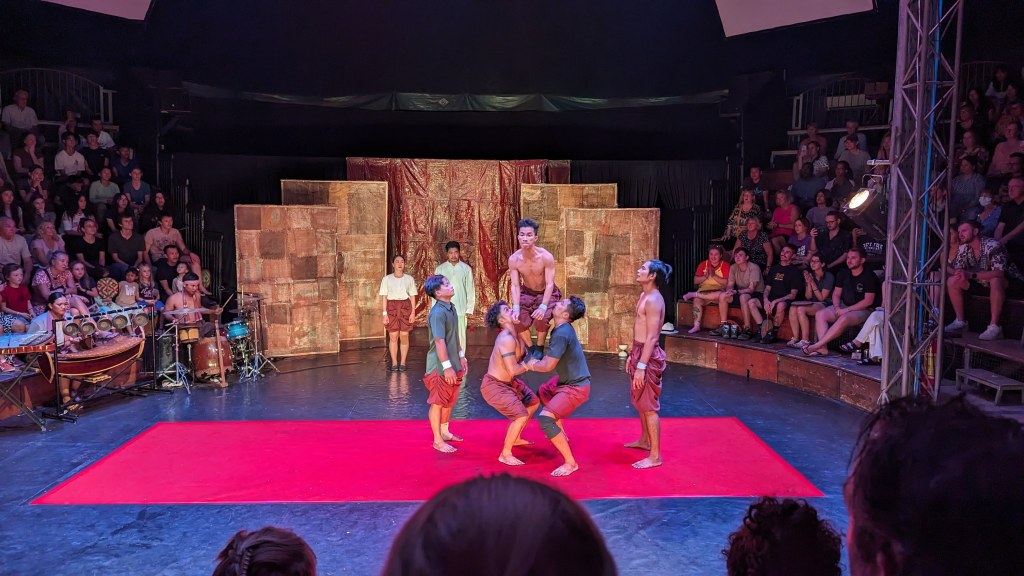
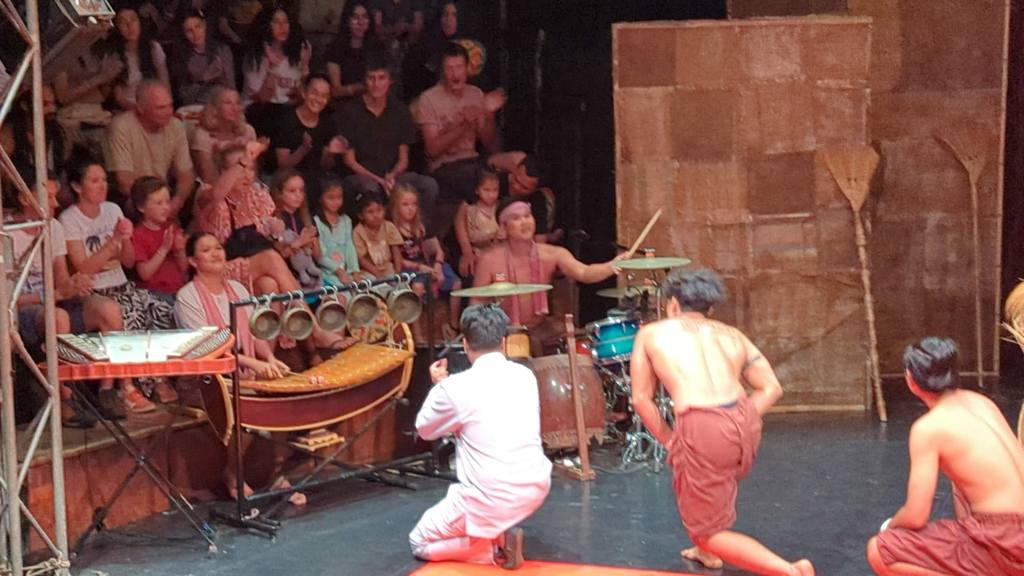
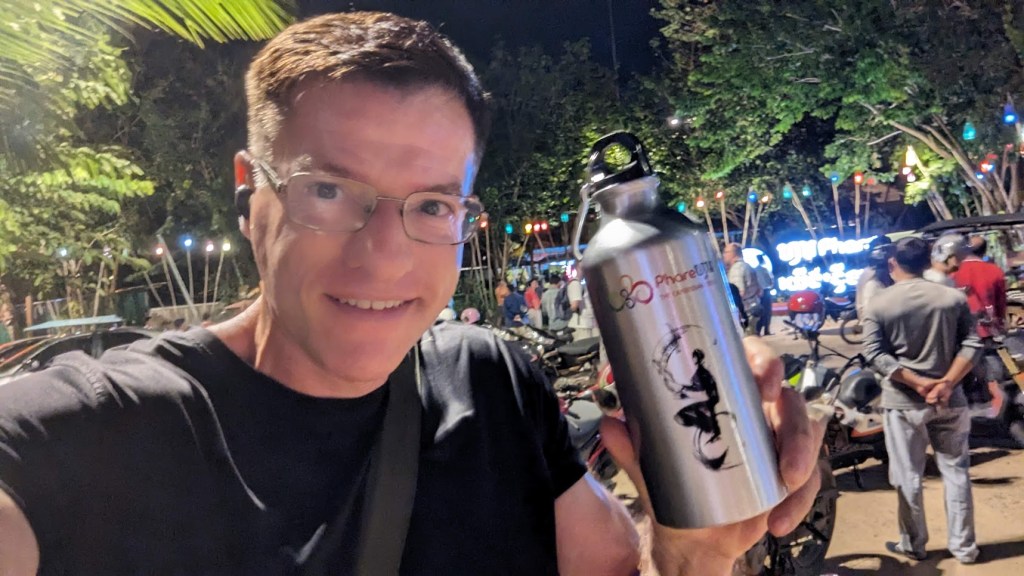
Regardless, I arrived at 7:36 PM, and since I had bought my ticket online ahead of time, I was directed into the gift shop, which then allowed me to arrive to my seat along with my complimentary metal water bottle, already filled with chilled water, at 7:43 PM. Note, my entry experience was maybe a bit different than that of many others, since I had bought the most expensive VIP reserved seating ticket for a cost of $38 USD ($18 USD for children 5-11). For those really wanting to spend more, there is also the VIP + backstage pass which costs $63 USD which includes a 30-minute escorted tour before the show starts. On the other hand, adult tickets can be had for as little as $18 USD, and as long as you arrive a bit early, I think it is still a good experience for everyone, even some sections of the “cheap seats” are partially obstructed by poles and/or subtitle screens.

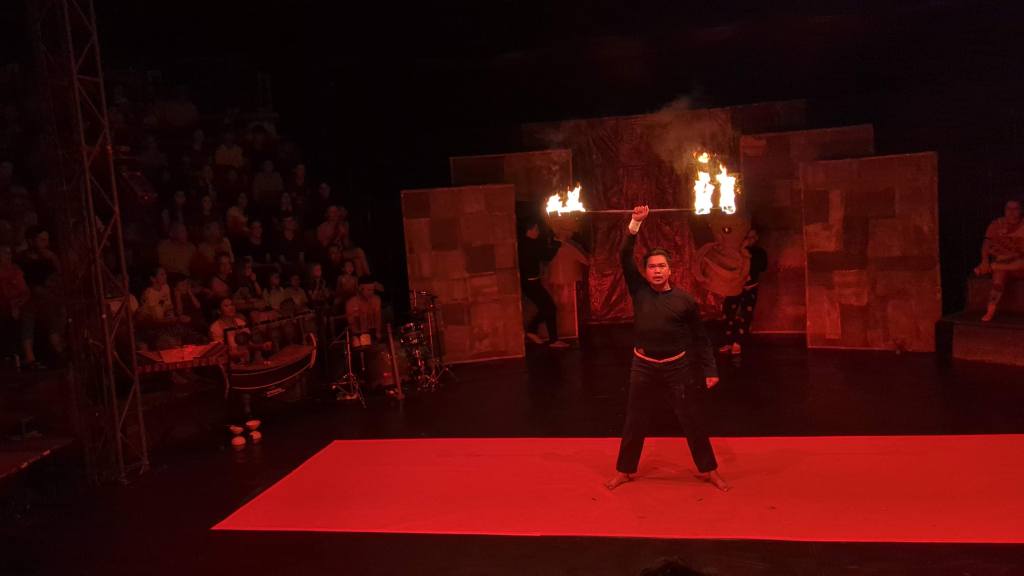
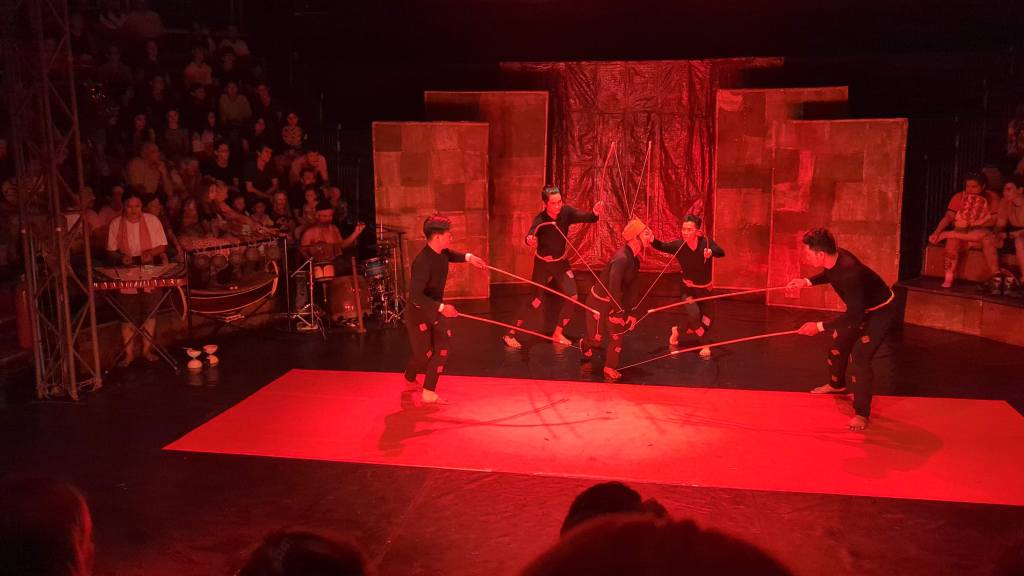
Pretty much every review you will read about the Phare Circus and everyone who has visited will tell you that you absolutely cannot miss this show when you are in Siem Reap. I will be no exception to that rule. The pictures do not begin to do it justice. My only complaint was that the seats were rather uncomfortable despite having thin cushions, but the show itself was just amazing, and pictures cannot begin to do it justice.

As mentioned earlier, I was very happy that a coworker had strongly suggested that I leave this as my final evening activity in Siem Reap. Yes, like with many “artistic stories” whether they be in painting, music or dance, the obvious connection between the supposed story and the actual act was rather tenuous, but that in no way detracted from my enjoyment of the overall experience. By 9:16 PM I was out the door and once again walking back to my rented apartment for my final night’s sleep in Siem Reap.

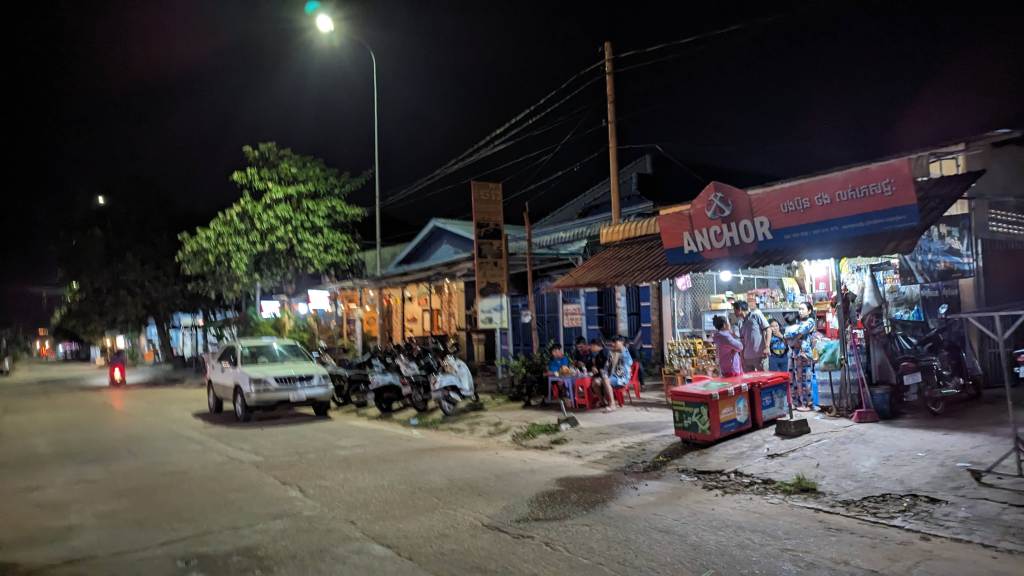
As for the walk back, I probably would not recommend it for most solitary travellers. While the temperature was very pleasant, much of the walk was through rather poorly lit more “authentic” residential areas, and I could see how some people would not have felt safe. I was perfectly fine myself, but most people would probably prefer to either take a tuktuk or a taxi away from the circus at this time of night.

Nevertheless, I arrived back safely with no incidents to report at 9:51 PM, and that was my last full day in Siem Reap. I will confess that I was not exactly feeling melancholy, but I did wish that I had a bit more time. So far, this has definitely been a good vacation, and I guess that’s the way you want to feel at the end of a visit. If you are eager to go back home, then you probably did not have a very good time . . .

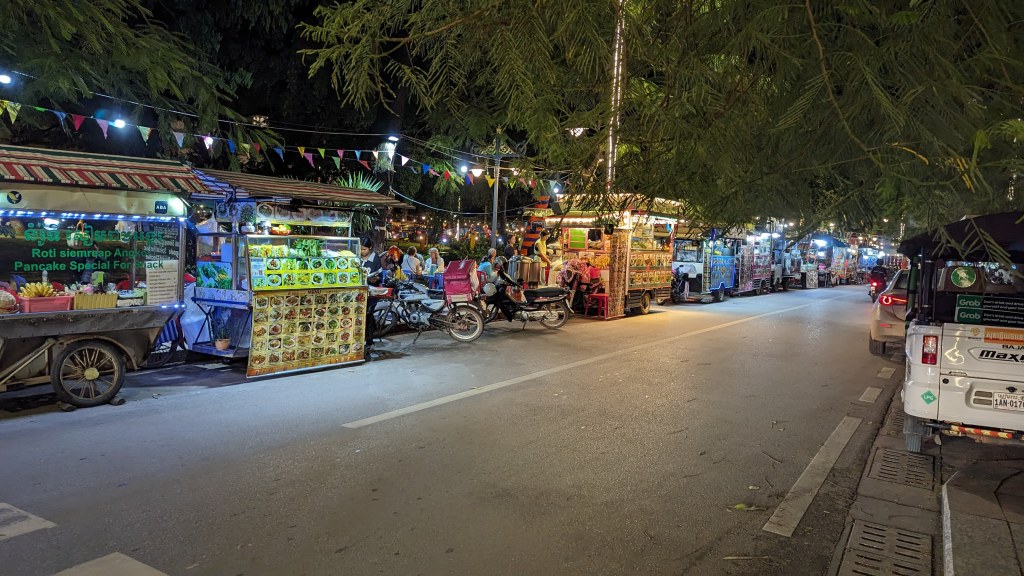
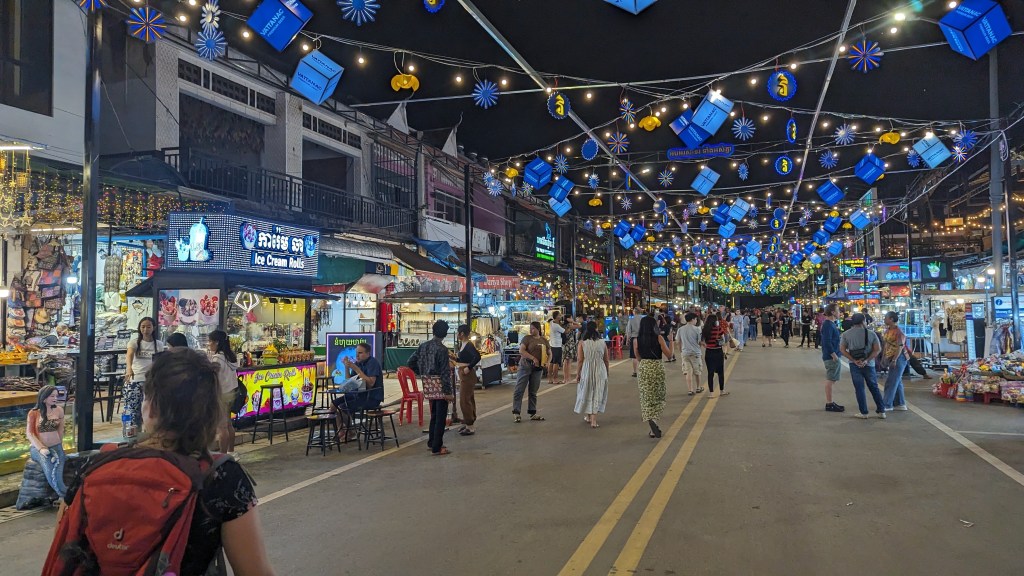
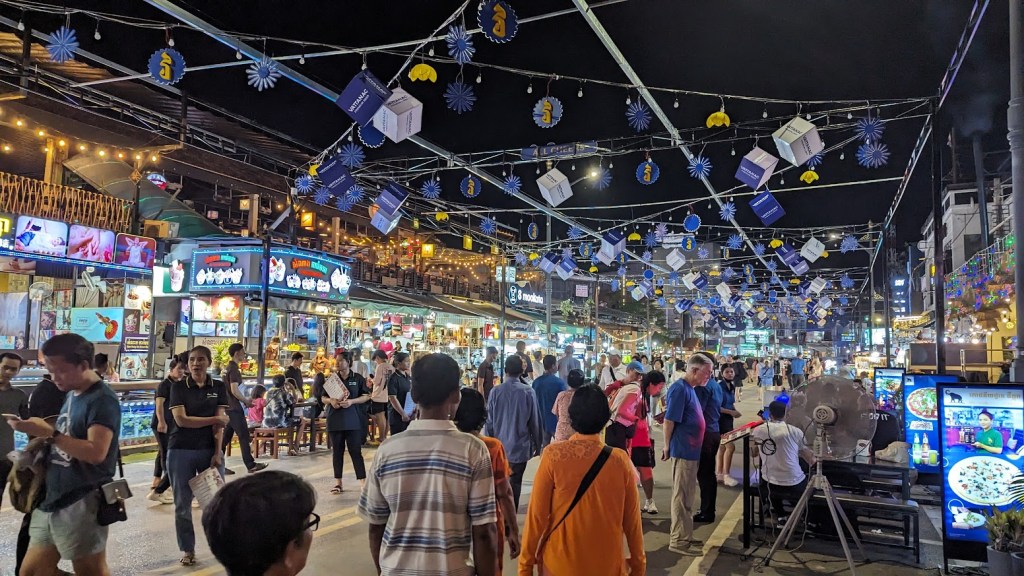
My final view of the street food stalls which were set up each evening near where I was staying . . .

Siem Reap trip: Day 5 (16 Nov)

Hey there again readers! I hope you found some useful information in my Day 4 entry, and I also hope that Day 5 will help you make some better choices on your next trip to Siem Reap.

Those of you who have been following along regularly already know that I did not get into bed until a bit late last night, so you will not be surprised to know that I did not set the alarm to go off until 11:AM today. I’m happy to say that I once more had slept extremely well in my highly recommended Airbnb apartment.

I did not actually leave my apartment until 12:02 PM, but I did want to make sure I had enough time to have a leisurely lunch before getting together with my upcoming tour operator for the day. A couple of days ago while looking for somewhere to eat and had read an entry for an eatery called Arun restaurant. The Google review which popped up had specifically mentioned that the place was well-known for their frog legs, so I figured it would be something interesting to check out.

My leisurely walk finished at 12:22 AM when I arrived at the restaurant. While the sun was rather unforgiving, I had my trusty sun hat and even here in the city there was generally a nice breeze. So as long as I kept to the shadows whenever available, I did not find the heat to be overly oppressive.

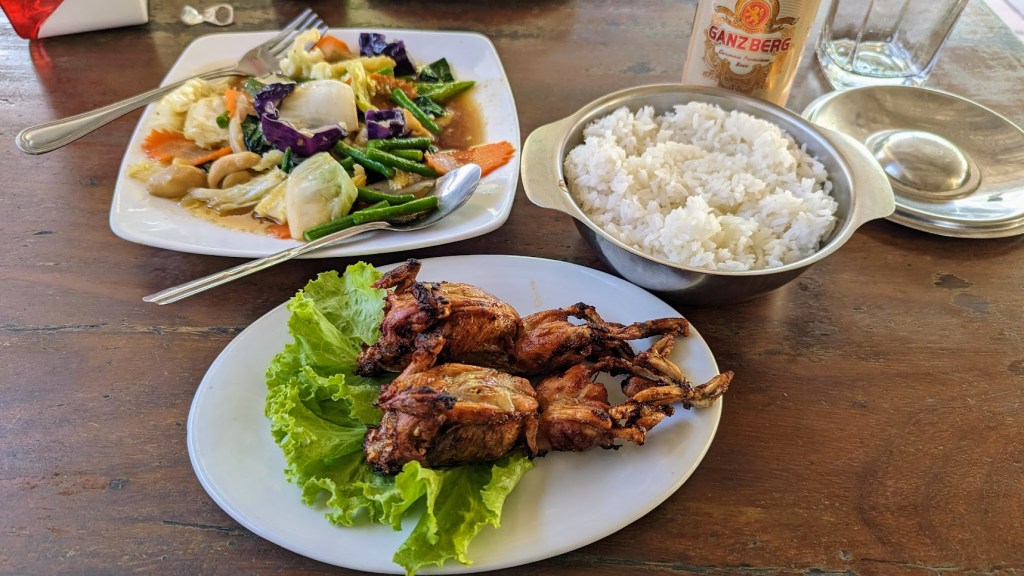
The menu was much more extensive than I had anticipated, and there were actually two different frog options: fried and stuffed. As I had never even heard of stuffed frog, I decided to give it a chance. I paired this with mixed vegetables, the obligatory bowl of white rice, and Ganzerberg beer which surprisingly had a pull tab! Yes, I know I was way too excited about the pull tab, but it has definitely been more than 30 years since I have actually seen one of those,

I was extremely happy with this meal. I felt that both the meat and the vegetables were well-seasoned, and the stuffing was amazing; although, I couldn’t figure out what was actually in it. Similar to what you would do with a bird, the stuffing was in the chest of the frog. Also, for those familiar with quail, the majority of the bones seemed meant to also be eaten, or at any rate that was what I did without any bad effects afterwards.

I let myself linger a bit longer than probably was prudent, paying the bill of 38000 Riel ($9.21 USD) at 1:16 PM and doing a VERY fast walk back to my apartment, where I arrived at 1:30 PM. This barely gave me enough time to grab a couple of things I meant to take with me today, and at 1:40 PM Saro was right outside my apartment building in a nice white van, waiting to pick me up. Today I would be going on a “floating village” tour.

This was one that I almost had decided not to do. Despite the relative popularity of these tours in Siem Reap, there are also an incredibly large amount of very negative reviews of the experience. The most negative comments are connected to the following: it smells incredibly bad, the trips seem to be a scam to get you to donate additional food and bags of rice to dubious recipients, the trips themselves are incredibly exploitative “poverty tourism” of the local populations, and other providers such as boat operators, drivers and guides hassle you for more money once you are on the tour. So no, this was not looking like something I would generally recommend.

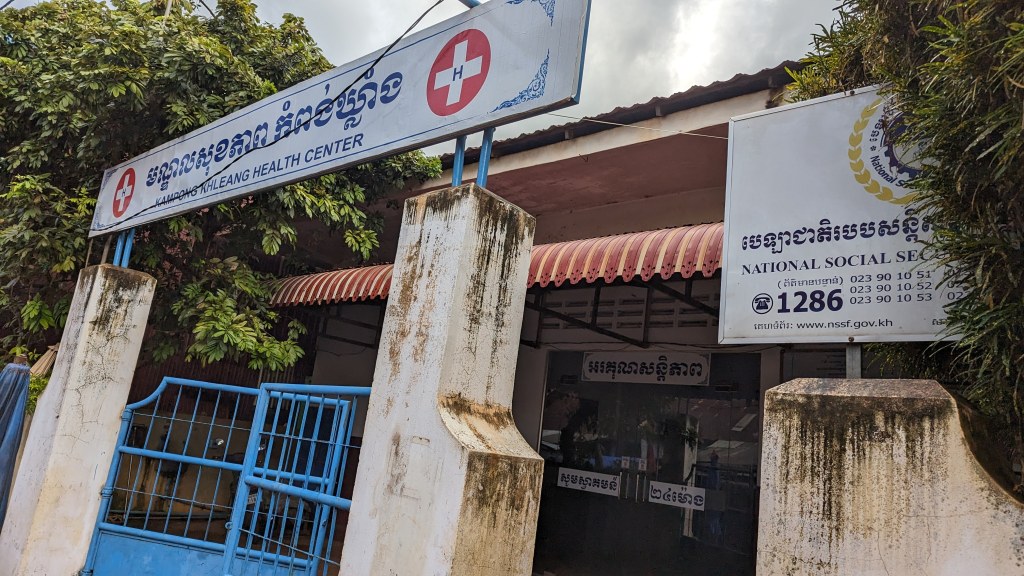
However, there was no denying that it was popular, so I had earlier asked my high-quality guide Sah Yon from Day 3. He said that yes, much of the year, it smelled very bad, but that right now would be a good time to visit. He also agreed that many of the tours were basically scams, but he knew of at least one organization that did a really good job. Unfortunately, he could not remember the name of the operator, but he was sure I could find it if I just carefully searched for “responsible tourism” operators that organized “floating village” tours. I am not going to lie; this was NOT that easy to do, but I finally found the one which I suspected he had been referencing: Community First: Kompong Khleang Floating Village Tours.

While they have a few private tour options, these are clearly meant for slightly more affluent travellers who are already travelling in a group. Regardless, from the beginning I had been primarily interested in their all-inclusive small group Kompong Khleang and Tonle Sap tour which had a cost of $35 USD per person, with a reduced price of $25 USD for children under 12. While this is quite a bit more expensive than most other providers which do these tours for around $21 USD, but as much as possible, I wanted to make sure that I was not promoting exploitative tourism, and frankly I also did not want to get guilt tripped to periodically shell out more money during the trip. So selecting this charitable organization was a win-win situation both for the projects which they support, and also for me as a tourist.

As always, the scenery as we were riding along outside Siem Reap city was beautiful, but it was not really until 2:15 PM that I would say that the actual “tour” began. Saro gave us some general background on his organization, all of which I would encourage you to read by referencing the earlier mentioned links, but he also shared some of his own background information, including the fact that his parents had been forced to marry by the Khmer Rouge, something which evidently had once been a common practice.

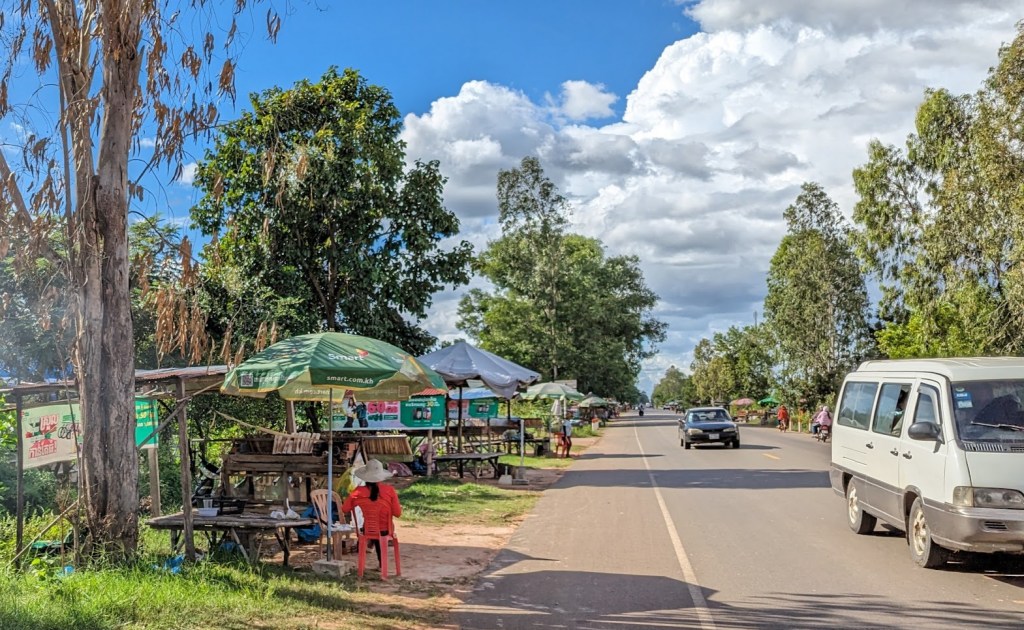
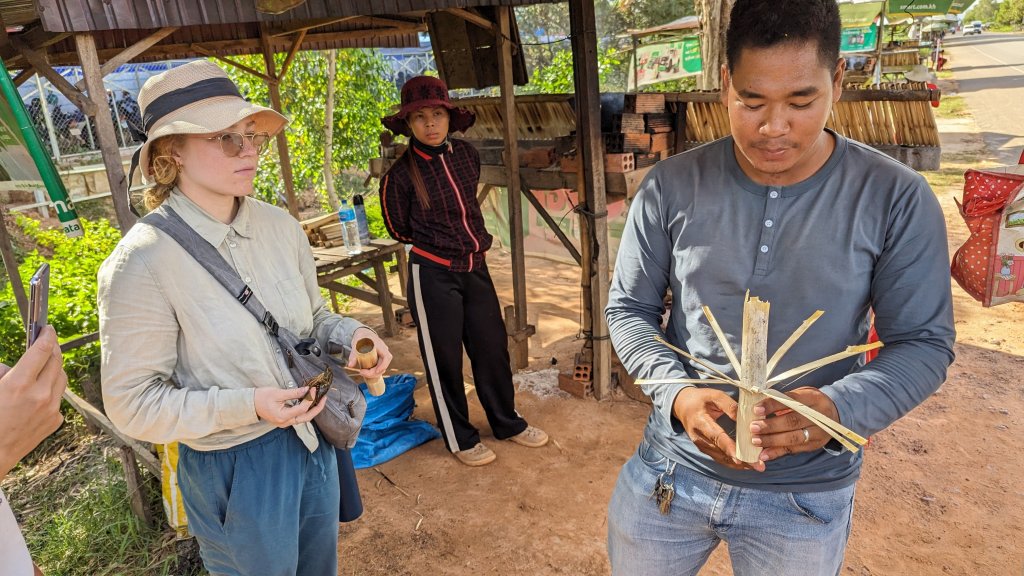
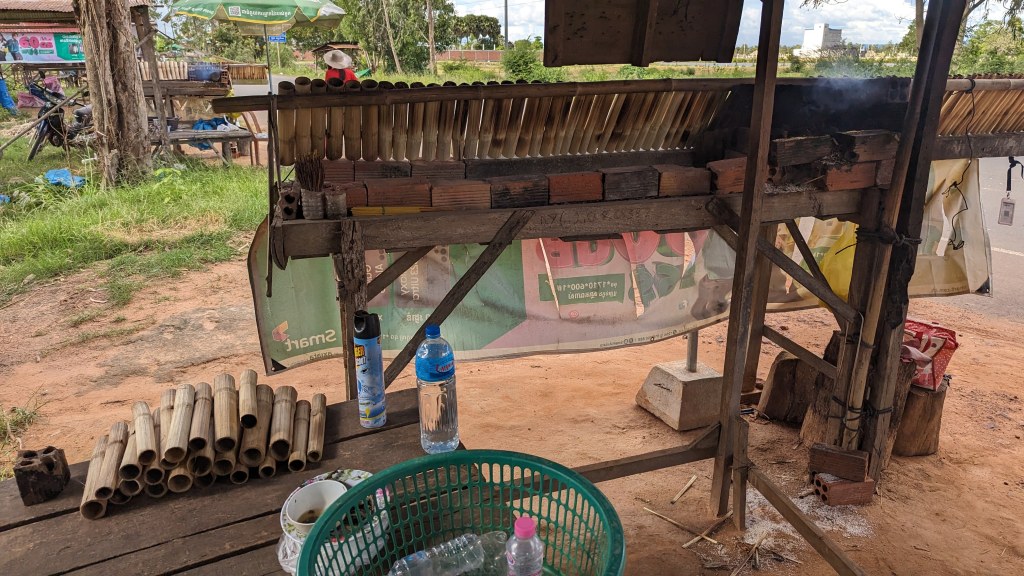
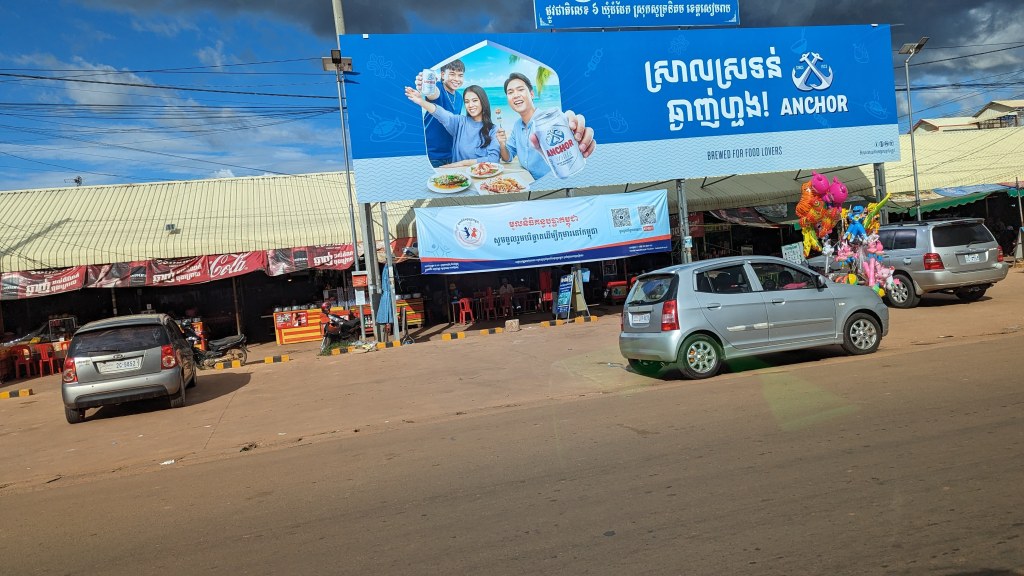
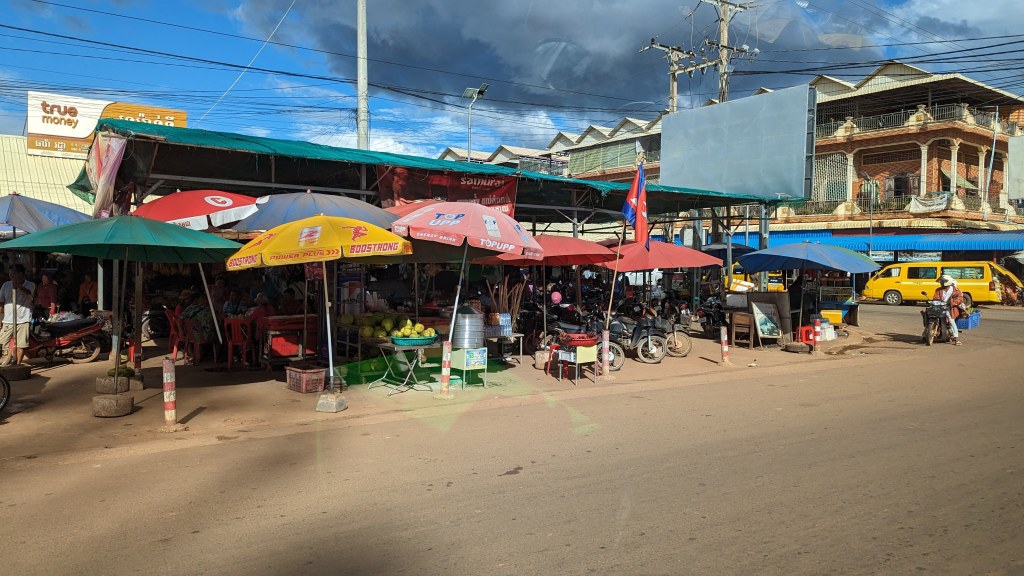
At 2:38 PM we made our first stop right along the side of the road. It is hard to appreciate in the picture, but there are at 30 different roadside stalls, all selling the exact same thing: bamboo sticky rice.

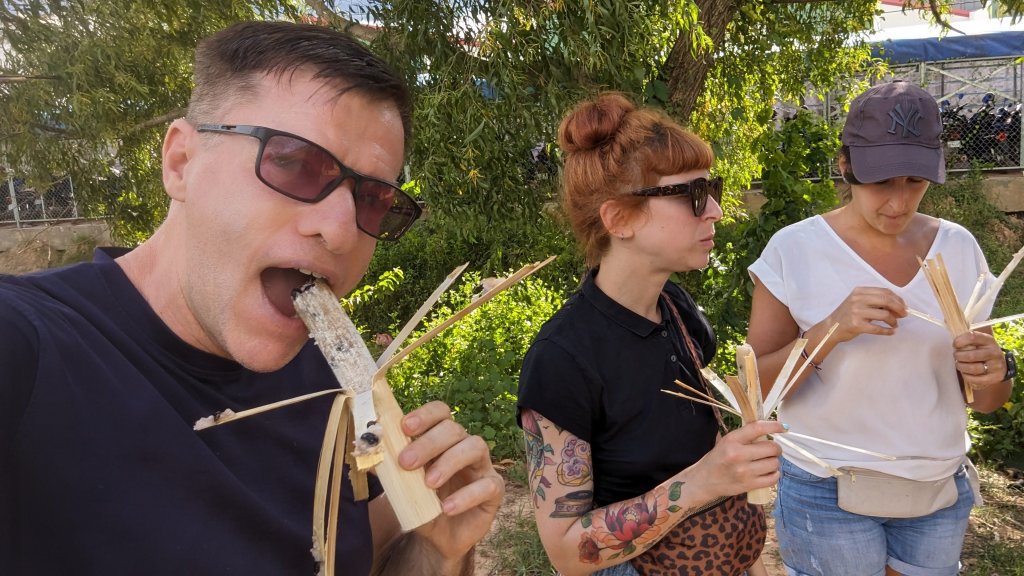
As mentioned earlier, this was an all-inclusive tour, so no, this was not a ploy to get us to buy sticky rice. I am not sure if they always would stop at the same place or if they change it up each time. I have to say that I was actually far more impressed with the bamboo sticky rice than I had anticipated. It was only very mildly sweet, a rather pleasant afternoon snack. Evidently it is actually made in their homes, but then they bring it here to sell. Once made, it is good for two days. The fire is not to actually cook anything, but rather to keep the bamboo a bit warm and also to burn the hollow bamboo once the rice has been eaten. While I found that I actually liked the snack, I couldn’t help but think that it really did not make sense for them to all be selling the exact same thing, made with the exact same ingredients, but evidently, it’s a business model that works for them.

At 2:51 we were back in the car to continue along our way. At 3:00 PM we were passing through Dom Daiy community, which is evidently where people from the floating villages come to do most of their buying and selling.

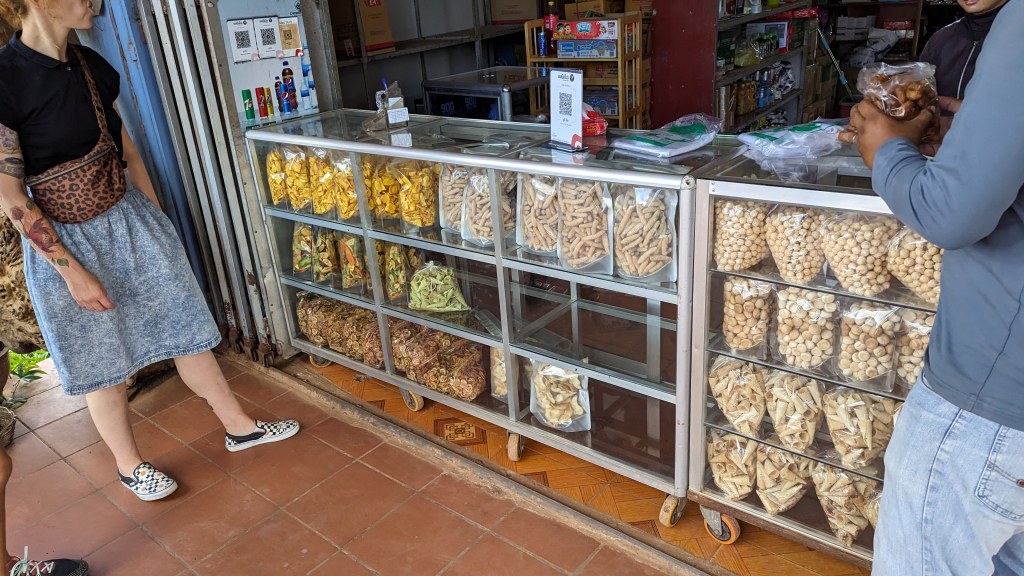
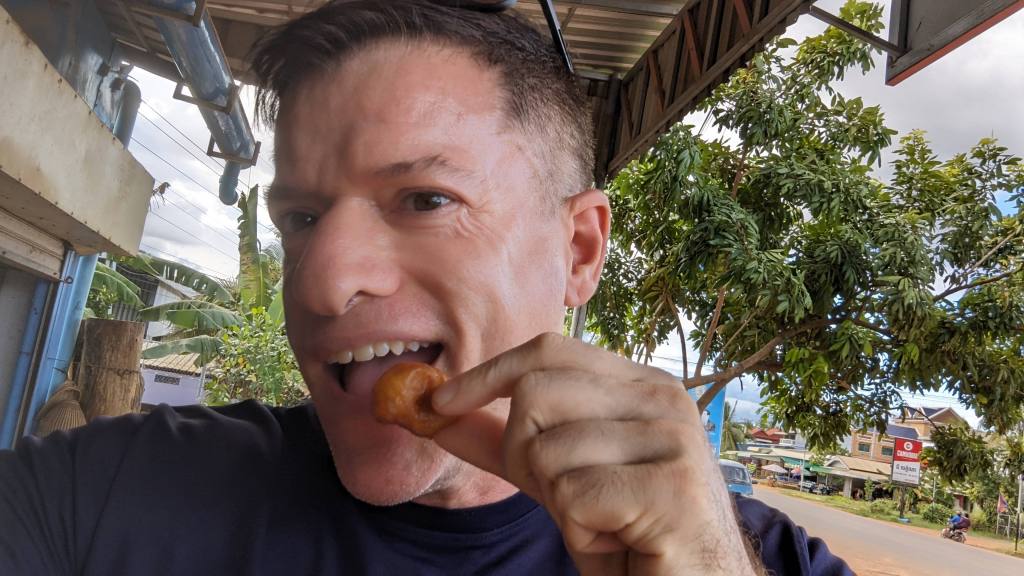
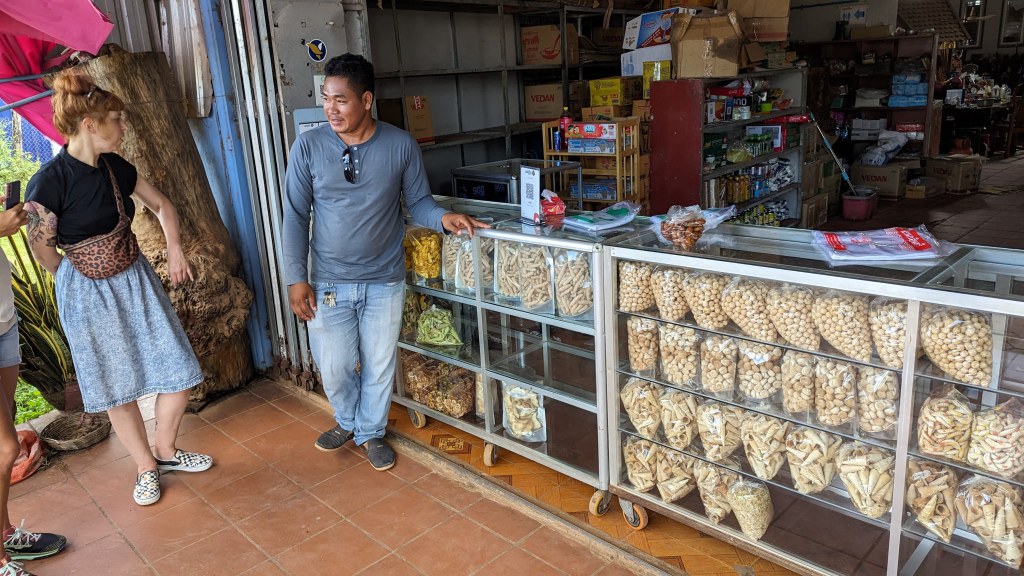
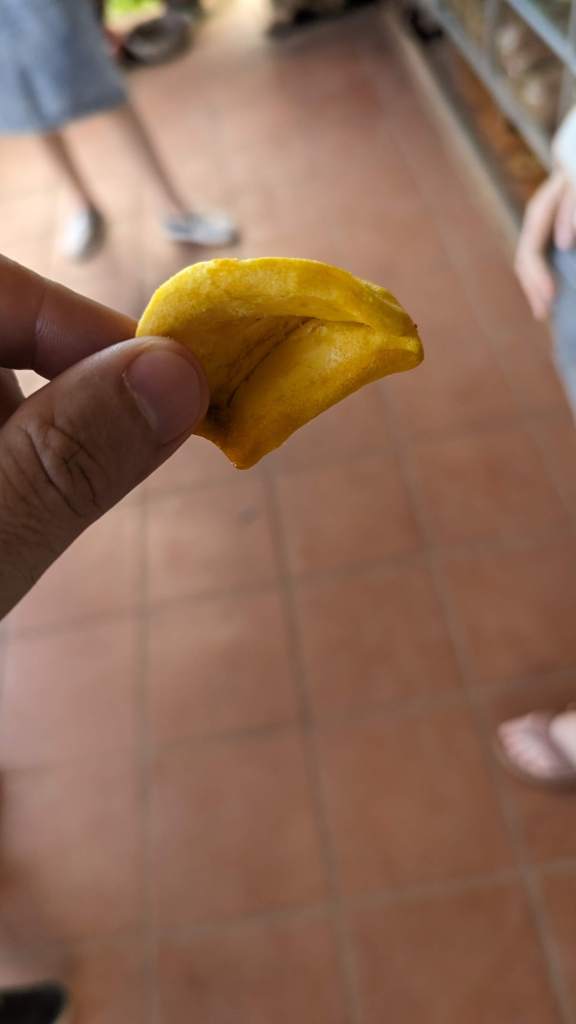
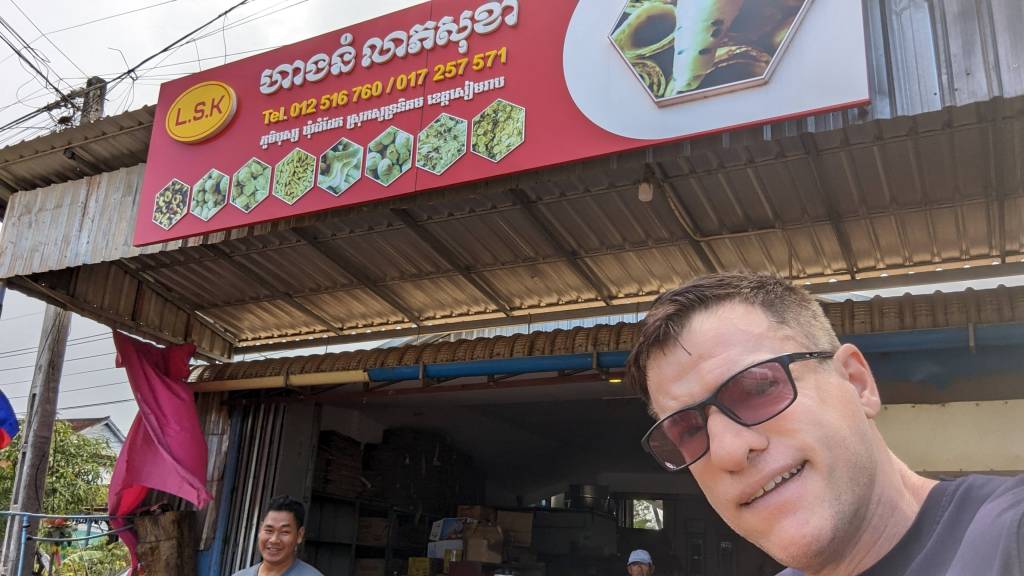
At 3:02 PM we once again stopped at a local bakery. There we tried three different types of local treats which this family evidently sells wholesale to many other vendors in the region. The tiny little doughnut things were basically baby buñuelos, whereas the yellow chips were dried jackfruit chips. The ones which looked kind of like fingers were crunchy, slightly sweet, with a bit of garlic taste. According to Saro, this little shop actually makes and ships an average of 100 kg of the little doughnut things each day. I was wondering who actually eats so many of these snacks, but I thought it was nice that there were local, family business manufacturers evidently managing well instead of everything being multinational companies.

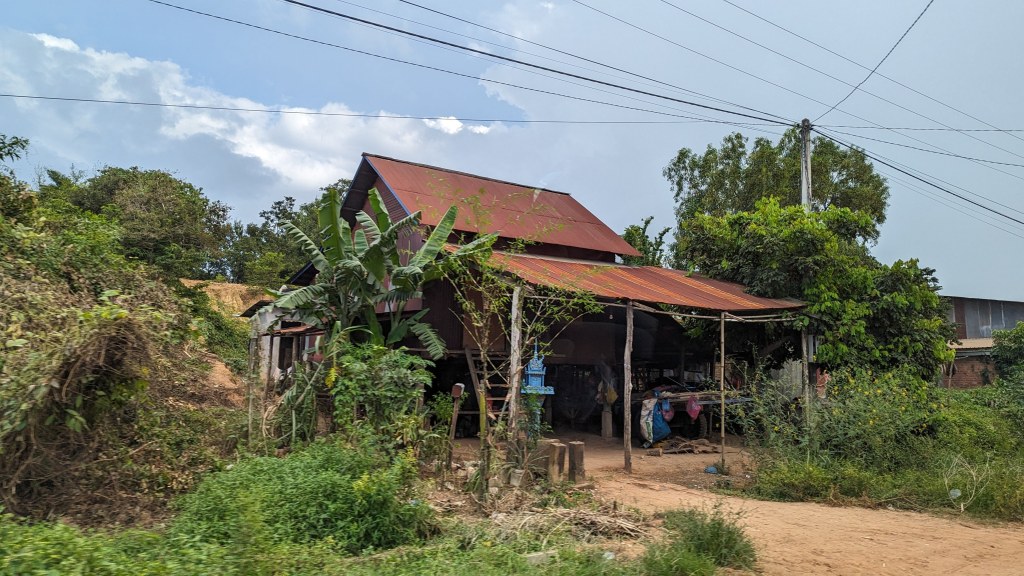
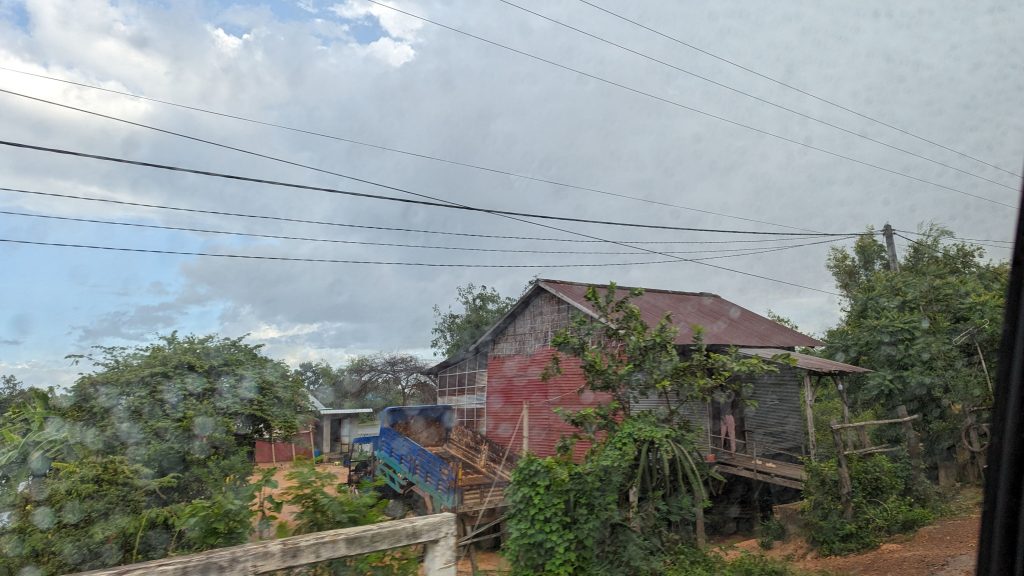
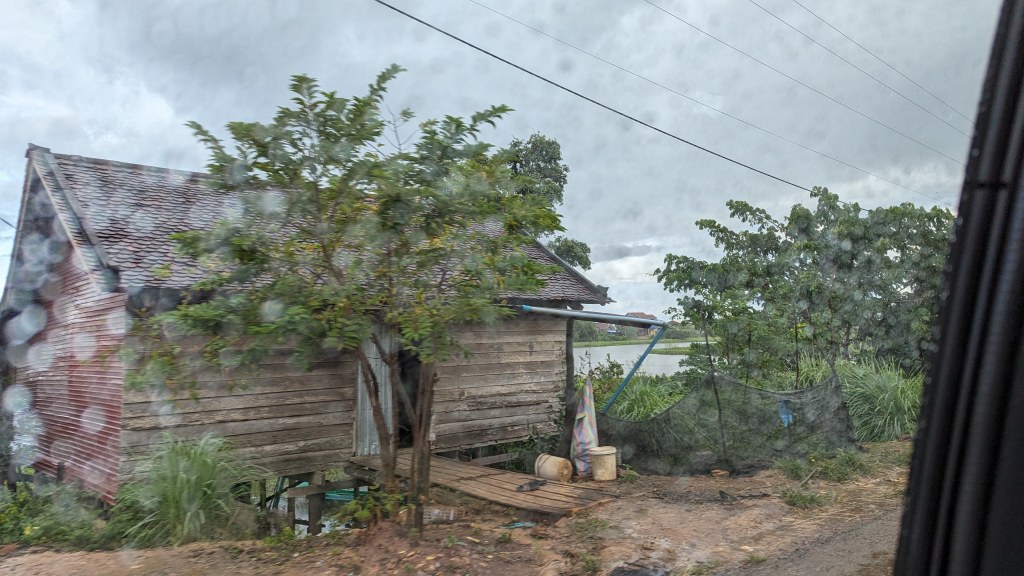
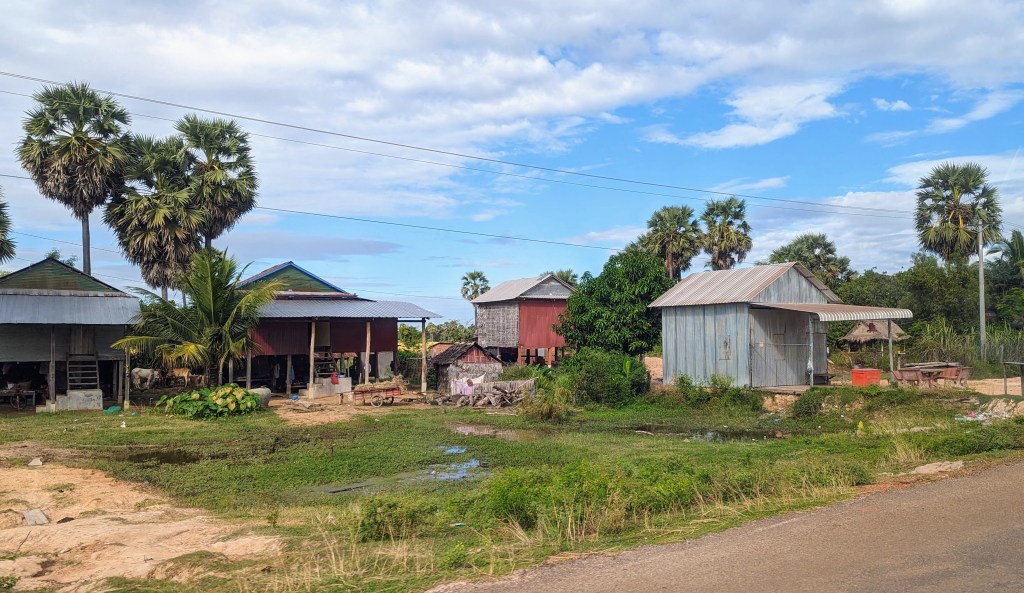
At 3:24 PM we were once more back in the van, with some intermittent light rain starting at 3:31 PM. As we continued, I noticed that many of the homes were already on stilts.

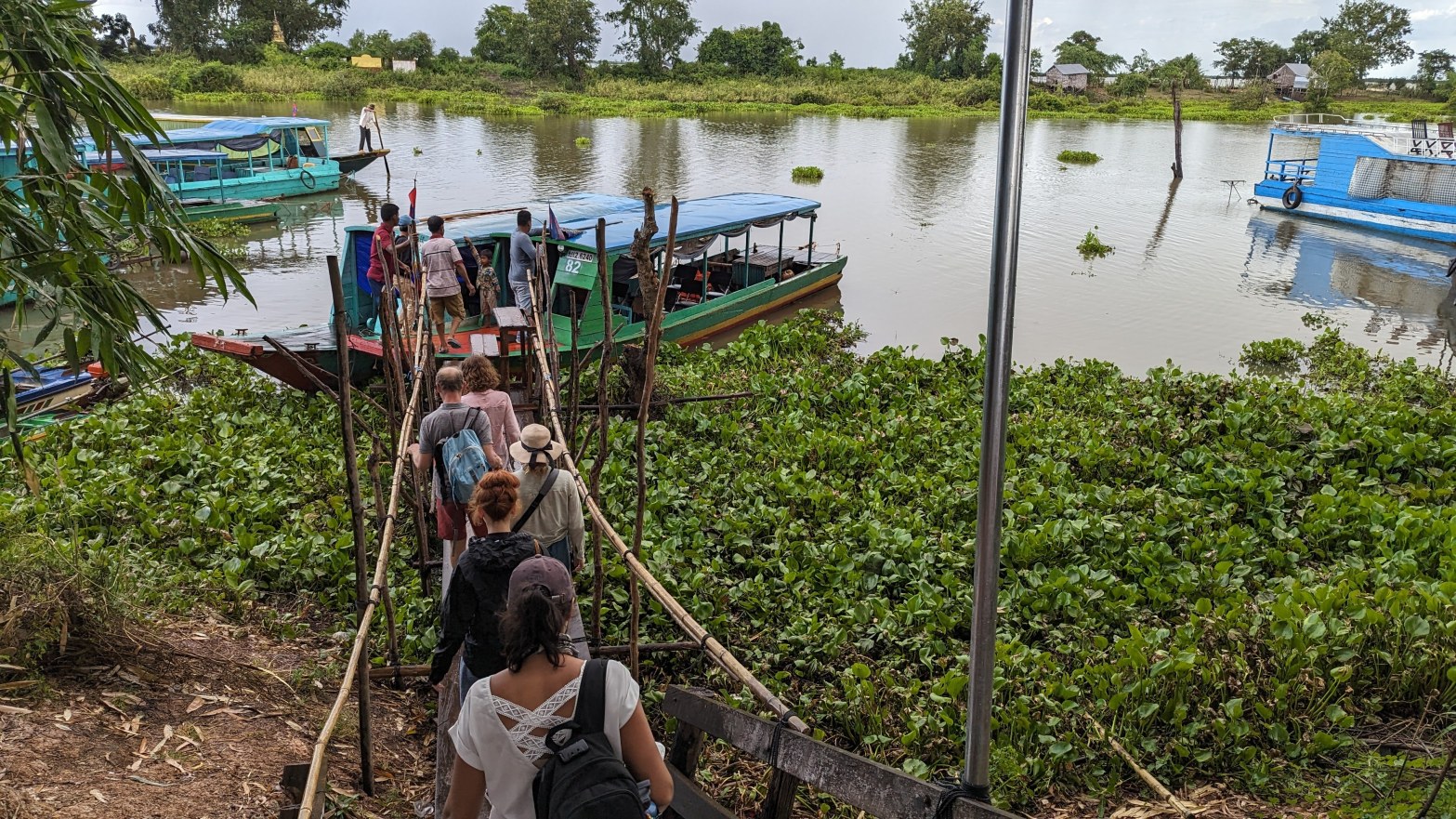
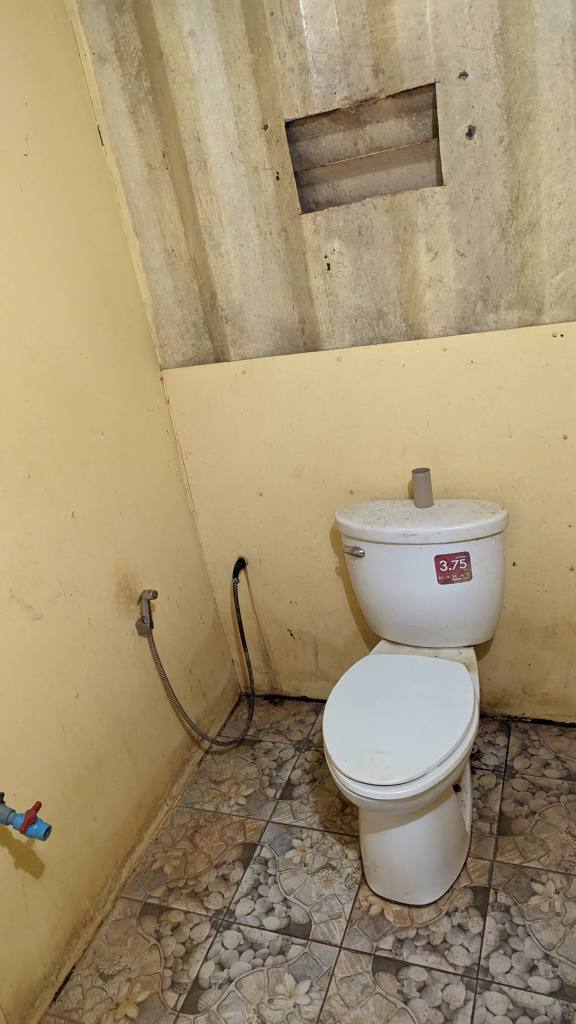
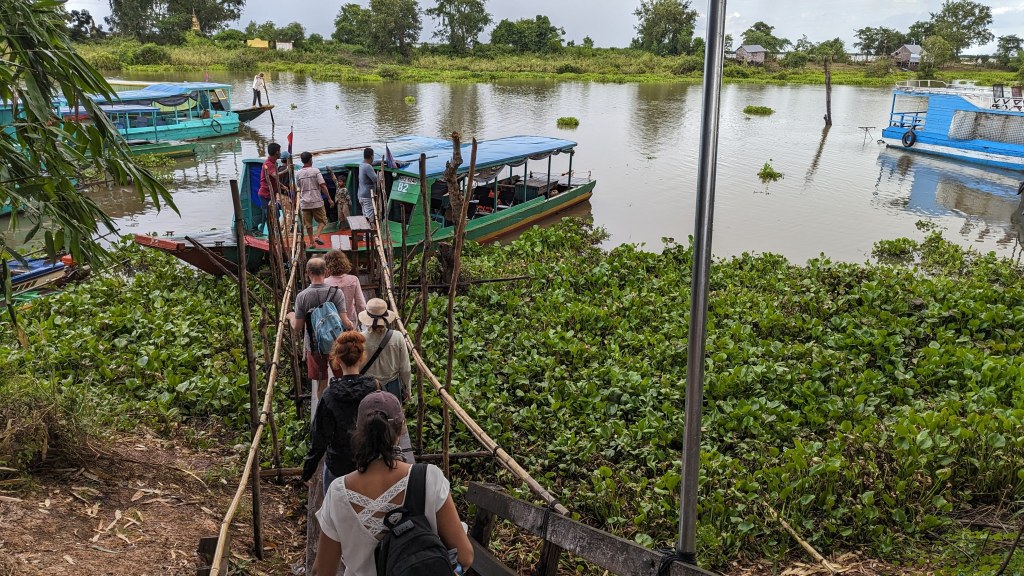
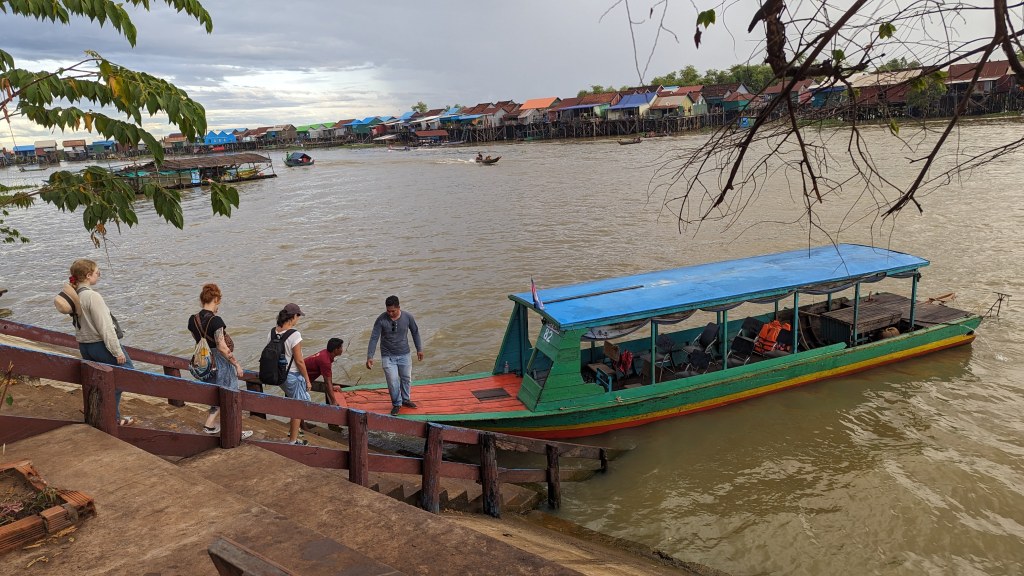
Then we arrived to a stopping point at 3:37 PM where we were advised to use the bathroom. I think this is basically like a “boat stop” since it seemed like Saro was paying for our passage and then unsurprisingly, we were led onto our boat at 3:45 PM. For those concerned about practical matters, the bathrooms were reasonably clean and had western style toilets but no toilet paper.

The boat itself had rather comfortable seats which appeared to essentially be padded folding chairs. Maybe I was just being foolish, but I felt that it was a completely safe setup. As we were heading out, Saro told us that most of what we were riding on was actually rice fields, but at this time of the year they were completely flooded. Regardless, it was all very interesting to see as we traveled on the water.

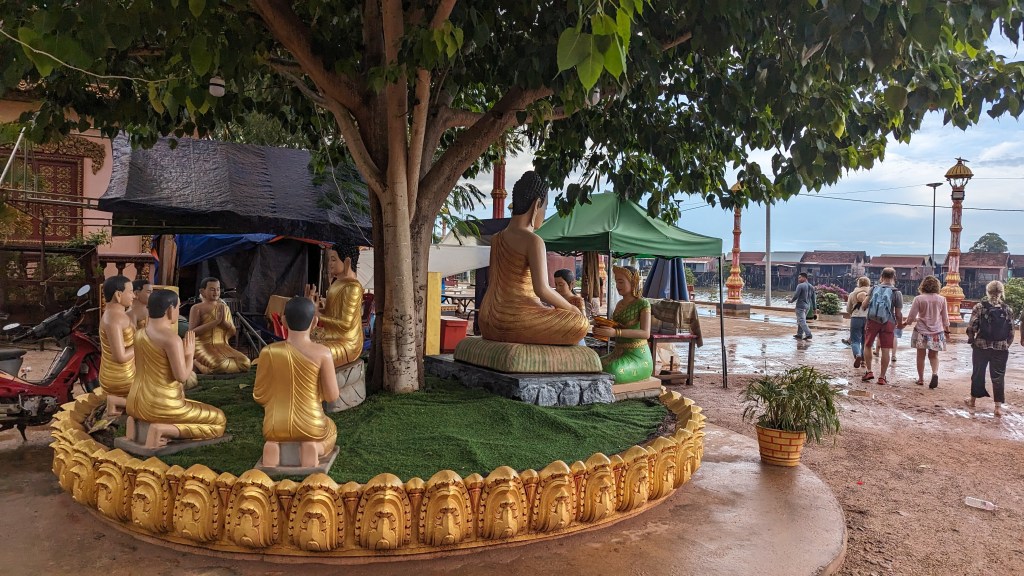
Then at 4:10 point we arrived at a dock which was right next to a Buddhist temple. Evidently this is “the capital” of the villages along the lake. We walked around a bit and he told us a bit about the water filtration system, the school which they support, and the upcoming local water festival which many in the community were currently preparing for. He said that a local fisherman here can reasonably earn as much as $25 USD a day, which I though sounded like quite a bit considering the way things looked, but maybe that was not taking into account daily expenses which might be quite high, or maybe they can only earn that a few months out of the year?

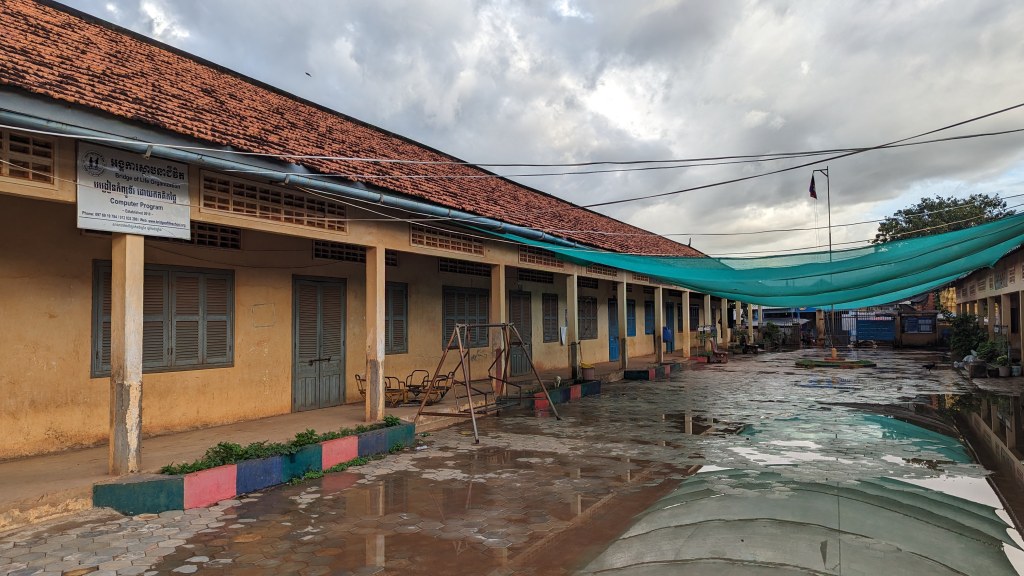
Then at 4:36 PM we were back on the boat for ten more minutes before arriving at the pre-primary school of Bridge of Life. This is evidently the main school they are currently working on supporting.

Getting into this place was the first time of the day that I felt a bit insecure. It is not pictured here, but going from the boat into the school was a bit precarious, and I could easily see how someone without sure footing would feel nervous. Yes, Saro did a good job of helping everyone, but I was thinking this might not be a good idea for people who have some minor issues with mobility.

Despite being a “pre-school”, the students here are from 6-8 years old, and they currently have 45 students. Many people in this village do not actually start first grade until they are 12 or even 13. The hope with this pre-school is that they will be able to get younger kids into school earlier. Given the current number of students, and the space in the building which is actually dedicated to “classroom” this seemed like it would be an incredibly cramped place to give and receive lessons. They only have classes from 8:00 AM to 11:30 AM, since the teacher goes out to do fishing in the afternoon. Surprisingly, the teacher also lives here, right inside the schoolhouse. Evidently, they used to also have sewing lessons in the afternoon, but they currently do not have a sewing teacher, so that part has been put on hold. Finally, this particular school has been operating since 2008.

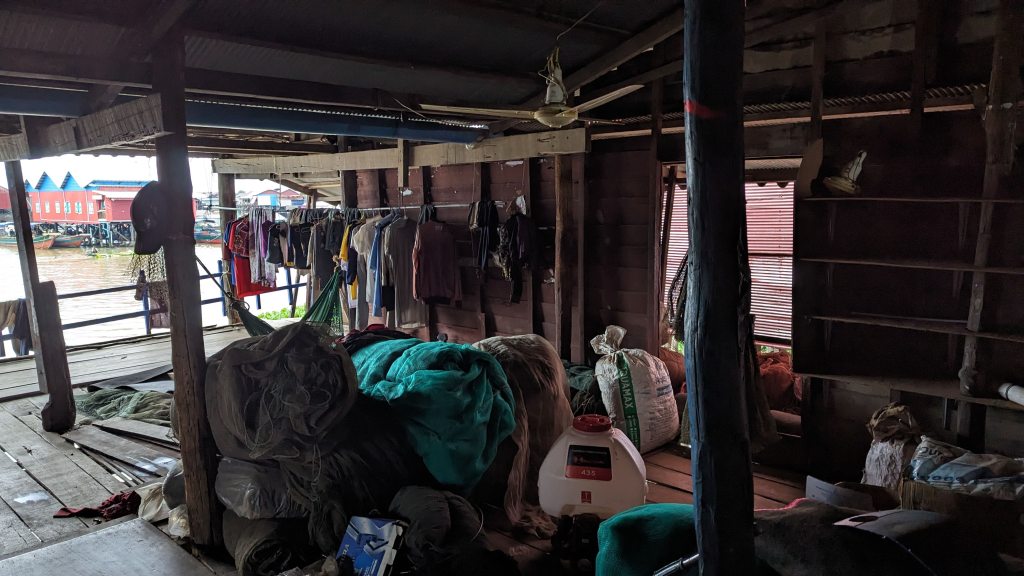
At 5:15 PM we went back onto the boat, headed towards a conglomeration of “true houseboats” which float on the water year-round. Both most of the stilted homes and the houseboats get their water directly from the lake, using black sand and activated charcoal water filters. However, whereas most of the stilted homes have electricity from the main power grid, the true floating homes get all their electricity from solar panels.

On a side note, one bit of humanity that drew my attention throughout the entire daytrip was this late middle-aged French couple who held hands almost the entire trip. I wondered, is this how they go through all of life, or was it just because this was a special trip? Also, how many years have they been together, and will they still be like this in fifteen more years?

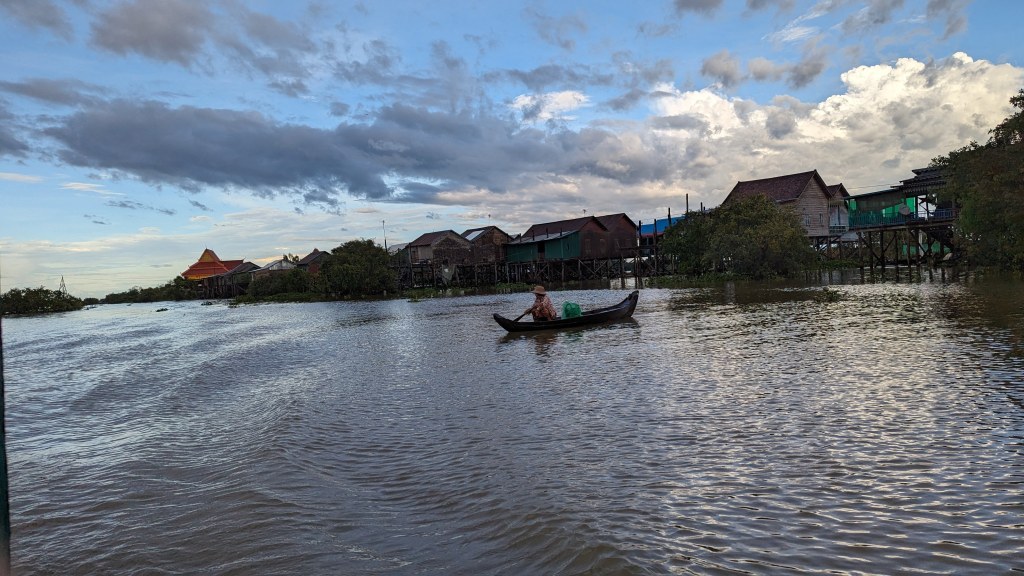
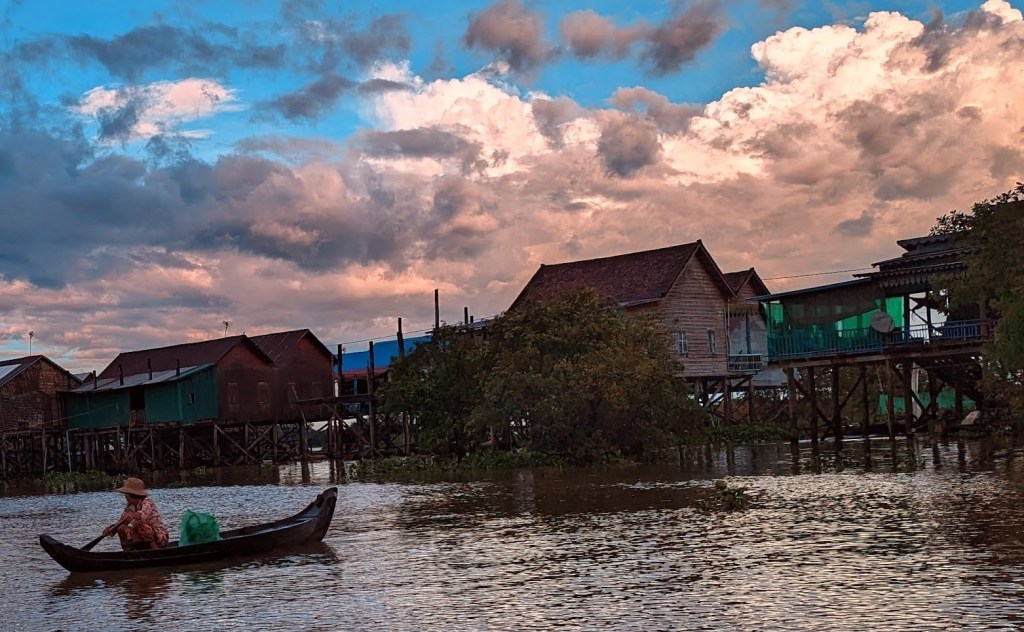
While there was little to indicate it for the casual viewer, at 5:39 PM we were finally out on the actual lake of Tonle Sap. Supposedly this is the largest freshwater lake in Southeast Asia, and it has approximately 50,000 people who either live on it in year-round floating boats or around it’s edges on stilted homes. It is an extremely productive and biodiverse lake, and recently steps have been taken to maintain the sustainable emphasis on artisanal fishing rather than more industrial methods. We hung out just looking around until 5:47 PM, ostensibly waiting for the possibility of seeing a sunset, but cloudy conditions put a wrench in the works. Still, it was very beautiful.

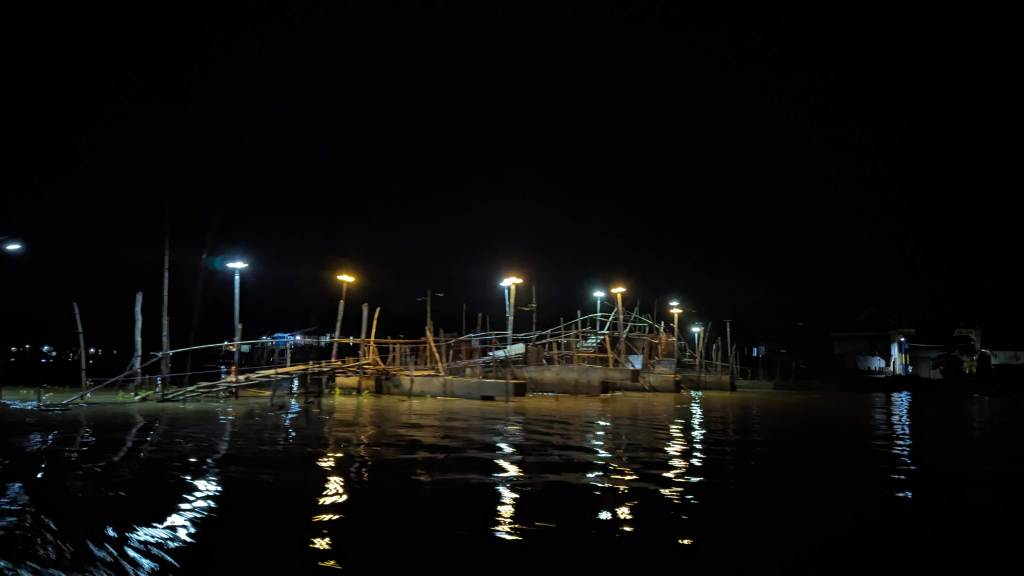
As we were heading back to our land transport, even at 5:52 PM it was already very dark on the water. Although it was hard to take night pictures on a moving boat, it was a very beautiful return to the dock, where we arrived back at 6:25 PM to get back in the same white van as before.

We had a quick bathroom break at the same place as before at 6:36 PM and we arrived right outside my apartment at 8:00 PM. I decided to shower and have a quick rest before walking out at 9:38 PM to explore some of the restaurants in a different area near where I was staying. There were actually quite a lot of nice-looking places, but these were clearly meant to be places for larger groups of people. My food which had a cost of $9.95 USD was perfectly adequate, but I think it would have been much better to have had a traditional Khmer barbeque with a small group . . . one of the issues of solo travel.

At 10:05 PM I headed back home, arriving about five minutes later. I quickly got in bed, and gave myself to sleep without any alarm, since I had not planned anything for Day 6 until much later in the evening.

So, I know that today was rather laid back, but I am still happy to report that it was a very good day. I am glad that I went out to see the “floating villages” and also glad that I did it with a much more responsible tour operator. The whole day had more of a family trip in the car feel to it than many tours, and that was not actually a bad thing. No, it didn’t smell bad at all during the entire trip, and while there were some very poor communities, I did not feel that our visit was at all exploitative. So, if you are in the area and are thinking about doing something similar, first make sure as I did that things will not smell bad during that time of the year, and then make sure to go with a very reputable tour operator like the one I used.

Thank you for continuing to follow along, and please let me know about some of your adventures as well. Until next time, may all of your experiences be as fulfilling as mine have been over the last few days.

Siem Reap trip: Day 4 (15 Nov)

Hey everyone, as you have already no doubt guessed, elephants are a big theme for day 4 of my recent Siem Reap, but there are also some interesting cultural elements which came up later in the day.

I first found out about the possibility of visiting an elephant center on Get Your Guide when looking for activities to do in and around Siem Reap city. However, as the cost which appeared was a bit expensive ($128 USD for a 5-hour experience) I kept looking around until I found the same thing on AirBnB for 8238 INR ($98.86 USD); AirBnB was where I actually booked it, but had I been a bit cleverer, I would have booked directly with Kulen Elephant Forest and would have only paid $90 USD for exactly the same experience. Evidently it is possible to get this for as little as $80 USD for bookings made at some hostels in the area, but I cannot officially confirm that. Regardless, no, it was not cheap; in fact, this was easily the most expensive thing I did on my trip, but visits to responsibly run elephant preserves/conservation/rescue centers tend to be expensive anywhere in the world. That is because these places usually subsist entirely on the money they charge tourists, and if they are doing it responsibly, they generally can’t have many people visit per day. Whether or not you think it is a fair amount to pay is really up to you.

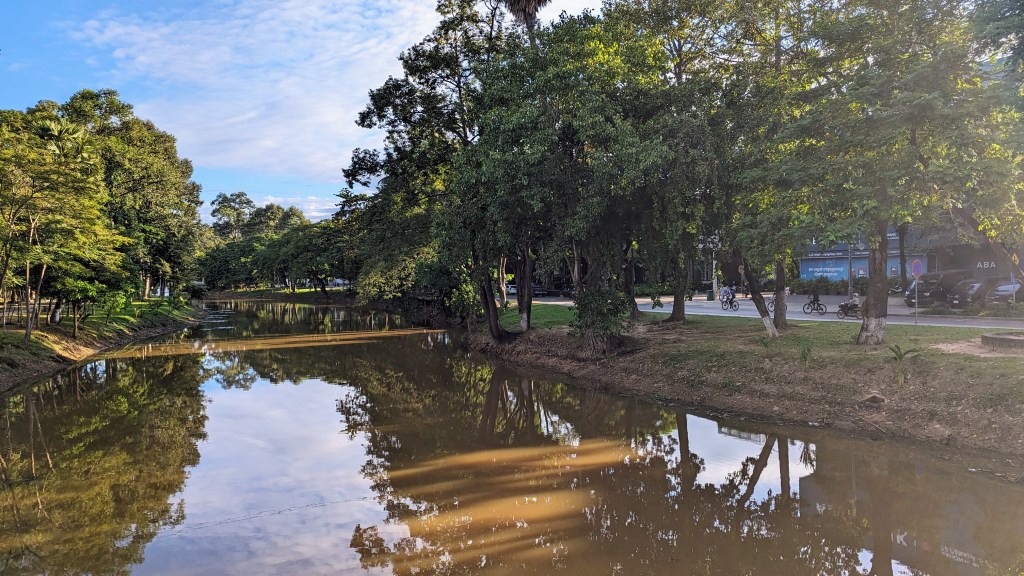
As I had the chosen the morning visit option, I was once again up early, and headed out walking from the apartment at 6:52 AM. The meeting site was a bit further away, so I had the opportunity to see some pretty views along the way.

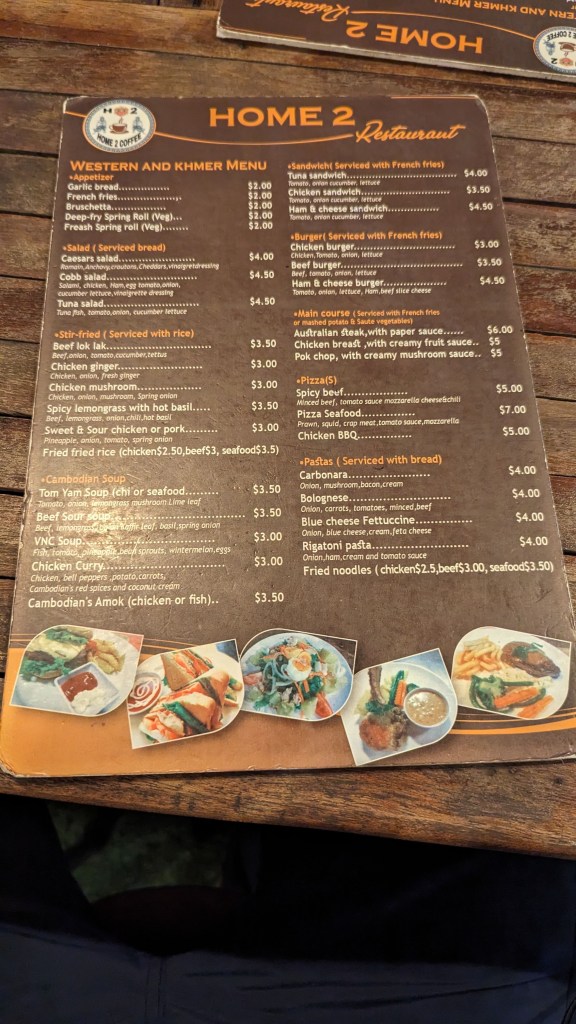
At 7:19 AM I arrived at the office from where I had been told I had to be NO LATER than 7:45 AM sharp, but there was nobody there yet, so I backtracked a bit to get breakfast at a nearby small restaurant called Tevy’s Place. I ordered the Beef Lok for $4 USD.

The food was pleasant enough, but I unfortunately didn’t really get to enjoy it, since it did not arrive until 7:34 AM, and I was very worried about arriving late. So, I gulped down my food and was back outside the nearby office at 7:45 AM sharp. At 7:47 AM the guide/chaperone, Seth, arrived but it was not until 8:01 AM that the car finally arrived, and then not until 8:03 AM that we actually got into the car. While this was not a huge wait time, I was quite annoyed, since I had been repeatedly told that if I were not there at 7:45 AM sharp, I would miss the transport. To be fair, most of my annoyance was because I had not had time to properly enjoy my breakfast, but that would also have been easily resolved had I simply left the apartment fifteen minutes earlier.

Regardless, we five tourists were in the minivan at 8:03 AM, finally departing at 8:05 AM. There was not a lot of information given, but Seth did tell us that there were ten elephants at the sanctuary, nine adult females and one adult male. However, he said that the male was never there on tours, since he was too aggressive. The vehicle itself was comfortable and the drive had plenty of nice scenery.

At 9:08 AM we arrived at the entrance where they already had some small cups of coffee waiting for us.

We kitchen area was comfortable, and we sat there visiting until 9:38 AM when things really got started. Seth gave us some background about the center, including the fact that they had opened in 2018 as a sanctuary for elephants which had previously been used for tourist rides. As far as I could tell, elephant rides are now illegal in Cambodia, but I may have misunderstood that. Seth also told us that Cambodia only has between 400 and 600 elephants left in the wild, with another 70 in captivity, including the 10 at this local sanctuary. I don’t know if this is true or not, but he said that most elephants which were previously used in the tourism or logging industry cannot be reintroduced to the wild. Next, as I had guessed, he told us that maintaining elephants was quite expensive since each adult eats about 250 kg of food per day, and they also need quite a bit of space in order to wander around and get a reasonable amount of exercise. Finally, we learned that the elephants here were all between 38 and 55 years old.

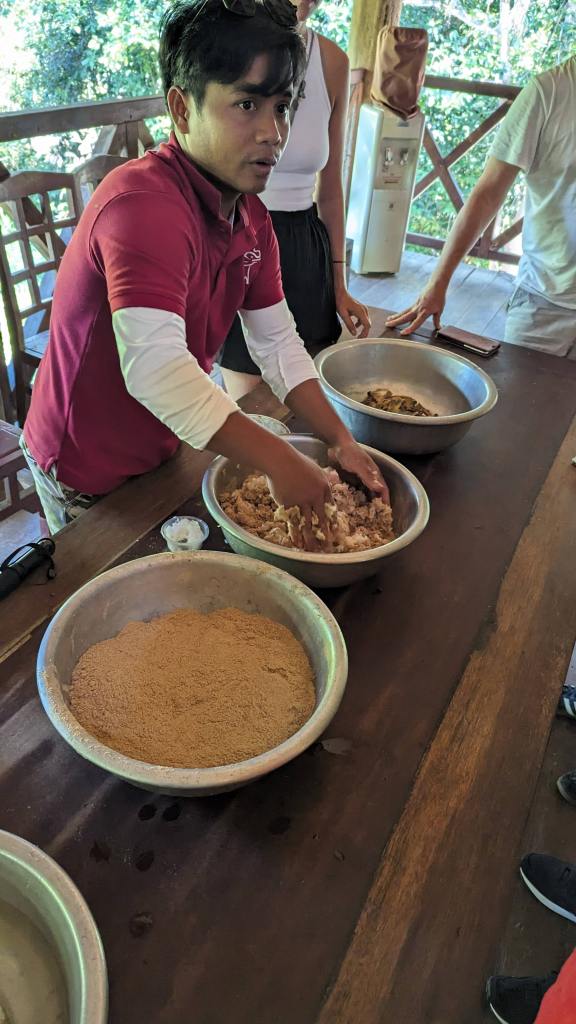
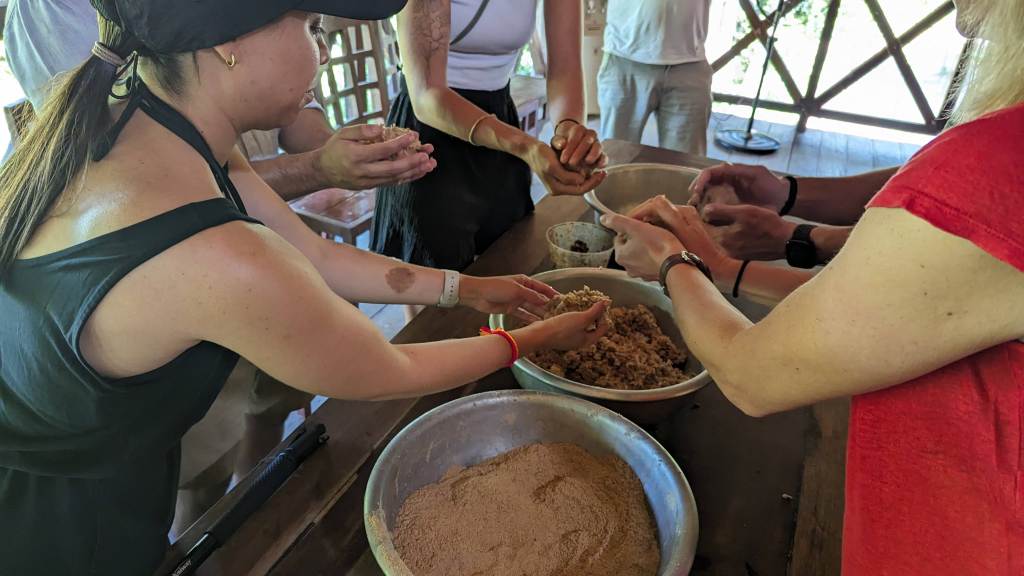
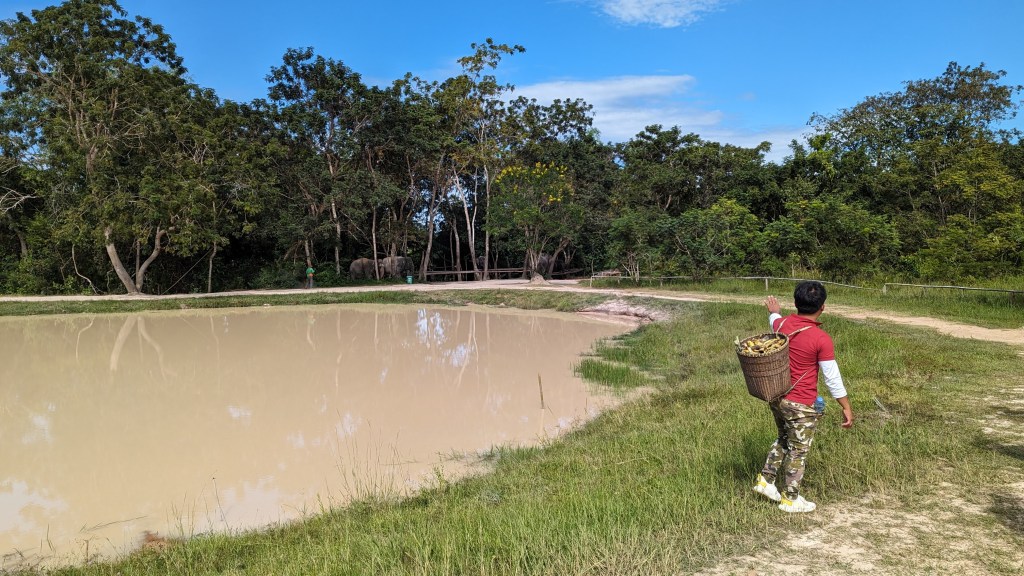
Once we had received the introduction, we were sent to thoroughly wash our hands before helping make a small number of elephant treats out of sticky rice, tamarind, rice bran, banana, and a tiny bit of salt.

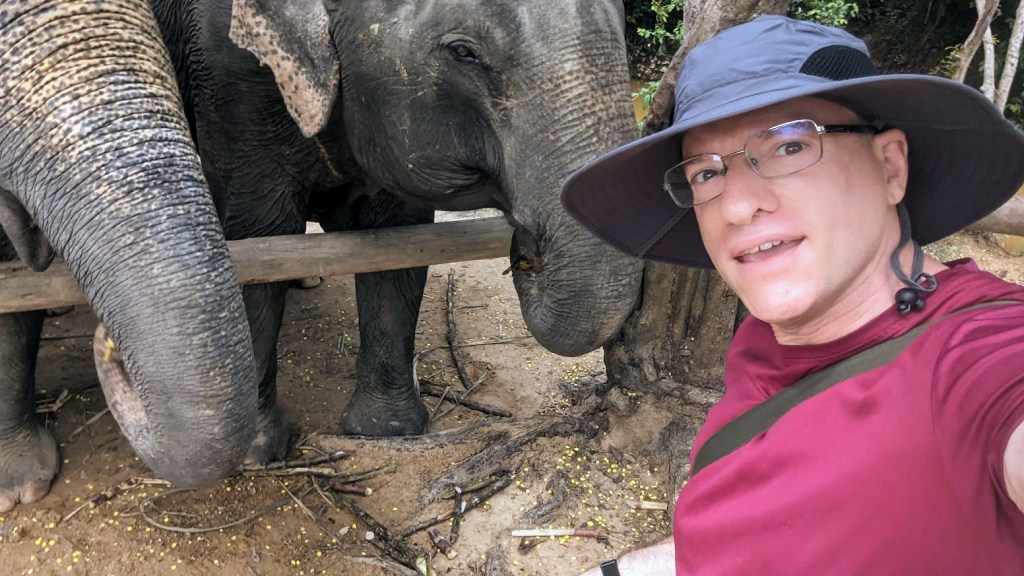
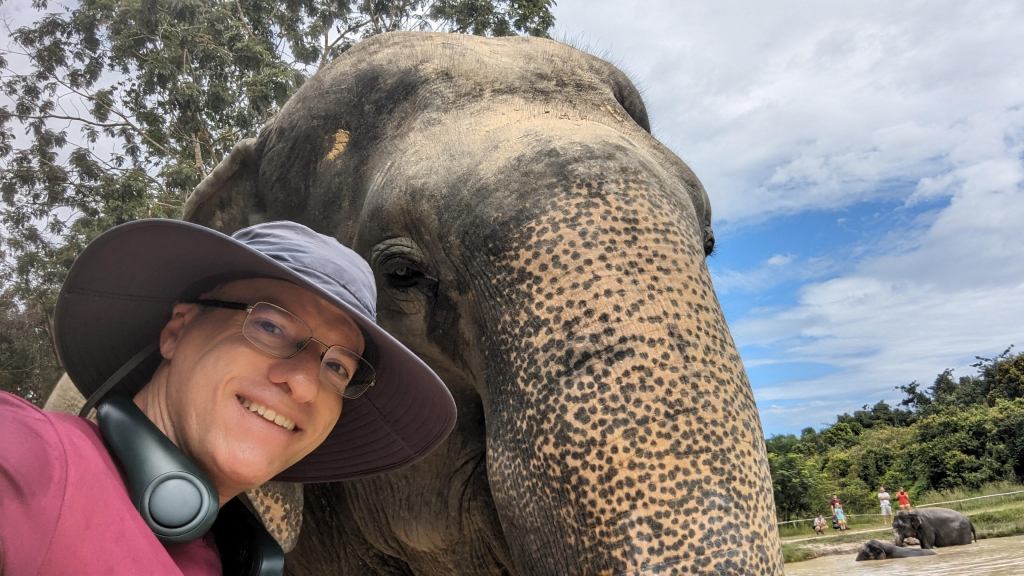
At 10:02 we finally went down to see the elephants, also feeding them whole bananas, pieces of sugar cane and of course the aforementioned treats. It was funny to see that most of the elephants were clearly not that interested in the sugar cane, since they would take it and then throw it on the ground before reaching for something else.

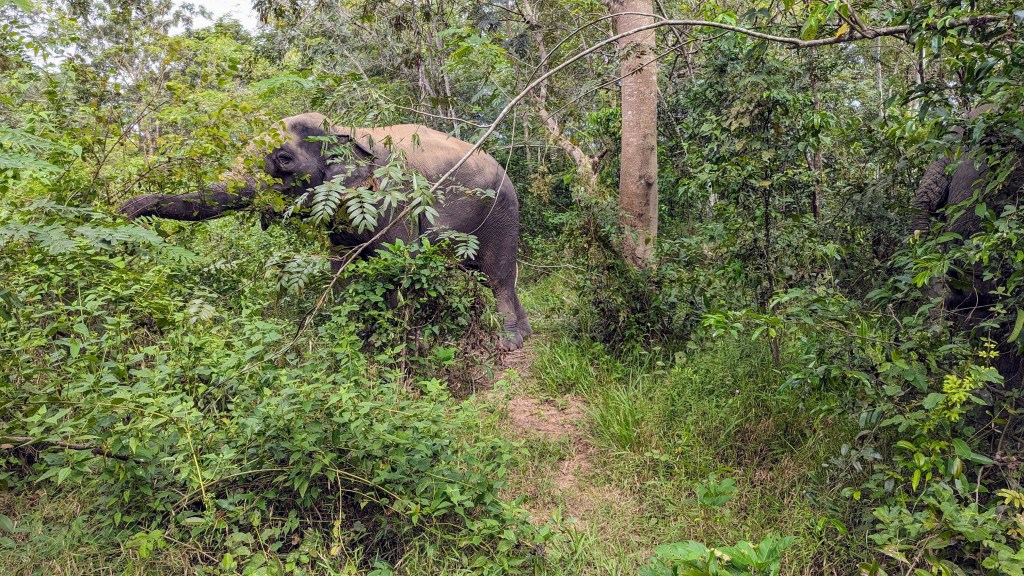
After the feeding was done, we went for a short walk in the nearby forest.

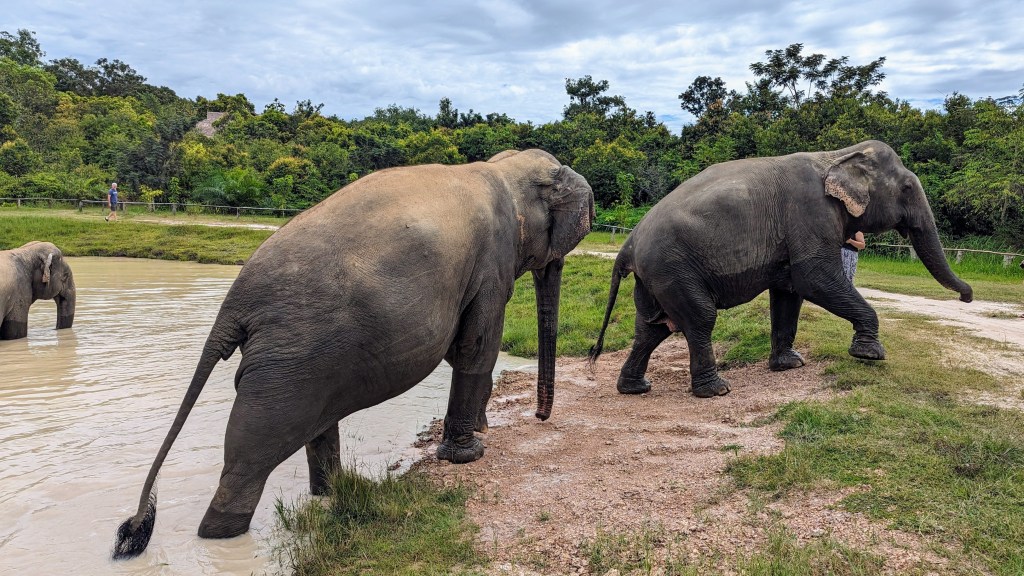
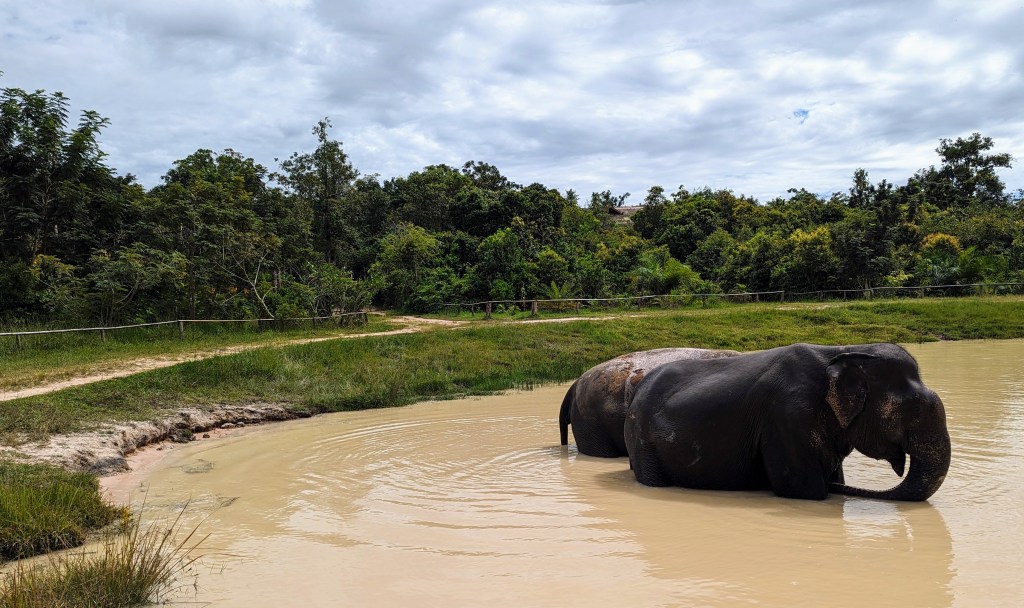
At 11:29 we walked back with the elephants to their pond area where we watched them a bit more.

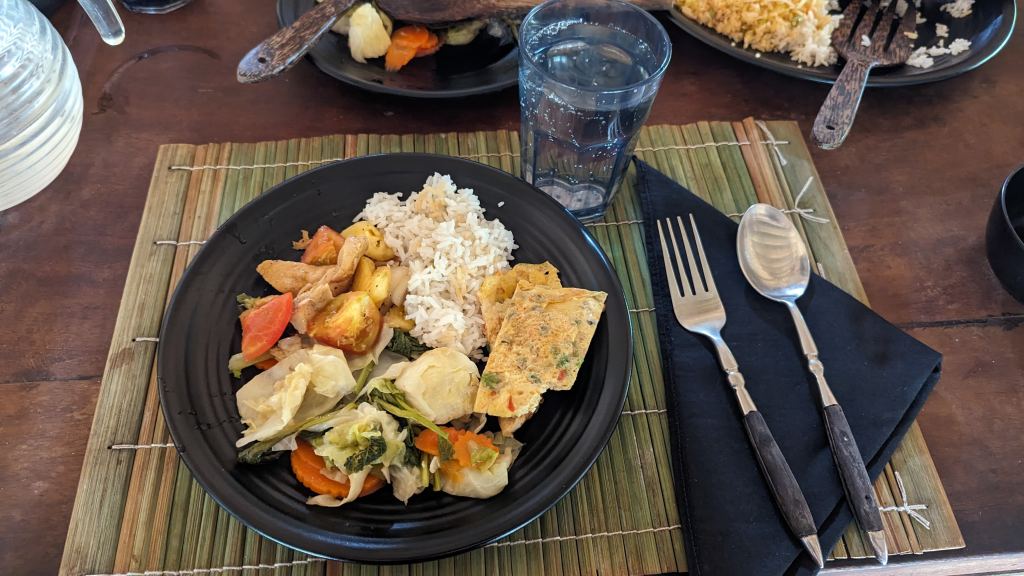
At 11:44 AM it was time to head back to the seating area for a simple but pleasant lunch which was served family style; this was also included in the cost of the tour.

At 12:29 PM it was time to head back to the bus. With a short walk we were back in the vehicle at 12:32 and once more on our way back to Siem Reap.

I know that some of you will object to me participating in this activity, but I really do think that it was done ethically. Yes, tourists were allowed to both feed and touch some of the elephants, but we definitely did not ride them or bathe them. Furthermore, this center not only cares for these aged elephants, but also provides work for many local community members. In an ideal world, there would be enough government money or simple private donations to take care of these animals, but that is generally not the case. I feel like this sanctuary has struck an appropriate balance of providing responsible care for the elephants while also giving tourists a once in a lifetime opportunity to be up close with these amazing creatures. So, if you can afford it, yes, I recommend that you visit Kulen Elephant Forest in Siem Reap.

At 1:35 PM we were back at the office where we had started, and everything was done.

I had earlier been on the fence about going to an Apsara show, since most of them take place in very large buffet halls where diners more or less ignore the dancers, but with a bit of investigation I had discovered that the Apsara Theatre, while still pairing a dinner experience with a show, was considered to be a much smaller, more serious venue where audience members were much more respectful. However, it was not possible to buy tickets online, so when I noticed that the same office which managed the elephant tours also could help with Apsara theatre reservations, I figured I would give it a try.

Due to another even that I had earlier scheduled, my only possibility to see the show would be tonight. As such, I was very sad when they told me that there was no more availability for night. I expressed sadness that I would miss it, since it was my only chance, and was ready to head out, but then one of the attendants in the office asked if I could wait for a minute while she called to check. Fortunately for me, one of the attendees who had earlier reserved had called in just an hour earlier to report that she was not feeling well, and could give up her spot, so I was able to get the last seat available. I paid $31 USD for the Khmer tapas package which included a lite dinner and of course the show. I probably would have opted for the slightly more expensive “traditional Khmer” dinner, but it had shrimp, and I am allergic. Yes, this was more expensive than other Apsara show options in Siem Reap, but I figured I was paying a premium to get a better viewing experience.

From there I once again headed out walking from the office back to my apartment. At 2:03 PM it started raining rather heavily, but I was able to duck under an awning, and believe it or not, but 2:06 PM it had already completely stopped raining. This sort of mini downpour happened several times while I was in Siem Reap.

I was back at my lodging by 2:20 PM, and as I was feeling fully rested, I decided to make use of the gym gear I had brought along, once again heading out on foot at 2:34 PM. There are quite a few gyms in Siem Reap city, and evidently most of them have day passes available with a cost of between $1 and $5 USD. As luck would have it, the one closes to me, Gold Fitness, had a cost of $5 USD.

I arrived at the gym at 2:44 PM. The place was alright, but $5 USD seemed a bit much for someone only planning on using the weight room. As other reviewers had written, this was a HOT place to work out, but there was plenty of space with good equipment, including a decent looking pool, fully adequate free weights section, a very complete weight machine area, as well as some spaces for group classes. The daily visit fee also includes locker rental and two towels. I worked out there until 5:05 PM, then once more walking back to the apartment, arriving at 5:22 PM.

I showered and took advantage of the apartment’s washing machine and included detergent and fabric softener to do a big load of laundry which I was able to put up to dry before once more walking out the door at 6:50 PM as I headed to the theatre where I arrived at 7:22 PM. In all honesty, I had my doubts about this whole Apsara show thing, since it all seemed excessively touristy, but I also wanted to see what it was all about, and definitely did not want to miss out on the opportunity to experience something unique.

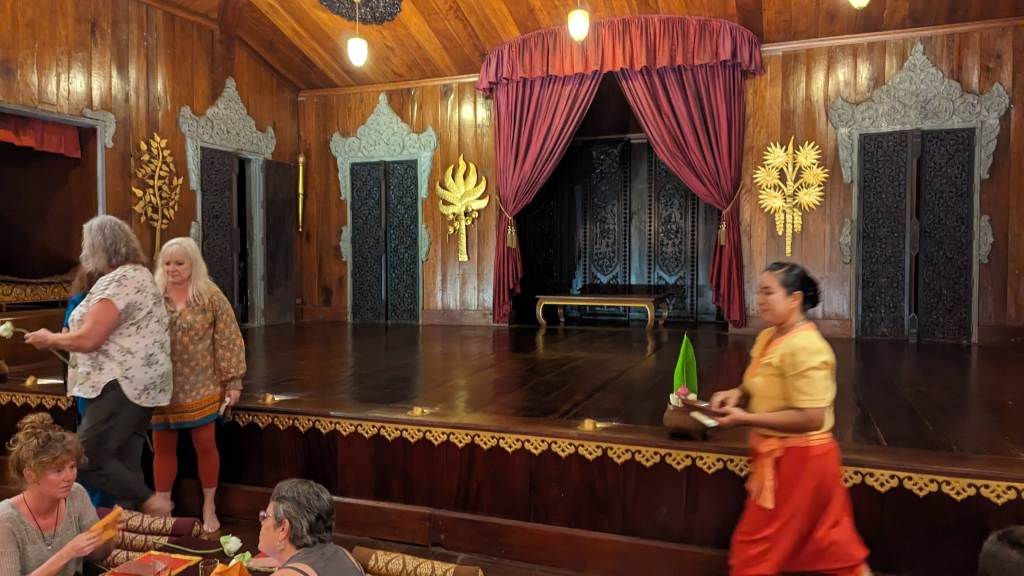
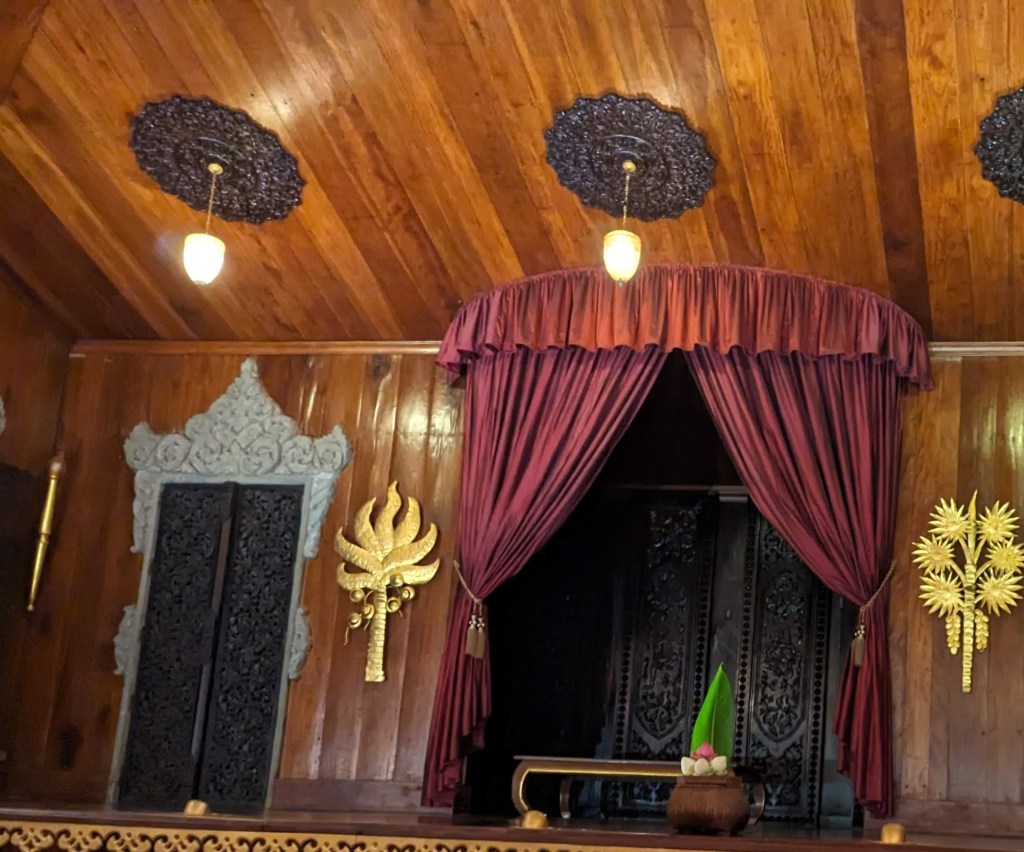
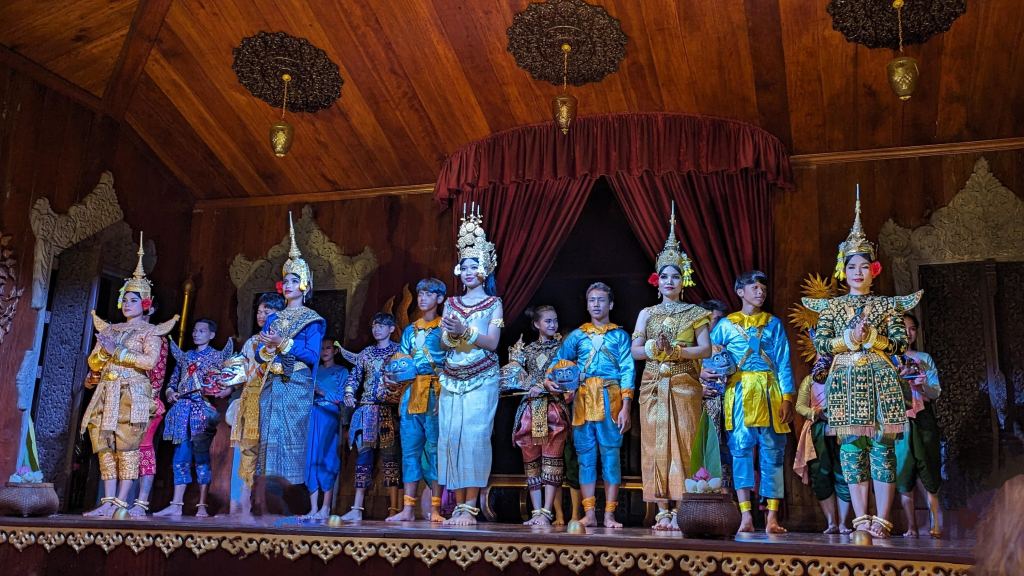
The theatre itself was quite cozy yet elegant, and the food was MUCH nicer than what I had expected. Getting the “tapas” menu was definitely more than sufficient and did not at all make me feel like I had a downgraded experience.

I didn’t actually count people, but I think the maximum capacity of the theatre is probably around 125 with most people seated family style at long tables where the food was served by elegantly dressed workers. As an unexpected plus, I was seated with a very pleasant group of people from Grace Fellowship who very kindly included me in their conversation. Given that I was greatly enjoying the company, I forgot to note down times, but the amount of time allowed for eating and visiting before the show was just perfect. As a result, everyone was completely quiet and focused on the dancers when it was their turn to perform.

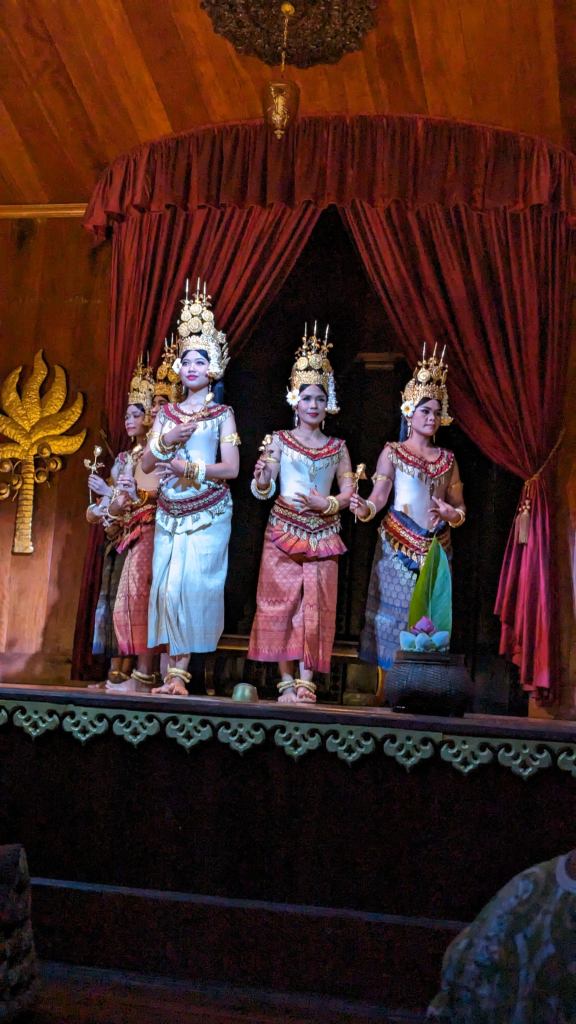
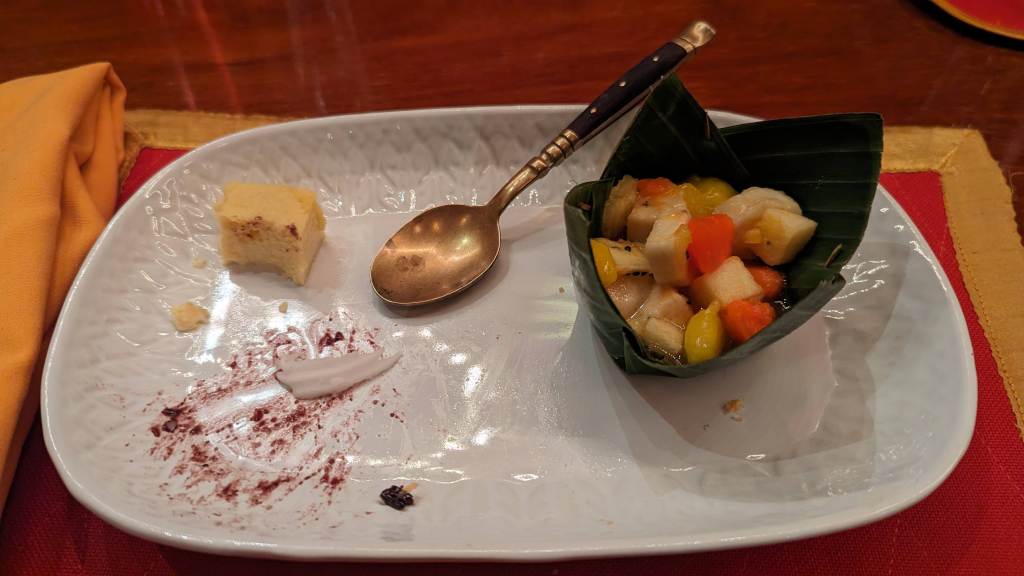
They did six different performances with a short intermission during which time dessert was served.

Like many reviewers have commented, these sorts of shows can be “a bit slow” but I felt that it was worth it. Furthermore, whereas I had been very skeptical about the entire dinner theatre concept, I found that at least here it was handled extremely well. All in all, I was very happy that I was able to get a spot. I am not sure if I would go again by myself, but I would definitely happily accompany another fellow traveler who wanted to have the experience.

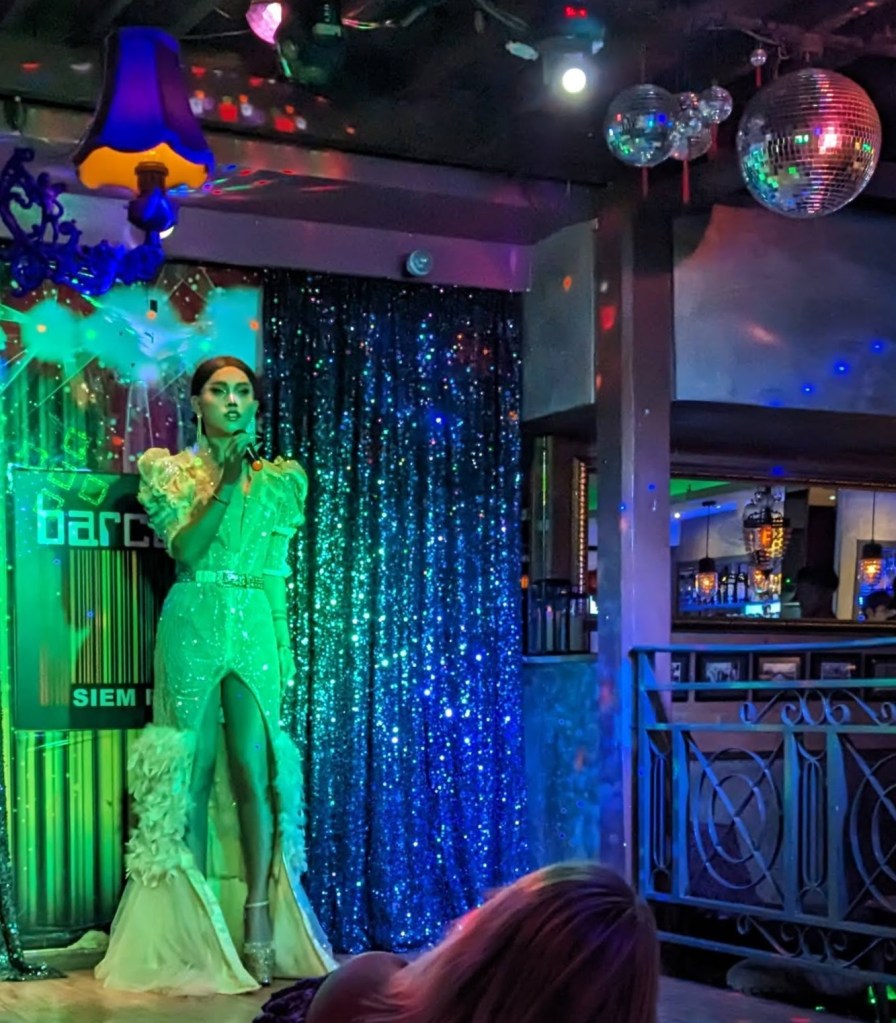
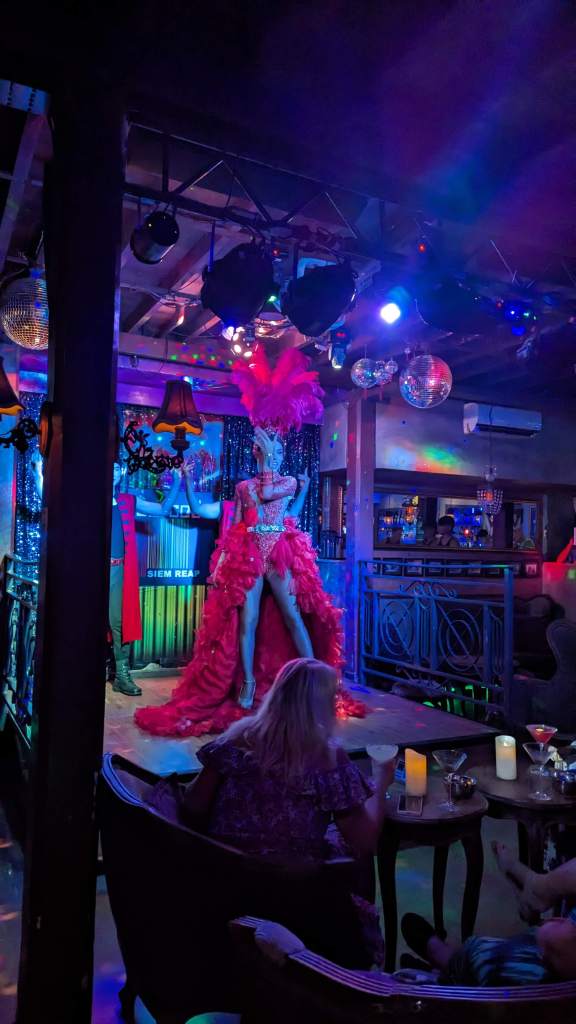
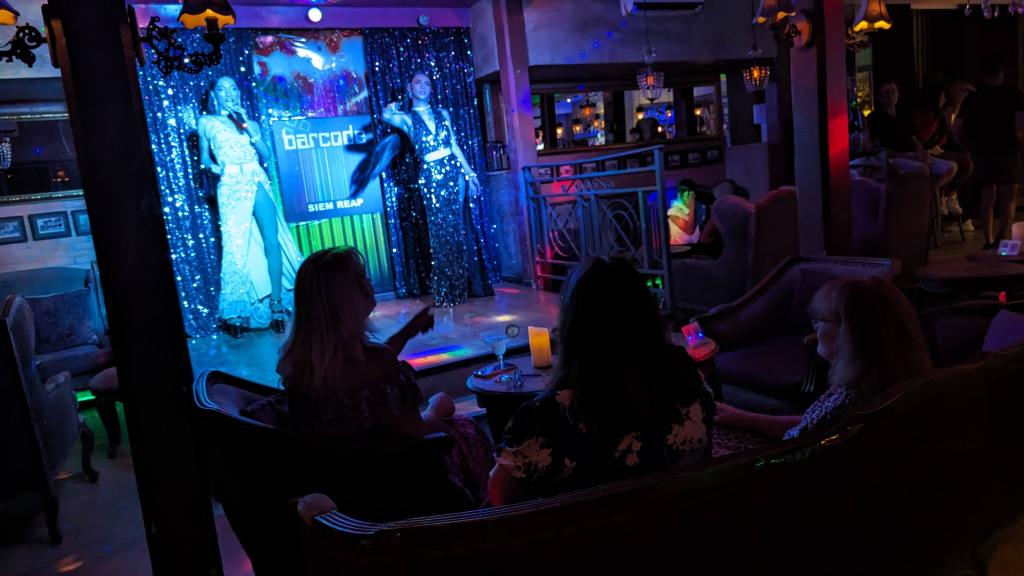
At 9:49 PM as I was exiting, I heard three women talking about a drag show at a nearby bar called Barcode which evidently had started at 9:30 PM. Since I was already out in the area, I figured I may as well check it out, especially since it was only a three-minute walk from the theatre, and I would have passed it on the way back home anyways.

While there was no cover fee at the bar, the drinks were quite expensive by Siem Reap standards. Pretty much, any drink had a cost of $5 USD a drink, be it a beer or a standard cocktail, and this was the only place I entered the entire time I was in Siem Reap which accepted credit cards. The bar itself was actually very small, and the service was excellent. Furthermore, while elegant may be an exaggeration, there certainly had been an effort to decorate the place in a more upscale fashion. Furthermore, the presentations themselves were rather cultured, even if the presenters themselves were not always incredibly accomplished. In total, there were perhaps maximum 20 clients in the establishment, but it did not feel empty.

Especially given that I had not even planned to do this, I felt that it was a very nice way to end the day. Do I think that this is a “must do” part of a Siem Reap trip? No. However, I was happy to stay until 12:26 AM when the shows ended and then I did a meandering walk back to the apartment, arriving at 1:25 AM.

So, how do you think Day 4 compared to Day 3? If you had to choose one over the other, which would you do? Fortunately, as I had planned for six full days in Siem Reap, I didn’t have to choose; I was happily able to do both. And yes, there is more to come in Day 5, so I hope you will keep reading.

As always, thank you for your time, and do let me know in the comment section below if you have any questions or even if you just want to share your thoughts.

Siem Reap trip: Day 3 (14 Nov)

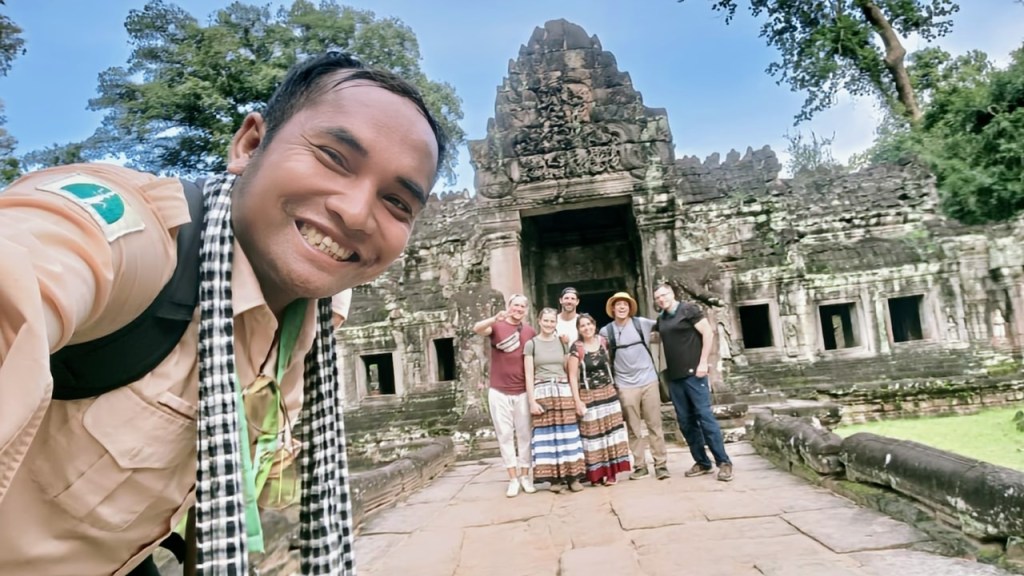
Sah Yon was our amazing guide from today; he really made Siem Reap come alive for us.

Hey everyone, I know that day 2 of my Siem Reap trip was not as great as I had hoped, but as you can already guess from the introductory photo, day 3 was a huge improvement which really made me incredibly happy to have elected to spend two days doing temple visits at the Angkor Wat temple complex. Since I really appreciated the extra details he shared, a lot of you may find today’s entry overly educational, but it was just perfect for me.

After another peaceful night of rest in my AirBnB apartment — Thank you again Chhay! — I woke up at 8:30 AM, fully resolved to be a bit better prepared than yesterday. Despite yesterday’s very early departure, the heat was very tiring yesterday, so today I decided to take along my $25 USD neck fan (JisuLife Bladeless Neck Cooler). This neck fan which I bought two years ago has been a life saver in other overly warm situations, so hopefully today it won’t disappoint.

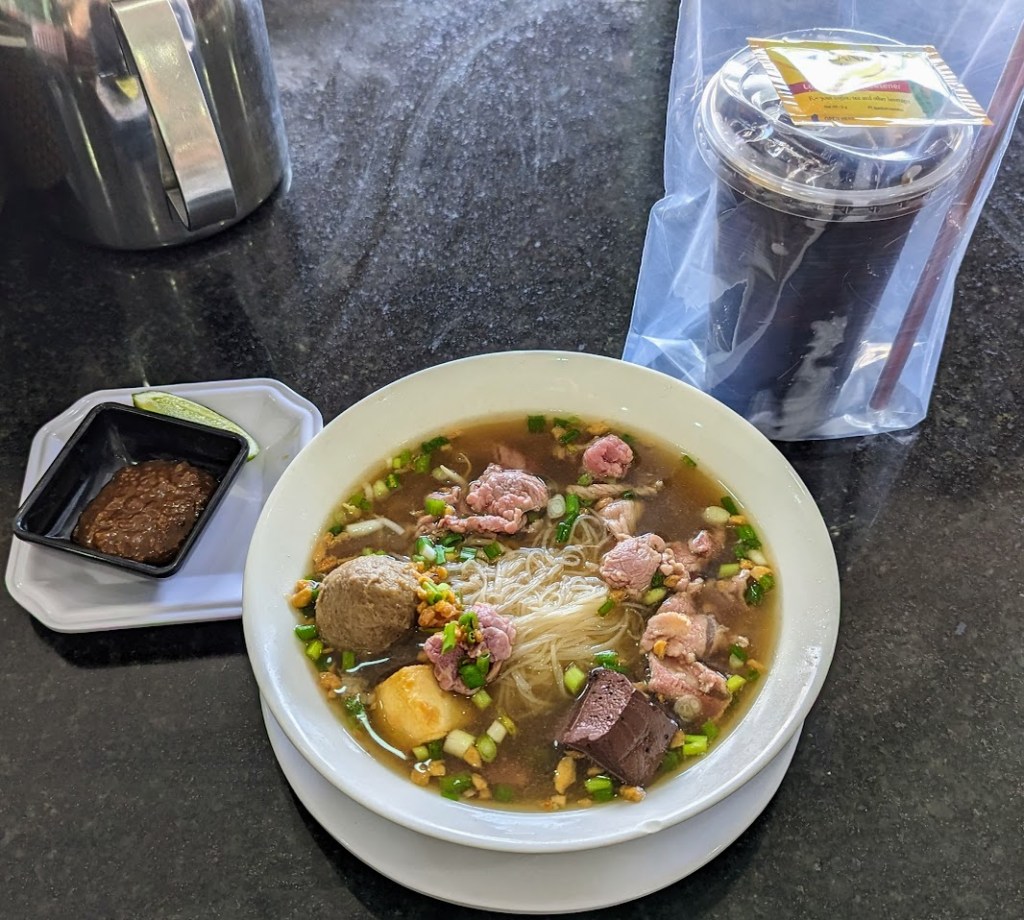
I walked out of the apartment at 9:11 AM, and by 9:18 AM had already arrived at a restaurant which was just down the place from where I was staying. I forget the exact name of the soup I ordered, but it was some sort of delicious beef broth with three different types of beef in it and some filling noodles. Remember how tired I had been at the end of the day, I also opted for an iced coffee americano.

The total cost was 18000 KHR (Cambodian Riel) or $4.38 USD. Incidentally, I noticed that while the savings were not huge, it was consistently a bit more cost effective to pay for things with local currency, even though pristine US dollars were also accepted pretty much everywhere.

At 9:58 AM I walked over to the same nearby petrol station as yesterday, arriving at 10:01 AM and found a spot in the shade where I waited until 10:13 PM where I was picked up by a guy on a motorcycle who said he would take me to meet the rest of the group. This might seem weird, but he knew my name, so I was not at all concerned. He even had a helmet for me, which is not as common as you might expect. Regardless, he was a careful driver, and by 10:17 AM I was waiting in the lobby of a hotel for the arrival of the rest of the group. I was offered cool bottled water here, and the waiting space was comfortable.

At 10:34 AM all six of us had arrived, and we headed out in a minivan with our guide Sah Yon. Right away, it was clear that today was going to be a different type of experience. Sah Yon explained to us that we would be visiting six temples today, and he gave us each a simple paper map of the route we would be taking and also sent us each an electronic copy. At 10:45 AM we once again had to make a stop to get an Angkor pass for one of the members of our group, but he was able to quickly purchase his pass, and we were once again off at 10:52 AM.

Some people might not like this, but I appreciated that while en route, Sah Yon asked us each to introduce ourselves, including where we lived, where we came from, and why we had decided to come to Angkor Wat. He also gave us important safety instructions: don’t touch the monkeys, no climbing on broken stones, and don’t touch any snakes.

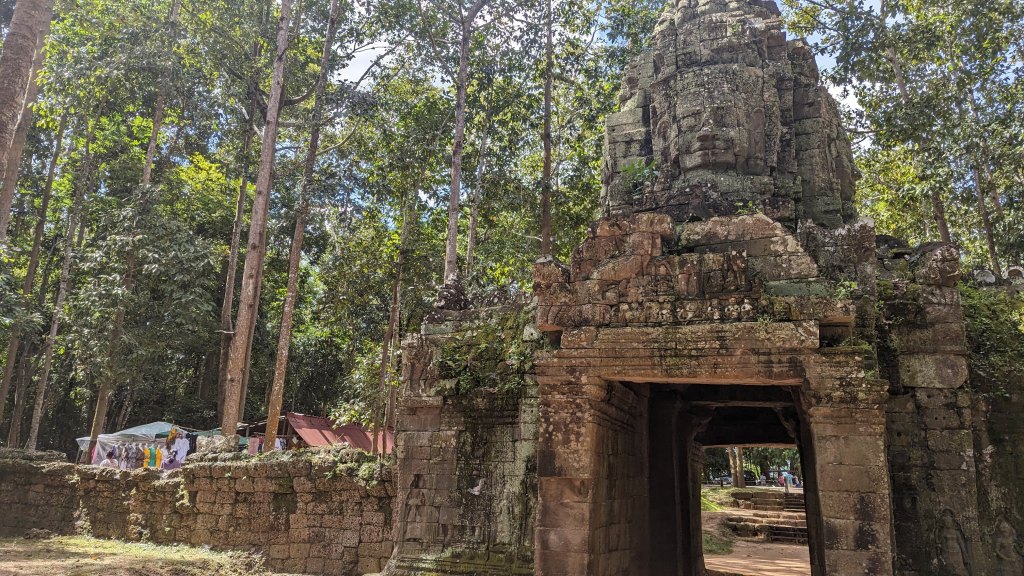
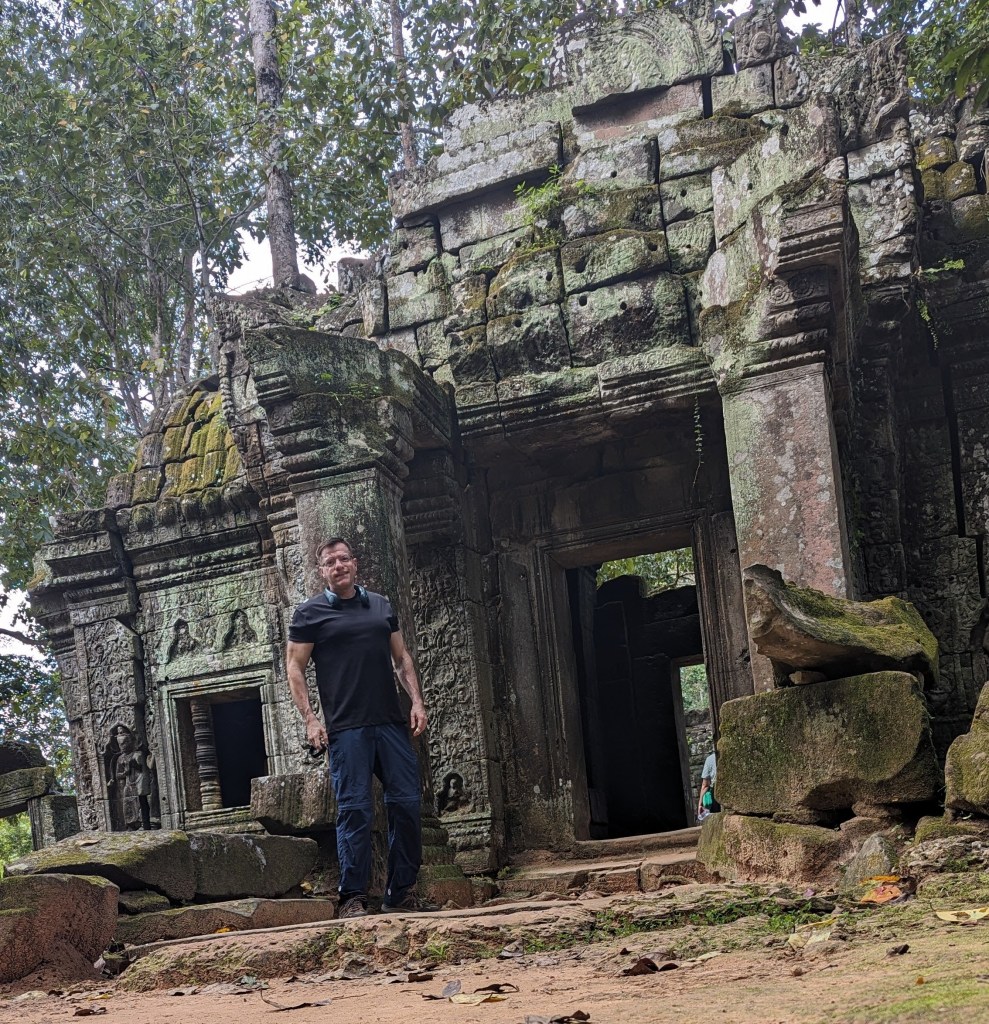
At 11:21 AM we arrived at Ta Som temple. There are some conflicting opinions about whether this Buddhist temple was primarily dedicated to King Jayavarman VII’s father or if it was dedicated to his teacher. There used to be five towers, each representing a different Buddha, but one fell down. It was built in the late 12th century. It may not be obvious in the pictures, but the temple is not as high as the Hindu temples from the same period, since Hindu temples were meant to represent Mehru mountain; whereas, the Buddhist temples do not. Note, the same as yesterday, at every temple, there were guards who required that we show our Angkor Passes.

The stone used to construct the temple came from Kulen mountain. While not obvious in the pictures, Lava rock was used for the base of most of the temples because it was strong, but the external rock is almost always sandstone, because it was easier to carve. Many of the carvings in Angkor Wat were intentionally damaged during the religious wars between Hindus and Buddhists in the 12th and 13th century. Later on, heads of many statues were taken by looters, with even more removed by the Khmer Rouge as a means to discourage worship at many of the temples. We explored this area until 2:18 PM, and then got in the van to head to the next site, where we arrived at 12:25 PM.

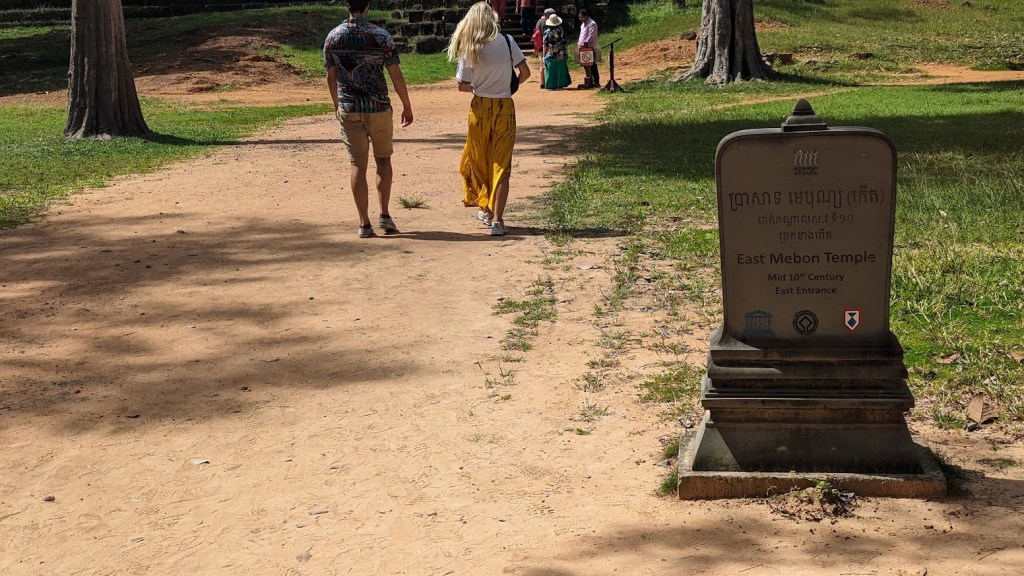
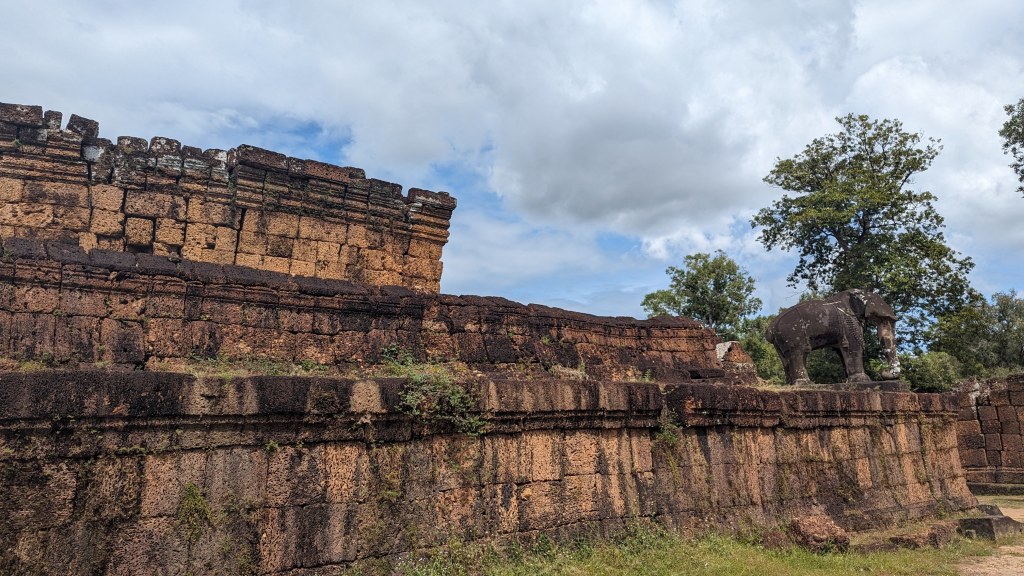
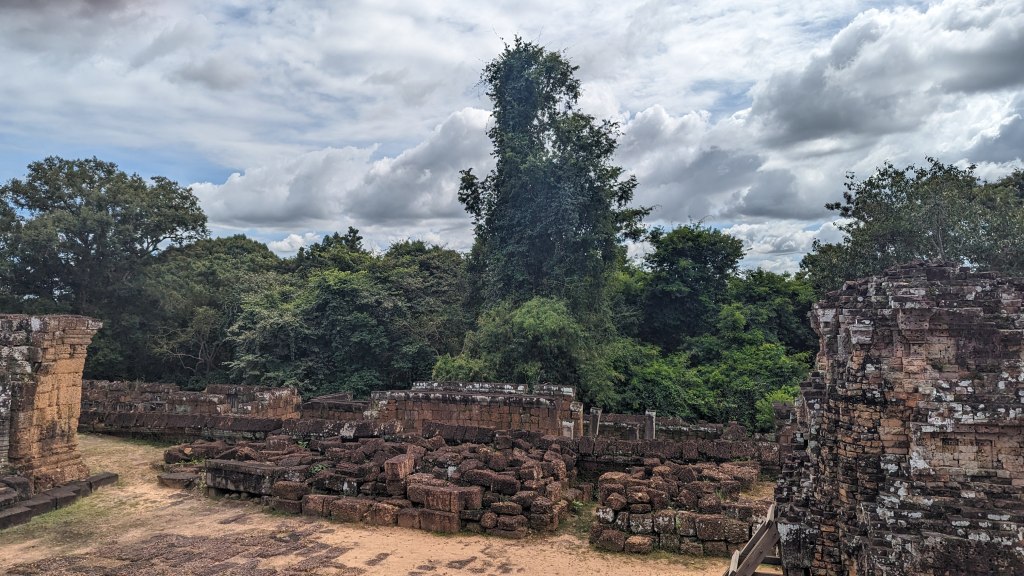
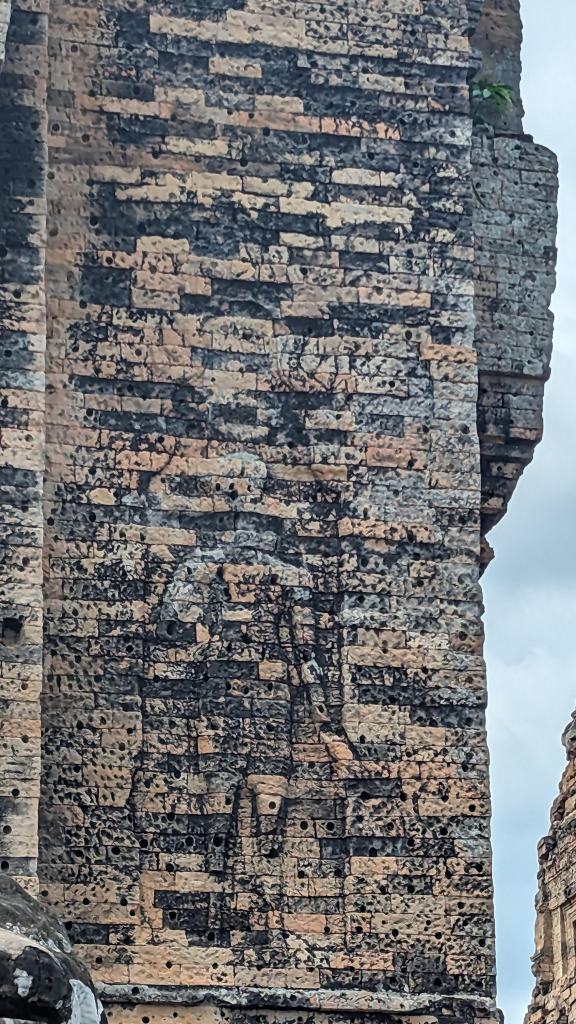
East Mebon temple, which was originally known as the Shiva Loka (world of the god) was originally created as a Hindu temple, but later on was repurposed as a Buddhist place of worship. Given its origins, like other Hindu temples in the area, there are three different levels to the temple, with certain levels being restricted to different types of people. Interestingly, this temple has only been open to the general public since 1992. Here you will notice many holes in the walls; according to our guide, those originally had precious gemstones, but like so much from ancient sites, that has been looted over the years.

The smaller towers were built to honor ancestors of the king; whereas the five large towers were for the five main Hindu gods which were generally honored in Cambodian Hinduism. Here, it was easy to see how bricks were used for construction. While I am not sure how that worked so well, according to our guide, the mortar used to join the bricks was a mixture of tree sap and sand. In contrast, stones were joined using a mixture of honey and palm sugar. No doubt a bit of research would reveal more of the particular details of the formula which they used.

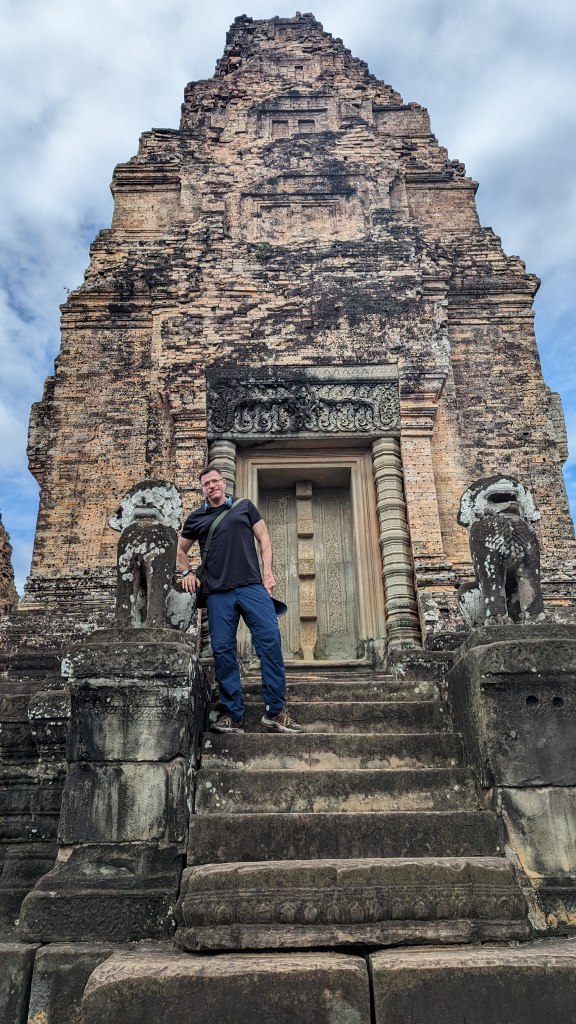
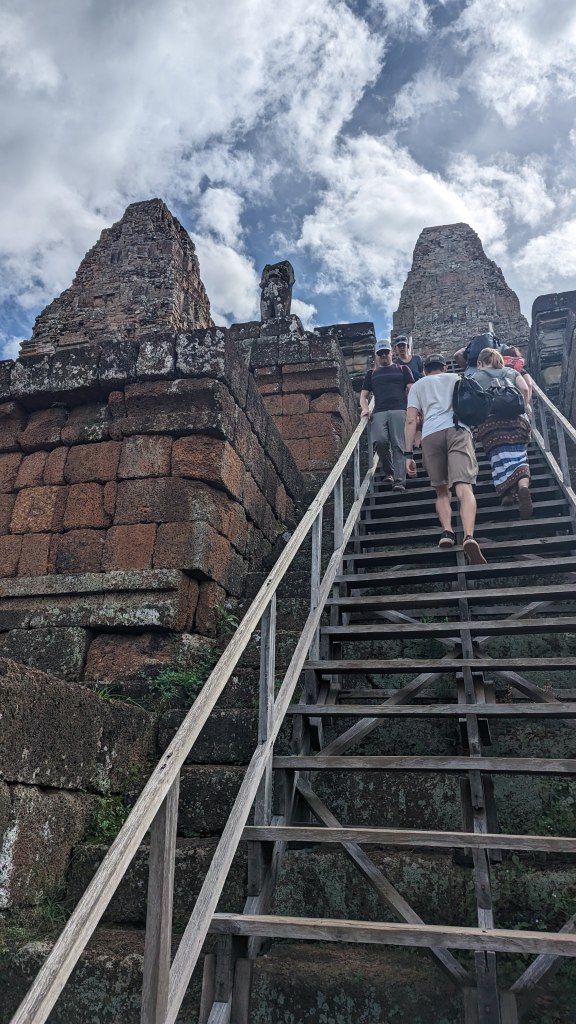
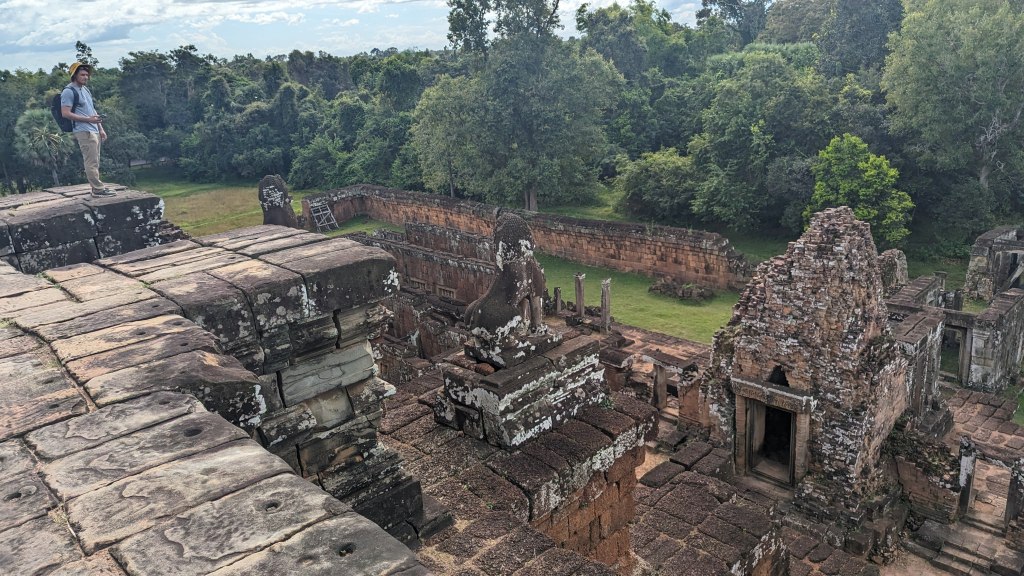
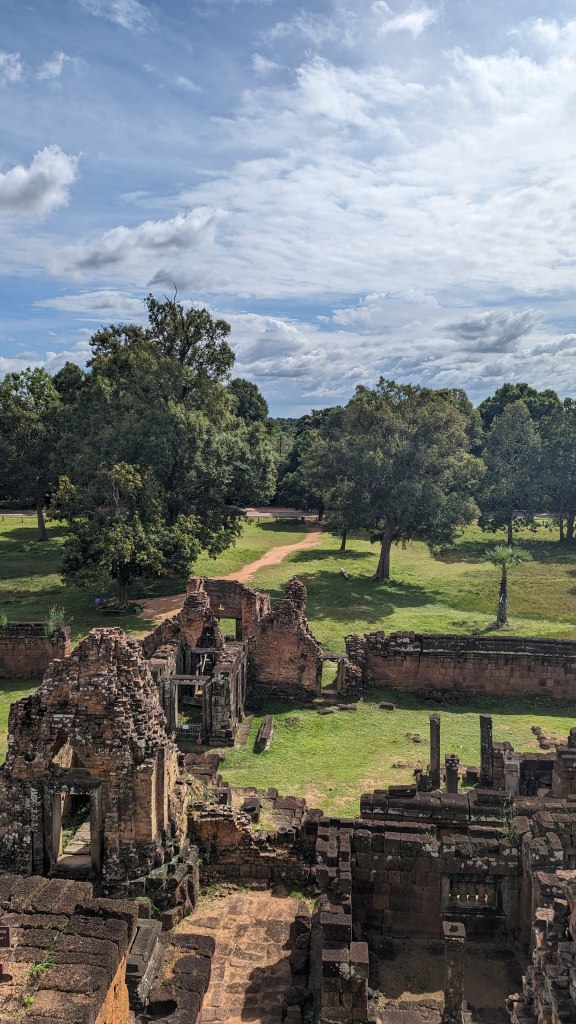
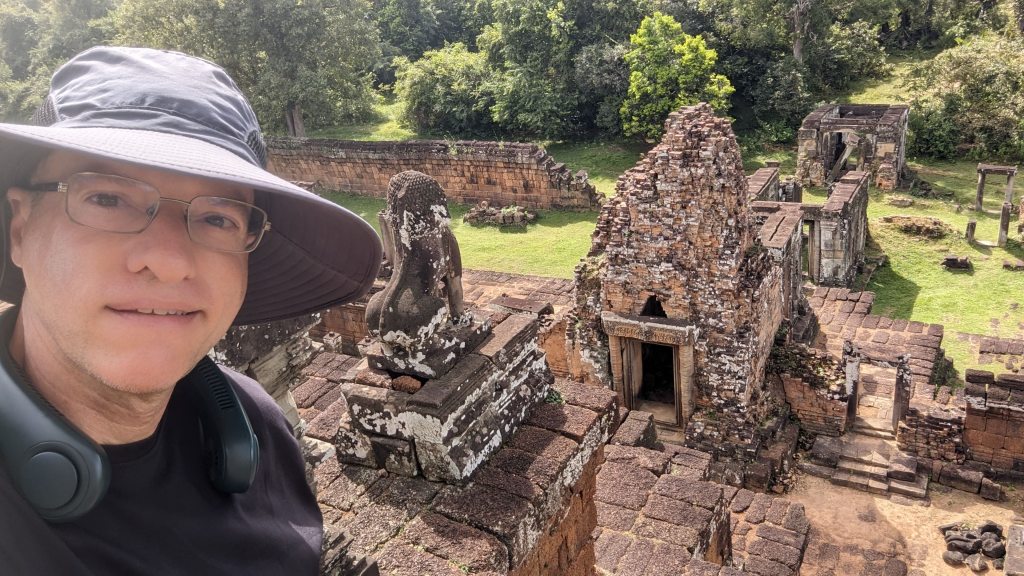
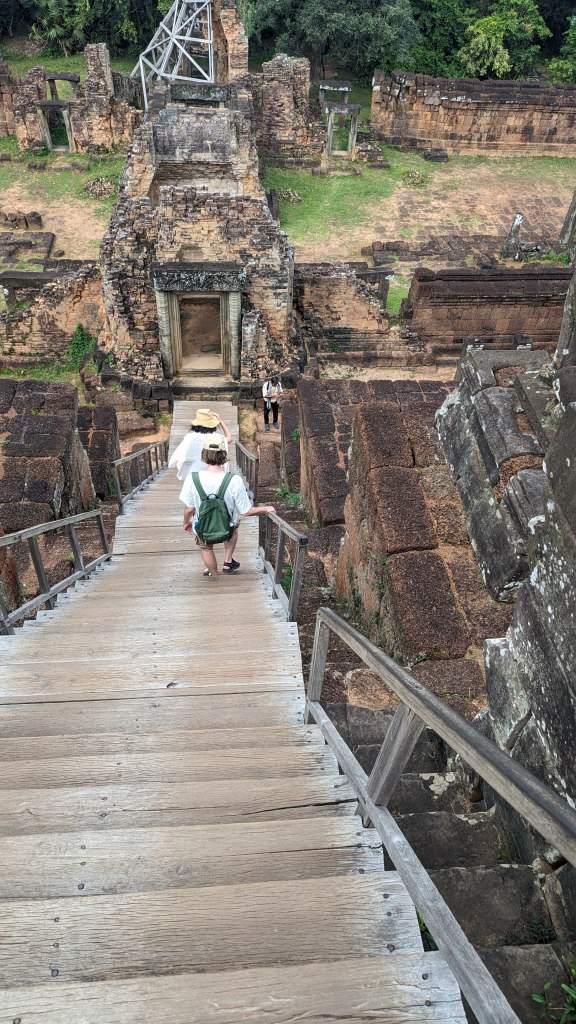
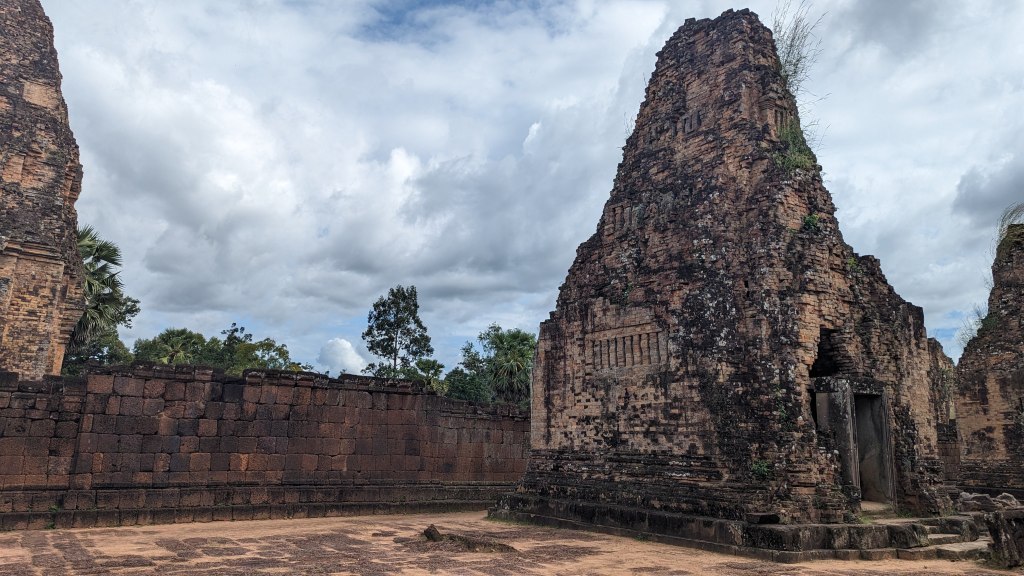
At 1:09 PM we departed for the next temple, Pre Rup, where we arrived at 1:15 PM. Similar to the previous temple, this was originally a Hindu temple, but this one was quite a bit larger. The guide did not give us as much instruction here, since he indicated that most of what he had said earlier also applied here. Here the main draw seemed to be to climb up to the extremely high towers.

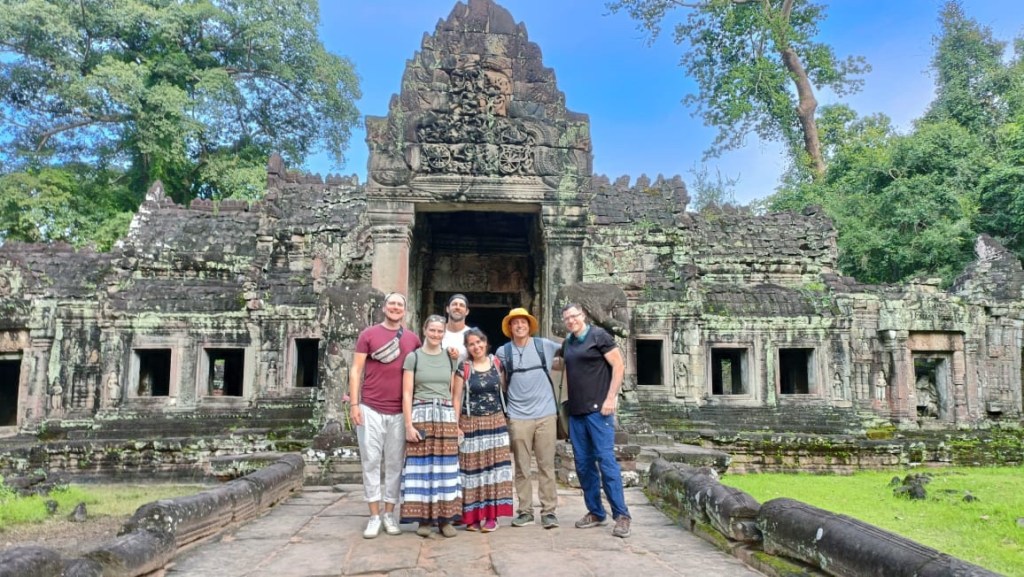
If you use your imagination and look for the black shirt, that’s me with our tour group and guide.

We left Pre Rup at 1:50 PM and at 1:55 pm had arrived at the same restaurant as yesterday. Upon the recommendation of the server, I ordered the Khmer Kor Kou with chicken and pork, for a cost of $6 USD.

It wasn’t very pretty, but it tasted great.

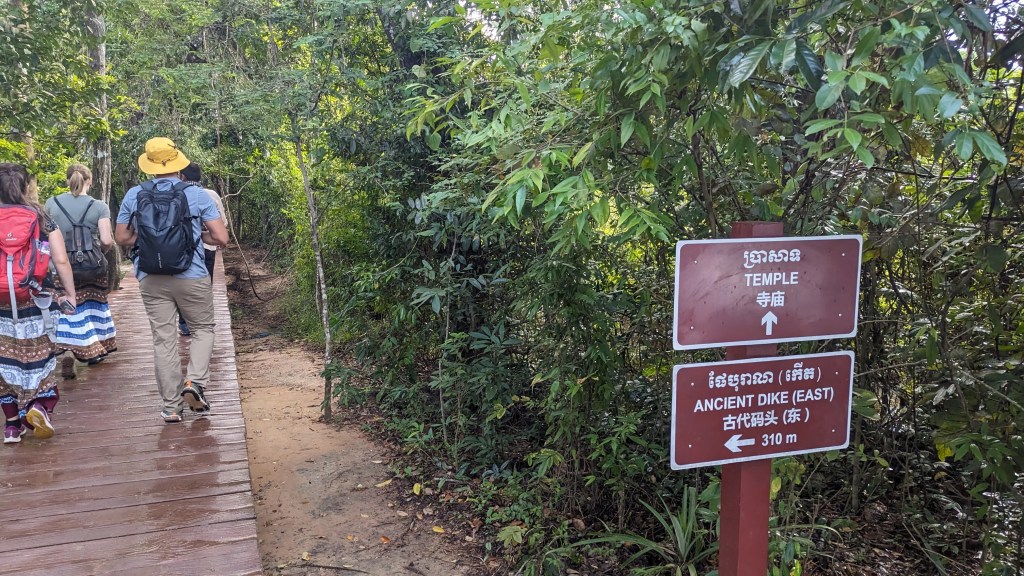
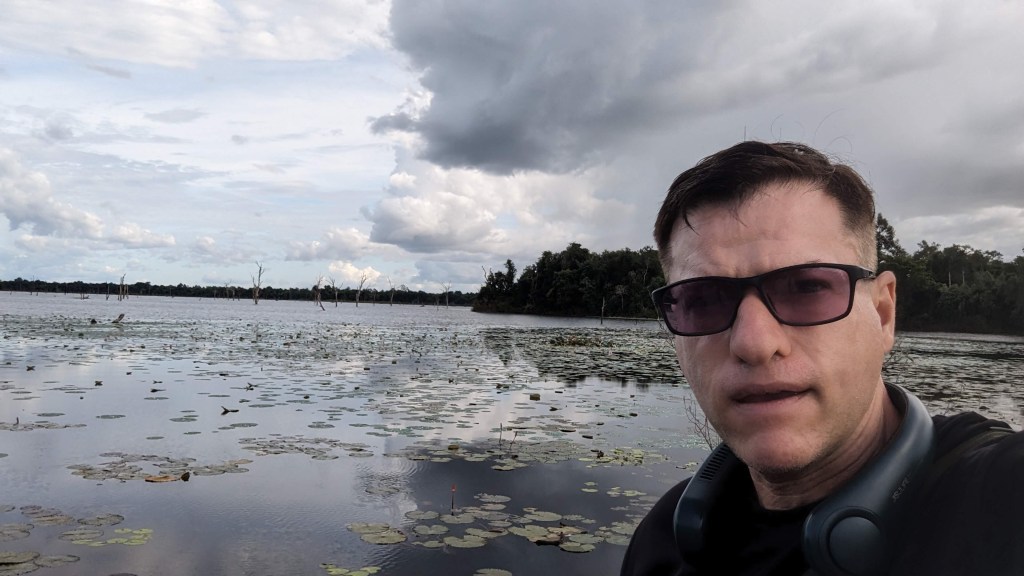
At 2:55 PM we were back in the vehicle headed to Neak Poan temple, which means entwined snakes temple. We arrived at the footbridge across the water at 3:15 PM. This Buddhist temple was specifically created to be a medical healing center, and it was created on an island found within a beautiful man made lake.

I found this to be particularly fascinating, because I had always been taught that the entwined snakes symbol for medicine was from Ancient Greece, but I have not been able to find a year reference. As this temple was made in the 12th century, that begs the question of how did this symbol make it to Cambodia or did it actually originate somewhere other than in Greece?

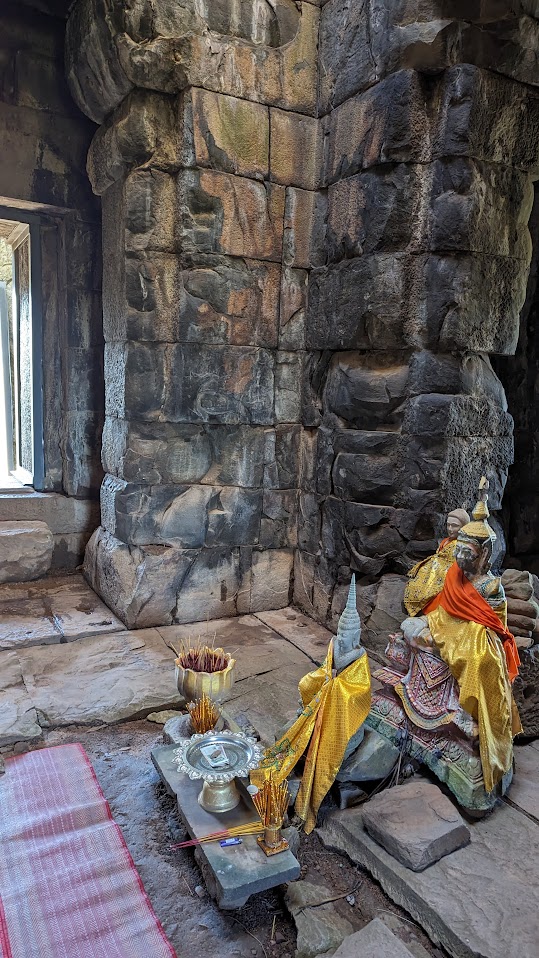
Although this is no longer a functioning Buddhist temple, and technically speaking no religious functions/ceremonies are allowed here, many Buddhists still leave offerings at one of the shrines. I assumed that maybe once a week a monk would come to collect them, but our guard said that the offerings are actually taken by the park rangers who are in charge of this particular area.

While I am not Buddhist, I feel that this was wrong; as a minimum, there should have been a sign clearly indicating that any offerings at the shrines would not be taken by a monks, but instead by park staff. Again though, as I am not Buddhist, maybe I am misreading the situation.

The pictures don’t do it justice, but this was an incredibly beautiful site. Unfortunately it was hard to see much of it well due to barriers which had been put up to protect the structures from further casual damage by visitors.

By 3:50 PM we were already back in the car heading on our way to Preah Khan temple, which we arrived to at 3:55 PM. This temple was unique in that it was specifically built to have three separate purposes. It was built to honor the king’s father, to pay homage to Buddhism, and to pay homage to Hinduism. Also built near the end of the 12th century, the king intentionally had elements of Buddhism and Hinduism mixed as a means to try to reduce religious conflict.

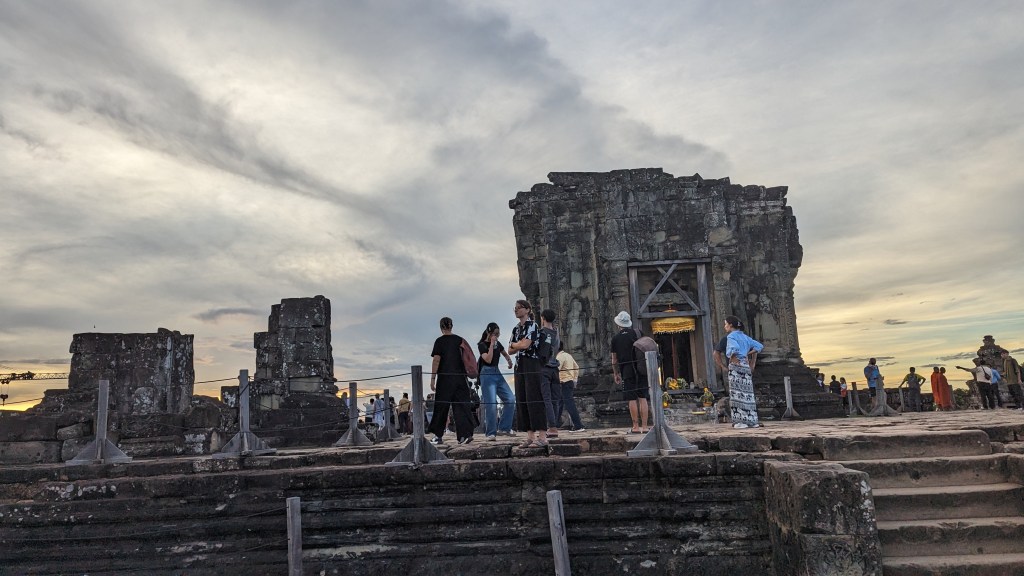
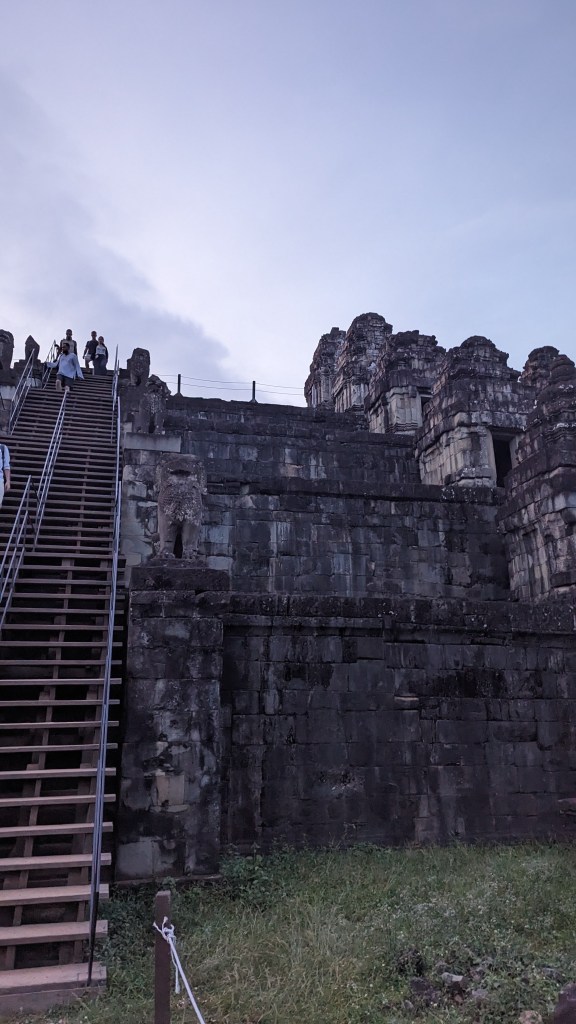
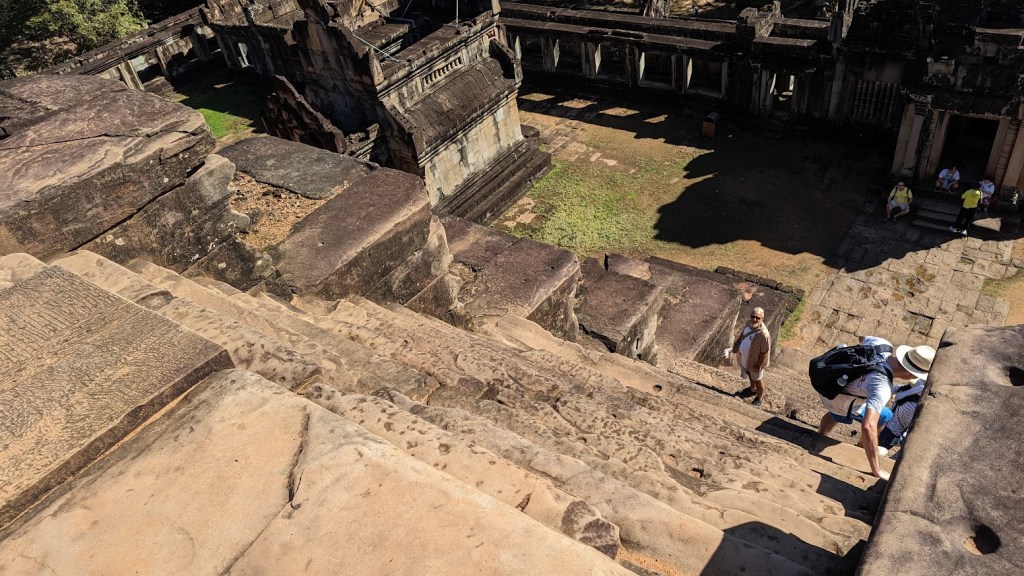
At 4:51 we were once again back in the car headed to our final destination, Phnom Bakheng. We arrived at the entrance at 5:05 and then began a frenetic speed walk up the very steep hill, more or less ignoring everything we passed, since evidently the only reason people come to this site is to see the sunset. I mean we almost RAN up the hill, and it was NOT easy.

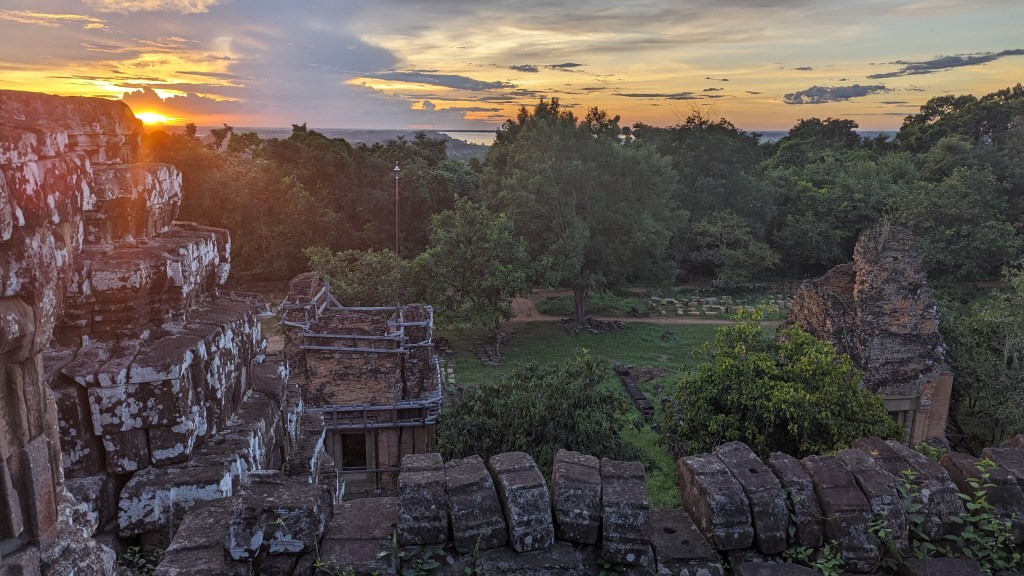
I irrationally feel sorry for temple. It was very beautiful in its own right and there was clearly much to see and explore, but people only flock to this place for the sunset. It is not as absurdly crowded as the principal Angkor Wat temple where people go to see the sunrise, but it is the same idea. Yes, the sunset views were beautiful, but I felt that we had been missing something by only rushing here for this sole purpose.

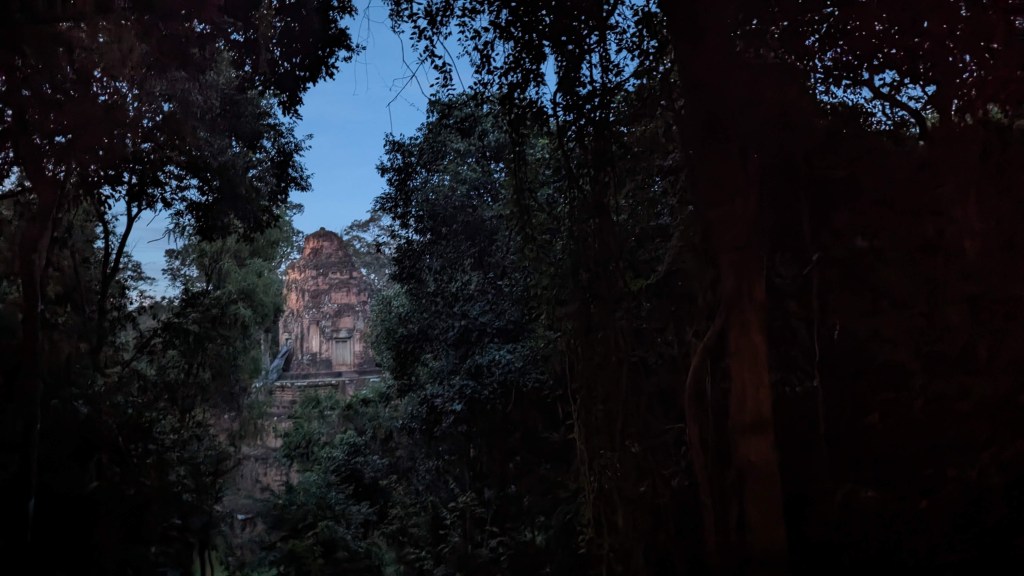
5:37 PM was official sundown time and the light started to fade quickly. Our guide asked us to stay in the middle of the rather wide path on the way down, since he said that many snakes would come out near the edges of the path at this time of twilight.

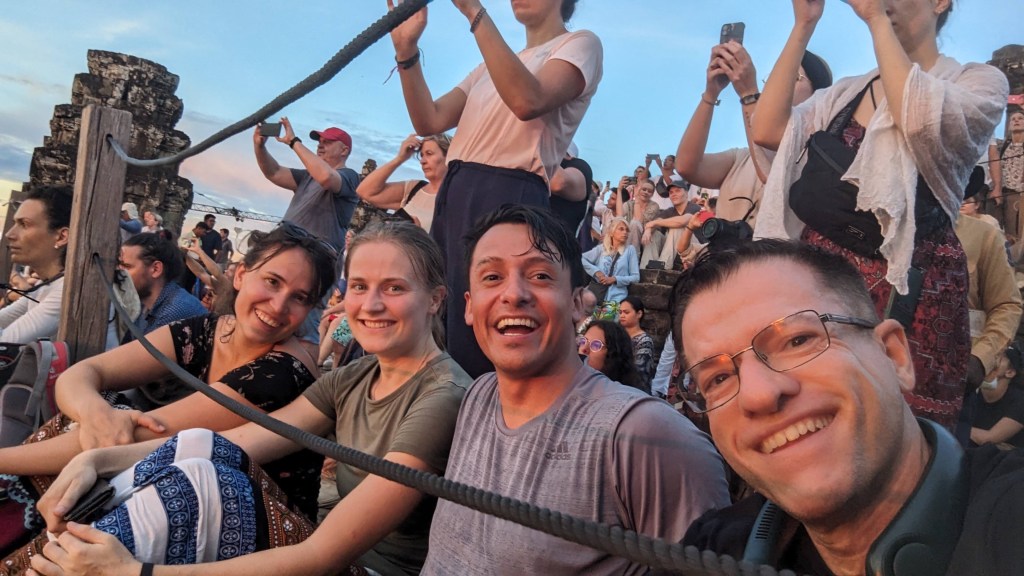
At 6:05 we were back in the vehicle headed back to Siem Reap city. I have already mentioned four of my tour mates for the day, but I wanted to mention that Kevin and Chris, who completed our small group today were also wonderful companions. I had originally planned on heading straight back to the apartment, but the three Germans (Katarina, Maria and Kevin) asked if I would like to get dinner with them, and I was very happy to accept their invitation. We arrived at the Pub street area at 6:30 PM and said our goodbyes to the rest of the group, including our excellent guide, Sah Yon.

We shared five different dishes, and we each also had the equivalent of two bottles of beer, with a total cost of $6 USD per person. At 8:13 PM, having shared delicious food and great conversation, we parted ways and I had a leisurely walk back to the apartment, arriving at 8:40 PM.

Wow, today was everything I had imagined that my trip would be! No doubt many of you are thinking, how will he top that for day 4? I am not sure that I would say that either day 3 or day 4 was better, since they had entirely different types of itineraries. However, maybe you will think differently.

In order to find out, you will just have to keep reading! As always, thank you for your continued interest and your kind words of encouragement. If you have any questions, just leave a note in the comments section, and I will get back to you right away. Until next time, whether it be a simple walk around the neighborhood or a year long voyage around the globe, I hope all your travels are just as enjoyable as mine.

Siem Reap trip: Day 2 (13 Nov)

Hello again friends. As promised, today will be much more in line with what you were expecting from a trip to Siem Reap. The day began with me awakening to my alarm at 3:00 AM and getting ready for the day before heading out to the nearby pickup point at 3:50 AM.

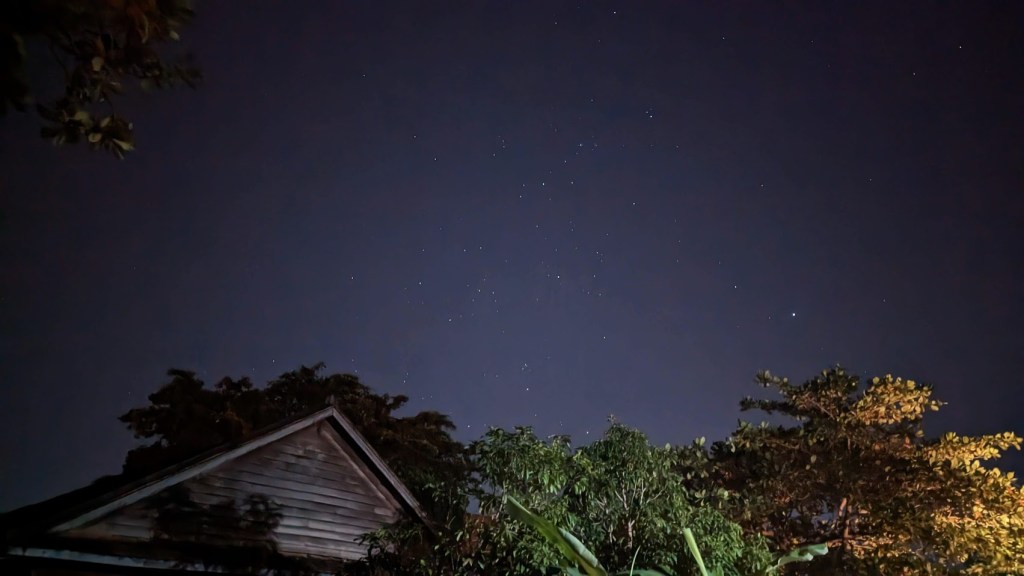
I was quite excited because I could actually see stars! It has been so long since I was in a place where I could easily see multiple stars in the sky.

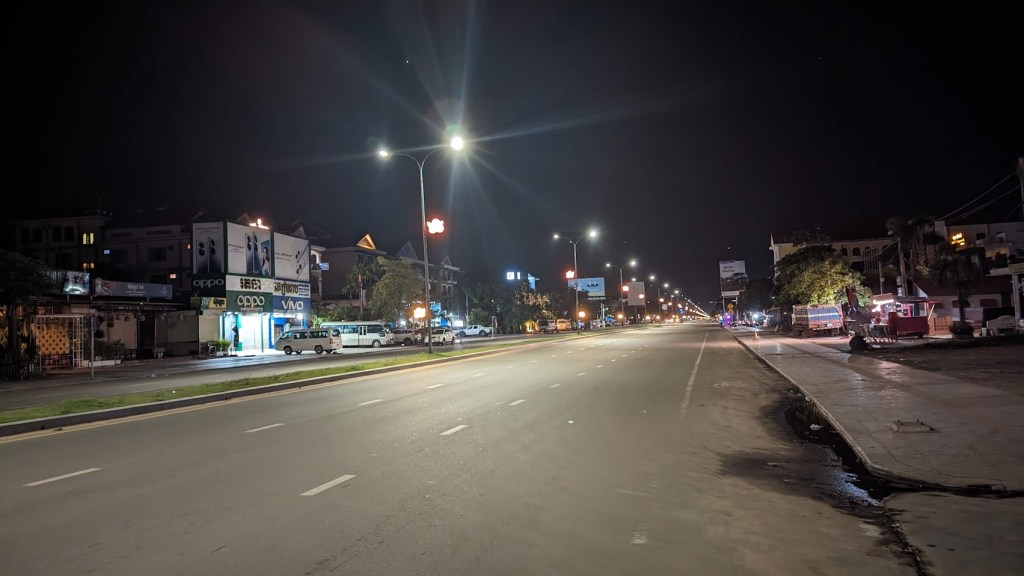
The street which I had to cross was unsurprisingly completely deserted at this time of the morning.

As soon as I arrived at the gas station at 3:55 PM which was roughly 350 meters from my lodging, there was already someone waiting with a tuk-tuk to take me to meet the others. I had earlier booked this two-day Angor Wat tour for a cost of only $23.85 on GetYourGuide, not including the cost of food and the entrance fee to the Angor Wat protected area. For entry to the Angkor Wat protected area, which is quite vast, you have three options: $37 USD for one day, $62 for three days, and $72 for seven days. There are other admissions policies for Cambodians and long-term (minimum two years) foreign residents of Cambodia. For most people, I think the three-day pass is the best option, as one day is definitely not enough time, and seven days of temples would probably be mind-numbing for the average tourist.
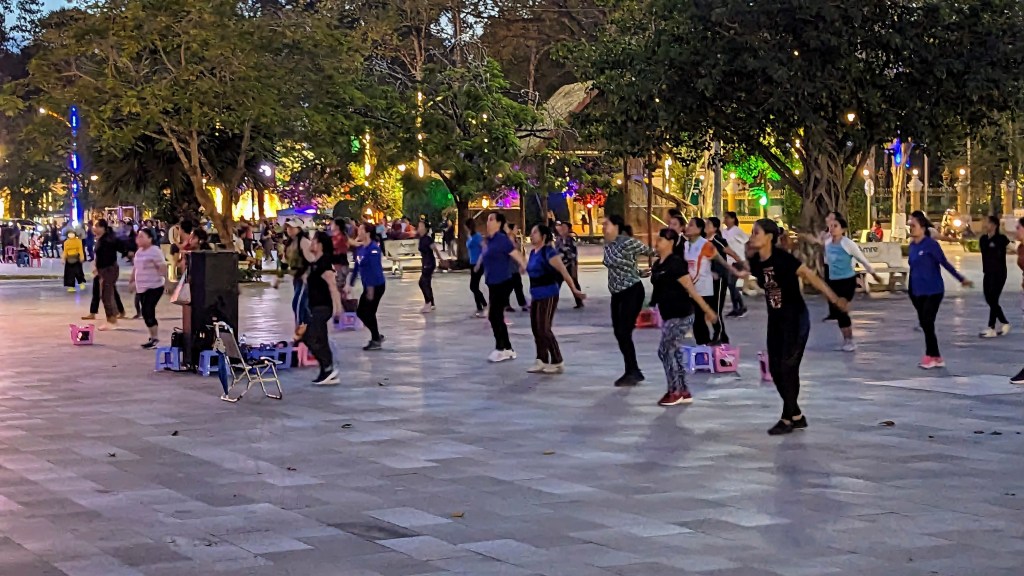
By 4:10 AM I had been deposited in the minivan with our driver Nick, and then we started heading around to pick up the rest of our group. By 4:38 PM we had a total of 12 tourists in our group, a guide, and our driver. Since a couple of the participants had not bought Angkor passes ahead of time, we had to go by the visitor center to get their tickets before entering the protected area.
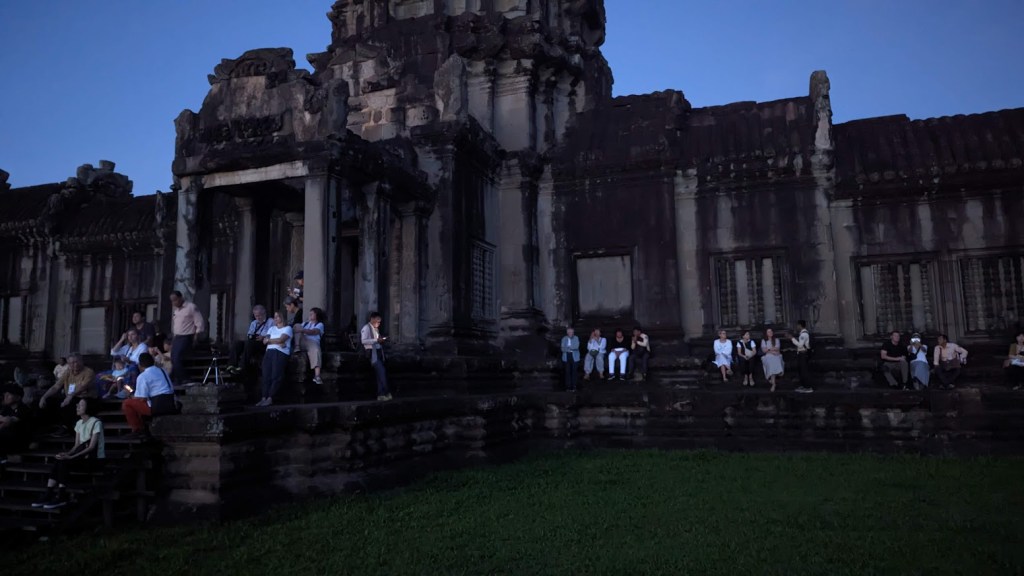
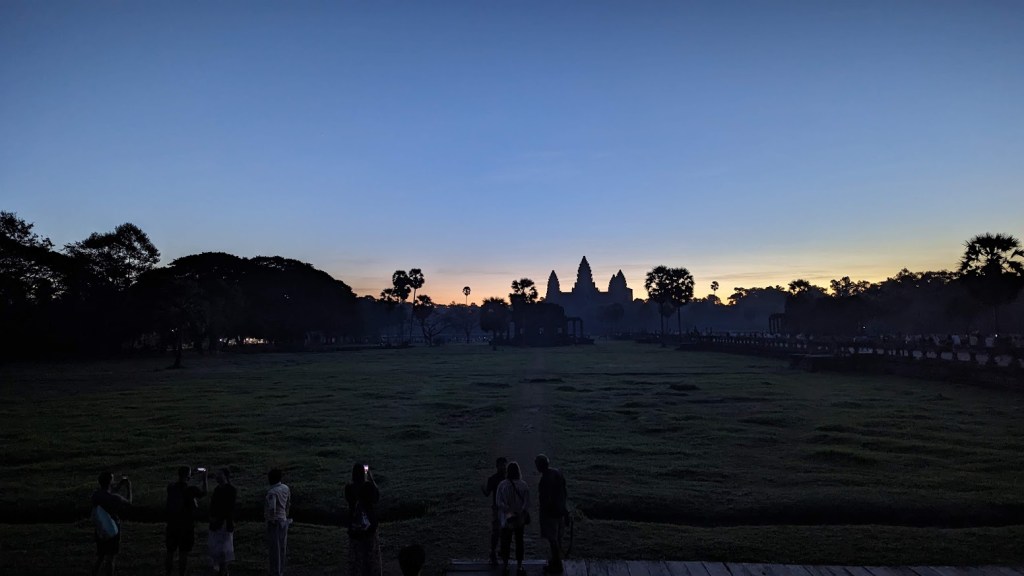
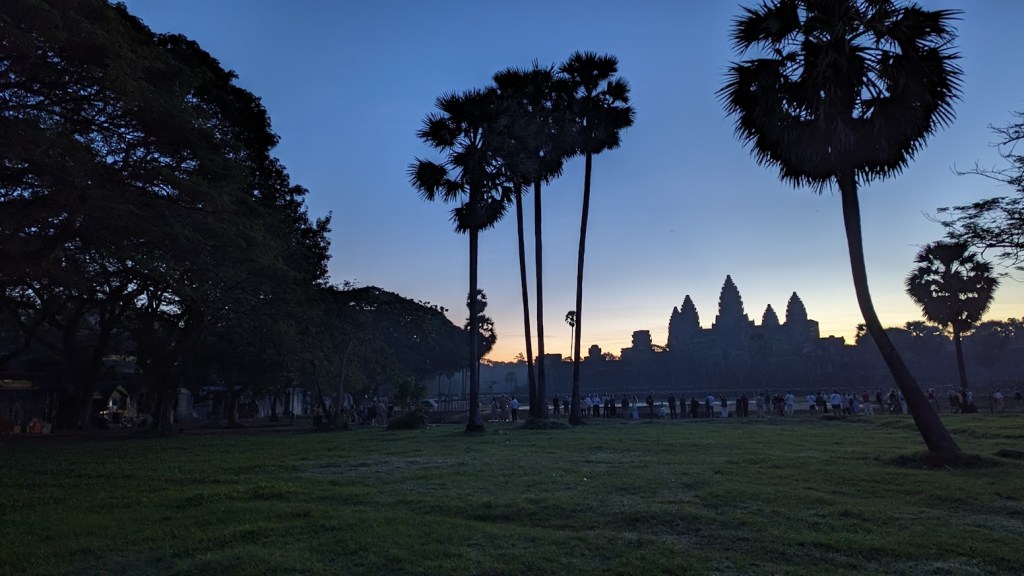
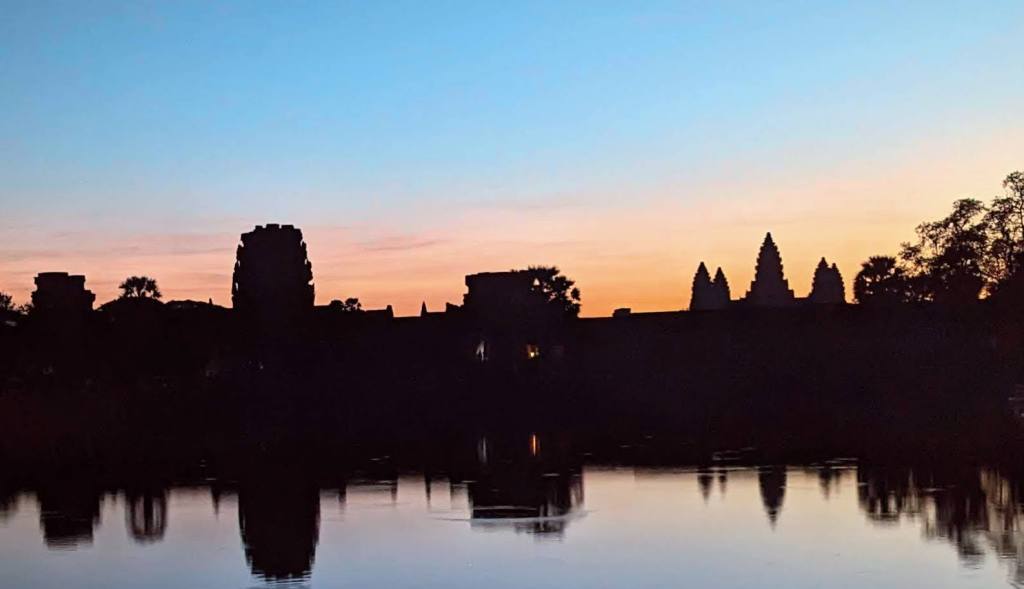
The big draw for Day 1 seems to be the sunrise pictures, and there were A LOT of people waiting for this even at 5:30 AM. Evidently pre-pandemic there would be like 3000 people here for this, but today there were “only” approximately 700.
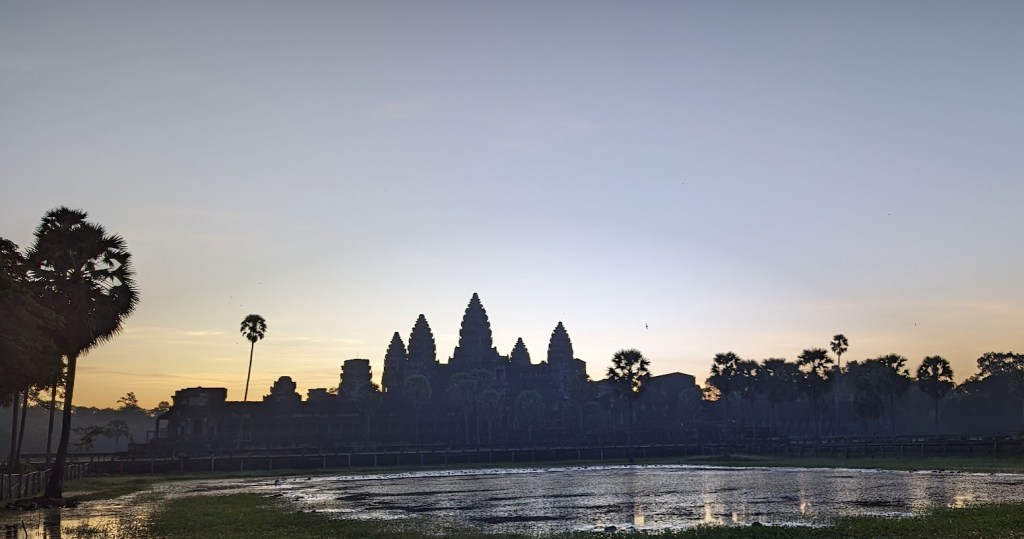
Personally, I didn’t really care that much about getting sunset pictures, but since everyone else was clearly into it, I started feeling that I was missing something, so I also took several pictures from different angles.

Don’t get me wrong, YES, it is pretty, but the whole sunset thing seems a bit overrated. Nevertheless, if you are here, it is sort of an obligatory experience. I am certainly not upset that I was there for it, but I didn’t share the fervor which seems to be the standard expectation.

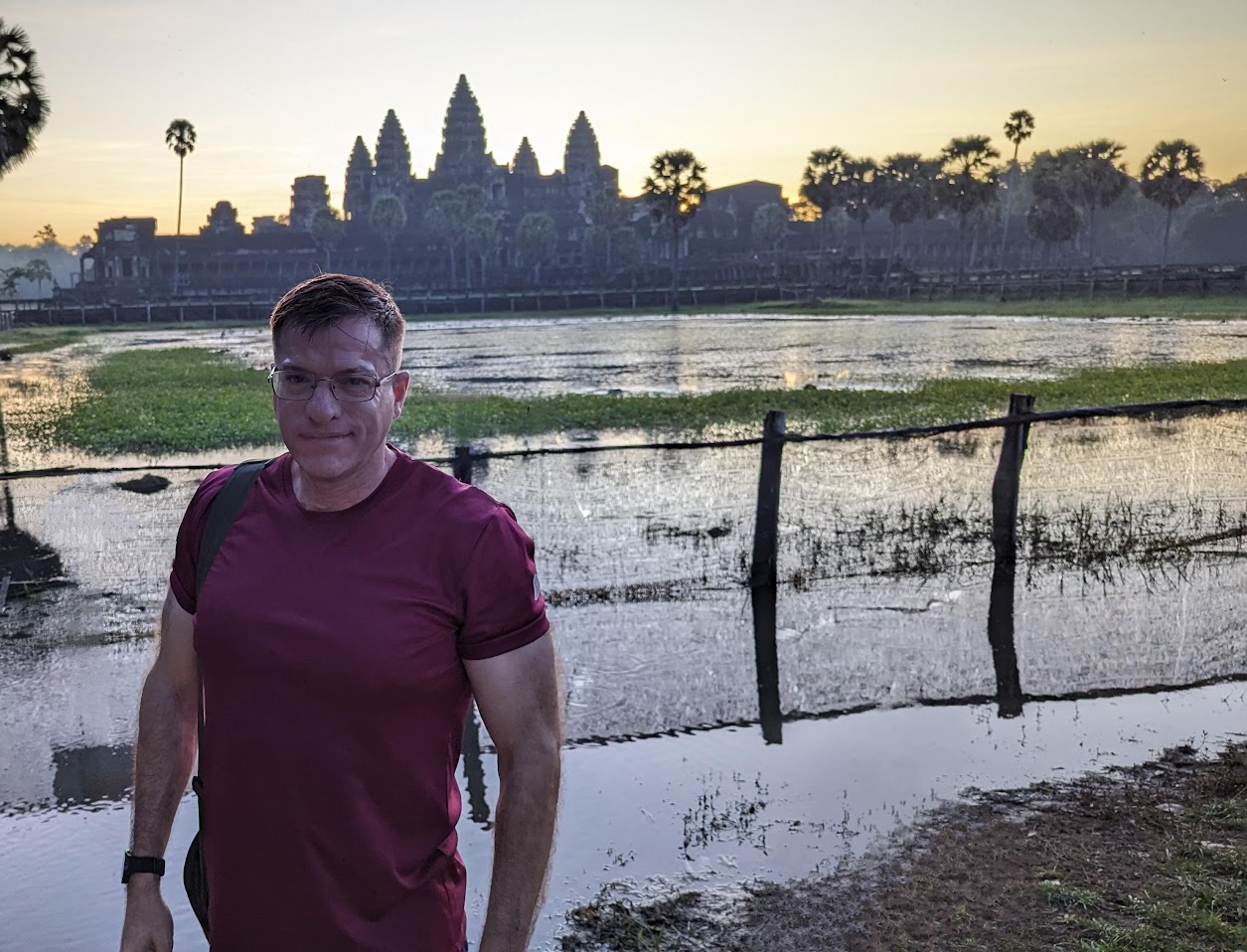
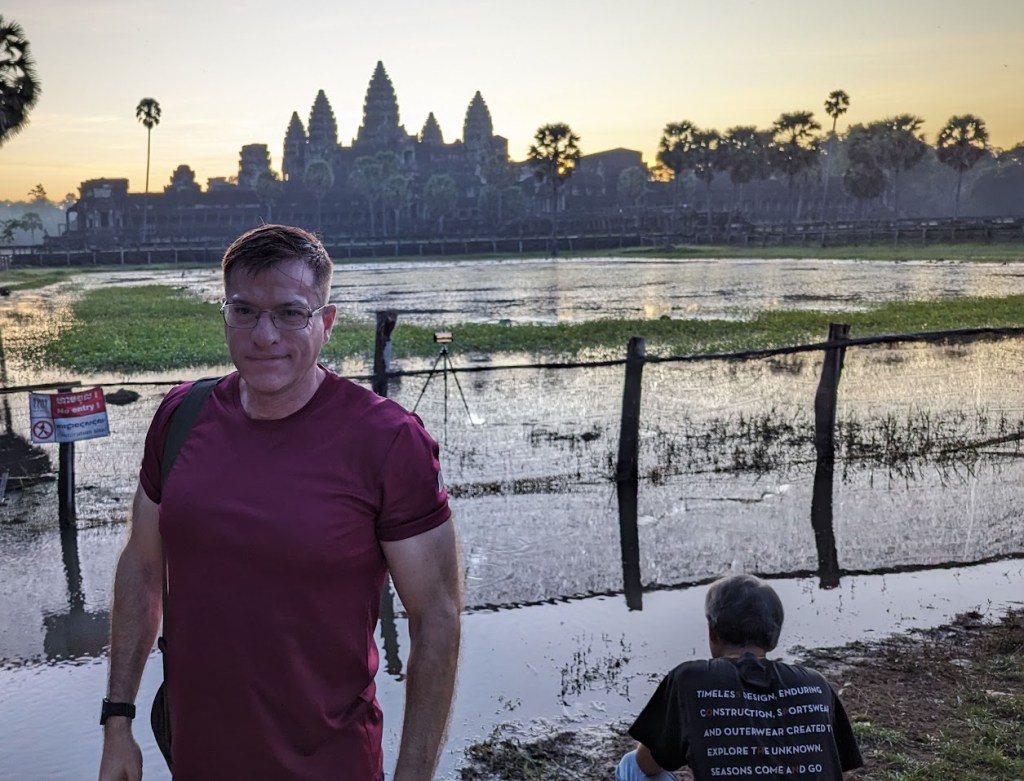
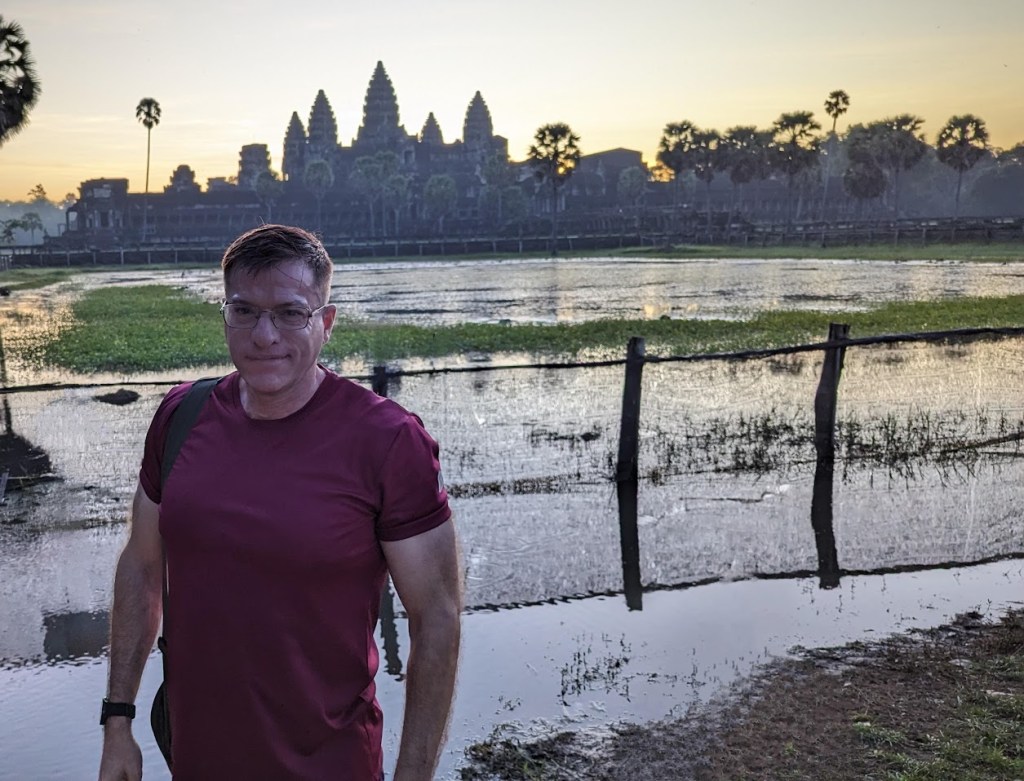
If you are hoping for an unobstructed picture of yourself with Angor Wat in the background, especially at sunrise, that isn’t going to happen. However, as you will see later on, a bit of Google Pixel magic eraser was able to get rid of the most annoying inclusions in the background. No doubt those proficient with Photoshop could make the picture even nicer.

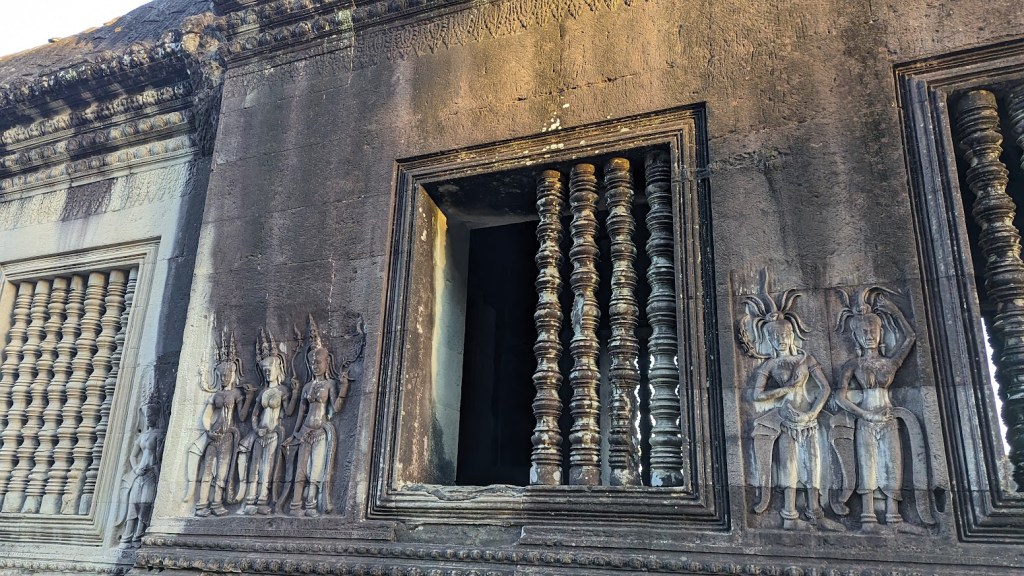
Honestly, I don’t have much to say about the temples themselves today, since the guide for day 1 wasn’t very good. To be fair, it was a very cheap two-day tour, so what was to be expected? However, the day 1 guide was much more of a chaperone than a “guide”. Still, as I knew nothing about the temple complex beforehand, I did learn a bit. For instance, the main Angor Wat temple is actually originally a Hindu temple which was built around 900 years ago during a 28-year period. When Cambodia later became Buddhist, many Buddhist elements were incorporated into various of the structures. I also learned that most of the female figures found all around the structures are called Apsara; these are supernatural “celestial beings” but not deities. I think the guide also said that there were 37 steps many places, and that this has some meaning. Anyways, here are some more pictures.

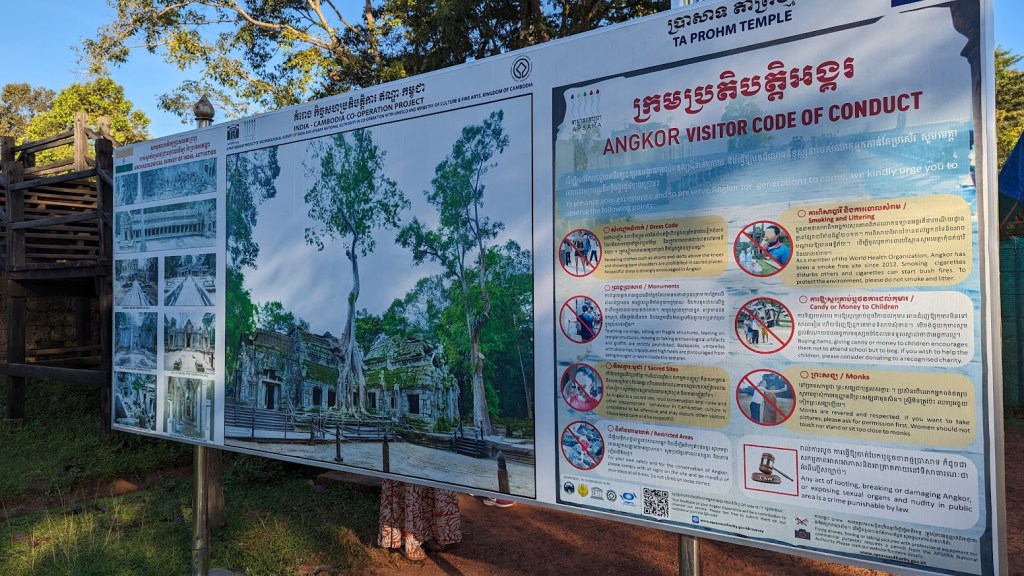
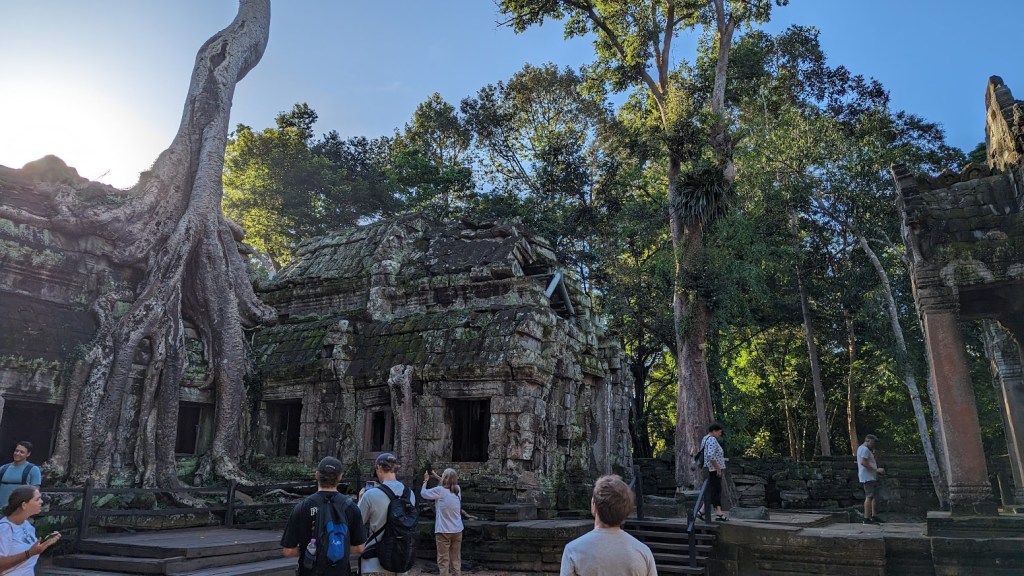
The Ta Prohm temple, which is shown here in several pictures, is what brought the Angor Wat temple complex to most westerners, since there was a tomb raider film short here. Evidently there is a lot of conflict associated with the trees; many argue that they enhance the beauty of the temples, but over time they also destroy them. We were at Ta Prohm from 7:24 to 7:56 AM and then headed out to get breakfast, arriving at 8:08 AM.

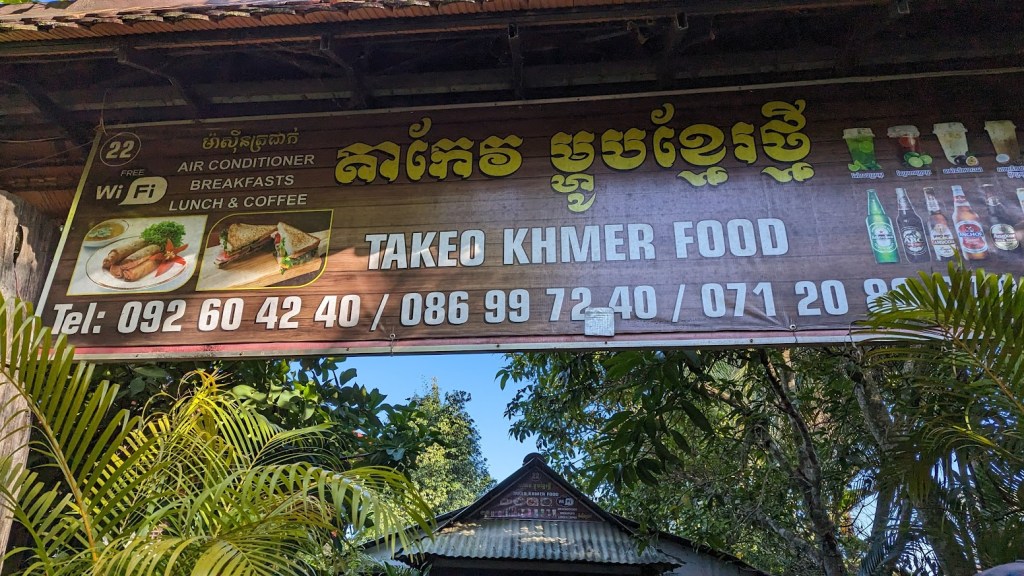
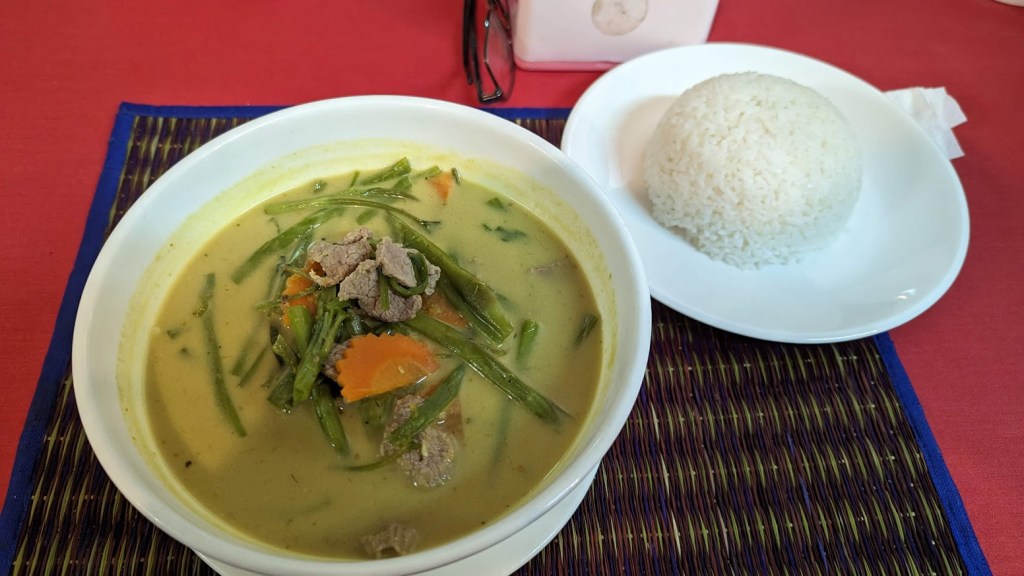
My Khmer sour soup with beef and rice had a cost of $6 USD. This is a bit expensive by Siem Reap standards, but you are paying for the air conditioning and the proximity to the Angor Wat temples.

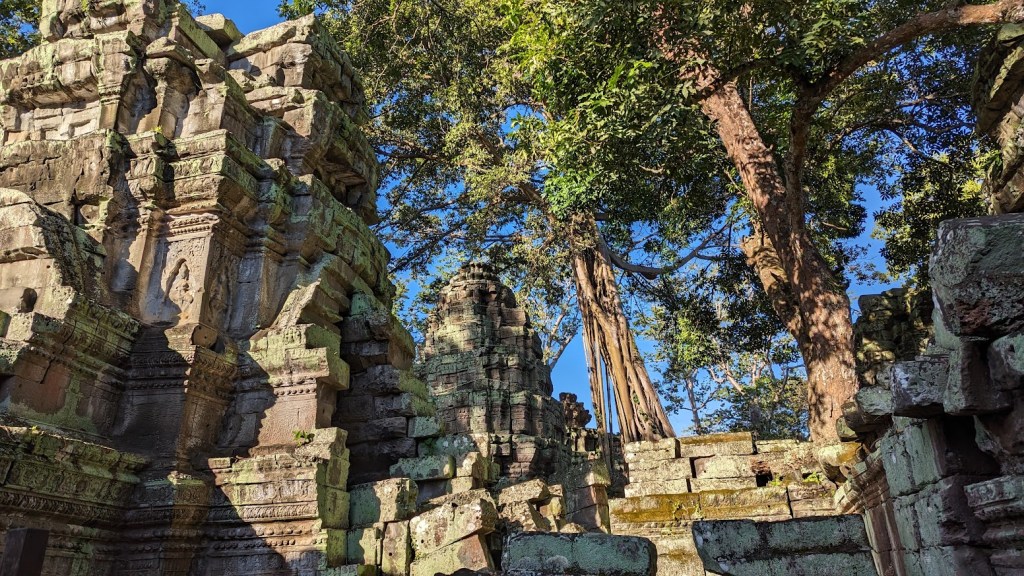
At 9:02 AM we were back in the bus headed towards Takeo temple. We arrived at 9:10 AM. Evidently the construction of this temple was never actually finished. It was nice enough looking, but after a bit, but we were not given any additional information. Still, once again, plenty of nice pictures.

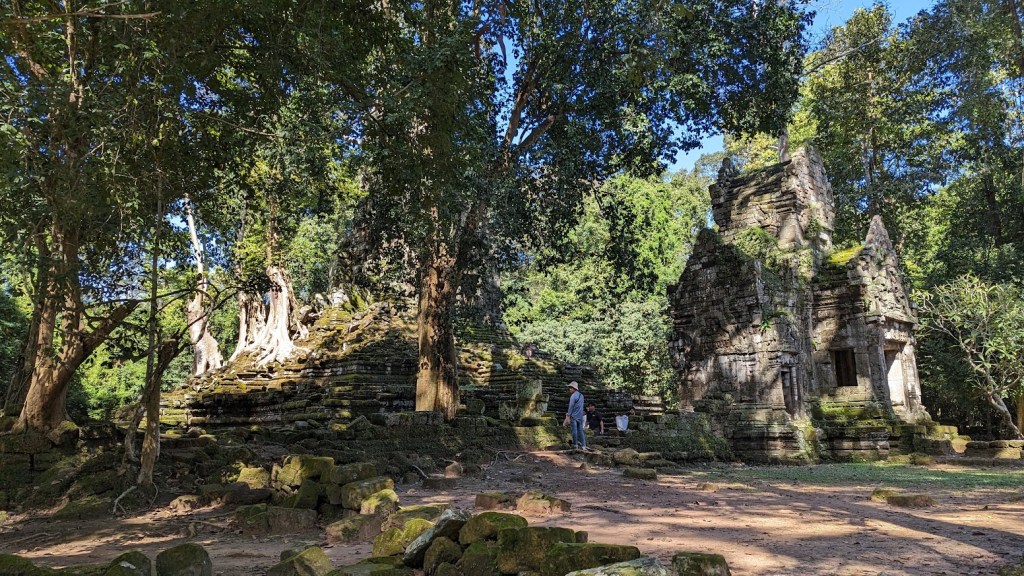
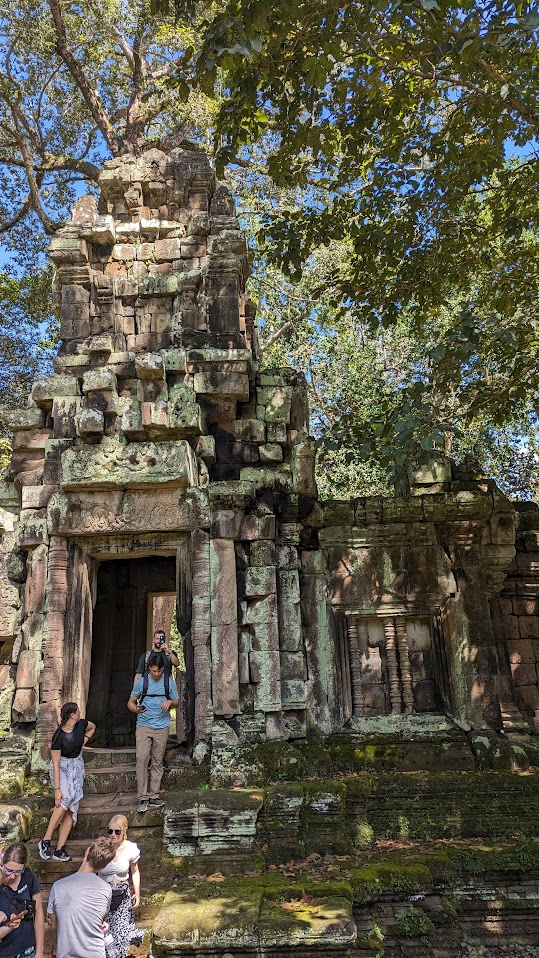
At 9:50 AM we were back in the bus headed to the next spot. Honestly, I couldn’t understand the name. The closest I could get was Prparilay temple. I know that there were many trees there and that is also where you can see the king and queen swimming pool. I also know that the temple’s construction was never actually finished. We arrived here at 9:56 AM and left at 10:40 AM.

We continued walking from there and at 10:41 AM we arrived at the Elephant Terrace.

As far as I can tell, the Elephant terrace is just this one wall. From there were continued walking to Bayon Temple, where we arrived at 10:49 AM. This was actually a rather impressive looking site, and I would really have appreciated some actual guiding, but “the guide” just told us to wander around on our own until 11:40 AM, and he went to wait at the bus.

At 11:40 we were back in the bus, with a quick picture stop at the Buddha bridge at 11:43 PM.

By 11:50 AM we were back in the bus, with me being dropped off near my apartment at 12:21 PM. When I was dropped off, the guide told me to meet at the same place tomorrow morning at 10:00 AM. As I was quite tired and very hot, I headed directly to my lodging, arriving about 7 minutes later.

It had originally been my intent to go to a gym this afternoon, but sometime around 2:00 PM I fell asleep and did not wake up until 5:30 PM. Then after an hour of procrastination, I went out at 6:30 PM since I wanted to pay the remaining dollar of last night’s dinner and also to see a bit of the city at night.

Having wandered around a bit, including walking near the famous Pub street, at 9:04 PM I finally decided to get some food at some random restaurant near my apartment for a cost of $8 USD.

At 9:42 PM I walked back towards the apartment, arriving at 9:55 AM. I quickly showered and get into bed.

So, while day 1 of Angkor Wat was nice, I think it didn’t fully live up to my expectations, whatever those were. To be fair, much of that was because today’s guide was not especially impressive, but I was hoping that tomorrow would be better. Anyways, I guess we will soon see.

Again, for all of those who have been loyally following along, thank you for your continued interest. As always, should you have any questions or comments, just leave a note in the space provided below, and I will make sure to respond as soon as possible.

Some judicious use of the Pixel magic eraser made this photo look far better than the original, but I don’t feel too guilty, since all I did was remove some annoying background elements. Regardless, I at least now have my obligatory Angkor Wat sunrise photo!

Siem Reap trip: Day 1 (11-12 Nov)

Spoiler alert . . . yes, I finally made it to Cambodia!

Hey there friends, family and loyal readers! No, it is not that I haven’t traveled at all since March, but I did not feel that those were really “tourist trips”. This last one however was an unabashed tourist extravaganza.

As is normal in Bengaluru, the trip started at night, in this case the evening of Nov 11, 2023. Having seen them as an option while making a quick work-related trip to Bangkok in September, I decided to try a new all-electric car service call BluSmart in order to get to and from the airport. I had booked ahead with a special introductory offer, so my 25 km trip only costed 454 INR ($5.45 USD). The care arrived ahead of when it had been scheduled, and I entered at 6:51 PM.

The view of my housing complex as I was getting into the car.

My first impression was that it was a very comfortable car with an extremely professional driver who even tried to open the door for me. Upon sitting down in the back, I noticed right off that there were SOS buttons strategically placed throughout the car, not only for the passengers, but also for the driver. Happily, the ride itself was also smooth, which was good since traffic was horrendous and it took us 61 minutes to arrive.

My AirAsia flight was scheduled to depart from terminal 2 which only just recently started to be the main airport for international flights out of Bengaluru. However, there are also, quite a few domestic flights, so to save yourself time, remember that international departures need to enter from the right.

Non-Indian flyers might think these are Christmas decorations, but this is just the way it always looks at terminal 2.

As my AirAsia app said that I could head straight to security, that was what I did at 8:00 PM, but was promptly turned away, being told that I needed to have a physical boarding pass. I really shouldn’t have been surprised, as that is quite common in India. The line for AirAsia was long, but as I had arrived with plenty of advance time, I was not concerned.
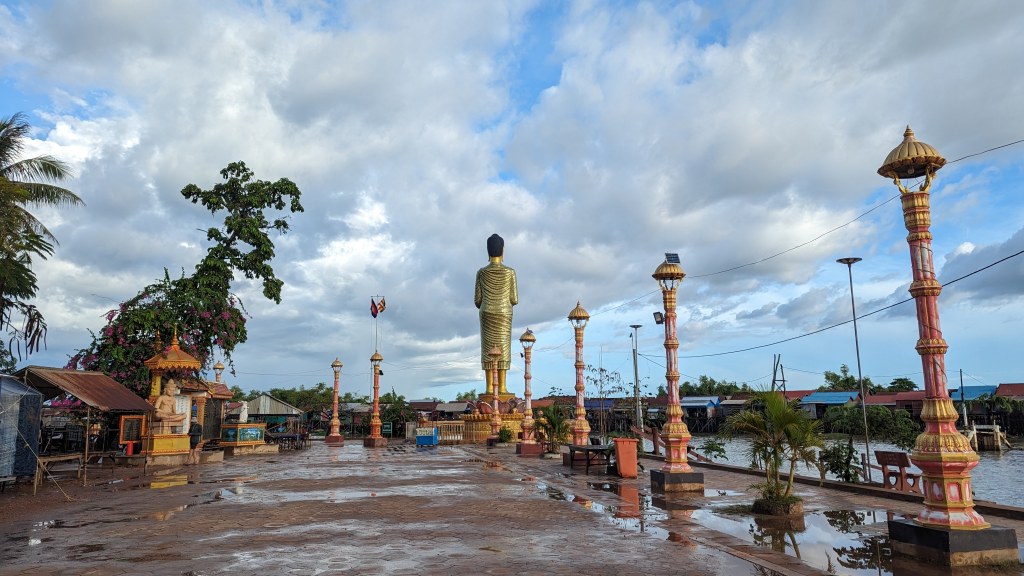
I had read ahead of time that they were VERY strict with the 7 kg luggage allowance and while waiting I noticed that several people ended up having to check their carry-on bags and also pay a hefty fee for the privilege. While I had weighed my bag several times ahead of time, I started to get worried, so I stuck my heavy-duty umbrella in my pocket (covered by my shirt) and my power bank in another pocket. Oddly enough, when my turn at the check-in counter came at 8:31 PM, my bag didn’t even get weighed, so all my subterfuge was for nothing, but I resolved to do the same on the return flight just in case.

Having read that U.S. dollars were almost a default currency in Cambodia, I tried to buy some using my Indian bank card before heading through security, but I was told that this facility was only available for Indian citizens. However, I could have changed Indian Rupees in cash, but I had few of those on hand so didn’t bother. By 8:44 PM I was through immigration and by 9:02 PM was also through security. As is the norm, my bag was selected for an additional check, but things went quickly so I didn’t really care.

I think these fancy ceiling lightings in the hallway after security are new.

As mentioned earlier, I had been through this same airport on an international flight in September and had already ascertained that there were very few food options, and those that are available tend to be on the expensive side from the Indian viewpoint. I did check just in case to see if I could get into the lounge, but none of my cards were accepted, and I definitely wasn’t interested in separately paying for access. Thus, just like last time I was here, I ended up at the La Madeline restaurant.

The food is not especially inexpensive, but the decor is pleasant.

I ordered the chicken Madeline with an add-on Caesar salad for a cost of 943 INR ($11.32 USD). While the food was nicely presented, the chicken was a bit dry but the broccoli was pleasantly crunchy. I took my time here and did not leave the restaurant until 10:23 PM.

At 10:37 I was boarding the plane. There were no entertainment screens, and the seats also lacked the adjustable headrests which I had become accustomed to which make sleeping much easier on the flight. Furthermore, it might have been my imagination, but the seat space itself seemed a bit more cramped than the norm. Thankfully though there was an adjustable air vent, since it was a bit too warm for my taste. My goal had been to attempt to sleep the whole four-hour flight to Bangkok, but as I realized at 11:30 PM, it was just too uncomfortable. I did still try to rest as much as possible; however, I was very thankful when we touched down in Bangkok at 4:00 AM Bangkok time on November 12th.

By 4:38 AM I was already through security in Bangkok and out in the terminal area. It was pleasant enough here with ample food options, but there was little else to do.
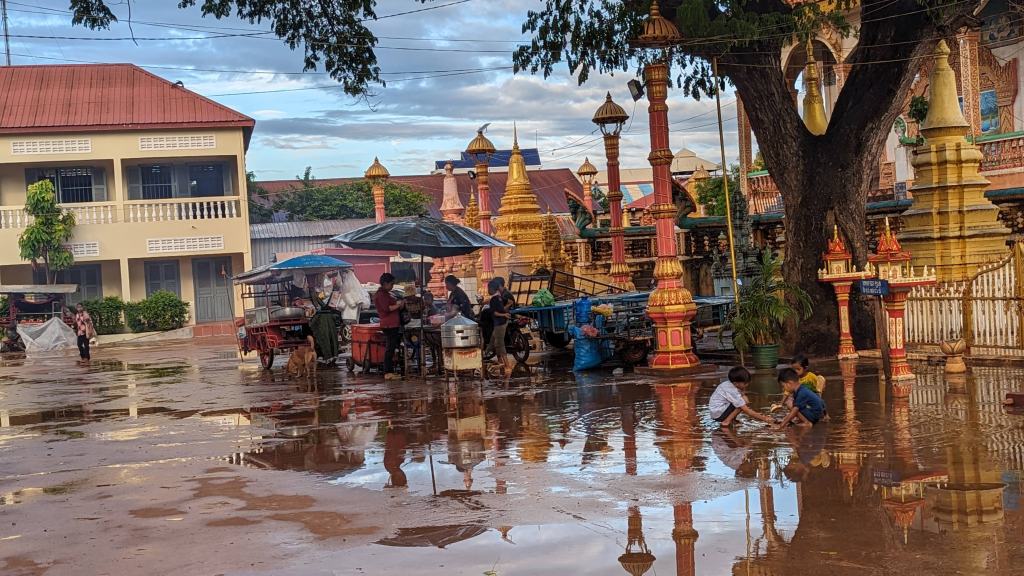
Nothing else particularly got my attention, so I went ahead and used my Priority Pass at 5:00 AM to enter the Miracle lounge. This lounge is not especially nice, but since I already had the benefit as part of my credit card package, I figured I might as well go ahead and eat and hang out in this space. Note that Priority Pass members can only use the lounge for a maximum of two hours.

I stayed till the absolute last minute, exiting the lounge at 7:00 AM and going to wait near the gate with a projected departure time of 9:55 AM. At 8:00 AM they announced that the flight departure had been rescheduled to 10:32 AM. While I was tired, sleeping was not really an option, so I used my waiting time to watch series which I had downloaded to my phone before departure. Finally, at 10:30 AM we started the boarding process.

In contrast to the first flight, this one was too chilly, but shutting off the air vent helped. Furthermore, as this only a 60-minute flight, I figured it would be bearable. Once on the plane, I had to fill out both an immigration and a customs form, in addition to the $36 USD e-visa which I had processed ahead of time rather than waiting to do visa on arrival upon touching down in Siem Reap. The flight touched down at 11:43 AM, and my Airalo e-sim which I had bought and installed ahead of time for $13.50 USD (30 day validity with 5 gb of data), connected right away. By 11:54 AM I was already off the gangway and into the recently opened new Siem Reap airport.

It was a quick walk to immigration, and at 11:58 AM I was in line with only 5 people in front of me. I noticed that they had 24 counters, but only 5 were open. In a different area there was a long line of people waiting to process their visas on arrival. Once I was finally up to the counter, the whole process took only three minutes; note, they required me to show BOTH of my boarding passes, so I was glad that I had not thrown away the first one. It then only took me two more minutes to get out of the airport and be in line at 2:14 PM for the bus which goes into Siem Reap city at 12:30 PM.

When it was my turn to board, the driver told me that I needed to go get a ticket, but the ticket counter was nearby; so, it was not a problem. Finally, at 12:35 PM I was in the bus and on my way to Siem Reap City!

At 1:25 PM we arrived at the CDF market. Supposedly there are three separate stops in Siem Reap city, but it looks like there is actually only one. My AirBnB host suggested that I take a Rickshaw for a cost of $1 USD to the apartment, but I figured I would be happier walking and seeing a bit of the city.

I arrived at the Airbnb apartment, near Kesararam school, for which I had paid $116 USD for six nights at 2:04 PM. The check-in process was fairly simple, and I am happy to report that the apartment was just amazing, exactly as it had been reported in the listing. The location was also great, reasonable walking distance to restaurants and places of interest within the city itself. Should I return to Siem Reap, I will definitely book here again.

Before arriving, I had the idea that I would visit a museum my first actual day in Siem Reap, but I was just too tired, so I turned on the blessedly quiet air conditioner and slept until 5:00 PM. At 5:00 PM I headed out walking towards the Made in Cambia market, where I found a random eatery where I ordered food by pointing at what was in different pots. The total for my food was $3 USD, but I only had two USD in good condition, so surprisingly the older woman who ran the place told me to just come back another day with the other dollar!

I highly recommend this spot with the green awning. It is right around the corner from the Made in Cambodia market.

After eating, I went ahead and checked out the Made in Cambodia market which was just around the corner. It was rather small, and also pleasant. However, it was also a bit expensive. Still, if I had been in the mood to buy anything, I probably would have bought here, since most of the stalls were intentionally run by people with some sort of a special need. Another nice thing about the market was that nobody hassled me constantly to buy; browsers were welcome. Still, by 6:30 PM I was heading back to the apartment, because the next day I would have to be up by 3:00 AM.

I took a rather leisurely stroll back, and by 7:16 PM was back in the apartment, and by 8:00 PM was in bed. I had my doubts about going to such a hyped-up tourist destination as Angor Wat, but I was hoping that the two-day tour I had booked to start the next day would be worth it.

For those of you who have followed along before with my travels, I apologize for this rather boring entry, but getting there is also half the battle whenever you take a trip, so it’s important to not leave out that part. Regardless, I promise that days 2-3 will be much more in line with what you were expecting from this trip. As always, thank you for reading along and feel free to leave any questions or comments below. See you next day at 3:00 AM!

Here’s a sneak peek from day 2 to keep you interested . . .

Nepal trip: Days 7-8 (24-25 Mar)

Hey there readers. I’m sorry I left you hanging there for a few days. Once I got back to India, I had very little time before heading back to work, and then predictably, I was too busy to finish up the posts on the Nepal trip. Since I’m writing this a few weeks later, the details are no longer as fresh in my mind, so this will probably be a bit shorter than usual and also a bit less exact with some of the information. So anyways, let’s go ahead and finish up this Nepal trip!

On day 7 we got up a bit later and headed out towards a nearby breakfast place that Dorothée had found online. The seating was quite limited, but the server asked a couple of solo travels if they would mind moving so that the three of us could sit together.

The food was quite good and the ambience was pleasant. As we weren’t in a hurry today, we hung out here until 10:31 AM.

Maria was all about finding the UNESCO World Heritage sites, and while we were eating, she had found the last one which was nearby, that we had not yet visited. By our estimation, it was about 13 km away by car. As we had nothing else planned, we decided to talk to random taxi drivers to see how much it would cost to take us there, wait an hour, and then come back. At first he said, 4500 NPR but then agreed to 3000 NPR ($23 USD). With our cultural fix for the day all planned out, at 10:40 AM we were on our way to Changu Narayan  Temple. The ride was fine, and at 11:36 AM we had arrived to the area.

Several different artisans were working on their crafts within their small shops.
Maria and Dorothée were in shopping mode, but like all good shoppers, they looked around and compared before making any commitments.

Entry to the temple area was 350 NPR ($2.67 USD) , but it seemed that maybe 250 NPR could be paid by SAARC members. It was all rather informal and a bit confusing. Nevertheless, there weren’t any problems getting access to the area. It is however worth noting, that like most of these sites, it definitely wasn’t wheelchair accessible. Although at this particular place there wasn’t a ton of walking to be done, throughout the trip I had frequently thought it might be good to have sedan chairs available for those with impaired mobility; this would allow more people to visit and also protect the traditional architecture while additionally giving more job opportunities. Perhaps during high season they already do this? If not, I feel like it’s a missed opportunity for everyone.

I was happy to see that a local school group was visiting.
There was a lot of restoration work going on.

While it was comparatively small, I really enjoyed this visit. It wasn’t at all crowded and at least to my untrained eyes seemed very “authentic”. The temple area itself only took about 20 minutes to see, but the attached village makes this easily an hour visit or more, especially if one is interested in doing shopping. If considering purchasing something, I suggest checking out the shops on the way up the small hill to the temple and then making purchases on the way back down. That is what Dorothée and Maria did, and both seemed very happy with the arrangement.

I was really impressed with the loads these women were carrying up to the temple. Who still dares to say that women are weak?

After quite a bit of friendly bargaining, Maria and Dorothée had their purchases.

At 12:45 PM we were once again in the car headed back to Kathmandu.

UDue to increased traffic, this time it took a bit longer, so we didn’t arrive back to our lodging until 2:23 PM. Given the added trouble, while there was no pressure to do so, we gave the driver a couple hundred extra NPR as a tip.

Dorothée spent a bit of time talking to the guide near our lodging who had arranged our transport on day 6. She’s thinking she may go to Everest base camp soon!

After putting things away in our rooms, at 2:58 PM we headed out walking to find a place to have lunch. I had found a place called Hotel Nepalaya Rooftop which looked promising. After a leisurely stroll, we arrived at 3:21 PM.

We were all three quite pleased, and the total bill for everyone was 2470 NPR ($18.86 USD). We stayed there until 4:40 and then headed back towards the cafe where we had eaten breakfast in the morning, arriving at 5:10 PM.

We had a nice chat, shared a couple of delicious desserts, and Maria and Dorothée both bought some fresh ground coffee beans to take home.

At 6:46 PM we had our last evening walk in Kathmandu as we headed back to the homestay, arriving at 7:07 PM.

We couldn’t figure out initially what these people were looking at.
The photo really doesn’t do it justice, but this sparkling planet just under the crescent moon was just breathtaking. It was a completely unexpected but much appreciated end to our last evening in Nepal.

Once we arrived, we cancelled our bill, since we would be leaving rather early. As I had a single room, it was $15 USD a night; whereas, Dorothée and Maria paid $20 USD a night for their double room. Shortly thereafter, we all went up to our rooms to quickly pack and go to sleep, since we would have an early departure the next day.

Upon departing from the homestay at 7:30 AM on day 8, our hosts put these satin scarves on us. I remember something similar happened when I was leaving a homestay in Sikkim last year.

The trip to the airport was only 17 minutes, but like many airport taxis was comparatively expensive given the short distance. There was no traffic, and we paid 900 NPR ($6.87 USD).

Once inside at 7:50 AM we had to scan all of our bags, including my passport pouch which was hanging around my neck. The Indigo line was very short, but it still took 20 minutes to get to the counter. By 8:20 AM we were in the immigration queue. There were more people but things seemed to move quickly with little fuss.

At 8:50 AM we had cleared both immigration and security. The waiting area only had one shop, but the seating was fine near our gate since it wasn’t overcrowded. I took advantage of the little shop to buy some dried yak cheese as gifts and a very unremarkable chicken club sandwich. Despite the slim pickings, the shop did not gouge people with the prices.

At 9:52 AM we were boarding the plane. While boarding was very fast, there was an additional fake security check in which they didn’t actually seem to be doing anything meaningful. Then at 10:05 AM I was on the plane in 13D. For the return flights I had opted for the more expensive exit row seats. While these spots were not particularly luxurious, the added legroom was much appreciated, especially since I had been so cramped earlier on. I hoped they weren’t saying anything important during the departure speech, because the volume was so low it was impossible to hear anything.

The flight to Delhi was uneventful and it was only 15 minutes to clear immigration. In a show of welcome efficiency, our bags were already waiting near immigration at 12:36 PM. It was at that point that all pretensions of efficiency ended; although, we maintained a positive attitude throughout.

There is no point in attempting to explain the process of transferring from one terminal to another in Delhi. You just have to keep asking people along the way and hope for the best. The bus is rickety, and it actually goes on the main highway. The driver, at least in our case was careless, and a couple of people including myself nearly fell over as he took curves rather abruptly. Men must have “a ticket” to use the transfer bus, but for some reason women do not. The ticket is free, and no, it’s not obvious where to get it. Again, you just keep asking. The entire process took 45 minutes; this is one of those situations where you just have to keep calm and maintain a good attitude.

Once in the new terminal, we had to recheck our bags and go through security again as if we had bought separate tickets. However, we got through it just fine between the three of us encouraging each other and all three asking people as we went along the circuitous route.

Finally we were through to the next gate waiting area where we had a mini meal and a coffee.

At 3:13 PM we were getting on the plane to Bengaluru; although, we did not actually take off until 3:44 PM. Again, the seat with more legroom was much appreciated, since this flight was very crowded. During the flight I did my daily Hindi ANKI review and then listened to an episode of American Hysteria. At this point things were going very smoothly, and the plane touched down at 6:15 PM; at 6:46 PM we already had our bags.

Taking a tip from Dorothée, I decided to just grab an airport taxi which is right at the exit. It’s a bit more expensive than getting an Ola or Uber, but the added cost is generally justified by the convenience.

At 6:51 PM we were all in our taxis and the Nepal trip was over.

This trip to Nepal was not one which I had initially planned to do right now, and many things did not go exactly as planned. However, it was definitely a great excursion. Of course, having excellent travel companions was an important plus that helped smooth over any inconveniences. Unlike Dorothée, I don’t think I’m keen to head to Everest base camp anytime soon, but I could definitely see myself making another visit to Nepal in the near to mid future.

And on that note, the trip notes for Nepal finally come to an end. Once again, for those who have followed along the entire time, thank you for your patience; I know the last entry was very late. And for those who have just joined for days 7 and 8, feel free to go back to earlier entries and see what happened beforehand. You might even be interested in previous trips? Do leave any questions or observations in the comments section, and until next time, I hope all of your travels are as enjoyable as mine, whether they be trips around the world or even just an afternoon spent exploring a long overlooked neighborhood park.

Nepal trip: Day 6 (23 Mar 2023)

Hey everyone, if you have kept reading since day 1, then I’m very impressed. The good news for those who have had the stamina to keep going is that today was a very classic tourist day, so there’s lots of stuff which would probably be of interest to the average traveller.

At 8:06 AM we departed in a Suzuki Liana which we had contracted for the day. The total cost for the same, including the driver, was $90 USD plus any tip we would decide on for our driver Sunil. Yes, this was only a standard mid size sedan, but it was quite comfortable and more than adequate for our needs when heading to locations within a few hours of Kathmandu.

By 9:22 AM we were driving through Panauti. We didn’t stop to explore here, but I can say that despite looking a bit run down, it looked like it would probably be an okay place to live, or even just a quirky place to hang out as a tourist for a couple of days.

So many adorable ducks!

At 10:06 AM we had arrived to the Thrangu Tashi Yangtse Temple area. It may be that memory is failing me, and I’m also certainly not the world’s most noted temple expert, but this seemed to be the most modern Buddhist site I’ve ever visited. Everything was very clean, in good repair, and easy to navigate. The only obvious downside for such a modern temple complex is that they didn’t appear to have made any provisions for people with obviously impaired mobility. It’s important to note that there was also no admission fee nor anyone attempting to pressure visitors into making donations.

No, photos were “not permitted” inside the actual shrine areas, but they seemed to be far more concerned about people filming Instagram Reels or Tiktok videos than with people discreetly snapping photos when no religious ceremony was actually taking place.
Dorothée made a special effort to always do the requisite seven clockwise turns around all of the smaller stupas.
At the very top there were a couple of small shops selling reasonably priced souvenirs.

This tiny spot right at the top was supposedly where the Buddha prince willingly sacrificed himself to feed a hungry tiger and her cubs.

We had a simple drink at one of the very basic cafes near the entrance of the complex and then took the car down to the actual village of Simalchaur Syampati which was less than a kilometer away. I think some visitors would actually find this village to be more interesting than the temple complex itself; since although it was far less exquisite than the temple, it had a lot more “character.” There were also several complete, but still very reasonably priced restaurants where one could eat a proper meal here.

At 12:37 PM we were once more in the car and headed towards a waterfall which Dorothée had read about.

The nature site was about fifteen minutes away from Changunarayan by car. While we had a very athletic and certainly memorable visit here, including a rather tense 20 minute period in which Maria and I were in the process of convincing ourselves that Dorothée had fallen off the side of the mountain, we never actually found the intended waterfall. Yes, there were several more or less obvious trails through the forest, but there were neither signs nor clear indications of how to get anywhere. With that in mind, I would not suggest this area for solo visitors, but small groups should get along just fine.

Here Maria and I had been discussing how much longer to wait before contacting emergency services about our missing friend Dorothée, but then decided maybe we would just take another smiling picture instead. Fortunately we made the right decision, as about ten minutes later Dorothée appeared.

At 3:20 PM we were once again in the car en route to the Peace Garden Restaurant and Cafe. Along the way we stopped at an interesting statue and army installation where one of the guards kindly told us a bit about the significance of the statue etc. . .

Finally at 4:12 PM we arrived at the peace garden where we had a very nice meal along with a couple of drinks, costing us just 2110 NPR ($15.98 USD) for the three of us. It really was a beautiful late afternoon, and the workers at the restaurant were extremely pleasant hosts.

As is obvious from the pictures, in the 30 minutes it took us to get there, the sky suddenly became rather cloudy. So there were no Everest sightings for us today, but we still enjoyed the area.

At 6:28 PM it was already dark, so we took the car back to Kathmandu, arriving at our lodging at 7:55 PM. After a bit of quick discussion, we agreed to give Sunil a 3000 NPR ($22.72 USD) tip for the day. He was an excellent driver and it had been a very long day of work for him.

We ourselves were also very tired, so rather than go out again, we all decided to retire to our rooms for the evening. All in all, it really was a perfectly delightful day. I wonder what will happen tomorrow? In order to find out, you’ll have to be on the lookout for Day 7.

Once more, thank you for sharing in my adventures and don’t hesitate to ask for any additional information in the comments below.