Hey there again. Day two had a lot more to see, and fortunately for you my intrepid readers, a lot less to read.
I was up at 7 AM to finish my blog post for Day 1, and then at 8:40 had tea with Dorothee, Maria and our guide, who is called Hit.
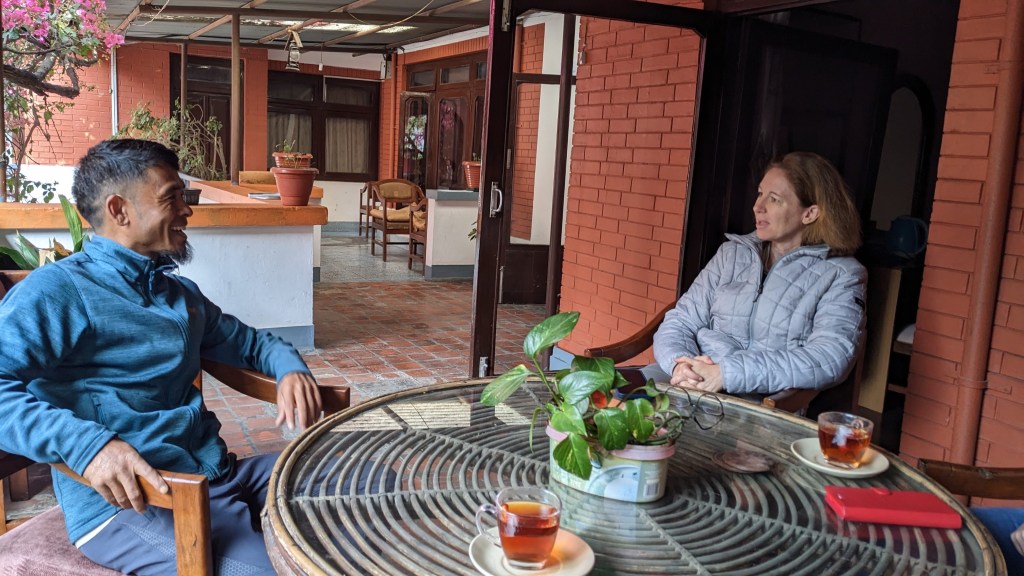
I had hoped to have a bit more clarity about the rest of the trip after speaking with him, but that was not the case. This was making me still feel very uncomfortable with heading off to a village in the middle of nowhere tomorrow, but then I realized that I needed to reframe the situation.
I had been viewing Hit as a travel agent or trip planner who was also doubling as a guide/translator. However, that is not his role; rather he is a travel facilitator when we attempt to do tourism in a couple of villages which are not actually setup to handle tourists. He can give us a general idea of what it will cost to negotiate being paying guests in the homes of local villagers for four days as well as the cost and methods of travel to them. In this way, one could see him as the “old school version” of a guide. Yes, this requires a great deal of trust, but if we want to have this experience, then it is what we have to do. The only point I actually did continue to feel a bit odd about what his insistence that he not have a daily set payment, but rather at the end, we would pay him whatever we thought made the most sense.
This is of course silly because he DOES work as a professionally contracted modern guide, so there is clearly a set minimum amount he is expecting. As is the habit with guides all over the world, if you want to give a tip, then you do it, but there is still the general expectation of an absolute minimum percentage for the tip when one has an individual or small group guide. So, after a bit of debate amongst ourselves and some online investigation, Dorothee and I found out what is actually generally the standard daily rate for a highly qualified guide in Nepal, and we simply decide to go with that amount once we had confirmed the plan with Maria.
We did have one tough decision to make though. Would we travel as “standard travelers” in the vehicles which they call jeeps, but I assume are more like land rovers (will see tomorrow), each paying 2200 NRP for the ten hour trip tomorrow, or do we buy out all ten seats in one of the jeeps, and travel just on our own? Given that two of us are rather large; I am 1.82 meters tall, we decided to bite the bullet and pay around NPR 7300 each for the one way trip. This would also give us more flexibility for stopping to take pictures etc . . . Along the way without inconveniencing other travelers. So that will be roughly $56 USD per person for transport to the first village rather than $17 USD. Based on how things go heading towards the first village, we will decide what to do when we come back to Kathmandu from the final village.
A bit after this we decided to head out to find breakfast and then continue on with the two temple visits we had decided that we wanted to do today.


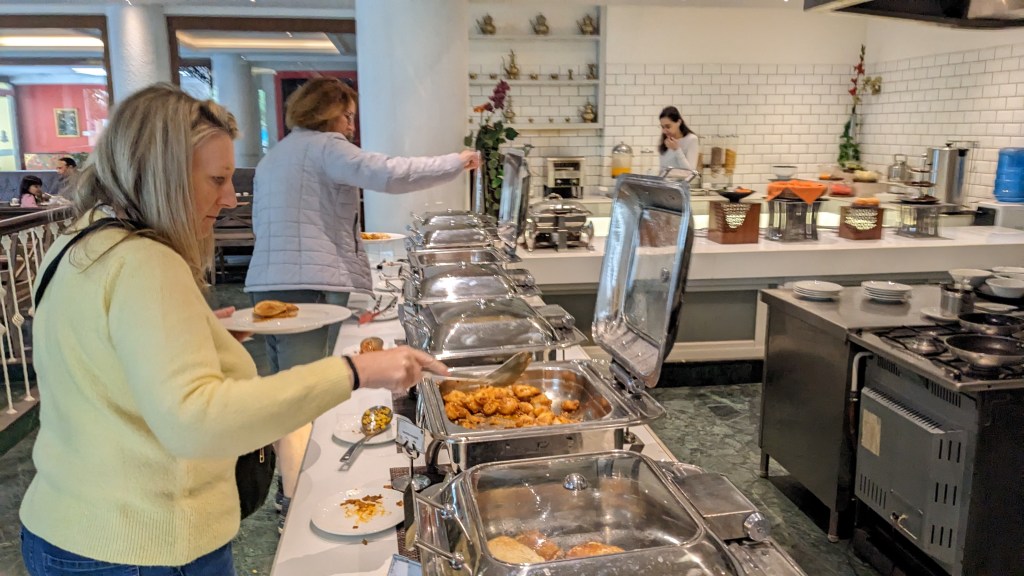
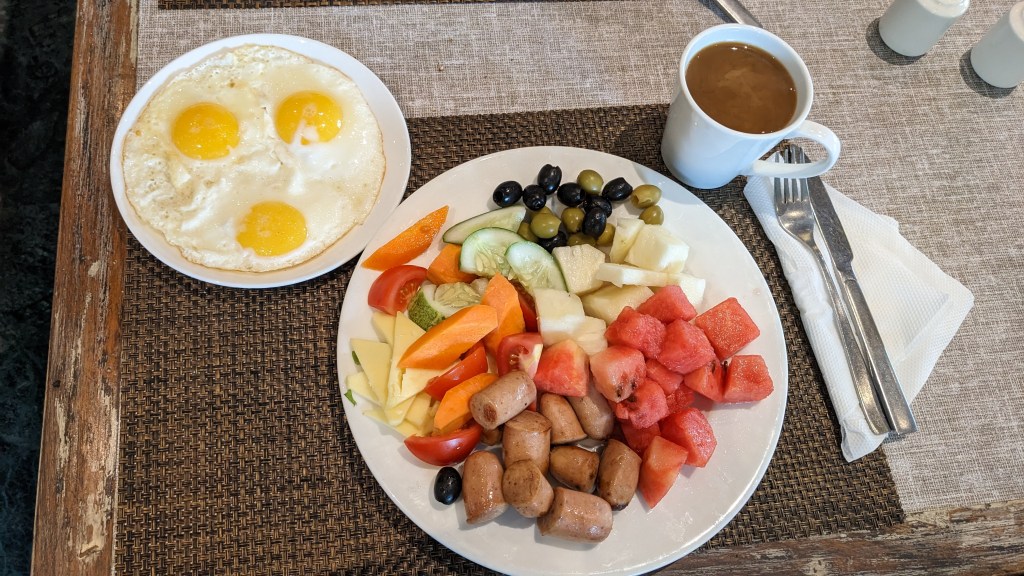
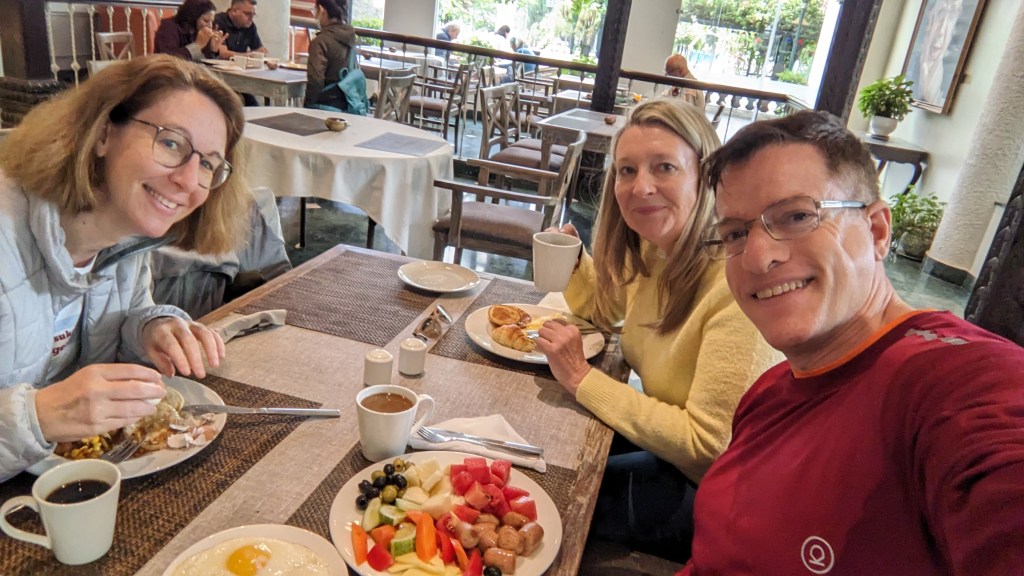
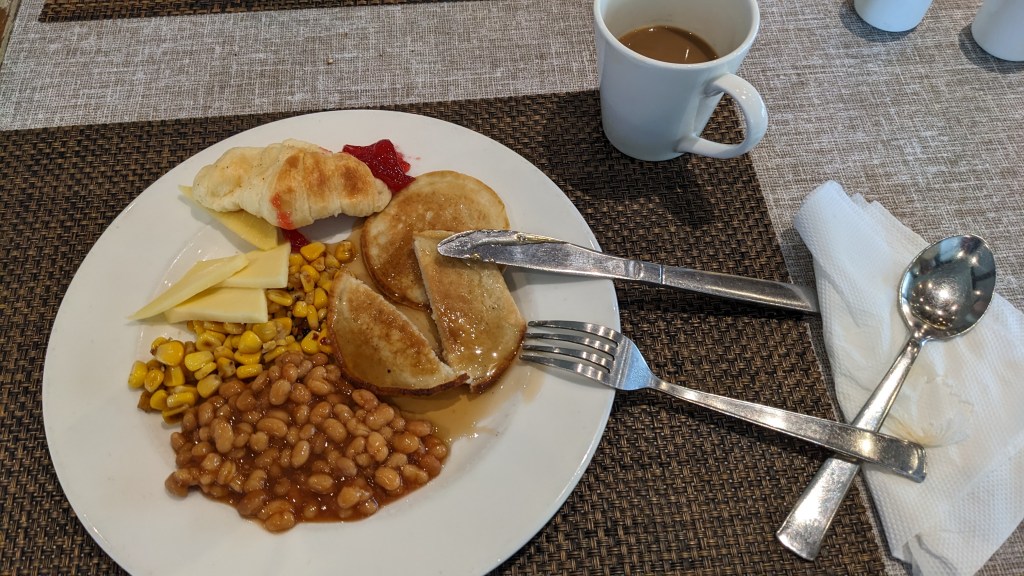
After wandering around for about 20 minutes trying to find an “amazing breakfast place” which we had read about online, going to the place where we told it had been moved, and then giving up when it was not there either, we decided to just go into the very next place we saw, which turned out to be a very fancy place called Kathmandu Guest House. The breakfast buffet was decent if perhaps a bit overpriced at NPR 1500 ($11.50 USD) per person, but the gardens were beautiful and the ambience is of course what we were really buying, not the food. I of course obstinately insisted on going overboard with the food amount in order to get my money’s worth. Regardless, if you want a pretty place to have breakfast, I would recommend them.
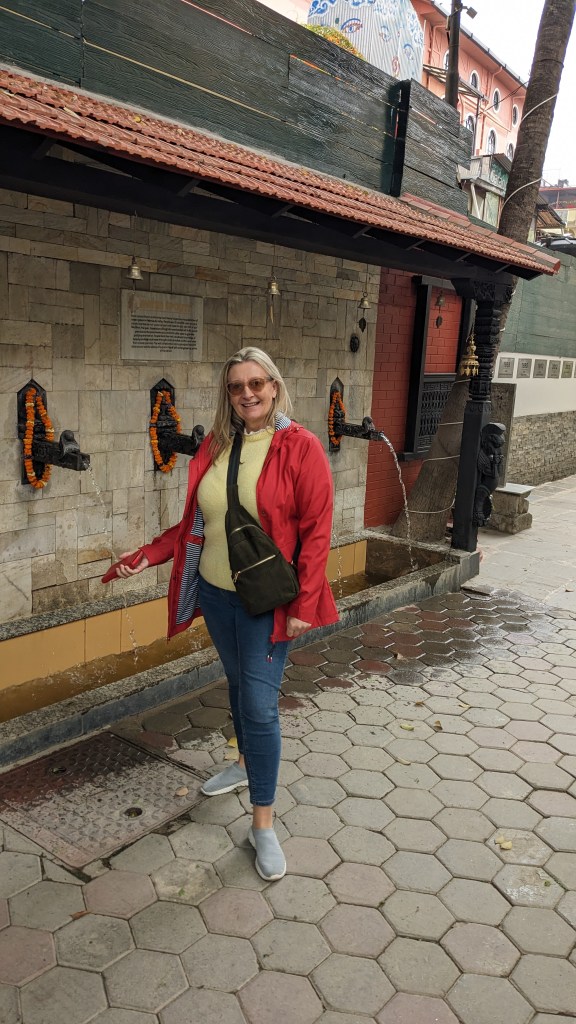
At 10:38 AM we started off walking towards Pashupatinath temple complex, which Hit had told us was about an hour walk away. While this was accurate information, Maria and I at least had imagined a far more leisurely walk than Hit had in mind, but we certainly did see a lot of interesting things along the way. Separately, we made a mental note as to what Hit thinks of as “standard walking speed” so that we can refer to the same in the future when he tells us how far we have to go until reaching any additional destinations.

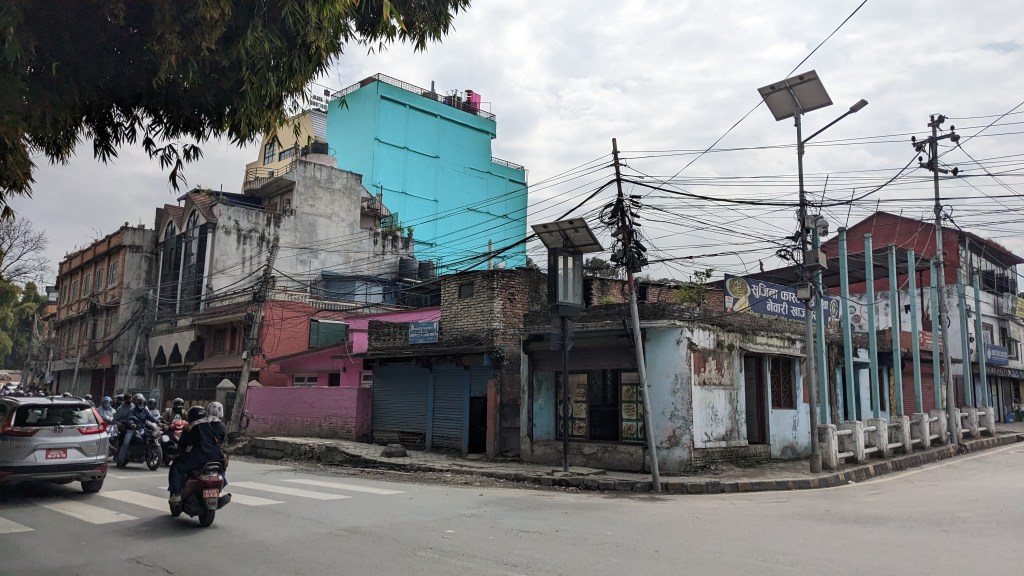
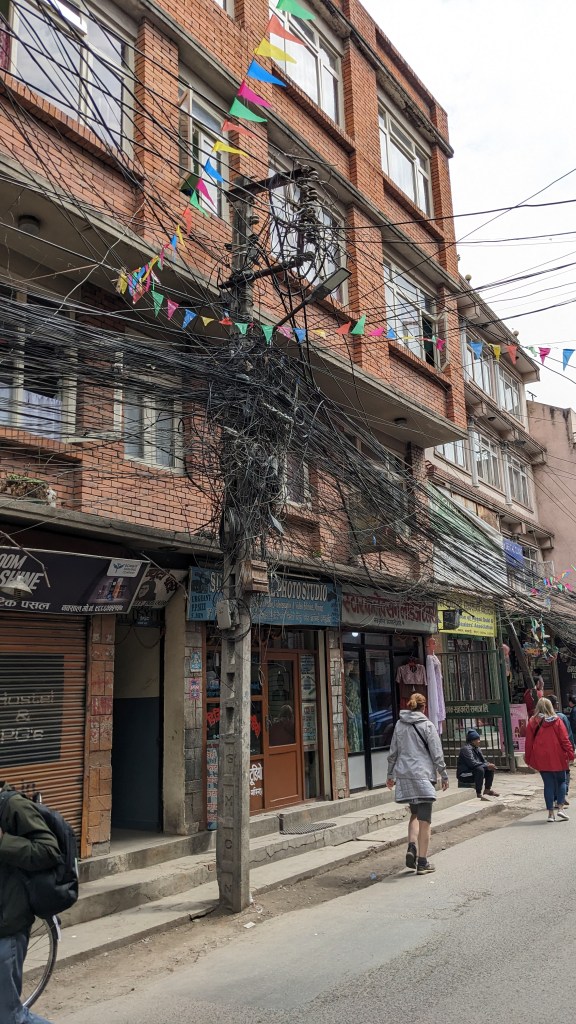


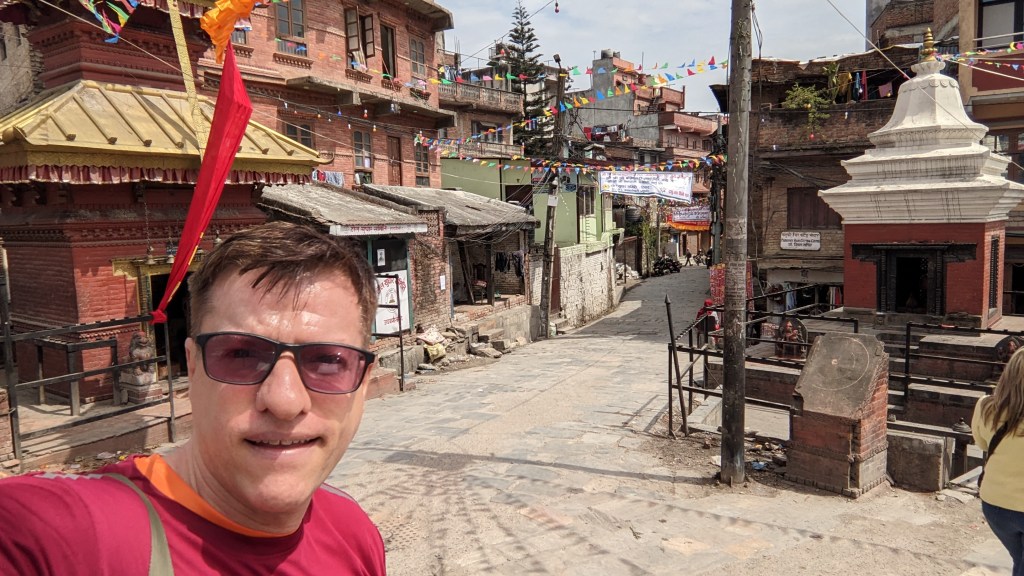
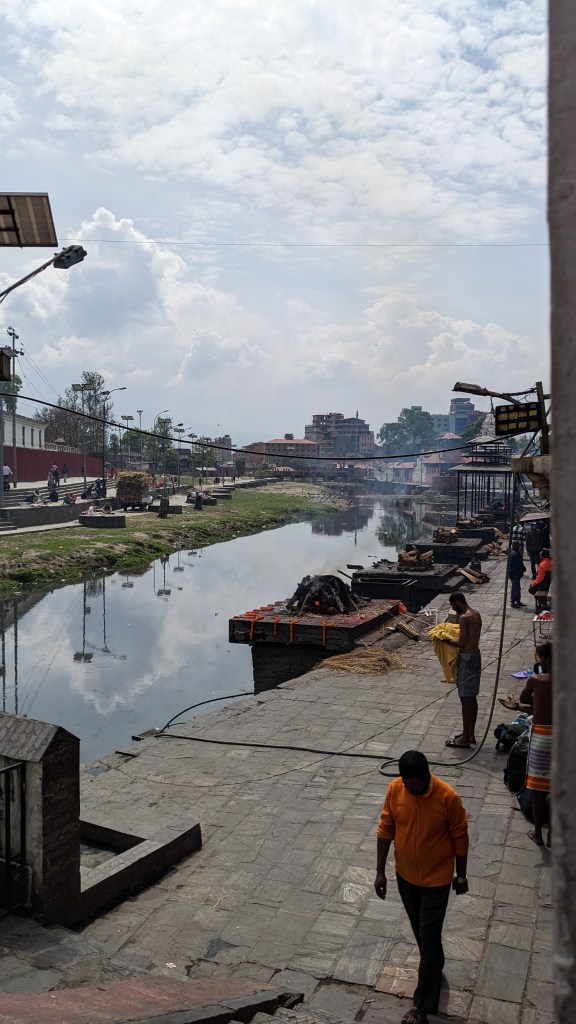
By 11:30 AM we had arrived to the Temple complex, which had a cost of 1000 NPR ($7.68 USD) to enter. I really had no idea what to expect, since I was just going to where Dorothee had suggested. Still, I am happy to report that it was money well spent. We were there for almost 90 minutes and easily could have stayed much longer without being bored.
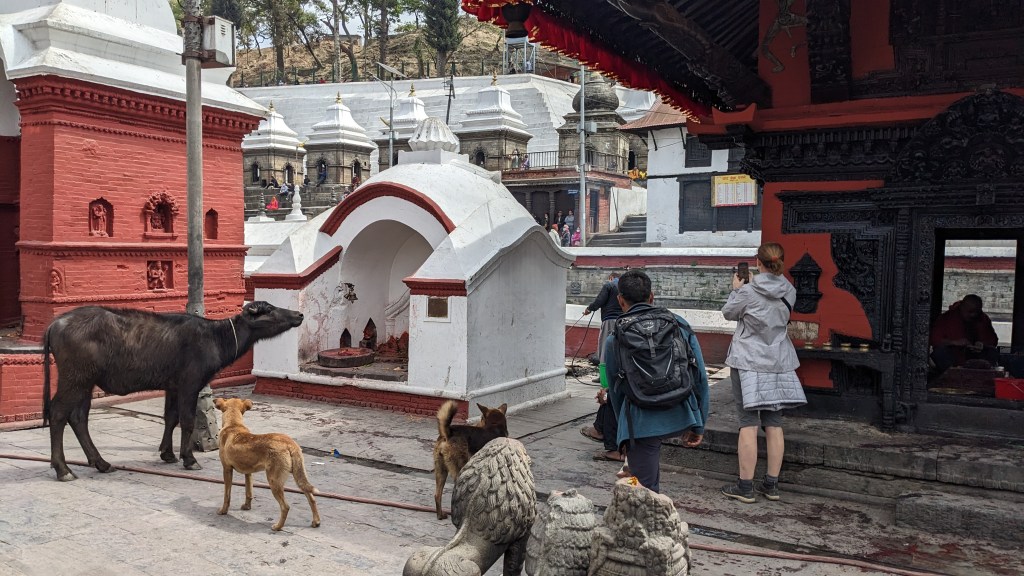
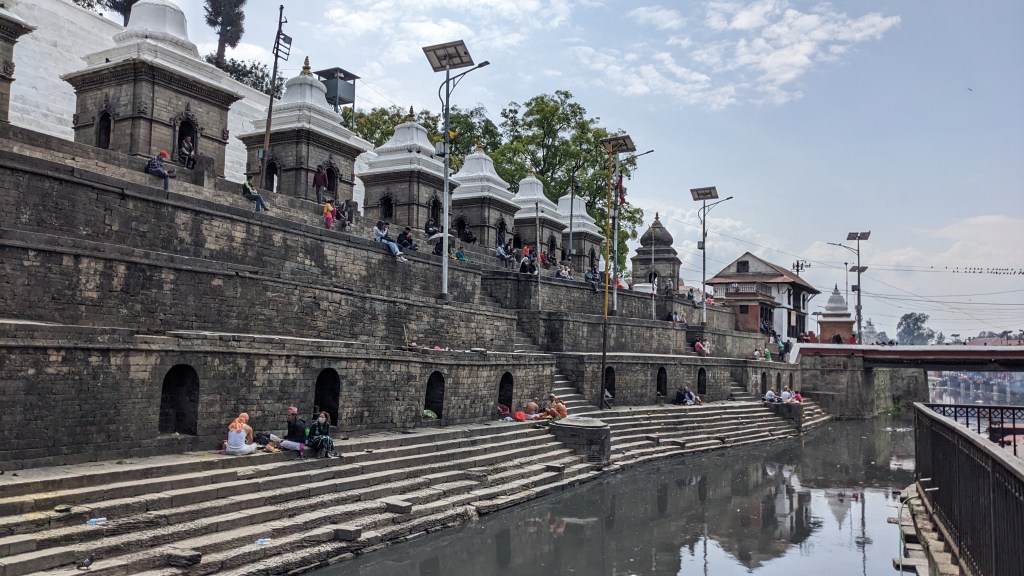
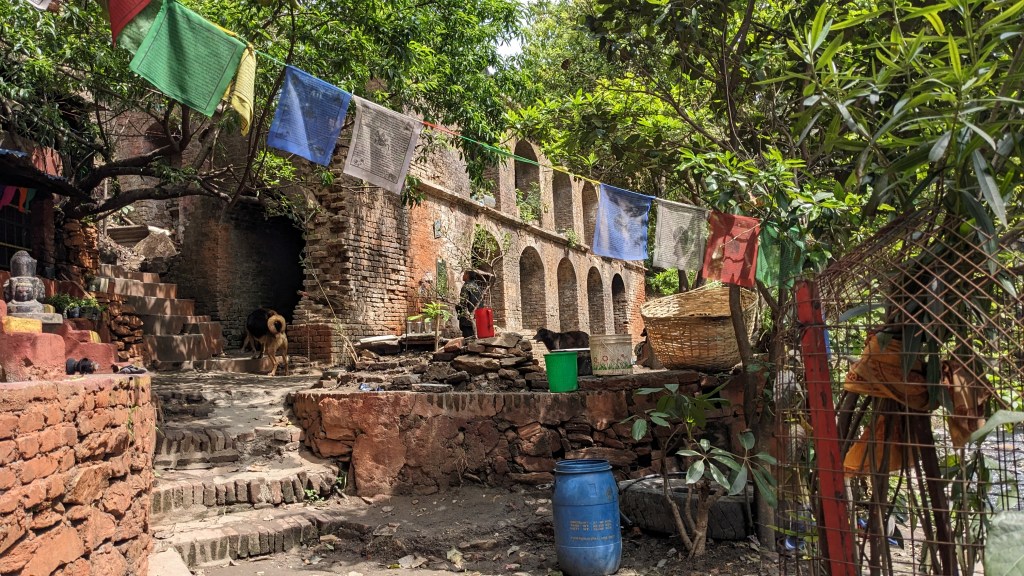

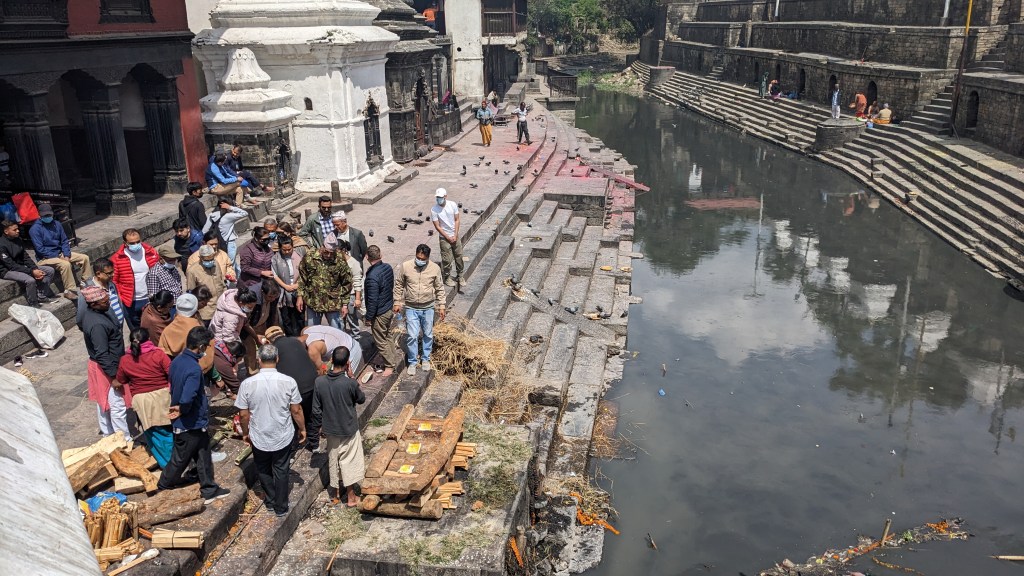
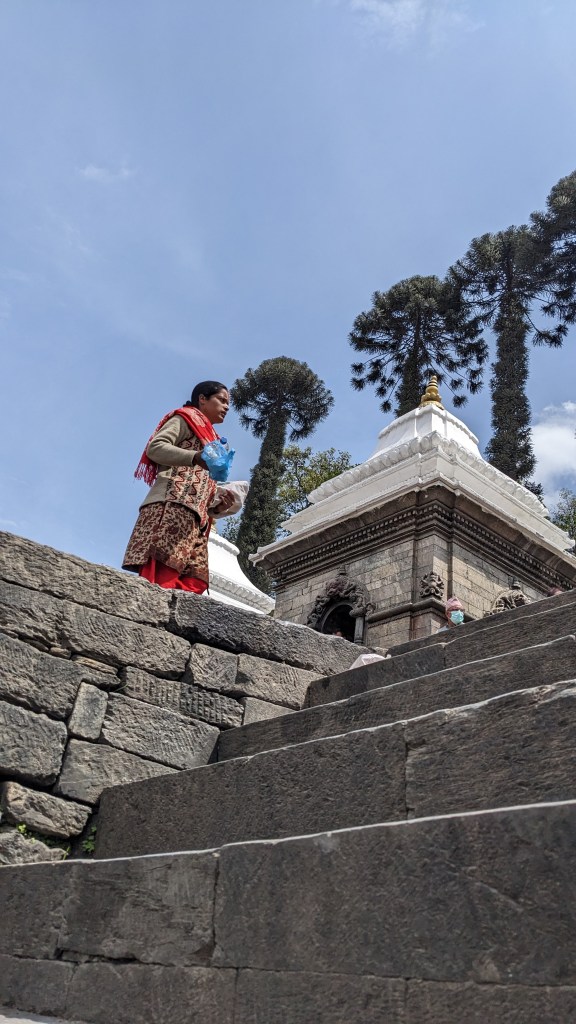
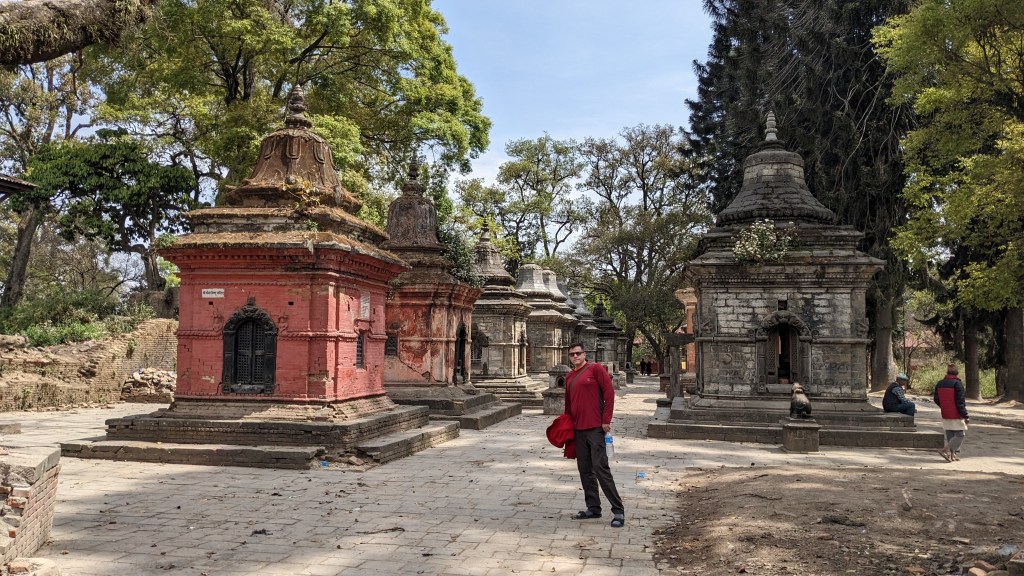

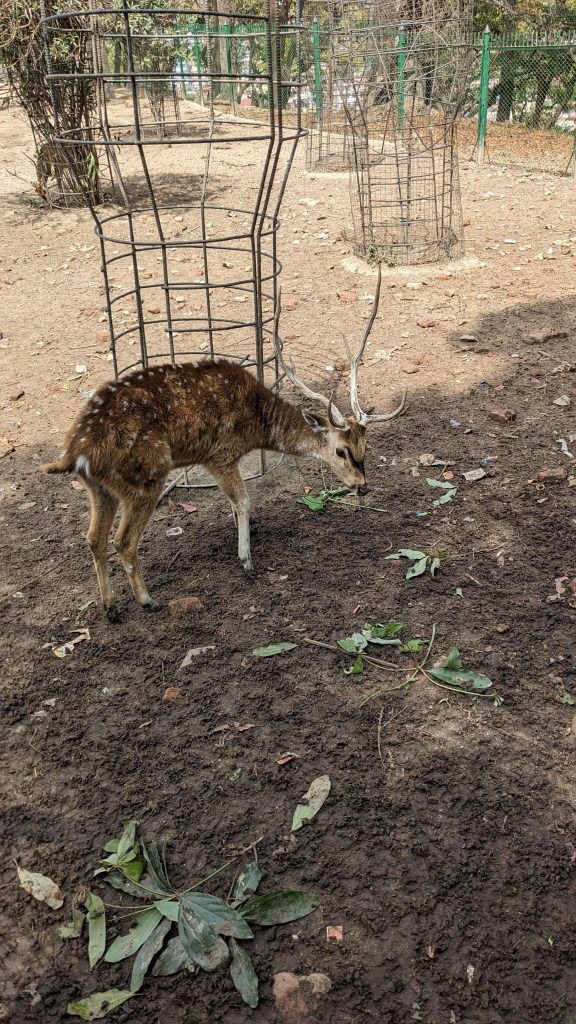
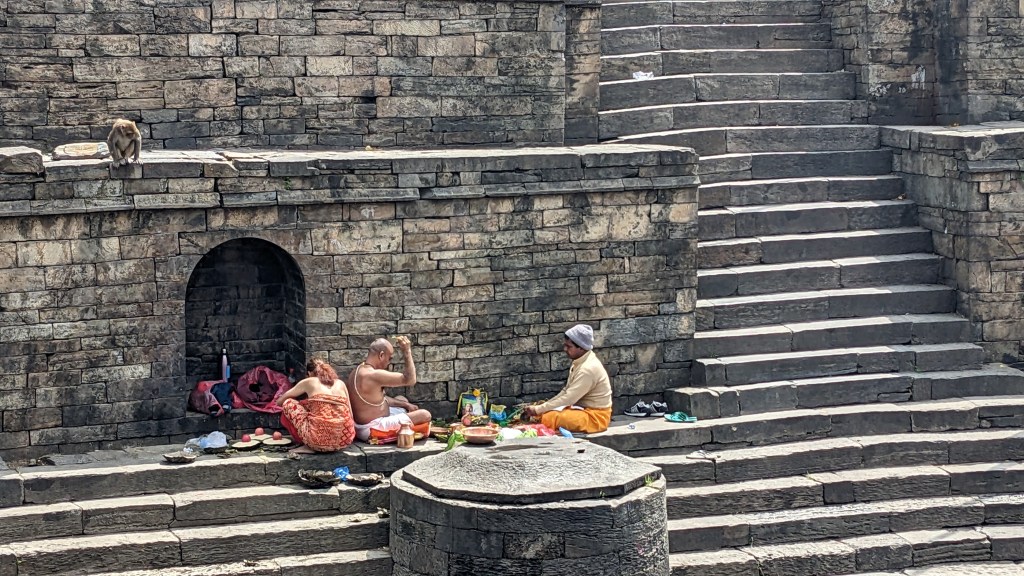
In case it was not obvious, this first temple complex that we visited was a Hindu site. Again, we easily could have stayed there for several hours, especially if we had been traveling with a specialized cultural guide, but at 12:45 PM we decided it was time to walk over to the next site. As none of us had had the foresight to take a proper sun hat or even sunblock today, I found myself resorting to comical attempts to stay in the shade and/or cover my head and neck with my fleece jacket. Note to self, always take the sun hat, even if the the day is supposed to be very overcast.

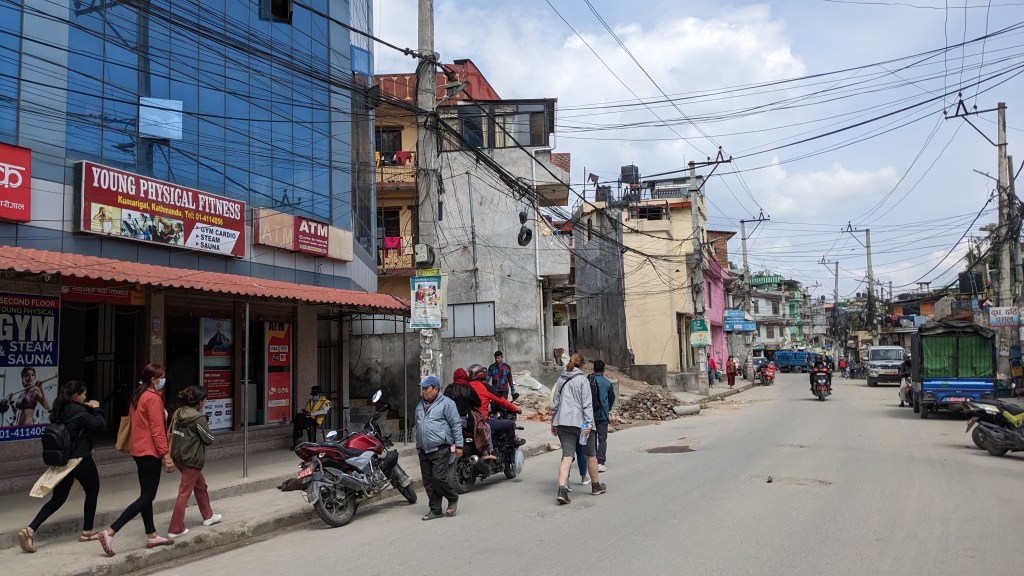

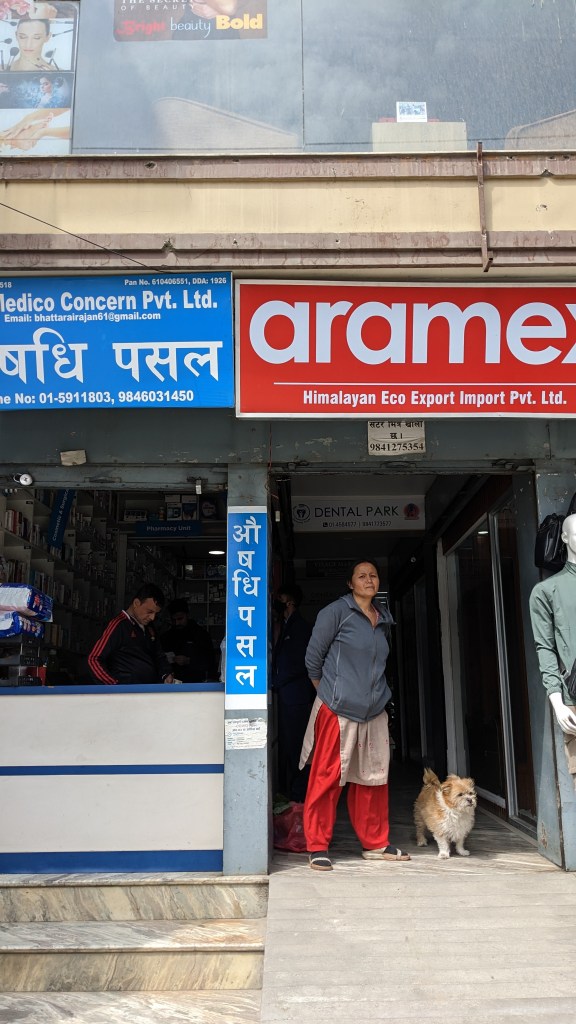
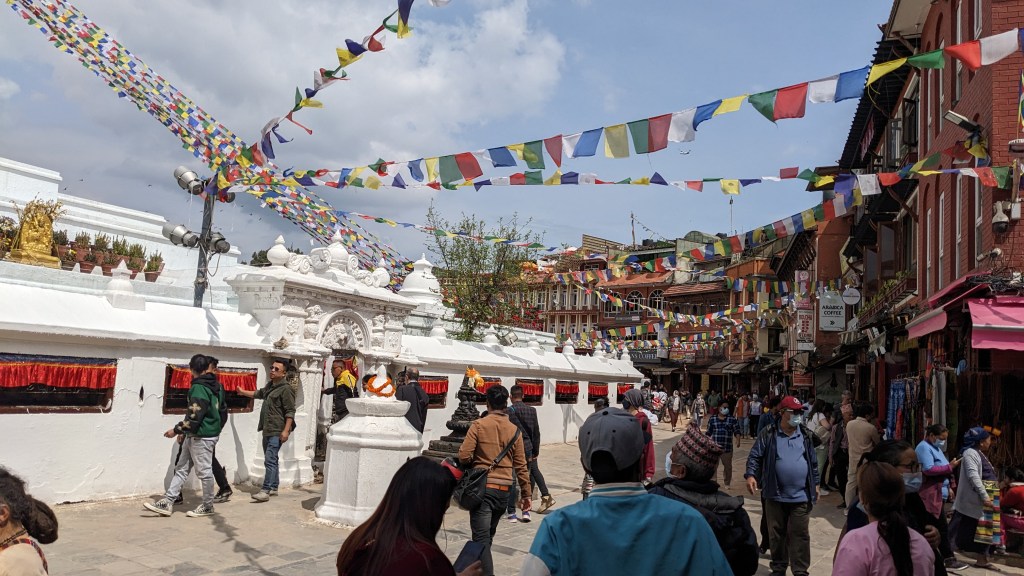
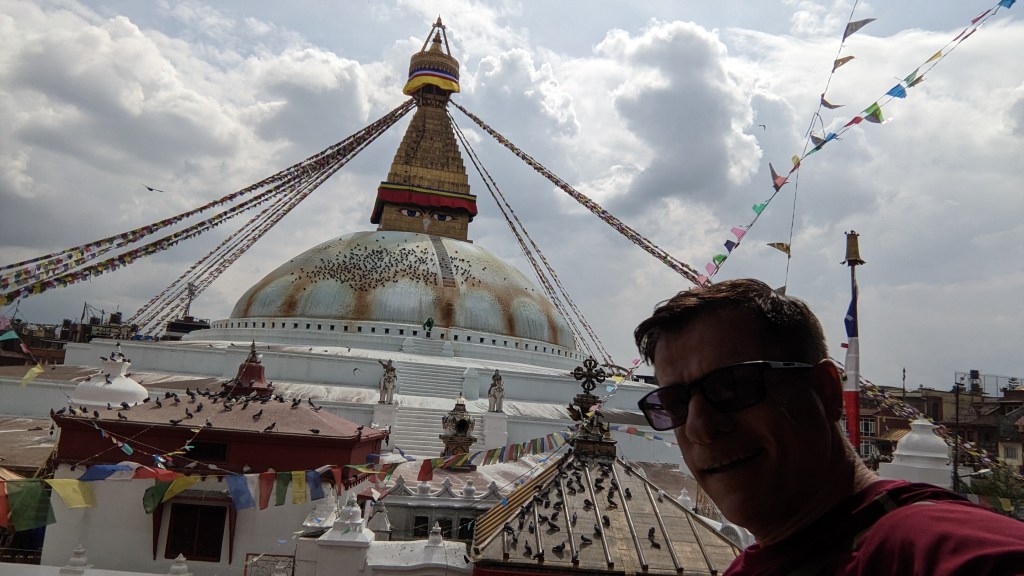
Arriving at roughly 1:15 PM to Shree Boudhanath Area, it immediately struck me that this temple area seemed more like a bustling town square with an impressive religious symbol in the middle, rather than an area normally visited for actual religious purposes. Cost for entry, which I assume was not charged to locals, was 500 NPR ($3.84 USD) but only 100 NPR ($0.77 USD) for SAARC citizens. I had my Indian Aadhaar card with me, so I greeted the ticket seller in Hindi, showed my card, and only paid 100.

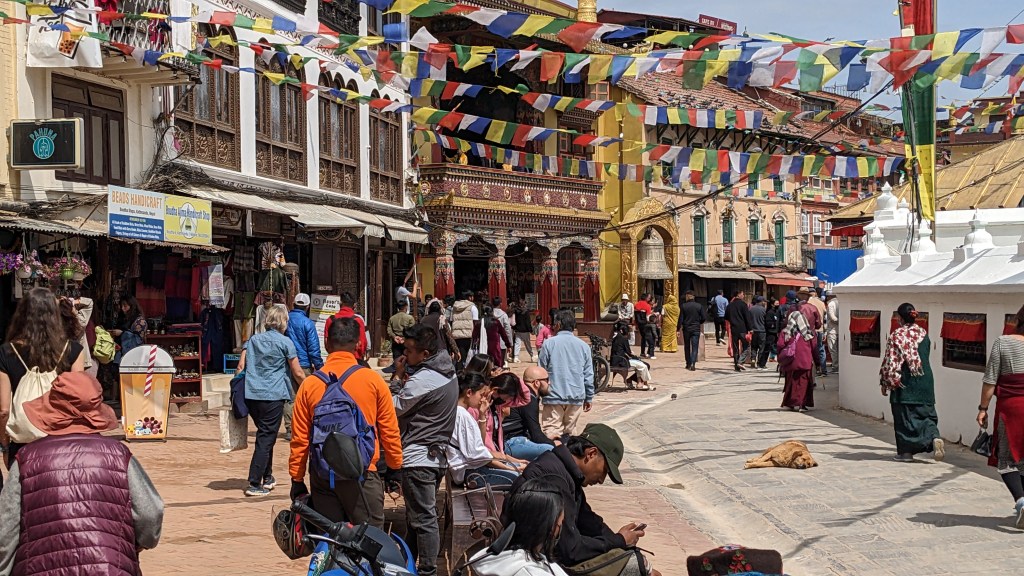
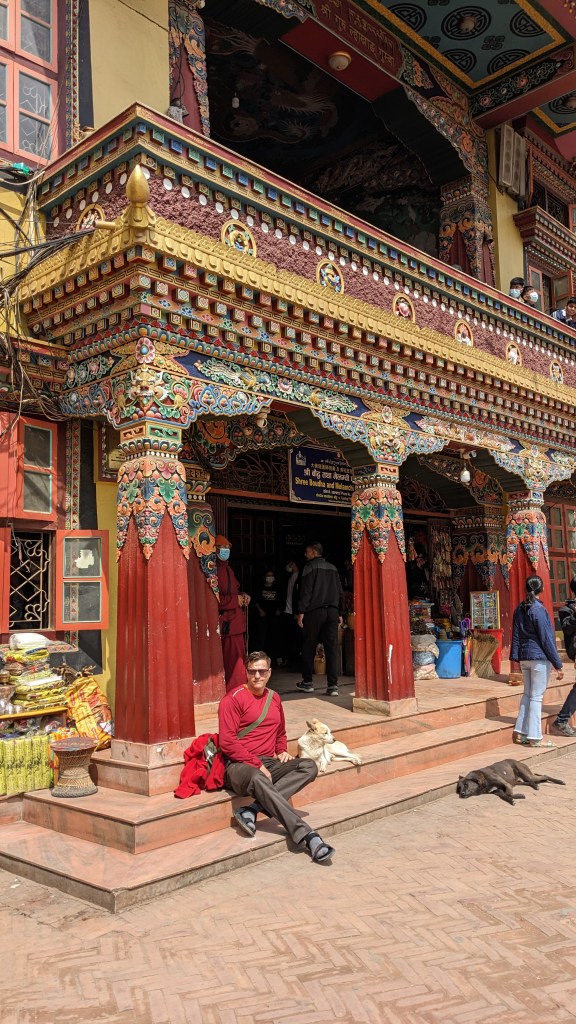
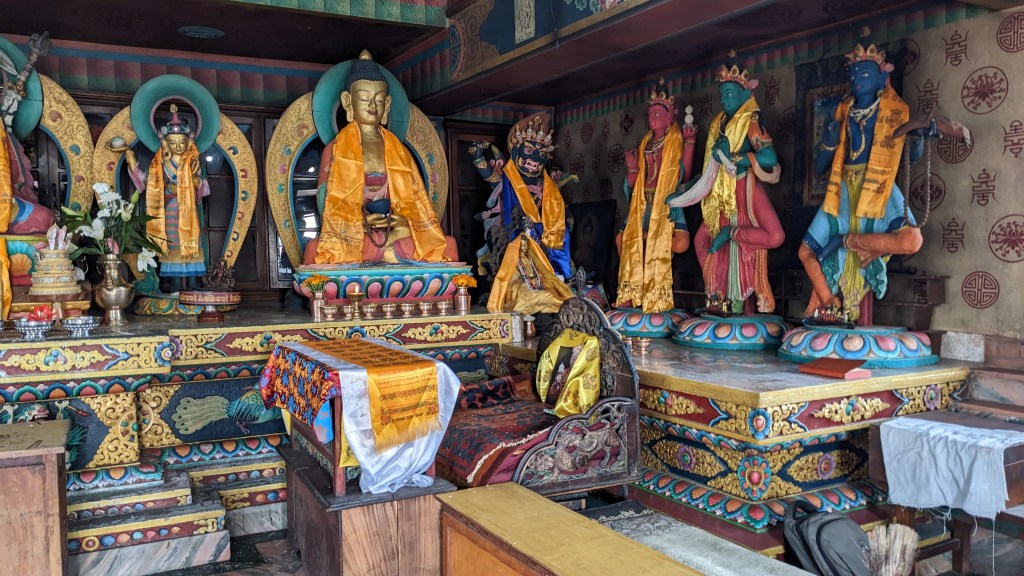
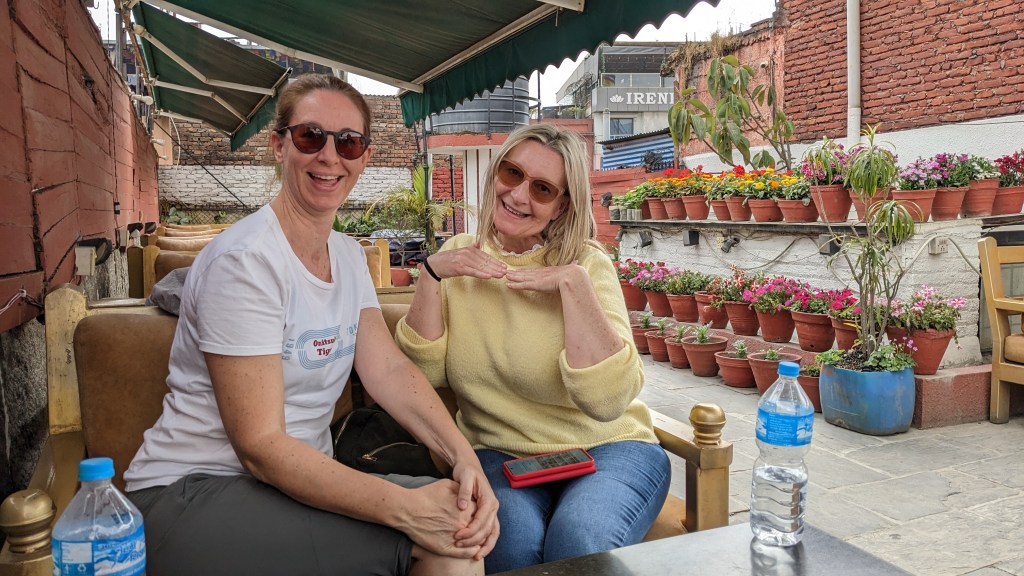
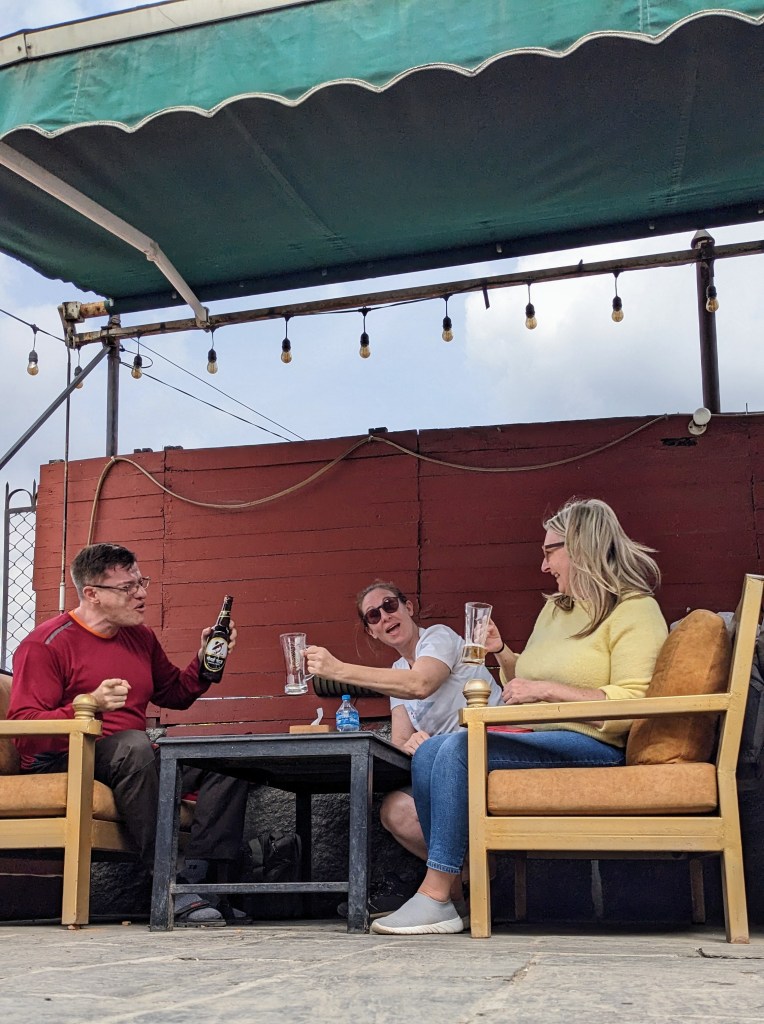
Having first assured ourselves that there were sun awnings, at 1:45 PM we went to the rooftop area of Hello Cafe to rest for a bit while having a drink and chatting. We paid 970 NPR ($7.45 USD) for three glasses of local Gorkha beer and a lassi drink. This local beer was actually quite decent, so if you are open to trying local beers while traveling, go ahead and give it a try; there’s a good chance you may like it.

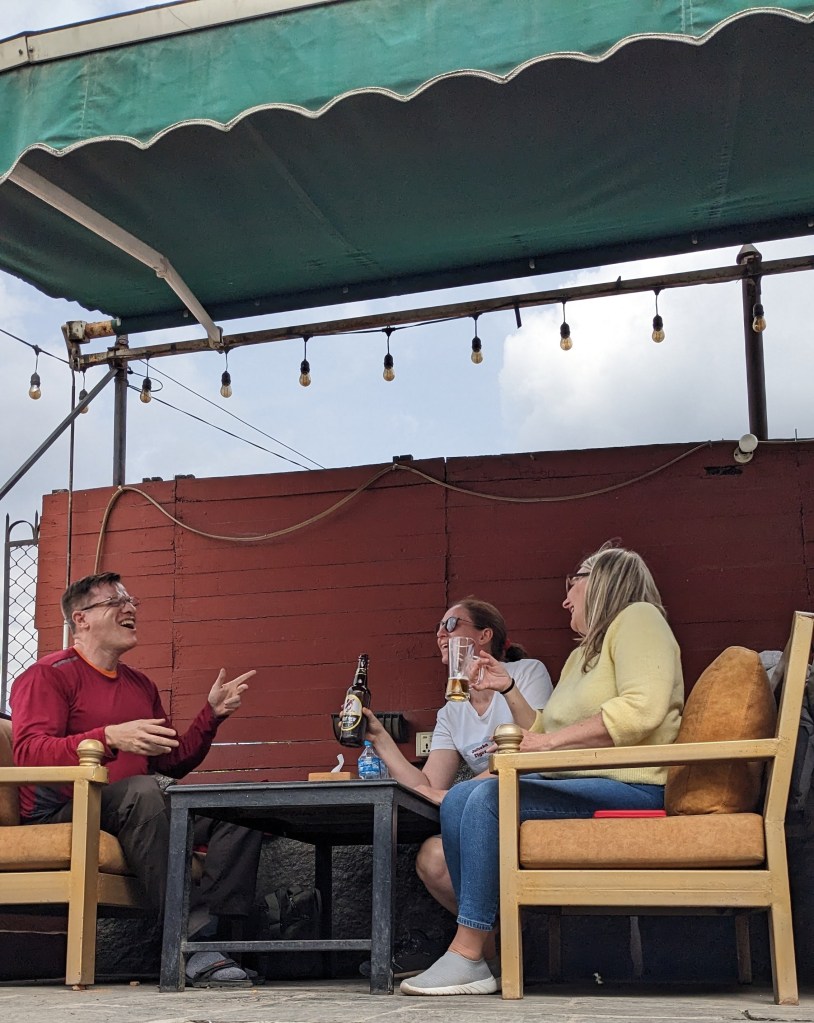
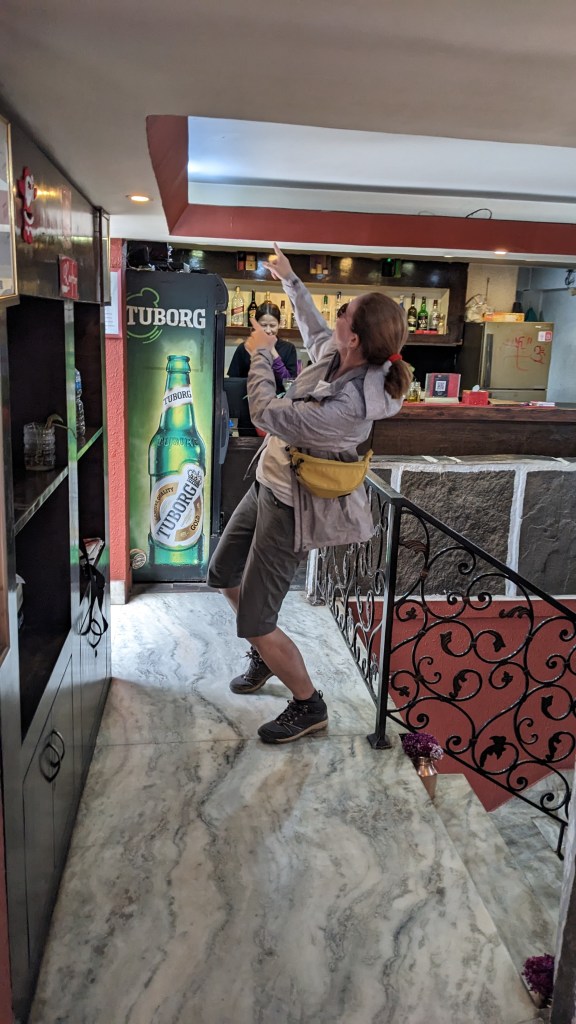
From 2:45 to 3:15 pm we were in a cramped taxi headed back to the homestay, paying 500 NPR ($3.84 USD) for the privilege of being smashed together in order to NOT spend more than an hour once again walking while enduring the unrelenting sun for which we had not properly prepared. All in all, we definitely agreed it was a bargain.

From 3:15 PM to 5:45 PM, I rested a bit and then packed for tomorrow’s trip. When Maria came back from her short shopping trip outing at 5:50 PM we went to a nearby restaurant for a quick dinner before heading out to get water purification tablets and cash for our village adventure which would begin at 5:30 AM the next morning.
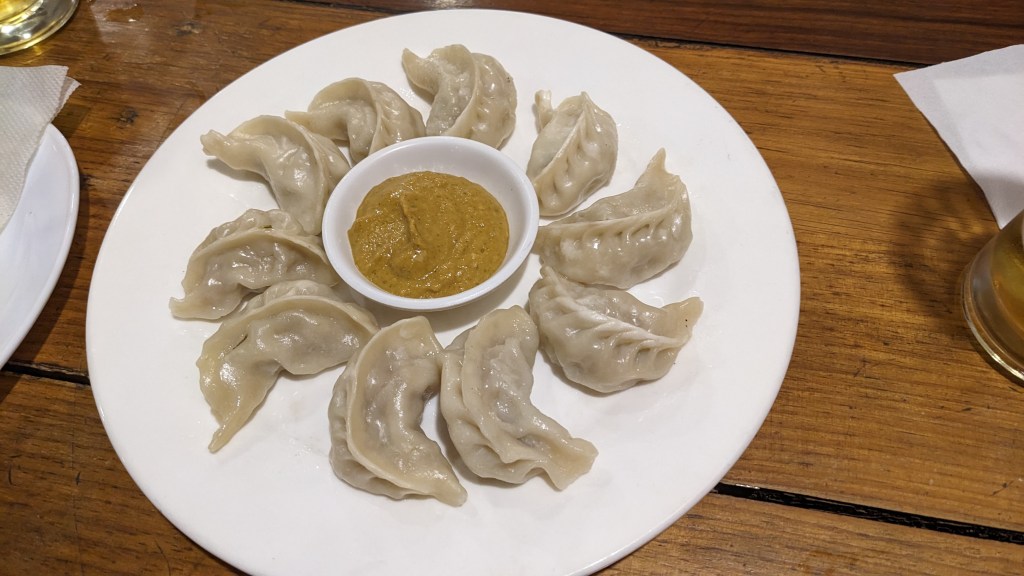
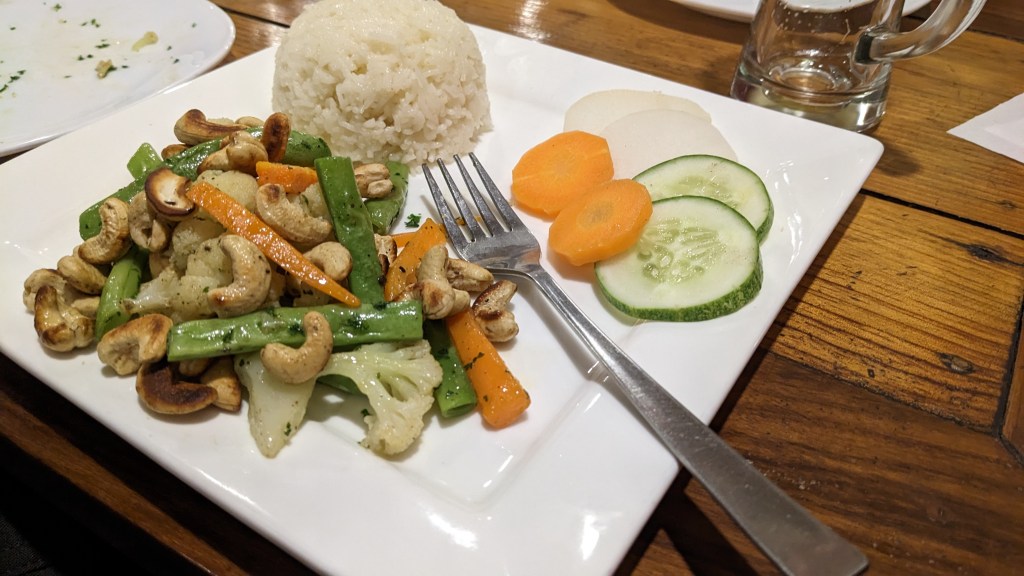
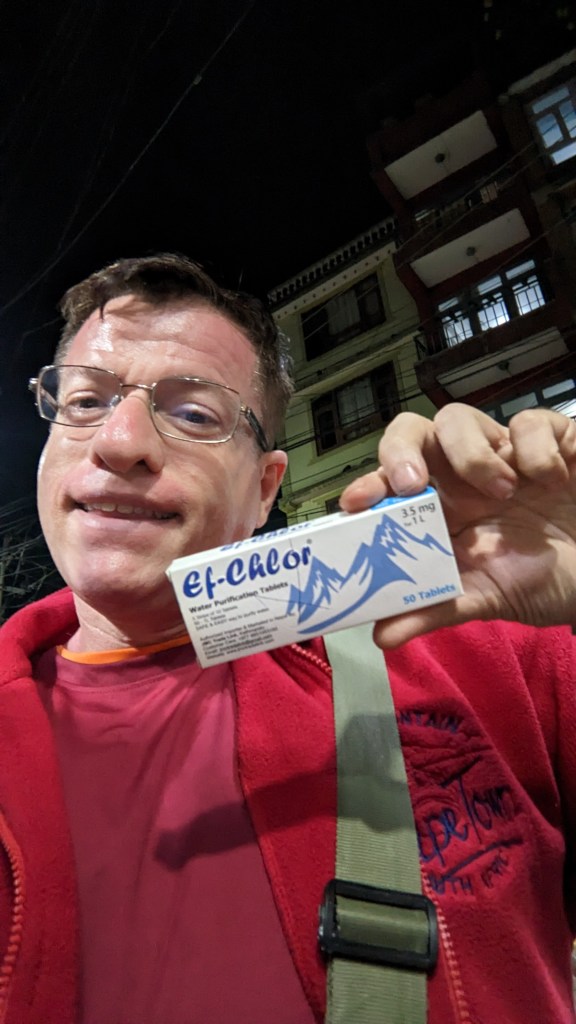
So that’s where things pretty much ended for the day. I’m cautiously optimistic about tomorrow’s ten hour road trip to the first village. I’m not adventurous enough to try such a thing on my own, but with two great travel companions and our local guide/facilitator/negotiator/translater Hit along, I’m sure it will be a great time.
If you want to find out what happened with village life, you’ll have to wait until day three’s post. As always, thanks for following along, and don’t hesitate to ask additional questions in the comments section.


Thanks for the update. Amazing the stamina that you have.
I feel exhausted just from reading about all that stuff.
Keep on trucking!
LikeLike