Hey there again readers! I hope you found some useful information in my Day 4 entry, and I also hope that Day 5 will help you make some better choices on your next trip to Siem Reap.
Those of you who have been following along regularly already know that I did not get into bed until a bit late last night, so you will not be surprised to know that I did not set the alarm to go off until 11:AM today. I’m happy to say that I once more had slept extremely well in my highly recommended Airbnb apartment.
I did not actually leave my apartment until 12:02 PM, but I did want to make sure I had enough time to have a leisurely lunch before getting together with my upcoming tour operator for the day. A couple of days ago while looking for somewhere to eat and had read an entry for an eatery called Arun restaurant. The Google review which popped up had specifically mentioned that the place was well-known for their frog legs, so I figured it would be something interesting to check out.


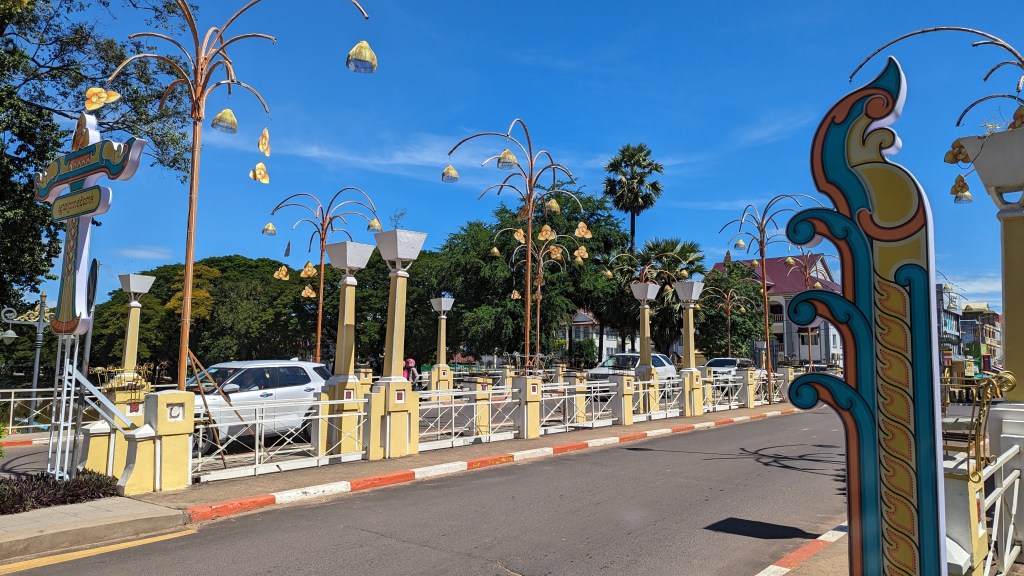
My leisurely walk finished at 12:22 AM when I arrived at the restaurant. While the sun was rather unforgiving, I had my trusty sun hat and even here in the city there was generally a nice breeze. So as long as I kept to the shadows whenever available, I did not find the heat to be overly oppressive.
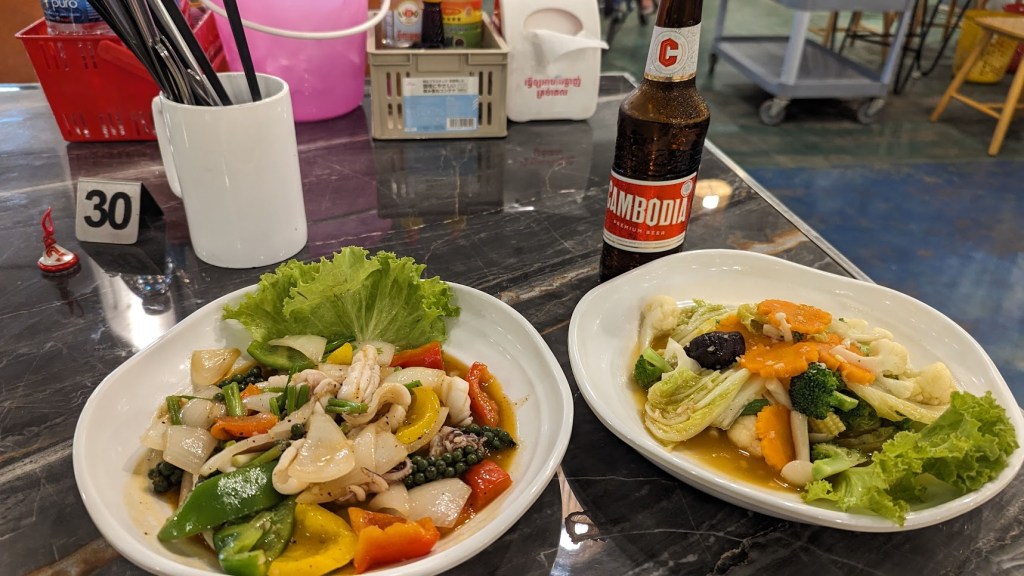
The menu was much more extensive than I had anticipated, and there were actually two different frog options: fried and stuffed. As I had never even heard of stuffed frog, I decided to give it a chance. I paired this with mixed vegetables, the obligatory bowl of white rice, and Ganzerberg beer which surprisingly had a pull tab! Yes, I know I was way too excited about the pull tab, but it has definitely been more than 30 years since I have actually seen one of those,
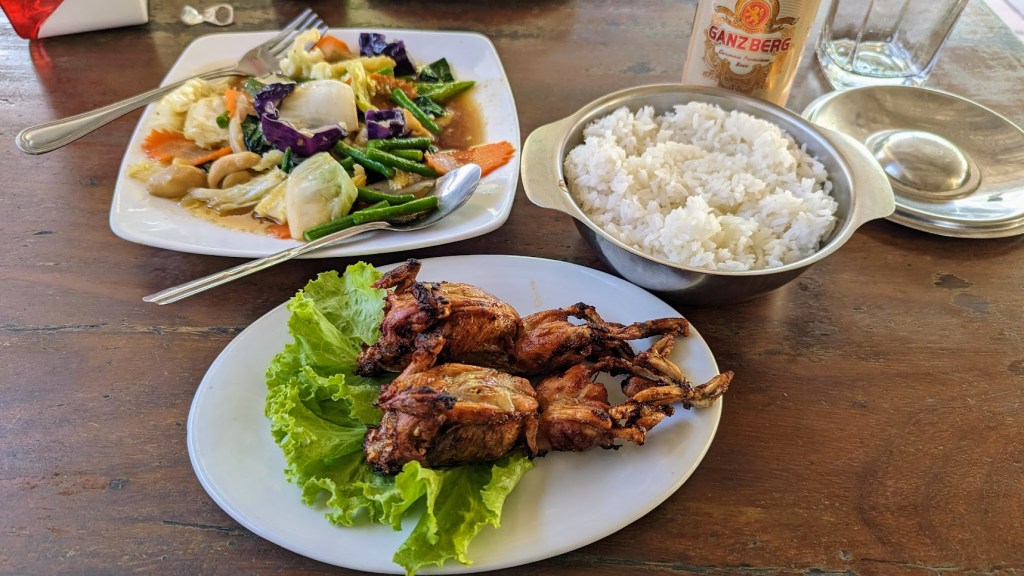
I was extremely happy with this meal. I felt that both the meat and the vegetables were well-seasoned, and the stuffing was amazing; although, I couldn’t figure out what was actually in it. Similar to what you would do with a bird, the stuffing was in the chest of the frog. Also, for those familiar with quail, the majority of the bones seemed meant to also be eaten, or at any rate that was what I did without any bad effects afterwards.
I let myself linger a bit longer than probably was prudent, paying the bill of 38000 Riel ($9.21 USD) at 1:16 PM and doing a VERY fast walk back to my apartment, where I arrived at 1:30 PM. This barely gave me enough time to grab a couple of things I meant to take with me today, and at 1:40 PM Saro was right outside my apartment building in a nice white van, waiting to pick me up. Today I would be going on a “floating village” tour.
This was one that I almost had decided not to do. Despite the relative popularity of these tours in Siem Reap, there are also an incredibly large amount of very negative reviews of the experience. The most negative comments are connected to the following: it smells incredibly bad, the trips seem to be a scam to get you to donate additional food and bags of rice to dubious recipients, the trips themselves are incredibly exploitative “poverty tourism” of the local populations, and other providers such as boat operators, drivers and guides hassle you for more money once you are on the tour. So no, this was not looking like something I would generally recommend.
However, there was no denying that it was popular, so I had earlier asked my high-quality guide Sah Yon from Day 3. He said that yes, much of the year, it smelled very bad, but that right now would be a good time to visit. He also agreed that many of the tours were basically scams, but he knew of at least one organization that did a really good job. Unfortunately, he could not remember the name of the operator, but he was sure I could find it if I just carefully searched for “responsible tourism” operators that organized “floating village” tours. I am not going to lie; this was NOT that easy to do, but I finally found the one which I suspected he had been referencing: Community First: Kompong Khleang Floating Village Tours.
While they have a few private tour options, these are clearly meant for slightly more affluent travellers who are already travelling in a group. Regardless, from the beginning I had been primarily interested in their all-inclusive small group Kompong Khleang and Tonle Sap tour which had a cost of $35 USD per person, with a reduced price of $25 USD for children under 12. While this is quite a bit more expensive than most other providers which do these tours for around $21 USD, but as much as possible, I wanted to make sure that I was not promoting exploitative tourism, and frankly I also did not want to get guilt tripped to periodically shell out more money during the trip. So selecting this charitable organization was a win-win situation both for the projects which they support, and also for me as a tourist.
As always, the scenery as we were riding along outside Siem Reap city was beautiful, but it was not really until 2:15 PM that I would say that the actual “tour” began. Saro gave us some general background on his organization, all of which I would encourage you to read by referencing the earlier mentioned links, but he also shared some of his own background information, including the fact that his parents had been forced to marry by the Khmer Rouge, something which evidently had once been a common practice.
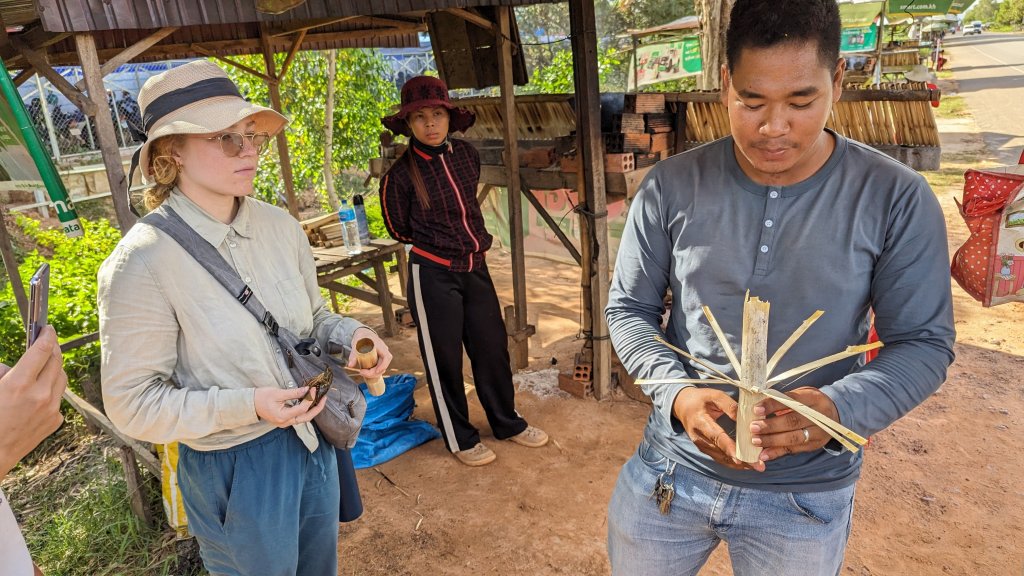
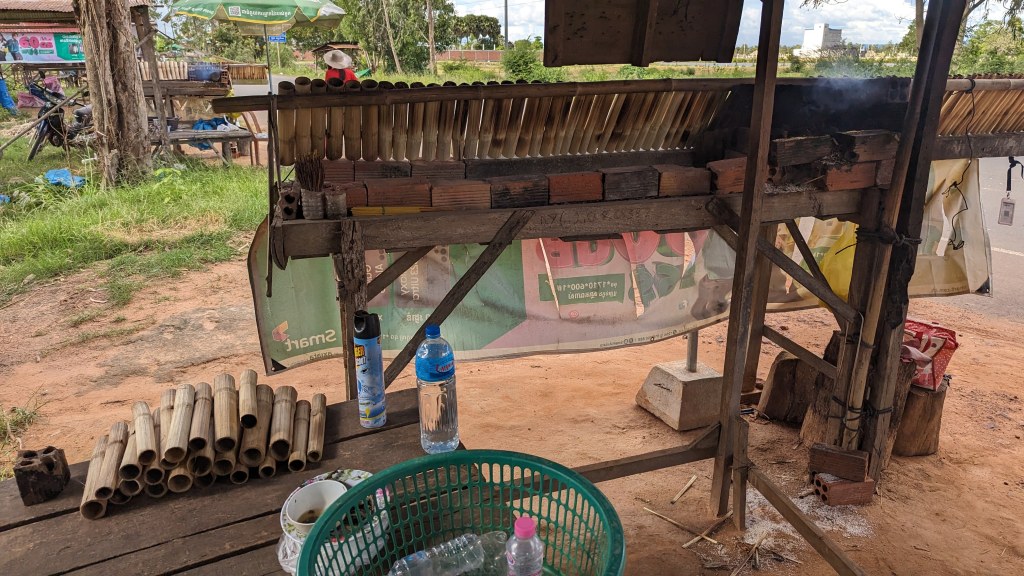
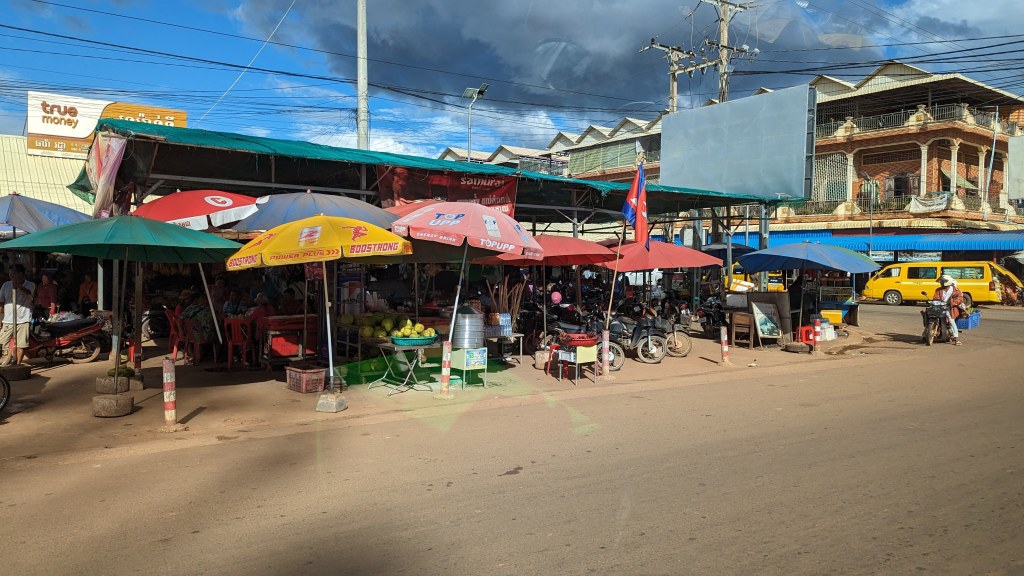
At 2:38 PM we made our first stop right along the side of the road. It is hard to appreciate in the picture, but there are at 30 different roadside stalls, all selling the exact same thing: bamboo sticky rice.
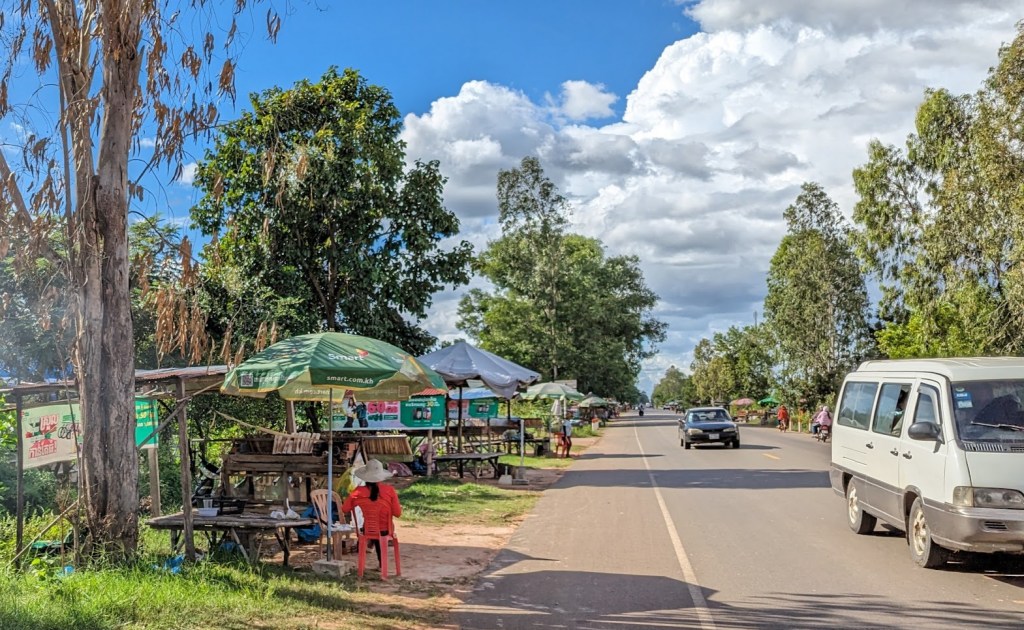
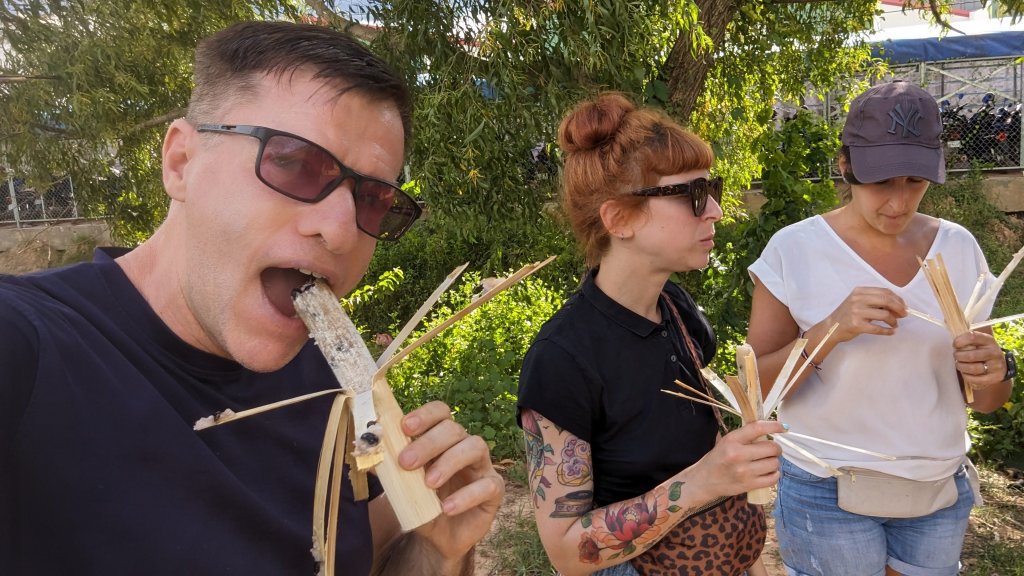
As mentioned earlier, this was an all-inclusive tour, so no, this was not a ploy to get us to buy sticky rice. I am not sure if they always would stop at the same place or if they change it up each time. I have to say that I was actually far more impressed with the bamboo sticky rice than I had anticipated. It was only very mildly sweet, a rather pleasant afternoon snack. Evidently it is actually made in their homes, but then they bring it here to sell. Once made, it is good for two days. The fire is not to actually cook anything, but rather to keep the bamboo a bit warm and also to burn the hollow bamboo once the rice has been eaten. While I found that I actually liked the snack, I couldn’t help but think that it really did not make sense for them to all be selling the exact same thing, made with the exact same ingredients, but evidently, it’s a business model that works for them.


At 2:51 we were back in the car to continue along our way. At 3:00 PM we were passing through Dom Daiy community, which is evidently where people from the floating villages come to do most of their buying and selling.
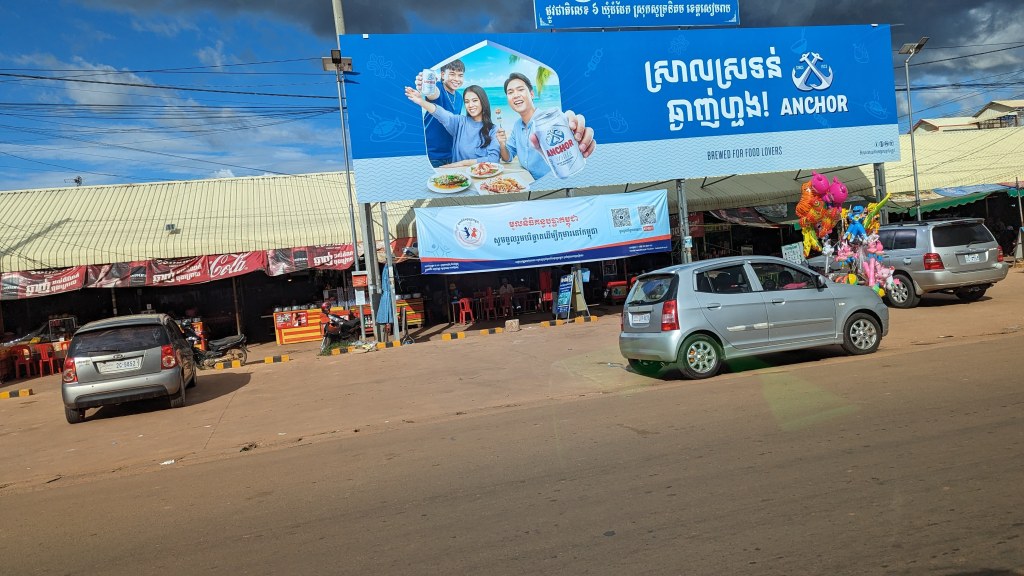
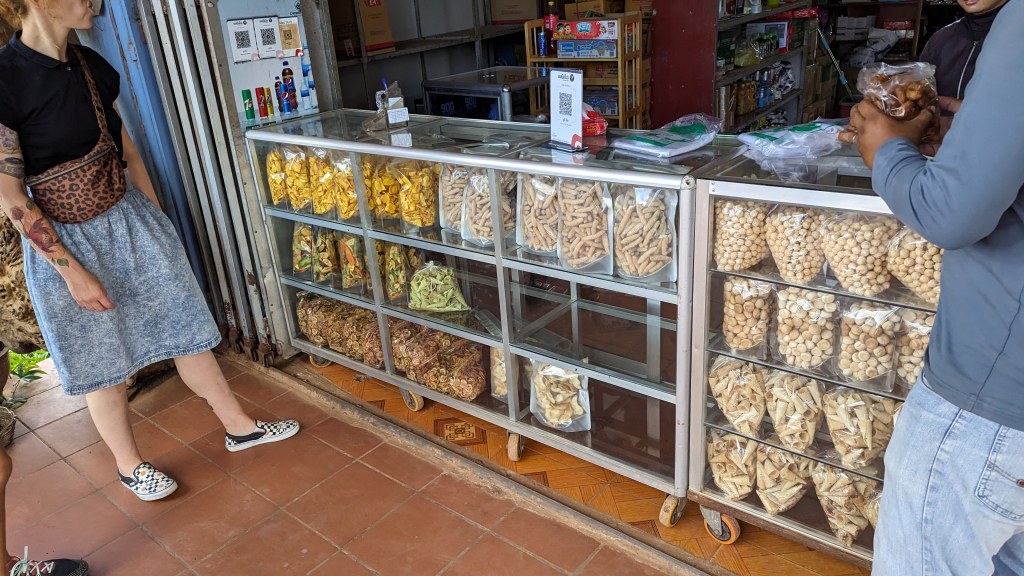
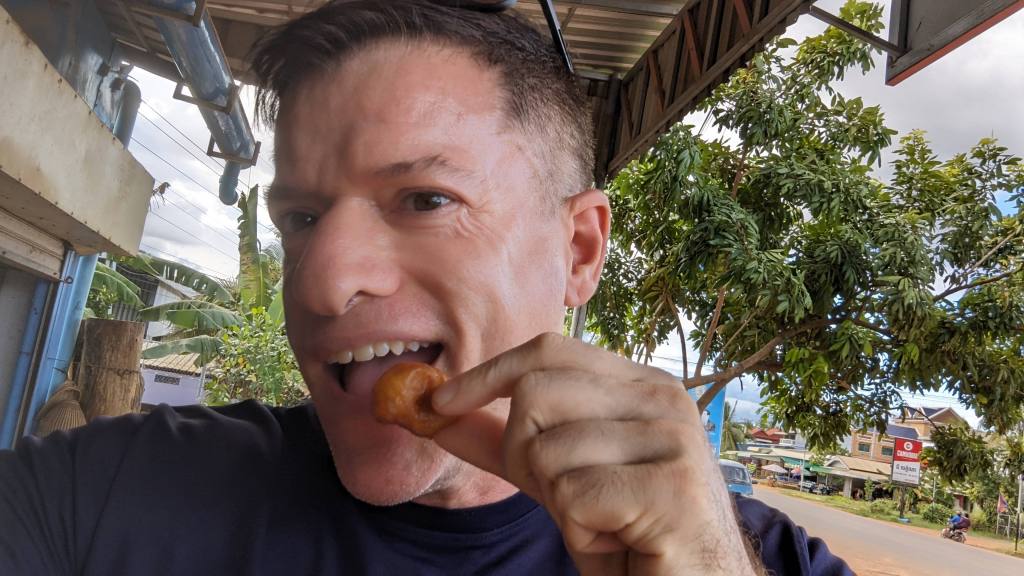
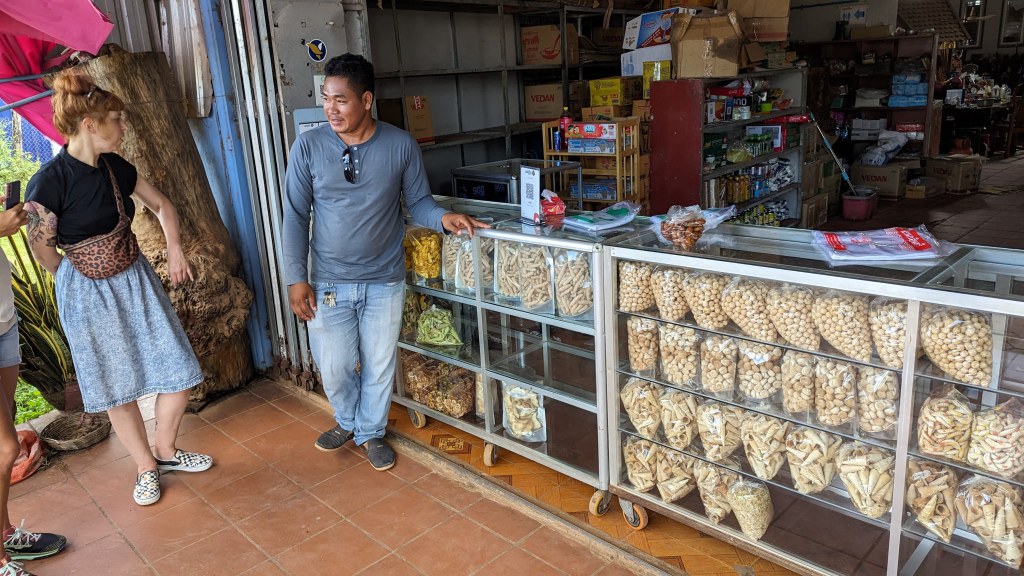
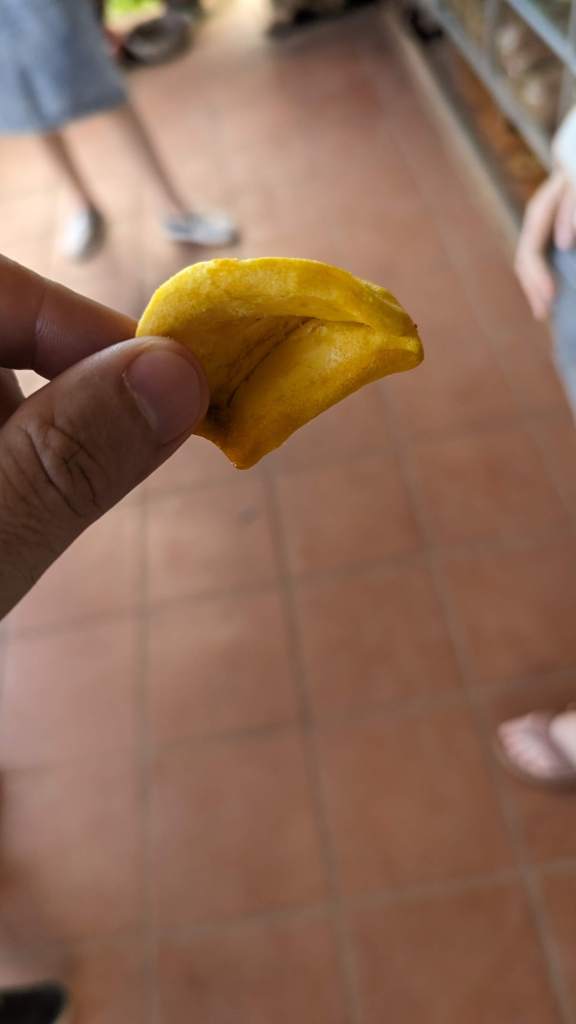
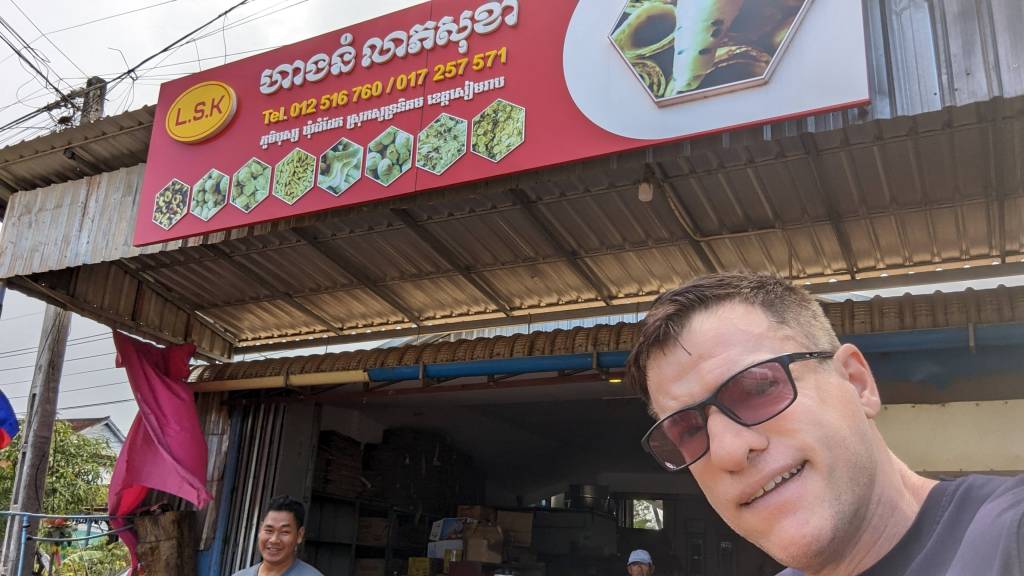
At 3:02 PM we once again stopped at a local bakery. There we tried three different types of local treats which this family evidently sells wholesale to many other vendors in the region. The tiny little doughnut things were basically baby buñuelos, whereas the yellow chips were dried jackfruit chips. The ones which looked kind of like fingers were crunchy, slightly sweet, with a bit of garlic taste. According to Saro, this little shop actually makes and ships an average of 100 kg of the little doughnut things each day. I was wondering who actually eats so many of these snacks, but I thought it was nice that there were local, family business manufacturers evidently managing well instead of everything being multinational companies.


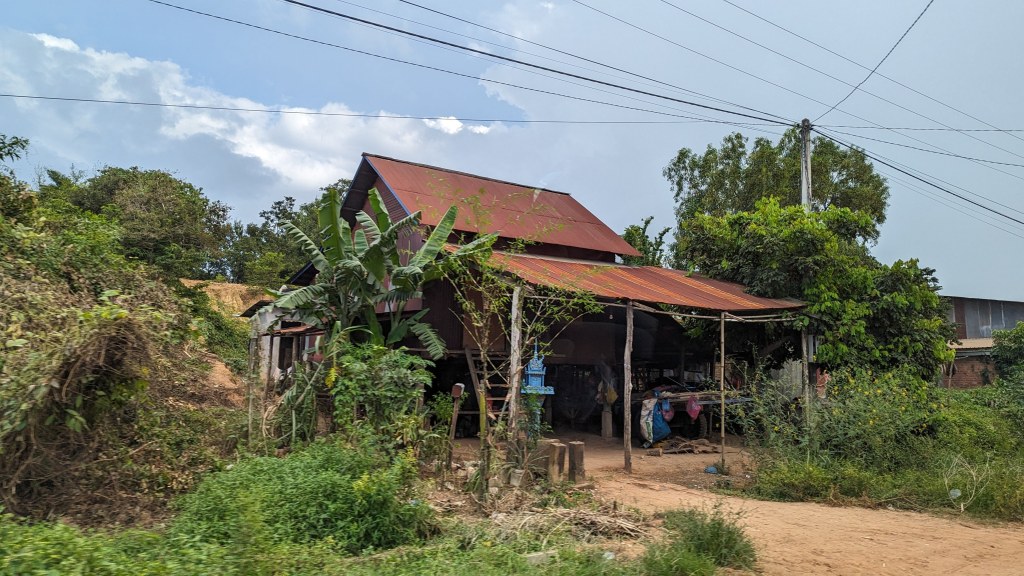
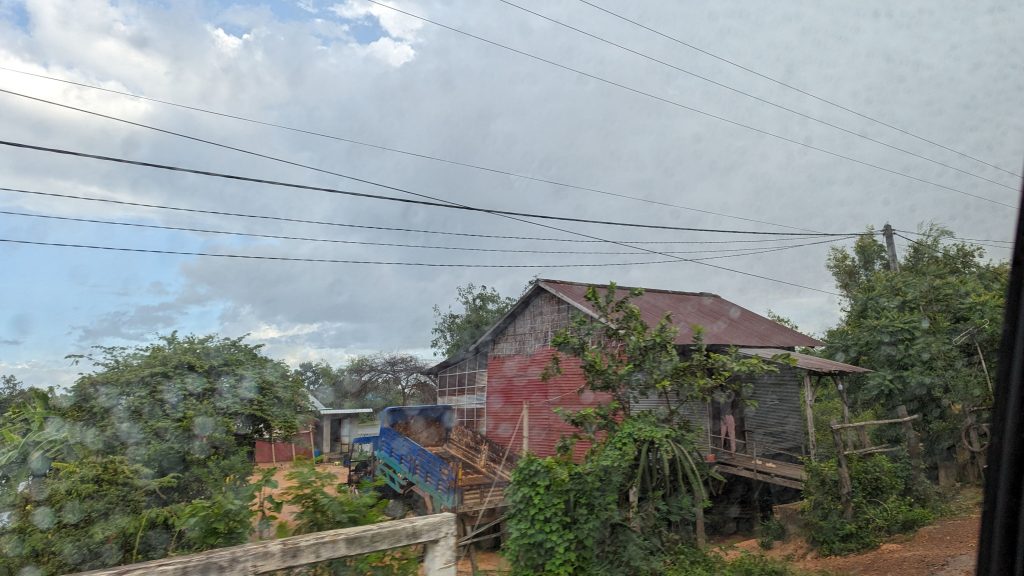
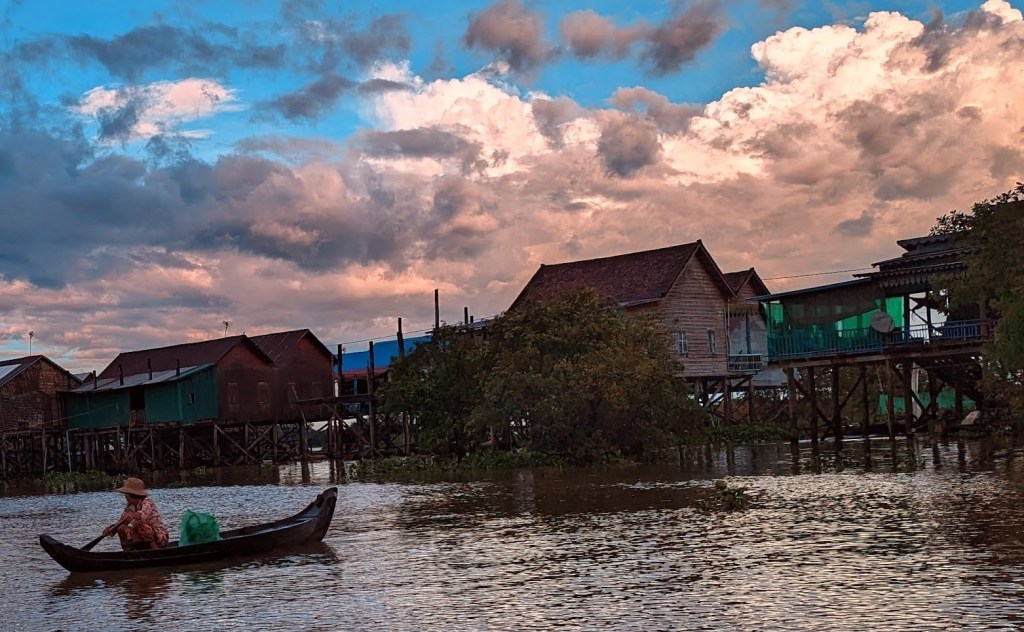
At 3:24 PM we were once more back in the van, with some intermittent light rain starting at 3:31 PM. As we continued, I noticed that many of the homes were already on stilts.


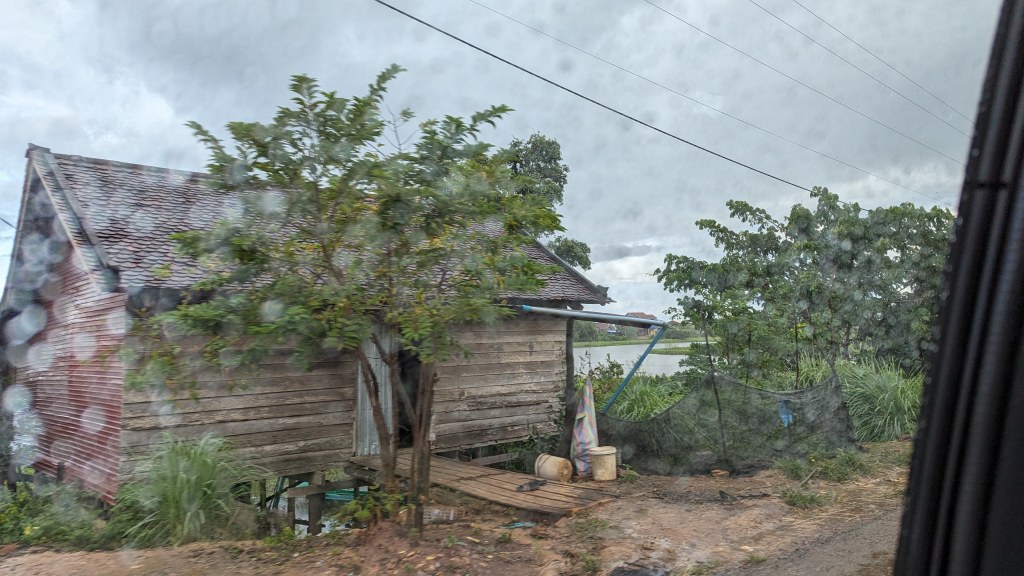
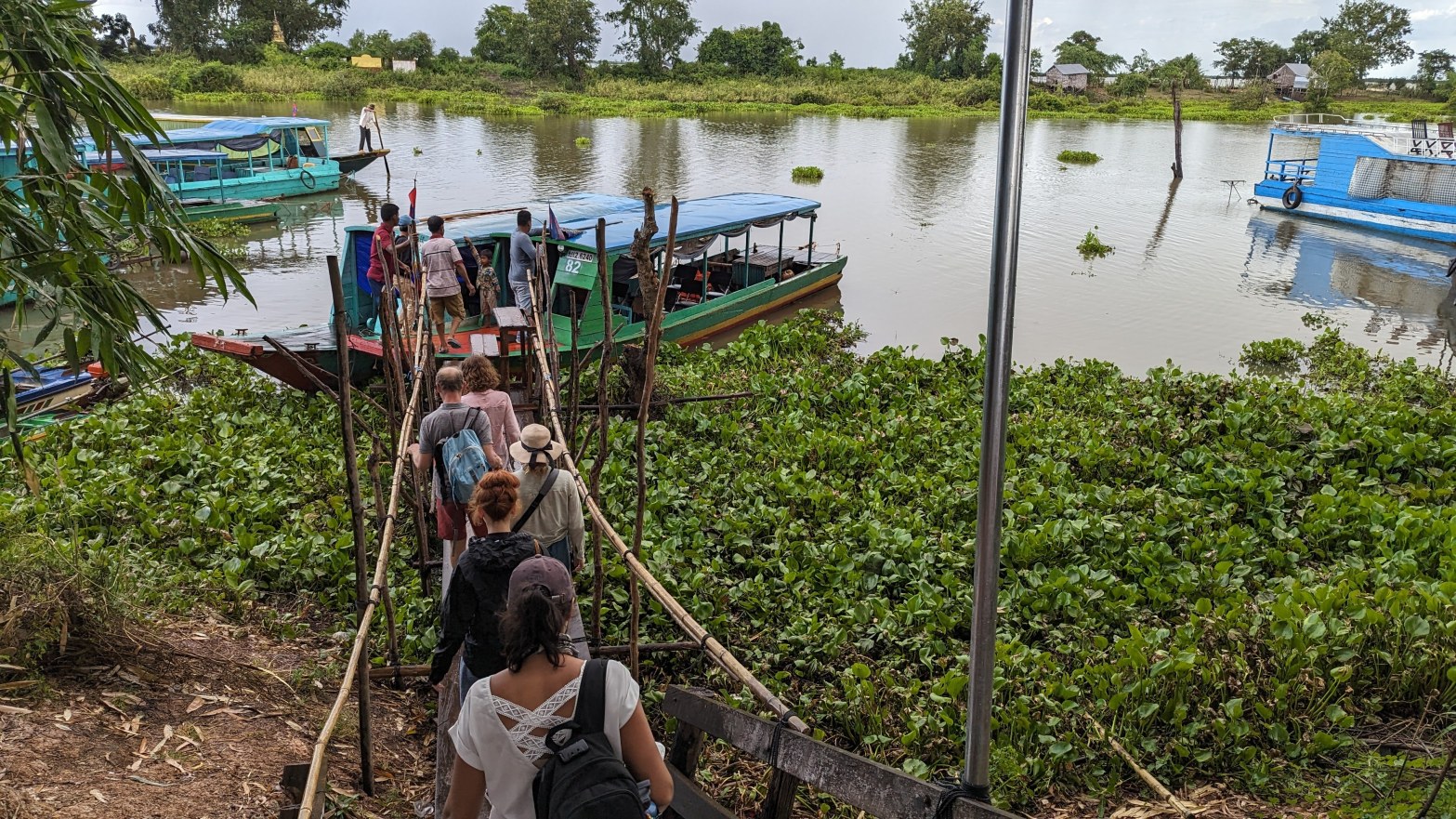
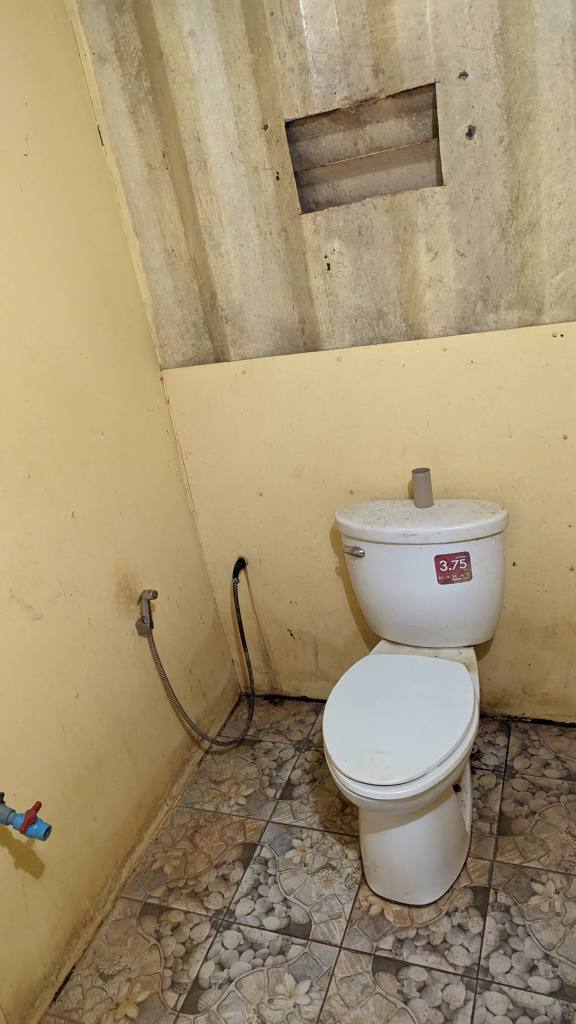
Then we arrived to a stopping point at 3:37 PM where we were advised to use the bathroom. I think this is basically like a “boat stop” since it seemed like Saro was paying for our passage and then unsurprisingly, we were led onto our boat at 3:45 PM. For those concerned about practical matters, the bathrooms were reasonably clean and had western style toilets but no toilet paper.
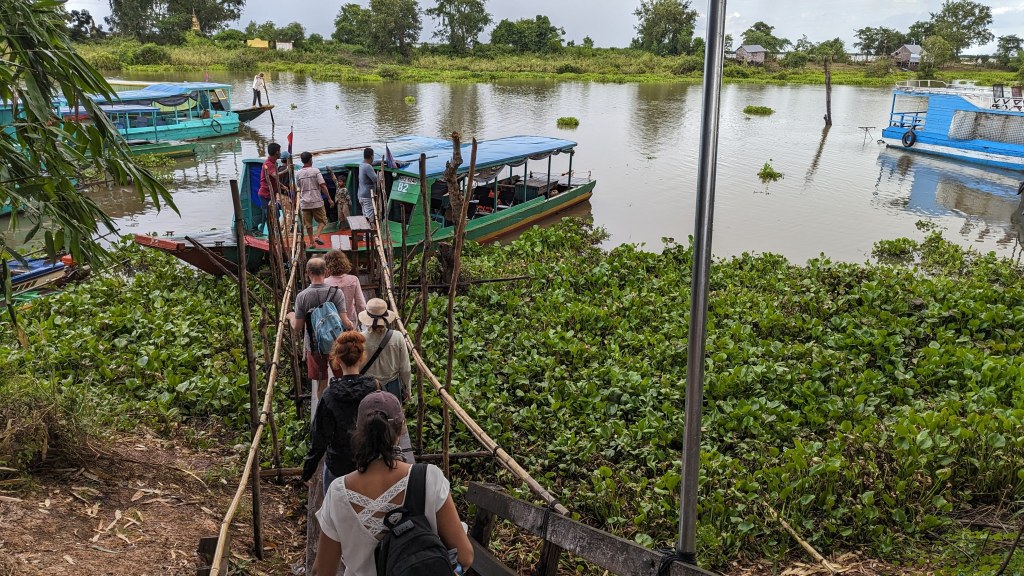
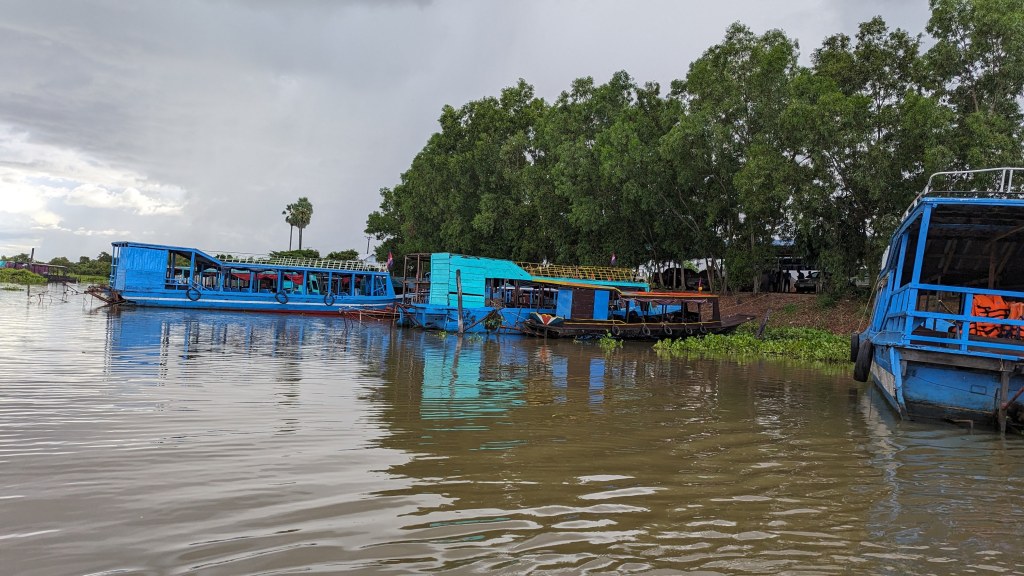
The boat itself had rather comfortable seats which appeared to essentially be padded folding chairs. Maybe I was just being foolish, but I felt that it was a completely safe setup. As we were heading out, Saro told us that most of what we were riding on was actually rice fields, but at this time of the year they were completely flooded. Regardless, it was all very interesting to see as we traveled on the water.
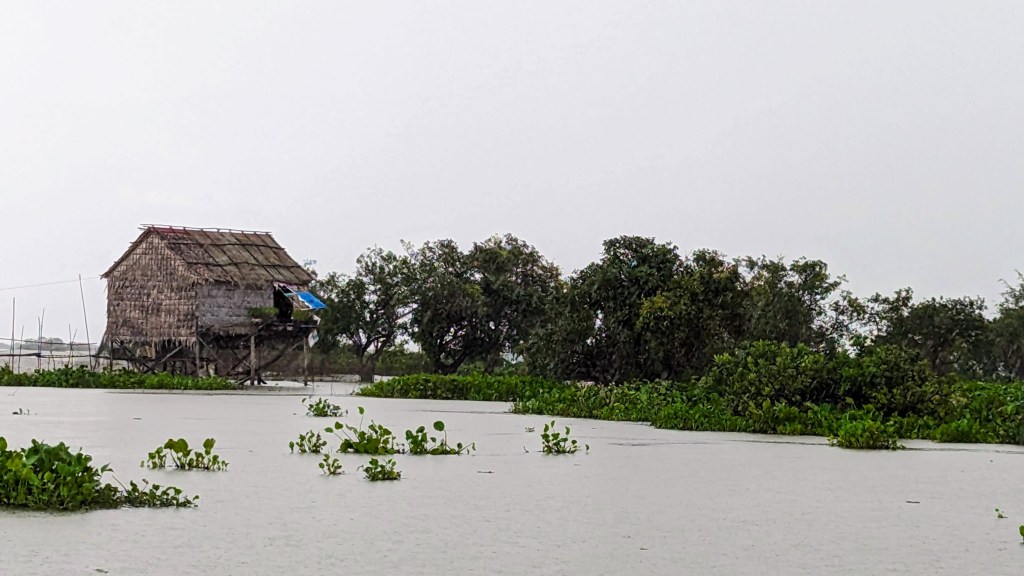
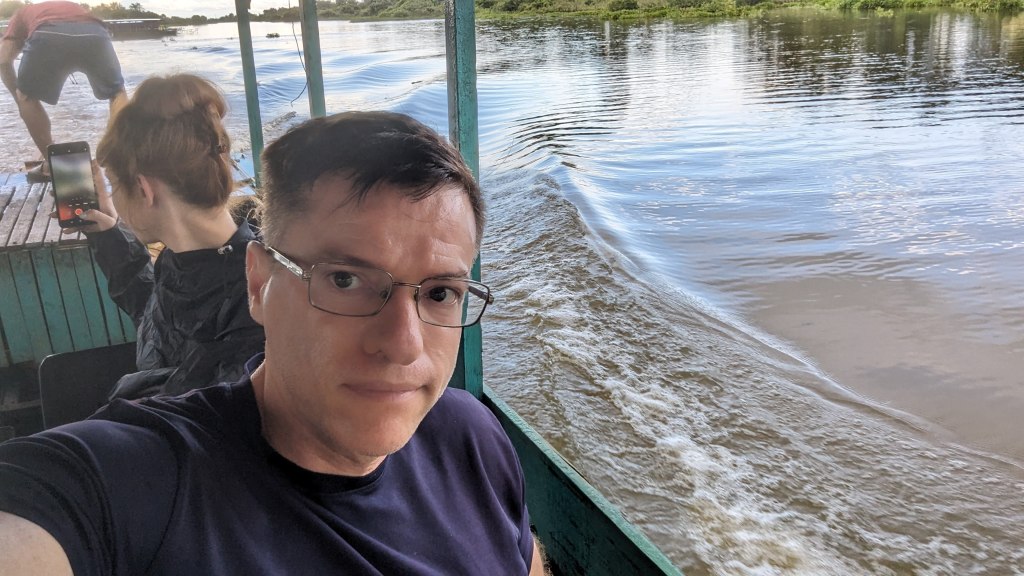
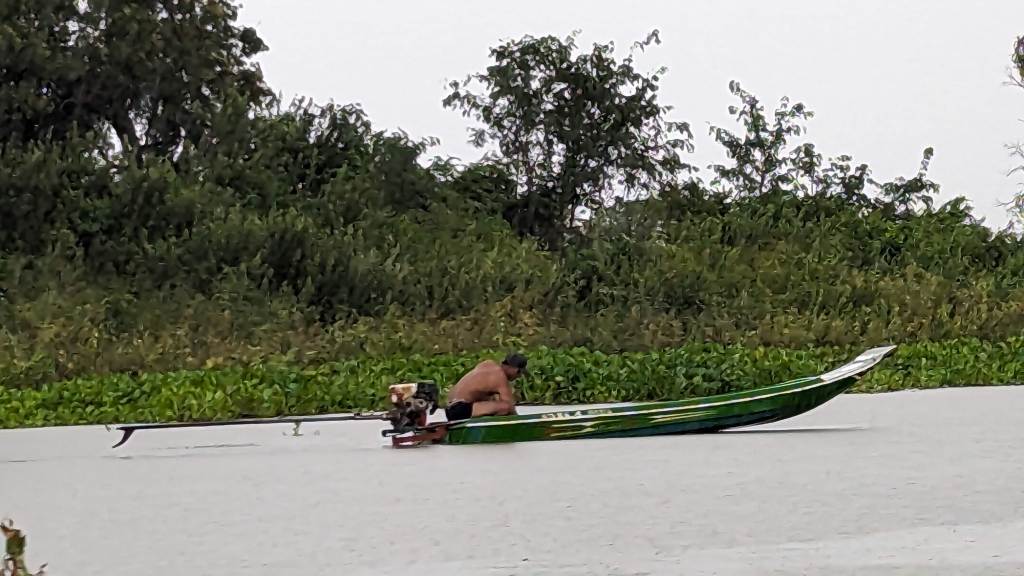


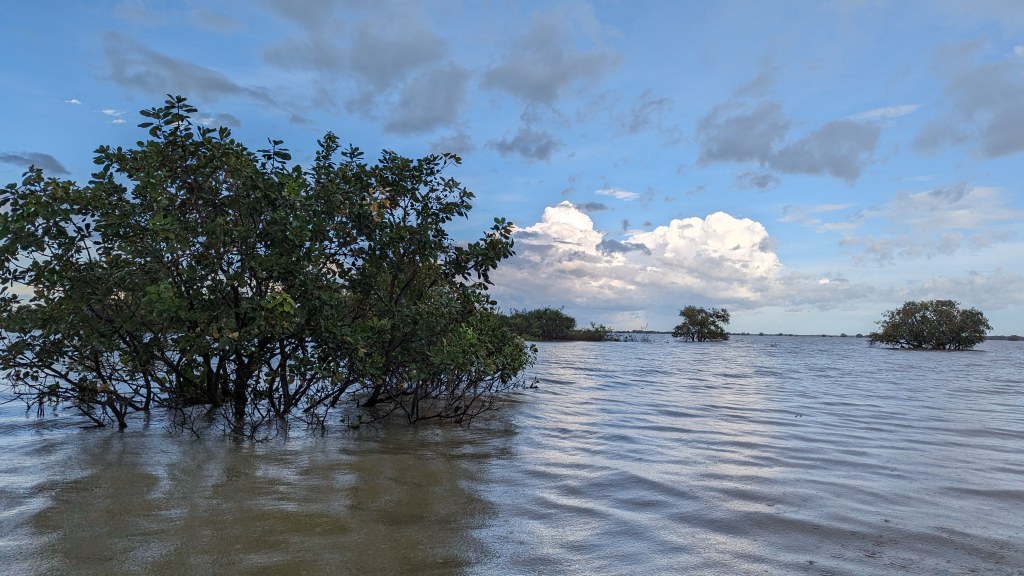
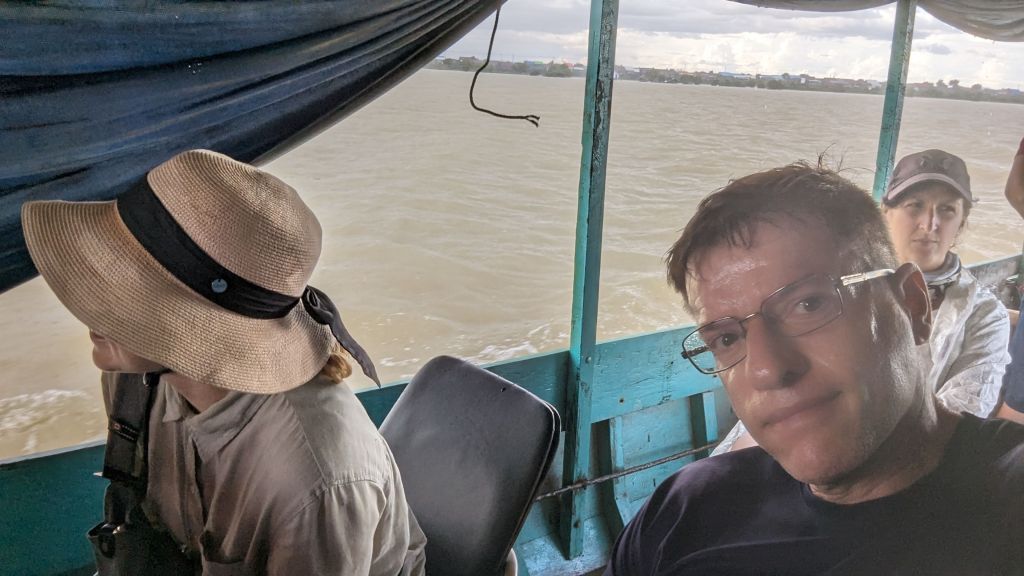
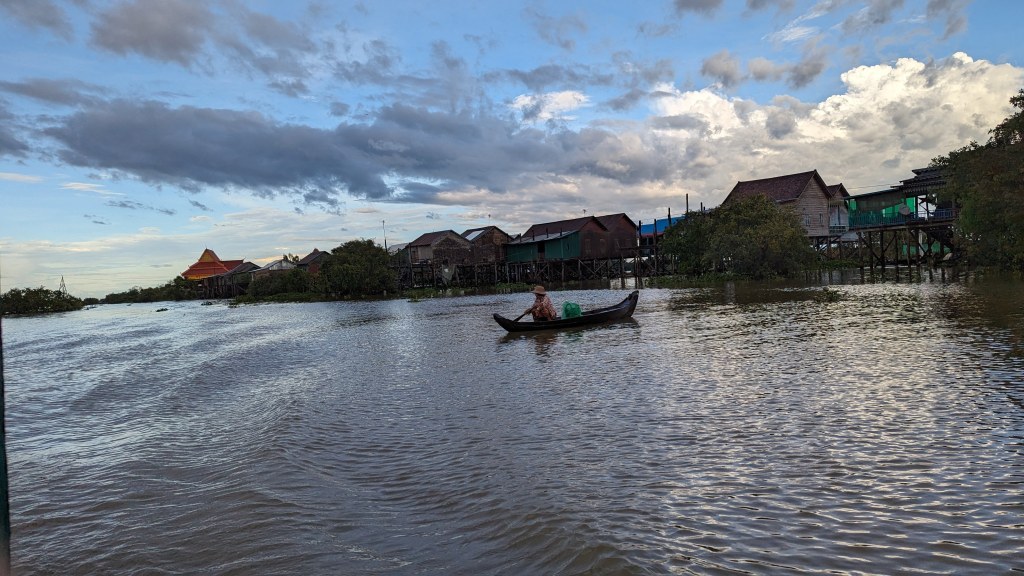
Then at 4:10 point we arrived at a dock which was right next to a Buddhist temple. Evidently this is “the capital” of the villages along the lake. We walked around a bit and he told us a bit about the water filtration system, the school which they support, and the upcoming local water festival which many in the community were currently preparing for. He said that a local fisherman here can reasonably earn as much as $25 USD a day, which I though sounded like quite a bit considering the way things looked, but maybe that was not taking into account daily expenses which might be quite high, or maybe they can only earn that a few months out of the year?

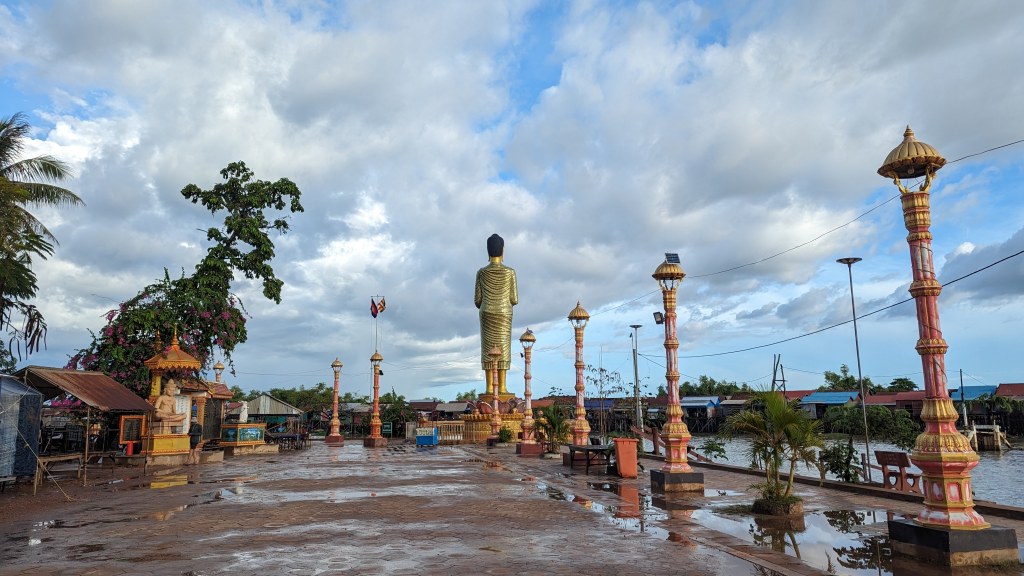
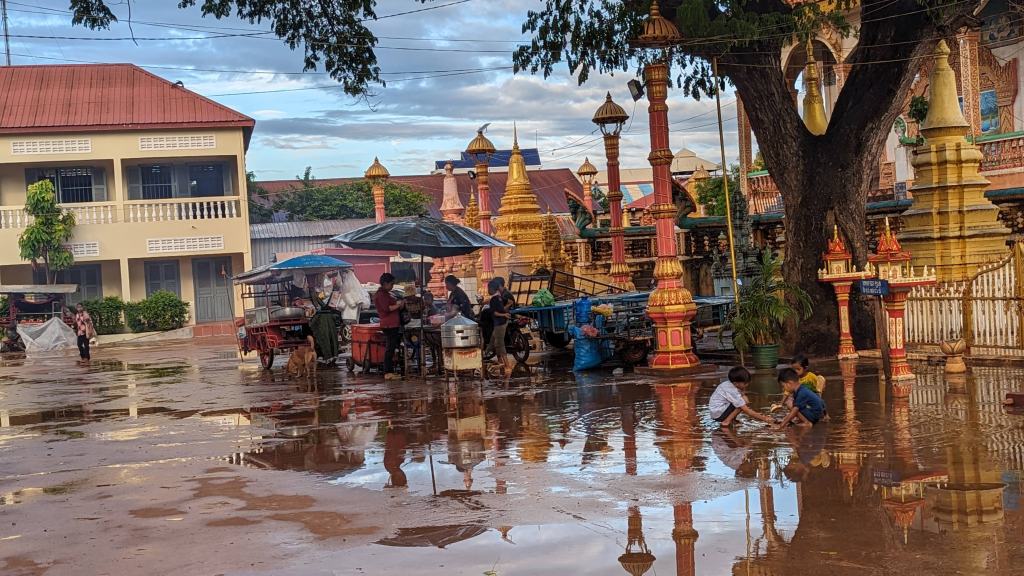

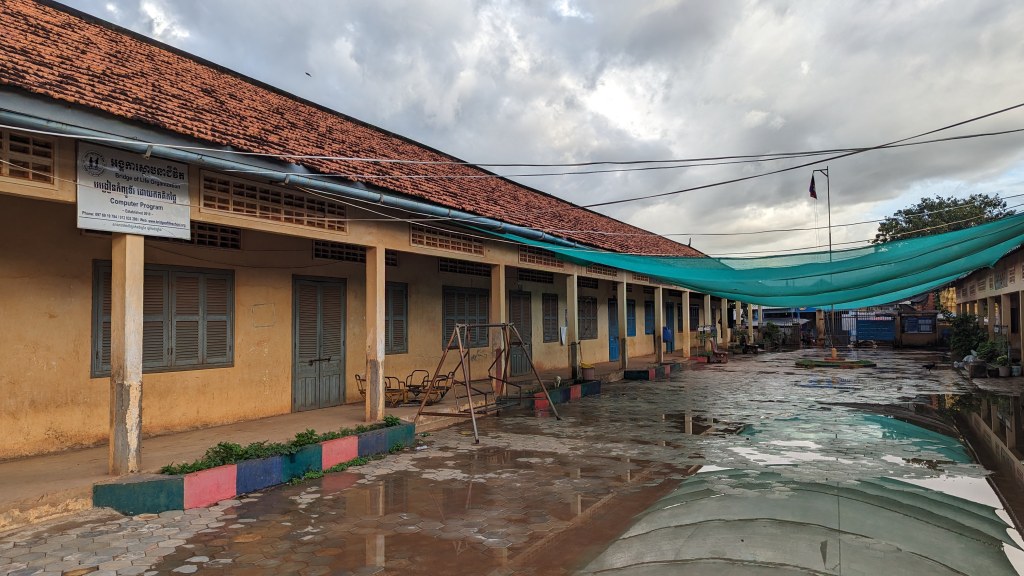
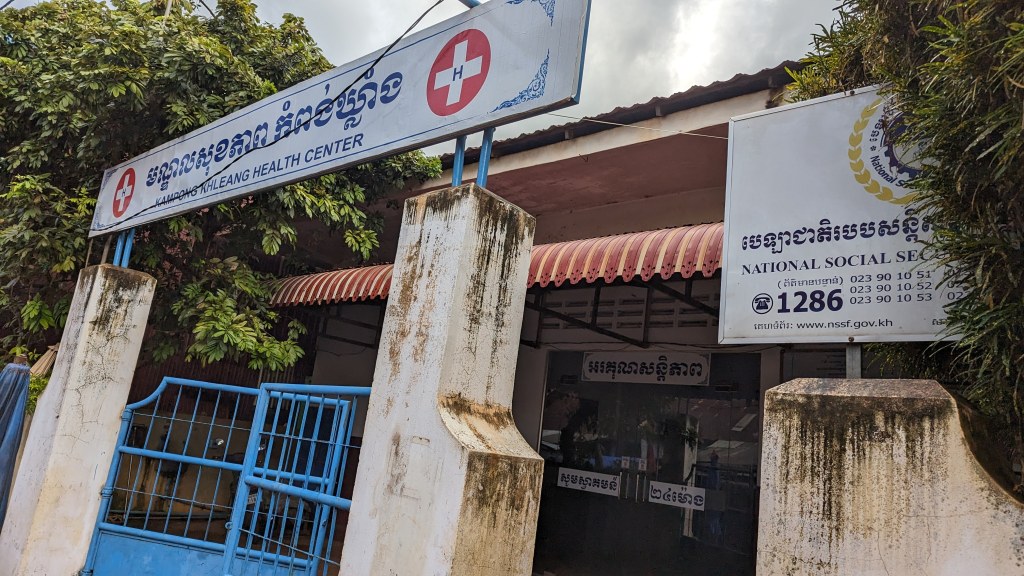

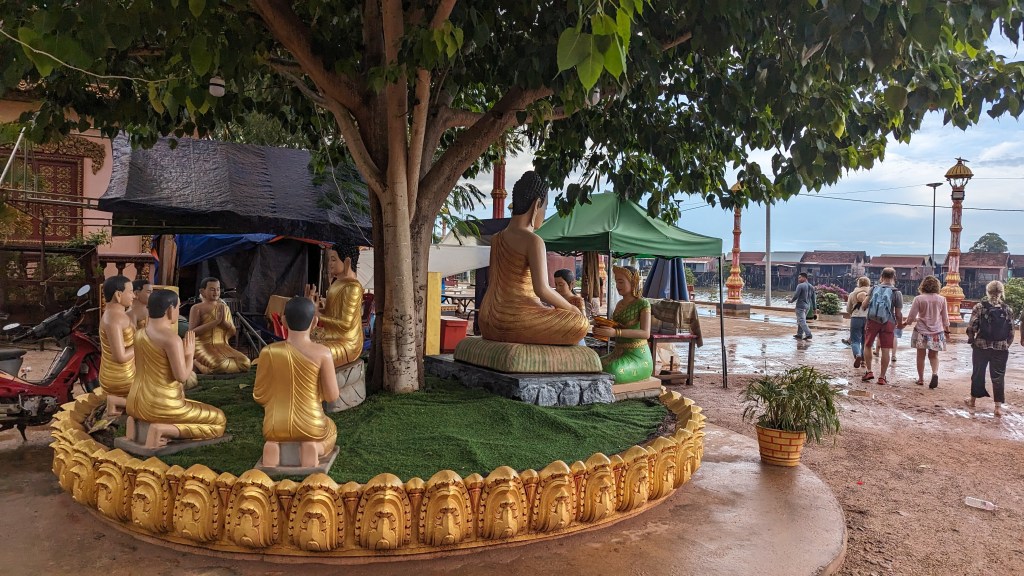
Then at 4:36 PM we were back on the boat for ten more minutes before arriving at the pre-primary school of Bridge of Life. This is evidently the main school they are currently working on supporting.
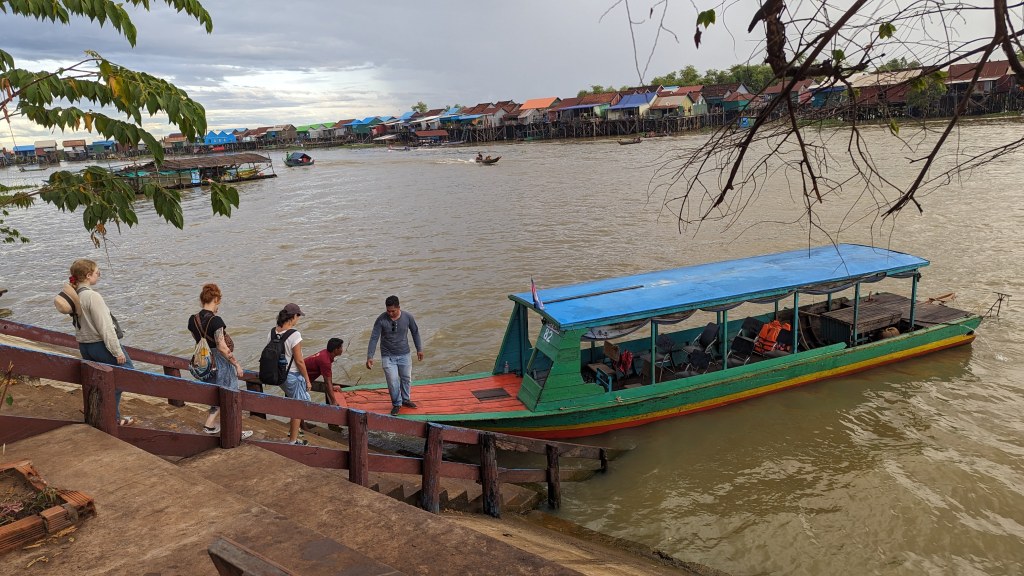


Getting into this place was the first time of the day that I felt a bit insecure. It is not pictured here, but going from the boat into the school was a bit precarious, and I could easily see how someone without sure footing would feel nervous. Yes, Saro did a good job of helping everyone, but I was thinking this might not be a good idea for people who have some minor issues with mobility.
Despite being a “pre-school”, the students here are from 6-8 years old, and they currently have 45 students. Many people in this village do not actually start first grade until they are 12 or even 13. The hope with this pre-school is that they will be able to get younger kids into school earlier. Given the current number of students, and the space in the building which is actually dedicated to “classroom” this seemed like it would be an incredibly cramped place to give and receive lessons. They only have classes from 8:00 AM to 11:30 AM, since the teacher goes out to do fishing in the afternoon. Surprisingly, the teacher also lives here, right inside the schoolhouse. Evidently, they used to also have sewing lessons in the afternoon, but they currently do not have a sewing teacher, so that part has been put on hold. Finally, this particular school has been operating since 2008.

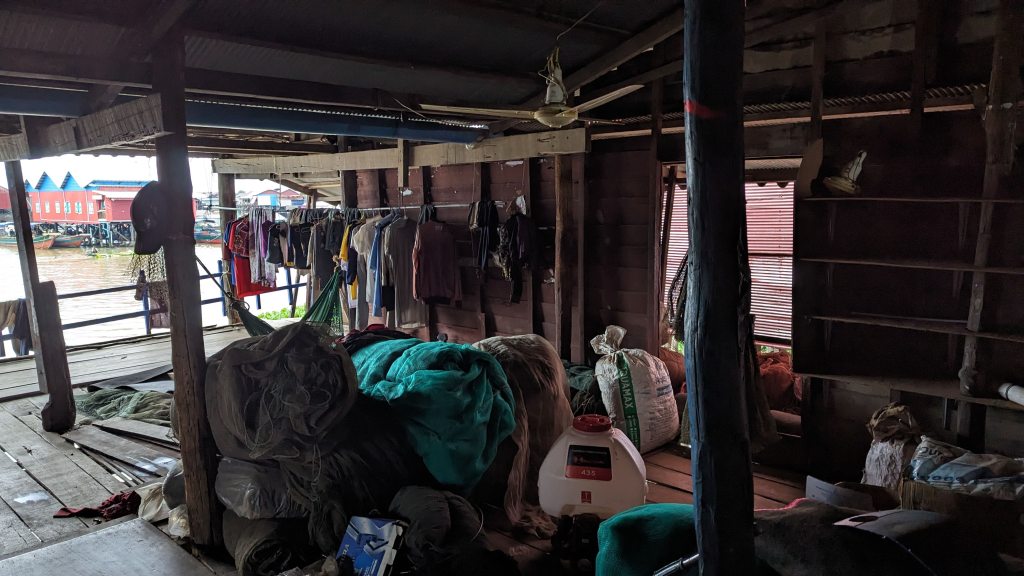
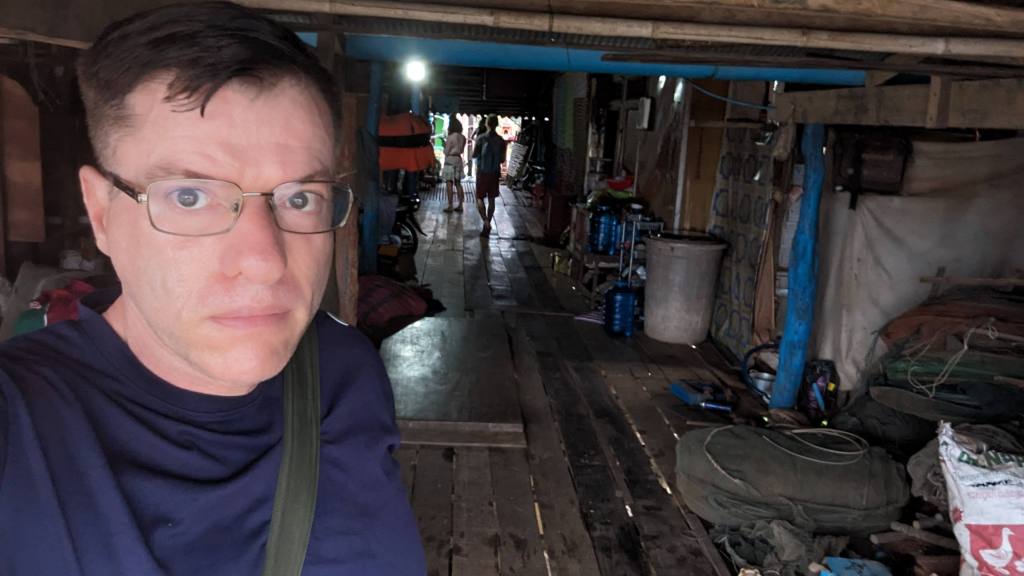
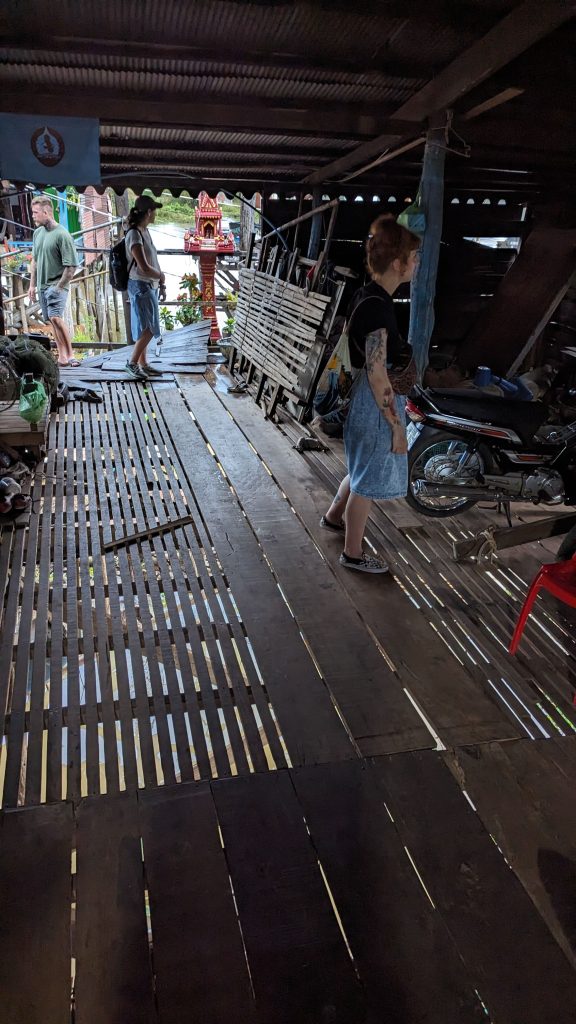
At 5:15 PM we went back onto the boat, headed towards a conglomeration of “true houseboats” which float on the water year-round. Both most of the stilted homes and the houseboats get their water directly from the lake, using black sand and activated charcoal water filters. However, whereas most of the stilted homes have electricity from the main power grid, the true floating homes get all their electricity from solar panels.

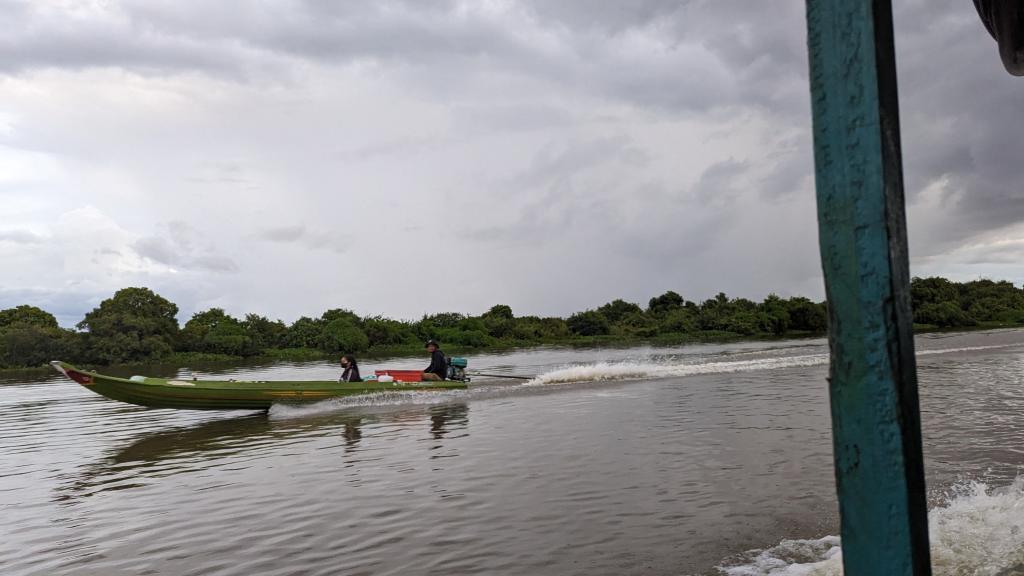

On a side note, one bit of humanity that drew my attention throughout the entire daytrip was this late middle-aged French couple who held hands almost the entire trip. I wondered, is this how they go through all of life, or was it just because this was a special trip? Also, how many years have they been together, and will they still be like this in fifteen more years?

While there was little to indicate it for the casual viewer, at 5:39 PM we were finally out on the actual lake of Tonle Sap. Supposedly this is the largest freshwater lake in Southeast Asia, and it has approximately 50,000 people who either live on it in year-round floating boats or around it’s edges on stilted homes. It is an extremely productive and biodiverse lake, and recently steps have been taken to maintain the sustainable emphasis on artisanal fishing rather than more industrial methods. We hung out just looking around until 5:47 PM, ostensibly waiting for the possibility of seeing a sunset, but cloudy conditions put a wrench in the works. Still, it was very beautiful.
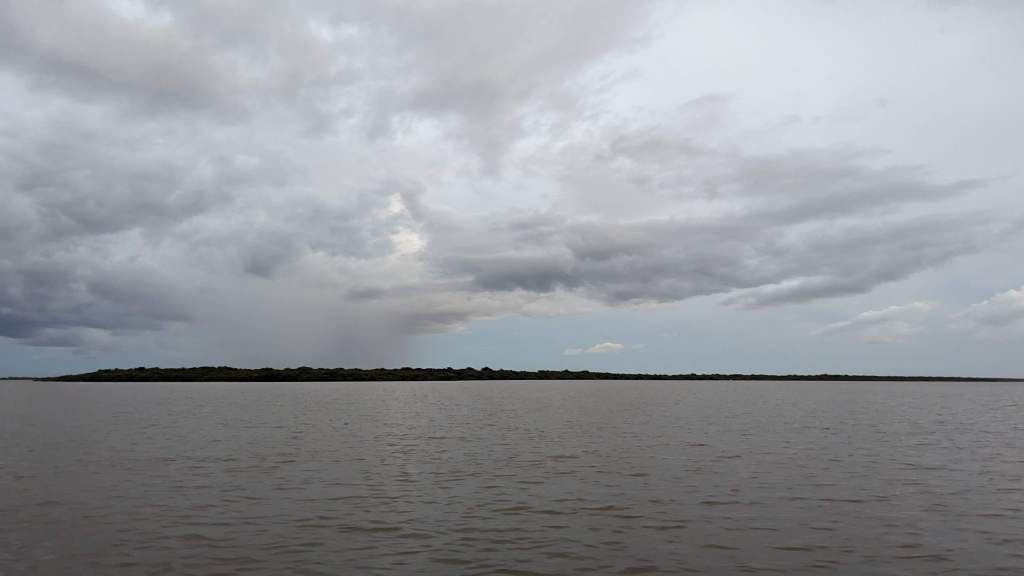

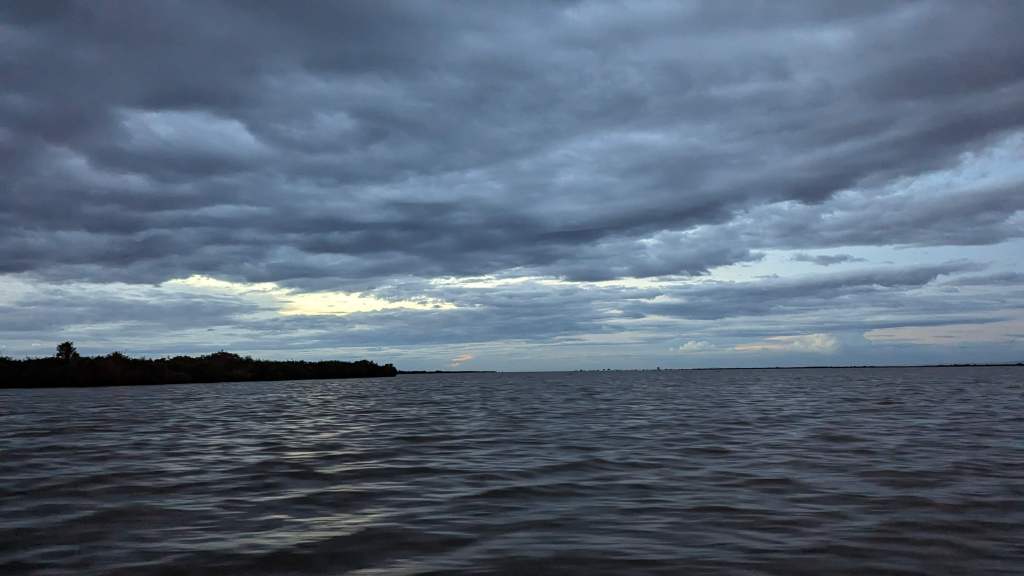

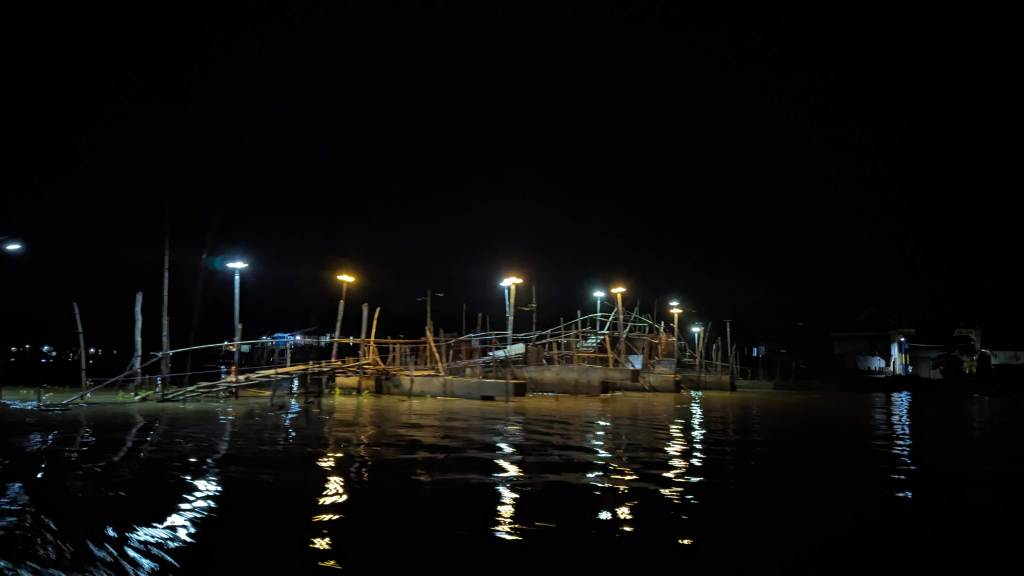
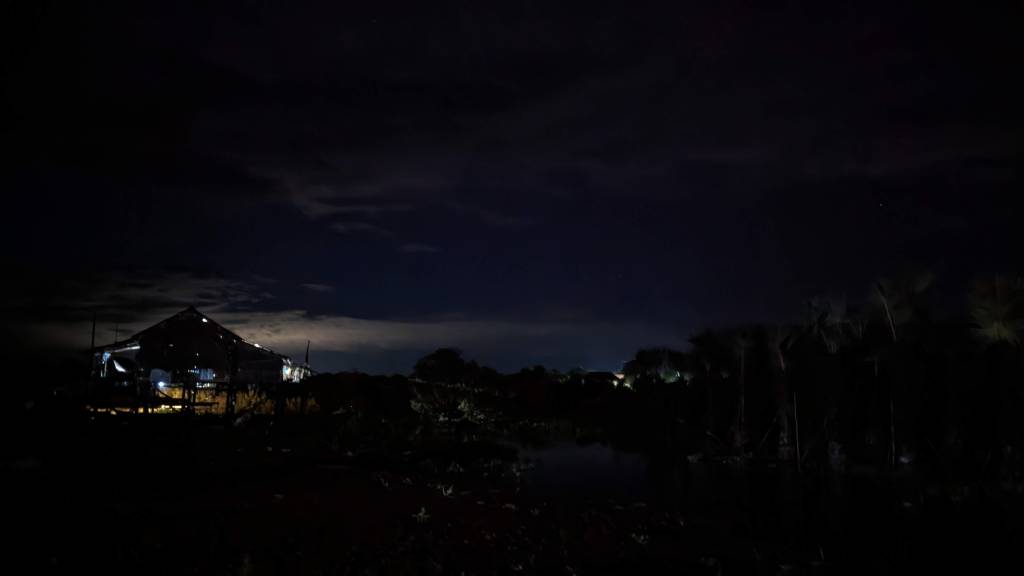
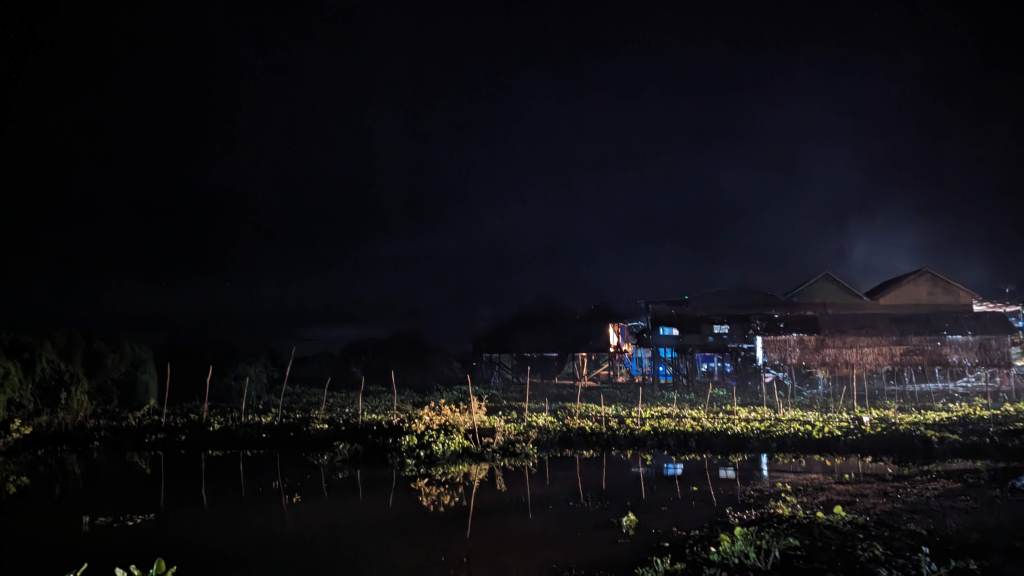
As we were heading back to our land transport, even at 5:52 PM it was already very dark on the water. Although it was hard to take night pictures on a moving boat, it was a very beautiful return to the dock, where we arrived back at 6:25 PM to get back in the same white van as before.
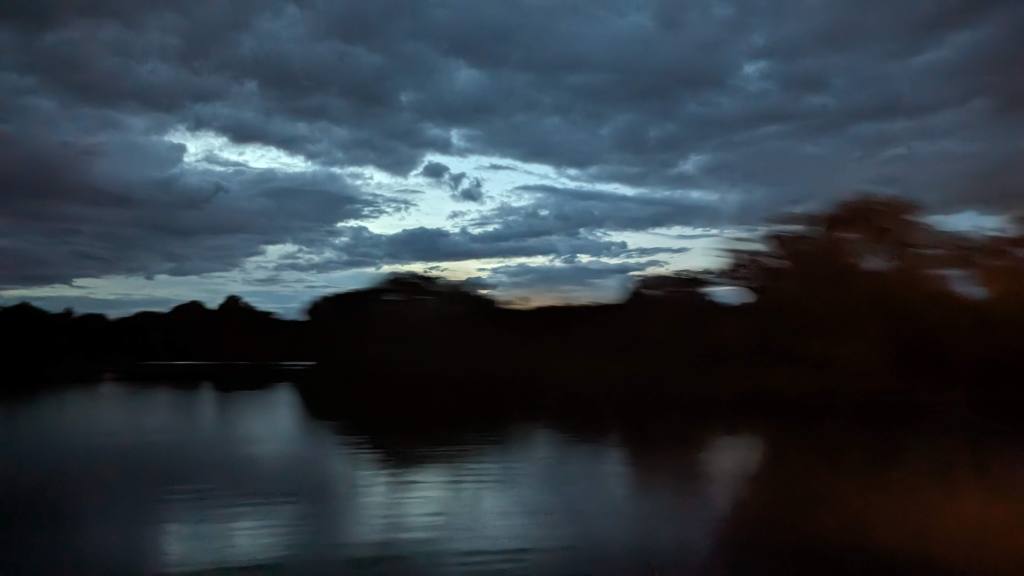
We had a quick bathroom break at the same place as before at 6:36 PM and we arrived right outside my apartment at 8:00 PM. I decided to shower and have a quick rest before walking out at 9:38 PM to explore some of the restaurants in a different area near where I was staying. There were actually quite a lot of nice-looking places, but these were clearly meant to be places for larger groups of people. My food which had a cost of $9.95 USD was perfectly adequate, but I think it would have been much better to have had a traditional Khmer barbeque with a small group . . . one of the issues of solo travel.
At 10:05 PM I headed back home, arriving about five minutes later. I quickly got in bed, and gave myself to sleep without any alarm, since I had not planned anything for Day 6 until much later in the evening.
So, I know that today was rather laid back, but I am still happy to report that it was a very good day. I am glad that I went out to see the “floating villages” and also glad that I did it with a much more responsible tour operator. The whole day had more of a family trip in the car feel to it than many tours, and that was not actually a bad thing. No, it didn’t smell bad at all during the entire trip, and while there were some very poor communities, I did not feel that our visit was at all exploitative. So, if you are in the area and are thinking about doing something similar, first make sure as I did that things will not smell bad during that time of the year, and then make sure to go with a very reputable tour operator like the one I used.
Thank you for continuing to follow along, and please let me know about some of your adventures as well. Until next time, may all of your experiences be as fulfilling as mine have been over the last few days.


French couple mention 🙂
LikeLike