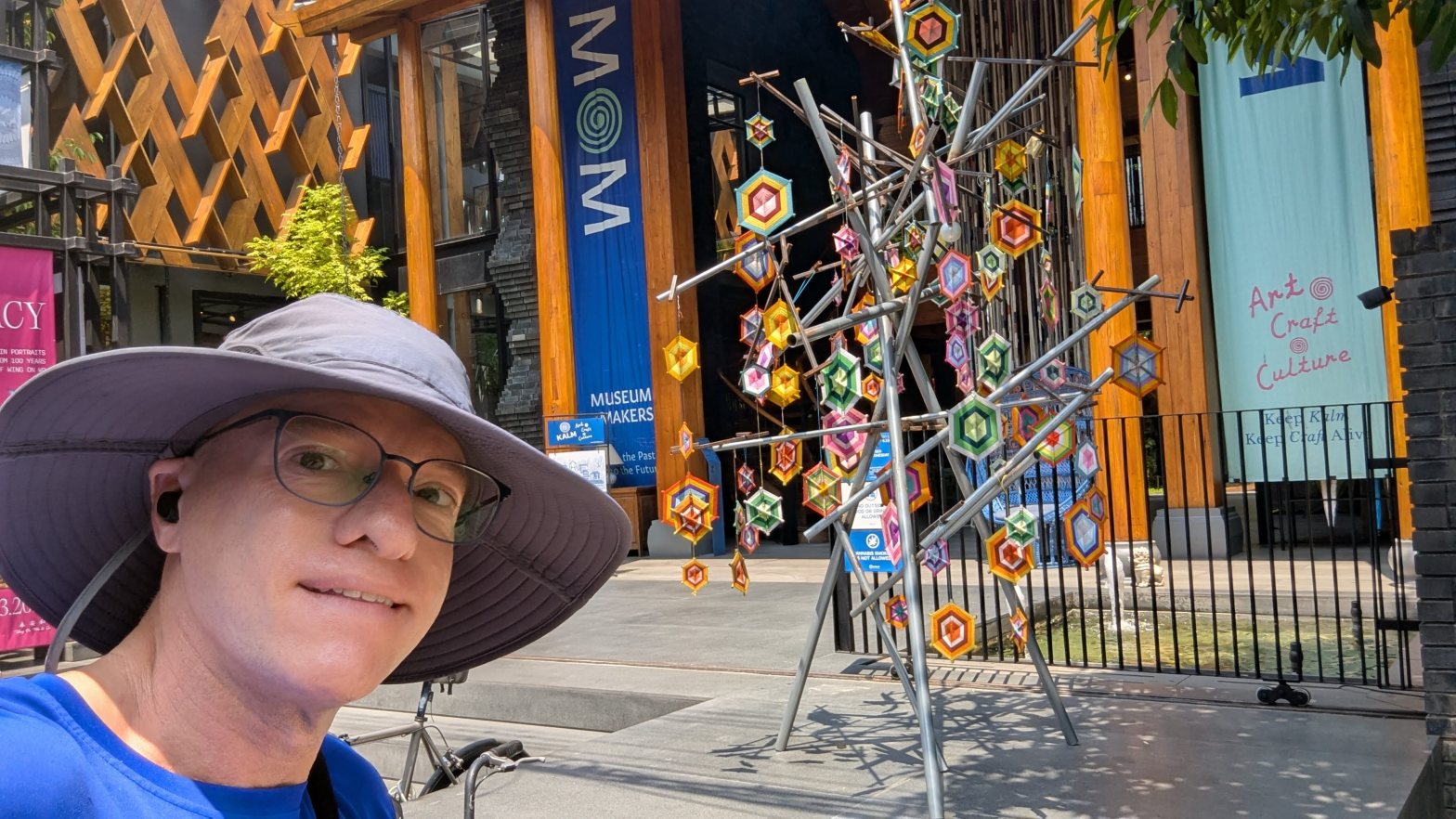
Hey there readers. I hope all is going well for you. My first three days in Chiang Mai had been very good, so even though I hadn’t planned for much, I was cautiously optimistic about my fourth and final day.
Again, I let myself sleep in a bit, and it was not until 9:18 AM that I headed out the door. I briefly considered getting some breakfast nearby, but then decided in favor of walking straight to Kalm Village, leaving open the possibility of stopping to get some breakfast along the way.
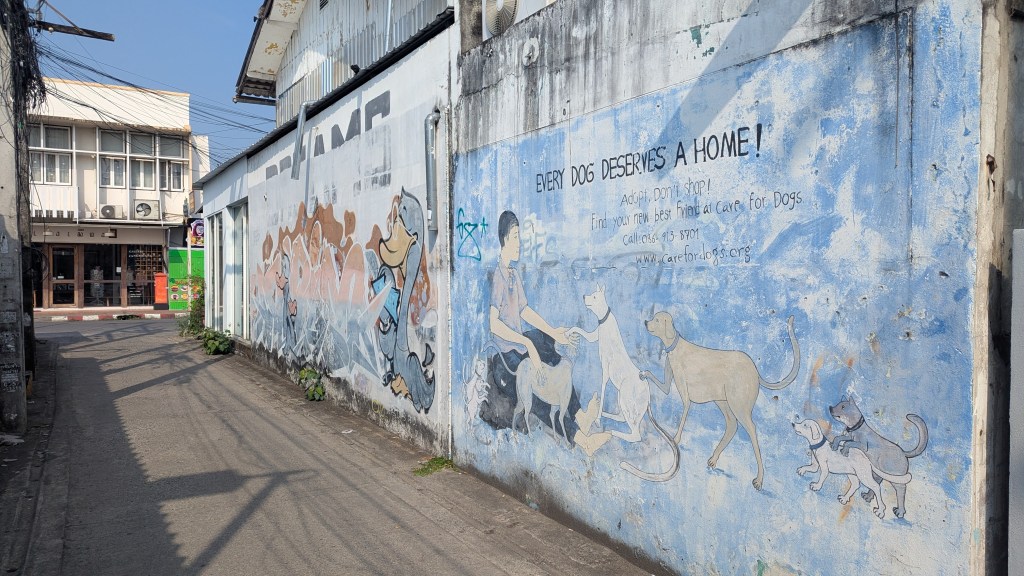
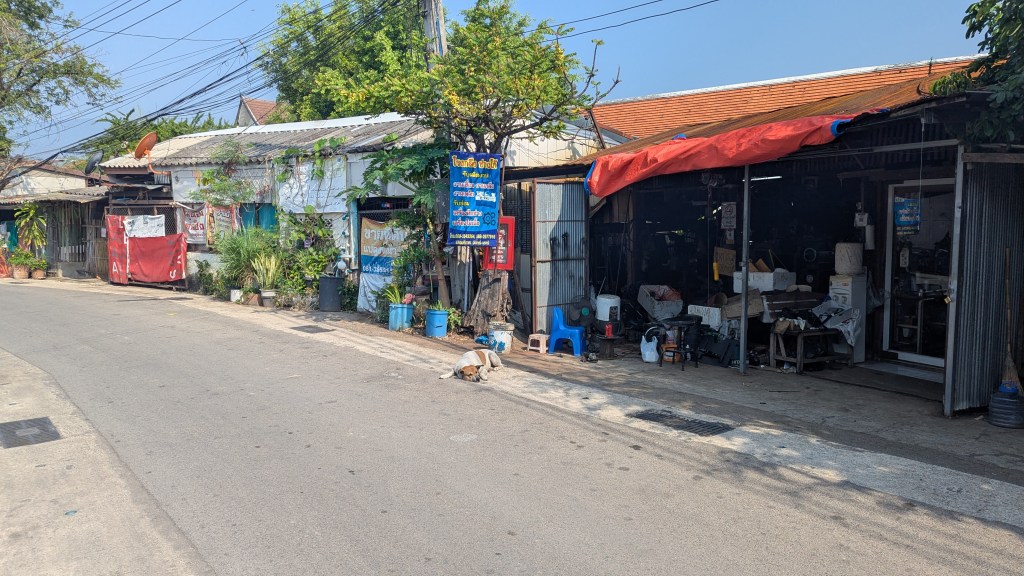
Fortunately the temperature was still pleasant at this time of the day. However, no breakfast spots caught my eye before I arrived the spot at 9:44 AM.
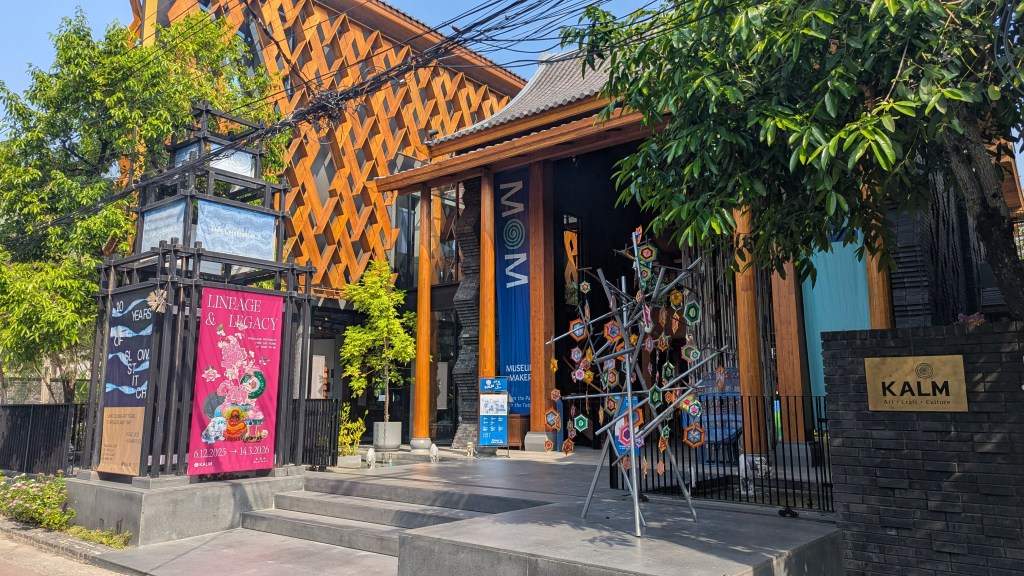
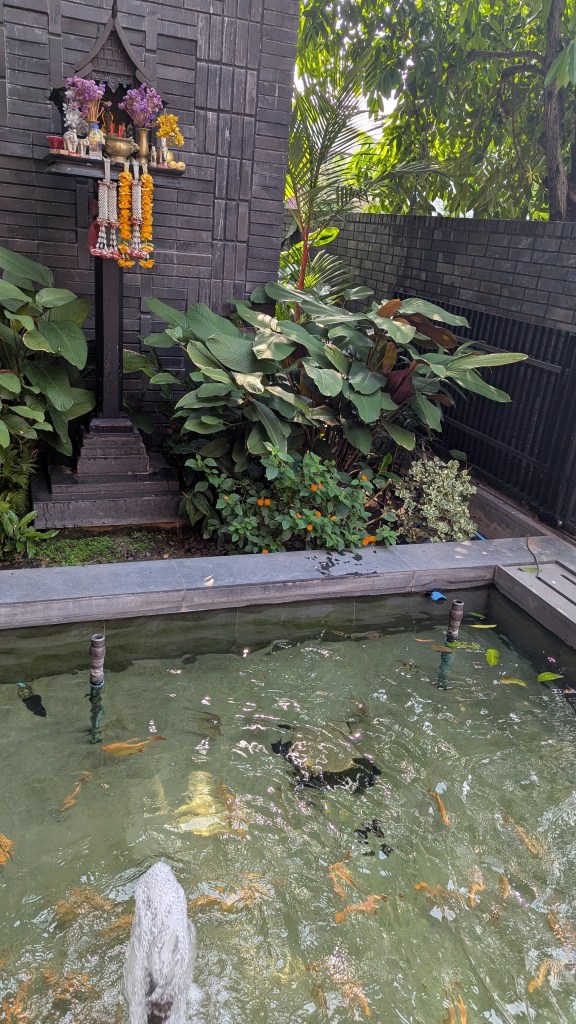
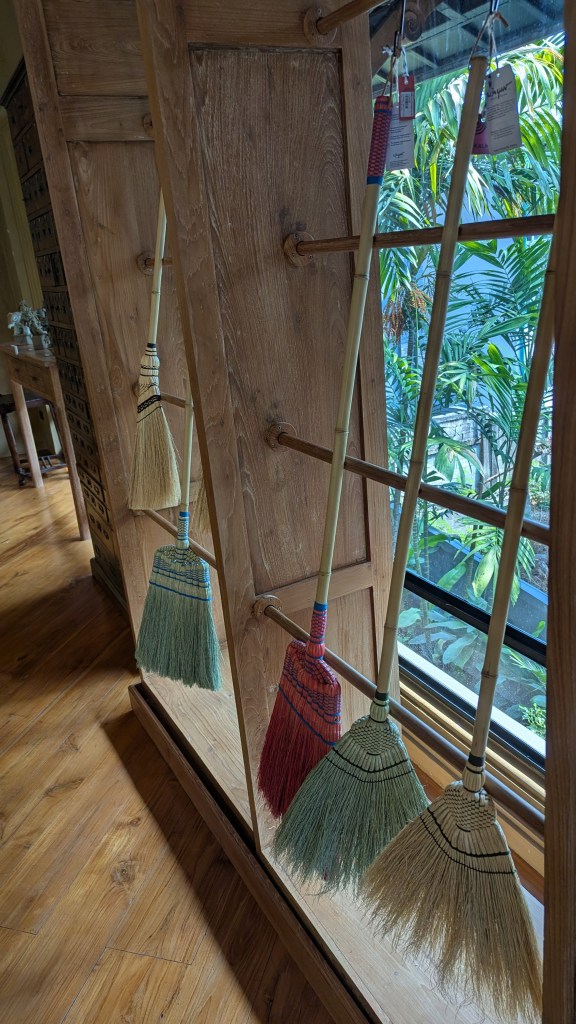
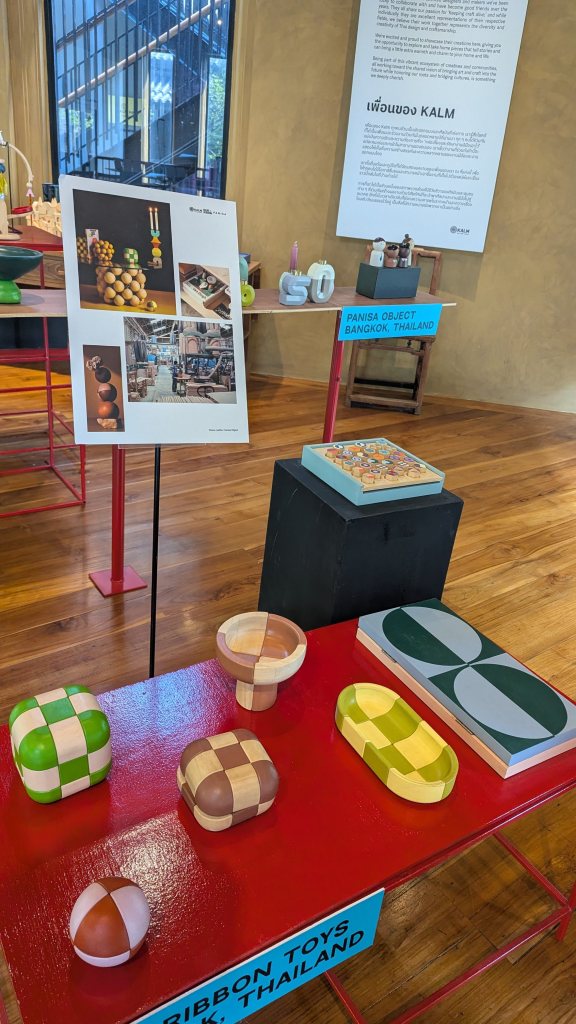
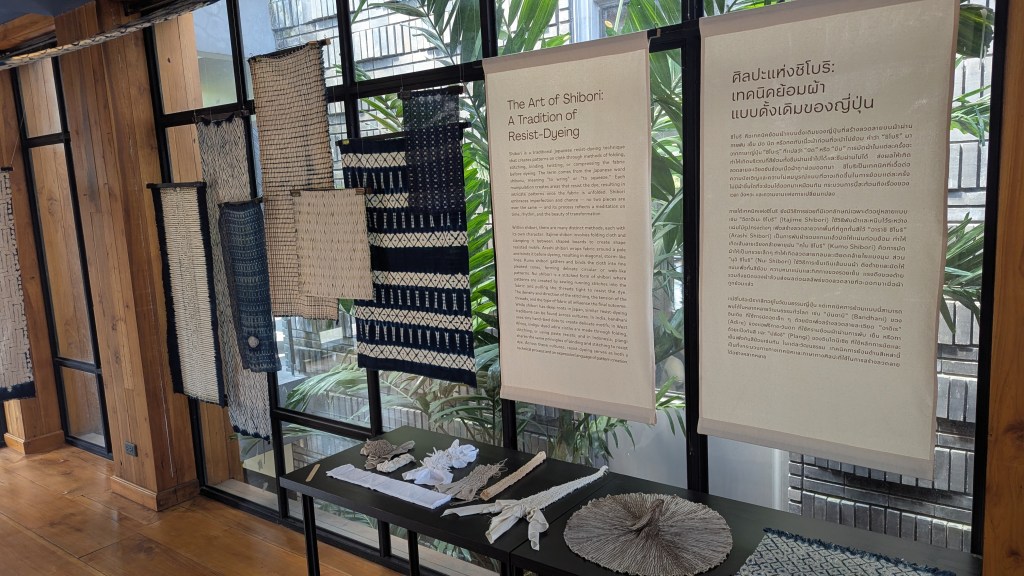
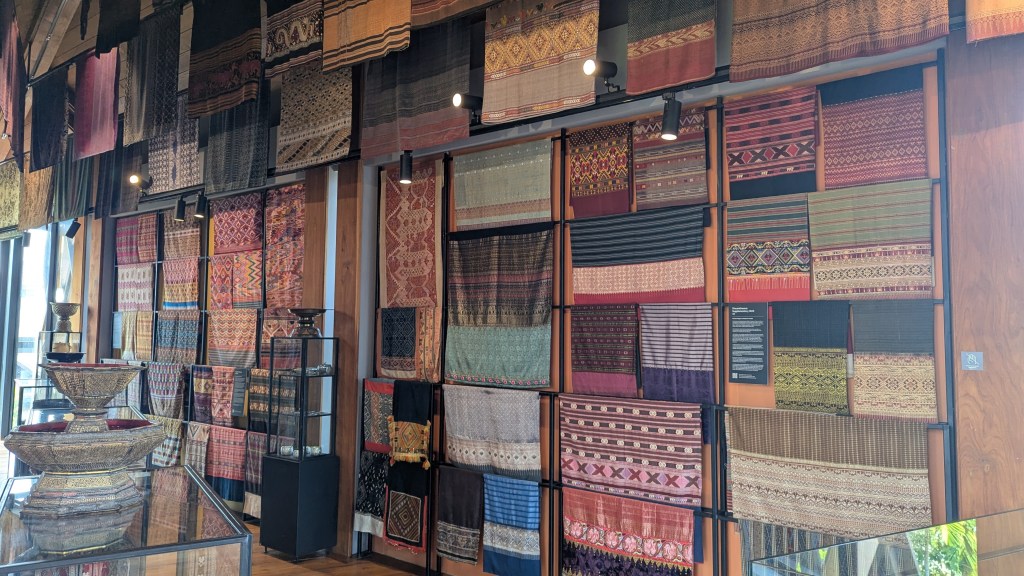
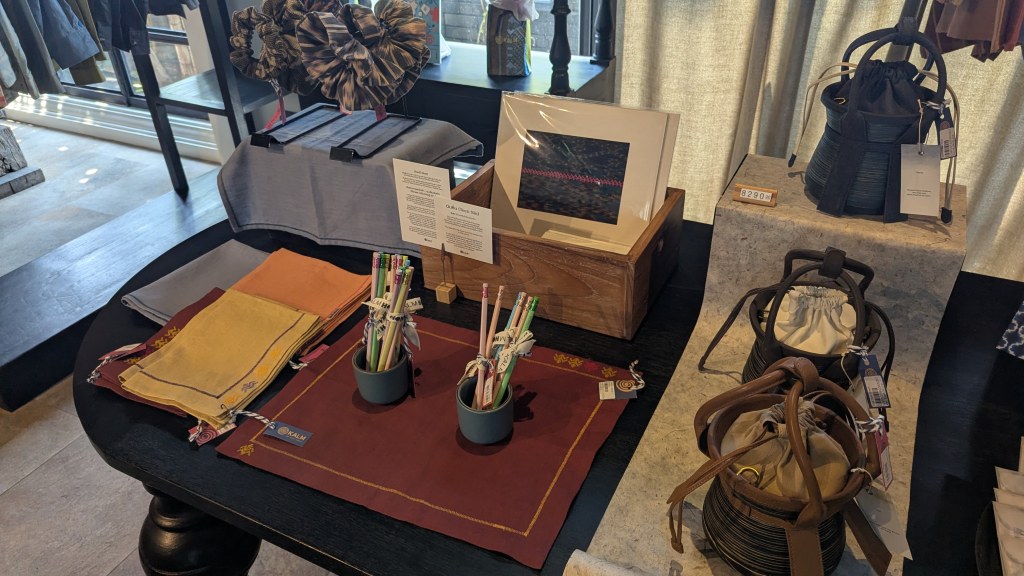
It didn’t take me long to have a fairly clear idea of the purpose of this space. It is basically a small, fancy shopping center focused on their version of traditional Thai crafts etc… So keep that in mind whenever seeing prices. For instance, at 9:54 AM I noted that you can buy what appears to be a perfectly serviceable and certainly a reasonably attractive traditional broom for 720 THB ($22.09 USD). It’s a bit over the top, but if living here, I supposed that I could see the attraction.
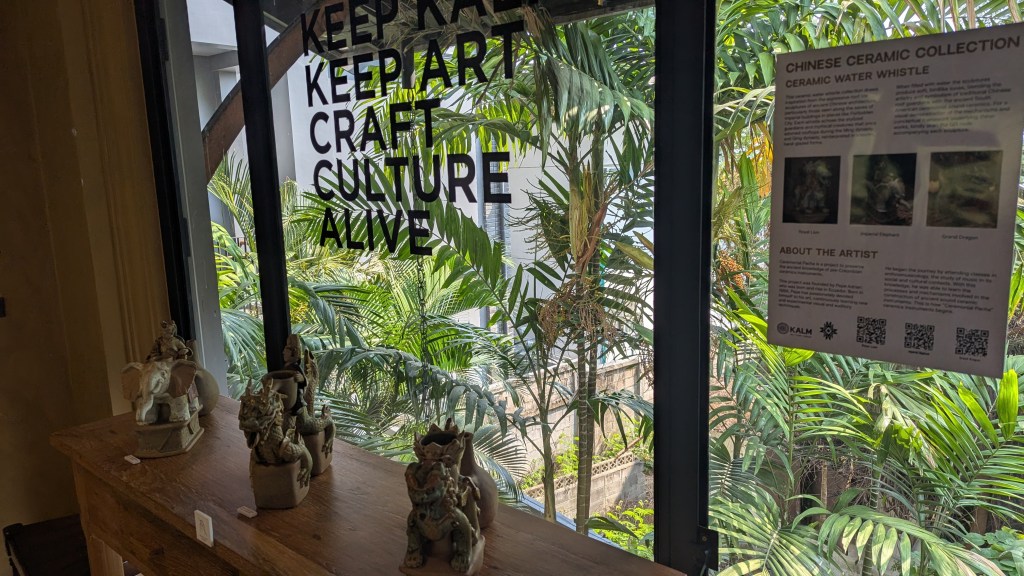
At 9:57 AM I kind of wondered about these local artisan-made “Thai versions” of pre-Colombian water whistles. Was this cultural appropriation? Does it matter whether or not they were putting their own spin on it? Is it less of an issue because they made sure to acknowledge the origin of the craft? Regardless of your views on the matter, you can buy one for 27,990 THB ($859.38 USD).
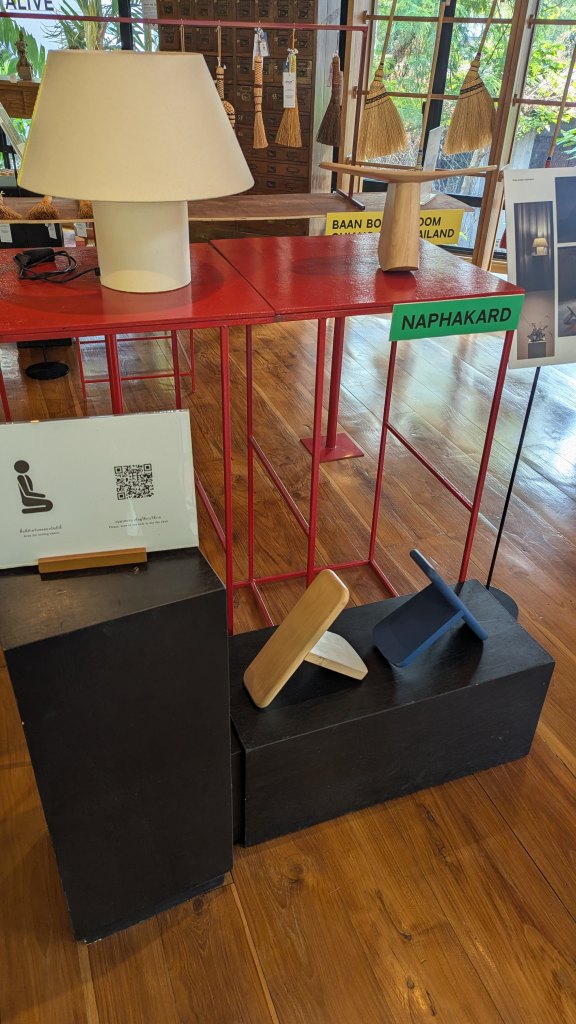
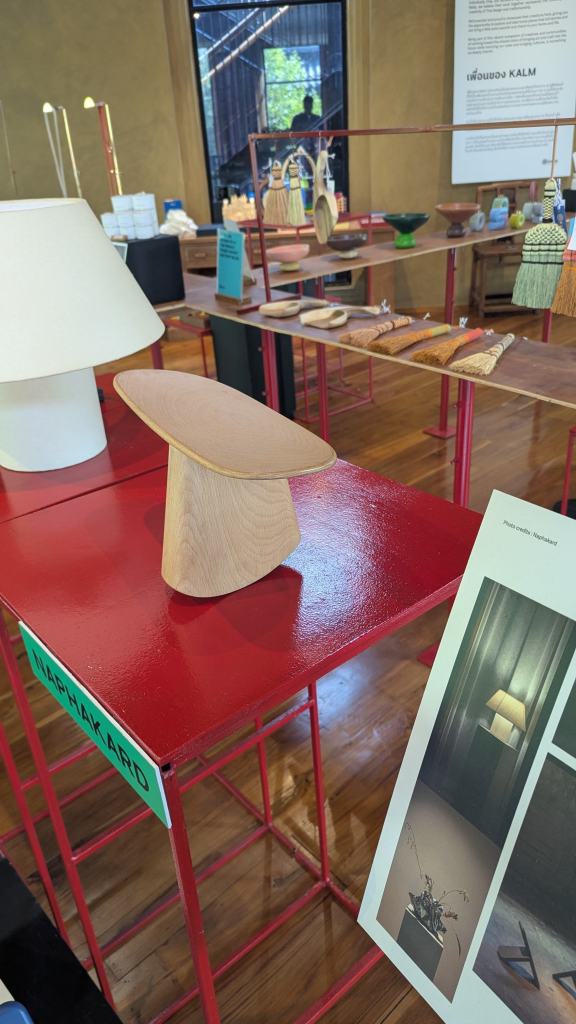
Soon after at 10:02 AM I saw these things that look sort of like weird bookends or simply wide letter “T”s. Evidently, these are chairs? They had a QR code to scan in order to see how to use them . . . there was even a rocking chair version. I can’t say that it looked like something I wanted to try, but who am I to censor someone else’s artisanship? Still, do I really want a chair that I need a QR code to understand?
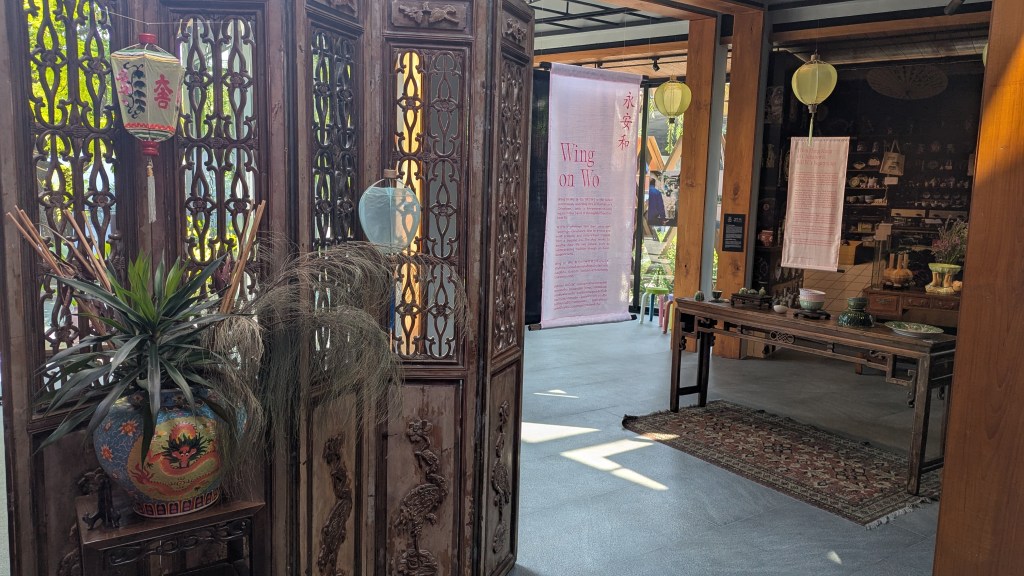
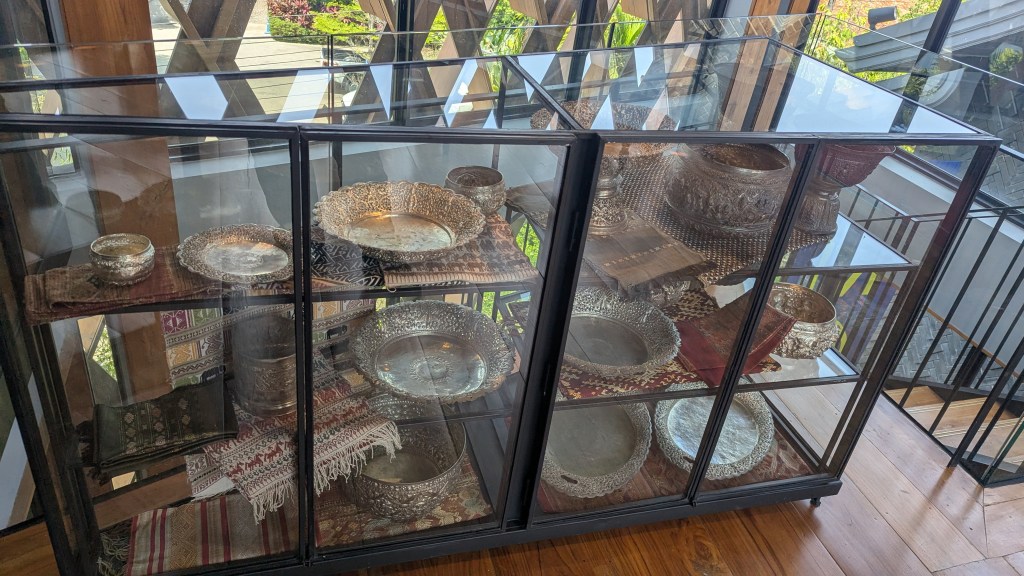
So, what were my overall impressions as of 10:20 AM. I certainly did appreciate what they are trying to do here, but like most “art,” it’s frequently a hard sell. The traditional uses of most of these crafts no longer seem practical, and the newer artistic versions are priced beyond affordability for most people. Furthermore, the average person would not appreciate the updated crafts anyway, because they are still obviously less practical than the common, modern alternatives. However, seen from the point of view of a visit to a museum, I thought they generally did a very good job of presentation. I guess it is all a bit of a paradox.
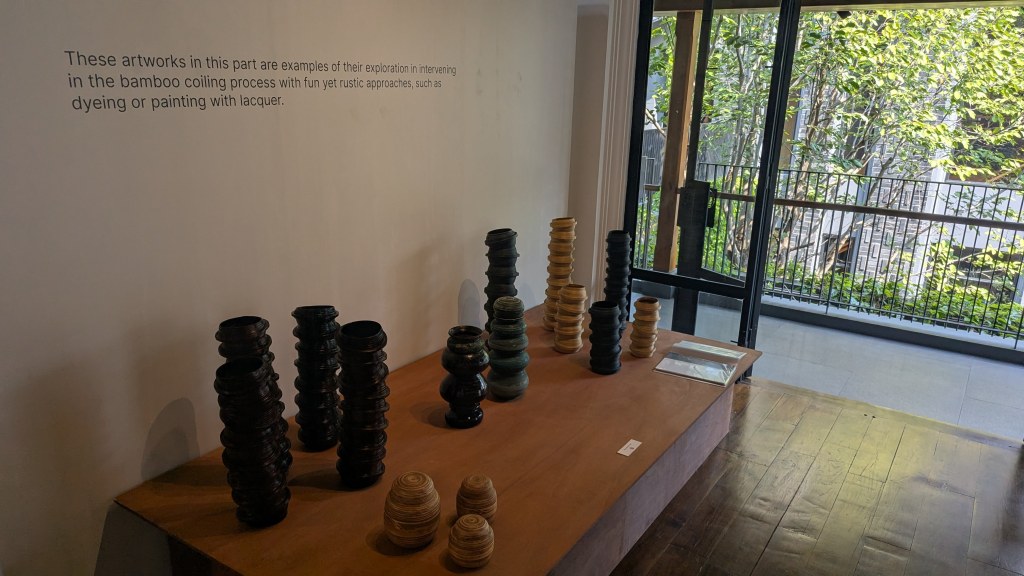
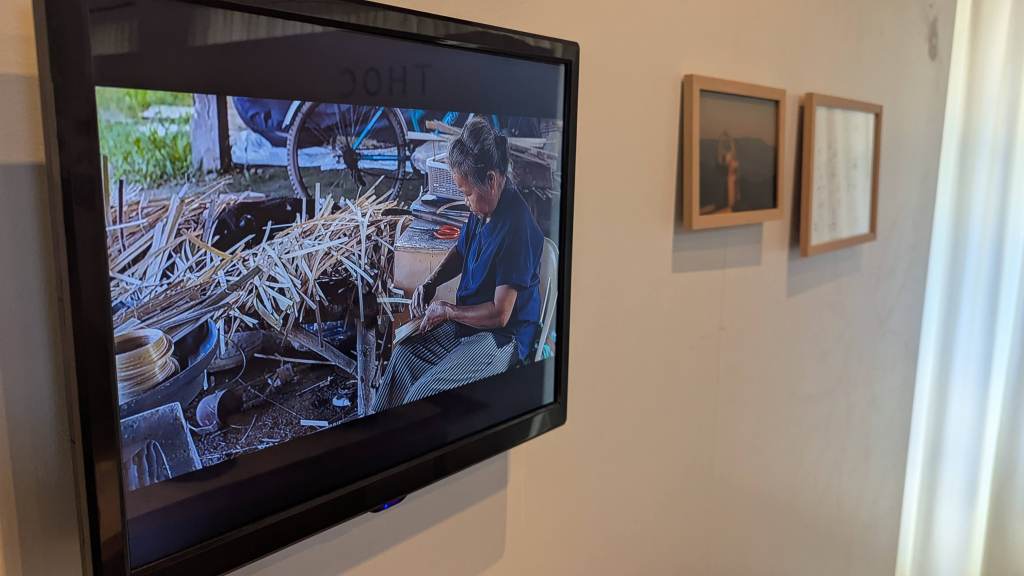
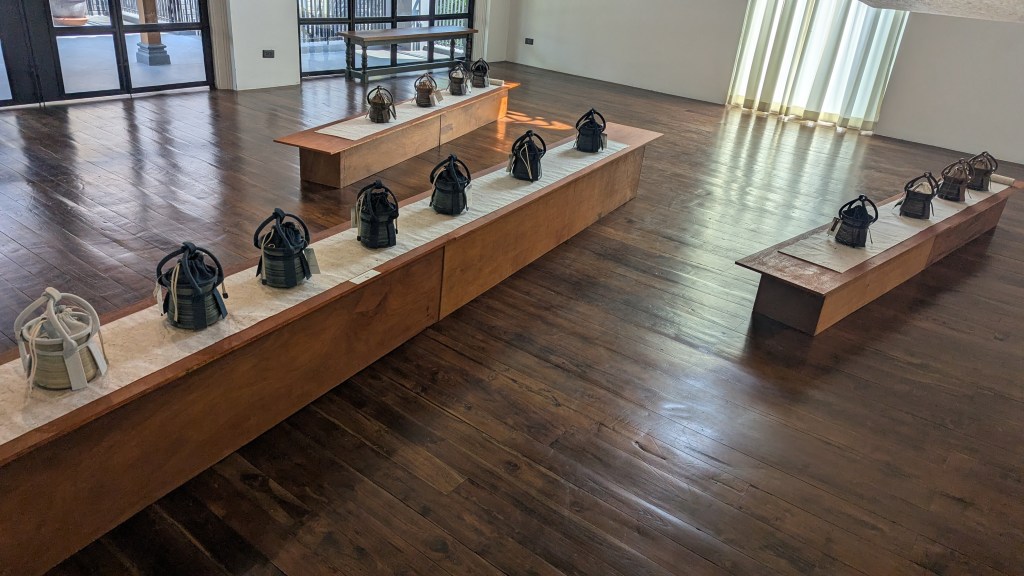
Furthermore, I definitely appreciate that they went to some pains to recognize the original traditional artisans.
I remember years ago visiting the Elwood glass blowing workshop in Indiana. The only remaining craftsman told me that he had several times gone to local schools to try to recruit apprentices, but nobody was interested. He was already in his late 50’s then. He said that fortunately he had enough back orders (mostly from museums) to keep him going until retirement and that he actually would now only take new orders from established old, family clients. By himself, he simply didn’t have enough time to fill the orders, even with a several year waitlist. Thus, he acknowledged that he personally was quite fortunate, but he was very sad that with his death, the local glass blowing tradition would be gone. Albeit for a very limited audience, I could appreciate that here they were attempting to maintain the relevance of some of these traditional crafts.
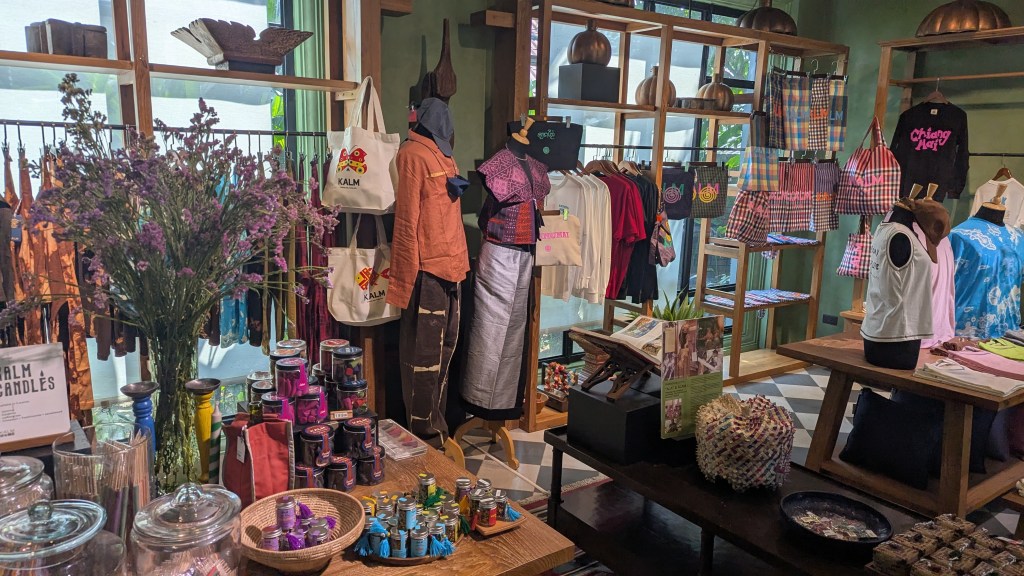
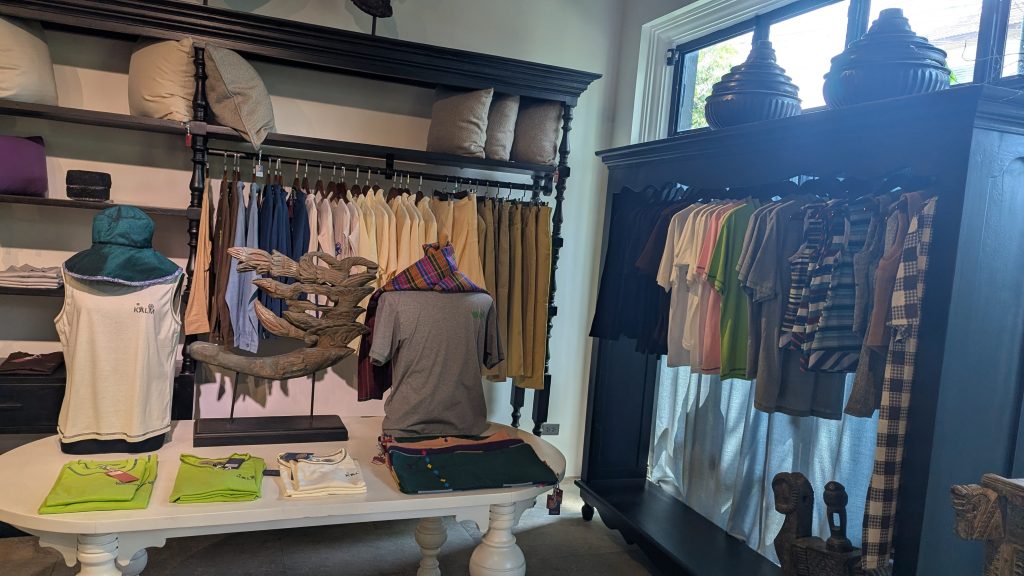
Upon further reflection at 10:36 PM, I didn’t really find the cost of many of the reasonably functional items to be prohibitive. I even seriously considered buying one or two items. However, I quickly realized that the clothing wouldn’t really work for me, and the home decor was a bit too cultured for my rather simple living space.
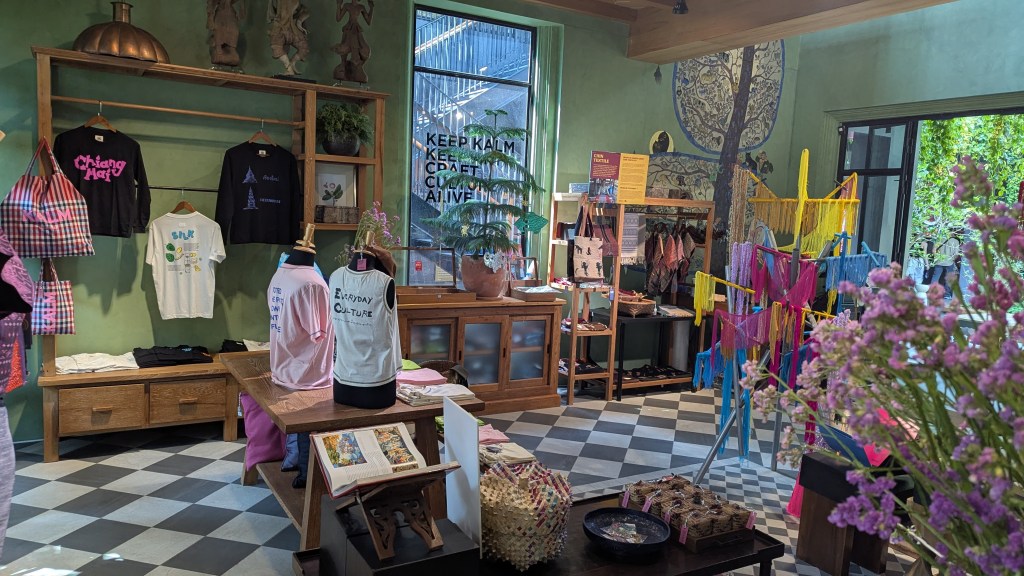
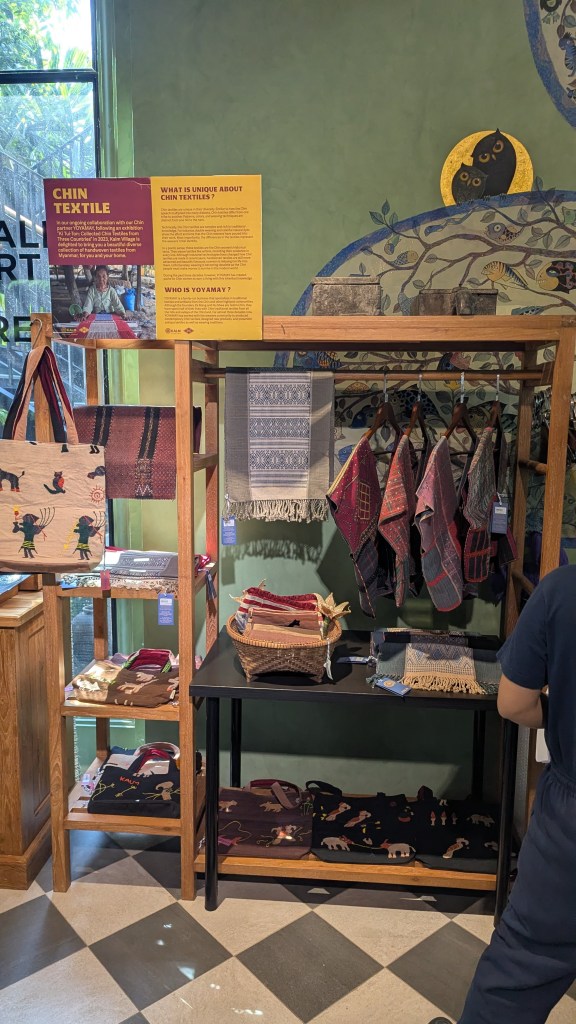
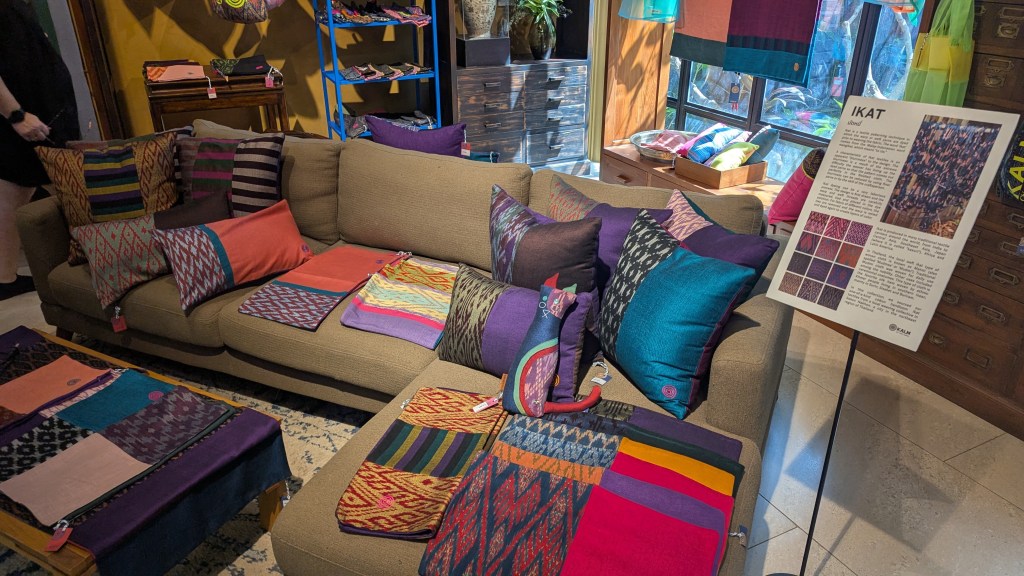
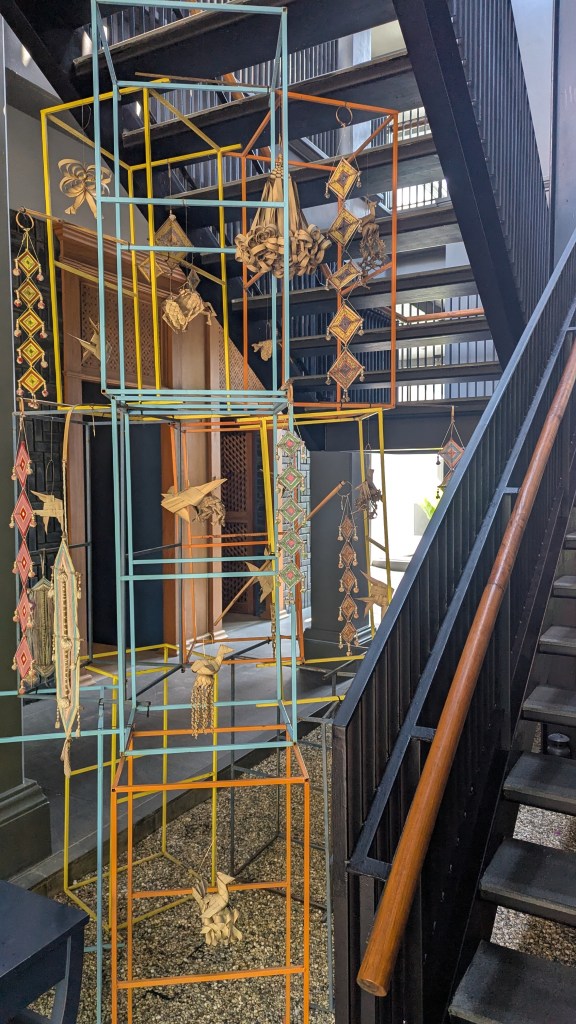
Could I give some of this to someone else? Yes, but would they actually appreciate it? Let’s be honest, probably not. I know it’s not exactly the same thing, but it’s like when I actually used to make spaghetti from scratch. It was a massive amount of work. After awhile, I realized that while people were fine with eating it, they didn’t actually get more out of it as a result of the many hours of work I had put into it . . . so I stopped. Connected to the same, I think people actually did appreciate it more when I used to actually regularly make bread, but again, it was just so much work for too little impact. Or at any rate, that was the way I saw it.
Some of the tunics seemed to be strong candidates for gifts, but I still couldn’t think of anyone in my life who would really appreciate actually using one, at least not $180 USD of appreciation. I guess that makes me the problem?
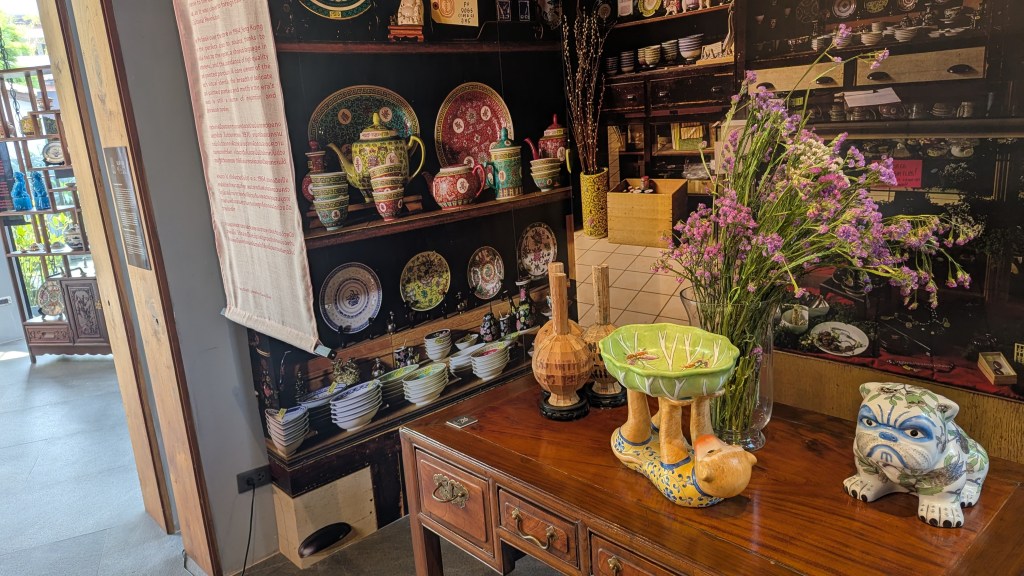
Finally, if I were actually living here, I found some stuff that I could realistically see myself buying. This pottery was completely functional, as well as being simply elegant. Yes, it’s far more expensive than buying mass produced stuff from a super store, but it would be justified as a lifelong, or at least several year home purchase. Of course, I write that now, but would I actually spend the money on it if I lived here? Probably I wouldn’t, not because I didn’t genuinely appreciate it, but because it would just seem silly to spend that much when I could get something functionally similar and perhaps even more attractive for much less. Still I would at least have been realistically tempted.
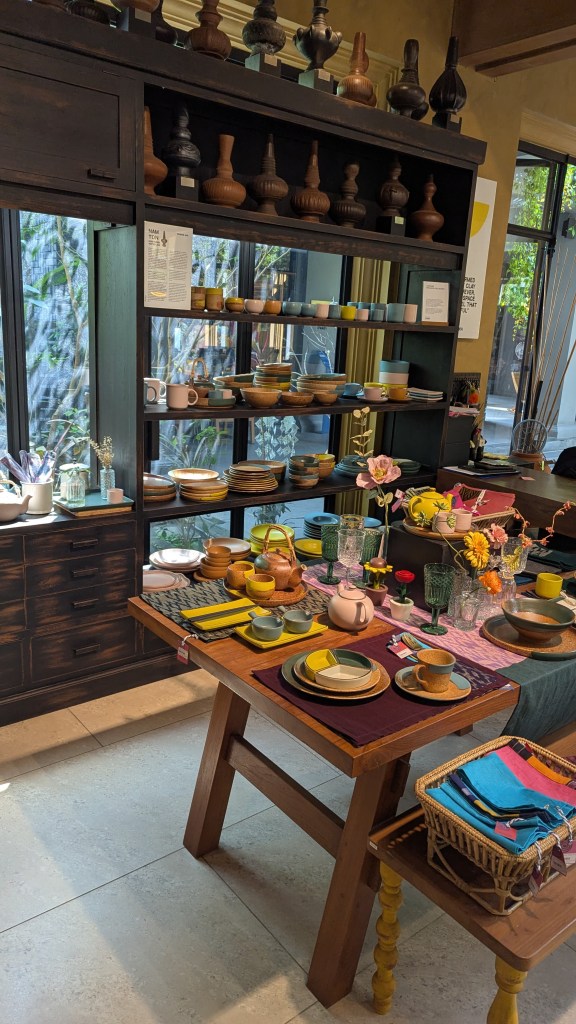
Maybe wealthier businesses and schools should make an effort to very visibly use products such as these. What would be the impact of a school cafeteria only using dishes made my local artisans? What about a fancy restaurant? Yes, some items would get broken, especially at school, but isn’t that the entire point of keeping these crafts alive? Of course, just as it’s difficult for an individual to justify the additional expense, perhaps even more so for a school cafeteria? But what if the students actually met the artisans? Would that make a difference? I definitely don’t have the answers, but I think it’s worth having these discussions.
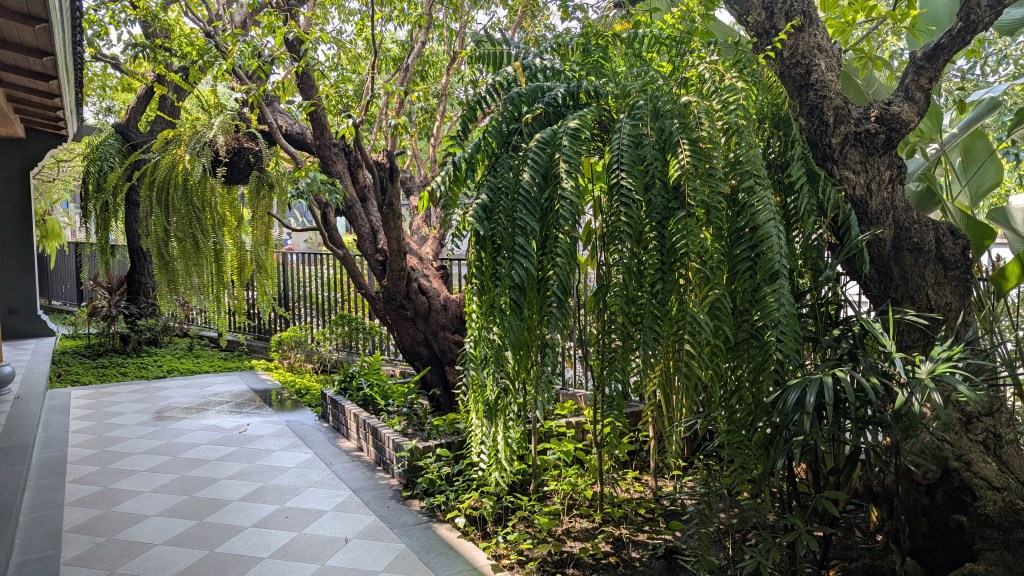
There were plenty of other interesting things to see, and I will definitely admit that I felt calm, so they had achieved at least one of their stated goals. It’s certainly remarkable that I spent two hours here, amazingly, without buying anything. Furthermore, to their credit, there was nobody pressuring me to make a purchase, but I am sure it would have been appreciated.
Still, there was only so much wandering I could do. So at 11:45 AM I started making my way out, with a short stop at the unsurprisingly elegant washroom. I also noted that they had a modern elevator, so points to them for being an accessible space.
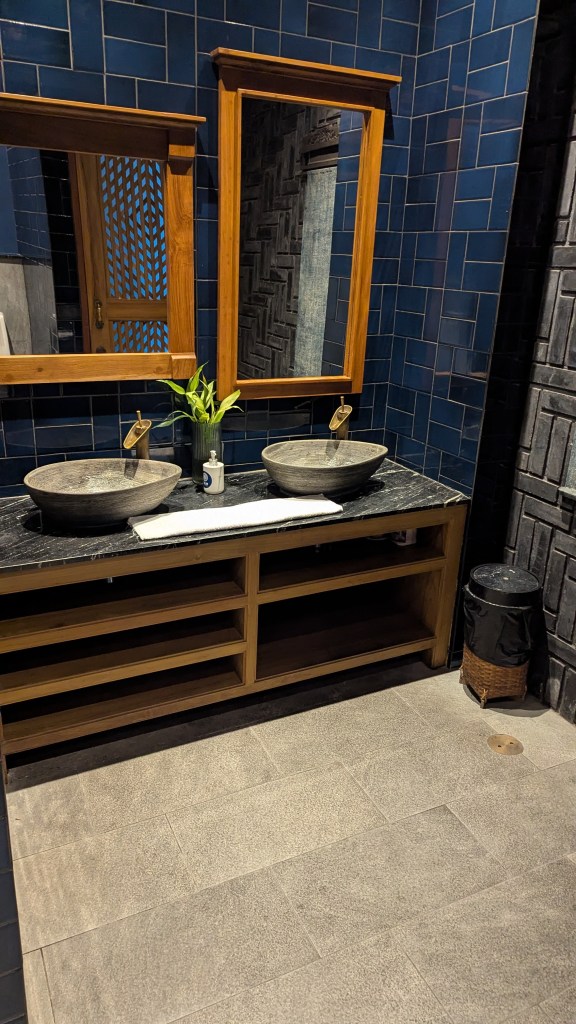
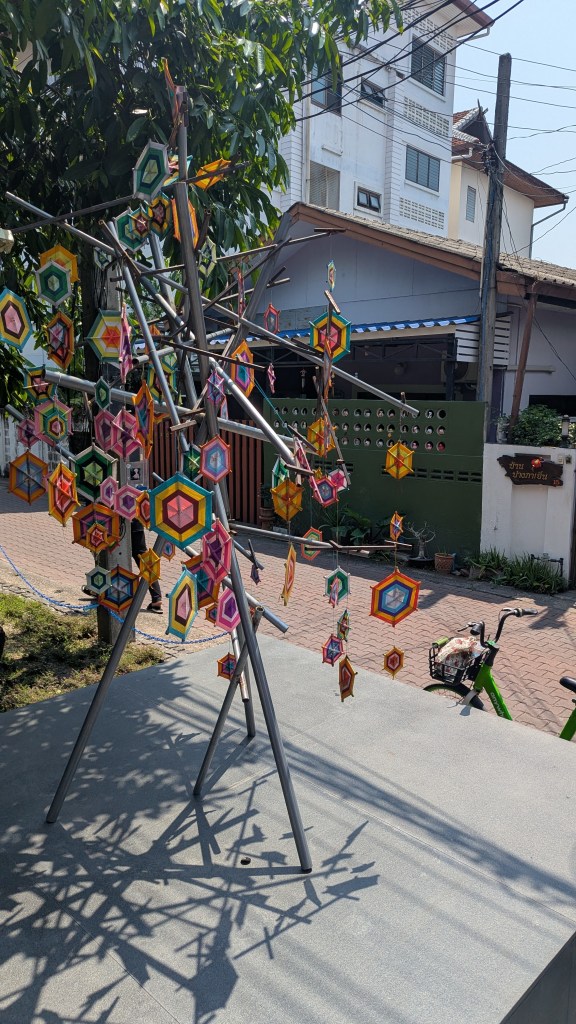
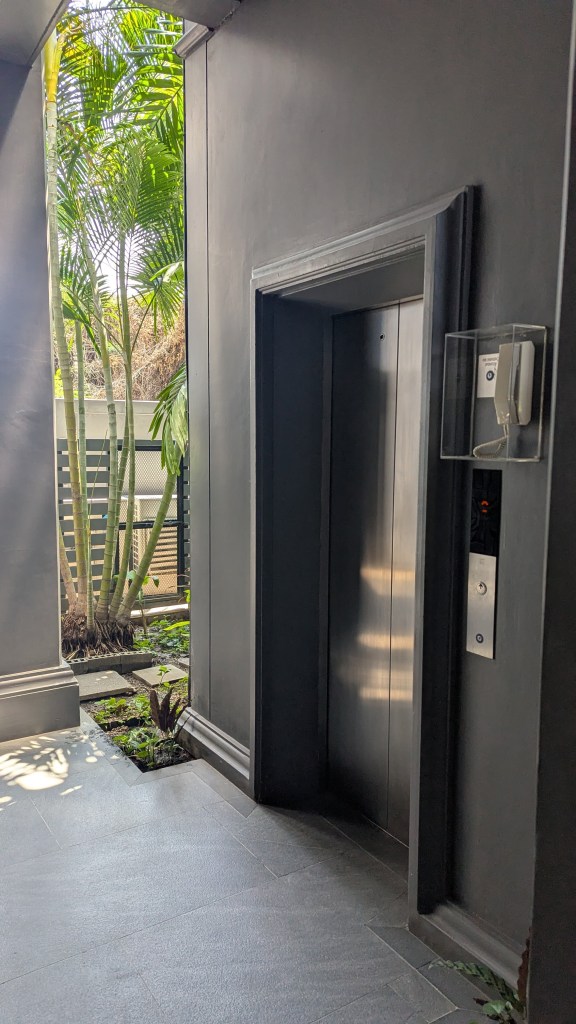
I left the building at 12:00 PM sharp, and despite the rather bright sun, it was a pleasant walk back to the area of the hotel.
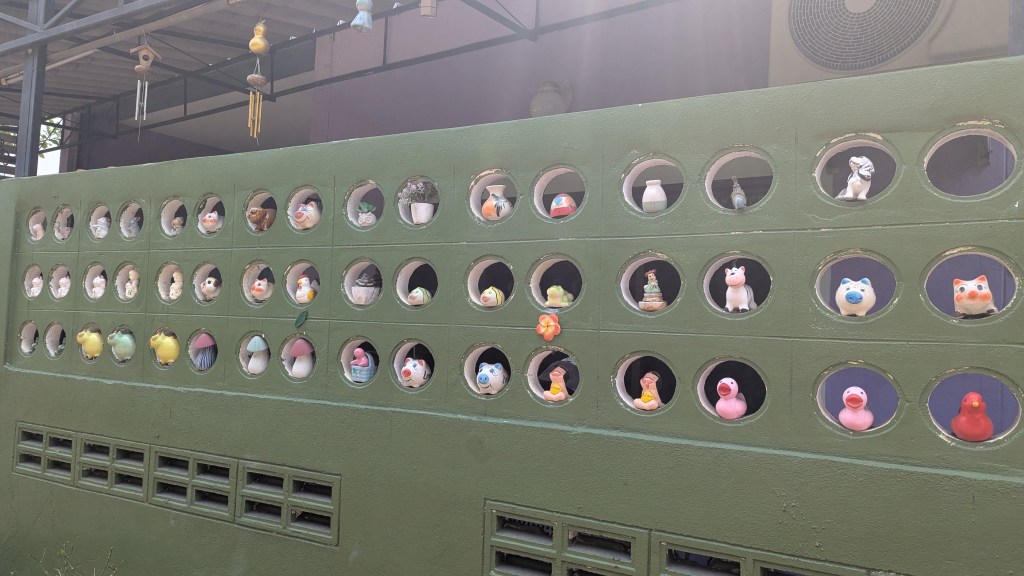
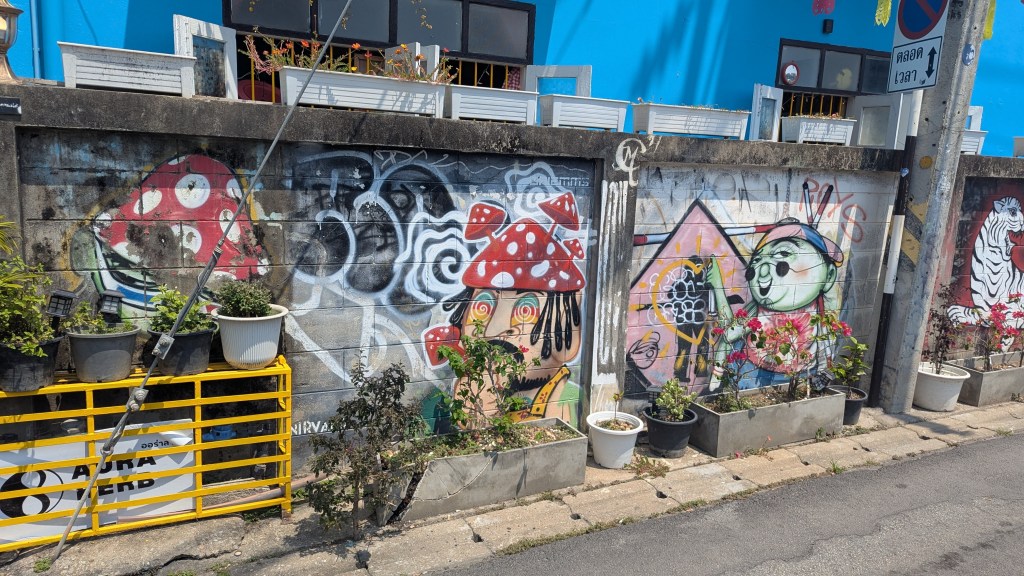
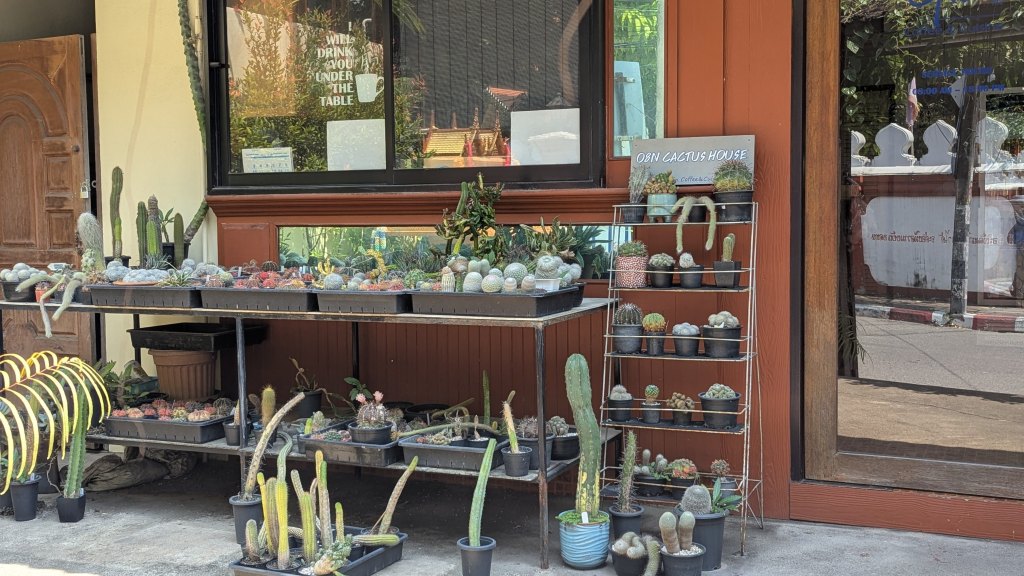
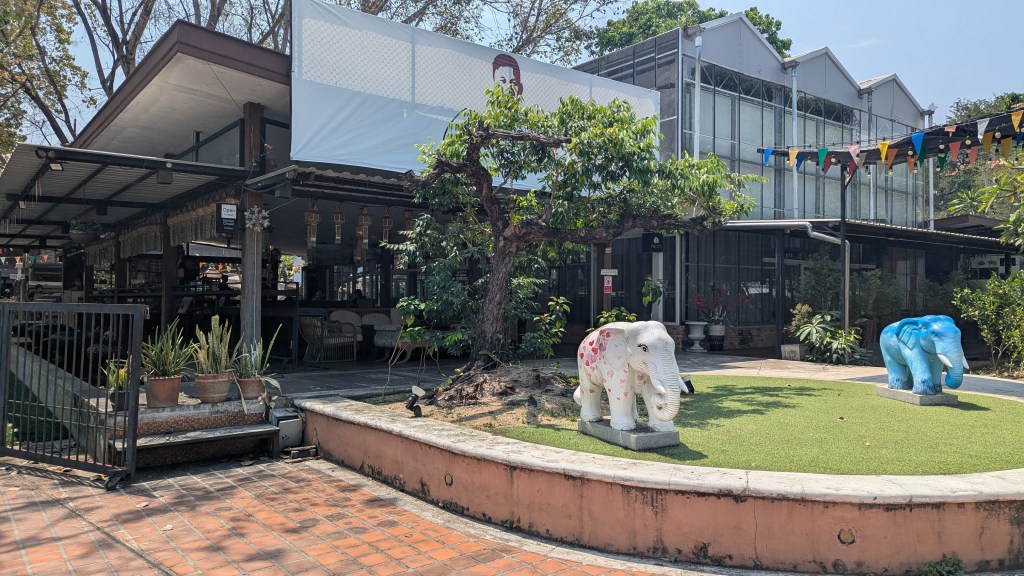
At 12:35 PM I decided to get lunch at the same place I had eaten breakfast the previous day, Jok Somphet. I ordered steamed egg custard dim sum, steamed pork dumplings, chicken khao soi and butterfly pea flower tea. The pork dim sum was divine, as was the khao soi. No doubt I would get tired of it over time, but at least while in Chiang Mai, I loved it. Furthermore, it was very fast service, with the food arriving just five minutes after I had ordered!
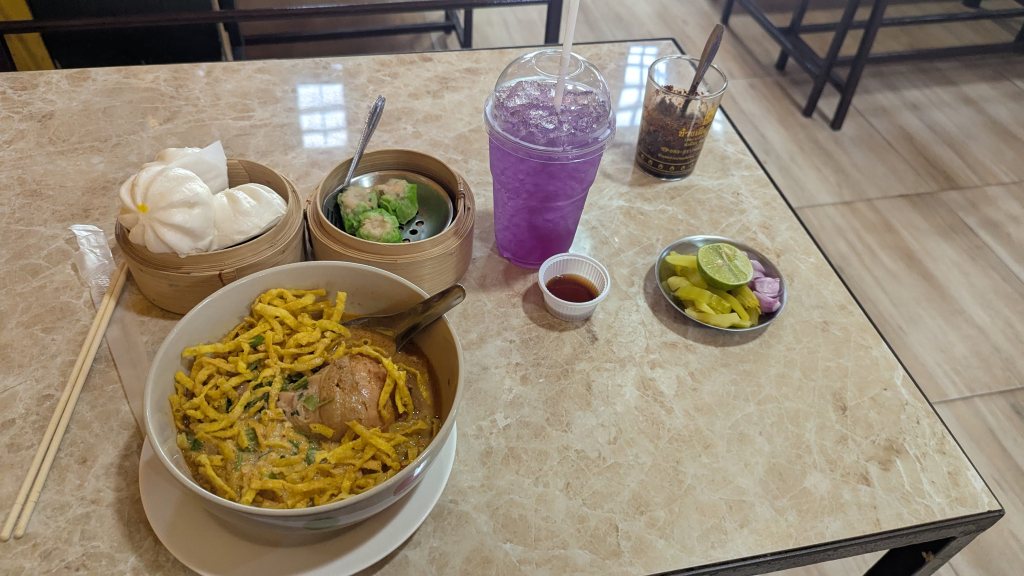
I’m sure that I could have had the exact same food elsewhere, but I think it’s important to be a repeat customer when you feel you have had both good food and good service. Of course, that also applies to other retail outlets as well. I really dragged out my lunch, and it wasn’t until 1:53 PM that I paid the bill of 165 THB ($5.07 USD) and walked back to my nearby hotel to get my bag and head to the airport.
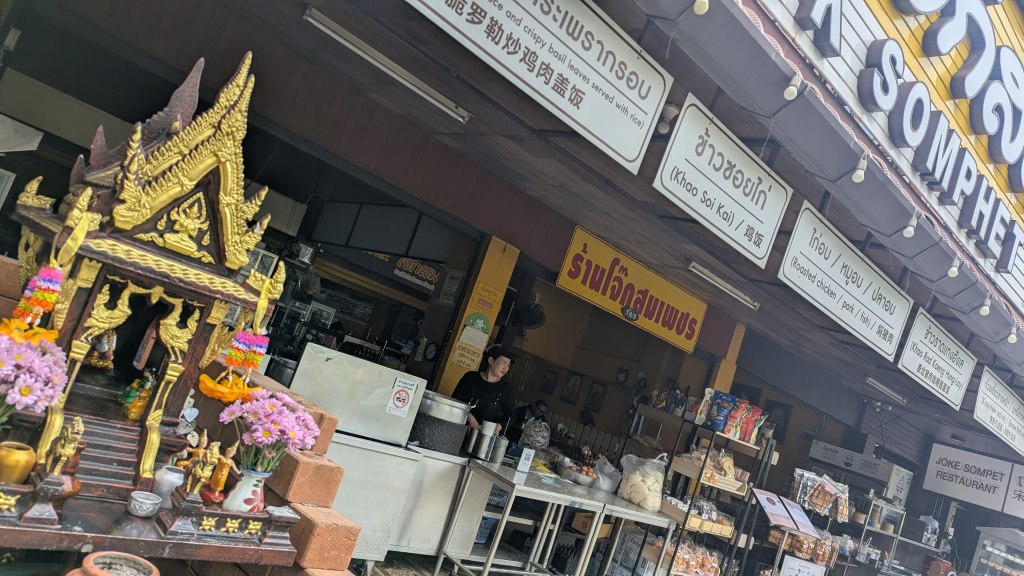
As I had plenty of time, I decided to try the RTC bus. So, following the indications I could find online, I walked over to the stated area of the bus stop.
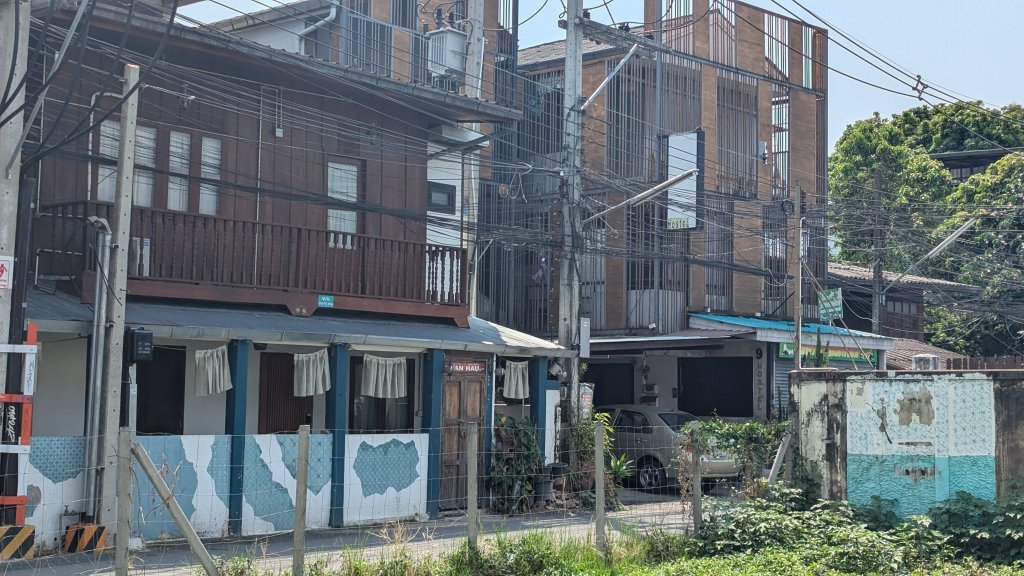
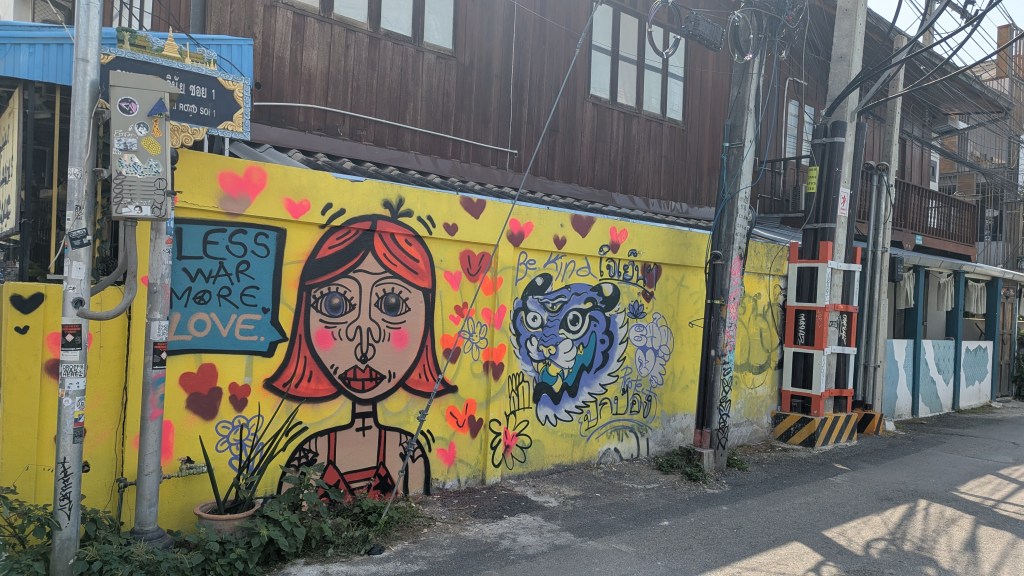
However, at 2:26 PM I gave up on that whole plan. As far as I could tell, catching the bus from Phae Gate is simply not possible unless you have some special insider knowledge. There is no clearly marked stop of any sort, and the bus doesn’t just simply stop at the supposed pickup point. Maybe you are supposed to wave it down? Honestly, I don’t think they really want people using the bus. Evidently there are two different buses you can use, but if you don’t know the trick (whatever it is) then you are out of luck.
So, at 2:35 PM I threw in the towel and got a Grab for 157 THB ($4.83 USD). The good news is that the car arrived less than a minute after I requested it. I had been trying to save a tiny bit and also take advantage of public transit, but that doesn’t seem to be a preferred mode in Chiang Mai. Anyway, just 16 minutes later I was at the airport.
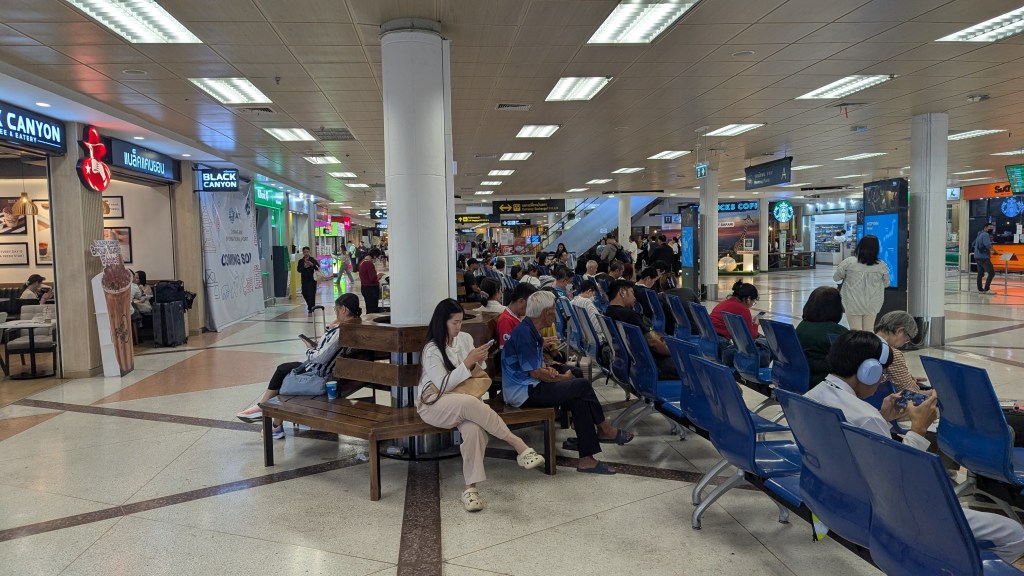
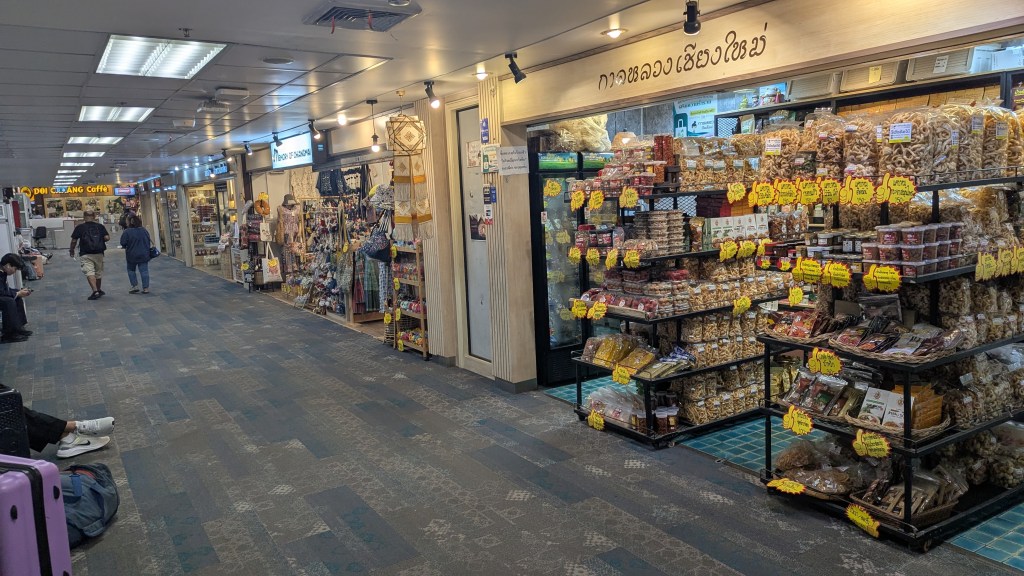
So, if you count the airport, how was my remaining time in Chiang Mai? Well, I had arrived rather early to begin with, and the flight was also delayed fifty minutes, so I had three fun-filled hours. I worked on my blog a bit, had a guilty pleasure light dinner of a a McDonald’s cheeseburger and an Oreo McFlurry (222 THB or $6.83 USD), and then got on my Air Asia flight at 6:35 PM to discover . . . Wow! You can read the in-flight magazine for free!
So, for the most part it had been a much “kalmer” morning and afternoon than the first three days in Chiang Mai, but I also had no complaints. Having had more time, I am sure that I would have had plenty more interesting adventures, but for now I was headed to a Teachers’ Conference in Bangkok. Do I have any immediate plans to head back to Chiang Mai? Not for the moment, but if you are headed that way and looking for some company, let me know. Who knows, maybe you can be a featured guest in a future set of blog entries . . .

 Travels with Jay